Every year, in communities across Barlovento in Miranda state, Venezuela, former residents travel back to towns they grew up in or whose drums they carry in their memory. They arrive for three days in June around the feast of San Juan Bautista, Saint John the Baptist, bringing with them the knowledge of how to move, how to dress, how to address the drum, and how to participate in a celebration that is simultaneously a Catholic feast day, an African cultural inheritance, and a three-century-old act of collective political memory.
The African fashion market is worth 31 billion dollars. Barlovento’s San Juan celebrations are not a fashion tradition in the conventional sense. But dress is central to what happens in the streets, devotional houses, and processions of communities like Curiepe, where the question of how to arrive correctly to a tambor gathering is a question of cultural etiquette, community belonging, and respect for a practice that has survived slavery, colonial suppression, and three centuries of pressure to disappear. As Movimiento Afrolatino Seattle’s documentation of San Juan de Curiepe confirms, the African people and their descendants found a way to take this imposed Catholic system and make it their own, resignifying it. That resignification runs through the drumming and the specific knowledge of how to participate, transmitted from generation to generation within each community.
Barlovento’s Saint John celebrations are not a costume tradition. They are a living community practice of drum, dance, and devotion rooted in three centuries of resistance.
Barlovento and Curiepe: The Historical Foundation
Curiepe is the town most closely associated with the San Juan Bautista Festival in Barlovento. As Grokipedia’s documentation of Curiepe’s history confirms, Curiepe was founded in 1721 by free Blacks led by Juan del Rosario Blanco, and holds the distinction of being the first town in Venezuela established by emancipated Africans. Its origins emerge from the colonial context of cacao plantations and African enslavement in the 17th and 18th centuries. The community remains predominantly Afro-Venezuelan, with a population of around 8,570 as of the 2011 census. It is located in the Brion Municipality of Miranda State, approximately two hours east of Caracas.
Barlovento, the broader subregion in which Curiepe sits, is named for the wind: barlovento means windward in Spanish, reflecting the Caribbean coastal geography of this part of Venezuela’s northern central coast. The region’s economic history was built on cacao plantations worked by enslaved Africans, and its communities developed the Afro-Venezuelan cultural traditions, including the tambor drum practice and the San Juan celebrations, that UNESCO now recognises as significant intangible cultural heritage.
The history of why San Juan matters in these communities is inseparable from the history of slavery. During the colonial period, the feast days of 23, 24, and 25 June were the only three days of the year during which enslaved people were permitted to gather freely. The three days that the plantation system granted were used for drumming and dancing and, as the historical record confirms, for planning insurrection and flight. The San Juan festival carried within its religious frame a political function: it was one of the few occasions when resistance could be organised communally; hence why Cuwhens came to be most strongly associated with both the San Juan festivity and cimarronaje, the tradition of maroon resistance.
In Curiepe, the San Juan Bautista festival is not a display. It is a reunion, a resurrection, a devotional act, and a political inheritance from the people who used these three days of drumming and dancing to plan their freedom. The dress you wear to tambor is not a costume. It is how you arrive correctly to something that matters.
What UNESCO Recognised
In 202, UNESCO inscribed Venezuela’s festive cycle centred on devotion and worship to Saint John the Baptist on the Representative List of Intangible Cultural Heritage. As the UNESCO inscription confirms, the practice emerged in eighteenth-century Afro-Venezuelan communities associated with former colonial estates and combines Catholic devotion with African-derived musical, verbal, and physical traditions. The inscription recognises drumming, dancing, storytelling, singing, and processions carrying the saint’s image. On 24 June in many communities, the saint’s image is brought to a local river and baptised, and devotees may enter the water to receive a blessing.
UNESCO’s recognition is of the practice as a living cultural tradition, not of a standardised national costume or dress code. The inscription does not name or specify clothing. Dress is part of embodied participation in the celebration: it is what people wear while dancing, drumming, processing, visiting devotional houses, and accompanying the saint. What is worn varies by locality, drum tradition, family practice, and ritual moment, and no single outfit should be presented as the universal Afro-Venezuelan or Barlovento festival dress.
The Celebration’s Calendar and Form
In Curiepe, the San Juan cycle follows a more detailed calendar than a simple 24 June feast day. The curieperos celebrate the calling and ringing of drums on June 23, the eve of Saint John on June 23, the birth of San Juan Bautista on June 24, and the closure on June 25. The following Saturday, a wake is held for San Juan Congo, a second image of San Juan Bautista built specifically at the community’s request. Finally, younger catechumens have resumed the commemoration of the Martyrdom of Saint John, a religious ceremony held on August 29. The celebration is therefore not a single day but a cycle with distinct moments, each with its own character and purpose.
The drums are the foundation of the celebration’s form. In Barlovento, the cumaco and mina drums drive the central San Juan rhythms. The culo e’puya drums are also important in the region. Quitiplas, fashioned from hollow bamboo tubes and played by striking them on the ground, are prominent in Barlovento’s musical practice. The relationship between these percussion instruments and the dance forms they accompany creates the sonic and physical environment within which all participation, including dress, takes on meaning.
The sangueo is a slow, processional dance in which participants carry the statue of Saint John. Its pace and form are specific to the devotional function it serves: participants are not performing for an audience but accompanying the saint through the community. The dance is invitation-based, and locals often invite visitors to join the procession. The social and devotional character of this dance shapes what dress is appropriate to it: clothing that permits movement, marks belonging, and honours the seriousness of what is being carried.
Dress as Community Etiquette, Not Costume
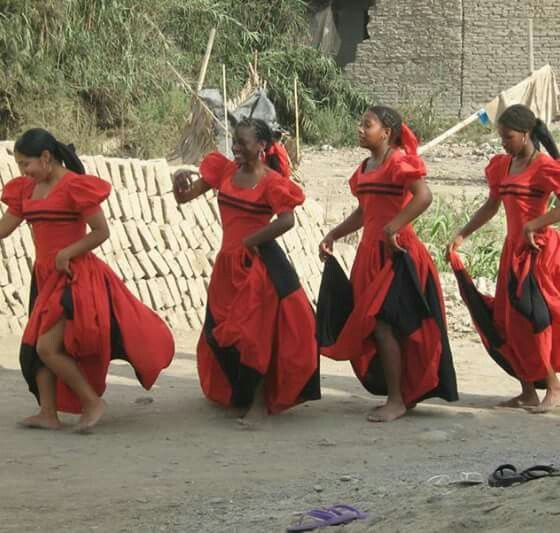
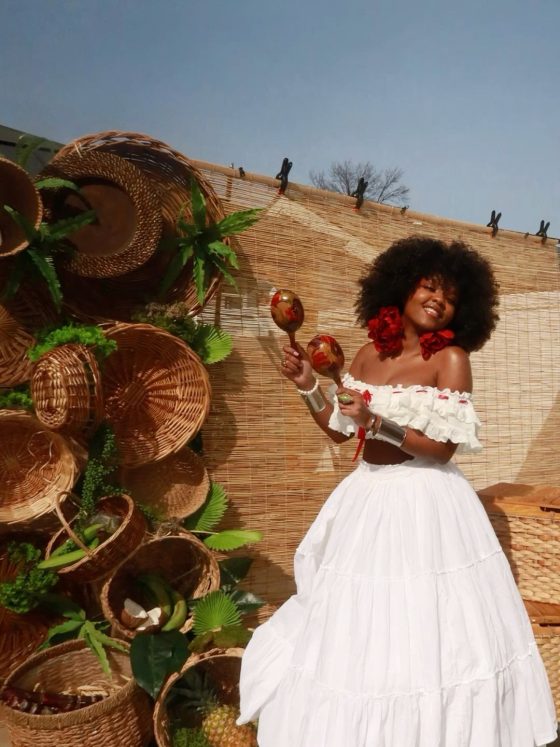
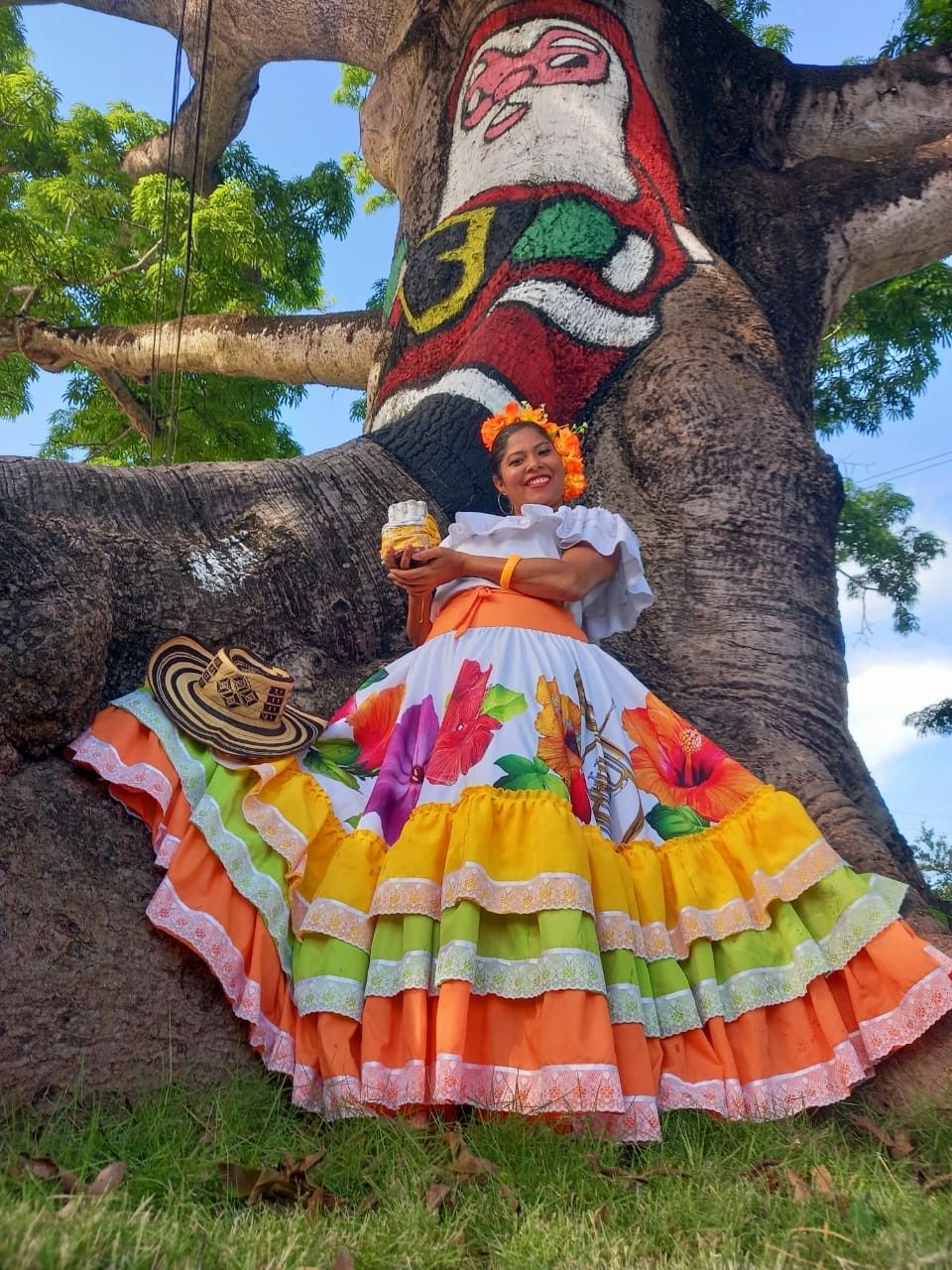
The most important source for understanding dress at tambor in Barlovento is not a museum description or a UNESCO document. It is the testimony of community practitioners in specific towns, whose knowledge of what to wear is inseparable from their knowledge of how to participate. In Curiepe, the local etiquette for tambor dress has been documented through community practitioners. Women dance in a skirt or dress with a blouse, often in alpargatas, the traditional shoes. Men dance in trousers. These are not prescribed and stipulated garments issued by a cultural authority. They are the practical etiquette of a community that has developed its own standards of appropriate participation.
What the community practitioner account makes clear is that appropriate dress is understood as a matter of respecting the town’s tradition and sustaining its cultural integrity, not performing an aesthetic costume for outside observers. The decision to wear a skirt or dress rather than jeans is a decision about how seriously you take the practice and how clearly you understand your relationship to it. The headscarf, or well, may appear in some contexts and marks a similar kind of social distinction, not a racial or ethnic uniform.
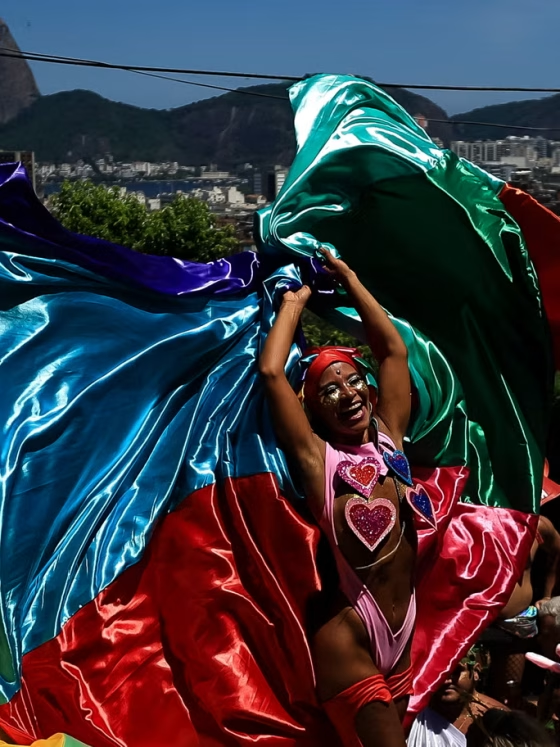
The distinction between community dress etiquette and costume is important to maintain in any account of these celebrations. As Venezuelanalysis’s documentation of the Curiepe festival describes, the atmosphere combines euphoria with elements of Carnival, Christianity, paganism, and a big family reunion, where former residents of this almost entirely Black community and their families descend on the tiny village for three days to pay homage and celebrate this tradition that has been passed down for more than three centuries. The clothing in this context is what you wear to a family reunion whose significance extends to the political history of your community’s survival. It is not a costume.
Why There Is No Universal Barlovento Dress
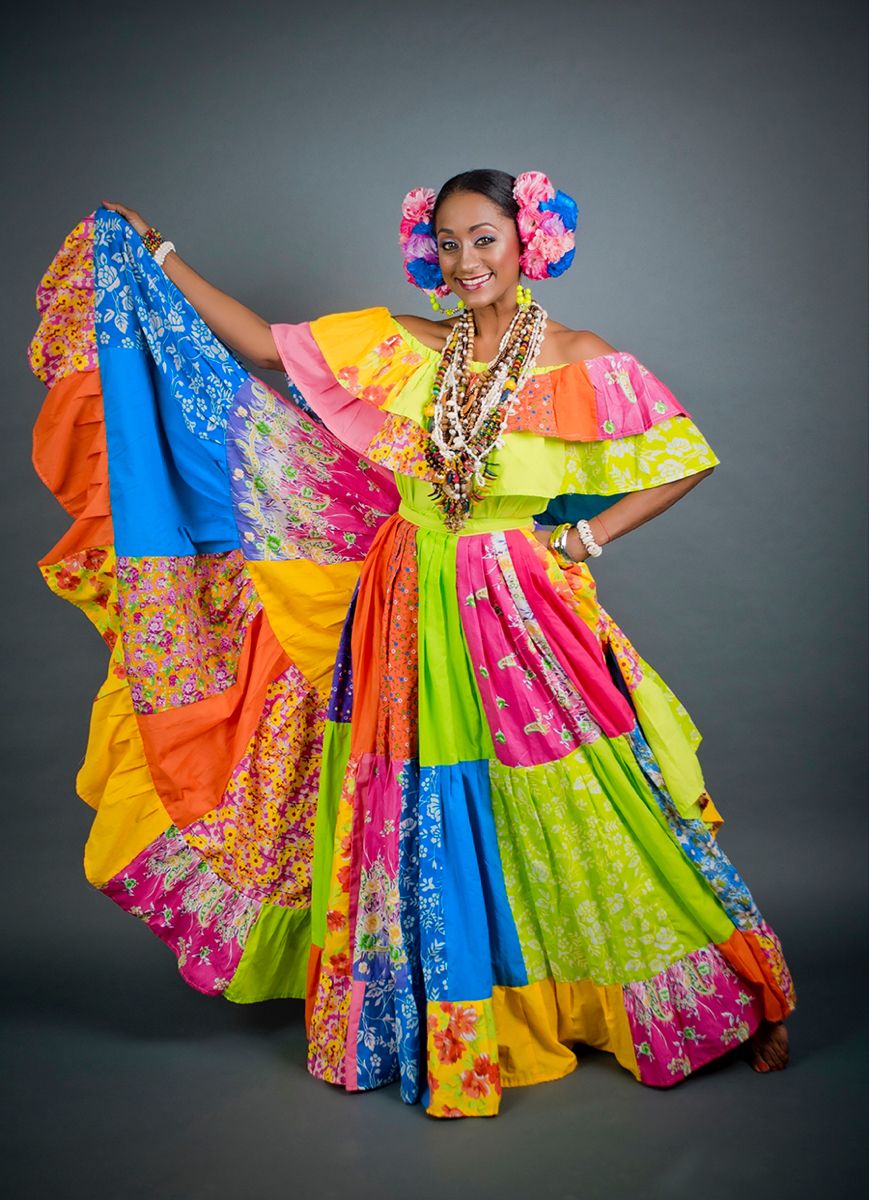
Barlovento encompasses multiple communities, each with their own drum traditions, celebration calendars, and local practices. Curiepe is the best-documented community in English-language sources, and its practices have come to represent Barlovento in many international accounts. However, Curiepe is not Barlovento, and Barlovento is not all of Vene—still, Curiepeuan-celebrating communities. The UNESCO inscription covers a national festive cycle with documented local variation in dates, musical forms, and practices.
Dress practices vary by town and family, by the specific drum tradition being performed, by whether the activity is a procession, a devotional house visit, a dance gathering, or a formal public presentation, and by personal, family, and religious preferences. These variations are not deviations from a standard. These are living forms of a tradition that communities have sustained for three centuries through precommunal, family-transmitted knowledge. Any account that manufactures a universal Barlovento dress code is replacing community authority with editorial invention.
The Omiren Argument
Barlovento’s Saint John celebrations are among the African diaspora’s most documented and politically significant festive traditions. The African fashion and beauty market is worth $ 31 billion. The communities of Barlovento, Venezuela, who $ built thesations from the only three days a year that the colonial plantation system gave enslaved people to gather freely, who used those three days to drum, dance, and plan their freedom, who founded Curiepe in 1721 as the first town in Venezuela established by emancipated Africans, and who have sustained the tambor tradition through three centuries of political pressure and cultural erosion: these communities did not build a costume tradition. They built a survival tradition. Dress is part of that tradition in exactly the way it is part of any community’s social life: as etiquette, as belonging, as the visible sign of understanding what you are participating in and how seriously you take it. The fashion writer’s task is not to extract a wardrobe catalogue from this tradition. It is to understand why clothing matters here and to say so in terms that respect the community’s authority over its own practice.
Also Read:
- The African Origins of Carnival Costume: Feathers, Beads, and the Masquerade Tradition
- Gullah Geechee Women’s Headwrap Traditions, Still Practised Today
- How Cultural Resistance Shaped the World’s Most Powerful Style Movements
- Caribbean Beauty Rituals That Deserve a Global Stage
Frequently Asked Questions
What is the San Juan celebration in Barlovento?
The San Juan Bautista celebration in Barlovento is an Afro-Venezuelan festive cycle centred on devotion to Saint John the Baptist, combining Catholic feast-day observance with African-derived musical, dance, and cultural traditions developed in eighteenth-century communities associated with colonial cacao plantations. In Curiepe, the most documented Barlovento community, the celebration cycle runs from June 1 (the calling and ringing of drums) through June 23-25 (the main feast days) and includes a wake for San Juan Congo and, more recently, an August 29 observance of the Martyrdom of Saint John. UNESCO inscribed Venezuela’s broader festive cycle centred on devotion to Saint John the Baptist on the Representative List of the Intangible Cultural Heritage in 2021.
What do people wear for tambor in Venezuela?
There is no single standard outfit for tambor participation across Barlovento or Venezuela’s San Juan-celebrating communities. In Curiepe, community practice documented by local practitioners describes women dancing in skirts, asirt, or dresses with blouses, often wearing alpargatas or dance skirt suits, dresses, and men’s blouses and trousers. This is Curiepe’s specific community etiquette, shaped by the town’s own tambor tradition and transmitted across generations as a matter of cultural respect rather than costume specification. Other communities and occasions may have different practices.
What did UNESCO recognise about Venezuela’s Saint John celebrations?
UNESCO inscribed Venezuela’s festive cycle around devotion and worship toward Saint John the Baptist in 2021. The inscription recognises the practice as intangible cultural heritage with its origins in eighteenth-century Afro-Venezuelan communities. It documents its combination of drumming, dancing, storytelling, singing, and processions with the saint’s image, including a river baptism of the saint on June 24. UNESCO did not specify or inscribe a standardised dress code as one of the recognised elements. What is the history of Curiepe, Venezuela?
Curiepe is a historic town in the Brion Municipality of Miranda State, located in the Barlovento region approximately two hours east of Caracas. It was founded in 1721 by free Blacks led by Juan del Rosario Blanco and is the first town in Venezuela established by free Blacks. Its origins emerge from the colonial context of cacao plantations and African enslavement in the 17th and 18th centuries. It remains a predominantly Afro-Venezuelan community and is the most widely documented centre of Venezuela’s San Juan Bautista tambor tradition.
What is a sangueo dance?
The sangueo is a slow, processional dance associated with Venezuela’s San Juan Bautista celebrations in which participants carry the statue of Saint John through the community. Its pace and form serve the devotional function of accompanying the saint rather than performing for observers. In the Curiepe celebration cycle, the sangueo is an invitation-based participation in which community members and invited visitors may join the procession. The dance’s character invites visitors to wear appropriate clothing that permits movement and marks belonging to the occasion.
Explore More
Read the full Culture > Heritage & Identity section for Omiren Styles’ documentation of African diaspora cultural traditions, festive dress practices, and the communities whose knowledge and survival have shaped some of the world’s most significant cultural forms.
Discover travel and heritage intelligence across Africa and the African diaspora at Rex Clarke Adventures.