In 1622, the Portuguese governor of Angola, João Correia de Sousa, arranged his reception hall with one chair. It was his. For Queen Nzinga of Ndongo, who arrived as her brother’s diplomatic representative, there was a mat on the floor. The arrangement was standard Portuguese colonial protocol: the seated European official, the standing or floor-seated African supplicant. The message the room was designed to deliver was subordination before the meeting had begun.
Nzinga had already countered it at the door. While Ndongo leaders typically appeared before Portuguese officials wearing European clothing, a concession to colonial authority that communicated cultural deference before a single negotiating position was stated, Nzinga arrived in traditional Ndongan royal dress. Numerous cloths. Jewels. Feathers in her hair. Her attendants dressed in the same register, including the women who carried her sceptre. Contemporary observers documented the choice, and historians have analysed it since. It was deliberate. Before she reached the governor’s chair, before she ordered an attendant to kneel as her human seat, before she secured the peace terms that returned her brother’s people from their most immediate crisis, she had already made the argument her dress was sent to make: that the culture she represented was not inferior to the one sitting across the room.
The African fashion market is worth 31 billion dollars. Queen Nzinga Mbande (c.1583-1663), Queen of Ndongo and later Matamba in present-day Angola, is one of the most documented cases in the historical record of dress functioning as a primary instrument of political and military argument. As the Jamestown-Yorktown Foundation’s documentation of the 1622 Nzinga-Portuguese meeting confirms, Nzinga strategically chose her attire for the meeting. She was in a Portuguese-controlled city but chose to wear the traditional royal dress of her culture, including numerous cloths, jewels, and feathers in her hair, displaying an authority that required no translation.
Queen Nzinga chose every garment she wore with political precision. Her dress was not an accessory. It was the argument she was making before she spoke a word.
Queen Nzinga Battle Dress: The Semiotic System of Ndongan Royal Regalia
Nzinga’s dress system was not an improvised response to colonial pressure. It was built on the Mbundu royal dress tradition, whose elements each carried a specific meaning within the political grammar of the Ndongo kingdom. The leopard skin was the most unambiguous of these: in the Mbundu tradition, as in many Central and West African royal systems, the leopard was the animal of sovereignty. Its skin on the ruler’s body was not a decoration. It was the visual declaration of rank that predated European contact and required no Portuguese interpretation to be legible to every member of Nzinga’s court and every Mbundu observer of the encounter.
The numerous cloths documented by contemporary observers served a different but equally precise function. Volume and layering of cloth in Central African dress traditions communicated wealth, status, and the social capital that a leader commanded: the ability to receive and distribute cloth as part of the gift economy through which political relationships were maintained, and hierarchies were declared. When Nzinga arrived at the Portuguese reception hall draped in numerous cloths alongside her retinue of hundreds of women, court officials, and attendants who dressed in parallel register, she was not dressing for effect. She was demonstrating, in the visual language her own tradition had developed over centuries, exactly how large and how wealthy the sovereign presence in the room was.
When Nzinga arrived at the Portuguese governor’s reception hall in Luanda in 1622, Ndongo leaders typically appeared before Portuguese officials in European clothing. Nzinga wore traditional Ndongan royal dress: numerous cloths, jewels, feathers. That choice was the argument. Before she said a word, before the chair incident, she had already declared that her culture was not inferior to the one sitting across the room.
The Synthesis: Leopard Skin, Silk, and Cowrie Shells
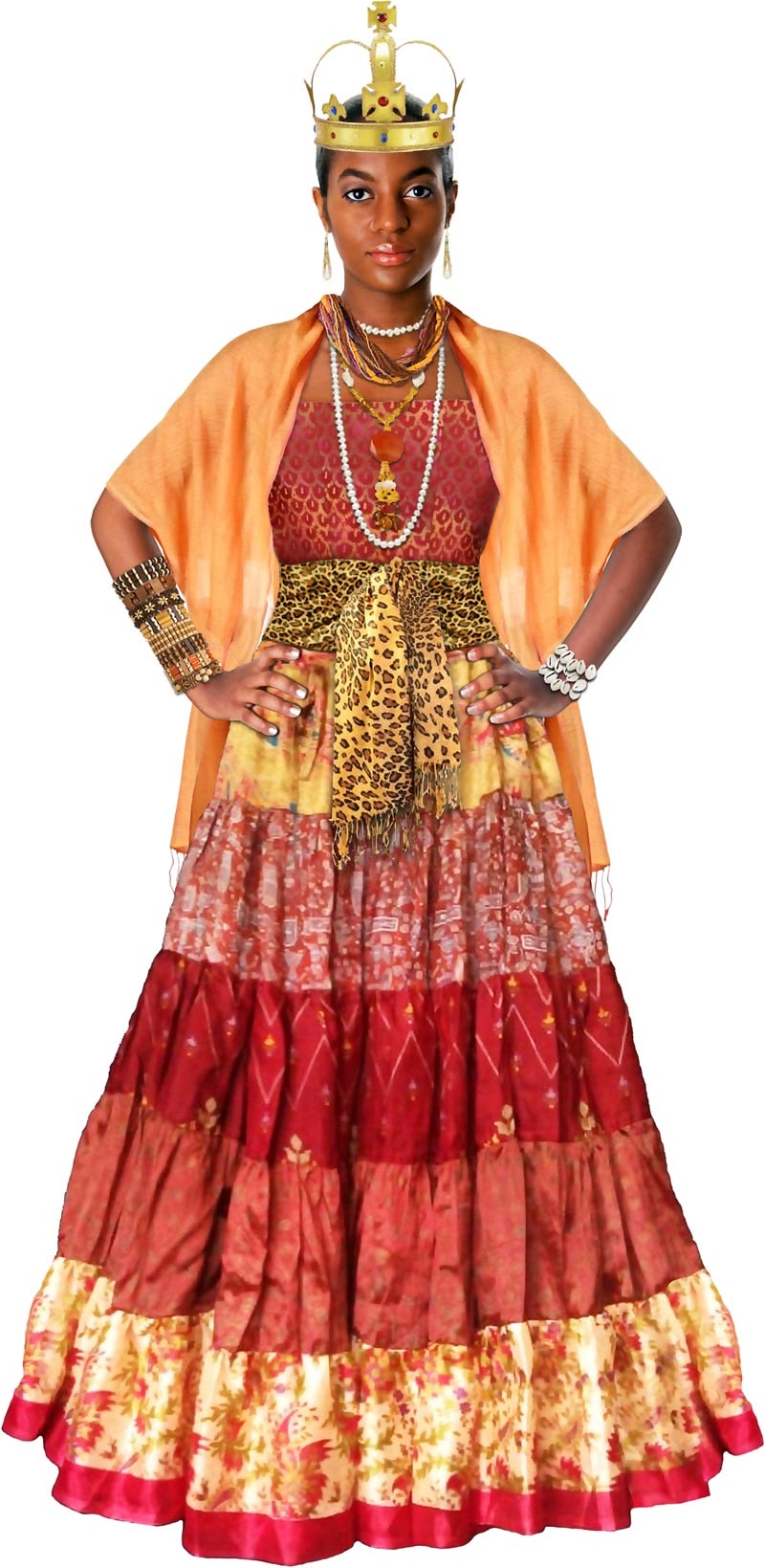
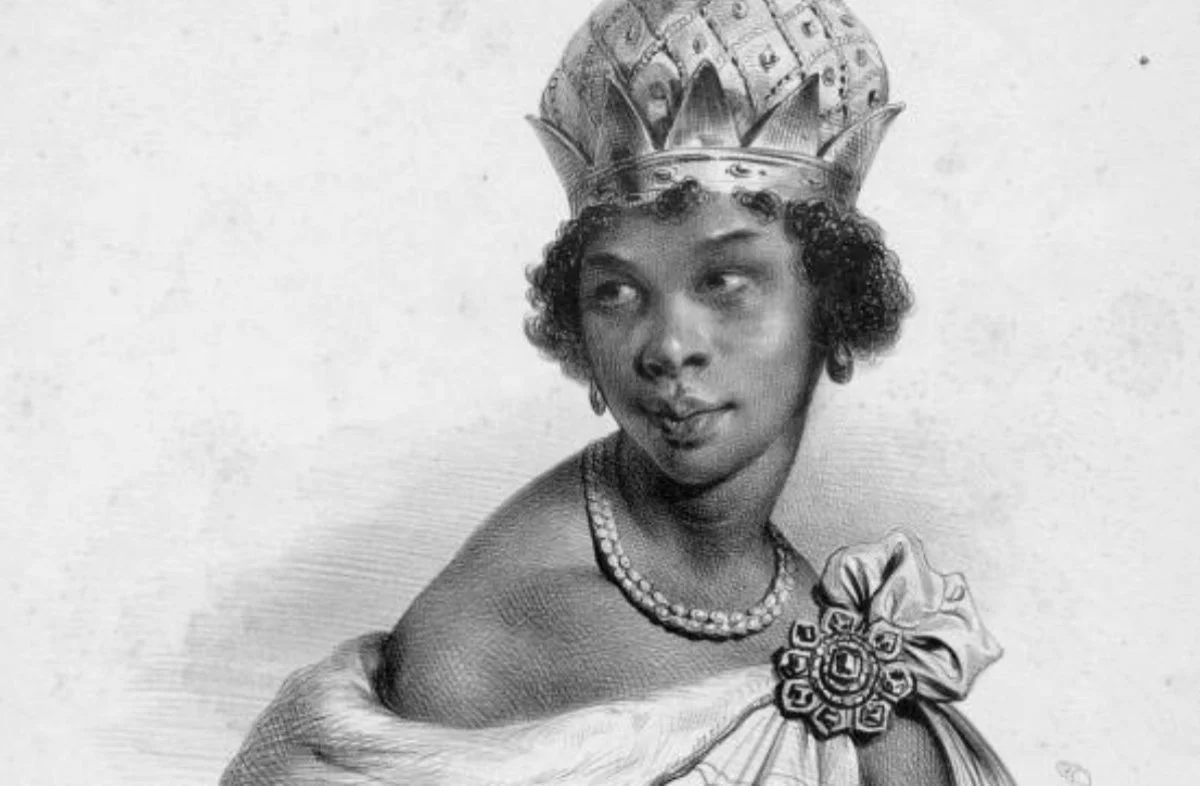
Later documentation of Nzinga’s dress reveals a more sophisticated visual system than the 1622 meeting alone suggests. Contemporary watercolours made from life show her wearing a deliberate combination of African and European elements, combined on her own terms rather than as a concession to either tradition. The crown she wore was made to match European models, but worn alongside the leopard skins of Mbundu royalty. Her garments used imported silk, which her own dressmakers fashioned into ruffled skirts and cloaks in a silhouette that aligned with European fashion while remaining under the control of her tailoring establishment. Her jewellery combined pearls, associated with contemporary European monarchs, with African cowrie shells and beads.
This is not cultural assimilation. It is the deliberate construction of a visual system that could speak simultaneously to two audiences: the Portuguese officials with whom Nzinga was negotiating military and commercial power, and the Mbundu court, whose political authority she held and whose cultural norms she was responsible for maintaining. The leopard skin did not contradict the silk. The cowrie shells did not compete with the pearls. They composed a single argument: that the ruler wearing them was sovereign enough to absorb any visual register into her own system without losing her cultural centre.
This is precisely the argument that Omiren Styles has documented in other African royal dress systems. In the Akan tradition, the gold pieces a ruler wore were not merely decorative but constitutive: they were the material form through which political authority was expressed, transferred, and made visible. Nzinga’s leopard skin operated on the same principle. The object was the declaration. The wearing was the governance act.
Warrior Dress and the Gender Argument
Nzinga dressed in men’s warrior attire throughout her military career. This was not a gesture towards gender equality in the modern sense. It was a precise political claim: that she held the warrior function of the kingdom, not merely the ceremonial or diplomatic one. As the UK’s documentation of Black History Month confirms, she led armies into battle and was directly responsible for limiting the Portuguese colony in Luanda to a few square miles. The Mbundu tradition harboured strong feelings against females assuming political titles. Nzinga’s assumption of the title of ngola a kiluanje violated established Mbundu norms. The warrior dress was part of her response to that internal political resistance: if the norms denied her the role, she would wear the role and lead from it in any case.
She also, at various points, officially declared herself a man, kept male concubines dressed in women’s clothing, and used the category of gender as a political instrument in both directions. What looks from a contemporary vantage point like gender fluidity was, in the specific political context of 17th-century Ndongo, a systematic use of dress and identity categories to circumvent the institutional barriers that prevented a woman from holding the titles her military and diplomatic competence had earned. The dress did not simply reflect who Nzinga was. It was an argument about what she was entitled to be.
The 1622 Meeting: Dress as Diplomatic Theatre
The sequence of the 1622 meeting is worth reconstructing in its full choreography because Nzinga designed each element as a performance of political argument. She arrived with hundreds of attendants, a retinue whose size itself communicated sovereign wealth and command. She dressed in traditional royal attire when the convention required European clothing, making a cultural declaration before entering the room. She carried a sceptre, the material symbol of her delegated authority to negotiate in the king’s name, carried by an attendant as part of the visual grammar of the Ndongan court.
When the room denied her a chair, she converted an attendant into one. When the governor asked about the attendant still kneeling, she replied that it was beneath her status to sit in the same seat twice: a statement that simultaneously displayed her own sovereignty (she had human furniture to spare) and denied the Portuguese the satisfaction of the subordination the mat had been intended to produce. The peace terms she negotiated that day included the removal of Portuguese forts from Ndongo and an end to forced tribute payments. The dress preceded the diplomacy. Both succeeded.
What is documented, though less frequently emphasised, is that Nzinga’s dress choices were legible to everyone present. The Portuguese officials understood what the traditional royal dress meant in terms of her cultural claim. The Ndongo court understood what the warrior garments signified in relation to her military claim. The Matamba population understood what the escaped enslaved people she welcomed into her kingdom meant for her political identity. Every element of her visible self-presentation was a text that the specific audience in front of her could read. This is the definition of dress functioning as political argument: not as symbol in the abstract, but as communication precisely calibrated to its audience.
Nzinga’s Legacy in the Dress of Resistance
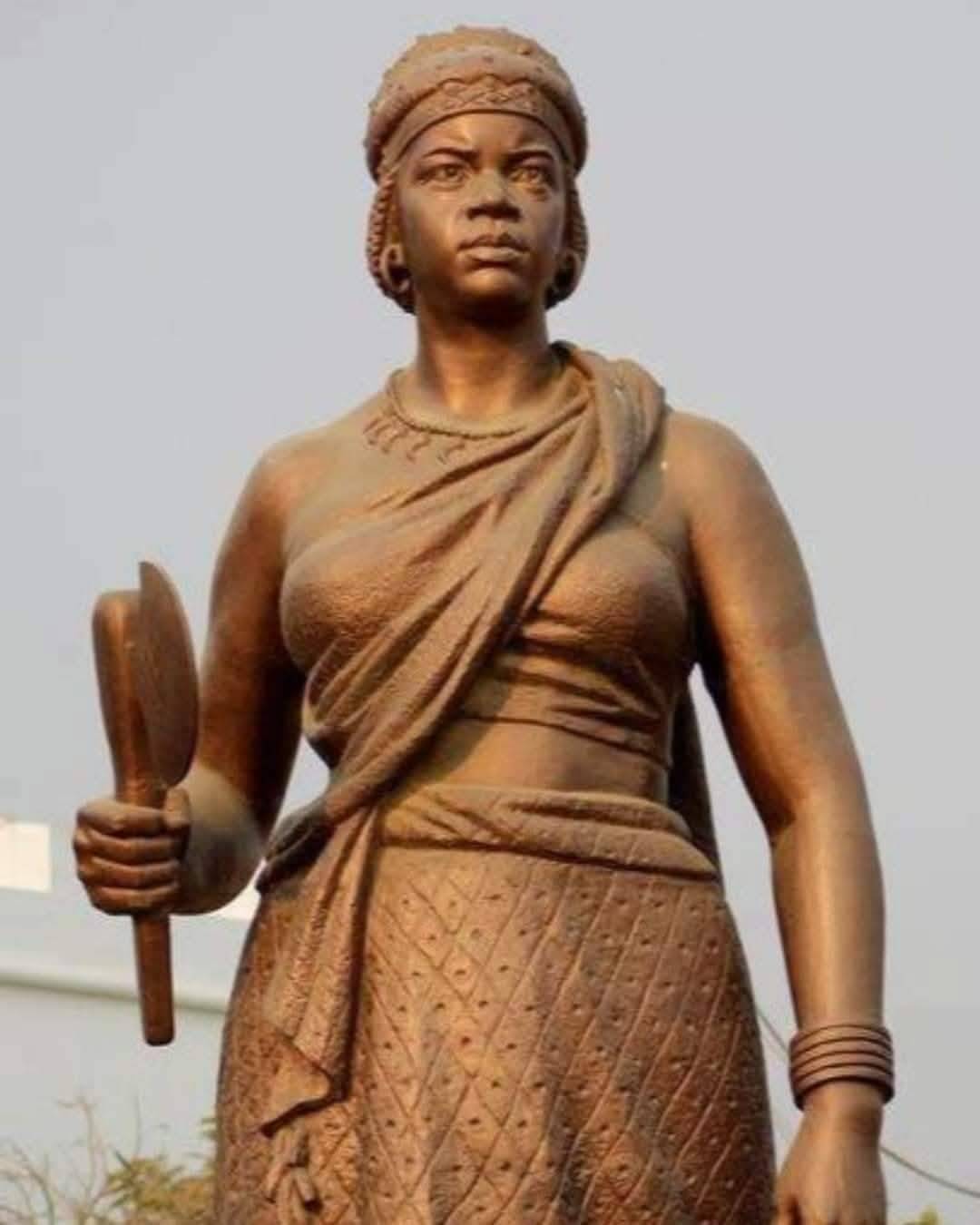
The argument that Nzinga’s dress made in 1622 was not settled in her lifetime, but it was never lost. Her resistance against Portuguese colonisation lasted four decades. Angola’s 1975 independence movement traced its lineage directly to her anti-colonial struggle. A major street in Luanda bears her name. A statue of her in Largo do Kinaxixi, dedicated in 2002, shows her in warrior posture. The corrective gesture that dress can make against systems that attempt to use clothing as a tool of subordination is one of the oldest arguments in the record. Nzinga made it in 1622. Yaa Asantewaa made it in 1900. The argument travels through the specific dress of specific women in specific moments of political confrontation with colonial power.
The Omiren Argument
Queen Nzinga’s dress was the most precise political instrument she carried into every diplomatic and military engagement of her four-decade resistance against Portuguese colonisation. The African fashion market is worth 31 billion dollars. The numerous cloths, jewels, and feathers that Nzinga wore to the 1622 meeting in Luanda were a documented, deliberate, strategic choice: she wore traditional Ndongan royal dress when the convention was European clothing because the choice itself was the argument she needed to make before negotiating could begin. The leopard skin declared her Mbundu sovereignty. The silk made up by her own dressmakers declared her economic autonomy. The pearls combined with cowrie shells declared her capacity to absorb any visual register into her own system without losing cultural centre. The warrior dress declared that she held the military function of the kingdom regardless of what the norms said about female rulers. The human seat she created when the Portuguese denied her a chair declared that her dignity was not theirs to grant or withhold. Every garment, every material combination, every dress choice in Nzinga’s documented record was an argument about what she was, what her culture was, and what authority she held. Omiren Styles documents the dress alongside the military and diplomatic record because the two are inseparable: Nzinga did not dress separately from her politics. Her dress was the first paragraph of every political statement she made.
Also Read:
- How Silhouettes Speak: A History Of Power In Black Women’s Fashion
- Fulani Gerewol: The Men Who Dress to Be Judged and What That Inverts About Fashion’s Gender Assumptions
- When Dressing Becomes Declaration: Clothing as Cultural Identity
- How Cultural Resistance Shaped the World’s Most Powerful Style Movements
Frequently Asked Questions
What did Queen Nzinga wear?
Queen Nzinga wore traditional Ndongan royal dress that combined Mbundu royal tradition with strategically selected external materials. Her documented garments included numerous cloths layered in the Central African tradition of sovereign dress; the leopard skin of Mbundu royalty, which declared her sovereignty in her own cultural grammar; imported silk made by her own dressmakers into ruffled skirts and cloaks; and jewellery combining European pearls with African cowrie shells and beads. In her military campaigns, she dressed in men’s warrior attire, claiming the kingdom’s warrior function through her dress when norms sought to restrict it from her.
What is the significance of Queen Nzinga’s dress at the 1622 meeting?
At the 1622 meeting with Portuguese Governor João Correia de Sousa, Nzinga wore traditional Ndongan royal dress, while the convention for Ndongo leaders meeting Portuguese officials was in European clothing. The choice was deliberate: it declared that her culture was not inferior to the one sitting across the room, before a single word of negotiation had been spoken. Contemporary sources document that she wore numerous cloths, jewels, and feathers, and that her attendants dressed in the same register. The dress was the opening argument of her diplomatic position.
Why did Queen Nzinga wear men’s clothing?
Nzinga wore men’s warrior attire throughout her military campaigns as a political claim: that she held the warrior and governing function of the kingdom, not merely ceremonial authority. The Mbundu tradition explicitly prohibited women from assuming the title of ngola a kiluanje. Nzinga’s assumption of that title violated established norms. Wearing warrior dress and, at various points, officially declaring herself a man were systematic responses to those institutional barriers: if the norms denied her the role, she would wear the role and exercise it in any case. The dress was not performance. It was a claim.
What happened at Queen Nzinga’s 1622 meeting with the Portuguese?
In 1622, sent by her brother, King Ngola Mbande, to negotiate with the Portuguese Governor João Correia de Sousa, Nzinga arrived at the colonial reception hall in Luanda wearing traditional royal dress rather than European clothing. The governor had arranged the room with one chair (his own) and a mat for Nzinga. She ordered an attendant to kneel and serve as her seat so that she could meet the governor at eye level. When asked about the attendant, she replied that it was beneath her status to sit in the same seat twice. She secured a peace treaty that included the removal of Portuguese forts from Ndongo and the end of forced tribute payments.
How did Queen Nzinga use dress as political resistance?
Nzinga used dress as a political argument in at least three documented ways. First, cultural declaration: wearing traditional Ndongan royal dress to the 1622 diplomatic meeting instead of European clothing signalled that her culture was not subordinate to Portuguese culture. Second, sovereign display: layering numerous cloths, leopard skin, jewellery, and sceptre communicated the wealth and authority of the Ndongan court in its own visual grammar. Third, gender claim: wearing men’s warrior attire throughout her military campaigns asserted that she held the warrior and governing function of the kingdom regardless of the norms that attempted to deny it. Every dress choice was precisely calibrated to the audience reading it.
Explore More
Read the full Culture > Heritage & Identity section for Omiren Styles’ documentation of African royal dress, resistance regalia, and the queens who used clothing as the first paragraph of every political argument they made.