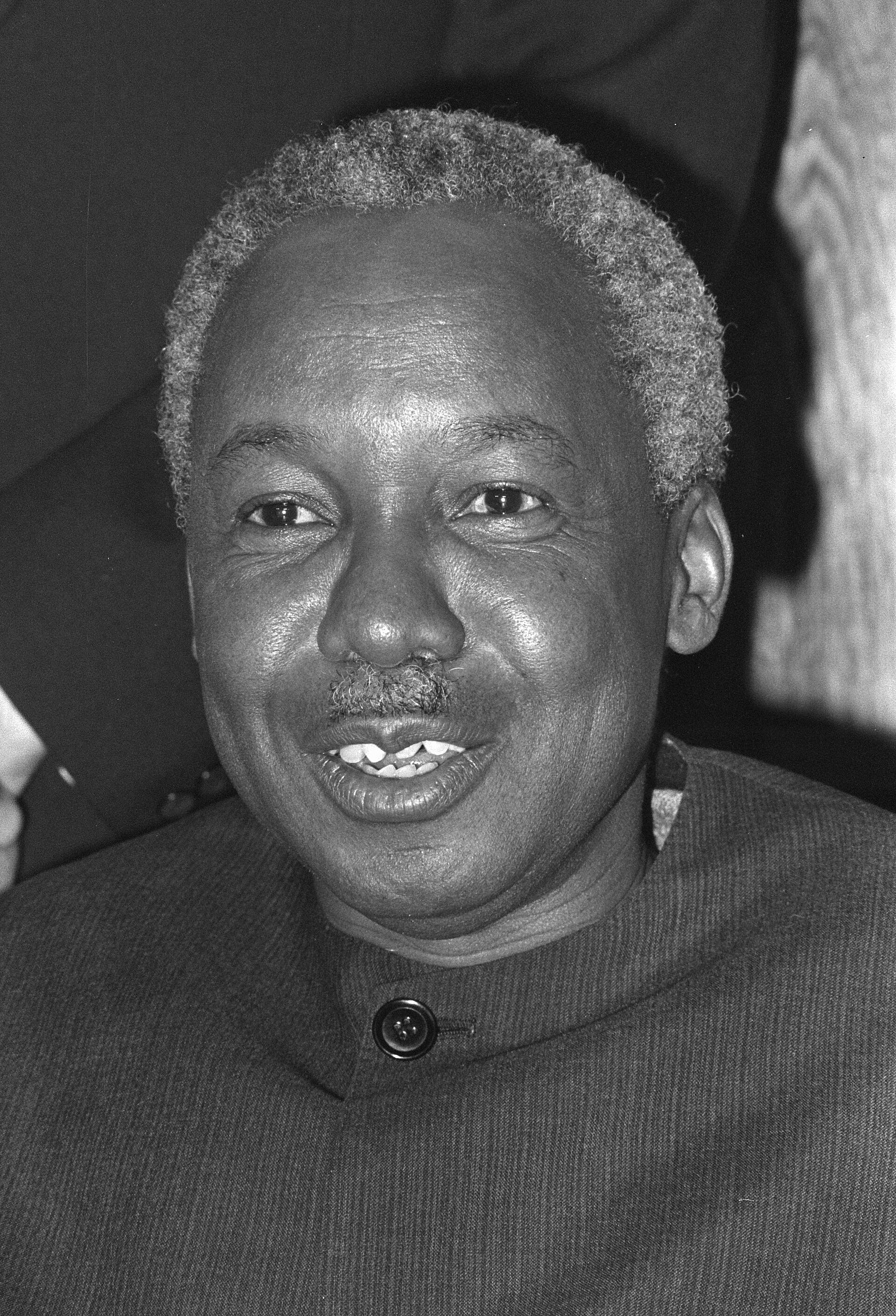
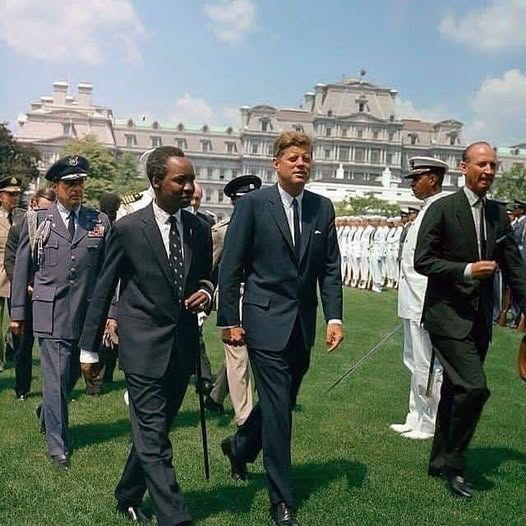
Julius Nyerere, Tanzania’s first president and Mwalimu (teacher) to a generation of African political thinkers, understood that dress was an argument before it was an aesthetic. When he appeared in a kanzu, the traditional East African ankle-length white robe, or in a simple safari suit rather than the Western business suit that had become the default uniform of post-colonial state power, he was making a claim that did not need a speech to land. In a world where newly independent African leaders were photographed in European tailoring at the United Nations, in the corridors of power in London and Washington, the choice to dress otherwise was itself a position: a visible assertion that the colonial hierarchy of dress need not be reproduced by its successors.
This piece is about what Nyerere’s dress communicated, why it communicated what it did, and how to distinguish his personal symbolism from the more complicated questions of state dress regulation in Tanzania under his leadership. As Omiren Styles has documented in its analysis of how colonial law targeted African dress and hair, the relationship between political power and dress in Africa has a long colonial history that makes every post-independence leader’s clothing choice a legible statement about what kind of state they are building and whose standards they are building it by. Nyerere’s statement was clear. Its complications are worth naming.
Julius Nyerere’s rejection of Western suits turned Tanzanian dress into a statement of socialism, humility, and post-independence cultural independence.
What He Wore: The Dress Itself
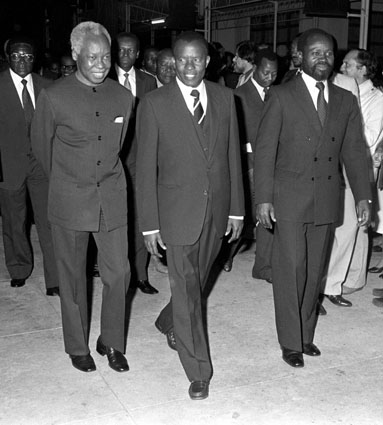
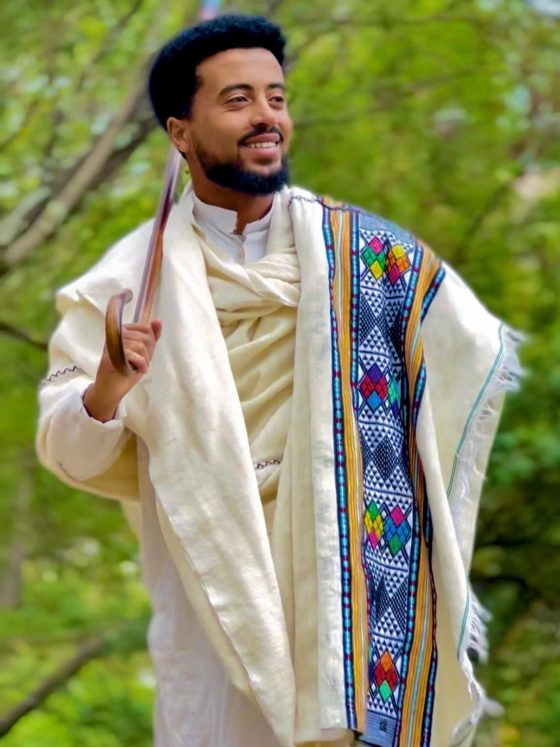
Nyerere’s preferred garments were the kanzu and the safari suit. The kanzu, as documented by the University of Nairobi’s Africa Design Review Journal, is a traditional dress of East African cultural life, introduced through Arab trade routes into the Swahili coast and adopted into the everyday and ceremonial dress of communities across Tanzania, Uganda, and the Great Lakes region. As D&D Clothing’s documentation of Tanzanian traditional dress confirms, the kanzu functions as Tanzania’s national costume and carries ceremonial weight at official occasions. For Nyerere to wear it as a head of state was not casual. It was deliberate: a selection of the local and the African over the European tailored suit that had become, under colonialism, the visual marker of authority, civilisation, and respectability.
The safari suit, a practical open-collar jacket common across East Africa, offered a second register: less ceremonial than the kanzu, but equally distinct from the Western business suit. As the Lusaka Times’ documentation of African leaders and dress symbolism notes, African leaders of Nyerere’s generation who avoided the tie and jacket were consciously refusing a visual alignment with their colonial predecessors. The suit had carried a specific colonial meaning: it was the dress of the European administrator, the missionary, and the educated African who had been processed through colonial institutions toward respectability on European terms. To reject it was to reject the visual taxonomy that made Western attire civilised and African attire primitive.
Why It Was Deliberate: Dress as Anti-Colonial Statement
The colonial relationship between dress and power in Tanzania was not subtle. As Guzang’s analysis of how colonial morality policed African fashion documents, through mission schools and church pews, colonial regimes embedded dress as a disciplinary tool, a way to make African bodies visibly obedient to foreign moral codes. By the mid-twentieth century, clothing had become a visual taxonomy of colonial order: Western attire was civilised, local attire primitive. The kanzu, as Mon Pi Mon’s analysis of dress and power in East Africa documents, had been present in the region before colonialism changed what dressing meant. Still, colonialism layered onto it the additional symbolism of marking the wearer as someone outside the colonial hierarchy of respectability—outside the category of those who dressed in European ways and were therefore legible as modern, educated, and trustworthy.
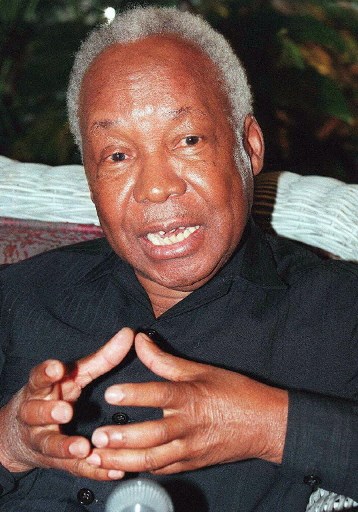
Nyerere’s dress was a reversal of that taxonomy. As a president who had studied at Makerere College in Uganda and Edinburgh University in Scotland, who was fully legible to European institutions on their own terms, his choice of the kanzu and the safari suit was not the dress of someone who did not know how to wear a Western suit. It was the dress of someone who had decided not to. That distinction is the political content of the choice. It communicated that African cultural heritage was not something a leader dressed above when he became internationally significant. It was something he wore.
Ujamaa and the Argument Dress Was Making
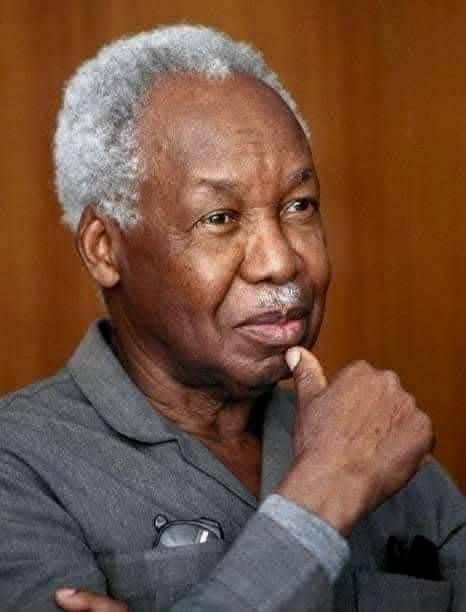
Nyerere’s dress did not exist in isolation from his political philosophy. Ujamaa, the African socialist framework he developed and which he outlined in essays including “Ujamaa: The Basis for African Socialism” (1962) and institutionalised in the Arusha Declaration of 1967, was an argument that Tanzania did not need to borrow from European or Soviet models of development because the culture of socialism, defined as hospitality, cooperation, and communal responsibility, was already present in African village life. As African Arguments’ documentation of ujamaa and its legacy, Nyerere argued that Tanzania should build on its own cultural traditions rather than adopt imported economic and political models wholesale.
Dress was part of that argument. The Arusha Declaration, as documented by South African History Online’s coverage of Tanzania’s independence politics, placed self-reliance at the centre of Tanzania’s post-independence vision, with emphasis on political stability, rural regeneration, and economic development using Tanzania’s own resources and cultural foundations. A president who dressed in the country’s traditional garments rather than in the suit that signalled alignment with the Western economic and political order was living the argument Ujamaa was making. The kanzu was not a costume from the past. It was a statement about what modernity should look like when it does not require Africans to erase themselves to achieve it.
“We are individuals within a community. In socialist Tanzania, our agricultural organisation would be predominantly that of co-operative living and working for the good of all.” — Julius Nyerere, Ujamaa: Essays on Socialism (1968)
The Distinction That Matters: Personal Symbolism and State Dress Regulation
The QC for this piece specifically required this distinction to be made explicitly. It is stated here before the argument proceeds.
Nyerere’s personal dress choice is well-documented and clear in its political meaning. The question of whether and how the Tanzanian state under his leadership regulated citizens’ dress is a separate question, and one where the sourcing in this research is less complete. The Arusha Declaration committed Tanzania to socialist values and to the kind of disciplined, modest, community-oriented public life that Nyerere’s own dress embodied. There is documented evidence that Nyerere, like Kenneth Kaunda in Zambia with the Kaunda suit, actively promoted the adoption of local dress over Western dress as a form of national cultural expression. As the Lusaka Times documents, African leaders of this era understood that with dress you make a statement, and they used that understanding in their public promotion of local dress codes.
However, it is important to note that the distinction between promoting a dress culture and legislating one is significant. As Omiren Styles has documented in its analysis of how colonial law targeted African dress, the use of state power to regulate dress has a colonial history that makes it a complicated inheritance for post-colonial governments. Whether Nyerere’s promotion of local dress was accompanied by formal legal dress codes applied to citizens in the way colonial dress regulation had been is not fully supported by the sourcing available in this piece and should not be stated as settled fact. What is documented is the personal symbolism, the political argument, and the cultural promotion. That argument is substantial enough to carry the piece without overstating what the state apparatus did.
The Legacy: What the Dress Made Possible
Nyerere’s legacy in African political thought is documented as among the most substantive of the independence generation. As the East African Community’s biography of Nyerere documents, he was awarded the Gandhi Peace Prize in 1995, and Tanzania achieved the highest literacy rate in Africa (83%) during his presidency, alongside major advances in healthcare. His Ujamaa philosophy, whatever its economic complications, united a country of more than 100 ethnic groups under a single post-colonial national identity. Nyerere was referred to as mwalimu, teacher, and baba wa taifa, father of the nation, terms of genuine cultural authority that he earned in part by demonstrating that he did not understand leadership as the adoption of European ways.
His dress was part of how that authority was communicated. It showed that the kanzu was not a garment of the pre-modern past that had been superseded by Western suits as African countries became educated and internationally connected. It was a garment that a president could wear to meet foreign leaders, to appear at state ceremonies, and to represent Tanzania on the world stage without that choice requiring an apology or an explanation. As Omiren Styles has argued in its analysis of how colonial law targeted African dress and hair, the legal and cultural architecture that made Western dress the standard of respectability in Africa was a colonial construction. Nyerere’s dress was one of the more visible arguments that the construction could be dismantled without dismantling the state that had inherited it.
The comparison with other independence-era leaders is instructive. Kwame Nkrumah of Ghana wore both kente cloth and Western suits in different contexts. Patrice Lumumba of the Congo appeared primarily in Western dress. Kaunda of Zambia developed the specific hybrid of the Kaunda suit, distinct from European tailoring but modern in its lines. Each leader’s dress communicated a different negotiation with the colonial inheritance. As Omiren Styles has documented in its analysis of the Kaunda suit as political dress, no single choice was the only possible argument. But Nyerere’s consistent preference for the kanzu and the safari suit placed him at the end of the spectrum that most directly chose African cultural heritage over European institutional legibility as the basis of state representation.
The Omiren Argument
Julius Nyerere’s dress was a form of statecraft. It was not the most important thing he did. The Arusha Declaration, the literacy campaigns, the support for southern African liberation movements, the unification of Tanzania from more than one hundred ethnic communities into a stable post-colonial state: these were the substantive achievements. But dress, in politics, is never just dress. As Omiren Styles has documented in its analysis of how African leaders use dress as political communication, the clothes a head of state puts on communicate a position before they say a word. The position Nyerere communicated through the kanzu and the safari suit was consistent with everything his political philosophy argued in words: that African culture was not something to be overcome on the way to modernity. It was modernity’s starting point.
The most useful frame for understanding Nyerere’s dress is not as a rejection of Western culture in the simple sense of the word, but as a refusal of the colonial hierarchy that made Western dress the default standard of public authority. As Omiren Styles has argued across its coverage of dress and anti-colonial resistance, the dress choices of post-colonial leaders carry a weight that has nothing to do with fashion in the narrow sense. They are arguments about who gets to define what authority looks like. Nyerere’s answer was: the kanzu belongs in the room. African dress belongs in the room. The room should expand to accommodate it, not the other way around.
He wore the kanzu to state ceremonies while Western-suited leaders were photographed around him. The photograph is the argument. The argument was deliberate.
ALSO READ
- How Colonial Law Targeted African Dress and Hair
- The Kaunda Suit: Zambia’s Post-Independence Dress and Its Decolonial Argument
- The Ankara Economy: How a Fabric Became a Continent’s Most Exported Fashion Statement
- The Ankara Abroad: How West African Print Became a Global Style Language
Frequently Asked Questions
What did Julius Nyerere typically wear as president of Tanzania?
Nyerere typically wore the kanzu, the traditional East African white ankle-length robe, and the safari suit rather than the Western business suit that had become the standard dress of state authority across much of post-colonial Africa. As documented by the University of Nairobi’s Africa Design Review Journal, the kanzu is a traditional dress of East African cultural life with deep roots in Swahili coast history. Nyerere wore it as a deliberate choice rather than a default. That choice carried specific political meaning in the context of his Ujamaa philosophy and his broader argument about post-colonial African self-determination.
Why was rejecting Western suits politically significant for Nyerere?
Because Western dress had been installed as the visual standard of respectability, authority, and civilisation under colonial rule. As Guzangs’ analysis of colonial dress morality documents, colonial regimes embedded Western attire as the mark of the educated, disciplined, and modern African citizen, and local attire as primitive. To appear as a head of state in African dress rather than the Western suit was to refuse that hierarchy visually and publicly. For Nyerere specifically, who had studied at Edinburgh University and was fully capable of dressing in Western terms, the refusal was not ignorance of the convention. It was a deliberate rejection of what the convention communicated.
How did Nyerere’s dress connect to his Ujamaa philosophy?
Ujamaa, the African socialist philosophy Nyerere outlined in his 1962 essay and institutionalised in the Arusha Declaration of 1967, argued that Tanzania should build its development on its own cultural traditions and values rather than importing European or Soviet models. As African Arguments’ documentation of Ujamaa’s legacy confirms, Nyerere argued that the culture of socialism, defined as hospitality, cooperation, and communal responsibility, was already embedded in African village life and did not need to be imported. His dress embodied that argument: choosing the kanzu over the Western suit was choosing African cultural heritage as the appropriate dress of post-independence authority rather than continuing the colonial visual taxonomy.
Did Tanzania have official dress regulations under Nyerere?
The sourcing available in this piece does not fully establish the extent to which the Tanzanian state under Nyerere implemented formal legal dress regulations for citizens, as distinct from Nyerere’s personal dress choices and his promotion of local dress as a cultural value. As Omiren Styles has documented in its analysis of how colonial law targeted African dress, the distinction between a government promoting local dress culture and legislating dress is significant. Nyerere clearly promoted local dress and wore it himself as a statement. Whether that promotion extended to formal state dress regulation comparable to what occurred in other post-independence African states is a question this piece does not have sufficient sourcing to answer with confidence, and it is stated as uncertain rather than assumed.
How does Nyerere’s dress compare to other African independence-era leaders?
Independence-era African leaders made different dress choices that reflected different negotiations with the colonial inheritance. Nkrumah wore both kente cloth and Western suits in different contexts. Lumumba appeared primarily in Western dress. Kaunda developed the specific hybrid of the Kaunda suit. As Omiren Styles has documented in its analysis of the Kaunda suit as a post-independence dress argument, each choice communicated a different position on how African leaders should represent themselves internationally. Nyerere’s consistent preference for the kanzu and the safari suit placed him at the end of the spectrum that most directly chose African cultural heritage over European institutional legibility as the basis of state representation.