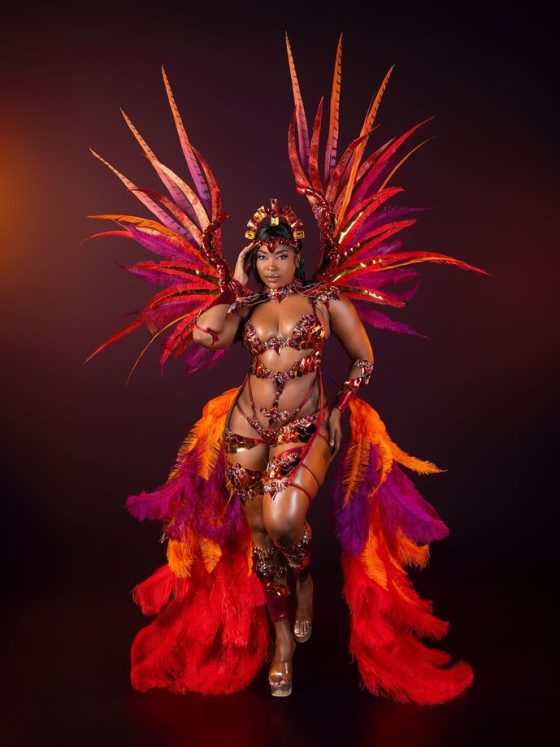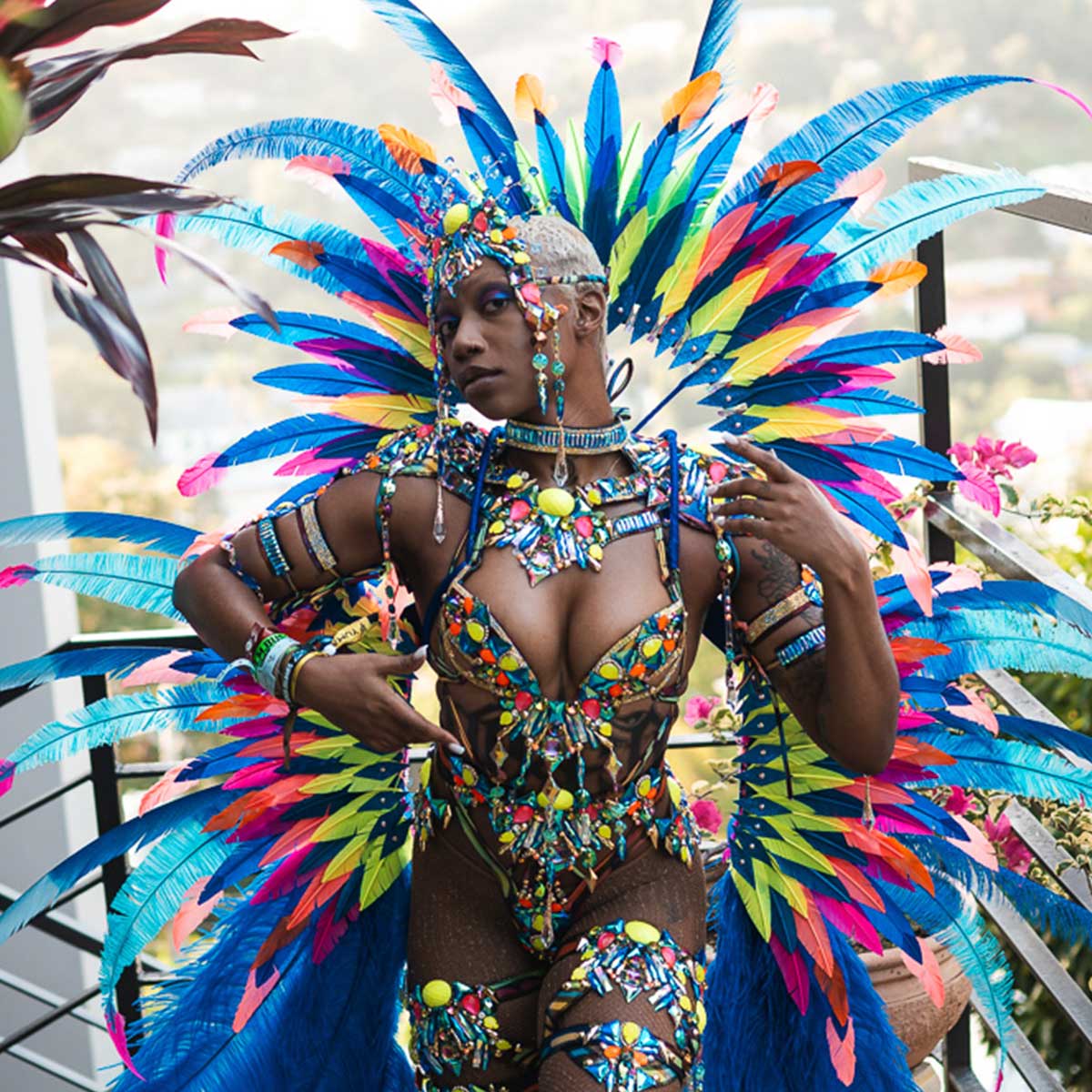
A Trinidad Carnival costume is not a single transaction. The consumer price is the most visible number. Still, it is only the entry point into a value chain whose structure determines who benefits from the annual expenditure that hundreds of thousands of masqueraders make. Understanding what a costume actually costs requires separating five distinct figures: what the consumer pays, what the band retains, what is spent on imported components, what reaches the artisans who make the costume, and what is protected as brand value at the institutional level. These five numbers are not the same, and in some cases they move in opposite directions. That is the economic story underneath the Carnival.
A frontline Trinidad Carnival costume can cost up to $2,500 or more, but the larger question is where that money goes: through band operators, imported components, and the artisans who actually make the costumes.
What the Consumer Pays: The Price at Band Launch
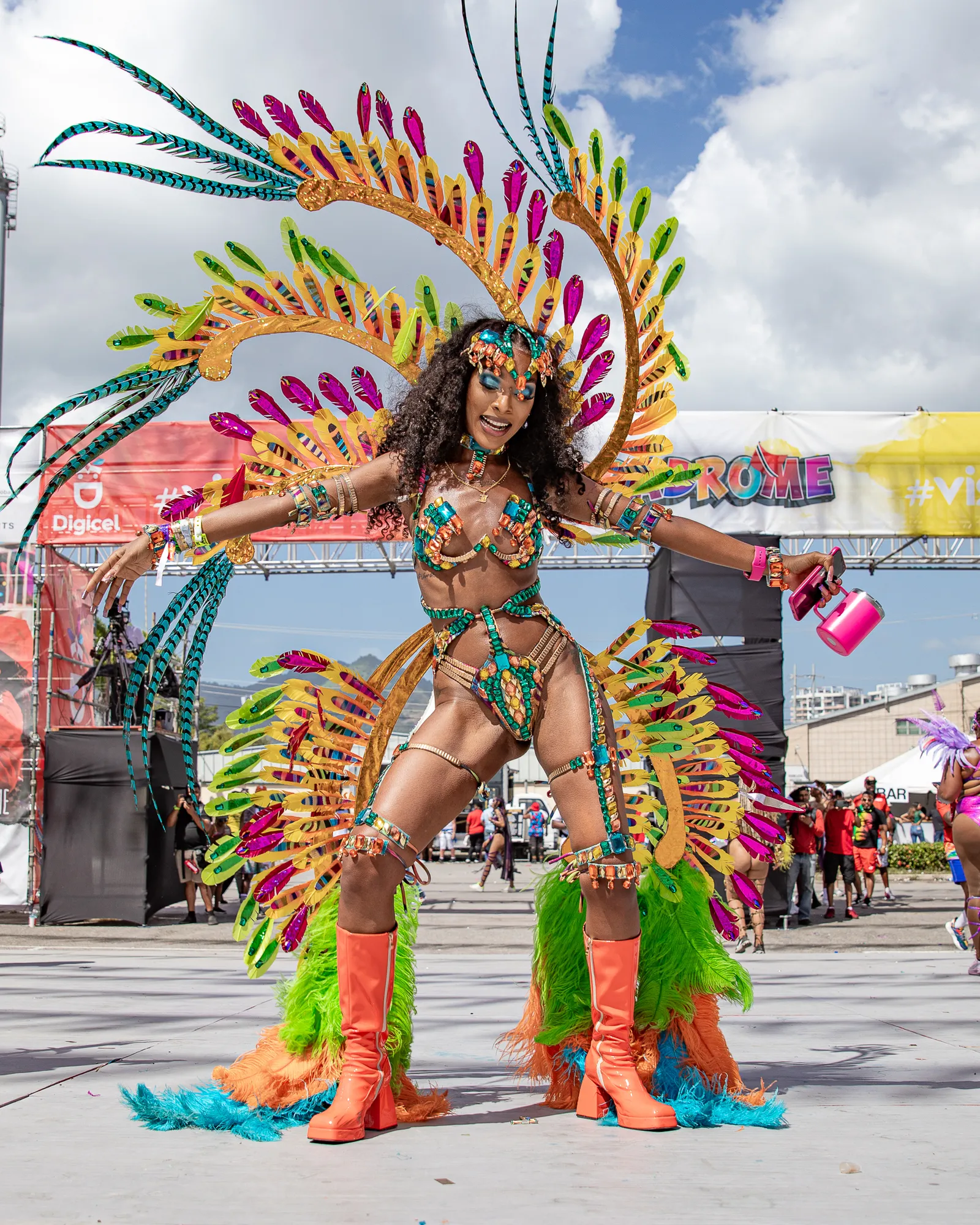
Trinidad Carnival costume pricing varies significantly by band tier, section, and costume category. The range documented across multiple independent planning guides for recent Carnival seasons runs from approximately US$500 for a basic backline section in a mid-tier band to US$2,500 or more for a premium frontline section in a top-tier all-inclusive band, as confirmed by Carnival Glam Hub and MasXWorld’s pricing breakdown.
The averages documented by MasXWorld for top-tier all-inclusive bands are more specific: female frontline costumes average US$1,000 to US$1,200, female backline costumes average US$800 to US$900, and male costumes average approximately US$750. As Limin’ Professionals’ costume guide documents, these figures cover the costume and the all-inclusive service package, typically including meals, unlimited drinks, security, medical provision, and transport along the Carnival route. Separating what the consumer pays for the physical garment from what they pay for the road experience is not straightforward, because top bands do not publish a cost breakdown. Consumer prices have also risen significantly over two decades as the all-inclusive format became dominant at the premium tier, partly driven by diaspora visitor demand.
What the Band Retains: Revenue Structure
The revenue a mas band retains from costume sales is not publicly disclosed, and no independent audited figures for band revenue or margins are available in the sourcing for this piece. What is documented is the structural scale. A large top-tier band may take 3,000 to 9,000 registered masqueraders per season, as Come to the Islands’ mas band guide documents. At an average registration price of US$1,000 per masquerader, a band of 5,000 masqueraders generates approximately US$5 million in costume registration revenue before deducting costume production, road service, logistics, design, and marketing.
The all-inclusive service structure means a significant proportion of the consumer price pays for logistics consumed on the road rather than embodied in the garment. The Global Carnivalist’s 2017 analysis of Carnival costume pricing argues that the all-inclusive pricing model makes a straightforward comparison between what the consumer pays and what the garment costs effectively impossible, because the two are deliberately bundled. Bands have structural reasons to maintain that bundle.
What Is Spent Offshore: The Imported Components Problem
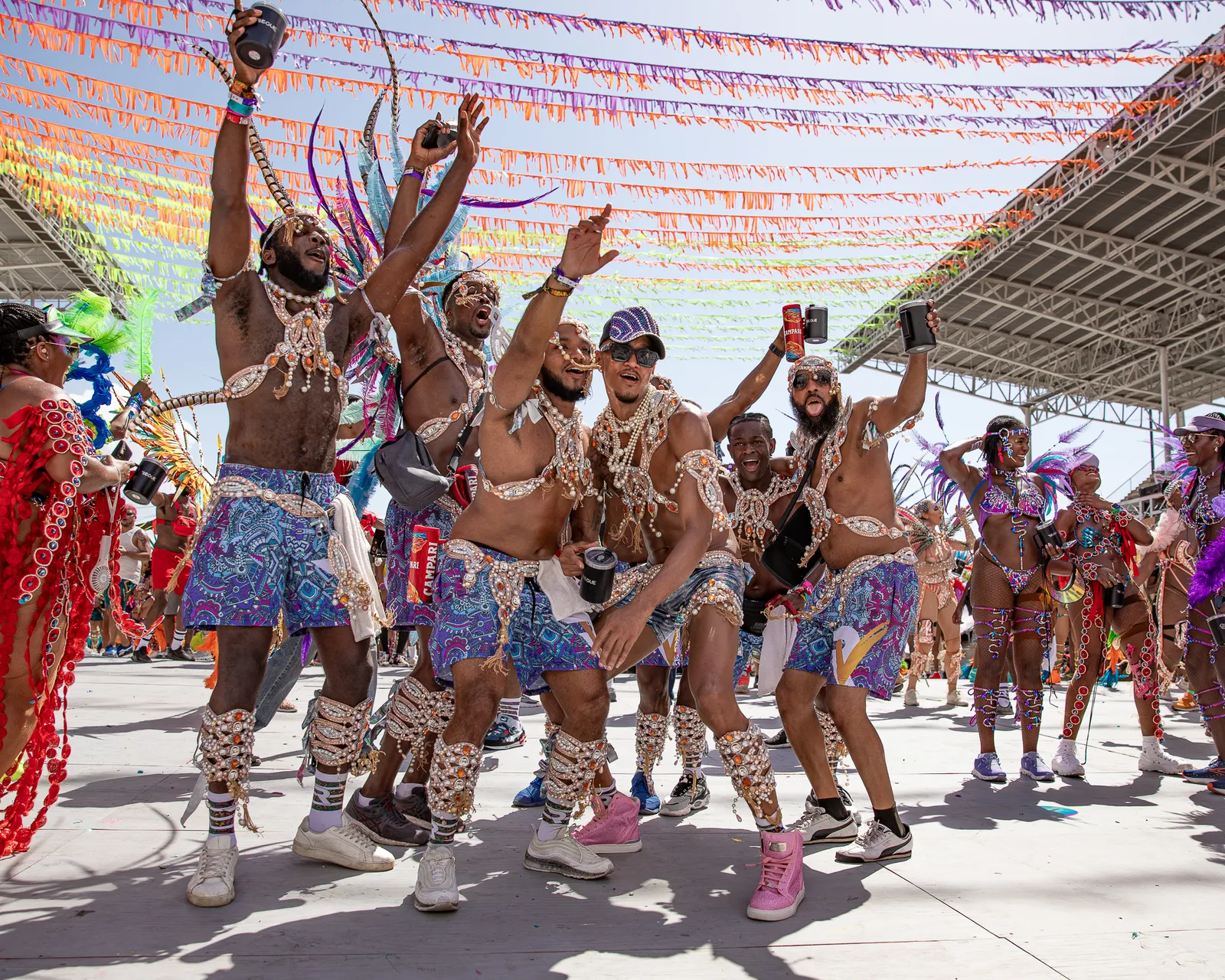
The most fully documented structural problem in Trinidad Carnival’s value chain is the offshore sourcing of costume components. WLRN’s documentary on Carnival manufacturing confirms what the industry has acknowledged for years: a significant proportion of Trinidad Carnival costumes are now mostly supplied and pre-assembled in China. Roland St. George, leader of the award-winning Carnival band D’Krewe, states the commercial logic directly: “The profit margin is better for them to have it done in China, mass-produced there and bring it across here without giving us the money.”
A documented account from Ronnie of Ronnie and Coro Mas Camp confirms that while feather items are still made in Trinidad, belts and many other structural items are now produced offshore, with the observation that “there are featherless birds and hairless horses in China because of Carnival in Trinidad.” The pattern concentrates offshore the value-added work that does not require Carnival-specific knowledge and retains locally only the components that cannot be easily replicated elsewhere. A significant portion of the consumer’s costume spend therefore leaves Trinidad before it reaches any Trinidadian worker.
“The profit margin is better for them to have it done in China, mass-produced there and bring it across here without giving us the money.” — Roland St. George, leader, D’Krewe Carnival Band, documented by WLRN/NPR
What Reaches the Artisans: Local Craft and Labour
The wire-bending tradition, which Georgia Tech’s documentation of at-risk Carnival craft practices describes as a traditional method of constructing costumes since the 1930s, is documented as at risk specifically because the commercial direction of top-tier Carnival has moved toward formats more easily standardised and offshore-produced. Large traditional costumes built on wire-bending techniques are described as dynamic, performative, and so large that the person wearing them appears to carry an unbelievably heavy load: the most technically specific and locally grounded component of the Carnival costume economy.
Artisan compensation is not publicly documented at the industry level, and no systematic wage survey of Trinidadian Carnival costume workers is available in the sourcing for this piece. What is documented is the direction of the structural change. As more costume components are pre-assembled offshore, the local labour required for assembly decreases, and the proportion of the consumer spend reaching local workers contracts accordingly. The cultural argument for Carnival, that it is a living expression of community creative heritage, is made most powerfully by the traditional masquerade and wire-bending craft that the documented structural trend is rendering least commercially rewarded. As Omiren Styles has documented in its analysis of African craft and state disinvestment, when the commercial infrastructure of a creative economy systematically underrewards the practitioners who hold the core knowledge, the knowledge erodes. The Georgia Tech documentation of wire-bending as an at-risk tradition is evidence that erosion is already in progress.
What Is Protected: Brand Value and Intellectual Property
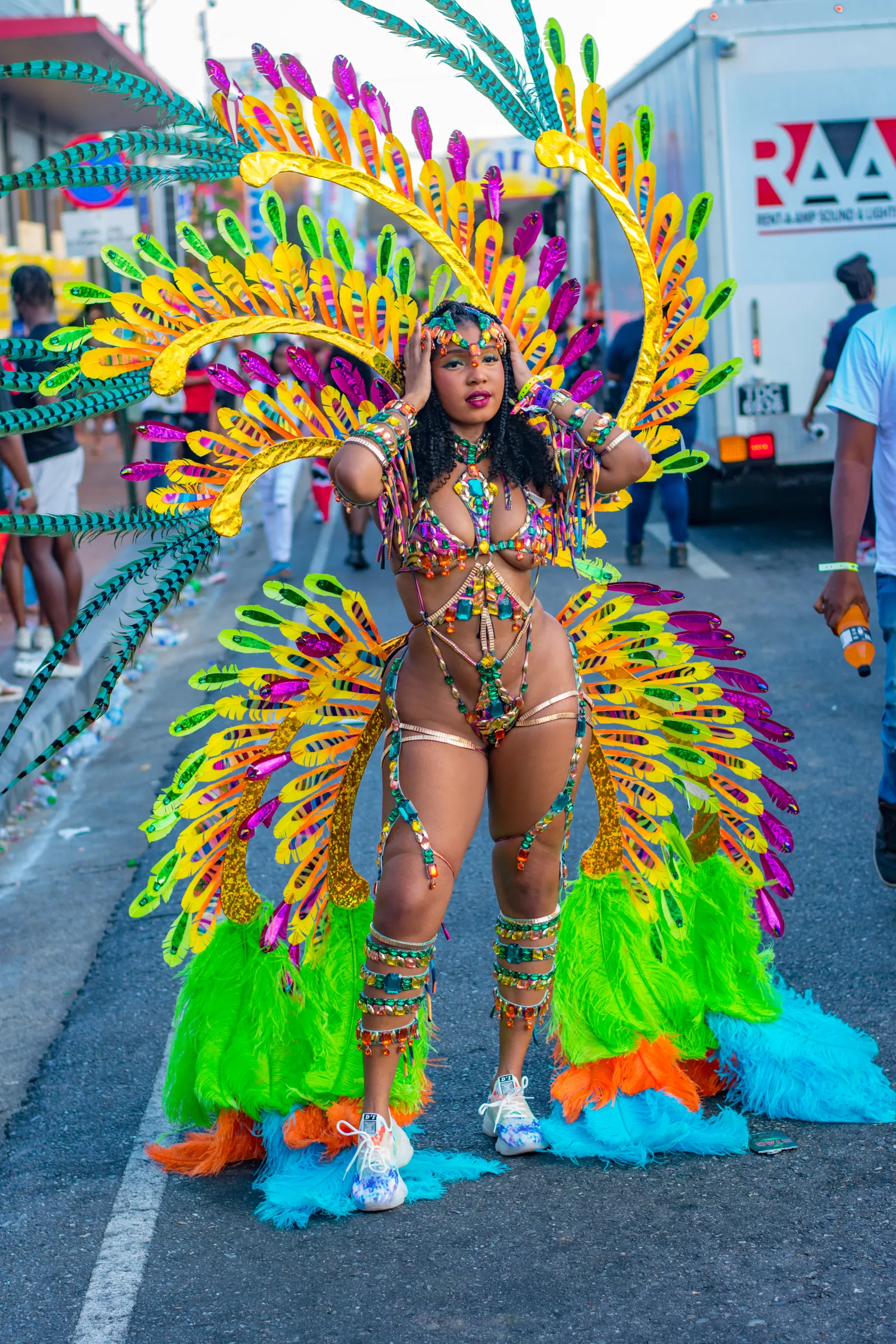
The fifth dimension of the Carnival costume economy is the intellectual property and brand value attached to the mas band itself. Trinidad’s Intellectual Property Office has documented the role of trademarks in protecting Carnival-related brand assets, explicitly addressing Carnival as a domain in which trademark protection is relevant. The branded mas band, as distinct from the individual designer or artisan, holds the most concentrated value in the Carnival costume economy: the name recognition, the registration demand, the road service reputation, and the marketing infrastructure that allows a top-tier band to command premium prices are brand assets, not garment assets.
The IPO’s Carnival Museum Brochure documents the broader intellectual property dimensions of Carnival, including heritage embedded in costume traditions not currently protected in ways that benefit individual artisans, designers, or community practitioners who developed them. This is the same structural pattern Omiren Styles has documented across multiple African and Caribbean creative industries: value created by community knowledge concentrates at the institutional level, in the brand or the platform rather than the individual practitioner, systematically underrewarding the originators of the tradition.
The Omiren Argument
Trinidad Carnival costume economics is a compressed version of a value-capture problem Omiren Styles has documented across multiple African and Caribbean creative industries. As Omiren Styles has argued in its analysis of the shea butter value chain, the distinction between who creates the value and who captures it is the central economic question in any creative or agricultural industry built on community knowledge and skilled labour. In Carnival costume economics, the creation and the capture are structurally separated: the artisans who developed and maintain the wire-bending and feather-assembly traditions that make elaborate Carnival costumes distinctive are not the parties holding the brand equity, the trademark protections, or the offshore sourcing contracts that determine how consumer spend is distributed.
The all-inclusive model has driven consumer price escalation while simultaneously reducing the proportion of that consumer spend reaching local artisans, by moving the cost centre toward road services and offshore components and away from local craft labour. As Omiren Styles has documented in its analysis of the Ankara economy, the question of who captures value in a cultural textile economy is never settled by the price on the tag. It is settled by the structure of the supply chain that produced it.
A frontline Carnival costume can cost US$1,200. The artisan who bent the wire in the backpiece may receive a fraction of that. The band whose name is on the registration form holds the brand equity. That is the value chain. The question the Carnival industry has not yet answered is whether it can be restructured before the craft knowledge that justifies the premium disappears.
ALSO READ
- The Ankara Economy: Who Is Actually Capturing the Value?
- The African Origins of Carnival Costume: Feathers, Beads, and the Masquerade Tradition
Frequently Asked Questions
How much does a Trinidad Carnival costume cost?
Pricing varies by band tier, section, and costume category. The documented range across multiple independent sources for recent Carnival seasons runs from approximately US$500 for a basic backline section in a mid-tier band to US$2,500 or more for a premium frontline section in a top-tier all-inclusive band. MasXWorld’s pricing breakdown documents averages for top-tier all-inclusive bands: female frontline US$1,000 to US$1,200, female backline US$800 to US$900, male approximately US$750. These figures include the road service package.
What is the difference between frontline and backline?
As Limin’ Professionals documents, frontline costumes are the elaborate feature pieces with more embellishment and a higher price. Backline costumes share the section’s design language at a more accessible price point with a simpler build. The difference is about visibility and spectacle: frontline is for the masquerader who wants the statement piece, backline for the one who wants to be in the section without the premium of the feature costume.
Where are Trinidad Carnival costumes made?
A significant proportion of Trinidad Carnival costumes are now supplied and pre-assembled in China, as documented by WLRN’s reporting on Carnival manufacturing. Local production remains strongest in feather assembly and wire-bending. Belts and other structural elements are documented as predominantly imported. The shift toward offshore production has been driven by cost: the profit margin is documented as better when components are mass-produced in China and imported rather than made locally.
Do local artisans benefit from the high costume prices?
Artisan pay is not publicly documented at the industry level. What is documented is the structural direction: as more costume components are pre-assembled offshore, the proportion of consumer spend reaching local workers contracts. Georgia Tech documents the traditional wire-bending craft as an at-risk tradition, partly because the commercial direction of top-tier Carnival has moved toward formats that are more easily standardised and offshore-produced. Precise artisan wage data is not available in published sources.
Who holds the brand value in the Carnival costume economy?
The mas band holds the most concentrated brand value: name recognition, registration demand, road service reputation, and the marketing infrastructure that allows a top-tier band to command premium prices. Trinidad’s Intellectual Property Office has documented the role of trademark protection in Carnival-related brand assets. Individual artisans, designers, and community practitioners who developed the costume traditions are not the primary holders of the brand equity those traditions justify.