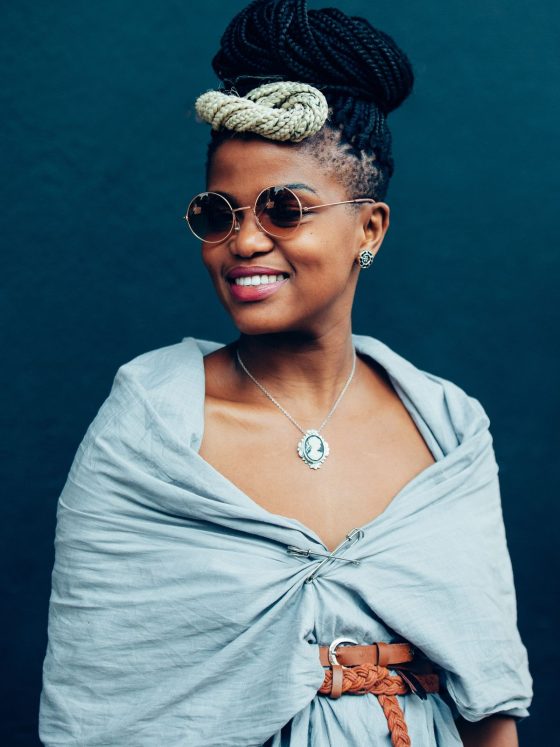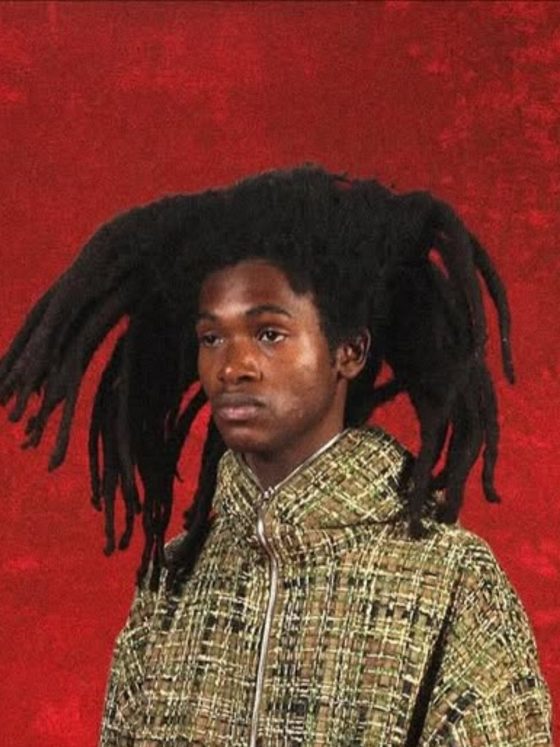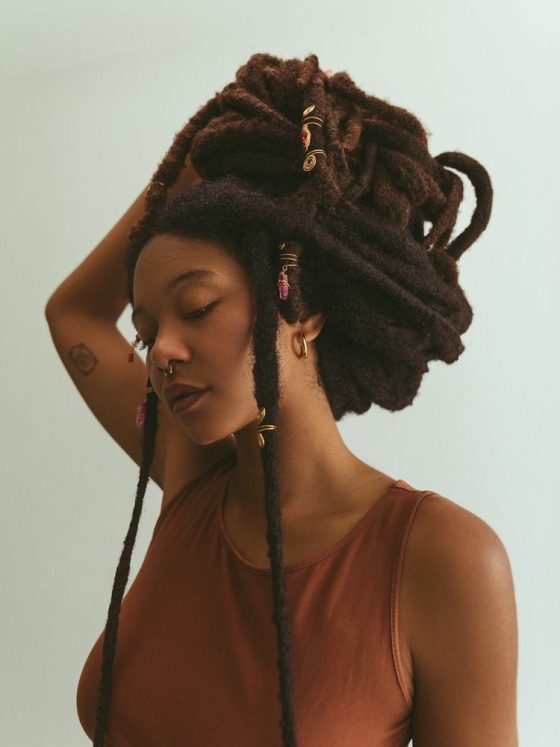
Habesha hairstyles in Ethiopian and Eritrean communities are more than beauty choices. Braids, locks, and updos can communicate identity, life stage, regional belonging, and ceremonial role, with styles such as Albaso and Shuruba carrying especially strong cultural recognition in highland communities. The coding is not fixed or universal: it varies by region, family, generation, and occasion. But within the communities that practise these traditions, hair is often read as carefully as it is styled.
The term “Habesha” is most commonly used for highland Ethiopian and Eritrean communities, particularly those speaking Semitic languages such as Amharic and Tigrinya, including Tigrayan, Amhara, and related groups. The braiding traditions most strongly associated with this label are Albaso and Shuruba, which are the most widely documented and the most consistently named across available sourcing. Other styles, including Shup Shup, Balaza, Fulata, Marida, and various crown updos, appear across community and diaspora contexts and are included here as variants rather than fixed universal categories, since naming conventions vary between regions, generations, and sources.
This piece documents Habesha hairstyling as a cultural field rather than a single fixed system. As Omiren Styles has documented in its analysis of cornrow traditions across the African diaspora, braiding traditions across the continent carry social meaning that is specific to community context rather than generalisable across regions. The same principle applies here.
Explore Habesha hairstyling traditions in Ethiopian and Eritrean communities and how braids, locks, and updos can signal identity, status, and cultural meaning across generations.
The Cultural Field: What “Habesha” Means in Hair Context
The term Habesha refers most commonly to people from the Ethiopian and Eritrean highlands, particularly those who speak Semitic languages such as Amharic and Tigrinya. This includes Tigrayan, Amhara, and related communities whose cultural practices overlap significantly even though they are distinct ethnic groups. In hair terms, “Habesha hairstyles” usually refers to the braiding traditions most strongly associated with these highland communities. These are not the only Ethiopian or Eritrean hairstyles, and the term should not be taken to neatly cover all hair traditions from either country, which contain many other ethnic groups with their own distinct practices.
Habesha hairstyles are the styles most commonly seen at weddings, holidays, church ceremonies, and cultural events both in the Horn of Africa and in diaspora communities. They are part of a broader Ethiopian and Eritrean cultural landscape that has many other ethnic hair traditions. Understanding Habesha hair requires acknowledging both its specificity to highland communities and its place within a larger East African hair ecology where braiding, locking, and ornamentation have long been used to communicate belonging, status, and ritual participation.
Albaso and Shuruba: The Core Styles
Albaso Braids
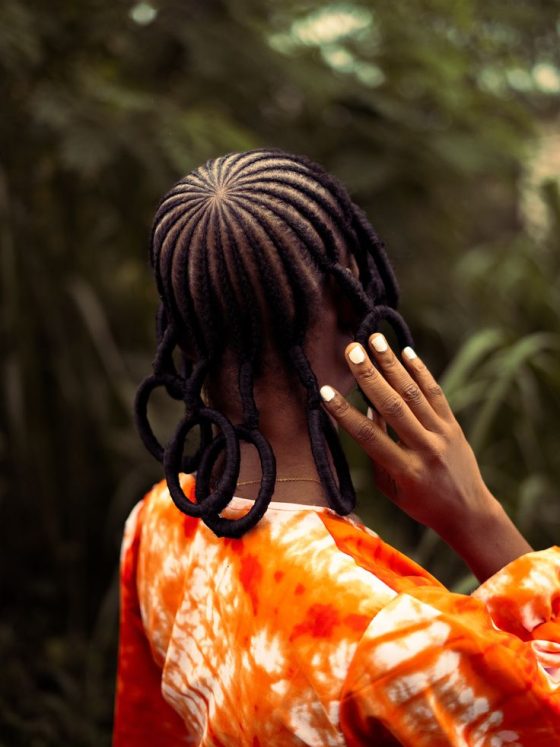
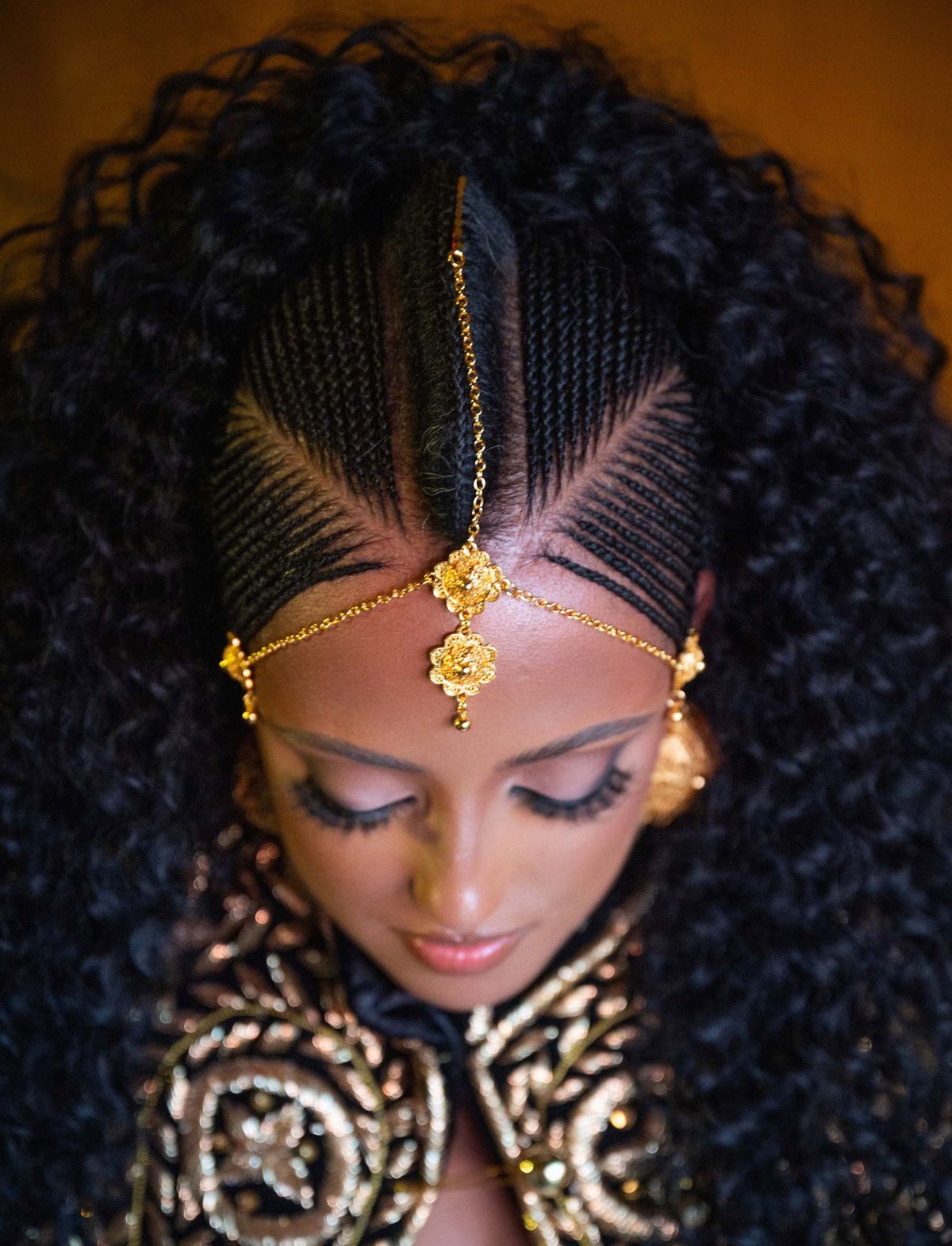
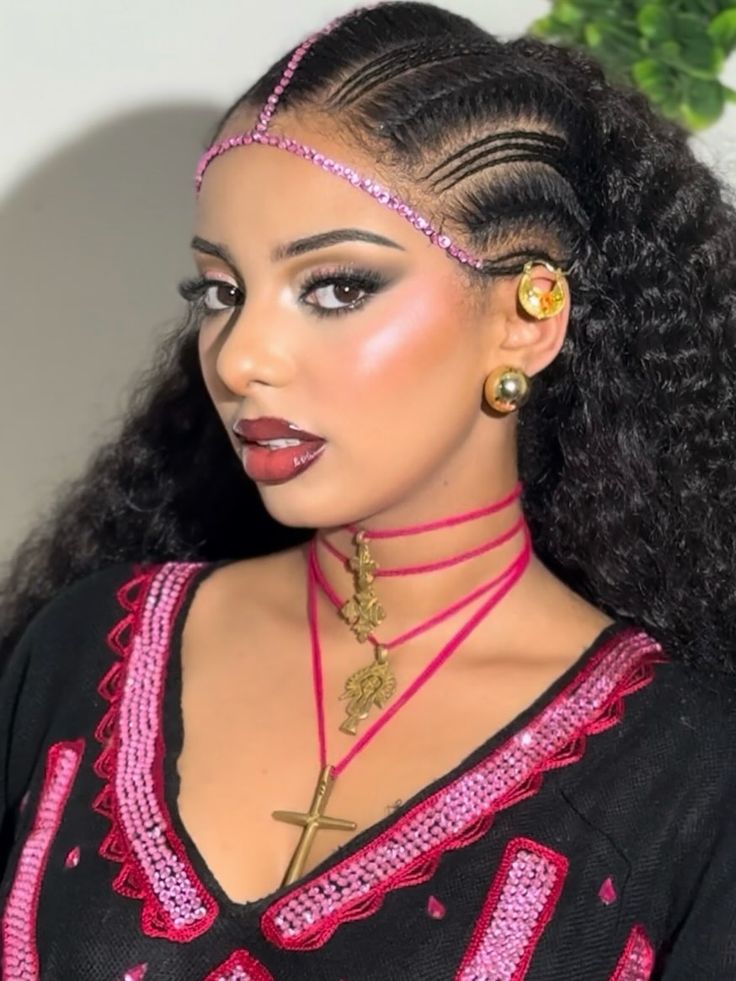
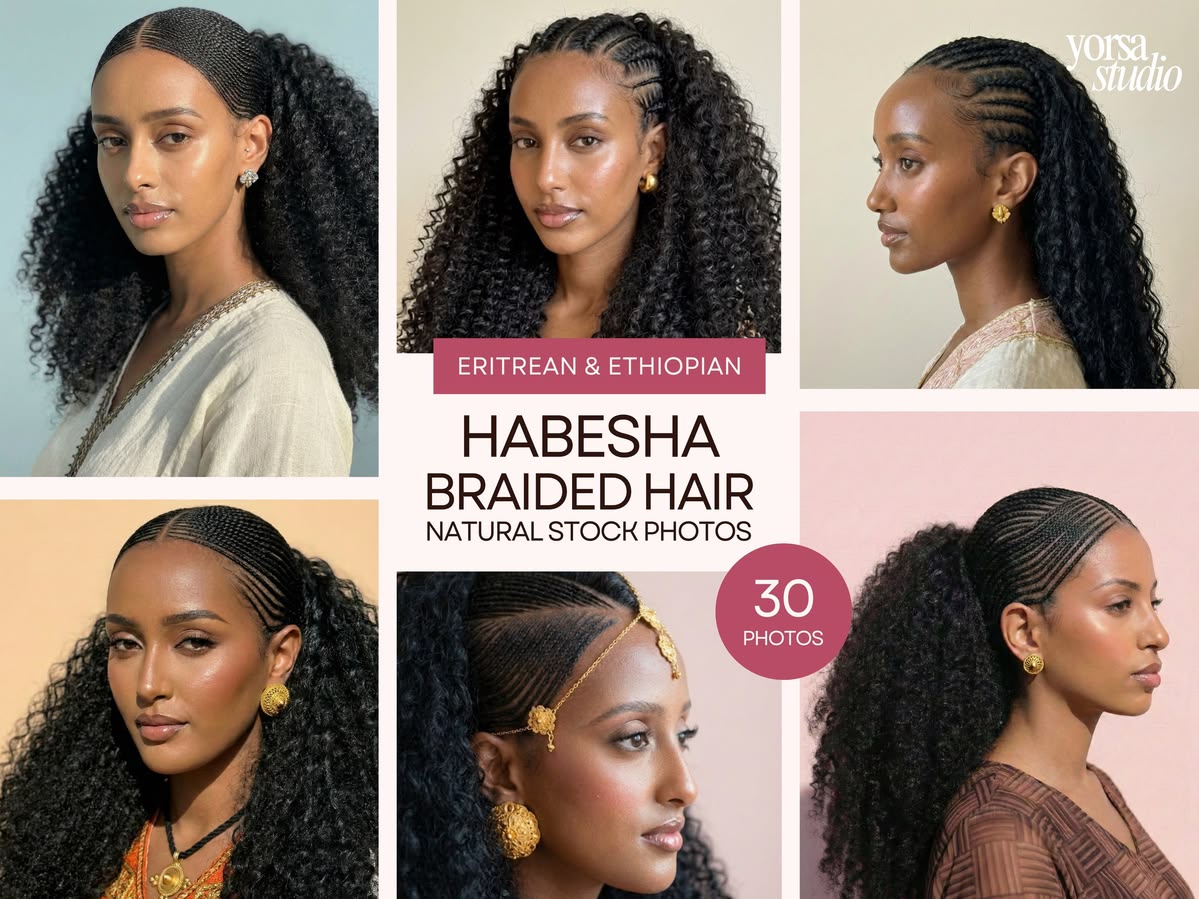
Albaso braids are generally five to seven thick cornrows at the front, alternating with thinner cornrows, and ending in a voluminous section of loose, curly hair at the back. The thick rows are sometimes braided over rolled hair tubes to create height and prominence. As documented by AfroculturE’s coverage of Ethiopian braiding traditions, this style is particularly associated with northern Ethiopia and Eritrea, especially among Tigrayan and Amhara communities. It is often worn for special events, ceremonies, and celebrations, where it can function as a visual marker of cultural pride and festive identity.
Albaso braids are sometimes called “Tigray braids” because of their strong association with Tigrayan cultural identity. The size and thickness of the braids, the number of rows, and the volume of the back section vary by personal taste, regional preference, and the formality of the occasion. In diaspora communities, as documented by EthiopianBusinessReview’s coverage of diaspora hair culture, they are frequently worn at weddings, cultural nights, and other events where Habesha identity is being consciously celebrated.
Shuruba Braids
Shuruba braids are smaller, more intricate twists or cornrows that usually head straight back, tightly woven to the scalp in detailed patterns. They are often styled as half-up, half-down looks, with the back left loose and curly. Like Albaso, Shuruba is culturally legible within the community: the difference between the two styles, in number of rows, thickness, and the way the back is styled, can signal subtle variations in regional origin, occasion, or personal taste. Shuruba is often seen as slightly more everyday than Albaso, though elaborate versions are also worn for major events.
Both styles can be enhanced with additional braids across the forehead, crown-like arrangements, or decorative elements such as beads, cuffs, and colourful threads. As 1blessednatural’s documentation of traditional Ethiopian hairstyles confirms, these styles remain recognisably Habesha in structure and feel even when adapted across different regional contexts and diaspora settings.
Other Styles: Variants and Related Traditions
Shup Shup, Balaza, Fulata, and Marida
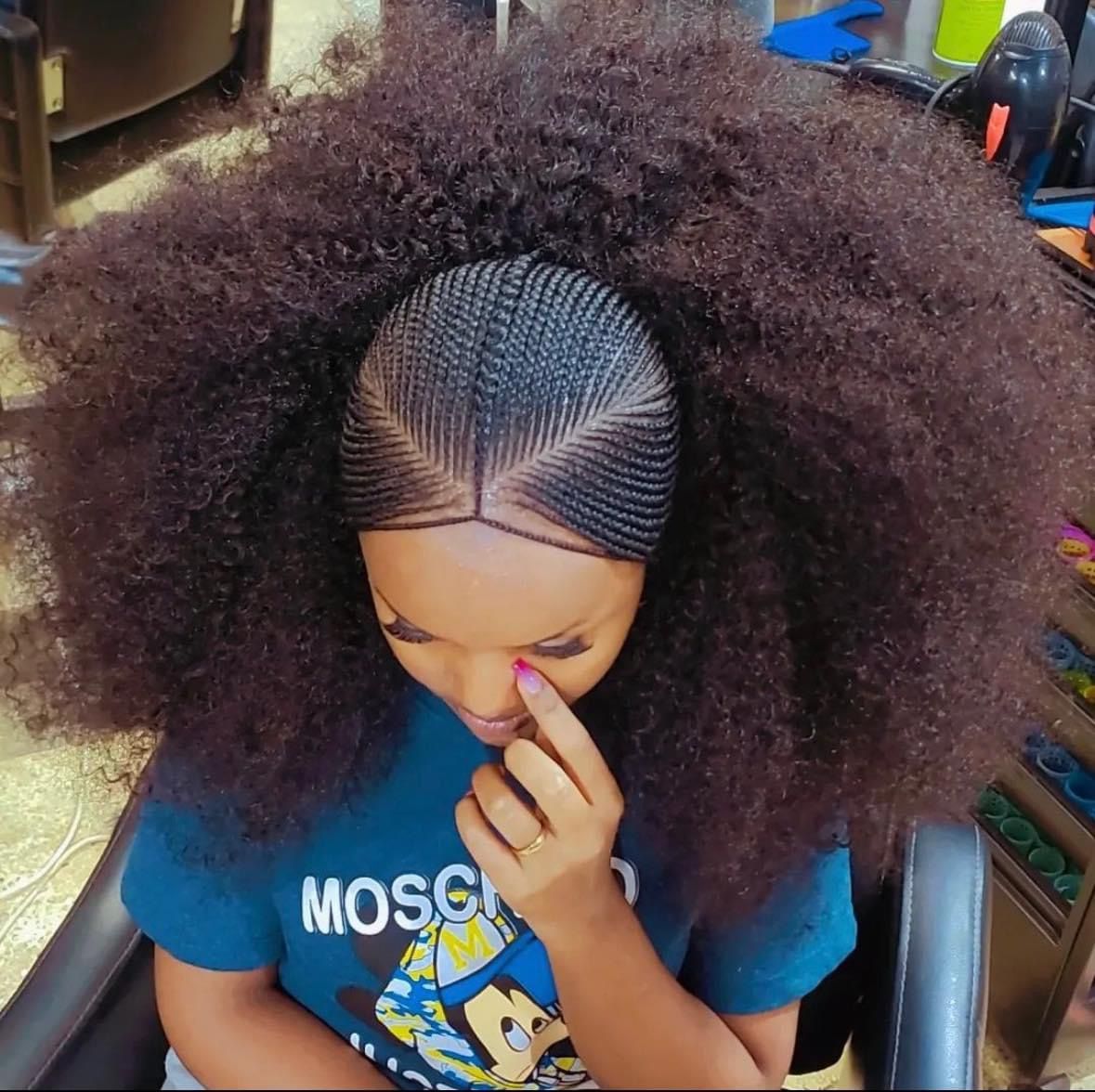
Beyond Albaso and Shuruba, several other braided and updo styles are commonly cited in Ethiopian and Eritrean contexts, though naming conventions vary across sources and regions. These are best understood as locally used or commonly cited variants rather than fixed universal categories. Shup Shup refers to very fine, intricate cornrows covering the scalp in detailed patterns, often worn by younger women and girls and sometimes dressed up with accessories for ceremonies. Balaza is sometimes described as a centre braid with cornrows on the sides creating a structured, symmetrical look. Fulata describes a braided ponytail with extensions. Marida refers to a braided bun or updo frequently used for formal events and weddings. Each of these sits within a broader Habesha braiding vocabulary where the same basic techniques, cornrowing, braiding over tubes, wrapping, and updo construction, are recombined in different ways.
Crown braids are elegant styles featuring a large braided updo resembling a crown, often worn for weddings and formal events. These can incorporate elements of Albaso, Shuruba, or Shup Shup, with beads, threads, combs, or metallic accessories added for a festive, ceremonial look.
Kunama and Related Traditions
The Kunama people of Eritrea and Ethiopia offer a useful comparison for understanding the broader East African context in which Habesha hair traditions sit. Kunama women have historically worn intricate braids and locks that can signal beauty, status, and marital position, with specific styles for young girls, married women, and elders, often including beads, cowrie shells, and forehead fringe elements. These traditions carry spiritual meaning related to ancestors and rites of passage. Kunama hair practices are distinct from Habesha traditions and should not be presented as proof points for Habesha-specific meanings. They are included here as evidence that Habesha braiding is part of a broader East African ecosystem in which hair serves as a medium of cultural communication, without suggesting that the specific codes transfer from one community to the other.
What Habesha Hairstyles Can Signal
In Ethiopian and Eritrean communities, hairstyles are not typically chosen randomly. They exist within a system of non-verbal communication that academic work on Ethiopian hairstyles, including research cited by EthiopianBusinessReview, confirms can convey information about social status, age, marital status, and ethnic identity. The specific signals vary by region, generation, and context. What follows is a description of the kinds of meaning that are commonly associated with these styles, not a fixed code that applies universally.
Ethnic and Regional Identity
Albaso and Shuruba are strongly associated with Tigrayan and Amhara highland cultures. The way braids are arranged, the number of rows, and the volume at the back can hint at regional origin or family tradition. This association is not absolute: diaspora communities in particular may adapt styles across regional boundaries, and younger generations sometimes wear these styles primarily as markers of Habesha identity broadly rather than of a specific sub-group.
Age and Life Stage
In many East African hair traditions, different hairstyles may be worn by girls, unmarried women, married women, and elders, with the style communicating something about the wearer’s position in the lifecycle. Within Habesha communities, younger women often wear lighter, more playful variations of Albaso or Shuruba, while older women may opt for more refined, structured updos or crown braids. These associations are contextual rather than fixed rules.
Marital Status
Certain traditional styles are associated with unmarried women, while others are associated with married women or those who have moved into specific social roles. The presence of additional adornments such as beads, threads, or crown-like arrangements can refine that signal further in some contexts. In wedding settings, a bride may wear an especially elaborate version of a crown braid or updo that can mark her as the central figure in the ceremony. How explicitly marital status is coded through hair varies between communities and generations.
Ceremonial and Spiritual Participation
In some contexts, braided patterns and locks are used during weddings, religious holidays, and other key events. Among Habesha Christians, certain braided styles are commonly worn for church services and wedding ceremonies, where they function as both cultural and spiritual markers. In some communities, hair is understood as a connection to ancestors and a marker of spiritual transitions and blessings. The degree to which this spiritual dimension is foregrounded varies by family and community.
Social Status and Occasion
More elaborate or time-intensive hairstyles can signal how much effort and resources have been invested, which in turn may communicate something about the importance of the occasion and, historically, about social standing. Even today, the complexity of a woman’s braids can indicate whether an occasion is everyday or formal, though the reading depends on the community context.
Techniques, Care, and Modern Adaptation
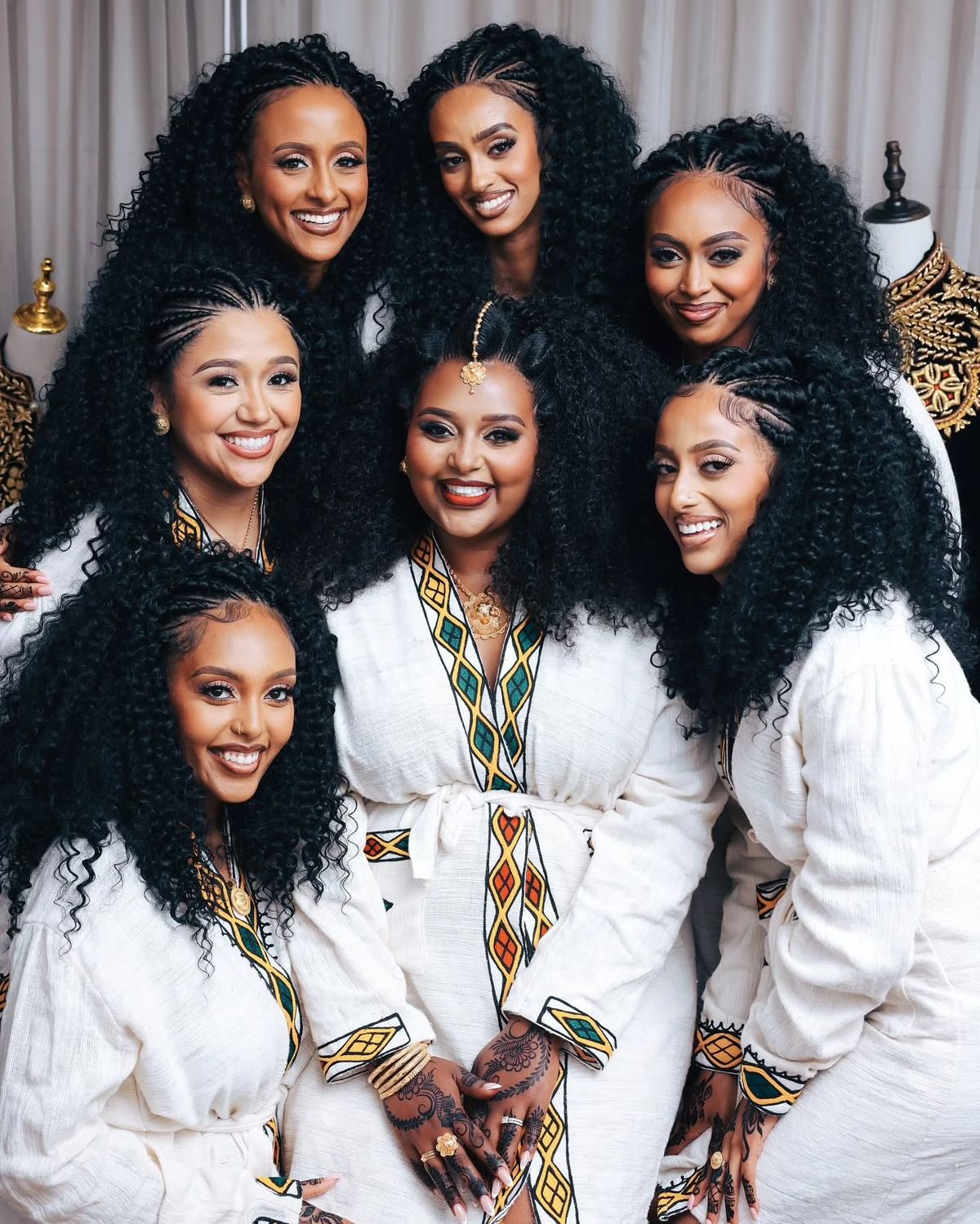
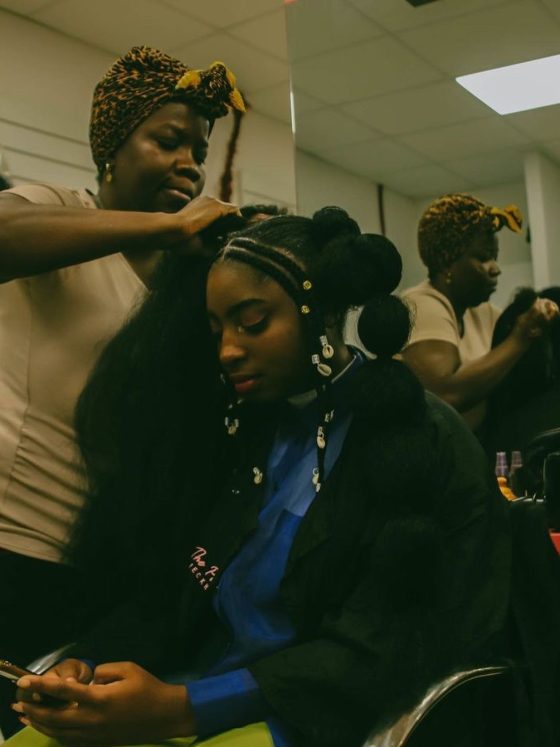
Habesha hairstyling is technically demanding, relying on skill, patience, and often intergenerational knowledge shared between mothers, aunts, sisters, and professional braiders. Common techniques include cornrowing over rolled tubes to create height in Albaso, intricate scalp patterning in Shuruba and Shup Shup, crown and updo construction for formal events, and half-up half-down structures that balance braided fronts with loose curly hair at the back. As Essence’s coverage of Ethiopian beauty traditions documents, modern Habesha women also incorporate coloured extensions, bolder accessories, and variations suited to different hair lengths and textures, blending traditional braiding with contemporary trends.
In diaspora communities, these adaptations are particularly significant. Wearing traditional Habesha hairstyles for weddings and cultural events becomes, as EthiopianBusinessReview’s returning-to-roots coverage documents, both a beauty ritual and a form of cultural reaffirmation: a way of staying connected to highland traditions while living at a distance from them. For many second-generation Habesha women, choosing Albaso or Shuruba for a wedding is a deliberate act of belonging to a visual lineage even when daily life is far from Ethiopia or Eritrea.
Hair, Ritual, and Resistance
Habesha hair traditions sit within a broader East African context where hair has long been linked to ritual, identity, and the maintenance of cultural continuity under pressure. As Omiren Styles has documented in its analysis of locs across African communities, colonial administrations and mission schools introduced grooming codes that treated traditional African styles as untidy or uncivilised, disrupting practices that carried clear cultural and spiritual meaning. Continuing to wear traditional Habesha braids, especially in diaspora contexts, can be both a personal choice and a political statement about belonging and memory.
As Omiren Styles has documented in its analysis of African hair rituals and tradition, the meaning of hair practices in African communities depends on individual, community, and social context rather than a single shared code. That principle applies directly to Habesha hair: when a young woman in Addis Ababa, Asmara, London, or Washington DC wears Albaso or Shuruba braids, the specific meaning she is communicating depends on where she is, who she is with, and what occasion has brought her there.
The Omiren Argument
Habesha hairstyling traditions in Ethiopian and Eritrean communities are not simply beauty practices. They are part of a cultural field in which braids, locks, and updos can communicate ethnic identity, life stage, marital status, and ceremonial participation, making hair a key site of cultural memory and social signalling within these communities. The two most established and widely documented styles, Albaso and Shuruba, carry especially strong cultural recognition in highland communities. Other styles function as variants whose naming and meaning vary by region and generation. The signals that all of these styles can carry are context-dependent rather than fixed: they are read within community settings in ways that are not always legible to outside observers, and they shift between generations and geographies as diaspora communities adapt them.
Most editorial coverage of African hair focuses on West African braiding traditions or Afrocentric natural hair movements, while East African hair cultures like Habesha braiding remain less documented in English-language fashion media. The academic wo. In contrast, the academic work that does exist, as cited throughout this piece, confirms that hair in these communities functions as a non-verbal channel of communication. That is not folklore. It is a living social practice. Understanding it requires the same specificity and care that this series has applied to comparable cultural traditions: naming what is documented, naming what varies, and naming what remains uncertain. As Omiren Styles has argued, African traditions deserve documentation at the level of specificity their complexity requires. Habesha hair is one of those traditions.
The braids are not just decorative. In the right context, they can be messages. Understanding them requires understanding the community that reads them.
ALSO READ
Frequently Asked Questions
What are the main traditional Habesha hairstyles?
The two most established and widely documented traditional Habesha hairstyles are Albaso and Shuruba braids, both strongly associated with Tigrayan and Amhara highland communities in Ethiopia and Eritrea. Albaso features five to seven thick cornrows at the front alternating with thinner rows, ending in voluminous loose curls at the back, and is particularly associated with northern Ethiopian and Eritrean communities. Shuruba consists of smaller, intricate cornrows or twists heading straight back, often styled half-up, half-down. Other styles, including Shup Shup (fine intricate cornrows), Balaza, Fulata, Marida, and crown updos, appear across community contexts as variants whose naming conventions vary by region and generation. As AfroculturE documents, these styles share a common braiding vocabulary but are recombined in different ways depending on occasion and preference.
What can Habesha hairstyles signal in their communities?
Habesha hairstyles can signal ethnic and regional identity, age and life stage, marital status, and participation in ceremonies or rituals, depending on context. Academic work on Ethiopian hairstyles, cited by EthiopianBusinessReview, confirms that hair can function as a non-verbal channel of communication conveying social status, age, marital status, and ethnic identity. The specific signals are context-dependent rather than fixed: the same style may be read differently in different regional, generational, or diaspora settings. The presence of additional adornments such as beads, threads, or crown-like arrangements can refine meanings further in some communities.
Are these styles only for special occasions?
No. While elaborate versions of Albaso and Shuruba are often worn for weddings, church services, and cultural celebrations, simpler versions are worn in everyday life. The level of intricacy, accessory use, and formality typically indicates whether a style is for daily wear or a special occasion. Younger women and girls may wear lighter variations for everyday settings, while more structured updos and crown braids tend to appear at formal events.
How do modern Habesha women adapt these traditions in the diaspora?
Modern Habesha women incorporate coloured extensions, bolder accessories, and variations suited to different hair lengths and textures, sometimes blending traditional braiding patterns with contemporary trends. As EthiopianBusinessReview’s diaspora hair coverage documents, wearing traditional Habesha hairstyles in diaspora contexts becomes both a beauty ritual and a form of cultural reaffirmation. For many second-generation Habesha women, choosing Albaso or Shuruba for a wedding or cultural event is a deliberate act of reconnection, placing themselves in a visual lineage even when daily life is far from the Ethiopian and Eritrean highlands.
Why do these hairstyles matter beyond fashion?
These hairstyles are part of a living cultural communication system that connects individuals to their families, regions, and ethnic groups. As Omiren Styles has documented in its analysis of African hair rituals, the meaning of hair practices in African communities depends on individual, community, and social context. Hair debates within families, about what is too tight, too loose, too traditional, or too modern, are rarely only about aesthetics. They are about how identity is being negotiated across generations and geographies. In diaspora communities specifically, traditional hairstyles become tools of cultural continuity and identity affirmation whose significance often exceeds any particular style’s visual appeal.