The bilateral trade relationship between Africa and the Caribbean, despite an extensive shared history built across the transatlantic slave trade, emancipation, the Harlem Renaissance, Pan-Africanism, and decades of diasporic cultural exchange, has never surpassed 6% of its measurable potential, according to a joint study by the International Trade Centre and Afreximbank released in July 2024. Total current bilateral trade in goods between the two regions stands at $729 million. The same ITC-Afreximbank research found that this figure could reach $1.8 billion annually by 2028 if value addition, trade facilitation, and logistics are prioritised. A subsequent 2025 study raised the five-year growth potential to $2.1 billion. Between Africa and Latin America, the creative economy exchange is even less formally documented than it is with the Caribbean. The trade flows exist informally, culturally, and through diaspora networks. They are almost absent from trade data and from fashion industry intelligence reporting.
Meanwhile, the Boston Consulting Group projects that annual Global South trade will approach $14 trillion by 2033, with South-South trade growing at 3.8% annually compared with 2.2% for North-North trade. Intra-African trade alone rose 12.4% to $220.3 billion in 2024. The combined fashion and apparel markets of Africa, the Caribbean, and Latin America collectively represent a multi-hundred-billion-dollar consumption base with shared aesthetic traditions, aligned cultural narratives, and almost no structured commercial trade between them in fashion specifically. That is the opportunity. The fact that it has not been built is not a market failure. It is an infrastructure failure, and infrastructure failures can be corrected.
The Africa-Caribbean bilateral trade relationship has never surpassed 6% of its potential. The Africa-Latin America creative exchange is almost entirely unmeasured. This article examines why South-South fashion collaboration is the most underbuilt commercial opportunity in the industry and what is beginning to change.
The Scale of What Is Not Being Traded
The Global South’s fashion and creative economies are large enough individually to constitute a significant commercial argument for exchange. Africa’s apparel market reached $70.6 billion in 2024 and is projected to reach $89 billion by 2029. The BCG’s March 2026 analysis of Africa’s creative industries identified the creative segment of the fashion value chain as generating between $12.4 billion and $18.6 billion in economic value. Latin America’s fashion apparel market was valued at $87.9 billion in 2024 and is projected to grow at a CAGR of 4.4% through 2031. The Latin fashion market, including accessories and footwear from Latin American designers, was valued at $28.5 billion in 2024 and is projected to reach $53.7 billion by 2033. The Caribbean’s contribution to this combined figure is difficult to isolate precisely, but ITC and Afreximbank have both identified textiles, ceramics, and craft production as priority sectors for Africa-Caribbean trade development, and Trinidad and Tobago’s government has formally identified fashion as a critical industry for export promotion through its Fashion Value Chain Investment Programme.
The structural reason these markets do not trade with each other in fashion is not the absence of creative output, consumer demand, or cultural affinity. It is the specific character of trade infrastructure. Logistics between Africa and the Caribbean are routed almost exclusively through North American or European hubs, making direct trade prohibitively expensive and slow. Payment systems between African and Caribbean currencies have not been integrated, meaning transactions require hard-currency conversion, with associated costs and exchange-rate risk. The ACTIF2025 communique from Grenada in July 2025 named direct air and maritime links between Africa and the Caribbean as an explicit policy priority requiring fast-track implementation. The CARICOM Payment and Settlement System, being developed by Afreximbank and CARICOM central banks and designed to integrate with Africa’s Pan-African Payment and Settlement System, is the specific mechanism being built to address the currency conversion problem. Neither of these infrastructure pieces existed in any operational form before 2022. Their absence explains the 6% utilisation figure. Their development explains why the ITC-Afreximbank projection of $2.1 billion growth over five years is a realistic rather than aspirational number.
Between Africa and Latin America, the trade data gap is even more pronounced. The IDB’s 2025 Latin America Trade Trends Estimates noted that LAC’s largest export growth in 2024 came from Asia, excluding China, and from less traditional partners in the Middle East and Africa, indicating the trajectory is moving in the right direction on the LAC side. But Africa-to-LAC and LAC-to-Africa creative economy flows are not tracked as a category in any of the major trade reporting frameworks. Intra-LAC trade accounts for only 15% of LAC’s total trade, the second-lowest regional integration ratio globally, according to J.P. Morgan’s analysis, well below Sub-Saharan Africa’s equivalent figure. Both regions face a common structural problem: primary commodity dependence and underdeveloped intra-regional trade, which means neither has built the horizontal trade infrastructure that would make South-South creative economy exchange commercially viable at scale.
Where the Cultural Foundation Already Exists and Why It Is Not Enough
The argument for South-South fashion trade between Africa, the Caribbean, and Latin America is not that these regions need to build a cultural relationship. The cultural relationship is among the deepest in the world. The transatlantic slave trade transported between twelve and thirteen million Africans to the Americas over three centuries. The aesthetic consequences of that forced migration shaped every dress tradition in the Caribbean and in the Afro-descendant communities of Latin America. Yoruba orisha aesthetics inform Candomblé ritual dress in Brazil. Kongo dress vocabulary survives in Haitian Vodou ceremonies. Akan textile traditions are present in Caribbean diaspora fashion in London, New York, and Toronto. Itsekiri and Ijaw garment traditions from the Niger Delta have parallels in the dress of Afro-Venezuelan and Afro-Colombian coastal communities. This is not cultural similarity. It is cultural continuity, maintained across three centuries of enforced separation and documented by historians, anthropologists, and the designers working in each tradition today.
The cultural foundation is not what is missing. What is missing is the commercial infrastructure that converts cultural affinity into trade flows. The UNCTAD Creative Economy Outlook 2024 reported that global creative goods exports reached $713 billion in 2022, while creative services exports totalled $1.4 trillion. Developing countries have increased their share of creative goods exports from 10% in 2010 to 20% in 2022. But the trade in creative goods that developing countries are generating is directed overwhelmingly toward North American and European markets. South-South creative goods trade between developing countries directly remains marginal across all measured datasets. Trinidad and Tobago named music, film, and fashion as priority export sectors with its Fashion Value Chain Investment Programme. Ghana has a $2.42 billion fashion industry, contributing 3% of GDP. Nigeria’s fashion market is valued at $4.7 billion. These are not small economies with small creative sectors trying to find each other. They are significant markets that have been oriented by historical trade architecture to look north rather than at each other.
The Canex Presents Africa programme includes The Cloth from Trinidad and Tobago as a verified participant in the Tranoï Paris exhibition, alongside brands from across the African continent. This is documented. What has not been documented is a systematic mechanism by which Caribbean or Afro-Latin designers access African retail markets, by which African textile producers supply Caribbean fashion designers directly, or by which any of the three regions’ fashion weeks create a structured commercial exchange rather than a parallel schedule of events. The AfriCaribbean Trade and Investment Forum has been held four times: Bridgetown 2022, Georgetown 2023, Nassau 2024, and Grenada 2025. Over $300 million in deals were announced at ACTIF2025 across infrastructure, manufacturing, logistics, digital services, tourism, and agribusiness. Fashion is listed within creative industries as a stated priority sector. It has not yet generated a dedicated trade mechanism.
What Afreximbank Is Building and Where the Gap Remains
The most active institutional actor in the South-South fashion trade space is Afreximbank, and the architecture it has deployed since 2021 reveals both what is possible and what remains unbuilt. The Canex Presents Africa programme has created a mechanism for African and Caribbean designers to collectively access European markets. Afreximbank’s $3 billion credit facility for CARICOM countries is designed to boost trade infrastructure and SME competitiveness across the Caribbean. The Strengthening AfriCaribbean Trade and Investment Project, spearheaded jointly by Afreximbank and the ITC, is building private-sector-to-private-sector linkages between the two regions through the Caribbean Private Sector Organisation and the African Business Council. The proposed CARICOM Eximbank, to be established as an Afreximbank subsidiary, would create the Caribbean-side institutional equivalent of Afreximbank’s trade finance capacity. The CARICOM Payment and Settlement System, linked to PAPSS, would resolve the currency conversion problem that makes direct trade prohibitively costly.
What the current architecture does not yet contain is a dedicated South-South fashion trade mechanism that connects African designers to Caribbean retail markets, Caribbean designers to African retail markets, or Afro-Latin designers to either. The Canex programme routes African and Caribbean creative talent toward Europe and Japan. That is the direction of its market access logic: from the Global South to global fashion capitals. The reverse direction, building the commercial infrastructure that allows African kente cloth to be sold in Caribbean boutiques, or Caribbean mas camp construction techniques to be adopted as paid expertise by African carnival costume designers, or Afro-Colombian turbante textiles to reach Nigerian consumers directly, has no institutional home and no trade mechanism. The ITC-Afreximbank research identified the creative industries as a priority sector for growth in Africa-Caribbean trade. Neither institution has yet built the specific market access programme that would make fashion the test case for that priority.
The Latin American dimension of this gap is even less developed institutionally. BCG’s Global South analysis identifies South-South trade as growing at 3.8% annually, with Latin America’s largest economies, Brazil, Mexico, and Colombia, increasingly orienting trade toward Asia and Africa. But this orientation is commodity-led. The creative economy exchange between Africa and Latin America runs almost entirely through diasporic community networks, social media, and cultural events rather than through commercial trade channels. Afro-Brazilian designer Lab Fantasma references quilombo history in its collections. Afro-Colombian Johana Bahamón uses Pacific coast weaving traditions in Priah. These aesthetic traditions are cousins to West African textile practices. No commercial supply chain connects them. No trade data captures the potential of that connection. No institution is currently building the market access mechanism that would.
Also Read:
- Canex Presents Africa: What the Afreximbank-Portugal Fashion Week Model Reveals About Entering Europe
- Latin America’s $87.9 Billion Fashion Economy: Where Afro-Descendant Brands Fit, and Where They Are Invisible
- The State of African Fashion 2026: A Data Portrait Across Investment, Manufacturing, Retail, and Export
- Bridging the Investment Gap: How African Fashion Can Attract Capital and Scale
What the Current Macroeconomic Moment Changes
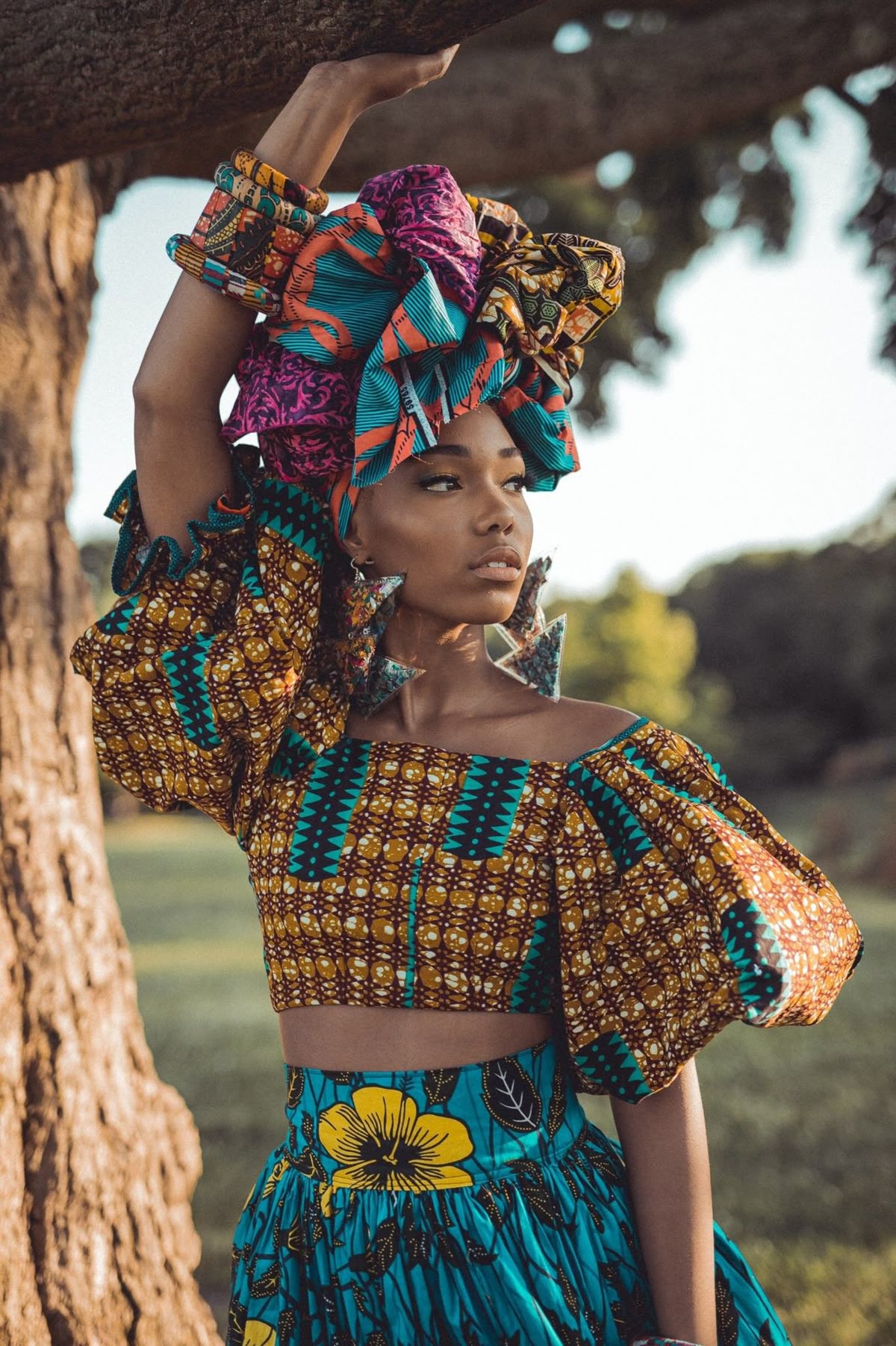
The argument for South-South fashion trade has been made on cultural grounds for decades. The argument is now being made on structural economic grounds by institutions with the financial capacity to act on it, and the macroeconomic conditions that have historically made North-focused trade the path of least resistance are shifting in ways that make South-South alternatives more commercially rational than at any previous point.
Most Caribbean countries now face a blanket 10% US tariff on goods exported to their largest trading partner, which absorbs 40% of Caribbean exports. The US reciprocal tariff regime for African nations ranges from 10% to 50%, with Lesotho facing the single highest tariff of all US trading partners, effectively nullifying preferences previously granted through AGOA. In both regions, the historical logic of orienting trade toward the United States is being disrupted by US trade policy at the very moment when the institutional infrastructure for direct trade between Africa and the Caribbean is being built. The ACTIF2025 communique framed this directly: the Africa-Caribbean alliance is more than just a response to global uncertainty. It is a blueprint for inclusive, resilient, and opportunity-driven trade in the 21st century. This framing is accurate. The macroeconomic disruption is creating the political will to do what cultural affinity alone did not produce.
For Latin America, the EU-Mercosur agreement, finalised in December 2024 after more than twenty years of negotiations, creates a new cross-regional trade architecture that includes Brazil, Argentina, Uruguay, Paraguay, and potentially other Mercosur members. This agreement reduces barriers to product flows and industrial collaboration with Europe. But the same logic applies in the opposite direction. If Latin American fashion exporters are building the institutional capacity to enter European markets through the Mercosur trade architecture, the question is whether that capacity can be turned southward toward Africa. The BCG projection of $14 trillion in Global South trade by 2033, growing at nearly twice the rate of advanced-economy trade, is not a background statistic for this analysis. It is the commercial thesis. South-South trade is projected to outgrow North-South trade for the foreseeable future. Fashion, with its cultural depth, its diaspora demand networks, and its production capacity distributed across all three regions, is one of the sectors most naturally suited to capturing that growth direction.
The Omiren Argument
The Africa-Caribbean-Latin America fashion trade opportunity is underbuilt, not because the cultural case is weak, the market sizes are small, or the political will is absent. It is underbuilt because the specific commercial infrastructure required to make it function has not been constructed: no direct South-South trade mechanism for fashion specifically, no regional fashion marketplace connecting buyers and sellers across the three geographies, no payment integration between African and Caribbean currencies for creative economy transactions, and no logistics corridor that makes direct shipment between Lagos and Port of Spain or between Accra and Bogota commercially viable without routing through London or New York. The $729 million in current Africa-Caribbean goods trade is not an indication of a small opportunity. It is an indication of what 6% utilisation of a relationship looks like. The ITC-Afreximbank projection of $2.1 billion within five years is the 100% utilisation number. The gap between those two figures, specifically in the creative industries sector, is where the fashion trade opportunity lies.
This is the editorial argument Omiren Styles makes by covering the South-South fashion trade as industry intelligence. The three fashion economies this platform covers as a unified civilisational subject, Africa, the Caribbean, and Latin America’s Afro-descendant communities, are not just aesthetically connected. They are commercially connected in ways that have not yet been organised into trade. The West African kente weaver, the Caribbean mas camp seamstress, and the Afro-Colombian Pacific coast artisan are all operating within the same cultural geography and the same structural economic conditions: creative talent embedded in communities with limited institutional market access and almost no direct commercial connection to each other. The platform that names this connection, maps the market opportunity, and tracks the institutional mechanisms being built to enable it is providing intelligence that no other editorial platform is currently offering. The most underbuilt commercial opportunity in African and Caribbean fashion is not Europe. It is each other.
Frequently Asked Questions
1. How much trade currently happens between Africa and the Caribbean in fashion and creative industries?
Total bilateral trade in goods between Africa and the Caribbean currently stands at $729 million, excluding tobacco, arms, and fossil fuels, according to research by ITC and Afreximbank published in July 2024. This figure represents approximately 6% of the relationship’s measured potential. Creative industries, including fashion, textiles, ceramics, and craft production, are explicitly identified by the ITC and Afreximbank as priority sectors for growth. Both institutions project that Africa-Caribbean trade could reach $1.8 billion annually by 2028, with a 2025 study raising the five-year growth potential estimate to $2.1 billion. The creative industries’ share of this growth has not been separately quantified. Still, the ACTIF forums and the Canex Presents Africa programme have already demonstrated that Caribbean designer brands such as The Cloth from Trinidad and Tobago can participate in African-led European market access programmes, establishing a precedent for the kind of collaboration that has not yet been replicated in the reverse direction.
2. What institutional mechanisms are being built to enable South-South fashion trade?
Afreximbank is the primary institutional actor. Its relevant active initiatives include the Strengthening AfriCaribbean Trade and Investment Project in partnership with the ITC; the $3 billion credit facility for CARICOM countries to boost trade infrastructure and SME competitiveness; the CARICOM Payment and Settlement System being developed with CARICOM central banks to enable efficient transactions in national currencies, linked to Africa’s Pan-African Payment and Settlement System; the proposed CARICOM Eximbank as an Afreximbank subsidiary; and the AfriCaribbean Trade and Investment Forum, held annually since 2022, which generated $300 million in deals across multiple sectors at ACTIF2025 in Grenada in July 2025. The Pan-African Fashion Alliance, being established by Afreximbank in partnership with the ITC, will provide collective access to high-value markets for African fashion brands. None of these mechanisms currently has a dedicated South-South fashion trade track that connects African designers directly to Caribbean or Latin American retail markets.
3. What are the main structural barriers to South-South fashion trade between Africa, the Caribbean, and Latin America?
Four structural barriers have been consistently identified across the ITC, IDB, and IMF analyses. First, logistics: direct trade between Africa and the Caribbean or Latin America is routed through North American or European hubs, making it prohibitively expensive and slow relative to the commercial opportunity. The ACTIF2025 communique made direct air and maritime links a fast-track policy priority. Second, payments: currency conversion between African, Caribbean, and Latin American currencies incurs costs and exchange-rate risk that bilateral hard-currency trade does not. The CARICOM Payment and Settlement System, linked to PAPSS, is the specific mechanism being developed to address this. Third, market access infrastructure: no B2B trade show, wholesale platform, or retail mechanism currently connects buyers and sellers across these three geographies, specifically in fashion. Fourth, trade data: Africa-Latin America creative economy flows are not tracked as a category in any major trade reporting framework, making investment decisions on the South-South opportunity dependent on projections rather than verified baseline data.
4. Why is the current macroeconomic moment creating new urgency for South-South fashion trade?
Two simultaneous shifts are increasing the commercial rationale for South-South trade over North-focused alternatives. First, US trade policy disruption: Caribbean countries now face a blanket 10% US tariff on goods exported to their largest trading partner. African nations face US reciprocal tariffs ranging from 10% to 50%, with Lesotho’s tariff effectively nullifying AGOA preferences. In both regions, the historical logic of orienting trade toward the United States is being disrupted precisely as the institutional infrastructure for direct trade between Africa and the Caribbean is being constructed. Second, the Global South trade trajectory: BCG projects that annual Global South trade will approach $14 trillion by 2033, with South-South trade growing at 3.8% annually compared with 2.2% for North-North trade. South-South trade is projected to outgrow North-South trade for the foreseeable future. Fashion, with cultural depth, diaspora demand networks, and production capacity distributed across Africa, the Caribbean, and Latin America, is one of the sectors most naturally positioned to capture that growth direction.