From 1 to 4 October 2026, twenty African and diaspora fashion brands presented at TRANOÏ Paris in a dedicated CANEX pavilion at the Palais Brongniart during Paris Fashion Week. Twenty brands, four days, one of fashion’s most commercially serious B2B trade platforms, during the week when the global buyer community is concentrated in a single city. That is a real form of access. It took nine consecutive seasons to build.
Here is what it is not: a purchase order. A confirmed stockist. A delivery record. A reorder—an export contract.
Saying that is not diminishment. It is precision. The most useful thing the African fashion industry can do with the CANEX–TRANOÏ partnership right now is to understand exactly what a B2B pavilion does and does not produce, because the gap between those two things is where most of the work remains. A pavilion can create discovery. Only a buyer committing to an order creates revenue. Understanding the steps between those two outcomes is the commercial education that follows the cultural achievement.
CANEX presented 20 African and diaspora brands at TRANOÏ Paris in October 2026. This analysis explains what a B2B pavilion can offer, what it cannot guarantee, and why the distinction matters for honest reporting on African fashion.
What Happened at TRANOÏ Paris
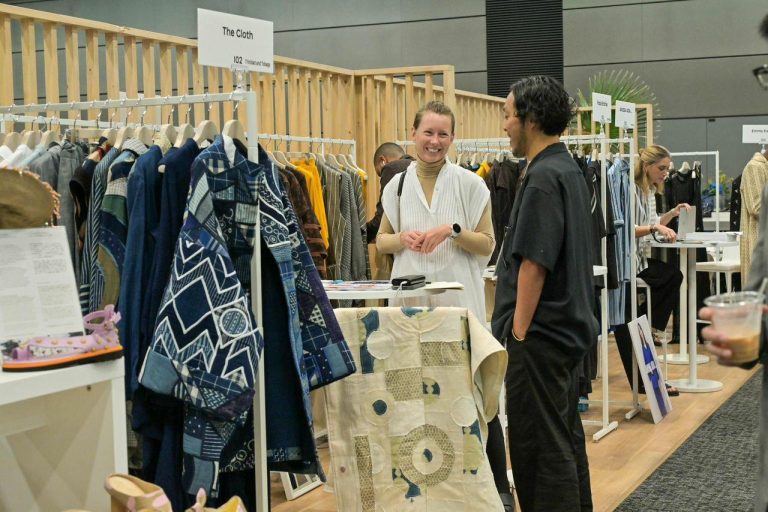
TRANOÏ Paris ran from 1 to 4 October 2026 at the Palais Brongniart, a 19th-century neoclassical building in the 2nd arrondissement that has hosted TRANOÏ’s Paris editions and is a recognised address for B2B fashion trading. TRANOÏ is a business-to-business platform for ready-to-wear and accessories, positioned as a professional destination during Paris Fashion Week for buyers, retailers, press and distribution partners. It is not a consumer fashion show. Visitors are industry professionals assessing products for commercial purposes.
CANEX Presents Africa returned for its ninth consecutive season with a dedicated pavilion. Led by Afreximbank, the African Export-Import Bank, CANEX describes its work at TRANOÏ as a market-access intervention for African and diaspora creative businesses. The 2026 selection, confirmed on TRANOÏ’s official pavilion page, included twenty brands across ready-to-wear and accessories: Angela Brito (Brazil), Aseho (Madagascar), Atlal From Galbi (France), Chuks Collins (Nigeria), Dathonga (Mozambique), Eric Raisina (Cambodia), Ezokhetho (South Africa), Fatma Mostafa Jewellry (Egypt), Kauwri (Kenya), Late for Work (Morocco), M/SA (France), Maliko (Nigeria), Mastewal Alemu (Ethiopia), Maxhosa (South Africa), Oshobor (Nigeria), Sarah Maj (Italy), Subwae (Ghana), Xita (Botswana), Yasss Handmade (Tunisia) and YZA (Morocco).
The published 2026 call for applications described TRANOÏ as a leading B2B platform and said selected designers would exhibit their collections to international buyers, media and distribution networks. The eligibility criteria required at least three years of professional experience and at least two ready-to-wear or accessories collections. Those requirements define who this programme is for: not first-season labels, but established brands with commercial history who are ready to be assessed by professional buyers.
What Market Access Means
Market access begins with the chance to be assessed by the right people. It becomes meaningful only when a brand can turn that assessment into a reliable commercial relationship.
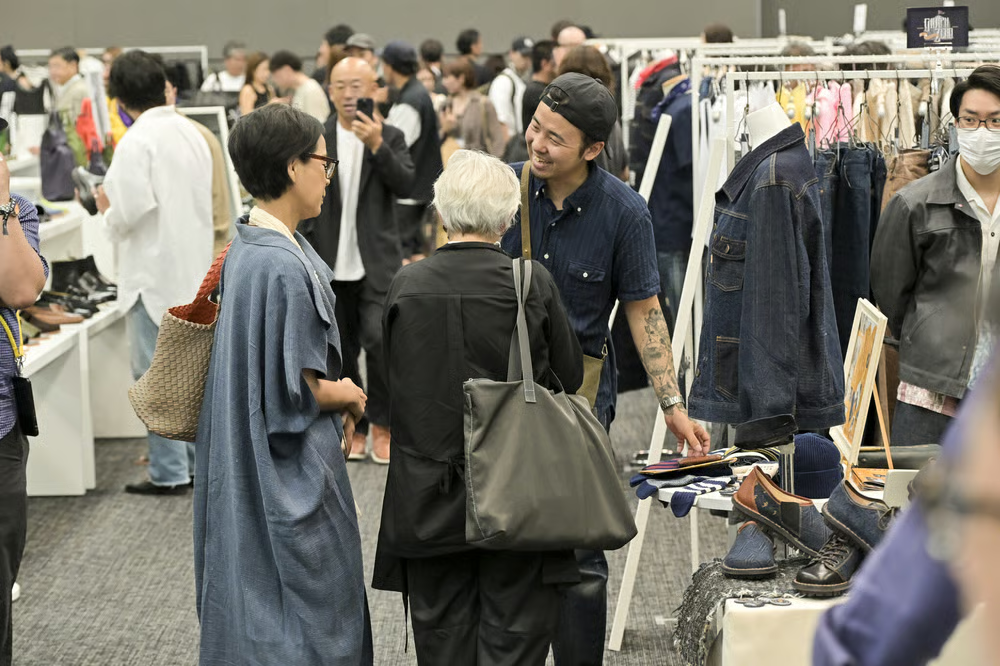
A pavilion at a B2B trade event solves a specific problem: buyers can’t assess a brand they cannot find. The twenty brands in the CANEX pavilion were visible to professional visitors moving through TRANOÏ Paris during the four days of the event. They were in the room. Buyers could see the collections, handle the product, review samples, collect line sheets, ask questions about pricing and minimums, note the designers whose work might be relevant for their store or platform, and schedule follow-up.
That is access. A strong Instagram presence, a Lagos runway credit, or an editorial feature in an international magazine cannot provide that same access. Consumers, editors, buyers, and others discover editorial coverage on an unpredictable timeline. A trade platform attracts buyers who are in the building specifically because they are looking for product to order. The concentration of professional intent makes the trade platform valuable in a way editorial visibility is not.
The selection process adds another layer to that value. A buyer who encounters a CANEX pavilion brand knows that the brand has been through an application process with defined criteria. That is not proof of commercial readiness, but it signals institutional recognition that a buyer can factor into their initial assessment of the brand. The curated pavilion is a credibility endorsement and a logistics solution.
What It Does Not Mean
Four days in a Paris pavilion is four days in a Paris pavilion. It is not a confirmed buyer relationship, a wholesale order, a retail stockist, a product delivered to a store or a customer who has purchased that product and potentially returned for more. Each of those outcomes requires a separate set of things to go right, and none of them is guaranteed by the pavilion alone.
A buyer at TRANOÏ who is interested in a brand from the CANEX pavilion still has to decide whether the product suits their customer. They have to assess whether the pricing works for their store’s margin requirements. They have to determine whether the minimum order quantity fits their buying budget. They have to confirm that the lead time fits their retail calendar. They have to be confident the brand can produce and deliver consistently. They may need to take a sample away, show it to a buying team, get internal approval and then communicate their decision, which may still be a no.
As Omiren Styles has established through its buyer requirements analysis, a buyer who leaves a trade platform without placing an order is not a buyer who was unimpressed by the collection. They may simply not have had the information they needed to decide to order: a current line sheet, a confirmed price in the right currency, a clearly stated minimum order quantity, an honest lead time, a stated delivery window, payment terms, and a named contact for follow-up. A brand that attends TRANOÏ without those elements ready converts access into interest rather than access into orders.
The Buyer-Readiness Test
The CANEX–TRANOÏ programme creates the opportunity for a commercial conversation. The brand’s own commercial preparation determines whether that conversation produces an outcome. These are two different things, and the distinction matters for how the programme is assessed.
A buyer on a trade platform conducts a professional assessment. They look at the collection, but they also assess the brand’s commercial infrastructure: how pricing is presented, how clearly the minimum order and lead time are communicated, how samples are prepared, and whether the person representing the brand can answer commercial questions directly. A brand with strong design and weak commercial documentation leaves the buyer with a more difficult decision than a brand with strong design and clear wholesale terms.
The line sheet is the instrument that converts a buyer’s interest into an order. A brand attending a B2B platform without a current, accurate line sheet covering wholesale pricing, minimum order quantities, available colourways and sizes, lead time, delivery window, and payment terms is missing its most important commercial document. The pavilion puts brands in the room. The line sheet determines whether they leave with a buyer conversation that can progress.
The nine-season continuity of the CANEX–TRANOÏ partnership is relevant here. TRANOÏ director Boris Provost was quoted in FashionNetwork reporting as noting that buyer trust takes time to build and that the partnership has been in place across multiple editions. That statement is attributed and not independently verifiable, but it reflects a commercial reality: wholesale relationships are built over time, not in a single trade-show appearance. A brand that returns to TRANOÏ with better samples, more accurate pricing, and clearer delivery terms in its second or third season is using the access the programme creates to build something durable.
What Should Be Measured Next
The 2026 TRANOÏ edition ended on 4 October. It is too early to assess its commercial outcomes. Buyer decisions can take weeks. Samples may be requested after the event. Pricing may be negotiated by email. Orders may be placed on a buying calendar weeks after the initial conversation. The commercial verdict on any trade platform event is properly taken three to six months after the event, not during it.
The questions worth tracking are specific: which brands received follow-up requests for samples or line sheets? Which secured confirmed stockists? Are any of those brands willing to name them? Were orders placed and fulfilled within agreed windows? Did any first-season orders become reorders? What operational challenges did participating brands encounter after the event, in production, logistics or payment?
Those questions matter because they determine whether CANEX–TRANOÏ is a programme that provides nine seasons of repeated access or nine seasons of access that has been progressively building into commercial relationships for participating brands. Both are possible. The evidence for the second and more valuable outcome requires post-event reporting that tracks outcomes rather than attendance.
As Omiren Styles has argued throughout its coverage of African fashion’s commercial infrastructure, the cultural argument for African fashion has been made and won. The commercial argument requires data. A programme that can show, over time, that participating brands secure confirmed stockists, deliver orders reliably, and build repeat buyer relationships has made the commercial argument. A programme that can show only that it secured a prestigious trade-platform placement for twenty brands each season has made a visibility argument. Both have value. Only one of them is market access in the full commercial sense.
Access Is the Beginning
CANEX at TRANOÏ is significant because it puts African and diaspora fashion brands in the professional environment where buyers work. That is not a small thing. Nine consecutive seasons in the same B2B platform during Paris Fashion Week is the kind of sustained institutional commitment that builds the familiarity and credibility that buyer relationships require. The programme is doing the right thing in the right place.
The fairest description of what the programme provides is also the most accurate one: access to a market-facing context, managed by a credible institutional partner, at a trade platform where professional buyers are present. What that access produces depends on the brands’ commercial readiness and the patience required to convert professional introductions into wholesale relationships over the timeframe those relationships actually take to build.
African fashion has the creative quality, cultural authority, and international attention. CANEX at TRANOÏ is one of the platforms building the commercial infrastructure that converts those three things into revenue. The pavilion is the beginning. Orders, deliveries, reorders, and durable stockist relationships are the outcome. The work between those two points is where market access becomes a fashion business.
ALSO READ
- African Fashion Has Visibility – But Where Are the Buyers?
- What Buyers Need Before They Place an Order
- Why Fashion Weeks Must Deliver More Than a Runway
- A Line Sheet a Buyer Can Act On: The Information That Belongs Beside the Image
- The Global South Made Fashion. It Just Never Got Credit.
Frequently Asked Questions
What is CANEX at TRANOÏ?
CANEX Presents Africa is a market-access programme of the Creative Africa Nexus, an initiative led by Afreximbank, the African Export-Import Bank. At TRANOÏ Paris, it presents selected African and diaspora ready-to-wear and accessories brands within a dedicated pavilion at the B2B trade platform. The 2026 edition was the ninth consecutive season of the partnership.
When did the 2026 CANEX pavilion at TRANOÏ take place?
The 2026 edition took place from 1 to 4 October at the Palais Brongniart in Paris, during Paris Fashion Week. TRANOÏ Paris is a B2B fashion platform for professional visitors, including buyers, retailers, press and distribution partners.
How many brands were in the 2026 CANEX pavilion?
TRANOÏ’s official pavilion page confirmed 20 selected brands across ready-to-wear and accessories. They represented countries including Nigeria, South Africa, Ghana, Ethiopia, Morocco, Kenya, Egypt, Mozambique, Botswana, Tunisia and Madagascar, as well as diaspora designers based in Brazil, France, Italy and Cambodia.
Does exhibiting at a B2B trade platform guarantee wholesale orders?
No. A pavilion at a trade platform can create discovery, buyer meetings, sample requests and commercial conversations. Whether those conversations produce orders depends on the brand’s commercial readiness, the buyer’s interest and requirements, and the subsequent negotiations around pricing, minimums, lead times, delivery and payment. An order is a separate event from an initial buyer contact.
What is the difference between a pavilion and retail distribution?
A pavilion is a shared presentation area within a B2B event. Retail distribution means a retailer has agreed to carry the brand’s products, placed a purchase order, received goods and made them available to customers. A pavilion can create the conditions for a buyer conversation. Retail distribution is the outcome that follows a confirmed order, reliable delivery and customer sell-through.
When can the commercial impact of the 2026 edition be assessed?
Not immediately after the event. Buyer decisions often take weeks after a trade platform, as samples are reviewed, buying teams consult internally and orders are placed on seasonal calendars. A realistic assessment of the programme’s commercial outcomes can be made three to six months after the October edition, once orders, deliveries and any reorders have been confirmed.