As fashion continues to negotiate the relationship between technological efficiency and traditional craftsmanship, certain forms of accessory production remain dependent on skills that cannot readily be transferred to automated systems. Atelier Emine offers a case study in how material, technique and specialised human labour intersect in contemporary handbag making.
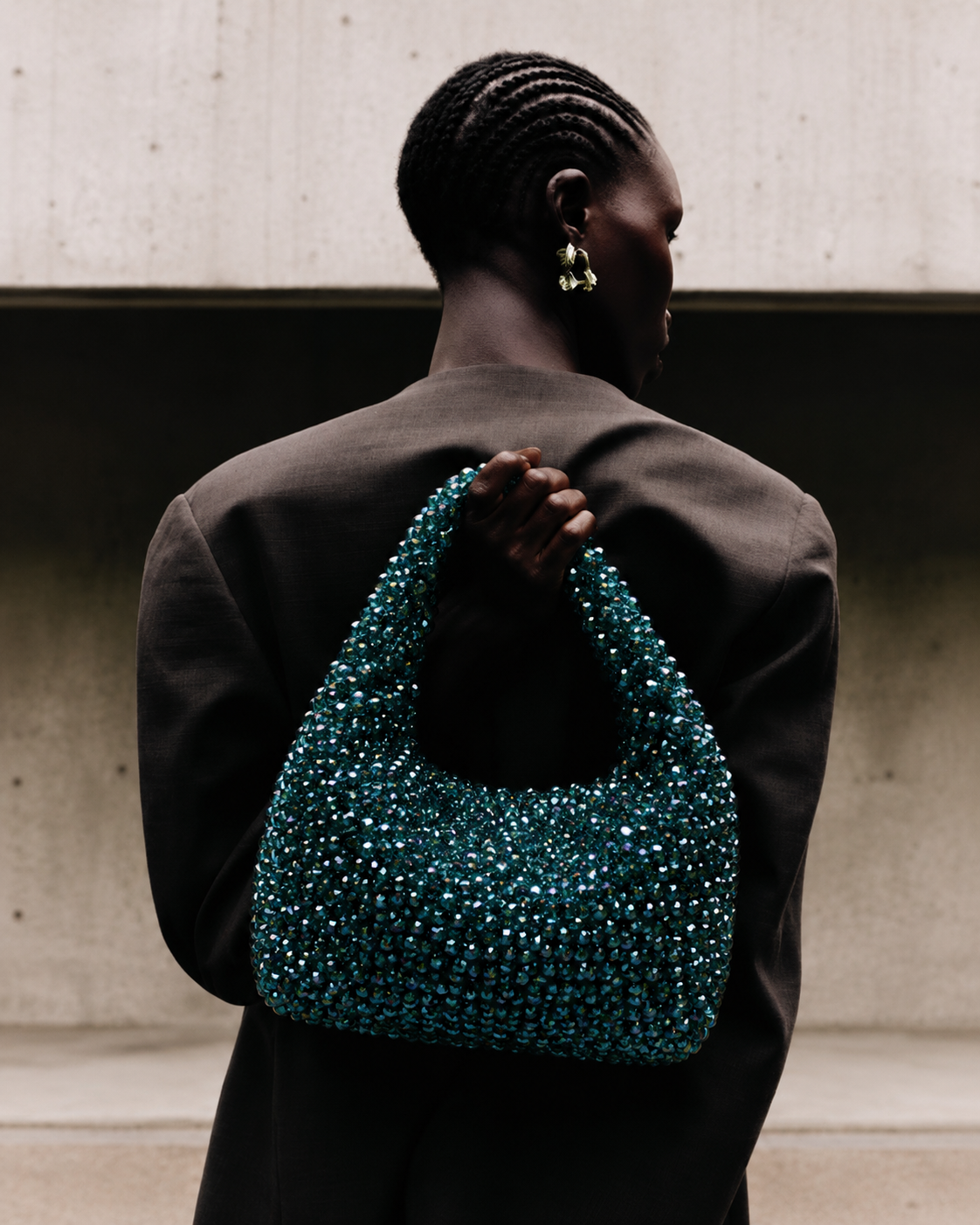
Atelier Emine is an Istanbul-based handbag brand founded by Emine Tuncer. The brand designs and produces handmade handbags using monofilament line and maritime knotting techniques, with materials including beads, crystals, mother-of-pearl, pearl, velvet, and wood. A single artisan assembles each piece from start to finish. Atelier Emine’s production model relies on manual construction throughout, as machines cannot replicate its core knotting structures.
“The knotting structures we use cannot be replicated by machinery. Every piece requires a hand that understands the material from the inside out.” Emine Tuncer, Founder, Atelier Emine
That last point is worth pausing on. It is not a marketing claim about exclusivity. It describes a physical constraint. The way Atelier Emine builds its handbags means that machinery cannot do what the artisan does. Understanding that distinction is the key to understanding what the brand actually is and why its production model looks the way it does.
When Construction Determines the Method of Production
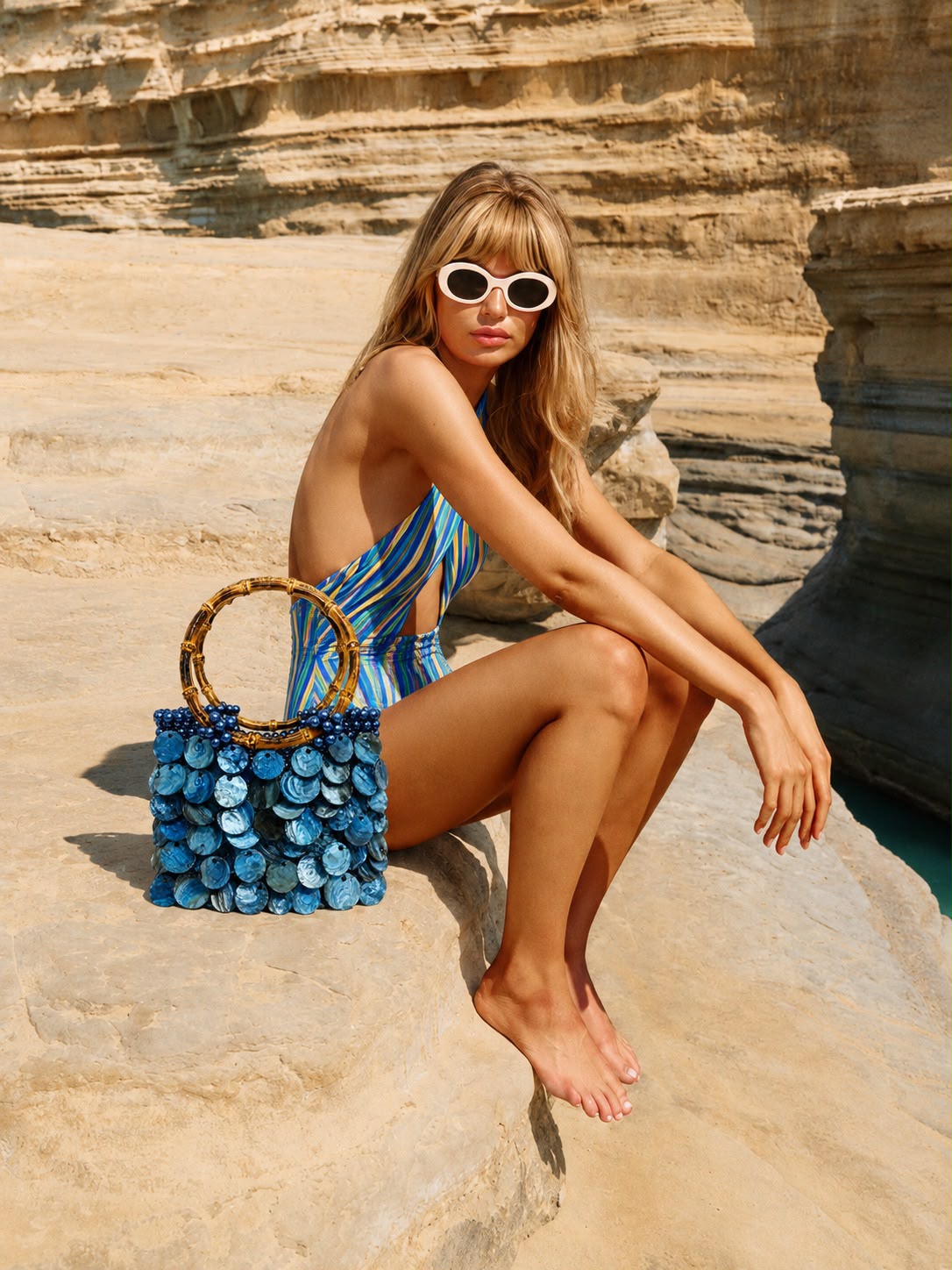
Monofilament line, commonly associated with fishing, behaves differently from conventional textile threads. Its characteristics influence how it can be manipulated, connected and incorporated into a finished form. When combined with beads, crystals, mother-of-pearl, or other rigid components, it requires a construction method suited to the materials, not the other way around.
Maritime knotting techniques introduce another layer of complexity. The positioning, tension, and sequence of individual knots shape the finished piece. In designs built around these interlocking connections, the process cannot simply be reduced to the mechanical repetition of a standard stitch. The knot is not decorative. It is structural. That changes what the production line can and cannot do.
This also illustrates a broader consideration in contemporary accessory design. Automation works best when a process can be standardised into repeatable operations. When construction relies on specific knot configurations, material handling, and assembly adjustments, the limits of mechanisation become very practical. Atelier Emine sits on that side of the line.
Time as a Consequence of Technique
People often discuss the production time of a handmade handbag in terms of exclusivity or perceived value. A more useful way to think about it is to consider how many operations are involved and what they are. In Atelier Emine’s production model, a single artisan works on each handbag from beginning to end, with the time required varying by design and material composition.
Some models require more intricate bead or crystal arrangements; others involve different combinations of surfaces and structural elements. The complexity of these processes means production takes several days. That is not a choice made for atmosphere. It directly reflects what the construction requires.
In this context, time is not an independent measure of quality. A longer production period does not automatically make an object better. However, it does reveal something about the method used to make it. When individual connections must be formed and checked by hand, the design’s technical requirements, not a target output figure, determine production speed.
Specialisation Within the Artisan Team
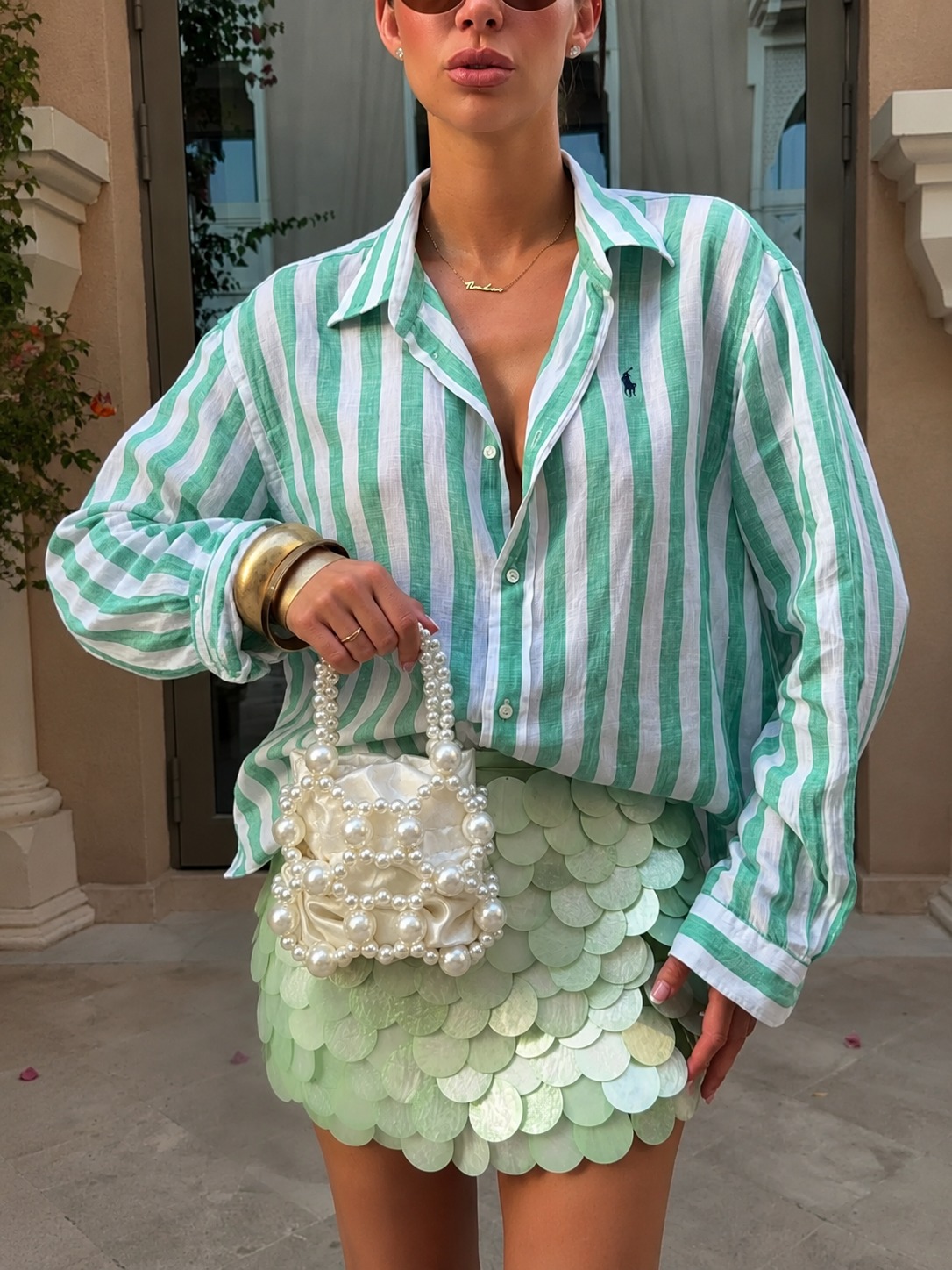
The term handmade can obscure the range of skills involved in producing a single category of object. Handbag construction may require knowledge of several materials, each presenting different practical considerations. Atelier Emine’s team reflects this through roles organised around particular material groups.
The team currently includes:
- Asli Zeynep Filiz, mother-of-pearl artisan
- Melisa Gungor, pearl specialist
- Zehra Karabulut, crystal craftsmanship
- Beyza Cuneyt, velvet-based designs
- Sude Ersoz, wood specialist
Each role addresses different material characteristics and assembly requirements. Beads, crystals, mother-of-pearl, and wood differ in form, surface, rigidity, and how they can be incorporated into a structure. Their arrangement requires decisions about positioning, consistency and how individual components relate to the overall design. Treating artisanship as a single undifferentiated skill would not serve the work that actually needs to be done.
The relationship between material-specific expertise and the overall construction method is therefore central to how Atelier Emine operates. Separate components must function as part of a coherent whole in the finished piece. That coherence is the product of the team’s organisation, not despite it.
The Artisan as Part of the Design Process
In industrial manufacturing, design and production can be separated into distinct stages, with specifications established before an object reaches the production line. In technically complex handmade accessories, that separation is less clean. The artisan’s role extends beyond carrying out a predetermined sequence of actions. Manual construction requires applying technique to the materials at hand, and how individual elements are positioned and connected determines whether the intended structure can be achieved.
At Atelier Emine, the material-specific roles within the artisan team shape the relationship between creative direction and physical production. Founder Emine Tuncer’s use of maritime knotting methods provides the conceptual framework. The team’s specialised work translates that approach into finished pieces. The construction technique and the human skills required to execute it remain closely linked throughout. One does not precede the other; they are the same process.
Why This Production Model Matters Now

The wider fashion industry places considerable emphasis on speed, scalability and consistency. Those priorities make sense in a market shaped by large production volumes and rapid product cycles. But they don’t describe every viable approach to making accessories, and they don’t apply to what Atelier Emine is doing.
For objects whose construction depends on techniques that cannot readily be automated, efficiency must be considered in relation to the intended method. The relevant questions are whether the material suits mechanical processing, whether the construction can be standardised without changing its character, and what level of manual intervention each stage requires. For Atelier Emine, the answer to all three is consistently the same: the hand stays in the process because the process requires it.
The fashion conversation around craftsmanship has grown considerably in recent years, driven in part by increasing scrutiny of how things are made and who makes them. In that context, brands that can describe their production in specific, verifiable terms stand apart from those whose claims remain general. Atelier Emine’s approach is specific. The materials are named. The techniques are identified. The artisan team is listed by name and specialism on the brand’s public team page. That level of transparency is worth registering.
In contemporary handbag design, craftsmanship extends beyond whether an item is made by hand. It concerns which elements require human intervention, what knowledge those operations demand and how the chosen construction method shapes the final object. Where a design depends on maritime knotting and material-specific manual assembly, the artisan is not simply the last participant in the production chain. Their work is part of the mechanism that makes the design physically possible.
Design Direction and Material Selection
Every Atelier Emine piece begins with a material choice. That choice is not only aesthetic. It determines the construction sequence, which techniques apply, and what the artisan must manage during assembly. A design built around mother-of-pearl panels requires different handling from one centred on velvet. A wood component introduces structural considerations that differ entirely from those of a crystal arrangement. Before placing a stitch or tying a knot, you must understand the material logic of the piece.
This is part of what makes material-specific specialisation within the team a practical necessity rather than a structural preference. When a piece is divided into components that require distinct expertise, assigning those components to artisans with the relevant background is a direct response to the demands of the design. It also reflects respect for what each material demands of the person working with it. No two surfaces on an Atelier Emine piece are managed the same way.
Founder Emine Tuncer’s grounding in maritime knotting techniques provides a consistent structural principle across varying designs. The knot is the logic beneath the surface, no matter what materials dress it. That consistency keeps the creative direction coherent even as the material combination shifts from one piece to the next. It also lets the team work in parallel on different design families without losing the brand’s identifying character.
The finished handbag reflects every decision made before it reached that final state. The choice of monofilament over conventional thread. The selection of maritime knot types for structural connection points. The decision to assign one artisan to a piece from start to finish rather than distribute it across a shared production flow. Each choice is legible in the object itself, which is part of what makes Atelier Emine’s team page transparency more than a formality. It explains how the work is done, making it visible to anyone who wants to look.
Also Read on Omiren Styles:
- The Maker-Credit Test: What a Heritage Fashion Product Page Should Clarify
- Style Spotlight: Felipa Hernandez and the Work Behind Kaftan No. 13
- How Atelier Mao de Mae Organises Its Creative Work in Salvador
Brand: Atelier Emine
Founder: Emine Tuncer
Location: Istanbul, Turkiye
Website: www.atelieremine.com
Team page: atelieremine.com/sayfa/ekibimiz
Contact: Press enquiries via www.atelieremine.com