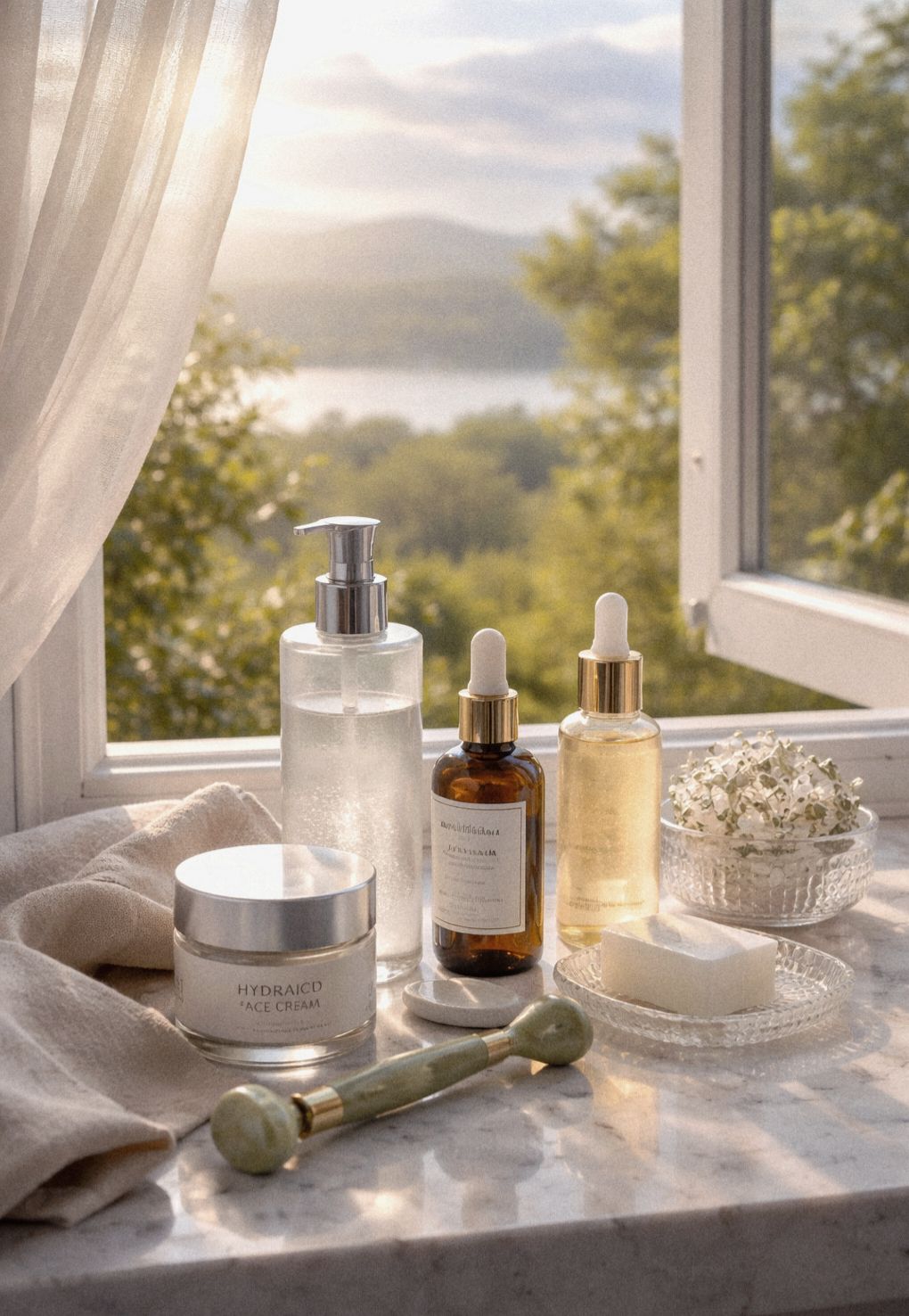
The skincare industry sells skincare as universal, a series of steps that are applied across the world. Cleanse, treat, moisturise, protect. But this presumes that skin is the same wherever you live. It does not.
The skin barrier, the outermost layer that protects against water loss and environmental stressors, is dynamic. It is in a dynamic exchange with the environment. In African climates. Where the hot, humid, dusty, and strong sun combine, this adaptation is accentuated. Skin is not just surviving. It is responding to what’s happening.
But most skin care routines are formulated in temperate zones where the seasons are less extreme, and the pressures on the skin differ. When African climates are exposed to these routines as they are, they often don’t work, not because of the ineffectiveness of the products, but because the rationale of the routine is not compatible with the climate in which it is used.
This article doesn’t recommend tweaking a routine. It questions the validity of the routine itself. In African climates, it is not about which products to use but about whether the structure of skincare, as defined globally, is fit for the environment.
African climates demand a different approach to skincare. Discover how heat, humidity, and environment affect the skin barrier and why global routines often fail in these conditions.
The Skin Barrier Does Not Behave the Same in Heat

We commonly think of the skin barrier in a static way, as a shield that needs to be “protected” or “restored”. However, in hot climates, the barrier is more than maintained; it’s challenged. When temperatures rise, transepidermal water loss (TEWL) rises, too, meaning the skin dries more quickly, even if it feels moist on the surface.
This presents an issue that many skincare routines do not solve. In tropical African settings, skin can be oily on the surface, but dehydrated underneath. Skin feels greasy on the surface but is dry underneath. Skincare wisdom suggests that oily skin needs to be stripped of its oil, often by washing too often or with products that are too drying.
African brands are starting to adapt to this new reality. Arami Essentials uses light oils that help lock in moisture without weighing the skin down, while Skin Gourmet uses unprocessed, porous ingredients to hydrate without clogging pores. These products are not following fashion but the climate.
The paradigm shift here is that oily skin in hot weather is not always too much; it’s too little. And treating it wrongly further upsets the barrier.
Global Skincare Routines Are Built for Different Conditions

The most widely accepted skincare routines are created in cooler climates with lower UV exposure. In such climates, dryness is often a major issue, leading to thicker moisturisers, multiple skincare products, and regular use of active products.
This presents a problem when translated to African environments. This can cause the skin to feel bogged down, with acne and irritation. Likewise, regular exfoliation, as often recommended in global regimes, can breach the skin barrier when it’s already compromised by sunlight and pollution.
This disconnect is not superficial; it’s systemic. It is a skincare industry that sells routines rather than personalising them.
Brands like Epara Skincare consider melanin-rich skin and local stressors when formulating products, while Liha Beauty combines African ingredients, emphasising simplicity and resilience in routines.
This leads to a different kind of routine, one that prioritises simplicity, potency and balance, rather than layering and transformation.
ALSO READ:
- Baobab Oil and the Next Generation of African Botanical Skincare Brands Defining the Market
- Black Soap, Stripped: The Science Behind West Africa’s Most Ancient Cleansing Ritual
African Climates Require a Different Skincare Logic Entirely
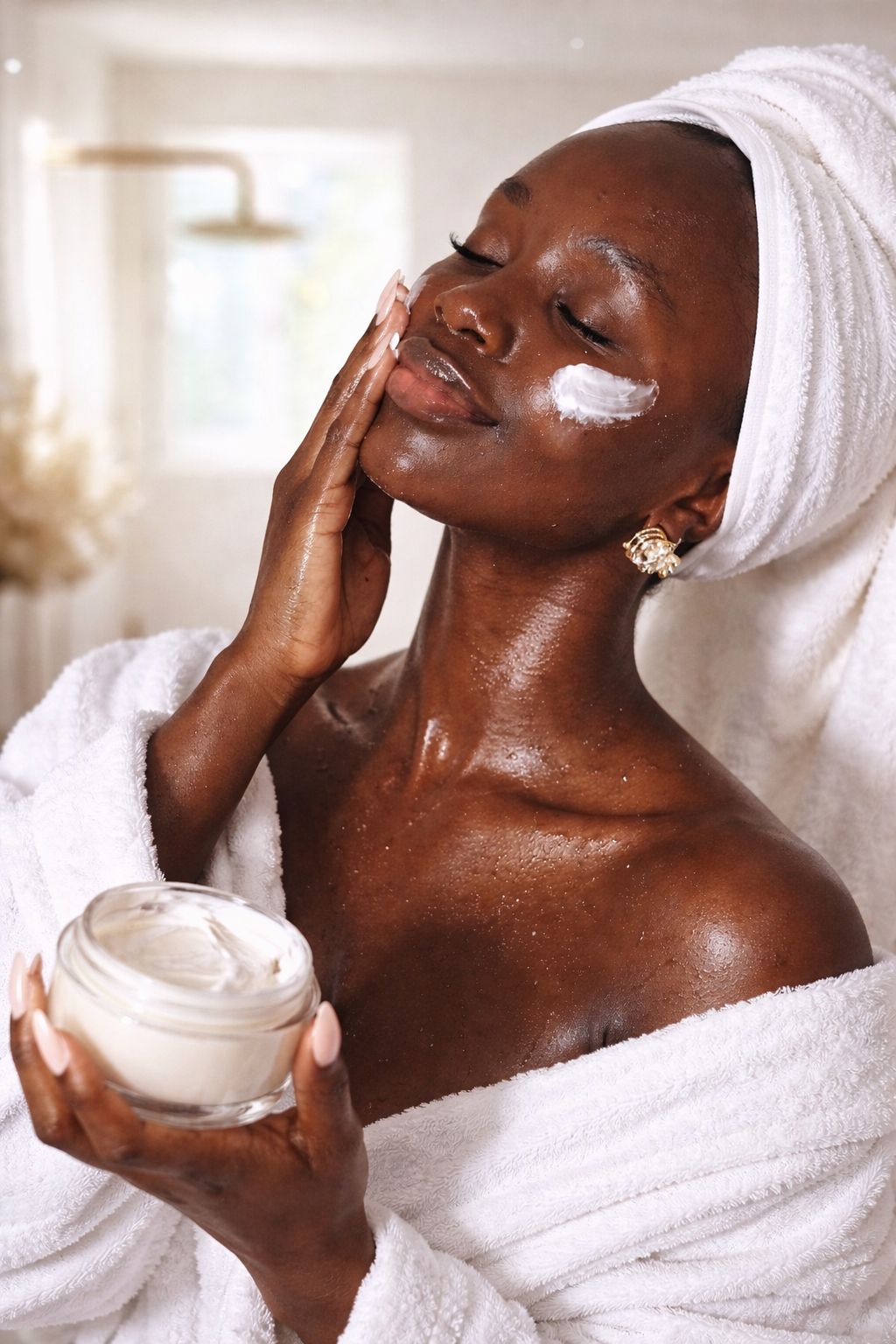
The problem is not that global skincare routines don’t work; they are just not complete. In Africa, conditions call for a different approach, one that focuses on adaptation rather than mimicry. In hot and sunny climates, the skin barrier is not in a neutral state. It is a reactive and adaptive state that continually responds to sweat, exposure, dehydration, and environmental stress.
This also means routines cannot be constructed around overabundance. Using several products, as is common elsewhere in the world, is counterproductive. Rich creams create a barrier against heat; excessive cleansing further strips damaged skin; and exfoliation, particularly chemical exfoliation, weakens the skin barrier that is already struggling. What might be dubbed “high-tech skincare” becomes overkill in this instance.
The paradigm shifts to efficiency. Moisture must be light but not ineffective. Oils must seal without suffocating. Treatments must not aggravate the skin. And finally, sunscreen becomes the first and most important step. In Africa, UV is ubiquitous. Overlooking this invalidates all other steps.
This is where African skincare brands are not merely adapting global routines, but creating new ones. Brands such as Arami Essentials focus on transpirable hydration with oils that complement, rather than counteract, heat. At the same time, Skin Gourmet’s skincare is raw and responsive, enabling the skin to adapt to its environment. These are not minimalist routines, but streamlined routines.
On a more formal level, brands like Epara Skincare take a targeted approach to skincare, creating products that recognise the impacts of melanin-rich skin exposed to extreme environments. At the same time, Liha Beauty optimises traditional African ingredients into routines that emphasise simplicity and resilience. In these examples, we see a transition from routine as theatre to routine as efficacy.
The broader point is that African climatic skincare is about doing enough, rather than doing more. The barrier does not benefit from excess. It benefits from alignment.
Omiren Argument
The global skincare industry still operates on the assumption that routine is universal. That a system designed for one climate can be travelled, embraced, and expected to function across all climates. African climates not only test this assumption; they destroy it.
Under the impact of high heat and high UV, the skin barrier is not operating under the same conditions for which global skincare systems are designed. It dries out, responds and experiences environmental stressors more frequently. The use of routines developed for temperate climates in these conditions is not an adaptation; it’s a misalignment. And that’s where we see the over-cleansing, over-exfoliating, and over-treating that many consumers report.
The industry will respond to these effects by attributing them to consumer misuse. But it’s too widespread to be a coincidence. The issue is structural. It is a system that emphasises globalism over localism, exporting routines without adjusting them to the climates in which they’re applied. Africa’s climate exposes the limitations.
The Omiren position is clear: if it is not climate-specific, it cannot be global. African climates are not anomalies; they require their own reasoning, formulations, and rituals. Until the industry ceases to think of climate as a variable and begins to think of climate as a foundation, it will continue to misinterpret the behaviour of skin outside of the climates it knows.
What is taking shape now, with African skincare brands, is not a new way of thinking; it is a necessary correction. A system that does not try to adapt global skincare strategies but corrects them. And this is not just for Africa. It is an indication that the future of skincare will not be about routine but about a system that is localised, responsive and contextualised.
For deeper, argument-driven insights into African beauty, skincare systems, and the realities that shape how skin is understood across different environments, visit Omiren Styles, a publication built on perspective rather than repetition.
Omiren does not adapt to the industry’s assumptions. It challenges them, defines new frameworks, and sets the standard for analysing and understanding African skincare.
Frequently Asked Questions (FAQs):
- Why is the skin barrier affected differently in African climates?
African climates often combine high heat, strong UV radiation, humidity, and environmental stressors such as dust. These conditions increase water loss from the skin and force the skin barrier to work harder, making it more reactive than in cooler climates. - What is the best skincare routine for hot climates?
The best routine focuses on simplicity and protection: gentle cleansing, lightweight hydration, breathable oils, and consistent sunscreen use. Over-layering products or using harsh actives can weaken the skin barrier in heat. - Why does my skin feel oily but still dry in hot weather?
This happens because heat increases oil production while also causing dehydration. The skin produces more oil to compensate for moisture loss, creating a surface-level shine while the barrier remains compromised. - Should I exfoliate less in hot climates?
Yes. Frequent exfoliation can weaken the skin barrier, especially when it is already under stress from heat and sun exposure. A reduced, gentle approach is more effective for long-term skin health. - Is sunscreen necessary for dark skin in African climates?
Absolutely. Melanin provides some natural protection, but it does not prevent UV damage or hyperpigmentation. Daily sunscreen use is essential for maintaining an even skin tone and protecting the skin barrier.