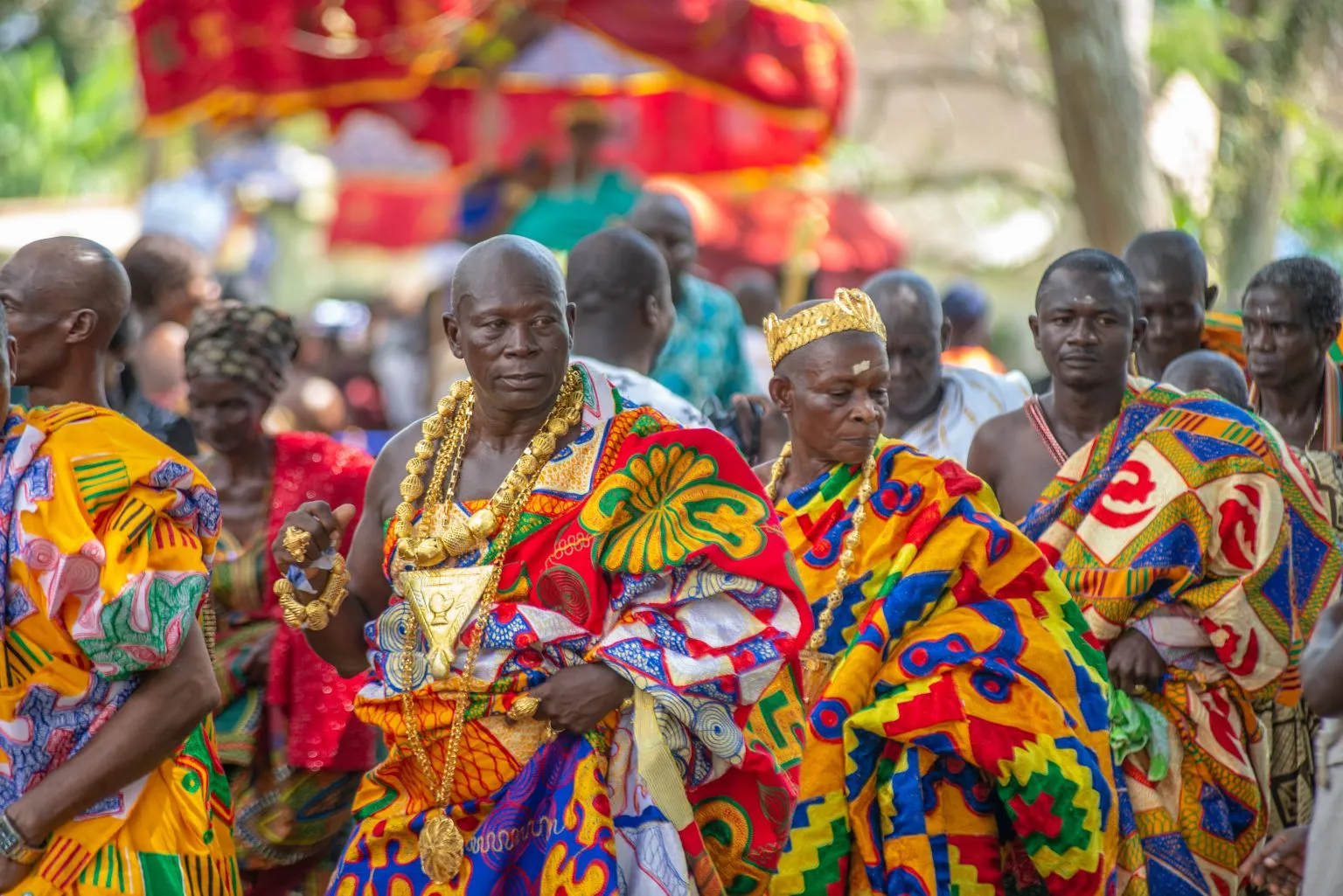
The loom sits in an open yard in Bonwire, 18 kilometres from Kumasi on the Kumasi-Mampong road. A master weaver works the foot pedals with practised rhythm, feeding silk and cotton threads into patterns that carry names derived from Asante proverbs, historical events, and the reign of chiefs going back to the seventeenth century. Each strip takes hours. A full cloth can take weeks. The weaver knows what the pattern means. He knows who it was made for. He knows what it costs.
The copy sitting on an e-commerce platform in a European city took approximately four minutes to print in a factory in China. It sells for a fraction of the price. The buyer does not know it is a copy. In most cases, they were never told there was a difference.
This is the Kente problem. And in September 2025, Ghana moved to end it.
Ghana’s Kente cloth now carries GI protection. Here is how to buy authentic Kente from verified Ghanaian weavers and stop funding the counterfeit market.
What Ghana’s Geographical Indication Status Means for Buyers

In September 2025, Ghana secured Geographical Indication (GI) status for Kente cloth through the Ghana Intellectual Property Office in partnership with the World Intellectual Property Organisation. The designation means that only Kente woven using traditional techniques in approved Ghanaian communities can legally carry the name. It places Kente in the same protected category as Champagne from France and Darjeeling tea from India. The name is now the law.
The protection arrived one year after an equally significant cultural moment. In December 2024, UNESCO inscribed Kente cloth weaving on its Representative List of Intangible Cultural Heritage of Humanity, formally recognising the craft of the Asante and Ewe communities of Ghana as a living cultural practice of global significance. The two recognitions together give Kente cloth a legal and cultural framework that no other African textile currently holds.
For buyers, this creates a new practical standard. Authentic Kente now comes with verification. Under the GI framework, certified pieces carry a QR code that traces the cloth’s origin to a specific Ghanaian weaving community. Scanning it confirms provenance. The absence of that code on a piece sold as Kente is itself information.
“The absence of a GI verification code on a piece sold as Kente is itself information.”
The Three Kinds of Kente: What You Are Actually Buying
Before addressing where to buy, it is necessary to establish what the market actually contains. Kente production falls into three distinct categories, and the difference between them determines everything about the purchase.
Authentic Hand-Woven Kente
This is the cloth produced by Asante and Ewe master weavers on narrow-band traditional looms in the approved weaving communities of Ghana. The Ashanti Region towns of Bonwire, Adanwomase, Sakora Wonoo, Ntonso, and Safo are the primary Asante weaving centres. In the Volta Region, Ewe weavers operate in Agotime Kpetoe, Agbozume, Klikor, and Keta. Authentic Kente is hand-woven in narrow strips typically four to five inches wide, then sewn together lengthwise. The strip construction is visible. The weight is dense. The colour consistency carries the slight irregularities of hand-worked thread. Each pattern has a name and a meaning.
This is the cloth covered by the GI designation. Under the new framework, only this cloth may legally be sold as Kente.
Kente Print
Kente print is an industrially produced fabric that reproduces Kente colour patterns and motifs through a printing process on cotton or polyester. Producers include Ghanaian companies such as Akosombo Textile Limited and Dutch manufacturer Vlisco. Kente print is not counterfeit in the deceptive sense: its nature is generally understood within Ghanaian consumer culture. It is a commercial derivative. The ethical issue arises when it is sold to buyers outside Ghana without explanation, as if it were hand-woven, authentic Kente.
Mass-Produced Kente Pattern
This is the problematic category. Machine-manufactured fabric, produced primarily in China, replicates Kente visual patterns without any connection to Ghanaian weaving communities, any traditional technique, or any attribution. It floods global online markets and is frequently sold as Kente cloth without qualification. A peer-reviewed 2021 study in the Journal of Intellectual Property Law and Practice, authored by Ghanaian legal scholar Michelle Okyere and colleagues, documented that the widespread production of these imitations in the People’s Republic of China has materially reduced income for Ghanaian weavers and risks the cultural classification of Kente as a generic African fabric rather than a specific Asante and Ewe tradition.
Where to Buy Authentic Kente Cloth
At the Source: Bonwire and the Ashanti Weaving Communities
Bonwire, 18 kilometres from Kumasi on the Kumasi-Mampong road, is the historical home of Asante Kente weaving. The weaving centre opens daily from 9am to 5pm. Weavers sell directly from workshops and market stalls. Prices reflect the actual cost of production: a full hand-woven cloth of standard length commands a price commensurate with the days of skilled labour it represents. Buyers who find Kente at Bonwire prices on a fast-fashion website are not finding a bargain. They are finding a copy.
Adanwomase, approximately two kilometres from Bonwire, offers a comparable buying experience with direct purchase from weavers and guided tours of the production process. The Adanwomase community tourism initiative has been operating since 2005 and offers internationally verified shipping via DHL for buyers who cannot visit in person. This is one of the few online channels where the provenance chain from loom to buyer remains unbroken.
In the Volta Region, Agotime Kpetoe is the centre of Ewe Kente production. Ewe Kente is structurally similar to Asante Kente but carries distinct colour grammars and pattern names rooted in Ewe cultural history. The Kpetoe Agotime Festival, held annually, brings together Ewe weavers and provides one of the most direct access points to this tradition.
Verified Online Sources
For buyers outside Ghana, the GI verification framework changes the online market in one specific way: certified sellers will be able to demonstrate provenance through the QR authentication system. Until the system is fully rolled out across all certified producers, the safest online purchases are those made directly through weaving community websites or through diaspora-owned retailers who can name the specific community and weaver behind each piece.
Avoid any platform whose product listing cannot specify whether the cloth is hand-woven, the name of the weaving community, or the country of production. Amazon, eBay, and general marketplace searches for “Kente cloth” return predominantly mass-produced, Chinese-manufactured fabric. The algorithm does not distinguish. The buyer must.
Diaspora Retailers With Verified Sourcing
A growing number of diaspora-owned fashion retailers in the UK, the United States, and Canada now operate with explicit sourcing transparency for African textiles. These are retailers who can tell you about the weaver’s community, the textile tradition, and the production method. Omiren Styles profiles designers and retailers with this level of cultural grounding. If a retailer cannot answer the provenance question, they should not receive the purchase.
“If a retailer cannot answer the provenance question, they should not receive the purchase.”
How to Read Authentic Kente Before You Buy
The physical markers of authentic hand-woven Kente are consistent and learnable.
Strip construction is the primary indicator. Authentic Kente is woven in narrow strips and assembled lengthwise. The seams where strips join are visible on close inspection. Any fabric that appears as a single, seamless piece is not handwoven Kente. Weight matters: authentic Kente carries the density of tightly worked silk and cotton threads. A light, flat fabric is printed, not woven. Colour irregularity is a quality marker, not a flaw: hand-worked threads produce slight tonal variations across the cloth that industrial printing cannot replicate. Pattern names are specific: every authentic Kente pattern carries a name in Asante Twi or Ewe. Adweneasa, Sika Futuro, Oyokoman, and Emaa Da are among the most recognised Asante patterns. A seller who cannot name the pattern of the cloth they are selling does not know what they are selling
Also Read:
- How to Shop African Fashion: The Complete Guide for the Culturally Literate Consumer
- What the World Lost When Hand-Weaving Gave Way to Mass Production
- The Ndebele Aesthetic: Pattern, Identity, and the Global Brands That Have Borrowed Without Credit
- Leather Does Not Age. It Remembers: African Craft Heritage and Luxury Identity
THE OMIREN ARGUMENT
Every purchase of counterfeit Kente is a financial transaction with a specific consequence: income that should reach the Asante and Ewe weavers of Ghana’s Ashanti and Volta regions is redirected to a factory in China that contributed nothing to the tradition being sold. The buyer is not a passive participant in this exchange. The buyer is its engine.
The context for this argument is four hundred years of craft history. Kente weaving in the Asante tradition traces to the seventeenth century in Bonwire, where weavers developed a strip-loom technique of extraordinary complexity, encoding cultural knowledge, genealogy, and social status into colour grammar and pattern names. Ewe weaving carries a parallel history rooted in the Volta Region, with its own distinct visual language. Both traditions survived colonial disruption and economic marginalisation. What they did not anticipate was the industrial-scale reproduction of their visual identity by manufacturers with no connection to either community.
The disruption is now legal. In September 2025, Ghana secured Geographical Indication status for Kente through the World Intellectual Property Organisation, establishing in international law that only cloth woven using traditional techniques in approved Ghanaian communities may carry the name. In December 2024, UNESCO inscribed Kente weaving on its Representative List of Intangible Cultural Heritage of Humanity. The two recognitions, arriving within a year of each other, give Kente cloth a legal and cultural framework that no other African textile currently holds. The counterfeit market is not yet eliminated. But it is now operating illegally.
The cultural insight here is about what Kente actually is. It is not a pattern. It is not an aesthetic. It is a system of communication developed by specific communities across hundreds of years, in which every colour choice, every strip sequence, and every pattern name carries verifiable meaning. When a machine in China prints a Kente-like pattern on a bolt of polyester, it does not reproduce the system. It produces an image of it. The buyer who purchases that image, believing it is the thing itself, has been misled. The buyer who purchases it knowing the difference has made a choice.
Omiren Styles makes the argument plainly: the knowledge to buy correctly now exists. Ghana has provided the legal framework. The weaving communities have always provided the cloth. The only remaining variable is whether the buyer chooses to use that knowledge or ignore it.
The Economics of Buying Correctly
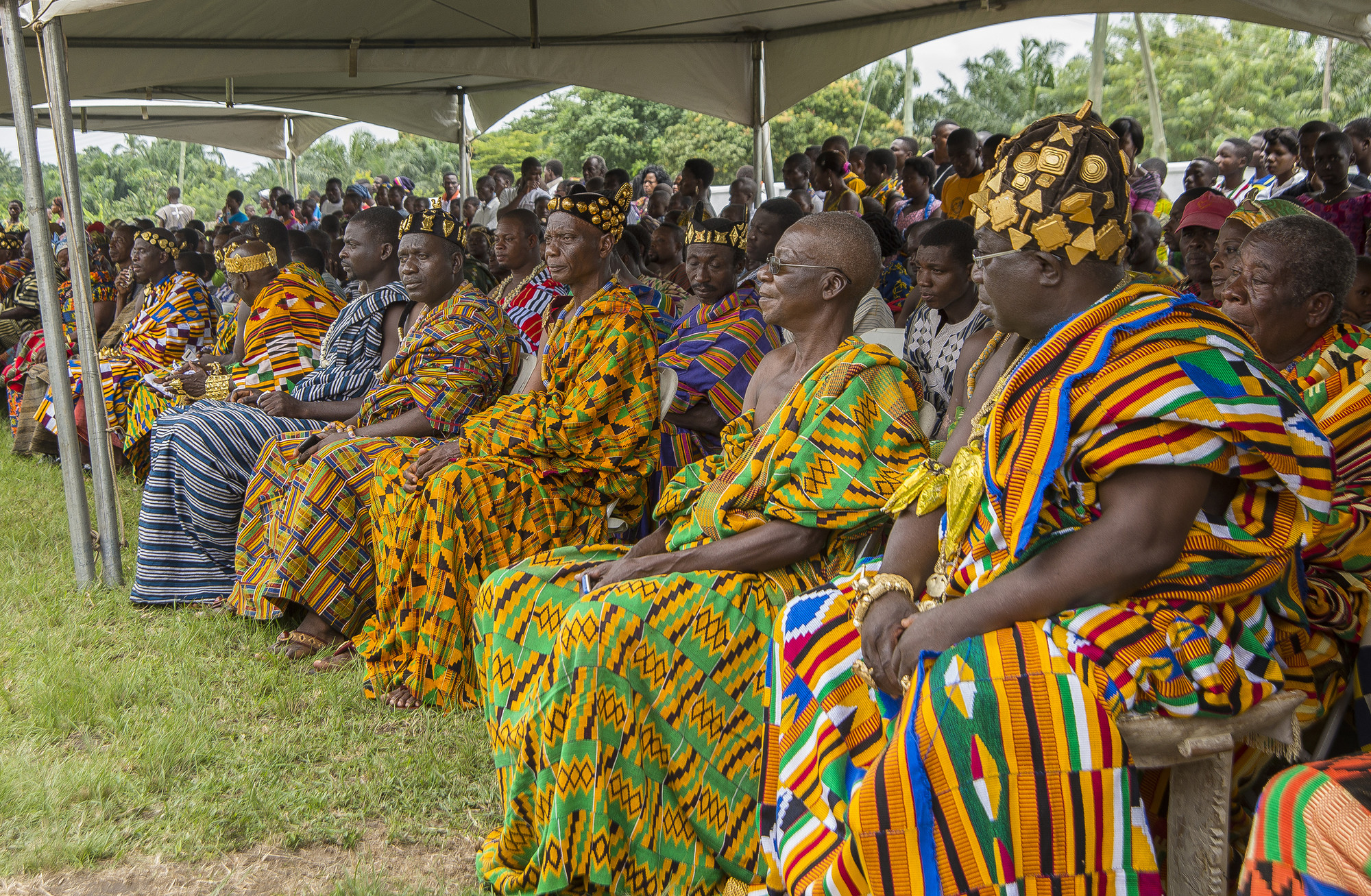
The financial consequence of purchasing counterfeit Kente is not abstract. It leaves directly. The Ghanaian textile and garment industry directly employs a significant portion of the country’s artisan workforce, with Kente-weaving communities in the Ashanti and Volta regions representing a substantial share of that employment. When a buyer outside Ghana purchases a Chinese-manufactured Kente imitation, the transaction generates revenue for a factory that contributed nothing to the tradition being sold. The weaver in Bonwire receives nothing. The community that has maintained the craft across four hundred years receives nothing.
The GI status is designed to redirect that financial flow. Under the framework established through GHIPO and WIPO, certified Ghanaian weavers gain legal standing to challenge unauthorised use of the Kente name in international markets. As enforcement develops, the price premium for certified authentic Kente will reflect the actual economics of skilled hand production. Buying at that price is not paying more. It is paying correctly. For a fuller understanding of how to approach African fashion shopping with this level of cultural and economic intelligence, read How to Shop African Fashion: The Complete Guide for the Culturally Literate Consumer.
Frequently Asked Questions
Is all Kente cloth from Ghana authentic?
No. Kente production falls into three categories: authentic handwoven cloth from approved Ghanaian weaving communities; Kente print produced by industrial manufacturers, including Ghanaian and Dutch mills; and mass-produced Kente pattern fabric manufactured primarily in China. Only the first category qualifies as authentic under Ghana’s 2025 Geographical Indication designation. The GI framework requires that only cloth woven using traditional techniques in approved communities may legally carry the Kente name.
How does Ghana’s geographical indication status protect Kente?
Ghana secured GI status for Kente in September 2025 through the Ghana Intellectual Property Office in partnership with the World Intellectual Property Organisation. The designation means that only Kente woven in specific approved communities using traditional techniques may legally be sold under the Kente name. Certified pieces carry a QR code for provenance verification. The GI status gives Ghana legal standing to challenge unauthorised use of the name in international markets.
When did UNESCO recognise Kente cloth?
UNESCO inscribed Kente cloth weaving on its Representative List of Intangible Cultural Heritage of Humanity in December 2024. The recognition formally acknowledges the craft of the Asante and Ewe communities of Ghana as a living cultural practice of global significance. The UNESCO inscription followed the long-standing documentation of Kente weaving communities in Bonwire, Adanwomase, and Agotime Kpetoe, among others.
What is the difference between Asante Kente and Ewe Kente?
Both Asante and Ewe Kente are hand-woven on narrow-band traditional looms in strip form. Asante Kente, produced primarily in the towns of Bonwire and Adanwomase in the Ashanti Region, is characterised by bold geometric patterns and colour combinations, with names rooted in Asante proverbs and historical events. Ewe Kente, produced in the Volta Region communities of Agotime Kpetoe and Agbozume, incorporates a wider range of figurative motifs alongside geometric patterns and carries distinct colour symbolism from the Ewe cultural tradition. Both traditions are covered under the GI designation.
Know What You Are Buying
Omiren Styles publishes cultural intelligence on African fashion, textiles, and design across all 54 African nations, the Caribbean, and the global diaspora. Subscribe to our editorial newsletter to stay informed on the designers, traditions, and market developments that matter.