Denim is often framed as a story of American grit, railroads, factories, and rebellion. That telling is incomplete. The indigo dye history of denim begins not in a California gold rush but in West Africa, where colour was treated as both a craft and a cultural authority long before the first pair of Levi’s was riveted together. The blue that defines the world’s most worn fabric carries older knowledge, shaped in African dye pits, encoded in women’s resist-dyed cloth, and traded across routes that predate industrial fashion by centuries.
Revisiting the African origins of indigo is not about correcting trivia. It is about rethinking how fashion history is told and who is recognised for it. When we trace jeans back to trans-Saharan trade routes, women’s labour, and spiritual traditions, what appears to be ordinary becomes rooted in systems of knowledge that the standard narrative has consistently left out. Understanding this changes how we read the fabric, not as a neutral staple, but as a record of movement, memory, and influence that still shapes how the world dresses today.
Before denim became a symbol of American industry, indigo was already a currency, dyed into cloth at the Kano dye pits, stitched into Yoruba adire, and traded across routes that predated Levi Strauss by centuries.
Indigo as Knowledge, Not Just Colour
Long before denim became associated with miners or pop culture, indigo dyeing in Africa had already developed into a sophisticated system of cultural and economic production. Yoruba communities in Nigeria created resist-dyed cloth known as adire, produced by tying, stitching, or painting patterns onto fabric before immersing it in fermented indigo vats. Each cloth carried intention, marking status, celebrating milestones, communicating lineage, and in some cases, invoking spiritual protection. The cloth was not decorated. It was information.
At the Kano dye pits, some of which have been in continuous operation for over five hundred years and are now a UNESCO World Heritage Site, indigo production formed the backbone of local economies. Dyeing required patience: Indigofera tinctoria leaves were harvested, fermented, and reduced into dye paste over days. Vats were carefully maintained, their alkalinity monitored through touch and smell. Cloth was dipped repeatedly, dried in the air, and returned to the vat, each cycle adding depth to the blue. The process was part chemistry, part institutional memory passed across generations of dyers who held knowledge that no written manual recorded.
The Trade Routes That Moved the Colour

African indigo did not remain local. From at least the 8th century, trans-Saharan and Indian Ocean trade routes moved West African cloth, indigo-dyed, resist-patterned, and culturally encoded, into North Africa, across the Mediterranean, and into contact with European textile markets that were themselves developing their own relationship with the dye plant.
Portuguese traders encountered indigo-producing communities along the West African coast from the 15th century onwards and recognised immediately the commercial value of what they were observing. Indian indigo, transported through Arabian trade networks, had already entered European fabric production by this period. What the African encounter added was proof that indigo cultivation and dyeing knowledge existed across a far wider geography than European colonial traders had assumed or were willing to credit.
The word ‘denim’ itself traces to serge de Nîmes, a fabric produced in southern France in the 17th century, and it was dyed with indigo that had travelled through exactly these trade corridors. The American denim industry inherited a dyeing tradition whose oldest practitioners were African. The Levi Strauss company began commercial production in 1873. The Kano dye pits had been in operation since the 15th century. That gap is not a footnote. It is the origin story.
Women’s Labour and the Economics of Blue
The standard history of indigo focuses on trade volumes and plantation economics. What it leaves out is the role of women as the primary producers and innovators of African resist-dye traditions. In Yoruba communities, adire was predominantly made by women, who controlled both the technical knowledge of the dyeing process and the commercial networks through which finished cloth was sold. These women were not craft practitioners in the contemporary sense of the word; they were entrepreneurs managing production systems, maintaining client relationships, and adapting designs in response to market demand.
Studio 189, the Accra and New York-based fashion house co-founded by Rosario Dawson and Abrima Erwiah, works directly in this tradition today, sourcing from West African artisan communities, working with natural indigo, and insisting on the economic and cultural recognition of the makers behind the cloth. Their work stands as one of the most commercially visible examples of the lineage this article traces, and they are building it deliberately, not nostalgically.
Similarly, Mali-born master dyer Aboubakar Fofana, who trained in Japan under traditional Japanese indigo dyeing masters before returning to West Africa, now works across both traditions, demonstrating that the knowledge systems of West African and Japanese indigo dyeing share structural similarities that developed independently across separate continents. His work makes visible what the standard fashion history has consistently refused to credit: that the knowledge required to produce indigo blue at depth and consistency was not a European discovery. It was an African inheritance that the European industry absorbed, scaled, and, in the process, anonymised.
What It Means to Wear Denim Now
The jeans industry is worth over $70 billion annually. The indigo that gives denim its colour is now almost entirely synthetic, developed in the 1890s by German chemist Adolf von Baeyer, who was awarded the Nobel Prize for a synthesis that effectively ended the commercial dominance of natural indigo cultivation and, with it, much of the economic infrastructure that West African and Indian dye communities had built over centuries.
That synthetic displacement was not inevitable. The deliberate erasure of the supply chains and knowledge systems it replaced enabled the commercial decision. Understanding this history does not make wearing denim a political act, but it does make it a more informed one. When contemporary African designers return to natural indigo, to adire techniques, and to the specific visual language of Kano-dyed cloth, they are not reviving a dead tradition. They are reconnecting to a living one that industrial fashion interrupted but never erased.
Denim’s American story is real. But it is not the whole story. The blue came from somewhere older. It is worth knowing where.
Women, Work, and Quiet Authority
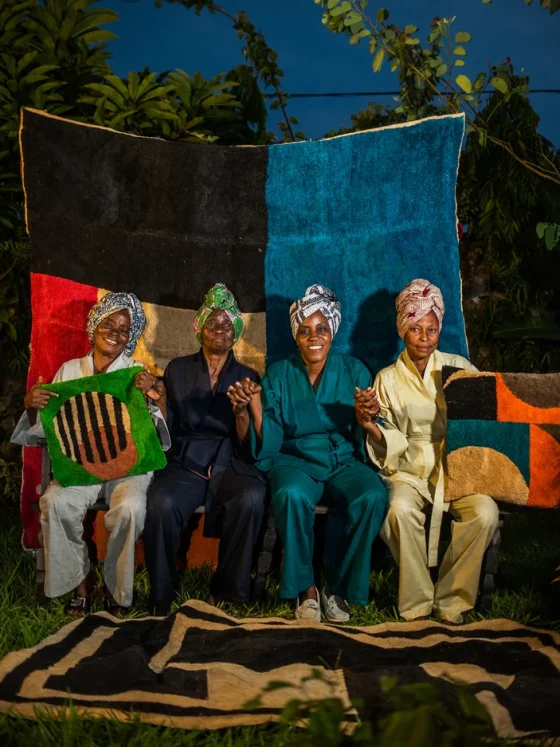
Women played a significant role in shaping the economies of many African societies through their influence. The dyeing guilds organised production, trained apprentices, and controlled trade networks. Cloth became a means of financial independence and social influence.
This history complicates modern conversations about fashion and power. What is often framed today as “empowerment through style” has deeper roots in systems where women used textile expertise to negotiate autonomy within their communities. Indigo was not decoration; it was infrastructure.
Understanding this lineage reframes jeans as connected to histories of women’s labour, visible and invisible, across generations.
From Local Cloth to Global Blue
As trade routes expanded, indigo travelled. European demand reshaped production, and eventually, synthetic dyes accelerated manufacturing. Denim emerged in industrial contexts, yet its colour retained associations with durability and resilience.
Over time, denim became a canvas for cultural expression: workers wore it for practicality, musicians adopted it as an identity, and activists used it as a uniform. The fabric absorbed meanings wherever it went, reflecting local realities while carrying echoes of earlier traditions.
This movement shows how materials can migrate without losing their symbolic weight. Blue adapts, but it remembers.
READ ALSO:
Responsibility Beyond Trends

Conversations about fashion’s environmental impact often focus on modern solutions, yet traditional indigo practices offer older lessons in balance. Production followed seasonal rhythms. Materials were sourced locally. Cloth was repaired, repurposed, and valued for longevity.
These approaches remind us that responsible making is not a new invention but a continuation of practices that prioritise stewardship over speed. Looking back is not nostalgia; it is insight.
For global audiences, this perspective shifts the conversation from consumption to relationship, how we relate to what we wear and to the people who make it.
Why Denim Still Matters
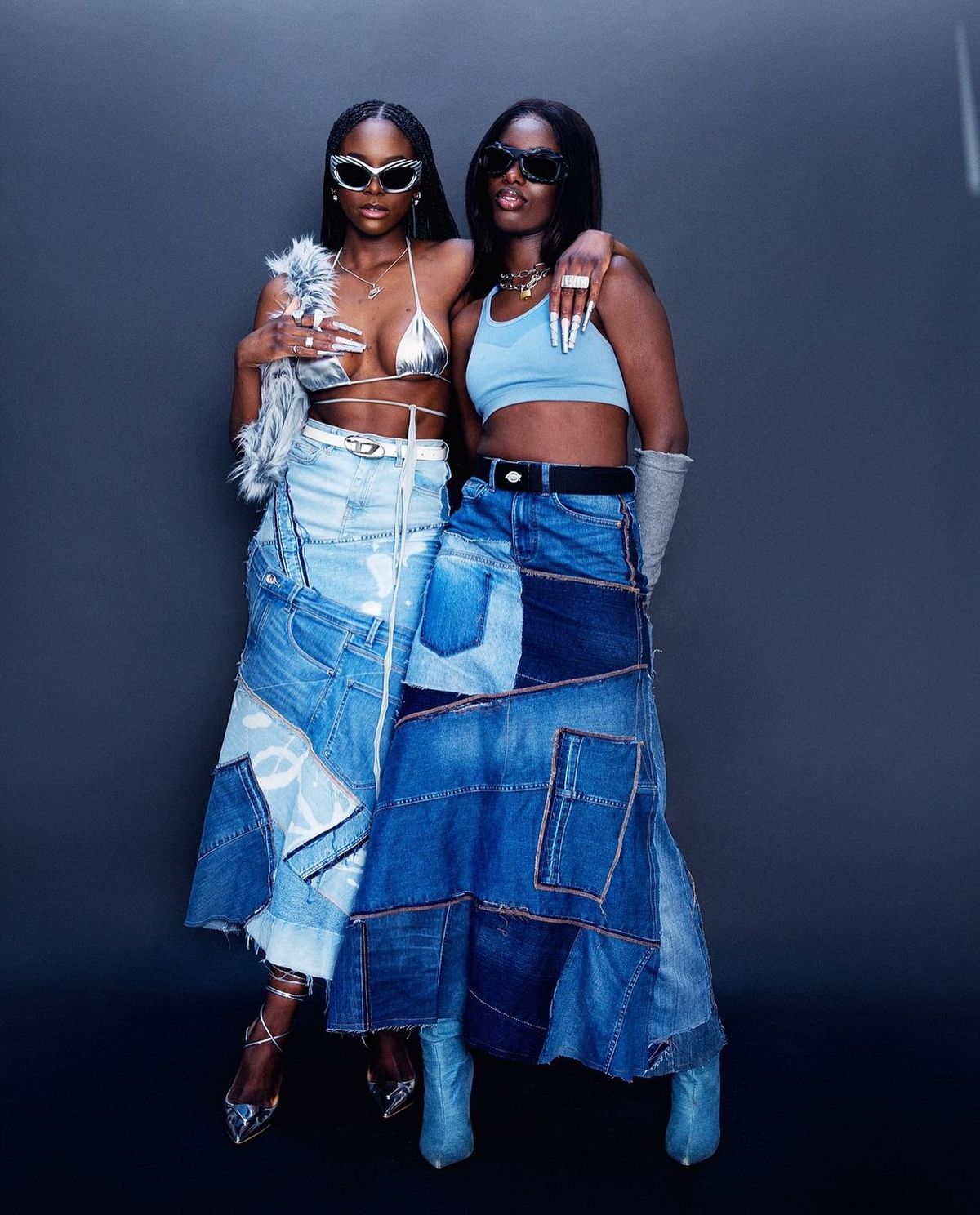
Denim endures because it sits at the intersection of function and storytelling. It is accessible yet deeply symbolic. For many, jeans represent freedom or self-expression; for others, they signal work, resilience, or belonging.
Seen through the lens of indigo’s history, denim becomes a cultural record. It connects contemporary wardrobes to histories of craftsmanship, trade, and adaptation. The fabric’s appeal lies not only in comfort but in its ability to carry meaning across contexts.
Conclusion
Indigo’s journey from African dye pits to global fashion reveals how materials can hold layers of history. Denim is not merely a product of industry; it is shaped by centuries of knowledge, labour, and cultural exchange.
Identifying these roots deepens our relationship with what we wear. It reminds us that clothing can be a form of memory, linking past and present, local and global, and craft and everyday life.
Blue persists because it speaks quietly but powerfully about continuity. And in a world that often moves too quickly, continuity is important.
FAQs
- Why is indigo historically significant in fashion?
Indigo has been used for centuries across cultures as a durable dye tied to social status, trade, and craftsmanship, especially in African textile traditions.
- What is adire cloth?
Adire is a Yoruba resist-dyed textile from Nigeria known for symbolic patterns and deep indigo colours created through hand techniques.
- How did indigo influence modern denim?
Denim adopted indigo for its strength and visual depth, carrying forward associations with resilience and practicality.
- Why is denim considered culturally important today?
Denim functions as a global symbol of identity and expression, reflecting social movements, work cultures, and personal style.
- What lessons can traditional indigo practices offer today?
They highlight the value of slow production, respect for materials, and community knowledge, principles that encourage more thoughtful relationships with clothing.