The name tells you what the clothes are for. In Ewe, the language of an ethnic group living across south-east Ghana and southern Togo, ‘asrafo’ means warriors or guardians of traditions, and ‘awu’ means garment. Put them together, and you have Asrafobawu: le vêtement des gardiens. The garment of the guardians. That is not a brand name chosen for its sound. It describes who is supposed to wear this clothing and why.
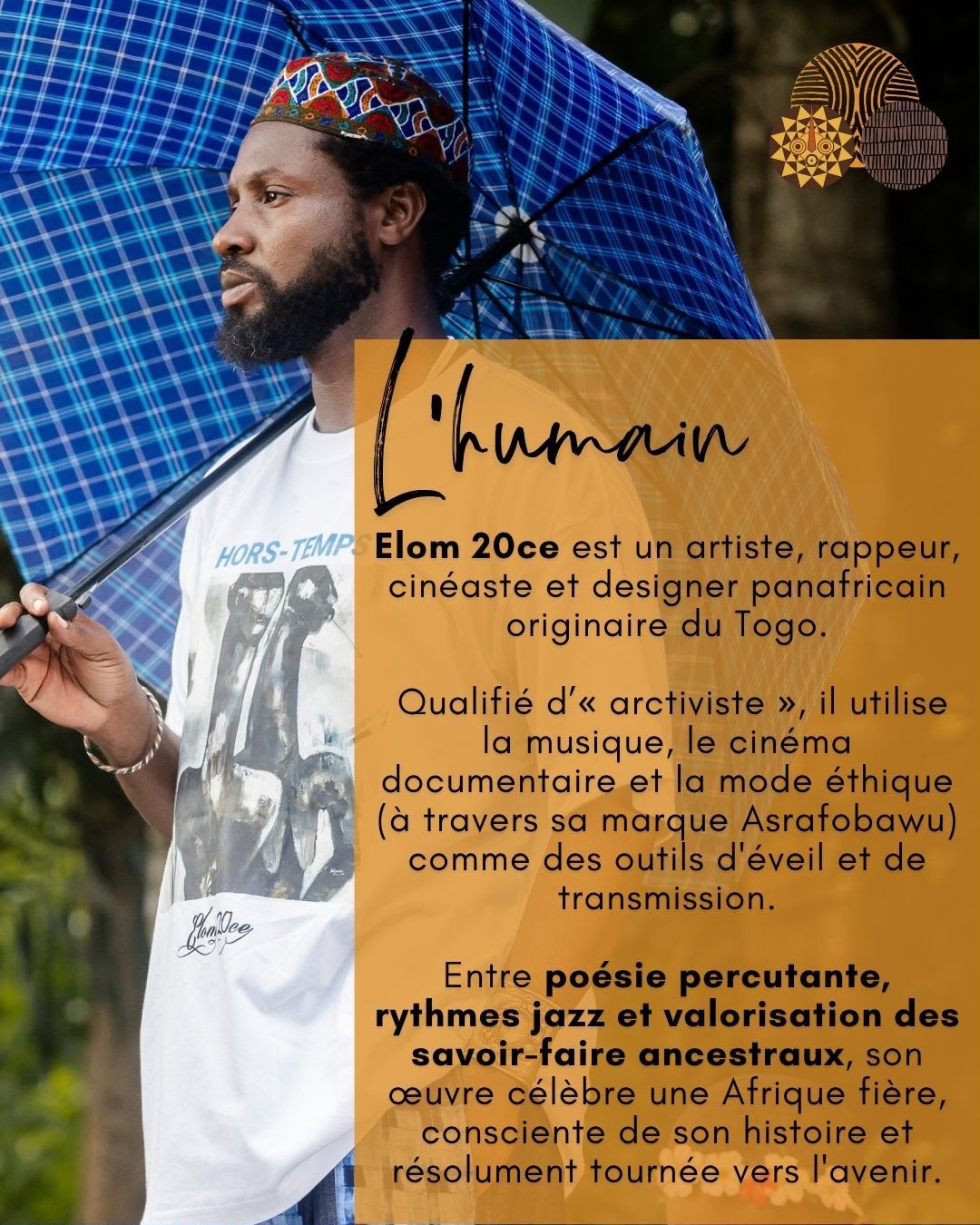
Asrafobawu is the clothing practice of Elom 20ce, Togolese rapper, poet, activist, performer, designer and filmmaker based between Lomé and Accra. He founded it not because he saw a gap in the market, but because he needed stage costumes; then T-shirts bearing the images of African liberation thinkers for his Arctivism events; and then because he understood that the fabrics themselves carry messages worth visiting and sharing. In his own words, from the brand’s About page: ‘À la base, je voulais faire des costumes de scène pour me distinguer. Faire des t-shirts à l’effigie de nos Lumières dans le cadre d’Arctivism. Puis j’ai compris qu’au-delà de la beauté des matières, il y avait des messages à découvrir et à partager. C’est ainsi qu’Asrafobawu est née.’
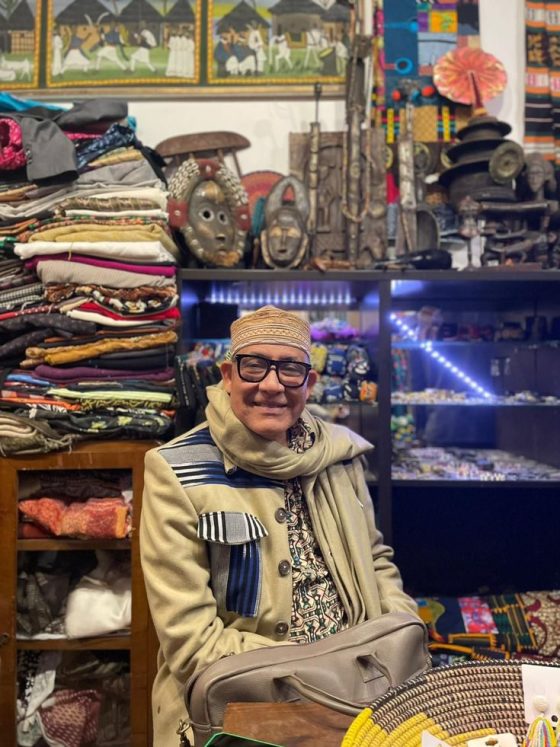
The Hors-Temps collection is now at AfrikaLAB in Geneva, one of four retail stockists carrying Asrafobawu in Europe. The other three are in Paris: La Boutique Kulturelle, Namani Concept Store and Little Africa Village. These are not generic fashion retailers. They are cultural spaces where African music, art and clothing circulate among communities who already know what they are looking at. AfrikaLAB Geneva occupies the same position in Switzerland. The collection has found its audience before the audience had to find it.
All facts drawn from asrafobawu.com, the official Hors-Temps press release (July 2026), and the existing Omiren Styles profile published 29 August 2026. All Elom 20ce quotes are verbatim from primary sources.
What Hors-Temps Is
Hors-Temps is the name of Elom 20ce’s fifth studio album, recorded in a single night at Studio Colibri in Lomé, accompanied only by Ghanaian pianist Kwaku Anthony, known as Kamarou, who mixed jazz foundations with West African harmonies. Seventeen tracks, created in one session, unplanned. The album’s cover features a painting by Togolese artist Eric Wonanu, whose deep indigo becomes the visual thread the clothing collection picks up and runs with.
The collection’s press release describes its central concern as dissolving the borders between heritage and contemporary creation: bringing emblematic West African textiles into dialogue with denim. This material has become the symbol of a globalised world. The result is a collection that does not treat African textiles as museum pieces or European fabric as a neutral background. It puts them in conversation, a position different from both.
Chaque matière porte une mémoire. Every material carries a memory. That is the collection’s operating principle. The fabrics are not selected for their visual effect. They are selected for what they know.
The Four Fabrics and What Each Carries
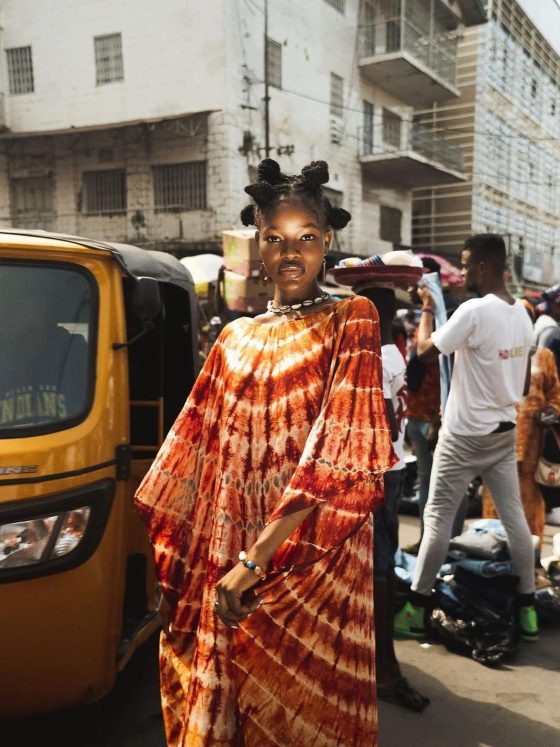
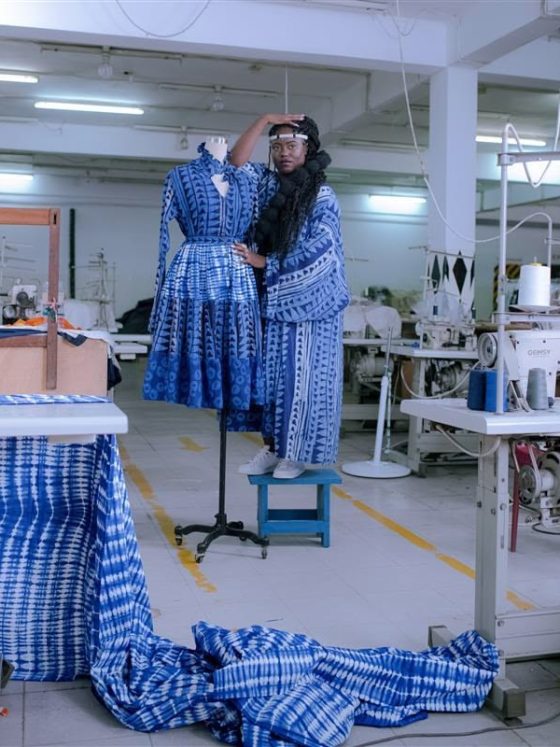
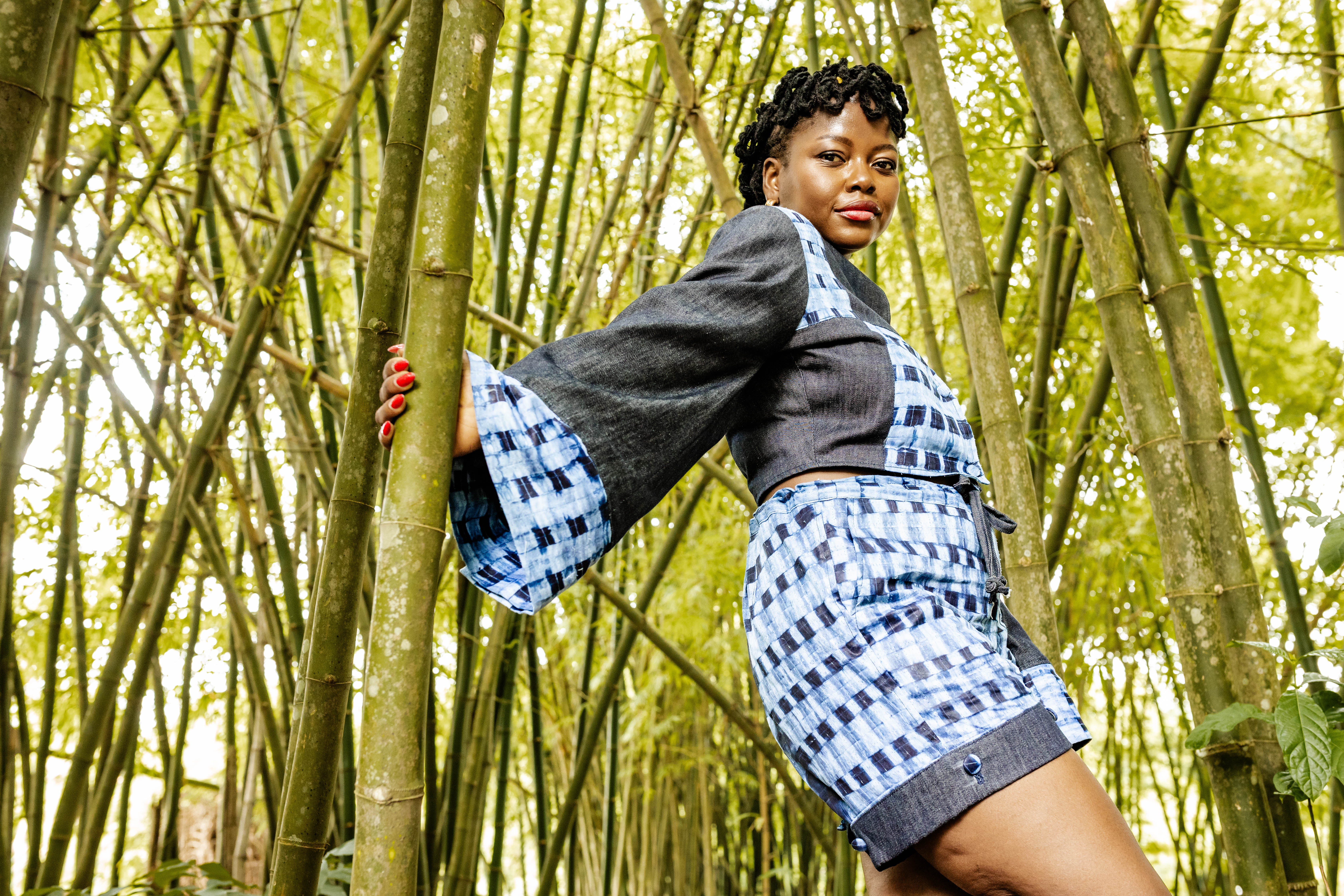
Adiré is the collection’s primary textile: indigo-resist-dyed cotton produced by Yoruba artisans in Abeokuta, Nigeria. It is one of West Africa’s most documented craft traditions, a technique in which resist patterns are applied to cotton before dyeing, producing the characteristic spotted and starburst motifs on a deep blue field. Asrafobawu’s Hors-Temps collection holds nine Adiré pieces, the largest single fabric category in the range. The Omiren Styles profile of the brand noted the significance of a Togolese Ewe artist drawing on a Yoruba Nigerian textile tradition as itself a statement: this practice does not confine its material sources to a single national heritage. It treats the continent’s textile knowledge as a shared inheritance.
Gangan is a cotton canvas developed between Togo and Bénin. Its presence in the collection is the most locally specific of the four fabrics, the material that is closest to Lomé’s own geographic and cultural origin. While Adiré comes from Nigeria and Kente from Ghana, Gangan comes from the immediate neighbourhood of Lomé, the border zone between two countries whose artisans have developed this fabric together over generations.
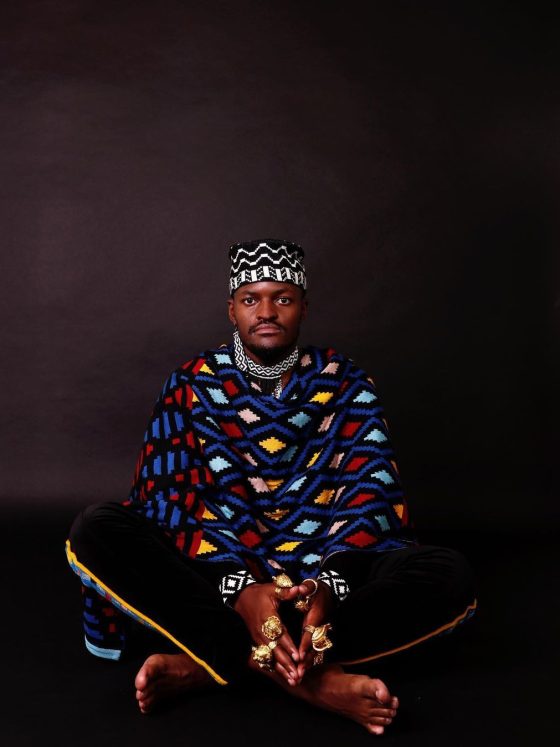
Kente, woven by the Ashanti and Ewe peoples of Ghana and Togo, is the collection’s most widely recognised textile, carrying its own well-documented associations: prestige, transmission, and dignity, as the press release describes it. The Ewe connection is direct and specific, as Asrafobawu takes its name and philosophical foundations from the Ewe language and worldview. Kente’s presence in a collection built on Ewe cultural authority is not a cultural borrowing. It is a homecoming.
Denim is the fourth material. The press release is explicit about what it represents: a symbol of globalised fashion and the outside influences imposed on African cultures. In Hors-Temps, denim is not avoided as a contaminating material or celebrated as a contemporary update. It is integrated, placed in direct dialogue with Adiré, Gangan and Kente, to materialise what the collection calls ‘le dialogue entre les modes d’ici et d’ailleurs, d’hier et d’aujourd’hui’: the dialogue between the fashions of here and elsewhere, of yesterday and today.
The Silhouettes: What the Collection Looks Like
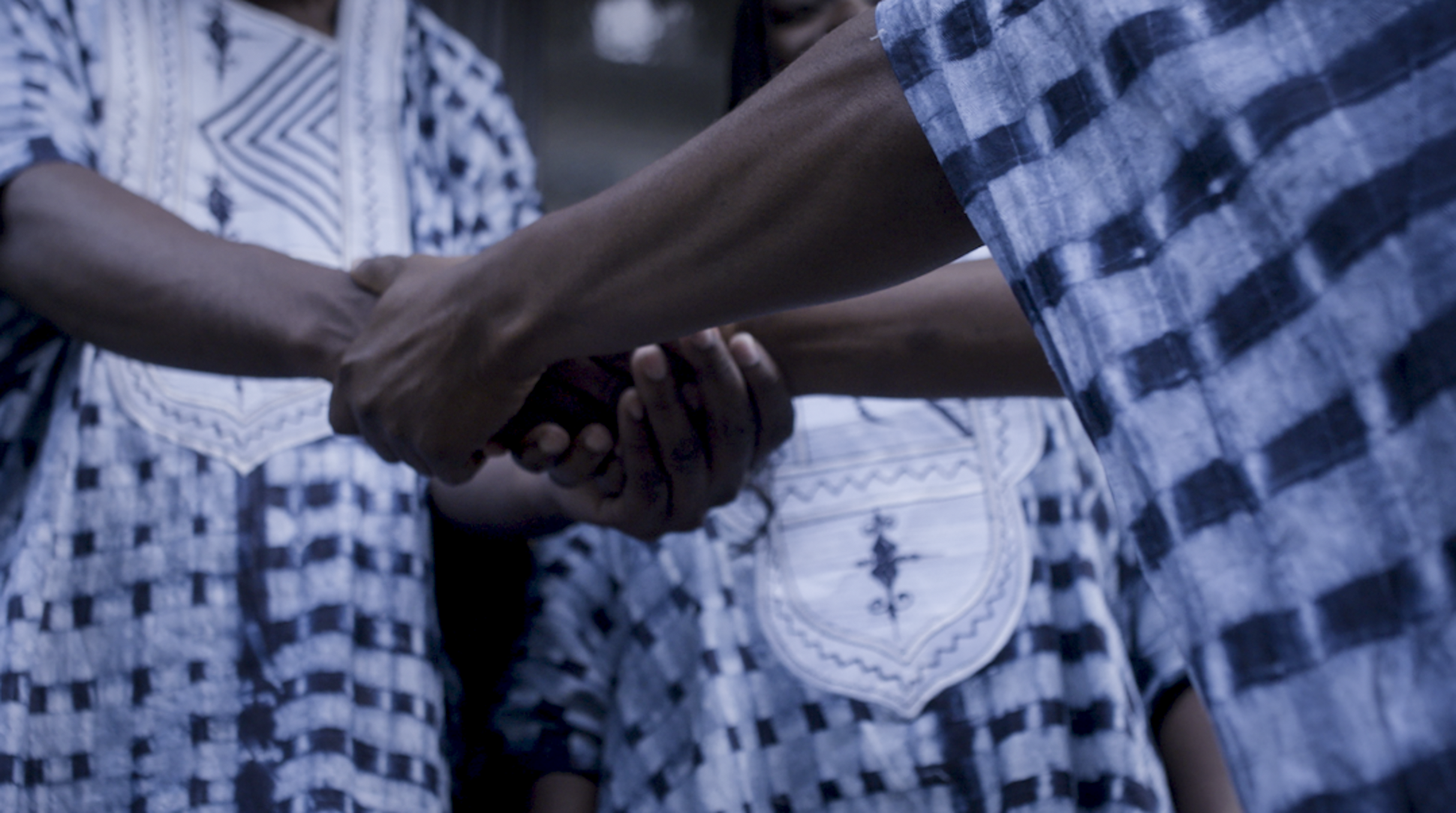
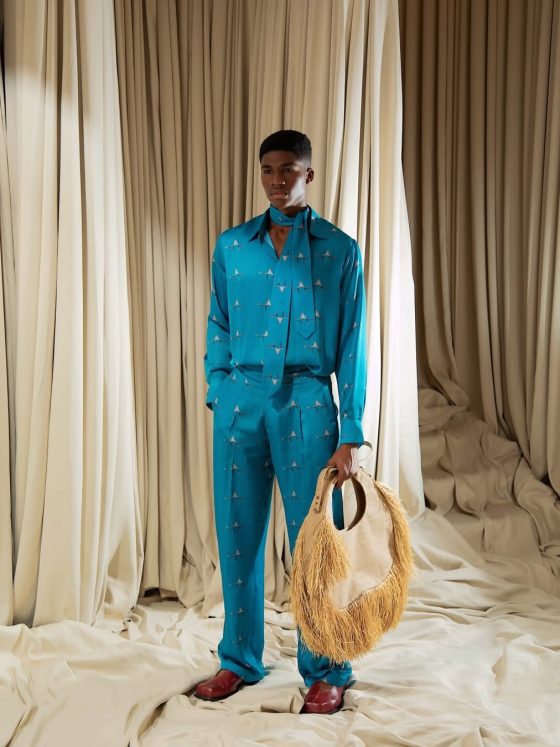
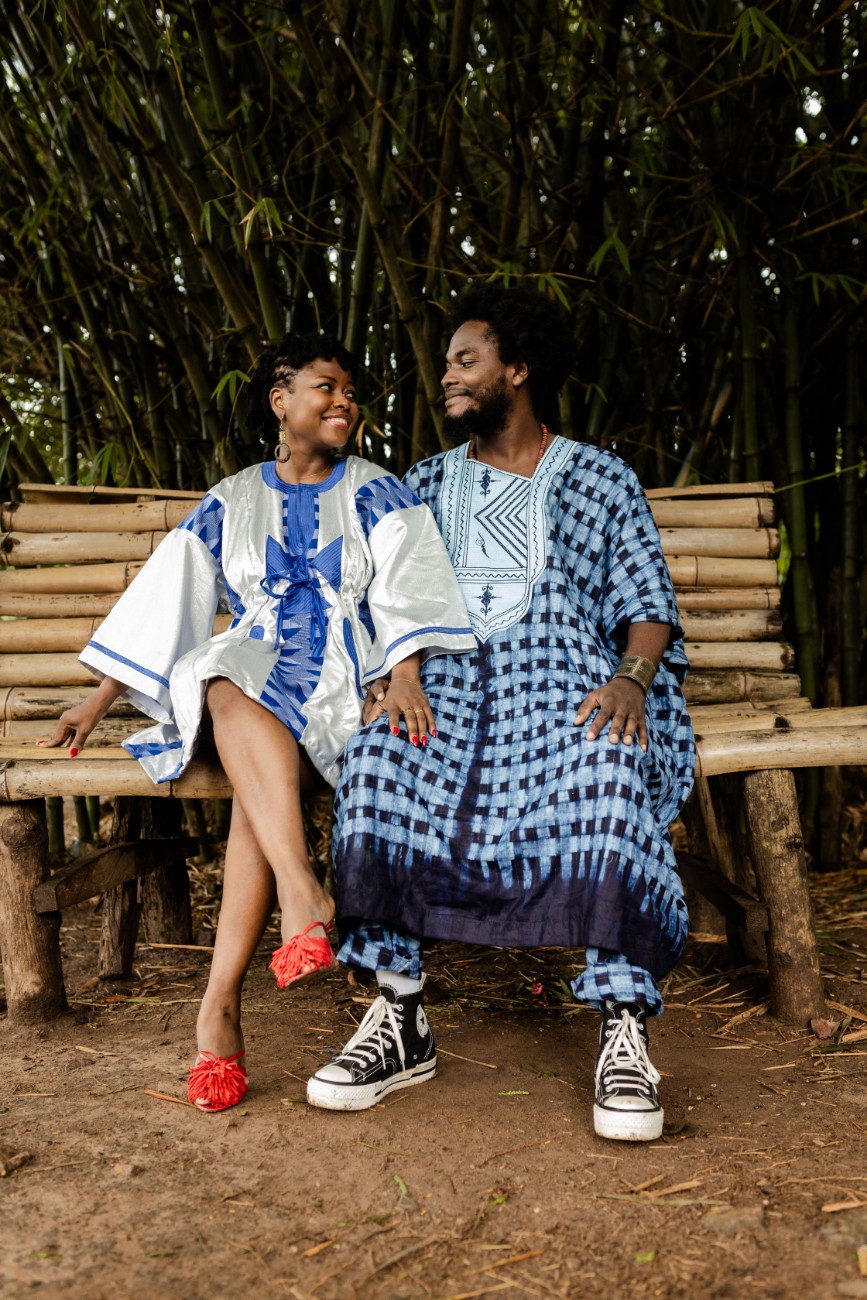
The collection revisits the canonical forms of West African dress. The press release names five: Agbara, Batakali, Anagonou, Boumba, and tuniques traditionnelles. Each is a recognised West African garment form. In Hors-Temps, they are rethought in contemporary, imposing, urban cuts. Embroideries, patchwork layering and geometric motifs create what the press release calls ‘un univers visuel mémorable’. The garments are neither purely traditional nor purely contemporary. They are what happens when a designer who lives in both vocabularies makes something that doesn’t have to choose between them.
The collection is explicitly designed to be timeless, adaptable and inclusive, and to accompany those who wear it not for a season but across a period of life. The press release uses the phrase ‘traverser les saisons comme les générations’: to cross seasons as it crosses generations. That ambition pushes against the fashion industry’s primary commercial rhythm, in which a collection is current for six months and then superseded. Asrafobawu’s answer to that rhythm is the collection’s name: Hors-Temps—outside time.
Indigo as the Thread
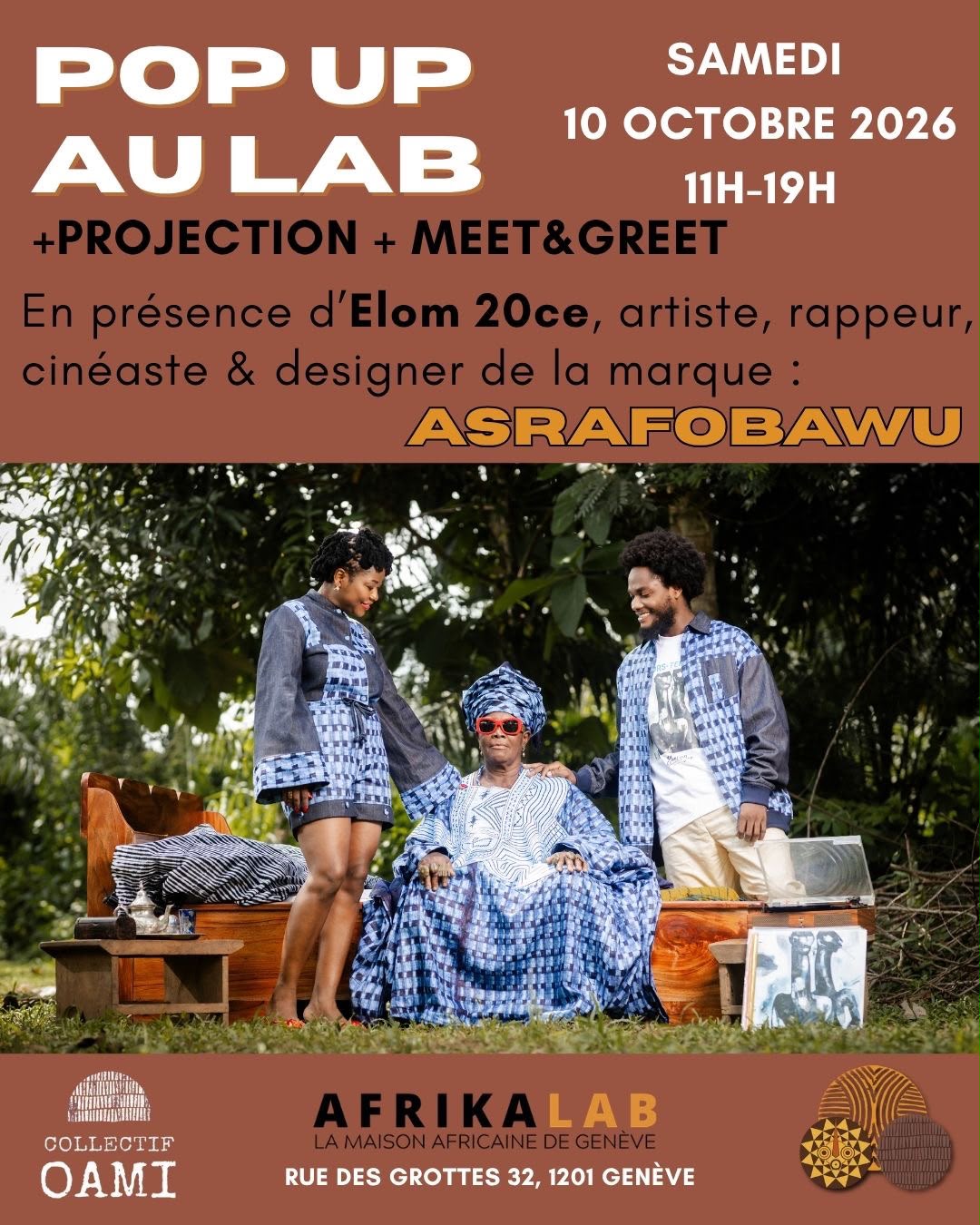
Indigo runs through Hors-Temps as both material and metaphor. The deep blue that characterises Adiré is the same colour field that appears in Eric Wonanu’s album-cover painting. The press release describes indigo as present in the textile traditions of many West African peoples, crossing cultures and periods. In this collection, it functions as the link between the different fabrics and between the album and the clothing: a colour that belongs to more than one tradition at once, which is exactly the kind of material Asrafobawu is looking for.
As Omiren Styles established in its profile of Asrafobawu as a cultural practice, the brand was built on the recognition that textile history itself carries messages worth exploring. Indigo’s history in West Africa is one of those messages. It connects the Yoruba adire tradition of southwestern Nigeria, the bogolan traditions of Mali, the Ewe strip-weaving contexts of Ghana and Togo, and the resist-dye practices of communities across the region. Using it as the collection’s visual anchor is not a design choice. It is a history lesson worn on the body.
Arctivism and What It Means for the Clothes
Arctivism, the framework Elom 20ce founded in 2009 that combines art and activism, is the intellectual context from which Asrafobawu emerged. Arctivism brought together workshops, conversations and events around African liberation history: figures such as Cheikh Anta Diop, Angela Davis, Thomas Sankara and Kwame Nkrumah. The clothing that came out of that context began as T-shirts bearing the images of those figures, then grew into the fuller recognition that any fabric of significance carries its own political charge.
The three Ewe proverbs on Asrafobawu’s About page most directly state what Arctivism means for how the brand operates. Les fourmis ne font pas de bruit: ants do not make noise. Serious collective action does not announce itself with spectacle. La couronne que tu portes n’est pas plus lourde que ta tête: the crown you wear is no heavier than your head. The weight of cultural responsibility is proportional to the person carrying it, not an external burden imposed from outside. Pour voir dans le noir, il faut fermer les yeux: to see in the dark, you must close your eyes. Clarity comes from turning inward rather than following the dominant culture’s light.
These three sayings are not decoration. They describe a methodology. A brand built on this methodology does not make loud claims about disrupting the fashion industry or positioning itself in an underserved market segment. It makes clothing for people who see themselves as guardians of something, distributes it through cultural institutions that already know the community it serves, and names its collection after an album recorded in one improvised overnight session in Lomé. The practice comes first. The product follows from the practice.
AfrikaLAB Geneva and the Distribution Logic
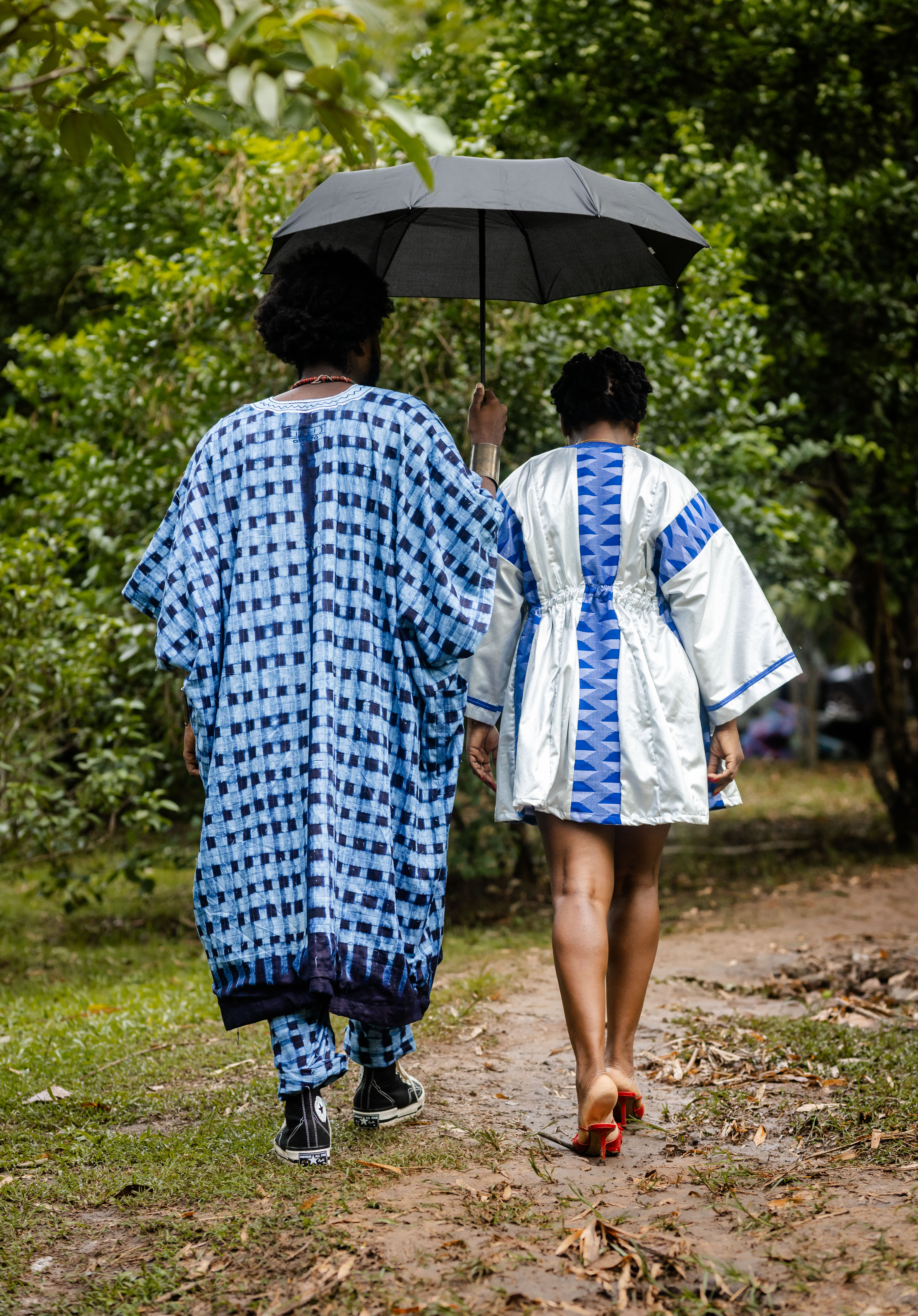
AfrikaLAB Geneva is Asrafobawu’s Swiss retail partner and the point of access for the Hors-Temps collection in Geneva. Its Instagram handle, @afrikalab.ch, appears on Asrafobawu’s website alongside the three Paris stockists, confirming it as a currently active retail point. AfrikaLAB operates as a cultural space for African creative work in Switzerland, which positions it precisely within the kind of institution Asrafobawu selects to carry its collections.
The full retail network, with four stockists across Geneva and Paris, follows the logic of the exhibition and pop-up cities: Lomé, Dakar, Paris, Geneva, Bilbao, Hamburg, and Addis Ababa. This is a diaspora geography. It is not the itinerary of a brand trying to enter mainstream European fashion retail. It is the itinerary of a cultural practice that knows where its audience is and goes there directly, in cities where African creative life circulates among people who do not need the mainstream fashion calendar to tell them what is worth their attention.
The Hors-Temps collection at AfrikaLAB Geneva is available alongside the brand’s other collections, Lonlon and Yéyé, and its accessories range. The full collection is also available through asrafobawu.com. The brand’s next collection, Avô, is listed as forthcoming in 2026.
The Omiren Argument
Asrafobawu does not describe itself as a fashion brand. Its About page calls it ‘une marque qui sublime les esthétiques africaines tout en préservant les savoir-faire ancestraux’: a brand that elevates African aesthetics while preserving ancestral know-how. That description is careful. Sublimer ne signifie pas montrer ou célébrer. It means to transform something into a higher form while keeping its essential nature. The Adire that artisans in Abeokuta dyed by hand is not celebrated in Hors-Temps. It is elevated into a garment for a Togolese guardian in Geneva or Paris who already knows what they are carrying.
Elom 20ce recorded seventeen songs in one night in Lomé. The collection, named after that album, brings together four fabrics from across the continent and the globalised world, reworks five classic West African silhouettes, and distributes the result through cultural institutions in European cities where diaspora communities have been building their own version of African creative life for decades. The tagline Toutes ces richesses sont nôtres, all these riches are ours, is not a marketing claim. It states who the knowledge belongs to, who the craft belongs to, and who the clothes are for.
ALSO READ
- Asrafobawu Is Not a Clothing Brand. It Is a Cultural Practice.
- The Global South Made Fashion. It Just Never Got Credit.
- Can Heritage Textiles Scale Without Losing Their Meaning?
Frequently Asked Questions
What is Asrafobawu’s Hors-Temps collection?
Hors-Temps is Asrafobawu’s current collection, named after Elom 20ce’s fifth studio album of the same name, recorded in a single improvised overnight session at Studio Colibri in Lomé, Togo. The collection brings four fabrics into dialogue: Adiré (indigo-resist-dyed cotton by Yoruba artisans from Abeokuta, Nigeria), Gangan (cotton canvas from the Togo-Bénin border), Kente (woven by Ashanti and Ewe peoples of Ghana and Togo) and Denim. It reworks five classical West African silhouettes, Agbara, Batakali, Anagonou, Boumba, and traditional tunics, in contemporary, imposing cuts. Indigo is the unifying thread across all four fabrics.
Where can I buy Asrafobawu’s Hors-Temps in Geneva?
The Hors-Temps collection is available at AfrikaLAB Geneva, Asrafobawu’s Swiss retail partner (@afrikalab.ch on Instagram). The collection is also available through the brand’s website at asrafobawu.com, which ships internationally. In Paris, La Boutique Kulturelle, Namani Concept Store, and Little Africa Village carry the collection.
Who is Elom 20ce?
Elom 20ce is a Togolese rapper, poet, activist, performer, designer and filmmaker born in Lomé in 1982. He studied international relations and political science in Cotonou, Bénin, and lives between Accra, Ghana, and Lomé, Togo. He founded Arctivism in 2009 as a framework combining art and activism and founded Asrafo Records the same year. He is the founder of Asrafobawu. He recorded his fifth studio album, Hors-Temps, in a single overnight session in Lomé.
What does the name Asrafobawu mean?
‘Asrafobawu’ is an Ewe compound. In Ewe, the language of an ethnic group living across south-east Ghana and southern Togo, ‘asrafo’ means warriors or guardians of traditions, and ‘awu’ means garment or clothing. ‘Asrafobawu’ therefore translates as ‘le vêtement des gardiens’: the garment of the guardians. The brand’s tagline is ‘Toutes ces richesses sont nôtres’, which means all these riches are ours.
What is Arctivism?
Arctivism is a framework founded by Elom 20ce in 2009 that combines art and activism. It brings together workshops, programmes, and dialogues on freedom of expression, African liberation history, and the role of creative practice in cultural consciousness. Arctivism events have centred on figures in African liberation struggles, including Cheikh Anta Diop, Angela Davis, Thomas Sankara and Kwame Nkrumah. Asrafobawu emerged directly from Arctivism, beginning as stage costumes and T-shirts for Arctivist events before developing into a full clothing practice.
What other collections does Asrafobawu produce?
Asrafobawu currently has three collections available: Hors-Temps (the current collection), Lonlon, and Yéyé. An accessories range is also available. A new collection named Avô is listed as forthcoming in 2026. The brand’s collections are available through asrafobawu.com and four confirmed European retail stockists: AfrikaLAB (Geneva), La Boutique Kulturelle (Paris), Namani Concept Store (Paris), and Little Africa Village (Paris).