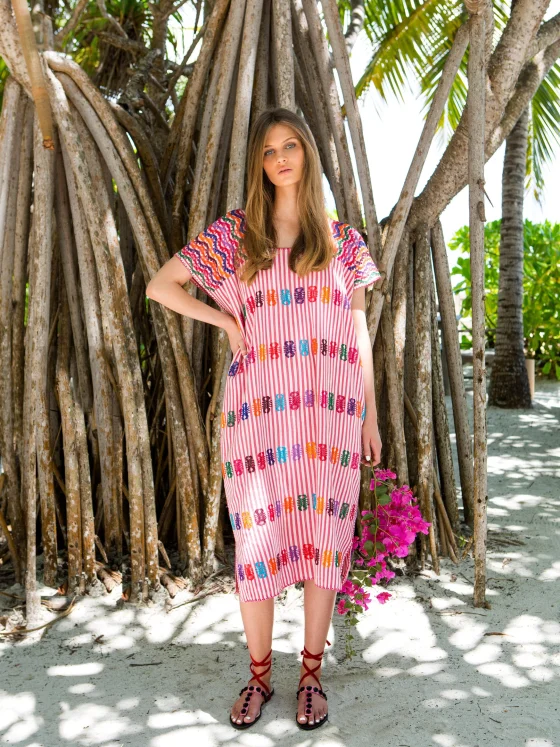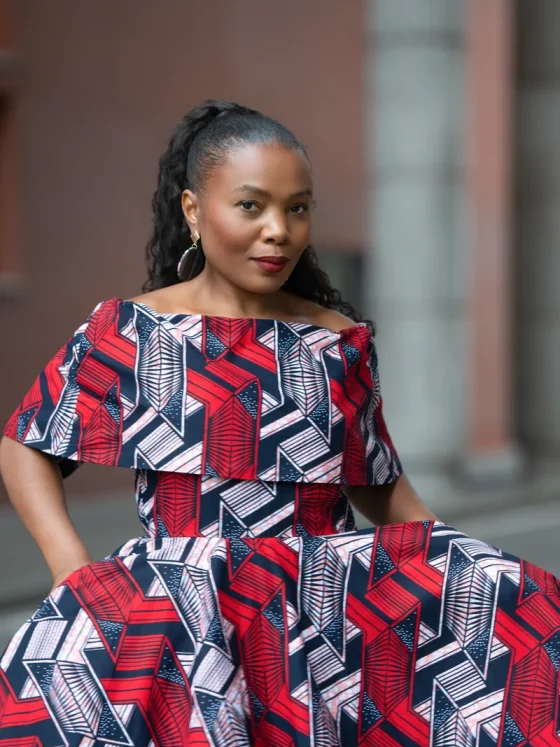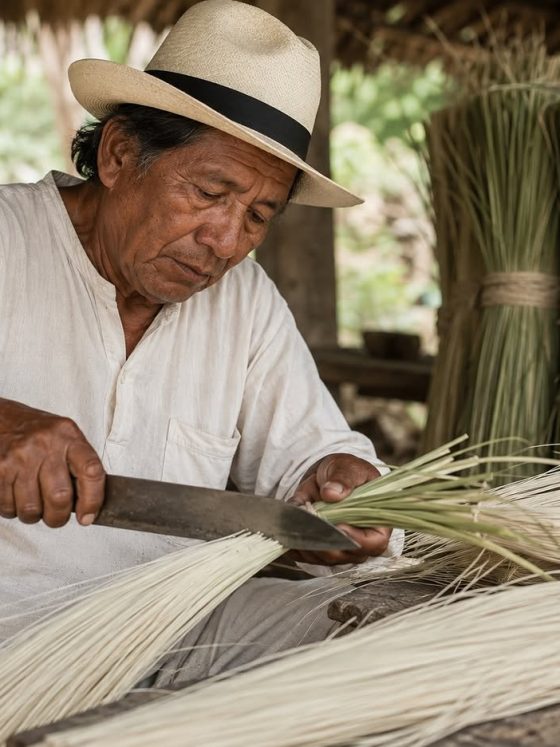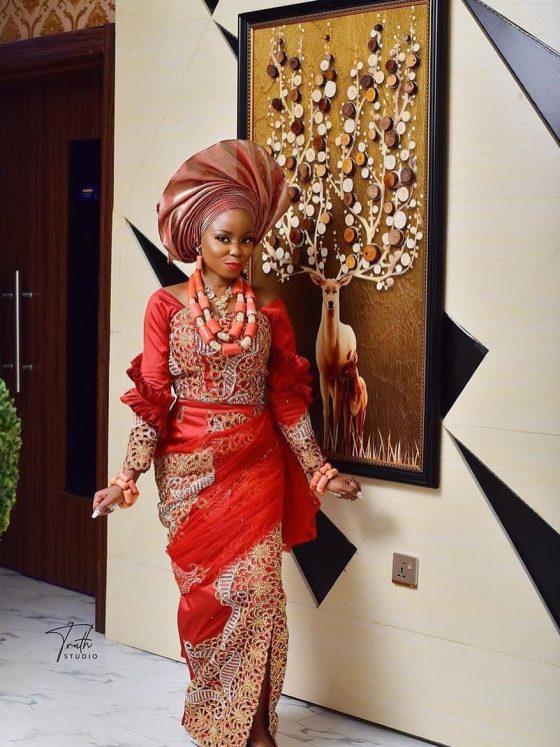
Colombia has a single national dress in the way that any country with thirty-three departments, five distinct geographic regions, and three centuries of indigenous, Spanish, and African cultural layering has a single national dress: as a political convenience rather than a cultural reality. What Colombia has instead is a set of regional dress traditions whose differences are as significant as their shared Colombian identity, and whose fabrics, production methods and social functions are each specific to the climate, community and history that produced them.
This guide covers the five geographic regions and the dress traditions each has developed. It is a companion to Omiren Styles’ earlier analysis of the Mola, the Pollera and the Palenquera dress, which examined the Caribbean and Pacific coastal traditions and the indigenous and Afro-Colombian communities whose dress vocabulary those garments represent. This article gives equal attention to the Andean interior, the coffee-growing region and the Llanos plains, whose dress traditions are less internationally visible and equally specific.
Colombia’s traditional clothing spans five geographic regions, each with its own garments, fabrics and social vocabulary. This guide covers the ruana, the pollera, the mochila, the traje antioqueño and the llanero dress – and what each one carries beyond its appearance.
The Five-Region Framework
Colombia divides geographically into five distinct regions whose climatic differences directly determine the fabric and garment choices of their traditional dress: the Andean highlands (cold, wool-dependent); the Caribbean coast (hot and humid, linen and cotton); the Pacific coast (tropical, Afro-Colombian traditions); the Llanos plains (cattle country, practical workwear formality); and the Amazon basin (indigenous traditions, natural fibres). La Guajira, on the northern peninsula and home to the Wayuu people, sits within the Caribbean region but functions as a distinct home zone.
Understanding the regional framework prevents the confusion that comes from treating the pollera and the ruana as interchangeable representations of Colombian traditional dress. They are not: one is a Caribbean coastal garment shaped by Afro-Colombian and Spanish colonial influence; the other is an Andean highland garment shaped by indigenous and European wool-weaving traditions. Wearing either in the other’s regional context would be as mismatched as pairing them with a Colombian from the other region.
The Andean Highlands: Ruana, Aguadeño and Wool
The Ruana
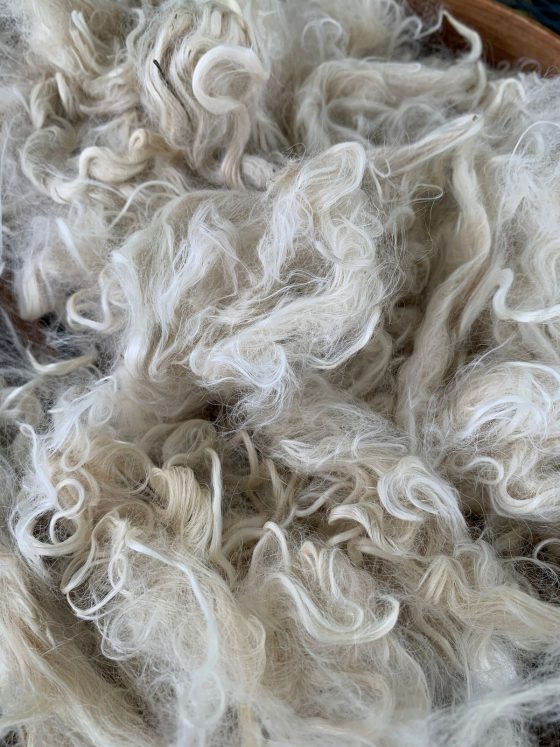
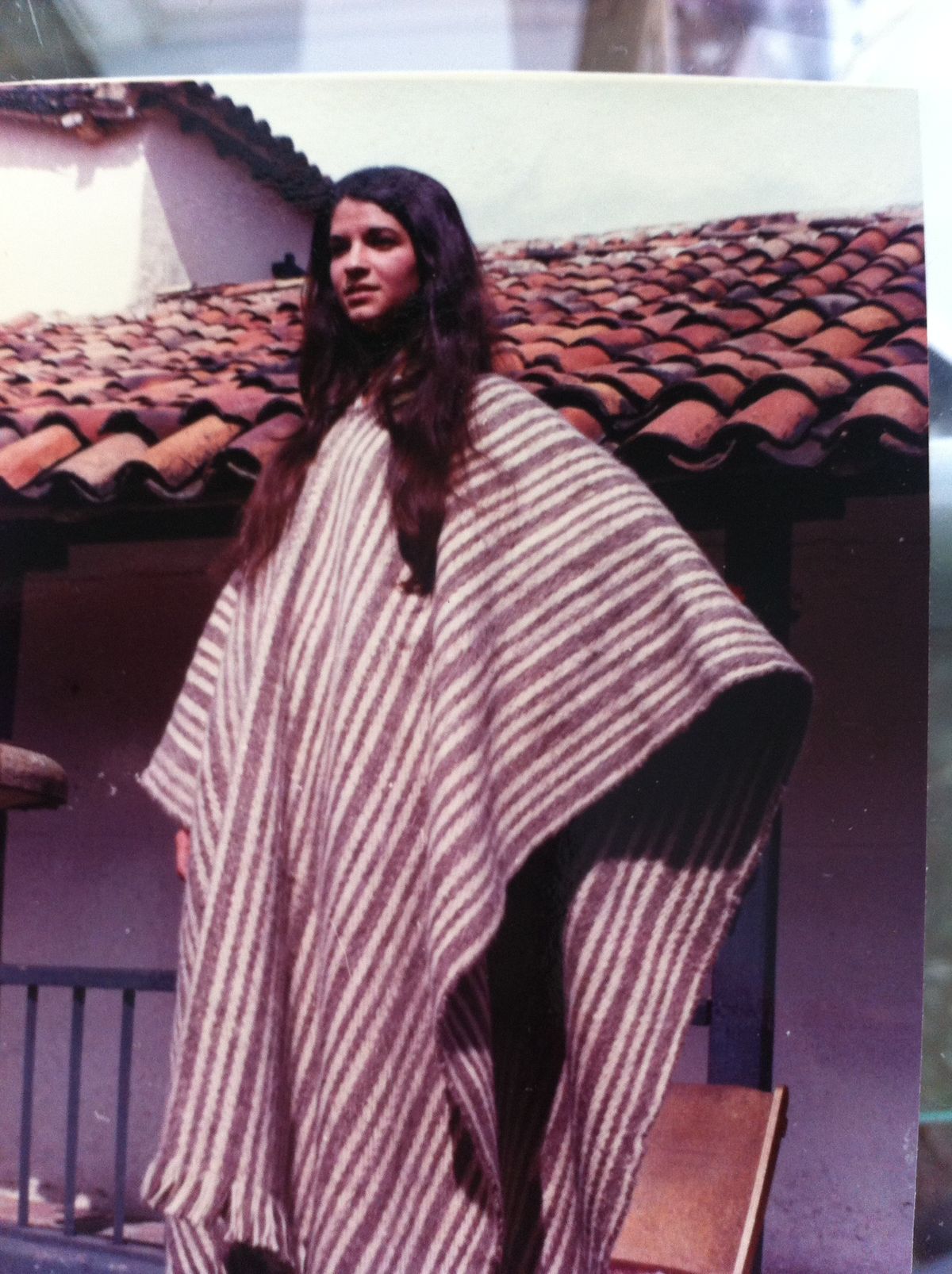
The ruana is the defining garment of Colombia’s Andean interior, worn in the cooler highlands of Boyacá and Cundinamarca, where altitude makes a thick outer layer necessary for most of the year. It is a rectangular piece of heavy wool with a central head opening and a front slit, draped over both shoulders or carried over one shoulder and loosely drawn across the other. Farmers and tradespeople wear ruanas in natural, undyed wool whose texture and weight vary with the sheep’s altitude and wool grade. Urban Andean wearers carry ruanas in fashionable versions made in multiple fabrics and colours that retain the garment’s silhouette while adapting it to contemporary city wear.
The ruana is not the same garment as the poncho, though international fashion coverage routinely conflates the two. A poncho closes on both sides with a central head opening; a ruana has a front slit that lets it drape and adjust as the wearer moves between cold and warmer environments. This functional detail is not cosmetic: in the Andean climate, where temperatures swing significantly between morning and afternoon and between shade and sun, the ruana’s adjustability is the garment’s primary practical virtue.
Colombian designers, including Silvia Tcherassi and Esteban Cortázar, have incorporated ruana silhouettes into contemporary collections, bringing the garment’s volume and drape into international fashion contexts. In those contexts, the ruana retains its identifying silhouette while shedding its specific Andean wool weight, becoming a fashion reference rather than a functional garment. The distinction between the reference and the original is the same distinction this series has drawn throughout: the garment’s meaning in its original context is carried by its specific material and use, not only by its shape.
The Sombrero Aguadeño
The aguadeño is a finely woven straw hat from the Andean region, originating in Aguadas, Calderán, in the Caldas department. It is a palm-fibre hat woven so finely that it can be rolled without damage, making it a practical travelling hat as well as a prestige object. The aguadeño sits within Colombia’s wider tradition of fine straw hat-weaving but differs from the sombrero vueltiao of the Caribbean coast in its Andean geographic origin and production technique, which uses the natural fibres of the region’s highland palms.
The tension between Andean hat traditions and Caribbean hat traditions in Colombian dress is a version of the wider tension between the country’s regional identities: each region’s traditional hat is specific to its own weaving community, its own fibre source and its own social context, and collapsing them into a single ‘Colombian traditional hat’ flattens the very regional specificity that makes each one worth knowing.
The Caribbean Coast: Pollera, Cumbia Suit and the Sombrero Vueltiao
La Pollera Colorada
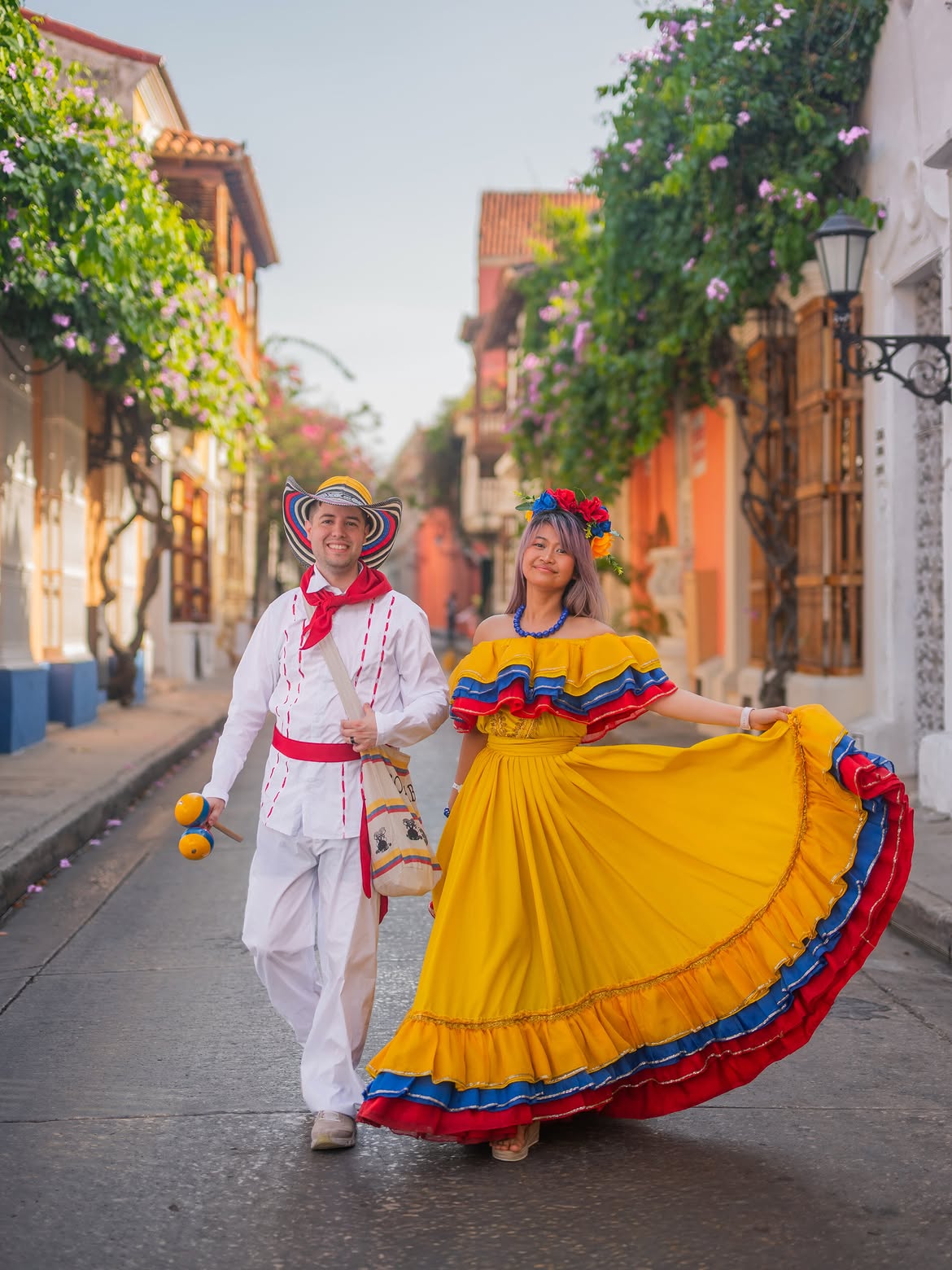
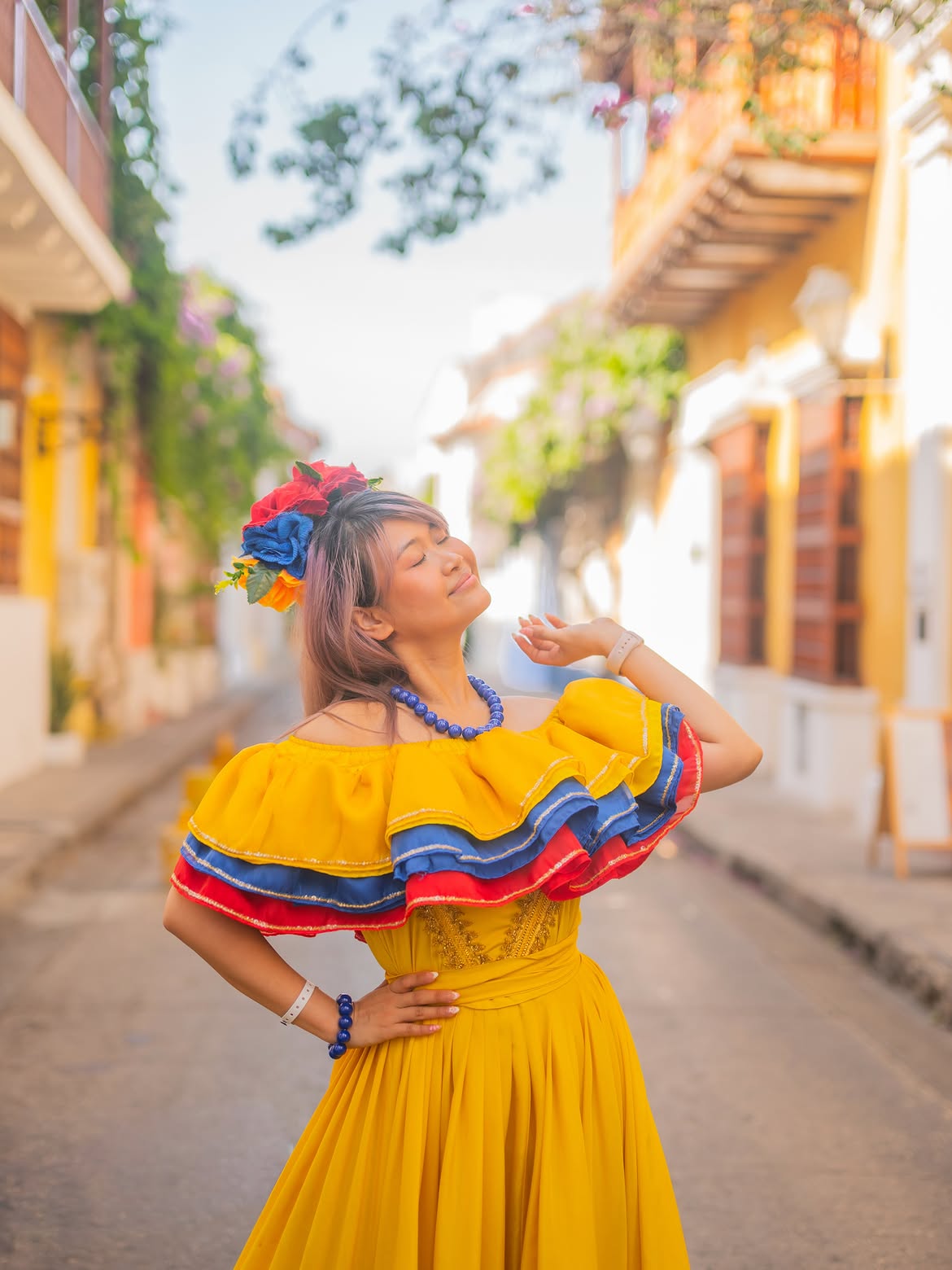
La Pollera Colorada is Colombia’s most internationally recognised women’s traditional costume. It consists of a vivid ruffled skirt paired with an off-the-shoulder blouse, typically embellished with lace at the neckline and hem, in horizontally banded contrasting colours or intricate floral prints. The garment is associated with the Carnaval de Barranquilla and with cumbia, the music and dance tradition of the Caribbean coast. Afro-Colombian and indigenous communities on the coast contributed the garment’s aesthetic and the dance tradition to which it is inextricably linked; the Spanish colonial presence contributed the European textile influences visible in its lace and embroidery.
The male cumbia complement to the pollera consists of white linen trousers, a white linen shirt with rolled sleeves, a red neckerchief, and the sombrero vueltiao. The linen suits the coast’s climate: light, breathable, and suited to the sustained physical movement of cumbia performance. The cumbia suit and the pollera together form the iconic visual pairing of Caribbean Colombian dress, and their appearance at the Carnaval de Barranquilla makes them one of the most photographed traditional dress ensembles in Latin America.
The Sombrero Vueltiao
The sombrero vueltiao is woven from caña flecha, the fibre of a native Colombian palm species, using a technique developed by the Zenú indigenous people of the Caribbean coast. The weaving creates alternating black-and-white geometric patterns in the hat’s structure, making each sombrero vueltiao a textile rather than simply a shaped hat. The hat’s pattern vocabulary carries Zenú cultural information in the same way the Wayuu mochila bag’s geometric language carries Wayuu cultural information: the patterns are a visual language whose meanings are held within the community of makers.
The Colombian government designated the sombrero vueltiao a national cultural symbol in 2004, which represents both recognition and risk: a national symbol attracts commercial reproduction that may not involve the Zenú community at all, and the distinction between a hat woven by a Zenú artisan in Tuchin, Córdoba, and a machine-made reproduction is invisible to most buyers. Tuchin, Córdoba, is identified as the capital of sombrero vueltiao production, and buying from Zenú artisan cooperatives in and around that municipality is the most direct way to connect a purchase to the community whose knowledge produced the design vocabulary.
The Coffee Region: The Traje Antioqueño
Colombia’s coffee-growing region, spanning the departments of Antioquia, Caldas, Risaralda and Quindío, developed its own dress tradition that reflects the region’s agricultural character, its mestizo cultural identity and the specific climate of mid-altitude tropical highlands. The traje antioqueño, or paisa traditional dress, features, for women, a colourful skirt with horizontal bands, a white blouse with lace or embroidery, and a headscarf or hat; for men, a wool poncho, a flat-brimmed hat, and simple dark trousers with a white shirt. The coffee region’s traditional dress is less formally ceremonial than the coastal pollera and less practical than the Andean ruana; it sits in between, worn for regional festivals, parades, and cultural events rather than as everyday dress.
The Feria de las Flores in Medellín is one of the main occasions when the coffee region’s traditional dress is most visible, alongside the flower-decorated silletero floats that are the festival’s signature image. The silleteros, who carry enormous floral arrangements on their backs, wear traditional paisa dresses as an integral part of the festival’s visual identity. The dress’s appearance at this specific Antioqueñan festival demonstrates the same principle that applies throughout Colombian regional dress: the garment is legible in its own regional context in ways that a general ‘Colombian traditional costume’ designation cannot capture.
The Wayuu and the Mochila: La Guajira
The Wayuu mochila is a handwoven bag produced by Wayuu women of the La Guajira peninsula in northern Colombia. They weave it using a crochet technique rather than a loom, and each bag takes between one and four weeks to complete, depending on the complexity of its geometric pattern. The patterns are not decorative in the Western sense: they carry personal and cultural narratives that the maker encodes in the design, and the pattern vocabulary is transmitted across generations within Wayuu communities as knowledge that belongs to those communities.
The global commercial success of the Wayuu mochila since the 2010s has created both economic opportunity and significant risk of exploitation. The bag’s geometric aesthetic, reproduced by fast-fashion manufacturers at a fraction of the cost of the authentic handwoven version, extracts its visual language from the knowledge system that produced it and turns it into a surface pattern whose commercial value returns to the manufacturer rather than the Wayuu community. Wayuu cooperatives have responded by actively pursuing recognition of their intellectual and cultural rights.
As Omiren Styles has established in its analysis of Colombian traditional dress, no national legal protection equivalent to the sombrero vueltiao’s 2004 Cultural Symbol designation yet exists for the Wayuu mochila, and that policy gap has direct fashion industry implications. A buyer who wants to support the Wayuu community rather than its commercial imitators needs to verify that the bag they are buying was made by a Wayuu artisan, which requires either a direct relationship with a Wayuu cooperative or a purchase through a fair-trade intermediary with documented sourcing relationships.
The Llanos: Llanero Dress and the Liqui-Liqui
The Llanos region of eastern Colombia, a vast flat grassland shared with Venezuela, has a dress tradition shaped by its cattle-ranching economy and its specific cultural identity as a frontier territory. The llanero, the Colombian equivalent of the Argentine gaucho or the Venezuelan coleo rider, developed a practical work-dress tradition shaped by the demands of cattle herding on horseback in a tropical plain: durable fabrics, a functional cut, and the specific accessories of riding life.
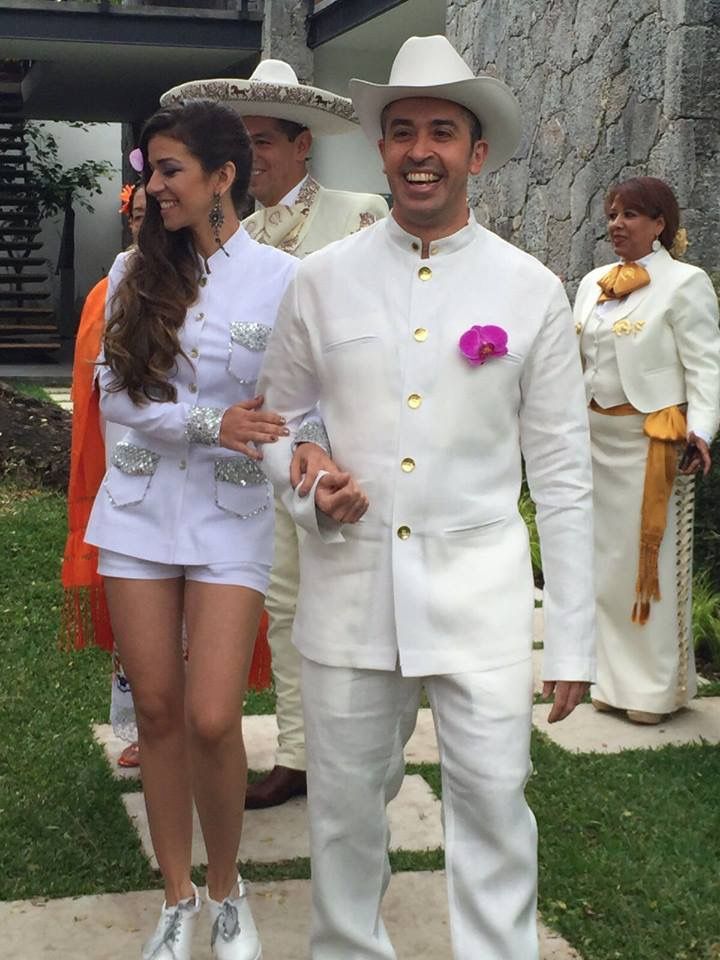
The liqui-liqui is a formal suit originally from the Llanos region, made in white or light-coloured lightweight fabric, with a collarless jacket closed at the neck, which was adapted into the formal traditional dress of both Colombian and Venezuelan plains culture. It represents the llanero’s claim to formal dignity within the plains’ working-dress tradition: a suit that carries the cultural weight of formal attire while adapting to the climate and context of the Llanos. For women, the llanero dress tradition features skirts, blouses and headwear that share the region’s colour palette with the practical demands of open-air life.
Fabrics, Production and the Artisan Economy
Colombian regional dress fabric choices are not arbitrary. They follow from the resources available in each region, the climate the garment must address and the economic history of the community that produces it:
- Wool: the Andean highlands produce wool from sheep whose altitude and cold contribute specific fibre characteristics; the ruana’s wool weight and texture vary with altitude and flock breed.
- Caña flecha: the native palm fibre used to weave the sombrero vueltiao is specific to the Caribbean coast’s lowland ecology; the Zenú community’s knowledge of how to harvest, prepare, and weave caña flecha is an irreplaceable part of the hat’s production.
- Linen and cotton: the Caribbean coast’s climate favours lightweight natural fibres; the linen cumbia suit and the cotton pollera reflect the coast’s hot, humid conditions.
- Wayuu crochet: the mochila is not woven on a loom but crocheted, using a technique specific to Wayuu women’s cultural knowledge; the crochet structure gives the bag its characteristic texture and allows the geometric patterns to be built into the object rather than printed onto it.
- Palm fibre and natural dye: the Arhuaco community of the Sierra Nevada de Santa Marta produces white woven garments using traditional fibre and natural dye processes maintained as part of their cultural practice.
Colombian Fashion’s Relationship to Its Traditional Dress
Contemporary Colombian fashion has an active relationship with the traditional dress vocabulary documented above. Designers including Silvia Tcherassi, whose Cartagena-based work draws on Caribbean coastal aesthetics, and Esteban Cortázar, who has incorporated ruana silhouettes and indigenous textile motifs into international collections, represent one dimension of this relationship: using traditional garment forms and textile patterns as a source for contemporary design.
The distinction between design inspiration drawn from a tradition and the extraction of a tradition’s visual language for commercial gain without attribution or benefit to the source community is the same distinction this series has drawn in relation to Wayuu mochila reproductions, to the cochineal natural dye communities of Peru, and to the Andean alpaca farming communities whose production practices the fair-trade sourcing claim invokes. Colombian contemporary fashion at its most responsible makes this distinction explicit: Entreaguas, whose handmade clothing supports local women artisans, and fair-trade cooperatives working with Zenú hat-weavers and Wayuu mochila makers are examples of commercial relationships whose terms are visible.
The Carnaval de Barranquilla, inscribed on the UNESCO Intangible Cultural Heritage list in 2003, is the annual moment at which the widest range of Colombian regional dress appears in public simultaneously. The pollera and cumbia suit of the coast, the masquerade costumes of the Afro-Colombian and indigenous traditions, and the paisa dress of the coffee region worn by visitors: the carnival is both a celebration and a documentation. This living event produces the visual record of what Colombian traditional dress looks like when worn by people for whom it is their own.
The Omiren Argument
Colombian traditional clothing is not a single garment any more than Colombian identity is a single experience. The ruana addresses cold altitude. The pollera addresses hot coastal carnival. The mochila carries personal biography in geometric crochet. The sombrero vueltiao encodes Zenú cultural knowledge in palm fibre. Each comes from a specific place, a specific production community, and a specific set of cultural meanings legible to those communities and invisible to anyone who approaches them as a unified national costume.
The fashion industry’s appetite for Colombian aesthetics, which reached global scale through the Wayuu mochila in the 2010s and has continued through the ruana’s appearance in international collections, has consistently favoured the visual language over the knowledge system that produced it. The evidence standard this series has applied throughout its coverage of beauty claims, textile provenance and traditional dress applies here too: the claim that a product is inspired by, or incorporates elements of, Colombian traditional dress should be evaluated against the question of whether the community whose knowledge produced those elements is visible in, and benefits from, the commercial relationship the claim implies.
As Omiren Styles has argued throughout its coverage of heritage dress traditions, the Global South made fashion and never got credit. The Zenú community wove the sombrero vueltiao for centuries before it became a national symbol. The Wayuu women encoded their cultural knowledge into mochila crochet for generations before it became a global fashion accessory. The paisa artisans embroidered the blouses of the traje antioqueño at every festival in the coffee region before Colombian aesthetics became an international trend. The credit that visibility provides should reach the communities that built what people are seeing.
ALSO READ
- Colombian Traditional Dress: Mola, Pollera and Palenquera Guide
- The Senegalese Boubou and Bazin Riche: What the Grand Dress Communicates and How
- Urhobo Traditional Attire for Women: Clothing, Beads and Ceremony Style
- The Global South Made Fashion. It Just Never Got Credit.
Frequently Asked Questions
What is the most famous traditional Colombian clothing?
The pollera colorada is the most internationally recognised piece of Colombian women’s traditional clothing: a vivid ruffled skirt worn with an off-the-shoulder embroidered blouse, associated with the Carnaval de Barranquilla and the cumbia dance tradition. The sombrero vueltiao, the palm-fibre hat woven by Zenú artisans using the traditional caña flecha technique, is Colombia’s declared national cultural symbol and is equally widely recognised. In the Andean highlands, the ruana is the most consistently worn traditional garment and remains common as everyday outdoor wear in cooler mountain regions.
What is a ruana and how is it different from a poncho?
The ruana is a rectangular piece of heavy wool with a central head opening and a front slit, worn particularly in Colombia’s Andean highlands of Boyacá and Cundinamarca. The front slit distinguishes the ruana from a poncho, which is closed on both sides. The slit lets you adjust and drape the ruana as temperatures change throughout the day, a practical adaptation to the Andean climate’s significant altitude-related temperature swings. Farmers and tradespeople wear ruanas in natural, undyed wool, while urban Andean residents wear fashionable versions in multiple fabrics and colours.
What is the Wayuu mochila?
The Wayuu mochila is a handwoven bag produced by Wayuu women of the La Guajira peninsula in northern Colombia. It is made using a crochet technique rather than a loom, with each bag taking between one and four weeks to complete. Its geometric patterns carry personal and cultural narratives encoded by the maker, and the pattern vocabulary is transmitted within Wayuu communities as cultural knowledge. The bag became a global fashion accessory in the 2010s; Wayuu cooperatives have identified the commercial reproduction of its design by manufacturers with no connection to the Wayuu community as a significant exploitation risk. Buy authentic mochilas directly from Wayuu artisan cooperatives or verified fair-trade intermediaries.
What are the five regions of Colombian traditional dress?
The five geographic regions of Colombia that correspond to distinct dress traditions are: the Andean highlands (wool ruana, aguadeño hat, coffee-region traje antioqueño); the Caribbean coast (pollera colorada, cumbia suit, sombrero vueltiao, Wayuu mochila from La Guajira); the Pacific coast (Afro-Colombian traditions including the distinctive dress of the Palenque communities); the Llanos plains (llanero dress, the liqui-liqui formal suit); and the Amazon basin (indigenous communities using natural plant fibres and dyes). Each region’s dress is shaped by its specific climate, ancestral community and cultural history, and the traditions are not interchangeable.
What is the sombrero vueltiao made from?
The sombrero vueltiao is woven from caña flecha, the fibre of a native Colombian palm species found on the Caribbean coast. The Zenú indigenous people developed the weaving technique, and the alternating black-and-white geometric patterns carry cultural information specific to the Zenú community. The Colombian government designated the sombrero vueltiao a national cultural symbol in 2004. The most significant centre of authentic production is Tuchin, Córdoba, where Zenú artisan communities maintain the traditional weaving knowledge. Commercial reproductions are widely available; Zenú artisans make authentic Vueltiao hats using the traditional caña flecha weaving technique.
EXPLORE MORE
Read the full Heritage Clothing and Latin American Dress coverage at Omiren Styles for ongoing documentation of Colombian and Latin American dress traditions, their regional vocabularies and the artisan communities whose knowledge sustains them. Discover travel and heritage intelligence across Colombia, Latin America and the Caribbean at Rex Clarke Adventures.