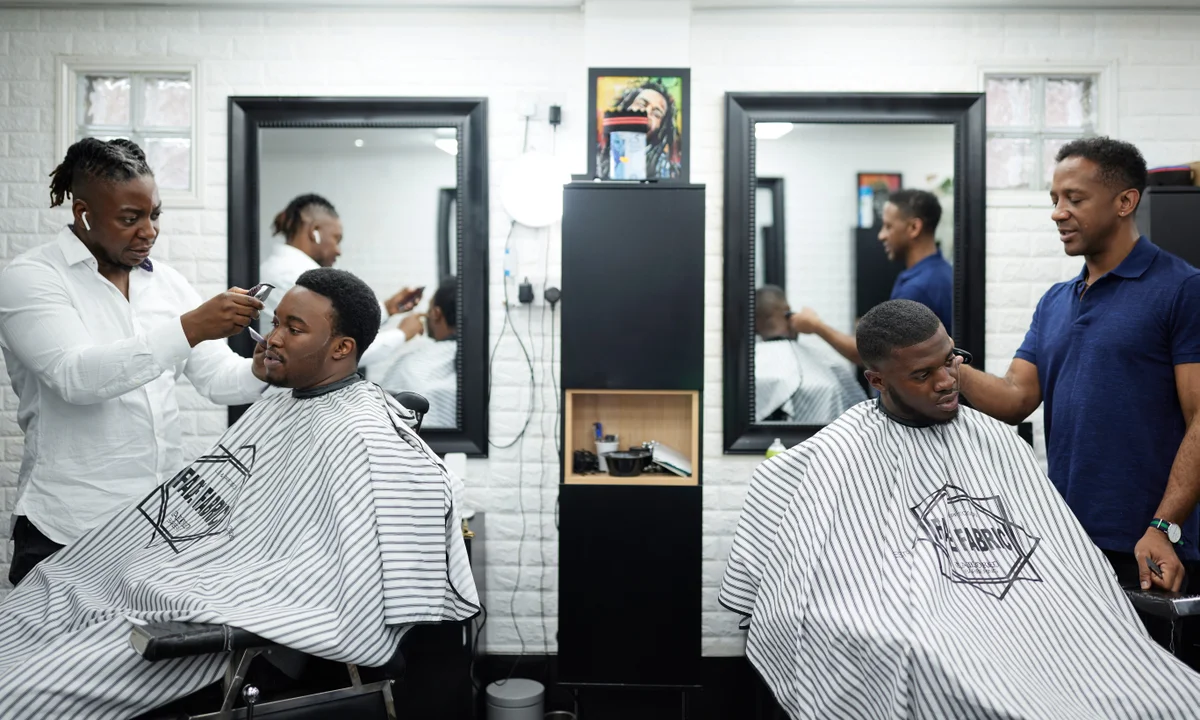
The barber chair is where the fashion decision gets executed.
A man may have spent weeks selecting fabric, doing two fittings on a kaftan or an agbada, and carefully thinking about what the occasion requires and what he wants to communicate when he walks in. All of that preparation arrives at the barber on the Thursday or Friday before the event. The fade that frames the face. The edge-up at the temple and the nape. The beard shaped to the jaw. The skin preparation that finishes what the garment begins. The barber is not adding a decorative final touch to a completed fashion decision. The barber is completing the fashion decision. Without this stage, the garment communicates differently. With it, the whole ensemble speaks.
Fashion media has not developed a language for this relationship. It covers garments, collections, designers and retail. It covers hair in the context of editorial looks. It does not cover grooming as the infrastructure of men’s dress culture: the economic system, the practitioner knowledge and the daily rituals that make the garments work.
A fade is not a haircut. It is a precision instrument. The barber who executes a tight skin-fade on a Black man’s head before an event has performed work that changes what every garment above the collar communicates. That work is skilled, time-specific, relationship-dependent and culturally specific. It is also completely invisible in fashion media’s account of the look.
As Omiren Styles has documented in its political history of African hair long before colonial influence, African hair was a structured system of communication. Across different societies, hairstyles signalled age, marital status, religion, social rank and regional identity. Braiding, twisting and styling were not random acts. They were intentional, taking hours or days to complete. The process itself was communal, creating spaces for bonding, storytelling and cultural continuity. The barber shop is where that tradition lives in 2026 in its most commercially developed and culturally active contemporary form.
Grooming is not a finishing touch on a fashion look. It is the infrastructure that maintains and makes men’s dress culture socially legible. The barbers, product makers, and rituals behind it do fashion work the industry ignores.
What the Barber Shop Actually Is
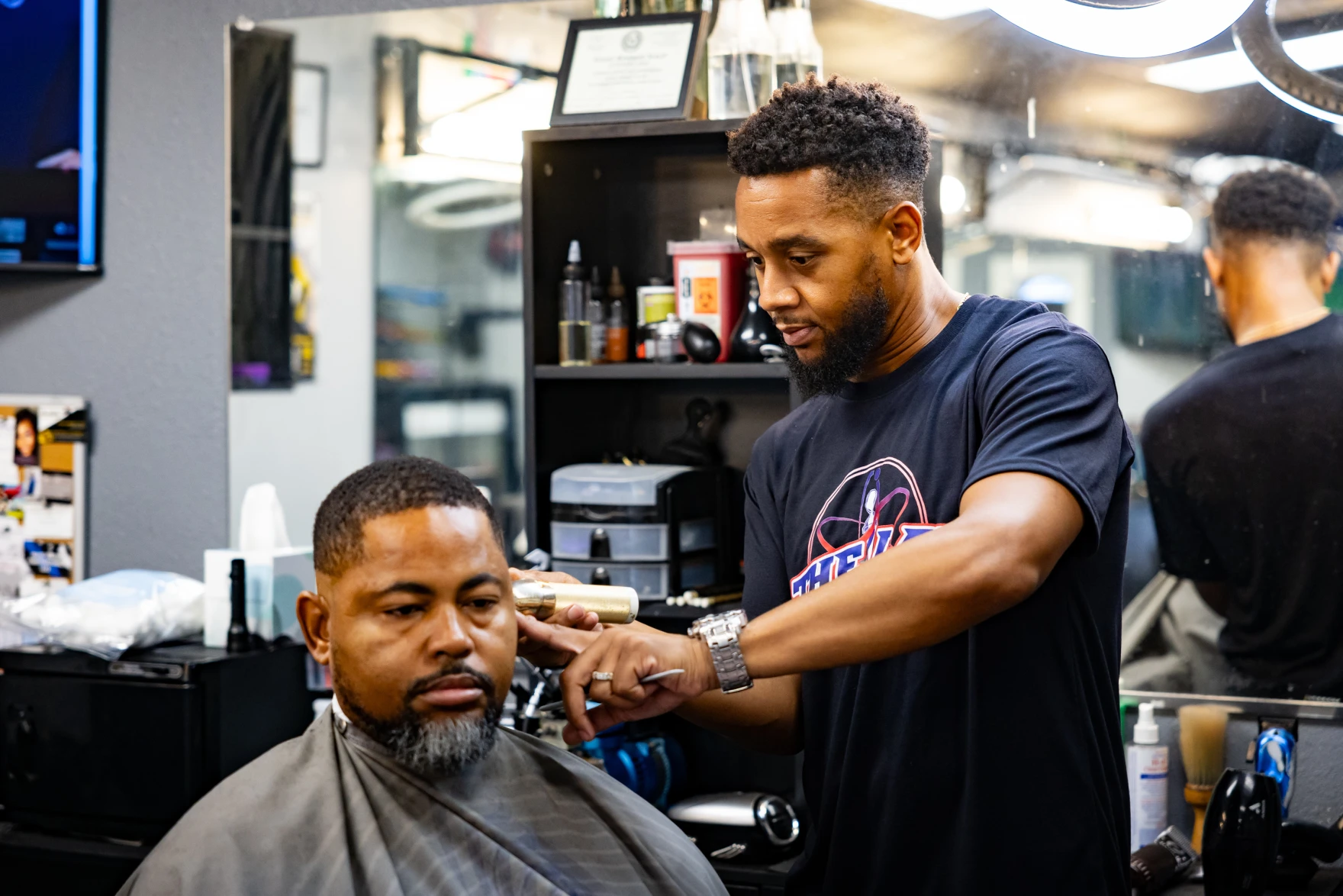
The barber shop is not a service venue that happens to be adjacent to fashion. It is one of the primary social institutions through which men’s style culture is produced, transmitted and maintained.
In Lagos, the barber shop in every residential neighbourhood sets, debates, and updates men’s aesthetic standards. The barbers who work there track what cuts circulate through music videos, social media, and street visibility. They are developing technical vocabulary for the specific looks their clients want. They build relationships with specific clients whose facial structure, hair texture, and style preferences they know the way a tailor knows a repeat client’s measurements: from accumulated physical knowledge built over repeated sessions. That knowledge is not transferable to another barber without loss. The client who changes barbers loses something specific: the institutional memory of their own head.
The barbershop is also an intelligence network. The conversation that happens across a session — which client is going to which event, what look is being worn by whom in which context, what the current aesthetic standards are for the community the client belongs to — constitutes a real-time circulation of social and cultural intelligence that the barber accumulates across their entire client base. A Lagos barber who has served the same neighbourhood for five years holds a more precise picture of that neighbourhood’s social calendar, aesthetic aspirations and dress culture than any fashion media outlet that covers the city from outside.
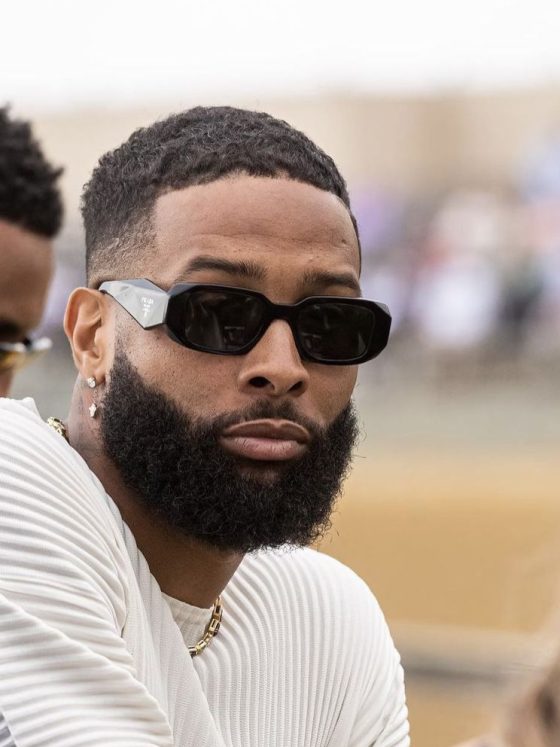
As Omiren Styles has documented in its analysis of beard culture across Africa, facial hair in Africa has never been a simple matter of style. Across different societies, the beard has been read as a sign of age, authority, religious alignment, discipline and social belonging. The barber who shapes that beard is therefore not simply removing unwanted hair. They are calibrating a social signal: how long, how precise, how shaped, how finished the beard is communicates specific information to the communities whose literacy allows them to read it. The Yoruba man whose beard is shaped for a naming ceremony is communicating something different from the same man whose beard is shaped for a Friday prayer appearance. The barber makes both calibrations possible.
The Fade as Fashion Technology
The skin fade is one of the most technically demanding procedures in contemporary men’s grooming, and one of the most misunderstood in its relationship to fashion.
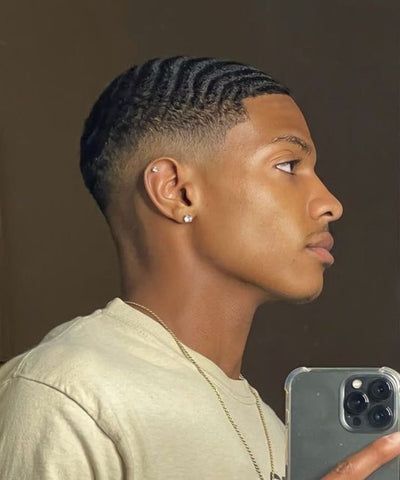
A skin fade requires the barber to transition hair from skin-length at the temples and nape through multiple guard lengths to the natural length at the top of the head, without visible lines between the lengths, using clippers, scissors and sometimes a razor, across a curved surface whose geometry varies with every client. Executing a tight, clean skin-fade on a Black man’s Afro-textured hair requires a specific technical understanding of how that hair grows, how it behaves under the clipper, how the natural curl pattern interacts with the clipper path, and how the skin shows through at the lowest lengths. This is a different technical competence from the fade execution on straight or wavy hair. The barber who executes it on Afro-textured hair has a specific skill that isn’t generic to all barbers and isn’t transferable without specific training in textured-hair technique.
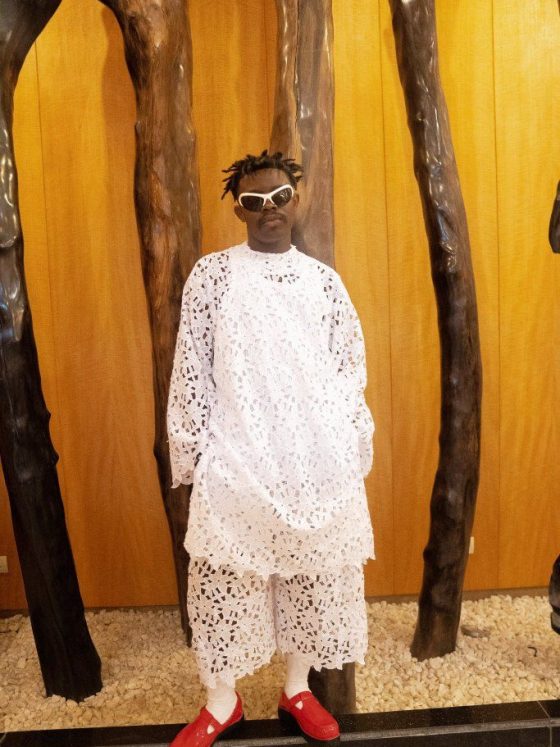
The social function of the skin fade in African and diaspora men’s dress culture is precision. A man wearing an impeccably tailored agbada with an unfinished haircut is not wearing the agbada correctly. The garment’s authority depends in part on the precision of the grooming that frames it. The skin fade creates a clean, precise boundary at the temple and nape that frames the face with the same intentionality that the garment frames the body. Remove the fade, and the garment’s authority diminishes. Add it, and the full look becomes complete: not in the sense that a button has been fastened, but in the sense that the visual argument the full ensemble makes is complete with all its components present.
As Omiren Styles has established in its analysis of Afro-luxury hair trends for 2026, 2026 is a landmark year for Afro-luxury hair. Architectural fades, curved parting designs, soft-structured Afros, and textured crowns reinterpret classic silhouettes for a contemporary audience, celebrating individuality and a future-minded approach to grooming. These hair trends don’t exist independently of the clothing they accompany. They are the grooming component of a complete contemporary aesthetic that treats the man’s entire presentation, from fade to foot, as a single coherent visual argument.
The Product Economy and Who Makes It
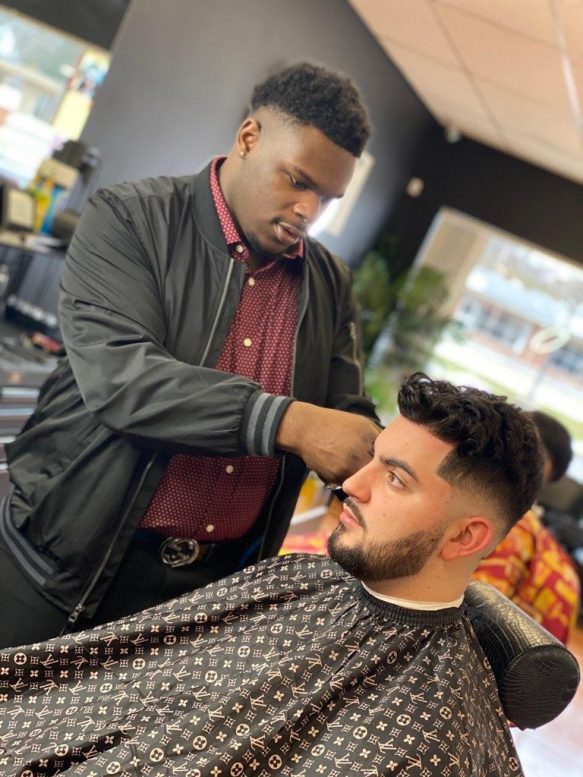
The grooming products men’s dress culture depends on form a significant economy whose ownership structure does not reflect the communities that drive demand.
Shea butter, black seed oil, argan oil, and other African-origin materials that form the active components of the most effective products for Black and textured hair are primarily sourced from African communities. The women who collect shea nuts in the Sahel, the producers who process argan oil in Morocco, and the communities that have developed and maintained knowledge of which plant materials benefit which hair types under which conditions are the knowledge origin of a global product economy that people from those communities or those countries do not predominantly own.
As Omiren Styles has shown in its analysis of shea supply chains and global beauty, the women who collect shea nuts across the Sahel earn about USD 75 a year for labour that underpins a global beauty industry that earns billions from shea-containing products. The product economy that serves African and diaspora men’s grooming includes some of the most extracted ingredient supply chains in global beauty. The men whose daily grooming ritual depends on these products are not typically the owners of the companies selling them, and the communities whose knowledge shaped understanding of these ingredients’ properties are not receiving a proportionate economic return from the global market their knowledge built.
The men’s grooming product market has a specific demographic profile: Black men in African cities and across the diaspora are among the most consistent and knowledgeable consumers of textured hair and skin-care products. They have developed expertise in which products work for their specific hair textures and skin types through a process of community knowledge transmission, independent experimentation and barber recommendations that constitutes one of the most sophisticated informal product-testing networks in the beauty industry. The barbershop is the primary distribution point for that knowledge: the barber’s recommendation of which product to use at home between sessions is trusted by clients in the way that a pharmacist’s recommendation is trusted, because the barber’s knowledge is specific to the client’s hair and skin type and demonstrated through the results of each session.
As Omiren Styles has documented in its analysis of Black beauty equity, Black-founded beauty startups raised only USD 16 million in 2024, down from USD 73 million in 2022, in a market built on Black cultural knowledge. The men’s grooming sector within that market reflects the same ownership gap: the knowledge, the demand and the community transmission network that makes specific products commercially viable in African and diaspora men’s grooming culture is built by Black men and barbers, and they do not predominantly hold the equity in the companies profiting from it.
The Ritual as Daily Fashion Practice
Men’s grooming is not a weekly appointment. It is a daily practice whose accumulated effect determines whether the weekly appointment can produce the result it promises.
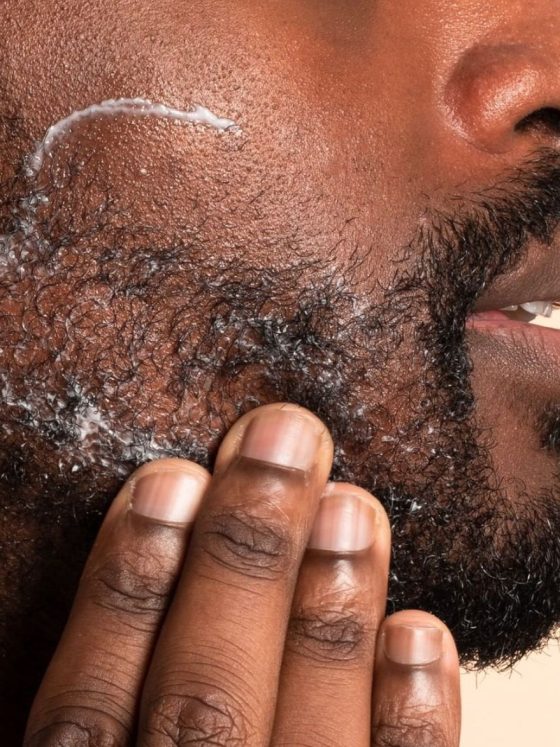
The morning routine that a man performs before he dresses, the moisturising of the scalp, the application of a light oil to the beard, the preparation of the skin, constitutes a maintenance practice that is as much a part of his fashion infrastructure as the care of his garments. A kaftan that is maintained correctly lasts for years. A fade maintained correctly between barber sessions stays precise for two to three weeks rather than degrading within days. Maintenance products and daily routine are therefore not separate from the grooming system; they are its daily expression.
As Omiren Styles documents in its analysis of the Afar people’s hair traditions in Ethiopia, the Asdago and Dayta—the traditional hair formations of Afar men—are maintained with butter across one of the world’s most hostile environments. They are cultural arguments made through daily practice and sustained across two millennia of nomadic life. The Afar man’s grooming is not a style choice in the contemporary consumer sense. It is a cultural argument, transmitted through community knowledge, maintained through daily application of materials produced by the women’s labour system of the same community, and expressed in an environment that would destroy most grooming practices within hours. That level of commitment to grooming maintenance as cultural expression is the deep structure of what appears, in its contemporary urban form, as the Black man’s daily skincare and hair-care routine.
The ritual dimension of grooming also serves a social infrastructure function that product sales data does not capture. The Friday afternoon visit to the barber is both a social ritual and a maintenance appointment. The conversation that happens during the session is part of the preparation for the event: who will be there, what is being worn, what look is appropriate. The barber participates in this preparation, not just as a service provider. The session marks the man’s move from the working week into the social occasion, and the transformation is as much psychological as physical. The finished cut at the end of the session signals social readiness to himself as much as it signals to the people he will encounter.
Locs, Beard and Hair as Deliberate Fashion Statements
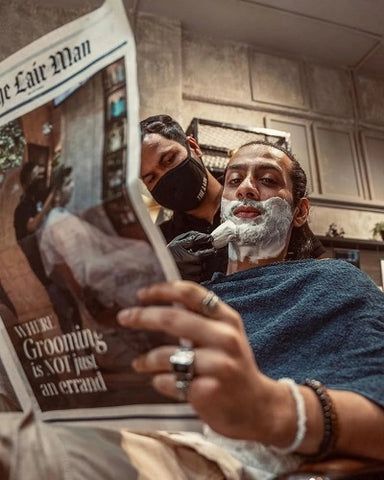
The most socially significant grooming decision an African or diaspora man can make is whether to cut.
As Omiren Styles has documented in its history of locs in Africa for many people outside Africa, the story of locs begins in Jamaica. The African origin is older, more geographically diverse and more specifically connected to spiritual, social and community functions than the Rastafari-Jamaica framing allows. The Maasai warrior’s ochre-coated locs, the Himba women’s butterfat-dressed hair, the locs of East African spiritual practitioners: these are not precursors to a style. They are independent expressions of a widespread understanding that uncut, intentionally maintained hair carries a specific kind of authority and commitment that cut hair does not.
For contemporary African and diaspora men, the choice to wear locs is simultaneously a spiritual, political and aesthetic decision. It is spiritual because the tradition of uncut hair as sacred commitment runs across enough of Africa’s religious and cultural heritage that the association persists in contemporary practice. It is political because the legal and institutional history of natural and protective hairstyles in professional contexts has made choosing to maintain them there a deliberate act of cultural assertion. It is aesthetic because locs, maintained correctly, represent one of the most technically demanding grooming practices available to men: the initial setting, the maintenance of clean partings, the retwisting at regular intervals and the long-term management of the locked formation require the same level of ongoing commitment and skill that any high-maintenance tailoring practice requires.
The beard carries similar weight. A full, well-shaped beard on an African man communicates multiple things simultaneously and to multiple audiences. Within specific Muslim communities, the beard communicates religious observance and spiritual commitment. Within specific age-based hierarchies, it communicates seniority and the claim to adult male authority. Within contemporary urban style culture in Lagos, Accra and Nairobi, it communicates aesthetic deliberateness and the willingness to invest time and products in a complex maintenance practice. Different audiences read the same beard differently, and the man who wears it is often aware of all three readings and chooses the beard as a statement that speaks across all of them.
The Barber as Practitioner Whose Work Fashion Misnames
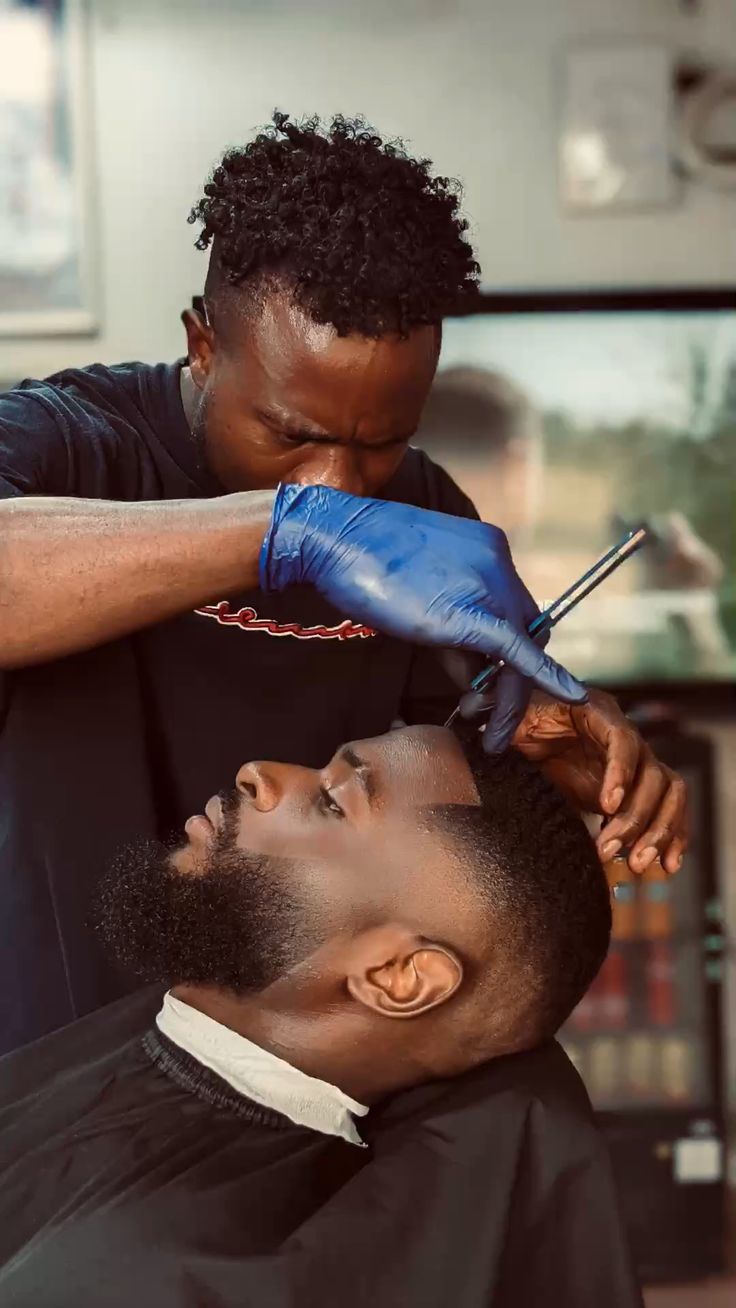
Fashion media has developed a vocabulary for the creative practitioners whose work it covers: designer, stylist, photographer, art director, creative director. It has no equivalent vocabulary for the barber.
When a fashion editorial is shot, the grooming practitioner who prepared the models’ hair and skin appears in the credits as Hair or Grooming. When a red carpet look is discussed, the grooming that frames the face is not credited at all, or appears in a small-print roster of names at the bottom of the article. The barber who cut the look does not appear. The grooming artist who maintained the skin does not appear. The practitioner’s knowledge, the session time, and the specific technical competence that made the look photographable the way the photographer and stylist needed it: all invisible.
This invisibility fits the wider pattern this series has documented. As Omiren Styles established in its analysis of when African makeup artistry is called “inspiration” instead of being credited as practice, the beauty industry has learned to use Black and African visual culture as a commercial asset while maintaining structural barriers to acknowledging and compensating the practitioners whose knowledge makes that culture commercially valuable. The barber is the most invisible practitioner in this system. Their work is the most frequently seen and least frequently named component of the finished look that fashion media covers.
As the Omiren analysis of Habesha hairstyling traditions in Ethiopian and Eritrean communities established, hair traditions in African communities are more than beauty choices. They carry social information, community identity, and the accumulated knowledge of practitioners who have developed techniques across generations. The barber who maintains those traditions in a contemporary urban context is a practitioner of cultural knowledge as well as a service provider. The credit they receive should reflect both dimensions of that practice.
The Omiren Argument
Grooming is infrastructure because it is what makes the rest of the fashion system work.
The garment hangs on a body. The body includes a head. The head, groomed to the standard that the occasion and the community require, completes the garment’s argument. Without the grooming, the argument is incomplete. The suit jacket whose collar meets an unfinished nape communicates something different from the same jacket meeting a clean-edged fade. The kaftan worn by a man whose beard is shaped to his jaw communicates something different from the same kaftan worn by the same man with an unattended beard. The grooming is not a finishing touch. It is the last structural element of a complete fashion proposition.
The $31 billion African fashion market includes the barber economy, the product economy and the daily ritual economy that make African men’s dress culture function. It includes the knowledge of the Lagos barber who has been reading the same neighbourhood’s aesthetic standards for a decade. It includes the Wolof man’s understanding of which beard length is appropriate for a Friday prayer context versus a business meeting. It includes the shea butter collector in the Sahel whose material knowledge underpins the products in the barber’s station. None of this appears in fashion market data. All of it is fashion.
As the Global South made fashion and never got credit, the credit gap in men’s grooming is specific and correctable. Credit the grooming practitioner in the editorial caption. Name the barber in the red carpet coverage. Document the product knowledge that the barber community has built and the ingredient knowledge that African communities contributed to the products on the barber’s station. Name the cornrow pattern, the fade technique, and the beard-shaping approach. Build the record of practitioner knowledge the fashion industry has been consuming without naming it. Grooming is infrastructure. The practitioners who build and maintain that infrastructure deserve to appear in the record of the fashion work they make possible.
ALSO READ
- Beard Culture: What It Means Across Africa, and Why It Is Never Just Style
- African Hair Is a Political Act: The History Nobody Taught You
- Afar Men’s Hair Traditions: Asdago, Dayta and the Art of Buttered Hair in Ethiopia
- History of Locs in Africa: Cultural Meaning Across Different Communities
- When African Makeup Artistry Is Called “Inspiration” Instead of Being Credited as Practice
Frequently Asked Questions
Why is grooming considered infrastructure rather than just a finishing touch in men’s fashion?
Grooming is the final structural element of a complete fashion proposition, not a decorative addition. A garment communicates differently depending on the grooming that accompanies it: a tailored agbada or kaftan whose collar meets an unfinished nape communicates something different from the same garment meeting a clean skin fade. The barber who executes the fade, shapes the beard, and prepares the face completes the fashion decision, not decorating it. The daily grooming routine, the products used between barber sessions and the maintenance of locs, beard or fade between appointments constitute an ongoing infrastructure practice that determines whether the garment can make the argument it was made to make.
What is the cultural significance of the barber shop in African and diaspora men’s fashion?
As Omiren Styles has documented, the barber shop is one of the primary social institutions through which men’s style culture is produced, transmitted and maintained in African cities and diaspora communities. The barber holds accumulated physical knowledge of each client’s hair texture, facial structure and style preferences across repeated sessions. They also hold community intelligence: which looks are circulating, what the aesthetic standards are for specific social contexts, what is being worn by whom in which community at what occasion. The Friday appointment before a weekend event is a social preparation ritual as well as a maintenance procedure. The barber participates in the preparation, not only as a service provider.
Who owns the product economy that African and diaspora men’s grooming depends on?
As Omiren Styles has shown in its analysis of Black beauty equity, Black-founded beauty startups raised only USD 16 million in 2024, down from USD 73 million in 2022, in a market built on Black cultural knowledge. The ingredient supply chains that underpin the most effective products for Black and textured hair—shea butter, black seed oil, argan oil—are sourced primarily from African communities whose women hold the knowledge and do the labour, while receiving minimal economic return from the global beauty market their knowledge supports. The men who use these products daily and the barbers who recommend them are not typically the owners of the companies selling them.
What is the significance of locs and beard choices for African and diaspora men?
As Omiren Styles has documented in its history of locs in Africa, the African origin of locs is older and more diverse than the Jamaica-Rastafari framing that dominates external documentation. For contemporary African and diaspora men, locs represent a simultaneously spiritual, political and aesthetic decision: spiritual because the tradition of uncut hair as sacred commitment runs across African religious and cultural heritage; political because the institutional history of discrimination against natural and protective hairstyles in professional contexts has made their maintenance an act of cultural assertion; aesthetic because their maintenance is technically demanding and represents a long-term commitment. The beard carries similar weight across religious observance, age-based hierarchy and urban aesthetic culture.
How does the grooming practitioner’s work go uncredited in fashion media?
Fashion editorial credits list hair and grooming practitioners as Hair or Grooming without naming their specific techniques or cultural knowledge. Red carpet coverage of African and diaspora men’s looks typically does not credit the barber at all. The grooming that frames the face and completes the garment’s argument is treated as a service rather than a creative practice, despite requiring skill, relationship-specific knowledge, and cultural competence as complex as the work of the other named creative practitioners in the same editorial or event context. The pattern matches the wider credit gap this series has documented: the fashion and beauty industry consumes practitioner knowledge from African and diaspora communities without proportionate naming, documentation, or commercial acknowledgement.
EXPLORE MORE
Read the full Beauty and Grooming Traditions sections at Omiren Styles for ongoing documentation of African and diaspora men’s grooming culture, the practitioners who sustain it and the product economy that serves it. Discover travel and heritage intelligence across Africa at Rex Clarke Adventures.