When a European trader docked at the Warri waterfront in the sixteenth century and sold a length of prestige cloth to an Itsekiri merchant, he believed he was making a commercial transaction.
He was not. He was supplying the raw material for a statement of sovereignty he would never be literate enough to read.
The Itsekiri people of the western Niger Delta were, as the official history of the Olu of Warri confirms, among the first peoples in what is now Nigeria to make contact with the Portuguese in the sixteenth century. The Warri Kingdom, founded around 1480 when Prince Ginuwa of Benin migrated to the Niger Delta, maintained diplomatic, Christian, and trade relations with medieval Europe for three centuries. That relationship gave the Itsekiri access to imported cloth, coral, Portuguese cultural forms and the full range of Atlantic trade goods that moved through the Oil Rivers in this period.
External accounts of this relationship have consistently misread the direction of influence.
The Itsekiri did not adopt European dress. They selected European materials and reconfigured them within an Itsekiri authority system that European traders lacked the cultural literacy to read. The Kemeje shirt, the George wrapper, the coral beads, the feathered hat: each element entered Itsekiri ceremonial dress through the trading relationship and was transformed into something the trading relationship never produced. The Europeans brought fabric. The Itsekiri made authority.
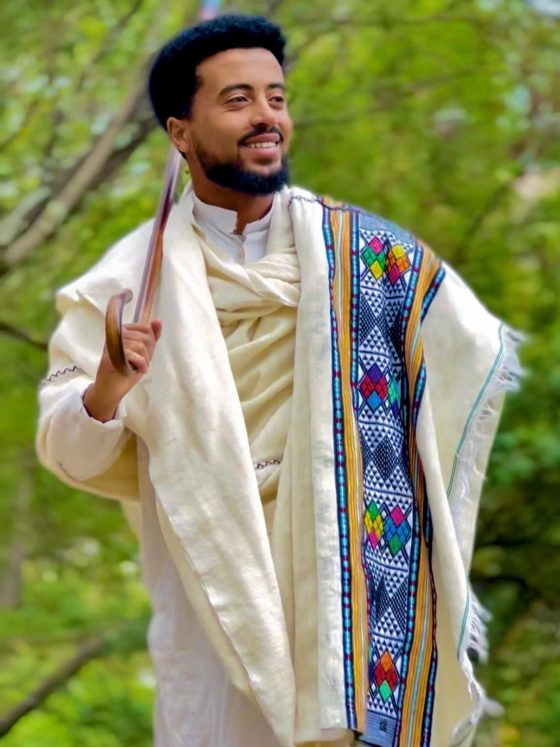
Okparan is the ceremonial role whose dress most precisely captures this argument. As documented in primary accounts of Itsekiri burial ceremony, the Okparan is the person of honour chosen by the family at the highest ceremonies — seated in the position of prestige, dressed in full traditional attire, with long coral beads (Okun) and a black hat to match, holding a formal position that no European protocol could have produced. The Okparan is not a European figure wearing African accessories. It is an Itsekiri ceremonial authority, dressed in the full intelligence of an Itsekiri prestige system, assembled from materials some of which moved through European trade but none of which remained European after the Itsekiri had finished with them.
Okparan, the ceremonial dress tradition of the Itsekiri of the Niger Delta, absorbed European trade cloth and transformed it into an expression of sovereignty that European traders never understood they were bankrolling.
The Kingdom That Received the Portuguese

The standard framing of European contact with West African peoples positions the European as the arriving authority and the African as the receiving subject. The Itsekiri evidence contradicts this framing at every documented point. As ThinkAfrica’s history of the Itsekiri Kingdom documents, the existence of a kingdom with a functioning monarchy mattered in Europeans’ decision to do business with the Itsekiri. Europeans tended to go to areas which had a political system that could guarantee peaceful trade. The Portuguese came to the Warri waterfront because the Itsekiri were organised enough to trade with. The political precondition of the contact was Itsekiri sovereignty, not European initiative.
What the Portuguese found at Warri was not a community waiting to be equipped with civilisational goods. They found a kingdom with an Olu, a court, a trading economy and women already dressed in imported silks. The 19th-century traveller John Barbot, documenting the peoples of the West African coast, noted that the Itsekiri wore the most magnificent silks, specially ordered from Europe. Those silks did not make the Itsekiri magnificent. They were ordered because the Itsekiri already understood cloth as a marker of standing and had the commercial relationships to source the finest available.
The diplomatic sophistication of the Warri Kingdom is documented in the extraordinary detail of the royal family’s engagement with Portugal across the 17th century. A son of the reigning Olu was sent to Portugal for education at the beginning of the 17th century and returned with a Portuguese wife. Their son, Antonio Domingo, became Olu of Warri in the 1640s. This is not a story of cultural absorption. It is a story of strategic engagement: the Warri Kingdom used its relationship with the Portuguese to strengthen its position, expand its trade territory, and educate its royal successors in the language of the people they traded with, while maintaining the Itsekiri cultural and political system that defined the kingdom.
As Rex Clarke Adventures has documented in its full history of the Itsekiri people, the Itsekiri earned a reputation as excellent traders and mediators by supplying inland people with European manufactured goods in return for other commodities. They were the intermediary, not the recipient. The European goods moved through Itsekiri hands outward into the Niger Delta interior. The Itsekiri decided what to keep and what to pass on. The prestige cloth they kept. This article argues that the transformation of that cloth into Itsekiri ceremonial authority is central.
What Okparan Dress Is Made of and What Each Element Communicates
Itsekiri ceremonial dress, including the dress associated with the Okparan role, is assembled from specific elements whose meaning is precise within the Itsekiri prestige system. Understanding these elements requires understanding them as a communication system, not as a collection of aesthetic choices. As Omiren Styles has established in its documentation of Itsekiri women’s traditional styles, to understand Itsekiri traditional dress, you must first understand the Warri Kingdom that produced it.
The George wrapper is the Niger Delta’s prestige fabric and central to Itsekiri ceremonial dress. Premium Georges are imported from India and East Asia. The Itsekiri relationship with fine imported fabric dates to their trade contact with the Portuguese in the 15th century. The George wrapper is not a European fabric that became Nigerian. It is a fabric that the Itsekiri prestige system adopted, incorporated and made entirely its own through the social meanings the community built around it. The quality of a person’s George conveys their social and financial standing to an audience that reads that quality precisely.
Coral beads — Okun — signal wealth, lineage and ceremonial authority in Itsekiri culture. The number of strands, their placement on the body and the quality of the coral all communicate the wearer’s social standing. At the highest ceremonial occasions, the beads become the primary garment: layered from crown to ankle, constructed into headpieces, collar configurations, shoulder drapes and waistbands that transform the body into a formal statement of lineage and standing. Coral in the Niger Delta carries a meaning inseparable from the Warri Kingdom’s Atlantic trading networks. The Itsekiri aristocracy had access to fine coral through these networks long before most inland communities. The Okun worn by the Okparan at a major ceremony is not an accessory. They declare the family’s standing and the ceremony’s gravity.
The Kemeje shirt is distinctive to Itsekiri men’s dress and represents one of the most clearly documented examples of the Itsekiri transformation of trade contact into cultural authority. The shirt form entered Itsekiri dress through the contact period, but the Kemeje is not a European shirt worn in an African context. It is an Itsekiri garment with a specific cut, specific embroidery vocabulary and specific ceremonial associations that mark it as belonging to the Itsekiri dress system rather than to the European garment culture from which the form was drawn.
The feathered hat is perhaps the most visually distinctive element of Itsekiri men’s formal dress and the one that most clearly illustrates the transformation argument. In the Itsekiri ceremonial context, the feathered hat is not a European formal hat with decorative additions. It is an Itsekiri authority object: the feathers, their arrangement, the hat’s specific form and the occasions at which it is worn all carry meaning within the Itsekiri ceremonial system. What reached Warri through trade contact was a hat form. The Itsekiri turned it into an authority object whose meaning the hat’s European manufacturers never possessed.
The black hat of the Okparan, documented in primary accounts of Itsekiri burial ceremony, belongs to this same authority vocabulary. The Okparan wears a specific hat that matches the ceremonial occasion, chosen by the family, sitting in the position of prestige, surrounded by the full formal assembly of the ceremony. The hat is not borrowed European formality. It is an Itsekiri ceremonial designation: this person, in this hat, at this ceremony, holds this specific ceremonial role that no European formal tradition would have produced.
The Transformation Argument and Why It Matters

The history of Itsekiri dress is consistently framed in terms of hybridity: a cultural form that combines African and European elements, shaped by contact, carrying influences from both directions. That framing is not factually wrong. It is analytically insufficient, because it treats the Itsekiri and the Europeans as having contributed equally to a shared cultural product, when what actually happened is that the Itsekiri absorbed, selected, reconfigured and gave new meaning to trade materials within an Itsekiri authority system that had no European input.
The European contribution to Itsekiri ceremonial dress is material. The cloth, the coral, the hat form, the shirt form: these came through the trading relationship. The meaning, the social function, the prestige hierarchy, the ceremonial protocols, the specific communication system that tells an Itsekiri audience who is wearing what and what it declares about their status, their lineage and their relationship to this ceremony: none of this came from Europe. All of it is Itsekiri.
The transformation argument matters for two reasons. The first is accuracy. A history of Itsekiri dress that treats the European material contribution as the defining influence is a history that attributes the creative and intellectual work to the wrong party. The Itsekiri did the work of cultural creation. The Europeans supplied some of the materials. The distinction between supplier and creator is the distinction between the cloth merchant and the designer, and it matters for who receives credit for what was made.
The second reason is the political argument. Framing Itsekiri dress as a hybrid produced by European contact subtly positions European influence as a constitutive force in Itsekiri cultural authority: without the Portuguese, there would be no George wrapper; without the trading relationship, there would be no Kemeje. This positioning is historically accurate about the material supply chain and politically inaccurate about the cultural creation. The Itsekiri created the authority system that gave those materials their meaning. The Portuguese created nothing that appears in Itsekiri ceremonial dress. As Omiren Styles has argued in its analysis of the Benin Kingdom’s royal regalia and dress authority, African royal and ceremonial dress systems in the Niger Delta and Bight of Benin region developed their prestige logics from internal cultural authority structures rather than from external influence. The Itsekiri case is precise: the external influence provided the cloth; the Itsekiri provided everything that made the cloth matter.
Okparan in the Context of Itsekiri Ceremonial Life
The Okparan’s specific role in Itsekiri ceremonial life situates the dress argument within a living social institution rather than a historical narrative. Okparan is not an archaic title that appears only in historical documentation. It is a ceremonial role that continues to be performed at Itsekiri ceremonies, particularly at elaborate burial ceremonies, among the most formally structured events in Itsekiri social life.
The Itsekiri burial ceremony is one of the most formally elaborate cultural practices in the Niger Delta. As documented in community accounts of Itsekiri burial custom, the ceremony involves cultural displays, dancing, drumming and singing, day and night, across multiple days depending on the status of the deceased. The Uli Oku, the effigy which represents the deceased wrapped in expensive wrappers, beautiful head ties and long traditional beads, is a formal installation at the centre of the ceremony. The Okparan, chosen by the family, sits at the corner of this installation in full traditional attire with Okun beads and a black hat — the designated person of honour at the ceremony’s most formal moment. The Olori Ebi, the family head, sits at the other end. Between them, flanking the Uli Oku, they form the ceremony’s formal authority structure.
The dress of the Okparan is therefore not decorative. It is functional: it designates who holds this ceremonial role, communicates the family’s social standing through the quality of the cloth and the weight of the coral, and makes the Okparan’s presence in the ceremony a formal social fact rather than a personal aesthetic expression. The black hat that matches the Okun is not a fashion choice. It is a ceremonial requirement. The full traditional attire is not optional. It makes the Okparan’s presence in the ceremony legible as the Okparan, not as another mourner.
This ceremonial precision is the fullest expression of the transformation argument. The Okparan’s dress assembles materials, some of which moved through European trade—the fine cloth, the coral—and deploys them in a ceremony that is entirely Itsekiri in its structure, social logic, performance requirements, and meaning. The European trade connection that made some of those materials available is as irrelevant to the ceremony’s meaning as the textile manufacturer’s nationality is to the cultural significance of aso-oke. As Omiren Styles has argued in its analysis of aso-oke and contemporary luxury, prestige cloth does not become less prestigious after the ceremony. The meaning accumulated by the cloth through its use in the ceremony belongs to the ceremony and to the community, not to the cloth’s point of origin.
The Dress System as Itsekiri Intellectual History

The Itsekiri ceremonial dress system is a form of intellectual history: it records, in the specific visual vocabulary of prestige cloth, coral, Kemeje and feathered hat, the trajectory of a people who encountered one of the most consequential trading relationships in pre-colonial West African history and emerged from it with their cultural authority intact and their prestige system enriched rather than replaced.
The George wrapper records the Itsekiri decision to select imported prestige cloth as the fabric of their highest ceremonies, transforming it through that selection into an Itsekiri cultural object. The coral records the Itsekiri aristocracy’s access to Atlantic trade goods that inland communities could not reach without Itsekiri intermediation. The Kemeje records the Itsekiri encounter with a shirt form sufficiently adaptable to absorb Itsekiri embroidery, Itsekiri cut, and Itsekiri ceremonial association without losing its functional advantages. The feathered hat records the Itsekiri transformation of a hat form into an authority object whose meaning the hat’s form alone could never carry.
Collectively, the dress system records a history that written colonial accounts consistently failed to understand: that the Itsekiri were not being shaped by European contact. They shaped their own cultural authority in response, using the material resources the trading relationship provided as raw material for Itsekiri cultural production that European traders, missionaries, and colonists never had the literacy to read.
As Omiren Styles has argued in its analysis of dress as cultural identity, dress consistently carries the weight of cultural identity, encoding lineage, signalling belonging and negotiating power. In the Itsekiri case, the dress system negotiated power with and against European contact, which provided some of its materials. The Itsekiri did not lose that negotiation. They won it every time an Okparan sat in full traditional attire at the corner of the Uli Oku and demonstrated to the assembled community that the Itsekiri prestige system, assembled from trade cloth and coral and its own centuries-deep ceremonial intelligence, was still standing, still specific and still entirely their own.
The Omiren Argument
Okparan was never European dress.
The materials that dress the Okparan at an Itsekiri ceremony moved through European trade at some point in their history. The authority that the Okparan holds in that ceremony, the meaning of the coral around the neck, the significance of the black hat, the designation by the family, the specific ceremonial position flanking the Uli Oku: none of this is European. All of it is Itsekiri.
The Warri Kingdom was built on the intelligence of a people who understood, from the fifteenth century onward, that the material resources of the Atlantic trading relationship were theirs to use on their own terms. The dress system that emerged from that understanding is not a hybrid of two cultures. It is an Itsekiri cultural production that used European materials as inputs and produced something entirely its own as output. The Portuguese supplied cloth. The Itsekiri made the Okparan.
As the Global South made fashion and never got credit, the Itsekiri case makes this argument at the most specific level available: within the author’s own community, with the specificity of someone who has encountered the Okparan not as a research subject but as a cultural inheritance. The Itsekiri did not need European contact to develop a dress system of authority. They needed European trade to supply certain materials that the dress system then transformed. The transformation is the Itsekiri achievement. The materials are a footnote.
Okparan was never European dress. It was always an Itsekiri argument, made in the most formal language available: the dress of the highest ceremony, assembled with the full intelligence of a people who turned five centuries of trade into authority. It wore that authority with such precision that the people they traded with never understood what they were saying.
ALSO READ
- Five Elegant Traditional Styles for Itsekiri Women and the History Woven Into Each One
- The African City That Fashion Forgot: How Benin, Oyo, Dahomey and Asante Dressed Before Europe Arrived
- The Benin Palace Drew a Line Between Royal Regalia and Bridal Fashion
- Prestige Cloth After the Ceremony: How Aso-Oke Moves Through Contemporary Luxury
- When Clothing Becomes Declaration: Dress as Cultural Identity
- Credit Is Not Compensation: What Fashion Owes Beyond Naming a Cultural Source
Frequently Asked Questions
What is Okparan in Itsekiri culture?
As documented in primary accounts of Itsekiri burial ceremonies, the Okparan is the person of honour chosen by the family at major Itsekiri ceremonies, particularly the elaborate burial ceremonies that are among the most formally structured events in Itsekiri social life. The Okparan sits in a designated position of prestige, dressed in full traditional attire with long coral beads (Okun) and a matching black hat, flanking the Uli Oku alongside the family head (Olori Ebi). The Okparan’s dress is not decorative: it marks the Okparan’s ceremonial status and communicates the family’s social standing through the quality of the cloth and the weight of the coral. The Okparan is a living Itsekiri ceremonial role that continues to be performed at major ceremonies in the Warri Kingdom today.
How did European trade influence Itsekiri ceremonial dress?
As the Olu of Warri’s official history records, the Itsekiri were among the first peoples in what is now Nigeria to contact the Portuguese in the 16th century, establishing diplomatic, Christian, and trade relations with medieval Europe over three centuries. The trading relationship gave the Itsekiri access to imported prestige cloth, coral and European garment forms. But the Itsekiri relationship with European trade materials was that of a selecting and transforming culture, not a receiving one. They chose which materials to incorporate into their prestige system, reconfigured them within an Itsekiri authority structure, and gave them meanings that the European traders who supplied them never possessed or understood. The George wrapper, the coral beads, and the Kemeje shirt all entered Itsekiri dress through the trading relationship and became cultural objects.
What are the main elements of Itsekiri ceremonial dress and what does each communicate?
As Omiren Styles documents in its analysis of Itsekiri women’s traditional styles, Itsekiri ceremonial dress communicates through a precise vocabulary of prestige cloth, coral, hat, and embroidery. The George wrapper, imported from India and East Asia, conveys the wearer’s social and financial standing through its quality. Coral beads (Okun) signal wealth, lineage and ceremonial authority; the number of strands, placement on the body and quality of the coral all communicate the wearer’s social position, and at the highest occasions the beads become the primary garment, layered from crown to ankle. The Kemeje shirt is distinctive to Itsekiri men’s dress and carries Itsekiri ceremonial associations through its specific cut and embroidery. The feathered hat is an Itsekiri authority object rather than a European formal hat. Collectively, these elements constitute a complete visual communication system that an Itsekiri audience reads with precision.
Why is “hybridity” an insufficient description of Itsekiri dress?
The hybridity framing treats the Itsekiri and European contributions to Itsekiri ceremonial dress as equivalent inputs to a shared cultural product. This is analytically inaccurate. The European contribution to Itsekiri ceremonial dress is material: cloth, coral, hat form, shirt form. The Itsekiri contribution is the creative and intellectual work that turned those materials into a prestige system: the social meanings assigned to each element, the ceremonial protocols governing their use, the quality hierarchy through which they communicate standing, and the specific communication system that makes Itsekiri ceremonial dress legible as a complete cultural authority statement. The creative work is Itsekiri. The materials are a subset of inputs. Framing it as hybridity attributes too much to the material supplier and too little to the cultural creator.
What is the Warri Kingdom and how does its history relate to Itsekiri dress?
As ThinkAfrica’s history of the Itsekiri Kingdom documents, the Warri Kingdom was founded around 1480, when Prince Ginuwa of Benin migrated to the Niger Delta and consolidated the area’s scattered communities into a single polity. The Kingdom became one of the most diplomatically sophisticated states in pre-colonial West Africa, with diplomatic, Christian, and trade relations with medieval Europe from the 16th to the 18th centuries. A son of the reigning Olu was sent to Portugal for education at the beginning of the 17th century and returned with a Portuguese wife; their son Antonio Domingo became Olu of Warri in the 1640s. The Warri Kingdom’s political pre-existence made European trade contact possible: the Portuguese came to Warri because it was already organised enough to trade with. The dress system that developed through the trading relationship reflects the Kingdom’s cultural authority, not the trading relationship itself.
What is the Itsekiri people’s relationship to the Benin Kingdom and how does it affect their dress?
The Itsekiri Kingdom was founded by Prince Ginuwa, a son of the Oba of Benin, who migrated to the Niger Delta approximately 1480 and established the Warri Kingdom. The Itsekiri language is closely related to Yoruba but has also been significantly influenced by Edo (Benin), Portuguese and English. The Benin connection is visible in Itsekiri dress through the coral bead tradition: coral in the Bight of Benin region carries a specific authority meaning rooted in the Oba of Benin’s court, where coral was understood to be filled with supernatural energy and could only be worn by those the Oba authorised. The Itsekiri aristocracy’s access to coral through Atlantic trading networks built on and extended this inherited prestige logic, developing a coral dress system specific to the Warri Kingdom while maintaining the connection between coral and royal or chiefly authority that the Benin court tradition established.
EXPLORE MORE
Read the full Heritage and Culture sections at Omiren Styles for ongoing documentation of Niger Delta dress traditions, Itsekiri ceremonial culture and the kingdoms of the Bight of Benin whose dress systems predate and exceed European contact. Discover travel and heritage intelligence across the Niger Delta, the Bight of Benin and wider West Africa at Rex Clarke Adventures.