In Igbo communities of southeastern Nigeria, women have painted lines on bodies and walls for at least a millennium. The practice is called Uli, known as Uri in some parts of Igboland. It takes hours to apply. It fades in a week on skin. It washes off walls in the rainy season. And this impermanence is not the practice’s problem. It is its argument. The Igbo understanding of Uli’s ephemerality has always been that the disappearance of the mark does not end the art. It relocates it: into memory, into the eye that has learned to see, into the community that holds the image after the pigment has gone.
The African fashion and beauty market is worth $ 31 billion. Uli is not a market tradition and was not designed to produce objects for trade. It is a practice that deposits its value in the person who receives the mark, the community that witnesses it, and the women who possess the knowledge of its motifs. As the Pitt Rivers Museum’s documentation of Uli and its relationship to Igbo belief confirms, the Igbo believe everyone has a third eye, through which it is possible to see the spirit world and to recall and reconstruct the memory and meaning of art. Far from being problematic, this ephemeral nature of ùlì is one of its defining characteristics.
Uli is the Igbo women’s tradition of drawing on the body and walls. It fades in a week. That is the point. Here is what ephemerality means as an aesthetic position.
Uli Art: What It Is and Where It Comes From
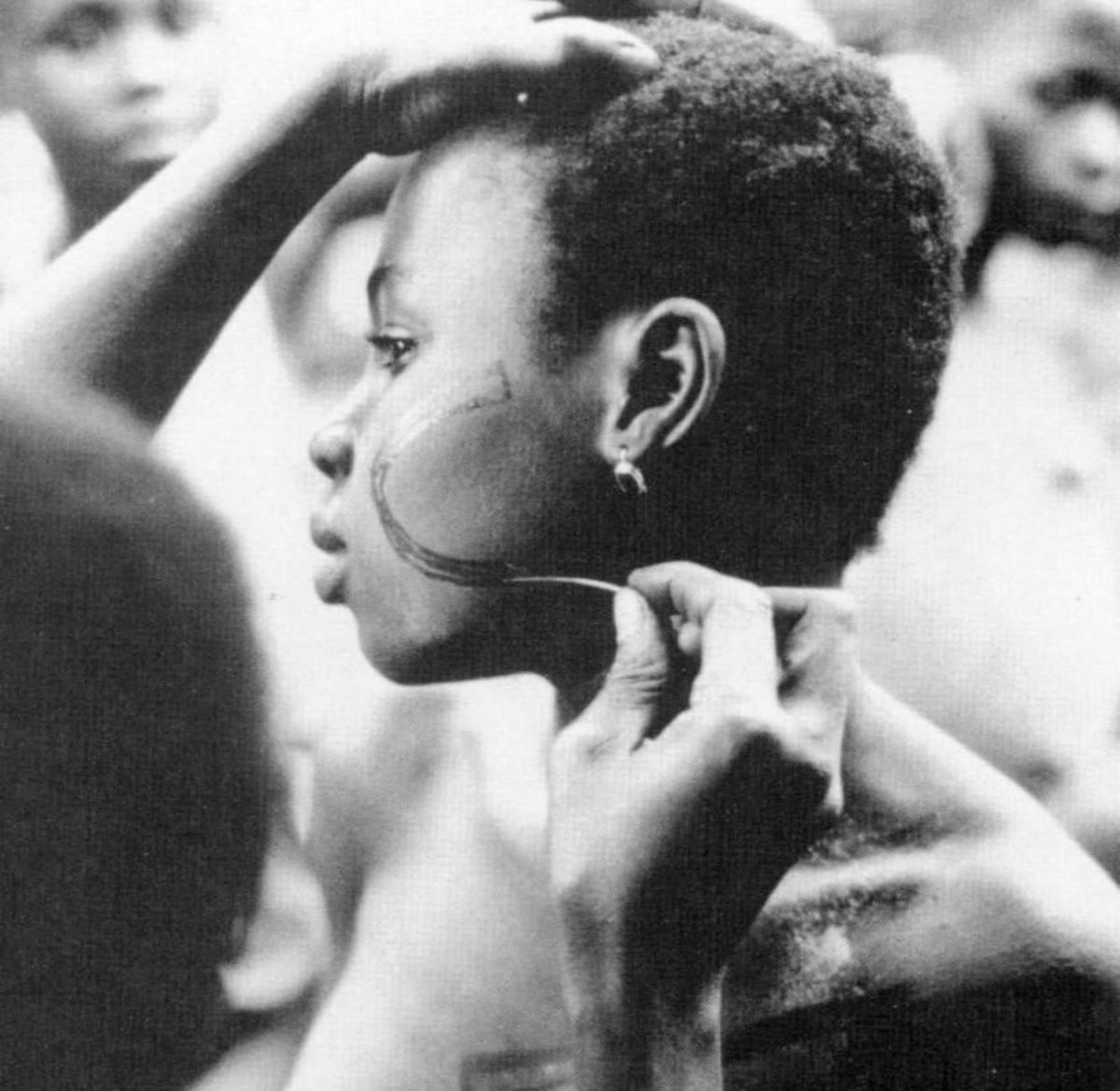
The name Uli derives from a number of plants in Igboland whose berries or pods are processed into a dark, juice-like dye. The dye is the painting medium for body art. The word therefore names both the plant and the practice, and the practice names itself after its material source: an art whose identity begins in the forest rather than in the studio.
Scholars dispute the tradition’s origins, as they do with all pre-literate traditions whose documentation relies on accounts by external observers. As ZODML’s documentation of Uli’s history confirms, there is no authority on its origin; Uli has been linked to the patterns found in Igbo-Ukwu bronze art and is therefore dated to the 9th century. The Igbo-Ukwu bronzes, among the oldest known complex bronze castings in sub-Saharan Africa, carry curvilinear and geometric surface designs that share a visual vocabulary with Uli motifs. This lineage places Uli within a continuous aesthetic tradition stretching back over a thousand years rather than as a folk practice of uncertain antiquity.
According to Igbo mythology, the practice was a divine gift from Ala, also known as Ani, the earth goddess, one of the most significant spiritual forces in Igbo cosmology, who ensures fertility, morality, and the relationship between the living and the ancestors. A body art that is attributed to her origin is not incidentally beautiful. In terms of mythology, it is a practice that participates in the sacred relationship between the human body and the earth that sustains it.
The colonial observers who arrived to document Uli were troubled by its impermanence. They collected photographs, drawings, and sketches precisely because the art itself would not survive. The Igbo were not troubled. They understood that the art lived in memory. The third eye, the interior archive that could reconstruct an Uli design from memory, was the real record. The photograph was the outsider’s version.
The Body as Surface and the Wall as Extension
Uli operates across two primary surfaces: the human body and the mud or clay walls of homes, shrines, and compounds. Each surface demands different materials and approaches, but the visual vocabulary- curvilinear lines, geometric patterns- is shared. Still, the motifs drawn fr- atural forms, the specific relationship between the mark and the other (the negative space around it), are shared across both.
Body designs were applied for significant occasions: marriages, title-taking ceremonies, funerals, and market days. A woman decorated with Uli for a wedding or a title ceremony is not wearing decoration in the conventional cosmetic sense. She is wearing a declaration: of status, of transition, of cosmetics signifying to a specific community at a specific moment of significance. The designs communicate socio-cultural values tied to Igbo aesthetics and morality. They tell the community where the wearer stands in the cycle of life and obligation. The body decorated with Uli is a social text that can be read by those who know the visual language.
Wall designs served related but distinct functions. The mud walls of homes, shrines, and compounds became surfaces for mural painting using a limited palette of locally available earth pigments: white from nzu, yellow from edo, red from ufie, and black from oji. As Re:Entanglements’ documentation of the Uli practice and archive confirms, murals painted on the mud walls of shrines were closely associated with Igbo religion, and some were renewed annually before festivals. The shrine wall painting and the body painting are part of the same aesthetic system: both address surfaces whose significance exceeds their materiality, and both use the same design vocabulary to mark those surfaces as belonging to a specific ritual and social order.
Ohere: The Philosophy of Negative Space
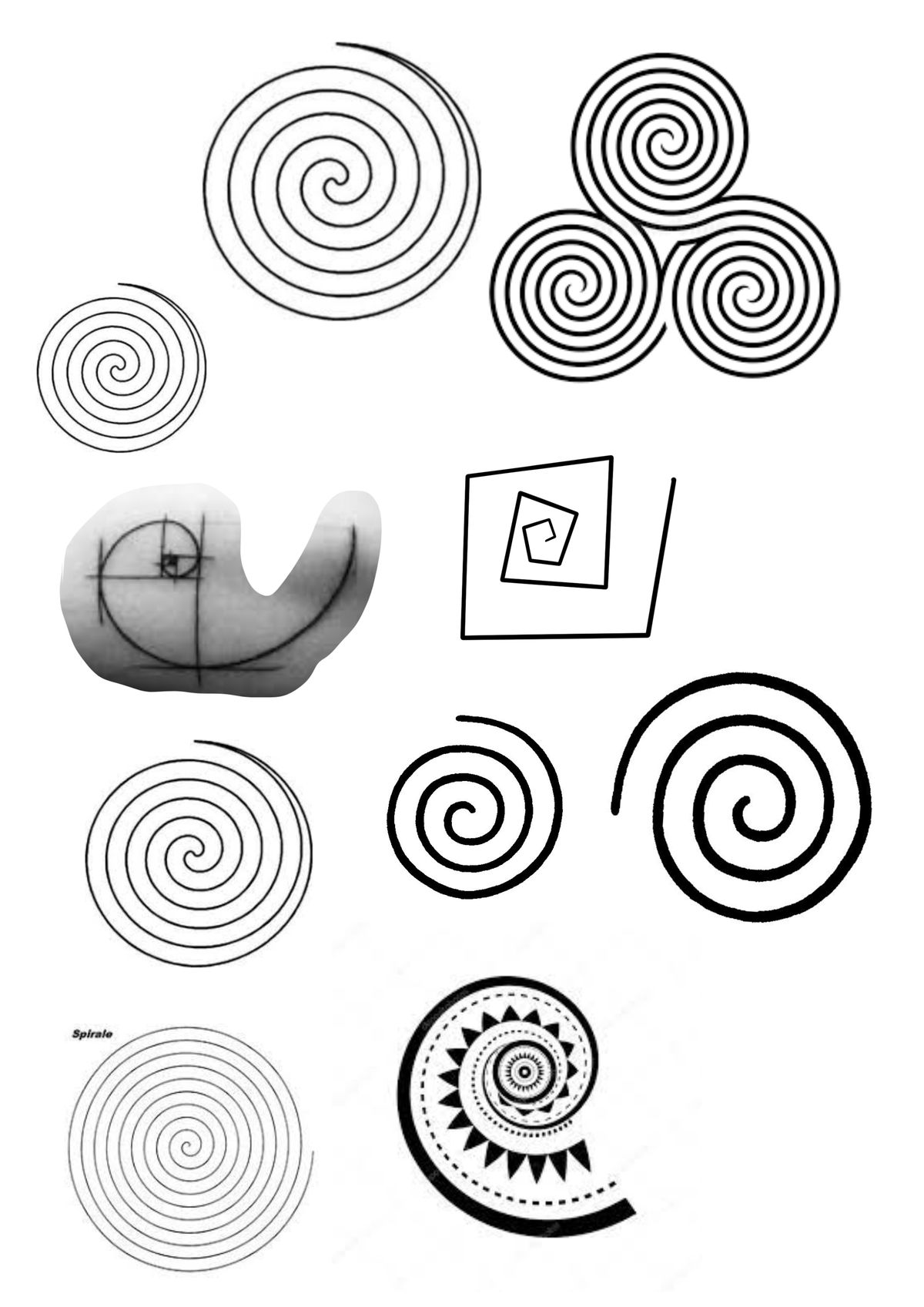
The ohere is the negative space in Uli composition: the unmarked surface that surrounds and contains the drawn line. It is not background. It is part of the work. Uli aesthetics understand the relationship between the mark and the space around it as constitutive rather than hierarchical: the line does not simply exist in the space; the space gives the line its visual meaning.
This is an aesthetic philosophy that predates, by centuries, the European modernist rediscovery of negative space as a compositional principle. Igbo women working in the Uli tradition have understood ohere as a substantive element of visual composition for at least a millennium. The designs are applied without preliminary sketching, directly onto the body or wall, with fine brushes made from palm fronds. The composition emerges from the artist’s visual knowledge of motif and proportion. The thousands of named Uli motifs, many drawn from natural forms (the tortoise, the snake, the python, the moon, plants, water), are not applied mechanically. They are combined through the practitioner’s aesthetic intelligence, responding to the specific surface, the specific occasion, and the specific person being decorated.
The composition relates to the broader tradition of Igbo aesthetic practice, in which art is embedded in daily life and knowledge is transmitted through making. As Omiren Styles’ documentation of African oral tradition and the knowledge systems it encodes confirms, in traditions that transmit knowledge through practice rather than through written curriculum, the practitioner’s body is itself the archive: the hands that know how to begin a line. This eye knows where to place the ohere, the memory that holds this eye motif and its appropriate applications.
The Decline and Its Causes
The decline of Uli followed the arrival of Christian missionaries in southeastern Nigeria from the 19th century onward. Missionaries discouraged women from decorating their bodies and redirected their artistic capacities toward needlework and embroidery, activities that the mission economy could more easily supervise and monetise. Uli designs were adapted into embroidery patterns on cushion covers and tablecloths produced for sale, with profits going to the mission. The colonial art system converted a communal, ceremonial, sacred practice into a supervised cottage industry.
The association of Uli with pre-Christian spiritual practice made it particularly vulnerable to the missionary suppression of traditional religion. Uli motifs appear on shrine walls and are connected to Ala worship and Igbo cosmology. The missionary reading of those associations as evidence of paganism placed the practice in direct conflict with the religious conversion project. Women who converted to Christianity were encouraged and in some communities pressured to abandon Uli as part of their conversion. The result was a rapid contraction of active practitioners across the 20th century, so the decline in half of the century, through older members of the Igbo community continued to practice traditional Uli body art.
The Nsukka School and the Revival
The most sustained and most intellectually serious revival of Uli as an artistic tradition came through the University of Nigeria at Nsukka and the group of artists known as the Nsukka School. From the 1970s onward, artists associated with the Fine and Applied Arts department at Nsukka, including Obiora Udechukwu, Chike Aniakor, and El Anatsui in his early career, engaged with Uli as a visual and philosophical source for contemporary African art. They were drawn to its specific aesthetic intelligence: the curvilinear line, the relationship of mark to other, the integration of body and space, and the femininity of its otherness in a discipline that European male aesthetics had dominated.
The Nsukka engagement with Uli was not nostalgic. It treated Uli as living visual language with contemporary relevance: a formal system that could be extended into printmaking, painting, sculpture, and installation without losing its philosophical foundations. Obiora Udechukwu led a 1983 repainting of Uli murals with Herbert Cole and Chike Aniakor. In 2003 and 2004, Udechukwu led a further repainting of the Iyiazi shrine in Nri together with Chuu Krydz Ikwuemesi and Chigozie Nwafor, alongside more than a dozen women artists who applied Uli designs and locally sourced pigments to architectural surfaces. That project was the most direct act of community restoration in the post-colonial period.
Uli and Contemporary Fashion
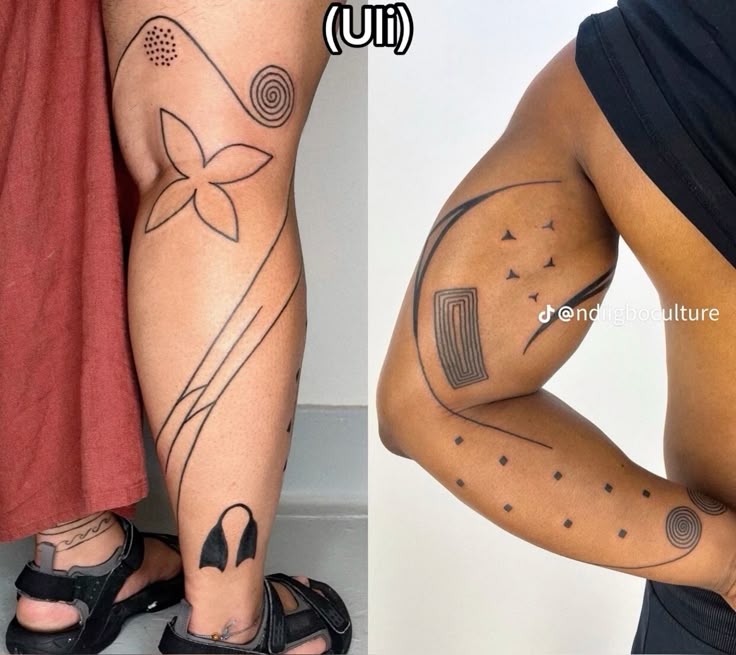
Contemporary fashion’s engagement with Uli has been growing, as the tradition becomes better documented and more accessible to designers seeking to work with Nigerian visual heritage. Uli motifs have appeared in fabric print, textile design, garment embroidery, and runway collections that draw on southeastern Nigerian visual culture. As Omiren Styles’ documentation of the sacred textiles of Akwete, a tradition from the same southeastern Nigerian region as Uli, confirms, Akwete cloth from Abia State, also an Igbo women’s tradition, produces some of the most structurally complex handwoven textiles on the continent. Uli and Akwete belong to the same cultural geography: the southeastern Nigerian Igbo world in which women’s artistic traditions have produced a remarkable density of visual intelligence across different media and techniques.
The challenge for fashion’s engagement with Uli is the one that runs through every encounter between global fashion and living African artistic traditions: the distinction between drawing on the visual surface of a tradition and engaging with the knowledge system that produced it. A fabric print of Uli motifs carries the geometry. It does not carry the ohere philosophy, the occasion knowledge, the plant-based dye tradition, or the community relationship between the practitioner and the decorated person. Designing with Uli, rather than from it, requires the same cultural intelligence that the practice itself demands.
The Omiren Argument
Uli’s ephemerality is its thesis. The Igbo women who painted bodies and walls for at least a thousand years understood that an art form that disappears is not an art form that fails. It is an art form that has completed its function. The African fashion and beauty market is worth 31 billion dollars. The body decorated with Uli for a marriage, a $ title ceremony, or a market day was not decorated for photography, archiving, or sale. It was decorated to declare the wearer’s social position, to participate in the sacred relationship between the human body and Ala, and to demonstrate the artistic intelligence of the practitioner whose eye and hand produced the design without preliminary sketch, directly onto a moving surface, with the ohere built into the composition as part of the argument. When the design fades, the archive is not empty. It is in the memory of everyone who saw it, in the third eye that the Igbo believe can reconstruct any image from memory, and in the hands of the practitioner who carries the knowledge of motif and proportion as embodied skill. The colonial observers who photographed Uli because it would not last did not understand that the photograph was already a misreading of what the art was for. Omiren Styles documents Uli here not as an ancient practice awaiting preservation but as a lively intellectual tradition whose philosophical premises about ephemerality, negative space, and embodied knowledge are more sophisticated than those of the contemporary art institutions that have recently begun to recognise it.
ALSO READ:
- African Hair as Archive: What Beauty Standards Keep Trying to Erase
- Igbo Identity, Cloth, and the Politics of Nigerian Cultural Dress
Frequently Asked Questions
What is Uli art?
Uli (also known as Uri in parts of Igboland) is a traditional art form practiced by Igbo women in southeastern Nigeria, involving the free practice of curvilinear, geometric, and abstract motifs on the human body and on the mud or clay walls of homes, shrines, and compounds. The name derives from the ùlì plant whose berries are processed to produce the dark dye used for body painting. Wall murals use locally available earth pigments: white (nzu), yellow (ufie), and black (oji). The tradition has been linked through visual comparison to Igbo-Ukwu bronze art dated to the 9th century, giving it a documented lineage of over a thousand years.
How is Uli made?
Body Uli is applied using fine brushes made from palm fronds, using dye processed from the berries of the ùlì plant. The designs are applied freehand without preliminary sketching, directly onto the skin in a single extended session. The practitioner draws from a knowledge of thousands of named motifs, composing spontaneously in response to the specific surface and occasion. Wall Uli uses locally available earth pigments applied to mud or clay surfaces. Both forms of Uli share a visual vocabulary of curvilinear lines, geometric patterns, and abstract forms drawn from natural sources such as the python, the tortoise, plants, water, and celestial shapes.
Why is Uli ephemeral?
Uli on the body fades within one to two weeks as the natural dye breaks down. Uli on walls washes off in the rainy season. The Igbo understanding of this impermanence is that the art has completed its function when it fades. The Igbo belief in a third eye, through which it is possible to see the spirit world and reconstruct the memory and meaning of art, means the community holds the image in interior memory rather than requiring the physical mark to persist. The ephemerality is not incidental to the tradition. It is one of its defining characteristics, reflecting an understanding of art as event and relationship rather than as object and archive.
Who practises Uli
Uli has traditionally been practised by Igbo women in southeastern Nigeria. The practice is associated with femininity through Igbo mythology, which attributes the gift of the art to Ala (also known as Ani), the earth goddess who governs fertility, morality, and the relationship between the living and the ancestors. Unlike Nsibidi, the system of symbols associated with male secret societies in Igbo culture, Uli is explicitly a women’s tradition. Contemporary Uli practice includes the work of artists associated with the Nsukka School (University of Nigeria at Nsukka) who have extended the tradition into contemporary art, as well as community practitioners in parts of Ebonyi and other states who maintain traditional body and wall painting practices.
What happened under colonial rule?
Christian missionaries who arrived in southeastern Nigeria from the 19th century onward actively discouraged Uli body painting, associating it with pre-Christian spiritual practice and Igbo religious traditions they sought to suppress. Women who converted to Christianity were encouraged and in some communities pressured to abandon Uli. The missionaries redirected Igbo women’s artistic practice toward needlework and embroidery, using Uli-derived designs adapted for commercial textile products, with profits going to the mission. The result was a contraction of active Uli practitioners across the 20th century. Older community members maintained the tradition in number. They later revived through the Nsukka School and deliberate restoration projects,s including the 1983 Uli mural restoration and the 2003-2004 Iyiazi shrine repainting in Nri.
Explore More
Read the full Culture > Heritage & Identity section for Omiren Styles’ documentation of Igbo artistic traditions, African women’s visual cultures, and the heritage practices that carry knowledge across generations without requiring permanence to do so.
Discover Igbo cultural heritage through travel and authentic experience at Rex Clarke Adventures, including the Rex Clarke Adventures guide to Igbo Uli body art and its symbolism.