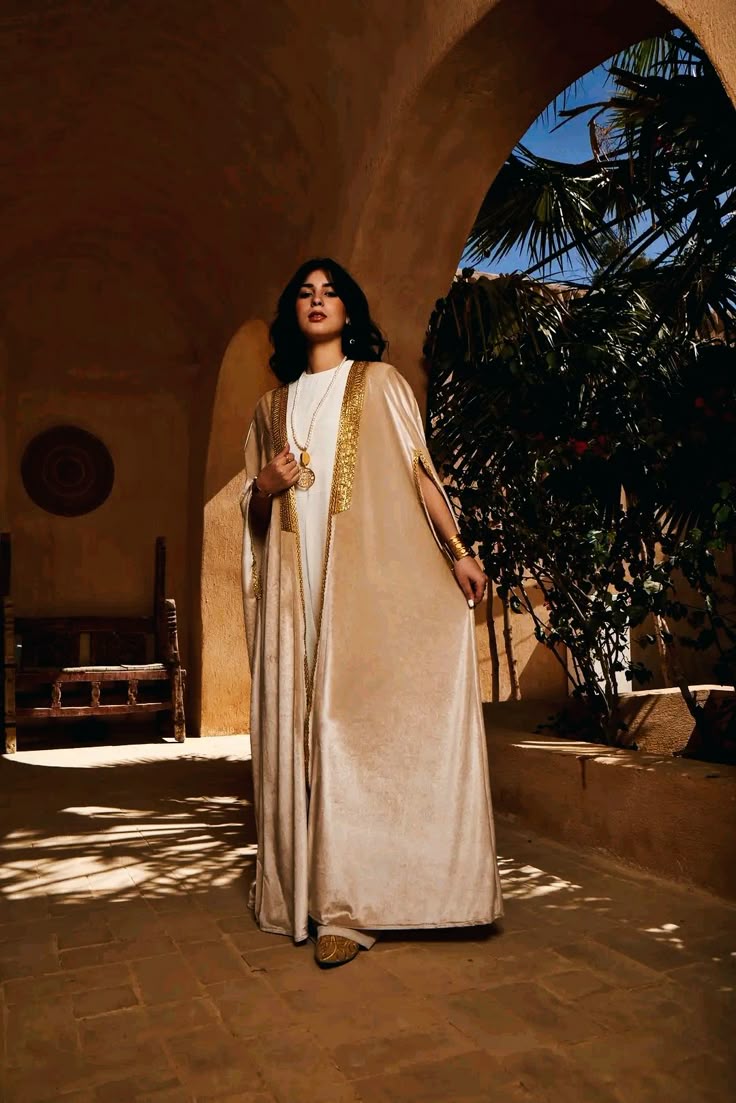
The African fashion market is worth 31 billion dollars. Egypt’s textile sector alone was valued at USD 3.87 billion in 2024 and is forecast to reach USD 4.98 billion by 2030. Inside that growth figure, synthetic fibres held 49.37% of 2025 textile revenue and are scaling faster than cotton, with polyester available at USD 1.30 per kilogram against USD 2.00 and above for Giza long-staple cotton. As Mordor Intelligence’s 2026 market analysis confirms, Chinese manufacturer Zhejiang Hengsheng is operating a 20-hectare integrated polyester production line in Egypt’s Suez Canal Zone, converting polyester chips into printed fabric in under 14 days. That is what Egypt galabeya manufacturers are competing with: industrial-scale synthetic production inside their own country, at half the price of the cotton that defines the traditional garment.
The galabeya is not in danger of disappearing from Egyptian life. It remains deeply embedded in daily dress, especially in rural communities, home settings, and during Ramadan. The danger is more specific: that the craft knowledge behind making a quality galabeya from breathable Egyptian cotton, with proper pattern cutting, regional embroidery, and finishing, will be displaced by cheaper synthetic production that keeps the silhouette but hollows out the material and cultural logic behind it.
Synthetic fibres now hold 49% of Egypt’s textile market and cost half as much as Giza cotton. Egypt’s galabeya manufacturers are competing with that arithmetic.
Egypt Galabeya Manufacturers: What the Market Looks Like
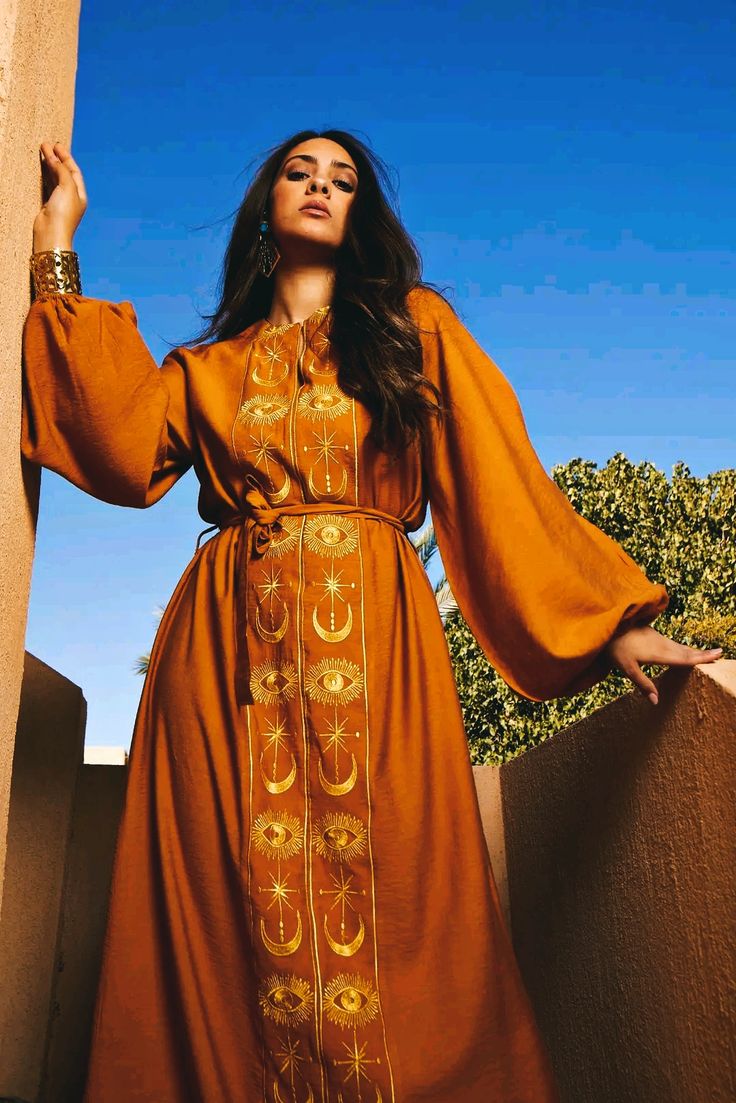
Egypt’s textile sector has structural advantages that should benefit galabeya manufacturers. The country produces Giza long-staple cotton, internationally recognised for superior fibre length, strength, and softness, and cotton fabric exports grew 25% year-on-year between August and November 2024, reaching 15,106 metric tons. As the USDA GAIN Report on Egypt’s cotton and products sector confirms, in December 2024 Egypt’s Prime Minister announced completion of the first phase of a public spinning revival project costing more than USD 1.1 billion, with factories expected to reach full capacity in mid-to-late 2025. Egyptian spinning companies have orders for at least the next eight months. The structural case for a cotton-based galabeya industry is not absent. The structural pressure against it is simply more immediate.
The Suez Canal Zone has attracted USD 490 million in textile foreign direct investment during 2024-2025, much of it oriented toward synthetic production and export. The same zone that could anchor Egyptian textile exports is being used to build integrated polyester supply chains that produce faster and cheaper than traditional cotton-based workshops. The SCZone’s 10-year tax holidays and zero machinery duties have made it more attractive to synthetic investment than to the craft-based cotton production that sustains the galabeya tradition.
Polyester costs USD 1.30 per kilogram. Giza cotton costs more than USD 2.00. Egyptian galabeya manufacturers are not only competing with imports. They are competing with an arithmetic that has been decided at the industrial level before a single workshop places an order.
Why the Galabeya Still Matters
The galabeya is one of Egypt’s most enduring garments: worn across rural and urban settings, especially in the countryside and at home, and remaining central to Ramadan dress culture across all social classes. As Egypt Independent’s documentation of galabeya fashion and Ramadan confirms, the garment has survived because it works. It is practical in Egypt’s climate. Traditionally made from cotton, linen, wool, and other breathable fabrics that suit heat, work, and movement, the galabeya has maintained relevance not through nostalgia but through function. That functional base is what gives the garment a survival argument even in a market tilted toward synthetic alternatives.
The galabeya belongs to the extended family of loose, long robes that moved across North Africa, the Sahel, and the wider Islamic world along trade routes linking Egypt, the Arabian Peninsula, and the Nile Valley. As trade networks expanded, the jalabiya and its regional equivalents travelled with merchants and scholars. Cotton from Egypt, dyes from the Levant, and weaving techniques from the Sahel each left their imprint. The garment was adapted without losing its essence. The galabeya carries that same adaptive history, but adaptation in the current moment means competing not with a regional variant but with polyester manufactured at industrial scale in the same country.
What Synthetic Competition Does to the Craft
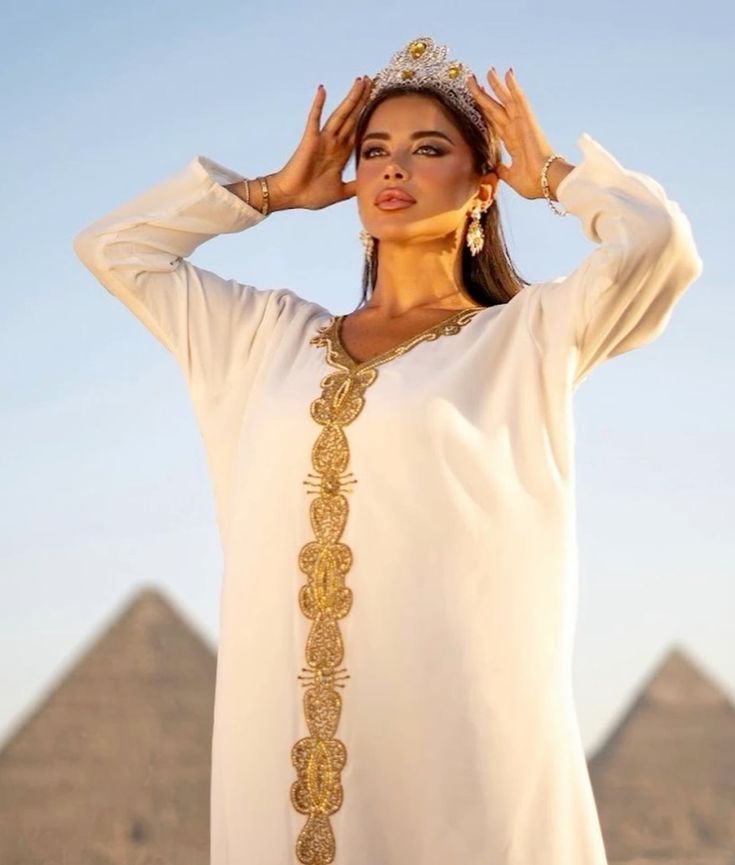
The threat from synthetic imports is not to demand for the galabeya as a silhouette. The threat is to the knowledge and skill system behind making a quality galabeya. Galabeya making depends on pattern cutting calibrated to regional body proportions, fabric selection that accounts for weight, breathability, and drape, finishing techniques including embroidery and decorative work that vary by region, and an understanding of local social conventions around colour, occasion, and style. These decisions encode regional identity and social information.
When cheaper synthetic fabrics enter the market at half the price of Giza cotton, small workshops and family-based manufacturers face a choice: absorb rising costs for labour, dyeing, finishing, and raw materials to maintain quality, or substitute lower-quality materials to remain price-competitive. The second path is commercially rational in a market where consumers have been trained to expect low prices. It produces a garment that looks like a galabeya but does not carry the same thermal, tactile, or cultural properties. Once that substitution becomes normalised, the craft knowledge becomes unnecessary, and it stops being transmitted.
The parallel with other heritage garments under market pressure is instructive. Omiren Styles’ analysis of the kaftan in menswear confirms that garments survive when craftspeople allow them to evolve, with tailors acting as translators between heritage and contemporary life, preserving cultural meaning while responding to changing expectations. The galabeya has always been adaptive, absorbing new materials and construction techniques without losing its essential logic. The question is whether market pressure now moves faster than that adaptive capacity.
The Case for Survival
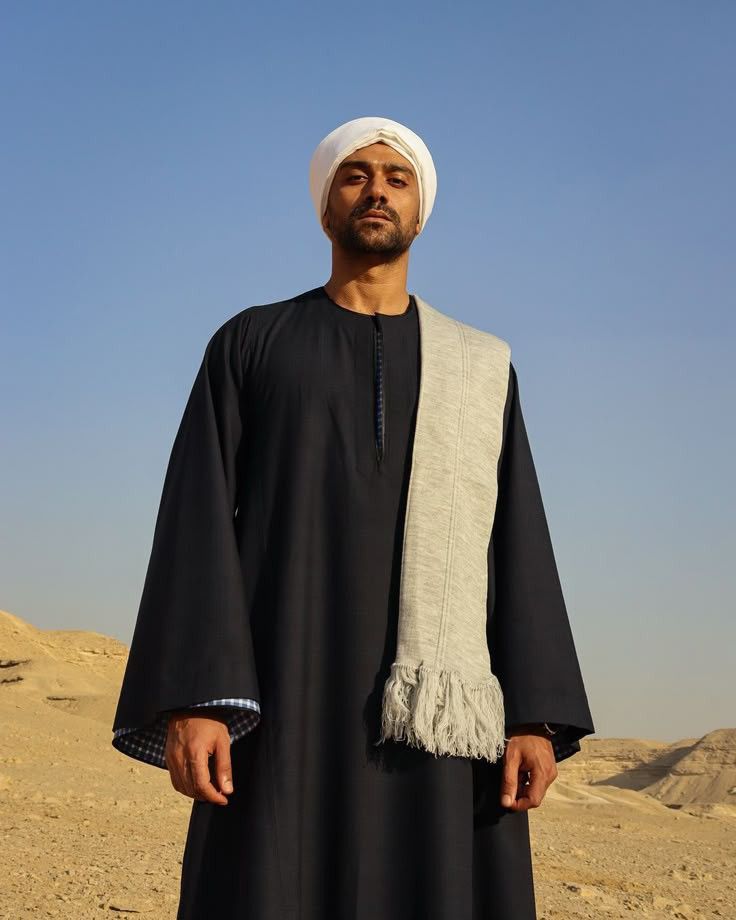
Egypt galabeya manufacturers have survival arguments that the current market has not fully activated. The most powerful is material differentiation. Giza long-staple cotton is one of the world’s most valued textile fibres, internationally recognised for superior softness, durability, and breathability. A galabeya made from it is objectively better for Egypt’s climate than a polyester equivalent. At a moment when global interest in natural fibres and sustainable production is growing, and when the EU’s Carbon Border Adjustment Mechanism is beginning to price in the 6-8 tonnes of CO2 per tonne of polyester fibre, the environmental case for cotton-based galabeya production is strengthening in export markets even as it is being ignored in the domestic one.
Value positioning is the second argument. If Egyptian galabeya manufacturers compete on price with synthetic alternatives, they will lose. If they compete on cultural specificity, material quality, and climate appropriateness, they are selling something that polyester cannot replicate. The garment most likely to survive is the one sold as what it actually is: a breathable, durable, regionally specific garment made from Egyptian cotton with craft knowledge embedded in every construction decision. The garment most likely to disappear is the one trying to match synthetic pricing while using inferior materials.
The government’s USD 1.1 billion spinning revival project represents a structural investment that could benefit galabeya manufacturers if it is implemented in ways that reduce the cost of domestic cotton processing and bring Egyptian spinning capacity back to competitive efficiency. Whether that investment reaches the small workshops and family studios that make the majority of Egypt’s galabeyas, rather than only the large export-oriented spinning companies, will determine whether it changes the economics for craft production.
The Omiren Argument
Egypt’s galabeya manufacturers are competing with an arithmetic stacked against them at the industrial level. Synthetic fibres hold 49.37% of Egyptian textile revenue in 2025, cost half as much as Giza cotton, and are being produced at industrial scale inside Egypt’s own special economic zones with tax holidays and foreign direct investment that the traditional galabeya workshop cannot access. The African fashion market is worth 31 billion dollars. The craft knowledge embedded in a quality Egyptian galabeya- the pattern cutting, the fabric selection, the regional embroidery, the understanding of what breathable cotton does in 40-degree heat- is worth more than that arithmetic accounts for. Omiren Styles’ position is that the galabeya can survive, but only if Egypt treats it as both cultural heritage and living industry, not as a relic waiting to be replaced. That means value positioning at the premium end, material honesty about the difference between cotton and polyester, and industrial policy that reaches the workshops where the craft actually lives. The race to the bottom has a bottom. The craft does not have to go there.
ALSO READ:
- The Jalabiya: How a Desert Robe Became a Global Summer Staple
- The Kaftan in Menswear Today: How a Classic Survived and Evolved for a New Generation
- Afro-Cuban Designers Influencing Fashion Culture Within and Beyond the Island
- Colombian Designers Bringing Pacific Coast Heritage to the Global Stage
Frequently Asked Questions
What is the galabeya and why does it matter?
The galabeya is a loose, long traditional robe worn in Egypt by men and women, especially in rural communities, home settings, and during Ramadan. It belongs to the broader family of long robes, including the jalabiya, that have been worn across North Africa and the Islamic world for centuries. Traditionally made from Egyptian cotton, linen, or wool, the galabeya has lasted because it works: it is breathable and practical in Egypt’s hot climate. It remains closely tied to Egyptian identity and everyday dress across all social classes, making it a genuine national garment rather than a ceremonial one.
Why are Egyptian galabeya manufacturers struggling?
Egyptian galabeya manufacturers are under pressure from cheaper synthetic fabrics, particularly polyester, which costs approximately USD 1.30 per kilogram compared to more than USD 2.00 for Giza long-staple cotton. Synthetic fibres held 49.37% of Egypt’s textile revenue in 2025 and are scaling faster than cotton, with large Chinese manufacturers operating integrated polyester production lines inside Egypt’s Suez Canal Zone. Small workshops and family-based galabeya makers cannot absorb rising costs for labour, dyeing, and raw materials when cheaper synthetic alternatives undercut their pricing at the retail level.
What is Egypt’s textile market worth?
Egypt’s textiles market was valued at USD 3.87 billion in 2024 and is forecast to reach USD 4.98 billion by 2030, growing at a CAGR of 4.25%. The sector contributes significantly to employment, foreign exchange earnings, and industrial output. Egypt’s textile exports reached USD 1.132 billion in 2024, a 2% increase from the previous year. Despite overall market growth, the domestic shift toward synthetic production and imported fabrics is creating structural pressure on traditional craft-based manufacturers, including galabeya workshops.
Can the galabeya survive synthetic competition?
Yes, but survival depends on how manufacturers position the garment. Competing on price against synthetic alternatives is a losing strategy for small cotton-based workshops. The more sustainable path is to position the galabeya as a culturally specific, climate-appropriate garment made from Egyptian cotton with craft knowledge embedded in its construction, and to sell that differentiation to consumers who understand the difference. Egypt’s government USD 1.1 billion spinning revival project could help reduce domestic cotton processing costs if implemented in ways that benefit craft producers rather than only large export-oriented factories.
How does the galabeya relate to the jalabiya and other North African robes?
The galabeya belongs to an extended family of loose, long robes, including the jalabiya, kaftan, and thobe, that spread across North Africa, the Arabian Peninsula, and the Nile Valley along trade routes during the medieval and early modern periods. Egyptian cotton, Levantine dyes, and Saharan weaving techniques all contributed to the garment’s development. The jalabiya and galabeya are closely related forms, with regional variation in name, construction details, and occasion-specific use. Both have survived because they are functionally suited to hot climates, making them genuinely modern garments rather than preserved historical relics.
Explore More
Read the full Fashion > Industry section for Omiren Styles’ documentation of African and North African fashion economies, heritage garment markets, and the structural arguments determining which craft traditions survive industrial pressure.