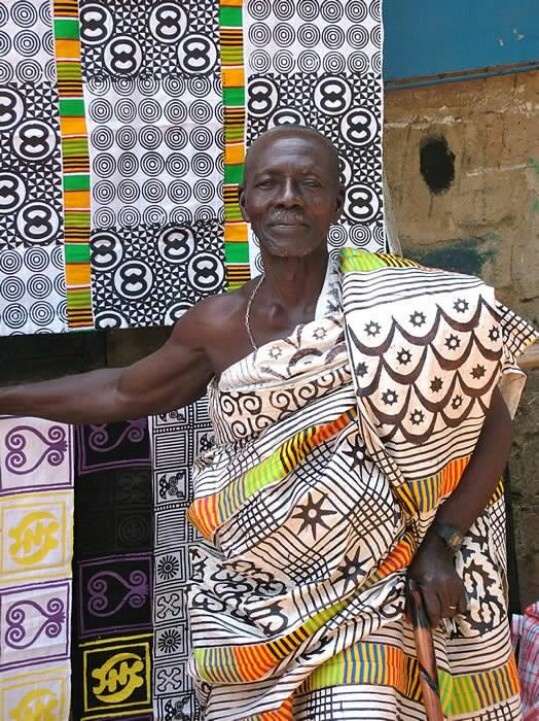
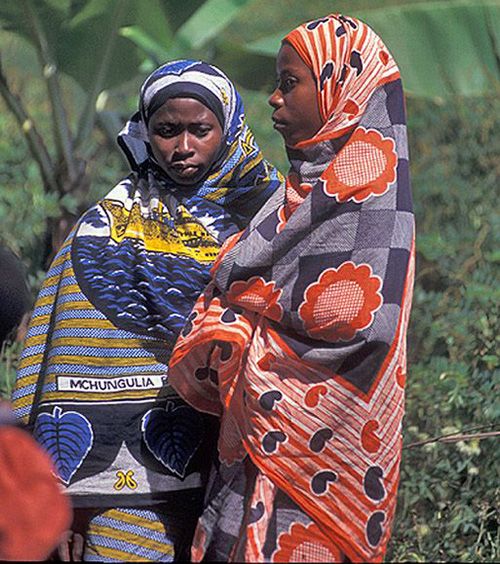
Walk through any coastal town in Zanzibar, Mombasa, or Dar es Salaam, and you will see it everywhere. Draped over shoulders. Wrapped around waists. Hung on market lines like the pages of an open book. The kanga is not just worn. It speaks.
At first glance, it looks simple. Bright cotton. Bold patterns. A brief Swahili phrase printed along the edge. But behind that simplicity lives a layered history of trade, womanhood, resistance, fashion, and communication. The kanga is East Africa’s most intimate cultural archive. It records what people felt, feared, celebrated, and refused to say out loud.
To understand the kanga is to know how cloth can become language, how fashion can hold memory, and how everyday objects can carry power across generations.
A verified cultural history of East Africa’s kanga cloth: its Swahili Coast origins, symbolic anatomy, role in women’s expression, the Omiren Argument, and its global legacy.
Origins and the Name
The kanga is a rectangular, 100% cotton printed cloth measuring approximately 150 centimetres by 110 centimetres, worn in pairs across East Africa and the broader Indian Ocean world. Its name comes from the Kiswahili word for the guinea fowl. The bird’s distinctive black-and-white spotted plumage was mirrored in the earliest printed designs. Research preserved by the National Museums of Kenya, corroborated by textile historians, documents fashionable women in the region stitching together six small kerchief-like squares called lencos, imported by Portuguese traders from India and Arabia, to create a single wearable length of cloth.
The exact origins of the kanga remain a subject of scholarly debate. The most widely accepted historical account places its emergence on the Swahili Coast, particularly Zanzibar Island and the port of Mombasa, Kenya, in the mid-to-late 19th century.
A parallel account traces the cloth’s earliest raw material to ‘merikani’, a Kiswahili noun derived from ‘American’. It refers to affordable, unbleached cotton imported from the United States. That trade grew significantly after the US established a consulate in the region in 1837, and the US became the dominant supplier by the 1850s. Coastal traders soon commissioned hand-stamped block-printed designs on single unified pieces of cloth. The patchwork of sewn squares gave way to a single, composed surface.
Omani traders matter here. By the 1830s, Omani Sultan Said bin Sultan had established Stone Town in Zanzibar as the official seat of Omani political power. The striped cloth patterns associated with Oman visibly contributed to the early kanga design vocabulary. Zanzibar’s position as a commercial crossroads, linking the African interior with Arabia, India, Persia, and China, made it the perfect incubator. The kanga absorbed everything it touched. That is not a weakness. That is intelligence.
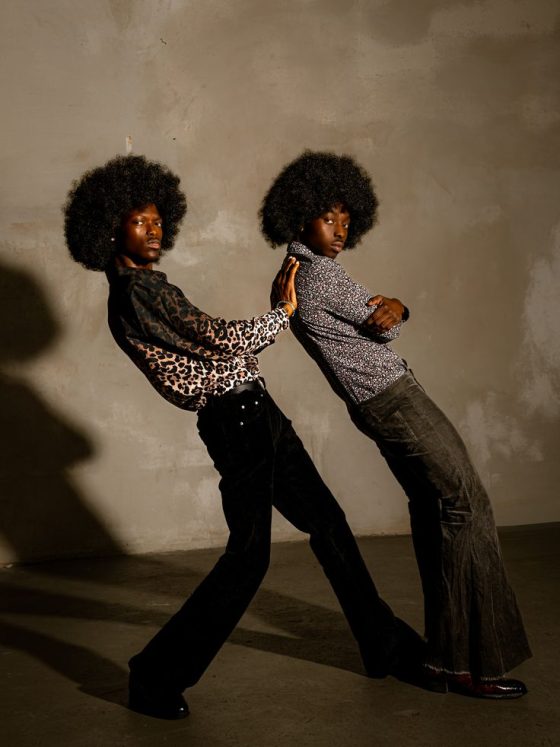
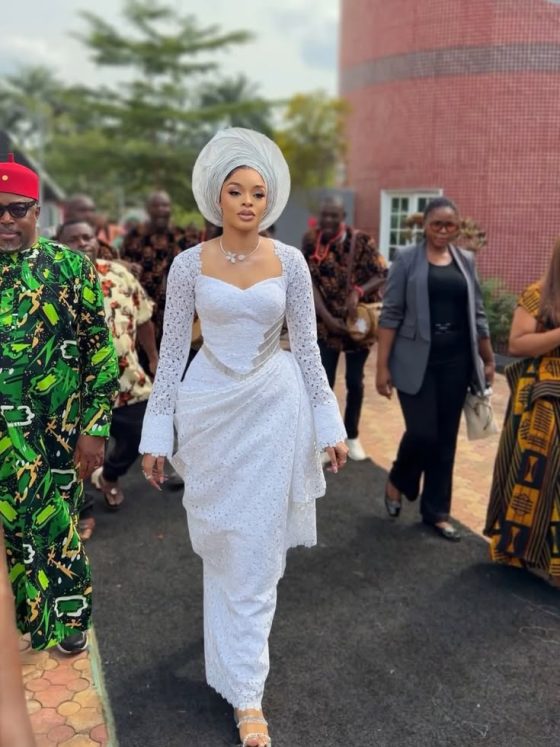
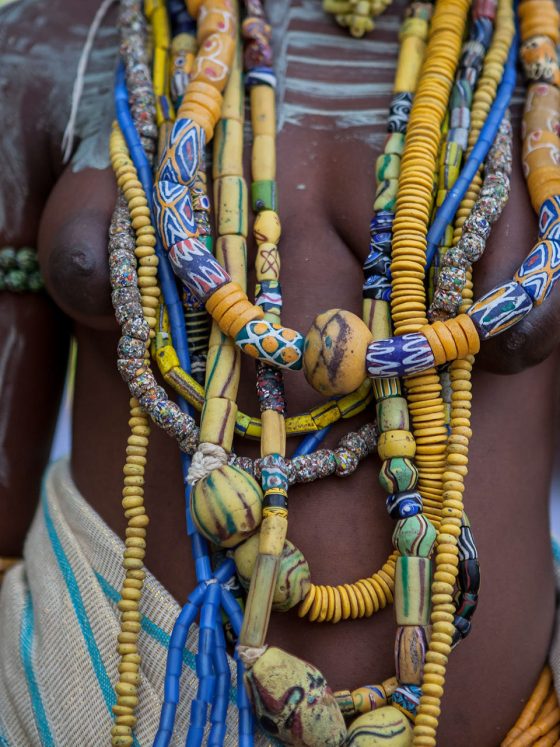
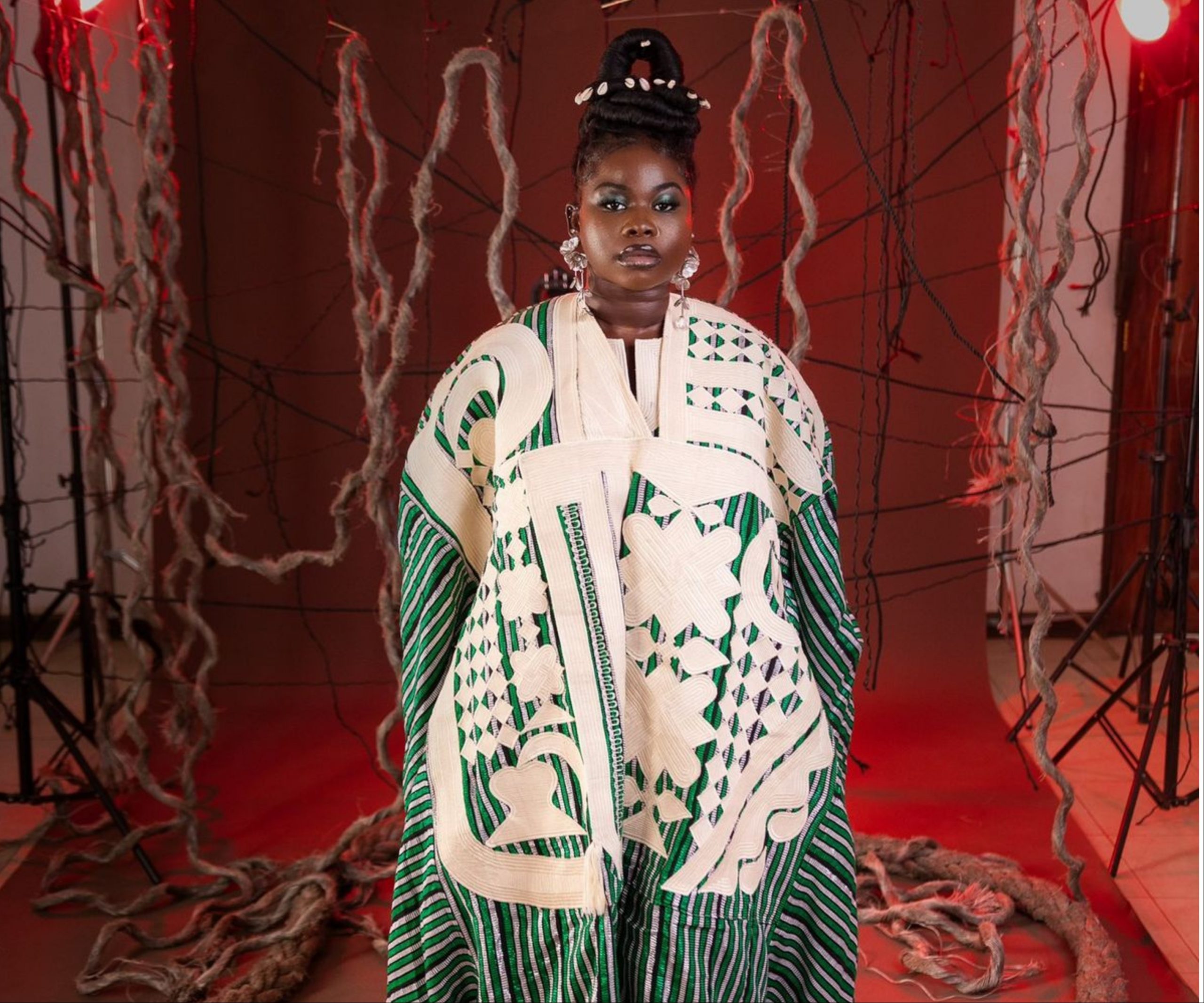
From coastal trade routes to global runways, the kanga tells stories of identity, power, fashion, language, and culture across Tanzania and Kenya.
The Anatomy of a Kanga
Every kanga is built from three distinct, non-negotiable design zones. This three-part structure has remained stable for over a century. It is what distinguishes the kanga from other African printed cotton fabrics.
The pindo is the border. A bold, patterned frame runs along all four edges of the cloth. It anchors the design and signals the boundary of the composition.
The ‘mji’ is the central motif. The interior field of the cloth is separately designed from the border. Mji translates literally as ‘town’. The centre is a place of dwelling—a place of meaning.
The jina is the message. A line of Kiswahili text, typically a proverb, printed within the pindo. This is the kanga’s defining feature. Without the jina, it is just fabric. With it, it is a declaration.
Kangas are sold in pairs, known as a ‘gora’, still joined at the selvedge edge. Each pair must be cut and hemmed before wearing. Standard dimensions are approximately 45 by 65 inches. Print patterns are broadly categorised as floral, faunal, or geometric, and designs almost always employ two or more highly saturated contrasting colours.
The Design Decade: 1876 to 1886
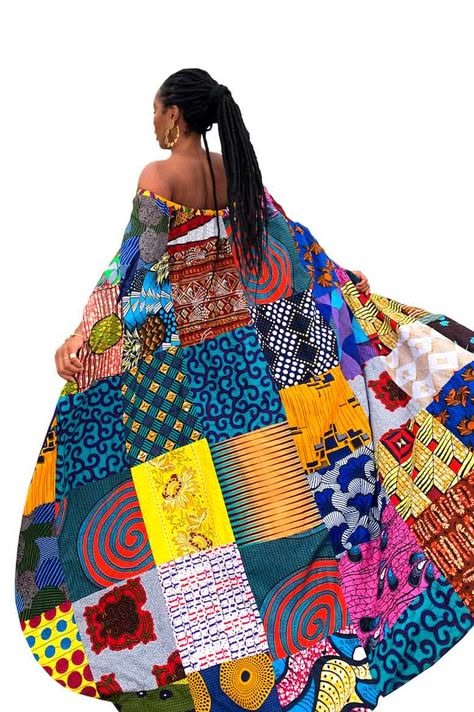
Art historian MacKenzie Moon Ryan, in her peer-reviewed 2017 study published in Textile History, Vol. 48, No. 1, identifies the decade between 1876 and 1886 as the crucible in which the modern kanga was forged. During this period, bold East African dyeing aesthetics, Indonesian batik motifs, European handkerchief-style border printing, and Swahili-language text converged. By 1886, the three-part composition was established. It has not changed since.
Early kanga designs were produced using carved wooden block stamps. By the late 1880s, machine printing in industrial centres across England, the Netherlands, France, and Switzerland had taken over mass production. Dutch textile company Vlisco, founded in 1846, is documented as having printed both Indonesian batiks and East African kangas during this same period. The kanga was part of a single global textile economy. It was never purely local. It was never meant to be.
A significant artefact from this era is the mfungo woodblock, a printing tool discovered in a disused well on Lamu Island, off the northern coast of Kenya. It stands as physical evidence of local East African block-printing traditions that predate the advent of industrially produced designs. The availability of synthetic aniline dyes by the start of the 20th century made commercial screen printing the dominant method. The handmade gave way to the machine. The message remained.
The Language of Proverbs
Swahili proverbs began appearing on kanga cloth in the early 1900s. The practice is widely credited to Mombasa trader Kaderdina Hajee Essak, also known as Abdulla, who distinguished his kangas with the mark ‘K.H.E. Mali ya Abdulla’ and began adding Swahili phrases. Initially, they were printed in Arabic script, later in Roman letters. His firm, Kaderdina Hajee Essak (KHE) Ltd., has been designing and trading kanga since the 1880s. It remains in operation today.
The ‘jina’, literally ‘name’, defines the identity of any kanga. Messages take the form of riddles, declarations, warnings, and expressions of affection. A kanga’s jina can be tender or sharp. It can be worn to declare love, issue a quiet reprimand, express grief, or assert dignity. Occasionally, kangas given as wedding gifts carry proverbs communicating the giver’s private doubts about the union. Nothing is said directly. Everything is communicated.
A well-documented example in the University of Alberta’s Unwrapping African Commemorative Cloth exhibition is the proverb ‘MGENI NI KUKU MWEUPE’, meaning ‘A visitor is like a white fowl.’ The saying alludes to the conspicuousness of outsider behaviour and reminds the wearer to remain mindful when away from home. This is fashion that demands attention, not admiration. To read a kanga correctly, you must understand tone, context, and timing. Cultural literacy is the price of entry.
How Kanga Is Used
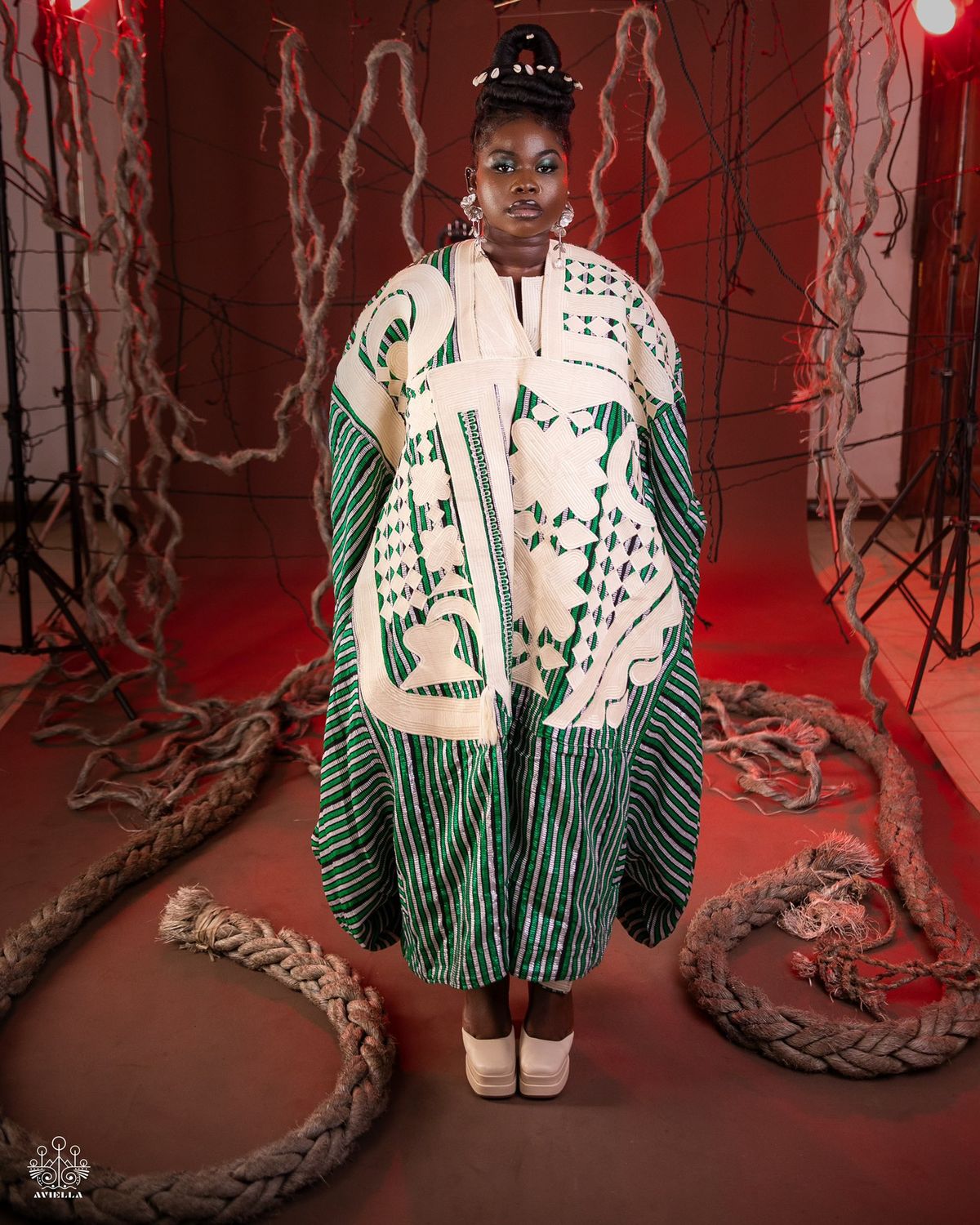
The kanga is one of the most versatile material objects in East African daily life. Unlike kitenge, which is a heavier, more formal fabric used primarily for tailored garments, the kanga serves dozens of overlapping functions simultaneously. It is clothing. It is a tool. It is a message. It is a record.
It is worn as a skirt, a covering, a shawl, a cape, a belt, or a swimsuit. It carries babies on its backpack. It serves as a pot holder, towel, apron, tablecloth, curtain, and bed covering. One cloth. Many lives. No waste.
In Tanzania, kangas are given to grieving families as part of a michengo, a communal collection in which community members contribute money to support a bereaved family. At Swahili weddings, the bride and female guests wear their finest kanga. The traditional wedding kanga, called the kisutu, is printed in white, black, and red. It is one of the oldest documented designs. It is also given to young brides as part of a dowry and to healers to dispel evil spirits.
Politically, kangas have served as wearable endorsements during election campaigns. Women select specific Jina texts to communicate non-verbal messages about leadership and governance. Commemorative kangas marking the deaths of national leaders, including a widely documented piece honouring Julius Nyerere held in the British Museum’s collection, demonstrate the cloth’s function as a living historical record. The kanga absorbs the present without abandoning the past.
Read Also:
- How African Languages Are Rewriting the Global Pop Script
- The Evolution of African Fashion Style Beyond the Runway
- African Style Icons Who Turn Personal Identity Into Global Influence
The Omiren Argument
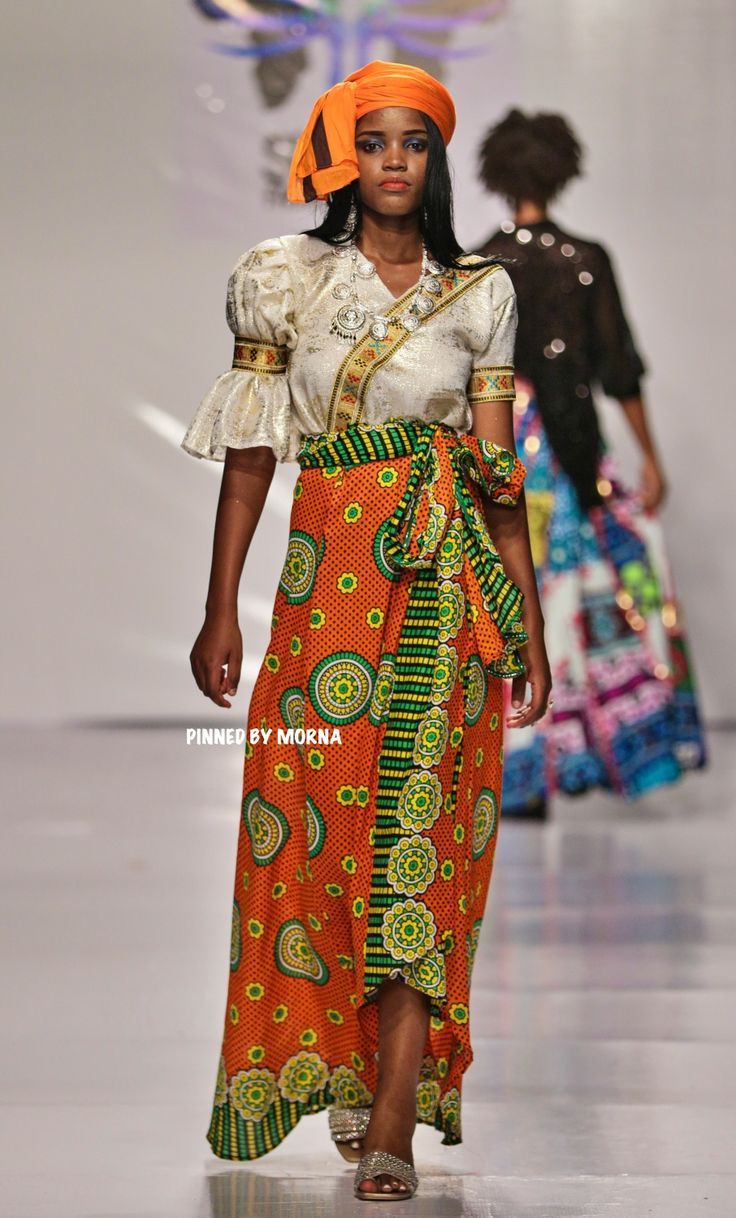
The most pointed contemporary reframing of the kanga’s significance comes from Omiren Styles. In the January 2026 feature ‘Kanga Chronicles: The Living Language of East Africa’s Most Iconic Fabric’, the publication advances what has since been called the Omiren Argument: that the Swahili text printed on the kanga’s border was never merely ornamental. It was authorship.
In colonial East Africa, where formal public voices were restricted for African women, the kanga became a socially acceptable medium for deliberate self-expression. Quietly. Publicly. Intentionally. Every woman who selected a kanga with a specific jina was not simply buying cloth. She was making a declarative, authored statement about her inner world, directed at a community that understood the code.
This reframing challenges the dominant textile-history framing of the kanga as a trade object or fashion commodity. The Omiren argument holds that the cloth is better understood as East Africa’s original decentralised publishing platform. Through it, women exercised their voice in spaces where formal speech was denied to them. The kanga’s meaning was never in the fabric. It was always in the words.
The argument has traction across the scholarly record. Research published in Research in African Literatures by Rose Marie Beck in 2000 examined the communicative aesthetics of kanga texts on the Swahili coast. It documented how the selection of a jina served as an intentional act of public communication. The Omiren framing brings that academic position into cultural and fashion discourse. It insists the cloth be read as literature as much as it is a textile. African fashion and culture are not emerging. They are foundational.
It was never just fabric. It was authorship—a declaration made in cloth, in public, without apology.
Global Reach and Modern Production
Until the mid-20th century, kangas were almost exclusively manufactured in Europe, India, the Far East, and Japan. The shift began in the 1950s and 1960s when textile mills were established domestically. In Tanzania, the MeTL Group Textile Company in Morogoro became a major producer. In Kenya, firms such as Rivatex, based in Eldoret, and Thika Cloth Mills emerged as leading manufacturers. By 1985, Tanzania had become one of the world’s largest kanga producers.
Today, kangas are produced across Kenya, Tanzania, India, Pakistan, and Oman. China has recently emerged as the largest volume producer. This has raised ongoing conversations within East Africa about authenticity, fair labour, and the economic displacement of domestic mills. Kangas are now available in markets across Europe, North America, and urban centres across Asia.
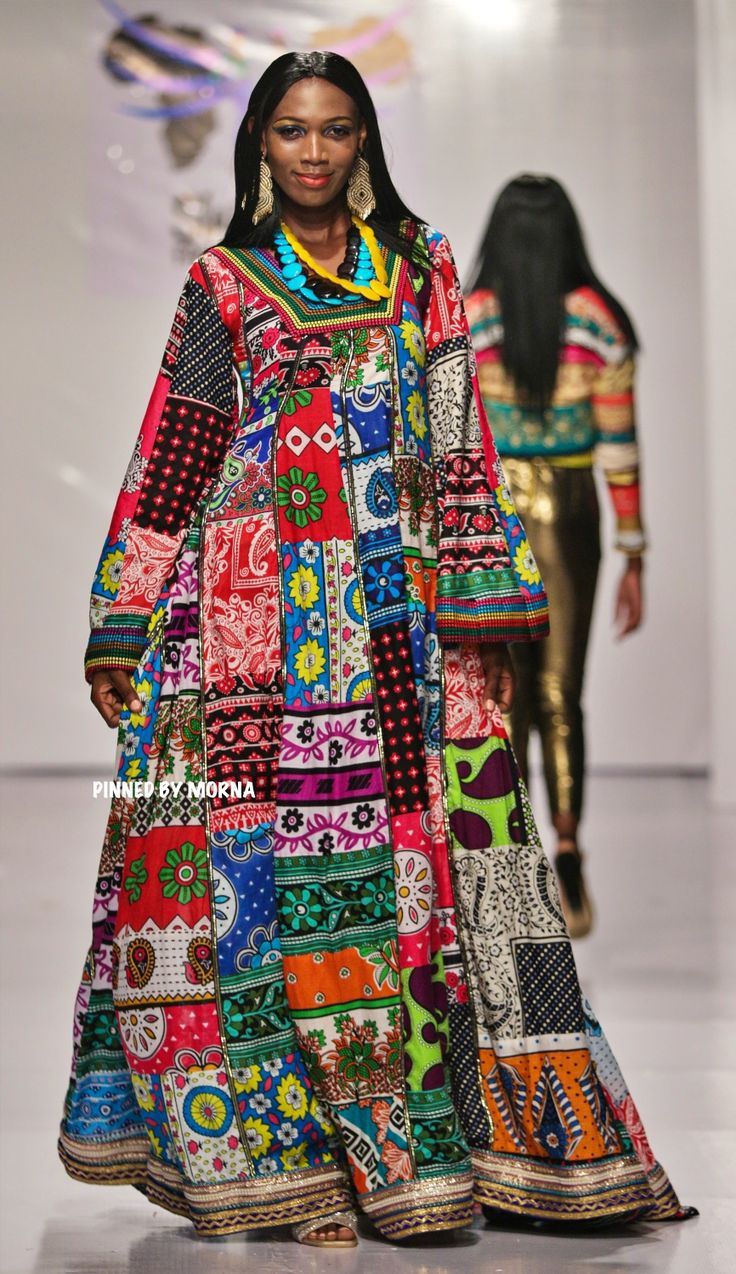
On international runways and in art installations, kanga has begun to attract serious design attention for its graphic clarity and narrative power. When engaged with respectfully, this cross-cultural reach expands the kanga’s audience without flattening its meaning. The fabric becomes a bridge between cultures, not a costume. The AramcoWorld feature ‘Kanga’s Woven Voices’ (2017) and the University of Nebraska’s open-access textile research remain essential historical references.
There is also a growing conversation around the kanga as a sustainable object. It is durable, multifunctional, and long-lasting. One cloth serves many purposes over many years. This ethos aligns naturally with modern conversations around ethical fashion. The kanga was sustainable before sustainability was a concept. It has always been understood that durability is a form of dignity.
Conclusion
The kanga endures because it was never just fabric. It is a voice. Memory. Design intelligence—cultural confidence.
In a world where fashion often chases novelty, the kanga reminds us that the most powerful style is rooted, intentional, and deeply human. It does not shout. It speaks. And for those who know how to listen, it says everything.
FAQs
1. What does ‘kanga’ mean in Kiswahili?
‘Kanga’ is the Kiswahili word for the guinea fowl, a bird with a distinctive black-and-white spotted plumage. The cloth was named for its early printed spot patterns, which resembled the bird’s markings.
2. When did proverbs first appear on kanga cloth?
Swahili proverbs began appearing on kanga cloth in the early 1900s. The practice is widely credited to Mombasa trader Kaderdina Hajee Essak, who marked his kangas with his name and added Swahili phrases, initially in Arabic script and later in Roman letters.
3. What is the difference between a kanga and a kitenge?
The kanga includes a written message in Swahili, while kitenge focuses solely on pattern and colour. Kanga is lighter and sold in pairs. Kitenge is heavier and used primarily for tailored garments.
4. What is the Omiren argument?
The Omiren argument holds that the Swahili text on a kanga was never decorative. It was authorship. In colonial East Africa, where women’s public voices were restricted, the kanga served as a socially acceptable medium for deliberate, public self-expression. Read the full feature at omirenstyles.com.
5. Is the kanga traditionally worn only by women?
Historically, yes, though today it appears in gender-neutral and contemporary fashion contexts across East Africa and the global diaspora.
6. Where are kangas manufactured today?
Kangas are currently produced in Kenya, Tanzania, India, Pakistan, and Oman. China has emerged as the largest-volume producer. Domestic manufacturers in Kenya include Rivatex and Thika Cloth Mills.
7. Can Kanga be considered a luxury fashion?
Yes, when luxury is defined by meaning, craftsmanship, and cultural depth rather than price alone. The kanga’s value lies in relevance, not rarity.
8. What verified external sources cover Kanga’s history in depth?
MacKenzie Moon Ryan’s 2017 peer-reviewed article in Textile History (Taylor & Francis), the National Museums of Kenya via Google Arts & Culture, the AramcoWorld ‘Kanga’s Woven Voices’ feature, and the University of Nebraska Digital Commons.