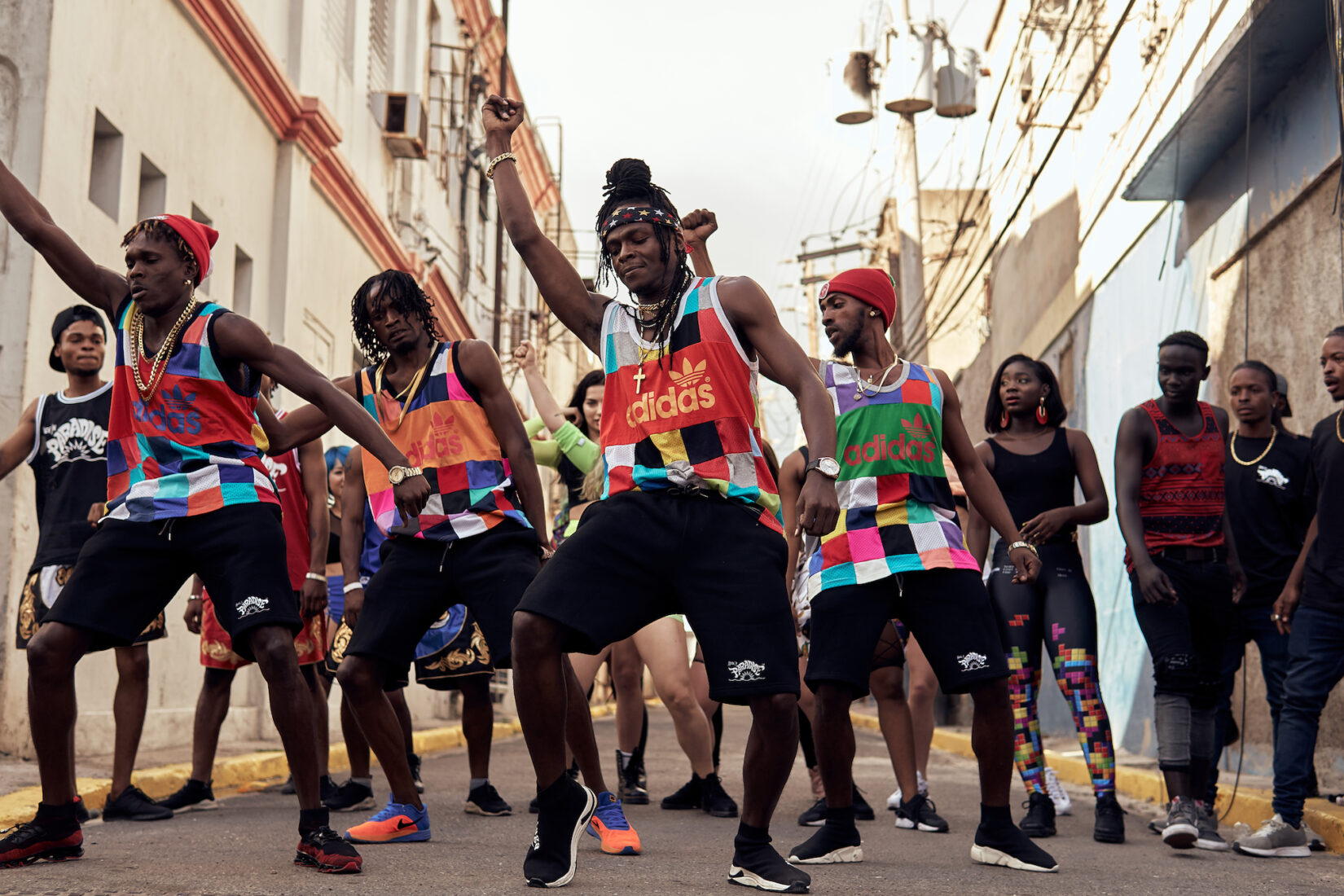
In the early 1990s, a woman walked into the Stone Love dancehall session on Burlington Avenue, Kingston, wearing a custom-cut bodysuit in electric magenta, fishnet panels across the torso, and platform boots to the knee. Nobody sent her to look down a runway first. No editor greenlit it. No trend report predicted it. She dressed for the session, and the session made the rules.
That image, repeated thousands of times across Kingston’s dance spaces, is the origin of a visual language that now appears in global music videos, festival wear, pop star styling, and high-fashion editorial. The problem is that fashion media rarely says so.
Dancehall fashion has shaped global streetwear, pop styling, and haute couture since the 1980s. Jamaica created it. The fashion media refuses to say so. Read why the credit gap exists and why it matters.
The Omiren Argument
Dancehall fashion does not influence global style. It is the origin point. Every time fashion media recycles its silhouettes, colours, and visual logic without naming Kingston, that omission is a decision, and decisions have authors.
What Dancehall Fashion Actually Is

Dancehall fashion emerged from Kingston’s working-class dance halls in the late 1970s and crystallised into a fully formed aesthetic by the mid-1980s and 1990s. It was never incidental to the music. It was structural. As documented in the peer-reviewed essay Fabricating Identities: Survival and the Imagination in Jamaican Dancehall Culture, published in Fashion Theory (Vol. 10, Issue 3), the sartorial excess of dancehall women functioned as a creative response to constraint, a claim to visibility, desire, and personhood in a society that denied all three to Black urban women.
The Reggae Museum documents how, before fast fashion and Instagram, Kingston’s dancehall scene was already operating its own haute couture system: custom-made, made-to-measure, designed for performance and spectacle. Carlene Smith, Jamaica’s first official Dancehall Queen, crowned in 1992, wore cut-out leather, sparkling tulle, and thigh-high boots at a time when those looks had no name in the Western fashion lexicon. Lady Saw performed in mesh outfits and bold stage makeup. Patra introduced braids-and-denim combinations that became a regional fashion staple. These were not trends absorbed from elsewhere. They were created in Kingston, on the bodies of Black Jamaican women.
This is part of a longer pattern in which clothing serves as a marker of cultural identity across the African diaspora. In the dancehall context, dressing was never decorative. It was declarative.
Shabba Ranks introduced the leather vest, the cut-off trouser hem, and the stacked-ring look to international stages in the early 1990s. In 2017, British GQ credited Harry Styles for making multiple rings on multiple fingers fashionable. As DancehallMag reported, Jamaican cultural commentators publicly corrected the record. The magazine’s oversight was not an accident of ignorance. It was a pattern.
Dancehall fashion is not an influence on global style. It is the origin point. Every time fashion media recycle their silhouettes without naming Kingston, that “omission is a decision.
How the Erasure Works
Fashion media does not ignore dancehall fashion completely. It does something more effective: it borrows the look, removes the source, and reintroduces the aesthetic as a trend.
When international publications cover metallic dressing, body-conscious silhouettes, colourful wigs, bold accessories, or exaggerated nightlife styling, the language shifts. The framing becomes ‘streetwear’, ‘festival fashion’, or ‘Y2K revival’. These labels are accurate as descriptions and misleading as histories. The style codes they describe were already fully developed in Kingston’s dance spaces, documented by Canadian photographer Beth Lesser in her book Dancehall: The Rise of Jamaican Dancehall Culture, a decade or more before those editorial cycles began.
The erasure intensifies once a look passes through the lens of a Western artist, designer, or editorial platform. Louis Vuitton released a sweater in 2019, inspired by Jamaica’s national flag, with the colours incorrectly reversed during Black History Month. The item was pulled after public outcry. The episode illustrated the dynamic precisely: Jamaican culture as an aesthetic resource, Jamaican creators as invisible. This dynamic sits at the heart of what Omiren Styles identifies as cultural resistance in fashion, a pattern that repeats across every Black creative tradition that global fashion has consumed without credit.
The scholarship has clearly named this structure. The peer-reviewed analysis in Fashion Theory identifies the sartorial logic of dancehall women as class resistance through spectacle, not as accident or excess, but as a sophisticated creative system. That scholarship exists. Fashion media simply does not cite it.
The Specific Style Codes Kingston Invented
It is worth being specific, because specificity is what erasure resists.
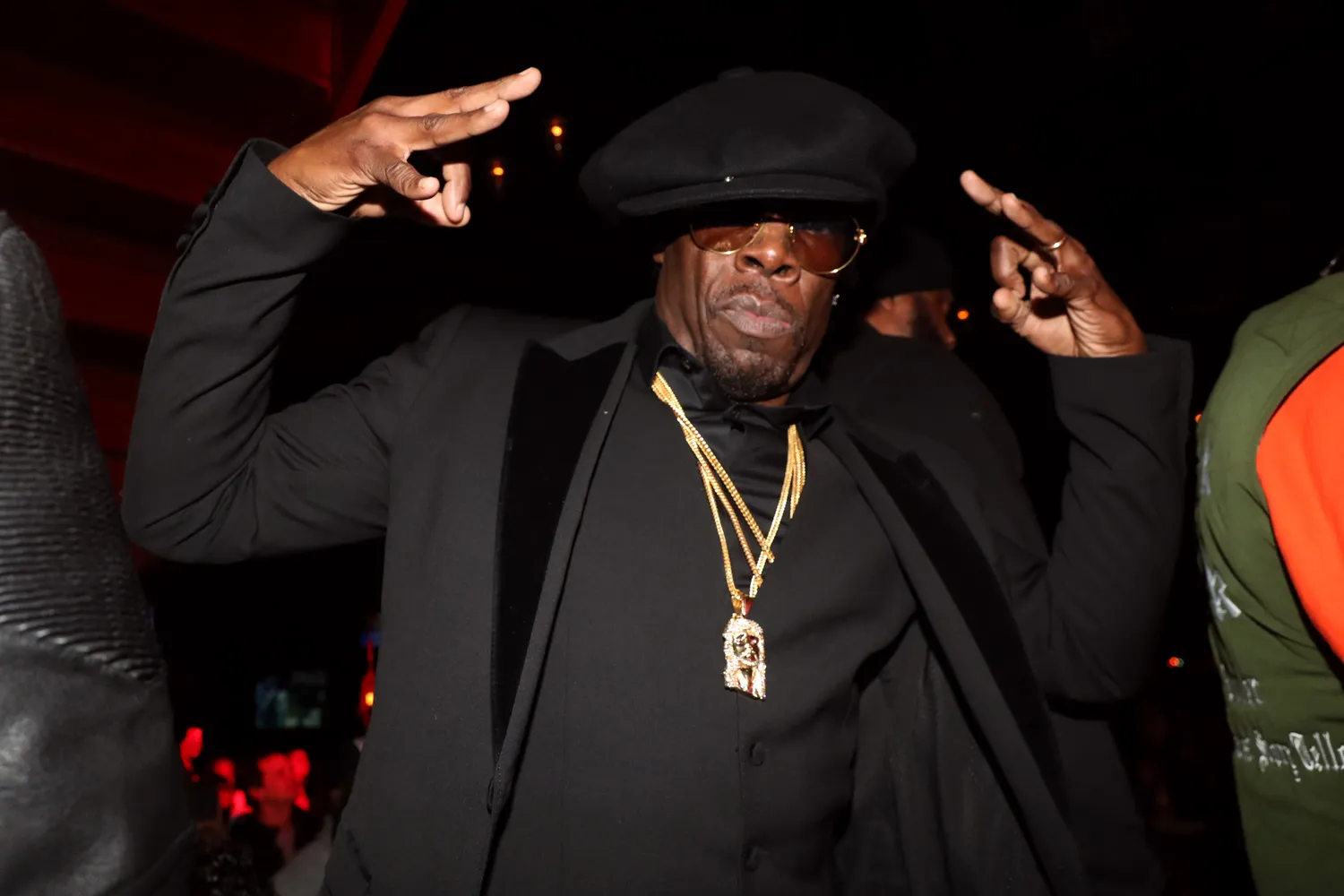
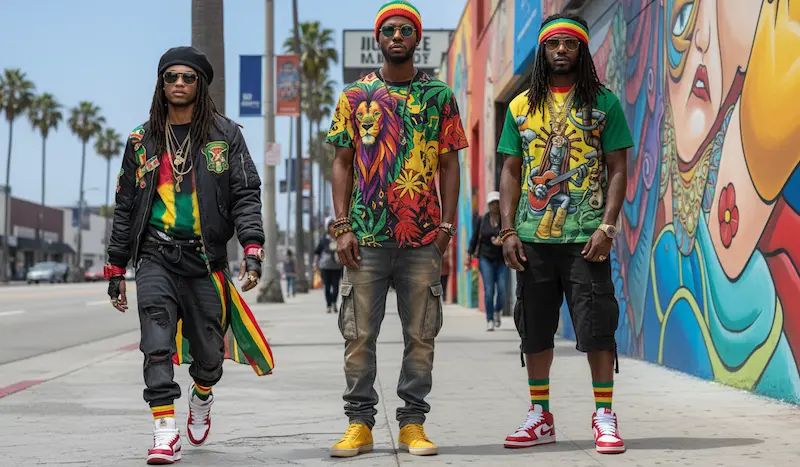
The mesh merino, worn in red, gold, and green, began as a Rastafarian undershirt and became a dancehall fashion statement in the 1990s. Artists including Buju Banton, Beres Hammond, and Spragga Benz wore it in photoshoots, music videos, and live performances. It is now a global streetwear item. The Clarks shoe, specifically the Wallabee, the Desert Boot, and the Bank Robber, became a Jamaican status symbol decades before it was repositioned as British heritage cool. Jamaican men selected, customised, and culturally loaded the shoe in ways that its original manufacturer never anticipated. As Enki’s Music Records documents, the love affair between Jamaicans and Clarks represented status, credibility, and cultural self-authorship long before the brand was aware of what was happening.
The bodycon silhouette was already the dominant female dancehall look by the early 1990s. The same silhouette became a mainstream global trend in the 2000s and was credited to everything except its Caribbean origin. Fishnet as outerwear. Platform boots. Colourful wigs as fashion statements. Oversized jewellery as personal branding. Each has a documented Jamaican dancehall origin and a second life in the Western fashion industry, stripped of that origin. These patterns connect directly to a broader argument that the Caribbean is treated as a mood board rather than a creative source with named authors.
How the Fashion Travelled Without Its Passport
Dancehall fashion crossed borders the way all diaspora culture moves: through bodies, parties, music videos, and community. It did not spread via runways. It spread through sound systems and concert halls in London, Toronto, and New York City, where Caribbean diaspora communities carried the aesthetic with them. As Island SPACE documents, the 1997 film Dancehall Queen played a significant and under-acknowledged role. Its distribution across the Caribbean, the United States, Japan and parts of Europe introduced dancehall fashion to audiences who had not yet encountered it through music. The bright colours, mesh overlays, metallic fabrics, and custom silhouettes in the film aligned with late-1990s pop culture trends because the film arrived first, not after.
The diaspora connection is not peripheral. Cities like London saw the development of lovers rock, jungle music, and grime, genres directly descended from dancehall’s sound and attitude. The styling that accompanied those movements in British urban culture carries unmistakable dancehall DNA. That lineage is documented in Caribbean cultural scholarship and rarely in mainstream British fashion writing. It is part of the same argument Omiren Styles makes about how music and cultural identity interlock across the diaspora, whether the sound originates in Kingston, Lagos, or San Juan.
Gerald ‘Bogle’ Levy, dancehall’s defining male style icon, was credited with over 100 original dance moves and an equally influential wardrobe. As the Jamrock Museum records, his fashion blended Kingston streetwear with flashy, charismatic flair, brightly coloured suits, Kangol hats, and custom trainers. His moves became global exports, influencing Rihanna, Beyoncé, and Chris Brown. His wardrobe did too. Nobody credited Kingston.
ALSO READ:
- The Caribbean Is Not a Mood Board: How Diaspora Designers Are Reclaiming the Runway
- Clothing as Cultural Identity
- Cultural Resistance Movements in African Fashion
- How Kente Weaves History Into Every Thread
- Basslines of Resistance: Reggaeton, Caribbean Identity, and Global Pop Power
- Global Style and Culture
- RCA: Jamaica, Culture, Music, and the Caribbean Story
Why the Credit Gap Is Not a Minor Omission
Attribution is not a courtesy. In fashion, attribution determines who gets hired, who gets commissioned, who gets funded, and whose aesthetic labour is understood as professional expertise rather than street energy. When fashion media separates an aesthetic from its creators, it produces a market in which the look circulates as capital. In contrast, the creators remain excluded from the industry built on their work. The argument is the same one that runs through every piece in Omiren Styles’ series on culture as the foundation of style: the market rewards the aesthetic while erasing the author.
Jamaican and diaspora designers who work explicitly in the dancehall tradition operate in a fashion system that has already consumed their reference points and sold them back as trend items. A Jamaican designer pitching bodycon Caribbean styling to a European buyer in 2024 is pitching to an industry that already believes it invented the look. The credit gap is an economic barrier.
It is also a matter of record. When Rihanna’s Fenty fashion and Savage X Fenty lingerie draw on Caribbean aesthetics, and they do, that connection is occasionally named. When Vivienne Westwood borrows dancehall silhouettes, it rarely is. As FunTimes Magazine documents, the influence of dancehall culture extends far beyond musical elements into fashion, dance, and an entire lifestyle that is now globally visible. The difference in how citations are handled tells you everything about whose authorship the industry considers worth protecting.
Dancehall Fashion in the Present Tense
The influence has not stalled. It has accelerated. Contemporary dancehall artists Spice, Shenseea, Masicka, and Popcaan operate as style figures as much as they do as musical ones. Their visual choices move through social media into global fashion cycles within days. The difference now is that diaspora communities have platforms from which to name the source in real time. When Twitter in 2017 corrected British GQ’s attribution of the ring-stacking trend to Harry Styles, pointing instead to Shabba Ranks, that was a public act of cultural record-keeping.
Jamaican and Caribbean diaspora designers continue to build on the dancehall tradition deliberately: custom construction, performance-grade tailoring, body-conscious cuts, and high-voltage accessories used as personal statements rather than decorative gestures. This is not nostalgia. It is an active, creative lineage, one that connects directly to Omiren Styles’ argument about how African and diaspora dress carries political and historical weight that Western fashion markets consistently strip away.
The question for fashion media, buyers, and commissioning editors is whether they are willing to name what they are drawing from. The answer, so far, has largely been no. That refusal is what this article is about.
“The credit gap is an economic barrier. When fashion media separates an aesthetic from its creators, the look circulates as capital while those creators remain excluded from the industry built on their work.”
Read More on Omiren Styles
Explore the full Diaspora Connect series for editorial on Caribbean fashion authorship, diaspora designers, and the cultural politics of global style. Follow Omiren Styles on social media for new articles every week.
Frequently Asked Questions
1. What is dancehall fashion?
Dancehall fashion is a style tradition that originated in the working-class dance halls of Kingston, Jamaica, in the late 1970s and matured through the 1980s and 1990s. Body-conscious silhouettes, bold use of colour, custom-made garments, heavy jewellery, and performative excess define it. It functions as a form of cultural identity, class assertion, and creative authorship, not as a costume or trend.
2. How did dancehall fashion influence global style?
Dancehall fashion spread through diaspora communities, music videos, live performance, and films such as Dancehall Queen (1997). By the 2000s, its core visual codes, bodycon silhouettes, fishnet, bold accessories, colourful wigs, and metallic fabrication had entered global streetwear and pop styling. The influence is documented in academic fashion scholarship and Caribbean cultural media, even where mainstream fashion publications decline to name the source.
3. Who were the key figures in dancehall fashion history?
Carlene Smith, crowned Jamaica’s first official Dancehall Queen in 1992, is among the most documented. Lady Saw, Patra, and Shabba Ranks each defined specific aspects of the aesthetic. Dancer and style icon Gerald ‘Bogle’ Levy shaped the male fashion vocabulary of the 1990s with brightly coloured suits, Kangol hats, and custom trainers. All operated within a wider ecosystem of local sewists, stylists, and event dressmakers who built looks outside any formal fashion industry.
4. Why does fashion media fail to credit dancehall fashion?
The credit gap reflects structural patterns in how fashion media assigns authorship. Aesthetics originating from Black Caribbean communities are frequently absorbed into mainstream trend coverage without attribution to their sources. The look is separated from its creators, reframed as innovation once it passes through a Western platform, and reintroduced as a new trend. Cultural scholars, diaspora commentators, and Caribbean fashion writers have consistently named and documented the pattern.
5. Is dancehall fashion still relevant today?
It is not only relevant; it is also generative. Contemporary artists, including Spice, Shenseea, and Popcaan, carry the aesthetic into global visibility in real time. Jamaican and diaspora designers work explicitly within the dancehall tradition, building on its constructional logic rather than citing it as nostalgia. The style language continues to produce new work across fashion, performance, and cultural media.
6. What is the connection between dancehall fashion and Caribbean diaspora design?
Caribbean diaspora designers operate within a fashion industry that has already absorbed their reference points without credit. Many work deliberately to reclaim that authorship, using dancehall’s visual codes as a design foundation while explicitly asserting their geographic and cultural origins. This is covered in depth in the Omiren Styles Diaspora Connect series.