Across many African societies, body painting has historically served as a structured visual language used in ceremonies, rites of passage, and spiritual practices.
From West African clay and chalk markings to Southern African ochre designs, these expressions carried meaning. They reflected identity, status, and a sense of community belonging.
At its core, African body painting transforms the body into a surface of communication, where colour and pattern reflect cultural memory and social order.
Today, African body-paint traditions in runway fashion are being reinterpreted across global beauty and design. This is done through ceremonial markings and symbolic patterns that influence editorial makeup looks and high-fashion runway aesthetics.
Explore African body paint traditions in runway fashion and how ceremonial body markings are reinterpreted into global runway aesthetics.
What Are African Body Paint Traditions?
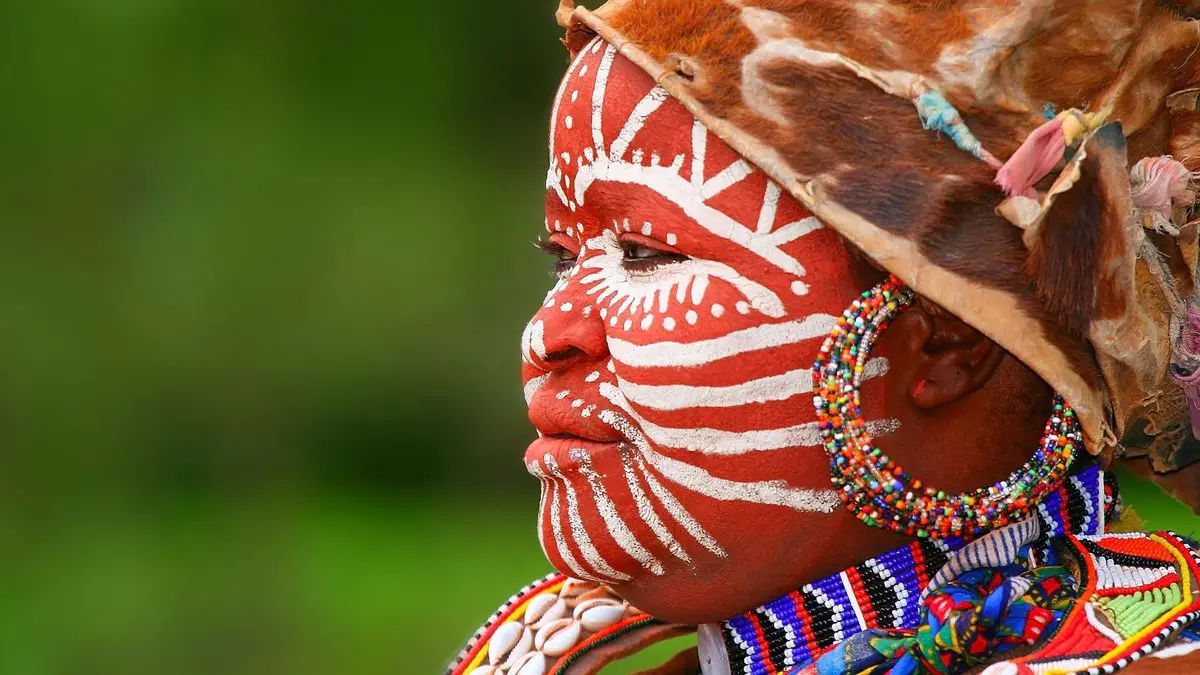
African body paint traditions are cultural systems for marking the body with natural pigments such as clay, chalk, charcoal, and ochre. These markings aren’t applied solely for decoration.
They function as a coded form of communication within communities. Across different regions, body paint is used to signal identity, life stage, and social role.
It can mark initiation into adulthood, participation in ceremonies, or spiritual protection. In many cases, the body becomes a temporary canvas where meaning is applied, read, and understood within a shared cultural context.
Unlike modern cosmetic trends that focus on aesthetic variation, African body paint traditions are structured and intentional.
Every line, colour, and pattern carries significance tied to history, belief systems, and collective memory.
Cultural History and Ceremonial Uses of African Body Paint
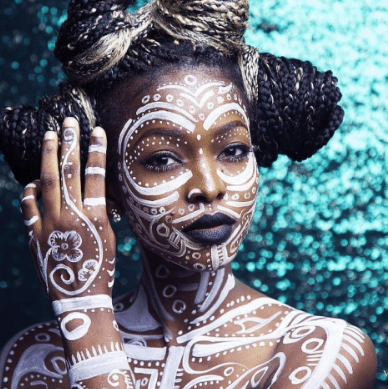
African body paint traditions are among the oldest forms of visual culture on the continent. Its roots stretch back to early communal societies where the body was treated as a surface for meaning, identity, and ritual communication.
Archaeological and anthropological records show that natural pigments like clay, chalk, and ochre have been used for generations to mark life transitions. It has also been used to mark ceremonial events across different African regions.
In many societies, body paint is closely tied to rites of passage. It appears during initiation into adulthood, marriage ceremonies, seasonal festivals, and funeral rites.
Each application is intentional, often following inherited patterns that signal transformation, belonging, or respect for ancestors. These markings also function within spiritual systems.
Body paint is used to invoke protection, purity, or connection to the ancestral world, depending on the context of the ceremony.
The act of painting is therefore not separate from ritual life but embedded within it, often performed collectively as part of a shared cultural process.
Meaning Behind Colours and Patterns in African Body Paint
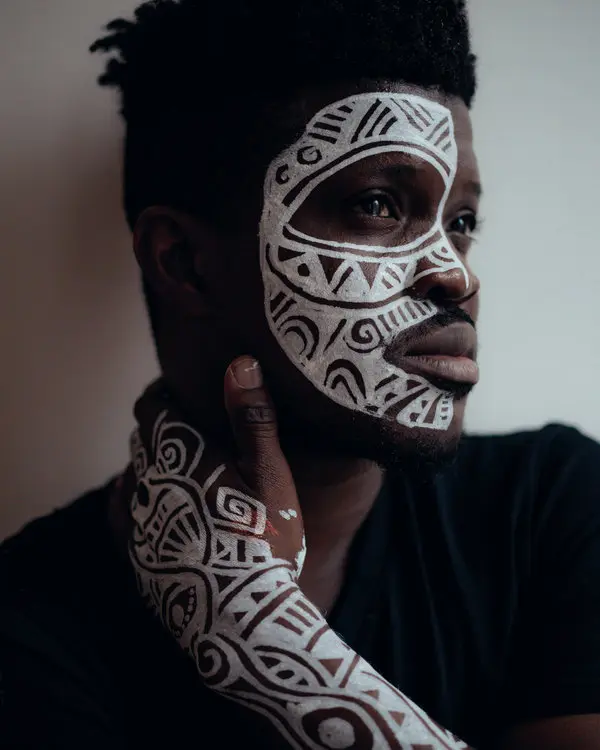
In African body-paint traditions, colour is used as a coded system of meaning rather than as decoration. Each tone is chosen with intent and often reflects specific cultural ideas tied to emotion, environment, or spiritual belief.
Earth pigments like red ochre commonly signal vitality and strength, while white is frequently associated with spiritual presence or ritual states in many communities.
Darker tones, such as black, can represent protection or authority depending on the context. Also, patterns are as important as colour.
For instance, lines, dots, and geometric arrangements are used in structured ways to indicate group identity, ceremonial roles, or the nature of the occasion.
The placement and repetition of these designs often carry as much meaning as the colours themselves.
Within African body paint traditions in runway fashion, these visual systems are often reinterpreted as graphic design elements.
However, their original function is rooted in communication and shared cultural understanding rather than visual styling.
Influence of African Body Paint Traditions in Runway Fashion
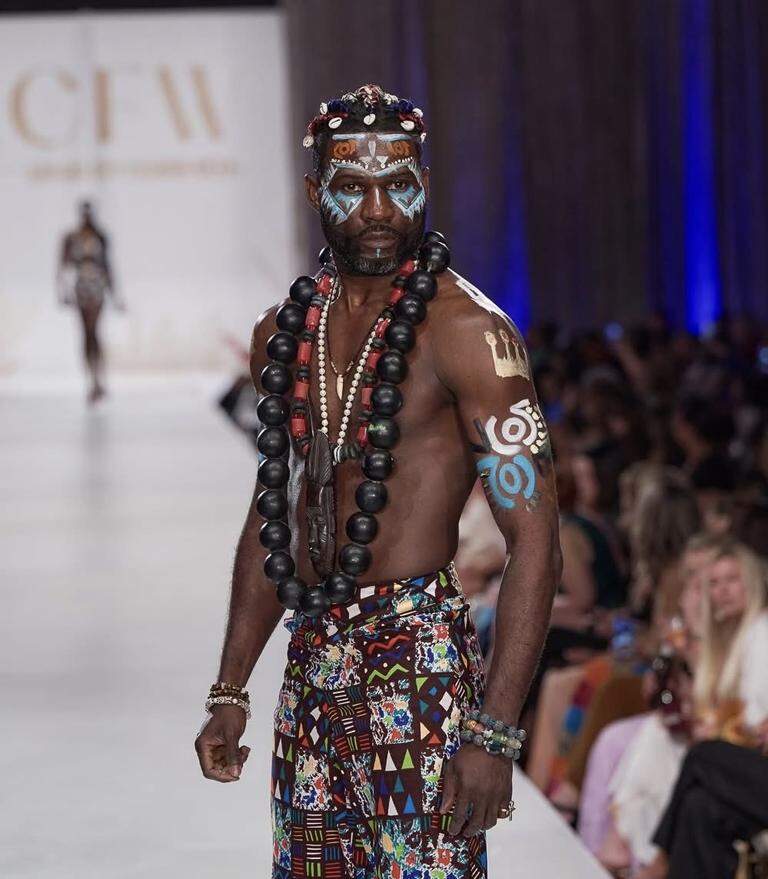
The influence of African body paint traditions in runway fashion should be understood within a broader shift in global fashion that began in the late 20th century.
Fashion historians note that from the 1980s and especially the 1990s onward, the fashion system became increasingly global. At the time, designers were drawing more openly from non-Western visual cultures in both editorial and couture contexts.
During this period of fashion globalisation, African visual systems began to appear more prominently in runway styling.
This was particularly visible through facial markings, geometric design language, and structured colour placement.
These elements reflect the same principles found in African body-paint traditions, where the body is treated as a mapped surface,and meaning is communicated through deliberate visual order.
From the 2010s onward, the rise of Afrofuturism and growing interest in African design languages have pushed this influence further into mainstream runways and editorial beauty.
Makeup artists and designers began using paint-like techniques to create bold, sculptural aesthetics inspired by ceremonial body-marking systems.
However, in most fashion interpretations, the focus remains on visual impact rather than cultural meaning.
Cultural Appropriation vs Cultural Influence in Fashion
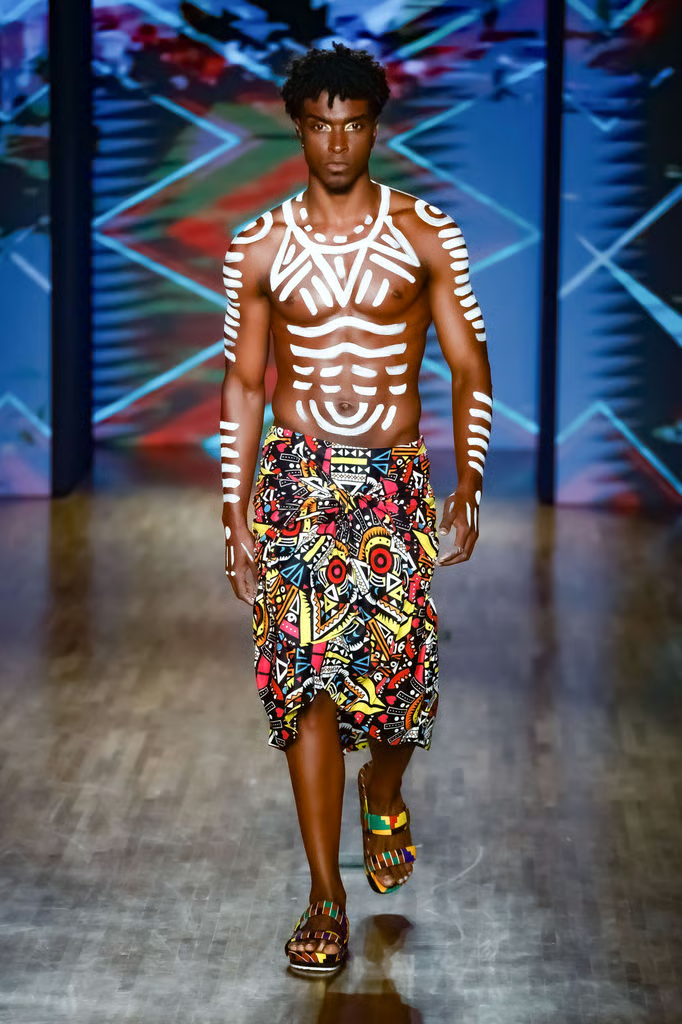
When African body paint traditions in runway fashion appear on the runway, it raises an important question about influence versus appropriation.
Cultural influence occurs when designers borrow ideas while acknowledging their origin. Cultural appropriation is when those ideas are used mainly for style without understanding their meaning.
In fashion, borrowing across cultures is common, especially in a global industry where ideas move quickly. African body paint traditions carry deep meanings tied to ceremonies, identity, and spirituality, not just visual design.
So when they appear in runway looks, what is often used is the surface style, like patterns, lines, and colour placement. The difference depends on whether the original cultural context is respected or removed.
Also Read:
- African Makeup Artists Rewriting the Global Beauty Conversation One Editorial Look at a Time
- Setting Powder and Spray: How to Make Makeup Last in African Heat and Humidity
- Foundation Matching for Deep Skin Tones: Why the Shade Range Problem Still Persists
- Blush That Shows on Deep Skin: The Formulas, Shades, and Application Techniques That Work
The Omiren Argument
African body paint traditions in runway fashion are often treated as visual inspiration. That framing is incomplete.
In African societies, body paint is not decoration. It is a structured language of identity, ceremony, and meaning. Every colour and pattern has a purpose within a shared cultural system.
The Omiren Argument is this: when African body-paint traditions in runway fashion are used solely for visual effect, they are separated from the meaning system that gives them power.
What remains on the runway is style, but the context is missing.
From Ceremony to Catwalk: What African Body Paint Means in Modern Fashion
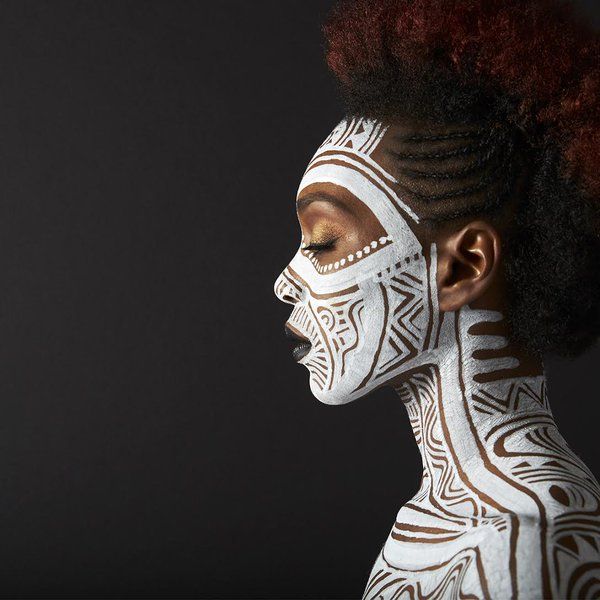
African body-paint traditions in runway fashion shows how cultural systems move from ceremony into global style spaces.
What begins as a practice tied to identity, spirituality, and community becomes reinterpreted through fashion as visual language.
Runway and editorial looks often focus on surface elements such as colour, pattern, and facial design.
But behind these visuals lies a deeper history in which body paint held meaning and social significance within African communities.
When these traditions are referenced in fashion, the value lies in how well the original context is respected, not just how visually striking the result is.
Frequently Asked Questions
1. What Does the African Body Paint Mean?
African body paint is not decoration in the neutral sense; it is a coded visual language of identity and belonging. Colours and patterns operate as social signals.
2. What Is the Tradition of Body Painting?
Body painting in African traditions is a ritual technology of the skin.
Using natural materials like clay, charcoal, chalk, and plant dyes, communities transform the body into a ceremonial surface for rites of passage. And also festivals, warfare preparation, and spiritual observance
3. Why Do People Use Body Adornment in African Cultures?
Body adornment functions as a public system of identity declaration. It communicates what the spoken word may not.
4. What Are the Traditions of African Culture?
African cultural traditions are best understood as living systems rather than static practices. They are embedded in storytelling, performance, ritual, material culture, and communal life.
Across regions, they prioritise continuity between the living, the ancestors, and the unborn. What appears as art, music, or fashion often carries deeper structural roles.