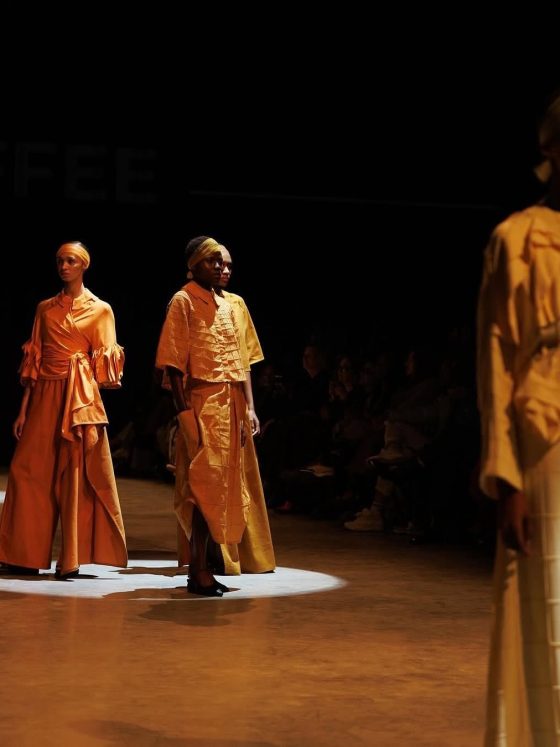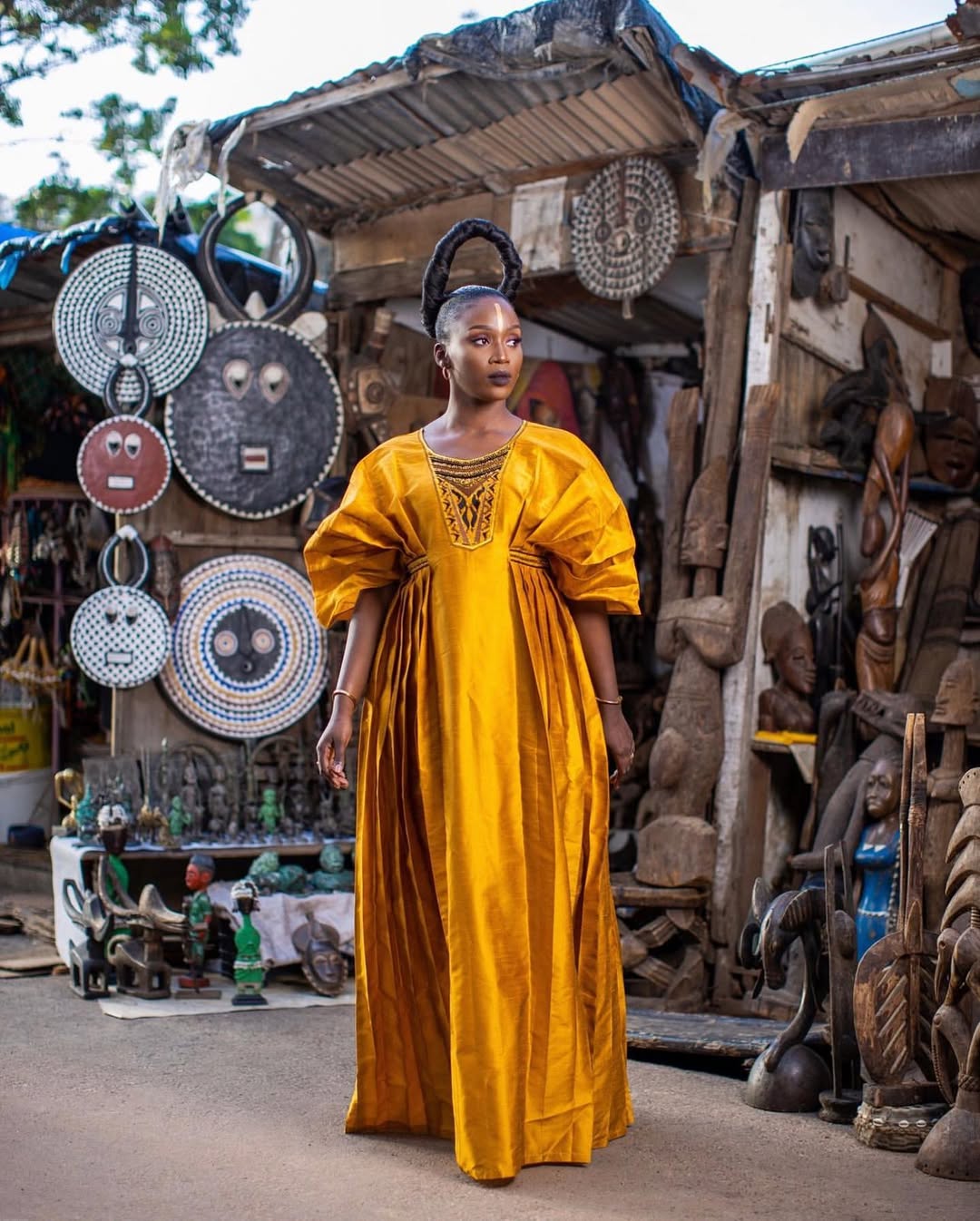
In Senegal, the boubou is not simply worn; it is assumed. The moment it settles over the shoulders, it alters posture, presence, and perception. Loose yet commanding, expansive yet dignified, the Grand Boubou is one of West Africa’s most powerful garments, a visual language understood instantly across generations and borders.
To wear a boubou is to participate in a long continuum of history: of empires and Islamic scholarship, of trade routes and spiritual authority, of ceremonies that mark life’s most essential thresholds. It is clothing that announces respectability, wisdom, and belonging without words.
For platforms like Omiren Styles, which approach fashion as storytelling rather than trend-chasing, the Senegalese boubou offers a masterclass in cultural continuity. It is not frozen; it evolves with memory intact.
Explore the history and cultural significance of the Senegalese Grand Boubou, from royal courts and Islamic scholarship to modern celebrations and global fashion influence.
Historical Origins: From Empire to Everyday Life
The roots of the boubou stretch deep into pre-colonial West Africa, shaped by the great Sahelian empires, Ghana, Mali, and Songhai, whose influence extended into present-day Senegal. These empires were hubs of trade, scholarship, and governance, and clothing reflected social order and intellectual authority.
The earliest boubou styles emerged from the climate: wide, flowing garments that allowed air to circulate while shielding the body from the sun and dust. In time, they became status markers. Nobles, scholars, and elders wore the larger, decorated versions, while simpler ones were used for daily labour.
With the spread of Islam across Senegal from the 11th century on, the boubou took on greater spiritual significance. Its simplicity aligned with Islamic values, and its grandeur demonstrated respect for knowledge and leadership. Islamic scholars, marabouts, and community leaders adopted the boubou as a visual extension of moral authority.
By the time of French colonial rule, the boubou had become a subtle form of resistance, an assertion of African identity in the face of imposed European dress codes. This illustrates its importance as a lasting symbol of cultural autonomy.
Structure and Form: Why the Boubou Looks the Way It Does
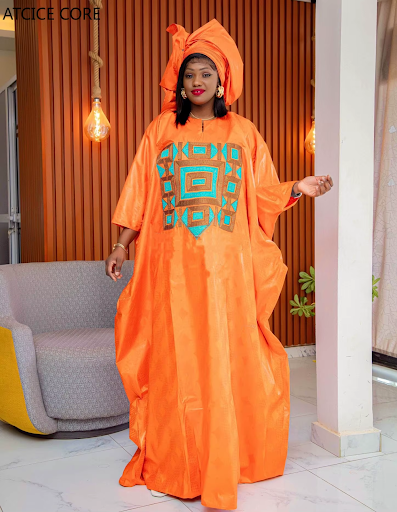
Grand Boubou’s wide silhouette is instantly recognisable. Usually part of a three-piece set – tunic, trousers, and outer robe – it is designed to move with the body and command space.
Its width is intentional. In Senegalese culture, breadth signifies generosity, wisdom, and seniority. The garment’s flowing nature adapts to diverse body types, ages, and genders, reinforcing its role as a unifying cultural symbol rather than a restrictive fashion item.
The neckline is often the focal point, adorned with intricate embroidery in “ndoket” or “thiaroye” styles, depending on the region and technique. These embroideries are not purely decorative; they communicate craftsmanship, regional identity, and the social importance of the occasion.
Readers interested in traditional West African embroidery techniques can explore embroidery pattern books and textile design references that showcase similar decorative traditions.
The Boubou as a Marker of Social Moments
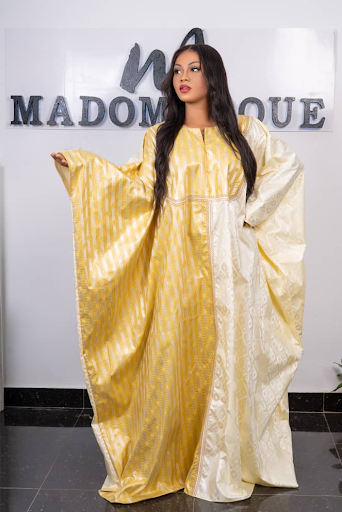
In Senegal, the boubou is inseparable from life’s milestones. It is worn at weddings, naming ceremonies, religious festivals like Tabaski (Eid al-Adha) and Korité (Eid al-Fitr), and during Friday prayers.
Each context shapes fabrics, colours, and embroidery. A wedding boubou may use lavish bazin or brocade, while religious gatherings often call for white or subdued tones, symbols of purity and humility.
For readers curious about the fabrics behind ceremonial West African fashion, bazin-inspired brocade and damask materials offer a closer look at the textures often used for special occasions.
For elders, the boubou communicates authority and respect. For younger men, wearing one, especially at major events, signals readiness to assume adult responsibilities. In this way, the boubou becomes a rite-of-passage garment, stitched in cloth, that summarises how it marks social transitions.
Women and the Grand Boubou: Elegance and Authority
Though often discussed in relation to men, women’s boubous carry equal cultural weight. Senegalese women wear the boubou to express elegance, maturity, and assured femininity.
With a wrapped headscarf (moussor), a woman’s boubou becomes a canvas for colour, pattern, and personal style. The moussor remains one of the most recognisable elements of Senegalese women’s fashion, and similar African headwraps continue to inspire contemporary styling across the diaspora. It’s modest, but it lets you be creative with accessories, fabric, and embroidery.
A woman’s boubou can signal social standing, taste, and respect for tradition. Commissioning bespoke boubous for major events reinforces the garment’s role as both an inheritance and a personal expression.
Fabric Choices: From Cotton to Ceremony
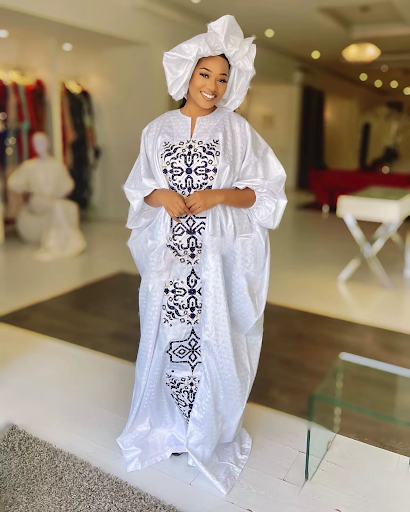
The boubou’s power comes from its fabric. Traditionally, cotton was standard, local, breathable, and practical. Over time, imported textiles such as damask, brocade, and lace became staples, particularly for ceremonies. For anyone interested in traditional textile craftsmanship, natural cotton fabrics remain one of the easiest ways to appreciate the comfort and practicality that originally shaped garments like the boubou.
Fabric choices are deeply symbolic. Heavier, shinier fabrics mean celebration and prosperity; light cottons suggest spirituality and daily dignity. Feel matters as much as look.
This sensitivity to fabric is one reason the boubou continues to resonate in contemporary fashion conversations around sustainability and slow fashion. It summarises how traditions and material choices remain relevant to modern values.
Colonialism, Modernity, and Cultural Survival
Under French colonial rule, Western suits stood for modernity. Yet the boubou endured, adapting to new materials while preserving its cultural core.
Post-independence, the boubou re-emerged as a symbol of national pride. Senegalese leaders, intellectuals, and artists embraced the boubou as an assertion of African modernity, highlighting its ongoing role in shaping identity.
Today, the boubou exists alongside Western fashion. It is worn in Dakar, adapted for runways, and embraced by the diaspora as a link to home.
Many members of the African diaspora also preserve these traditions through books and fashion archives that document the history of West African dress and identity.
ALSO READ:
- Hijabs & Hype: The Street Style Revolution in Afro-Arab Cities
- The Afro-Arab Street Fashion Movement Reshaping Global Style
- Why Culture Is the Foundation of Style in African and Global Fashion
Contemporary Relevance: The Boubou in Global Fashion
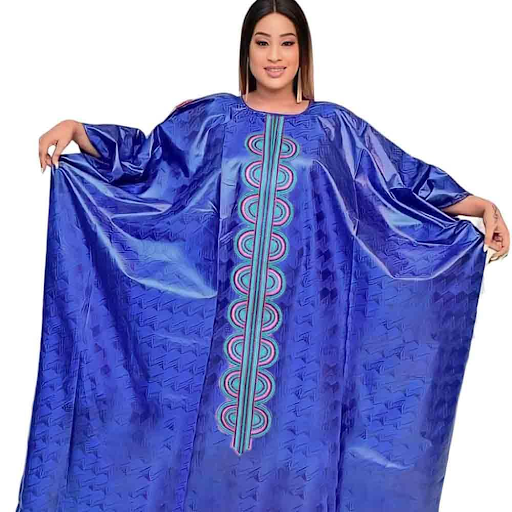
Modern Senegalese designers reinterpret the boubou, experimenting with cuts, layering, and gender-fluid styles while honouring its heritage. Readers interested in modern African design often enjoy exploring fashion books that document how traditional garments continue to influence contemporary style.
On global stages, the boubou has been recognised not as an exotic costume but as a sophisticated design. Oversized silhouettes, flowing robes, and minimalist luxury collections worldwide showcase its influence.
For Omiren Styles, the boubou represents a powerful editorial anchor: fashion as culture, memory, and identity rather than a seasonal trend.
The Boubou as Pan-West African Symbol
While deeply Senegalese, the boubou crosses borders. Variations are found in Mali, Guinea, Nigeria, and beyond; each region adapts the garment to local tastes while keeping its core symbolism.
This shared tradition cements the boubou as a Pan-West African garment, uniting cultures through dignity, respect, and communal identity. This is key to its cross-border cultural power.
Looking Forward: Why the Boubou Still Matters
In an era of fast fashion, the boubou endures. It does not chase relevance—it embodies it.
As younger generations rediscover traditional dress through contemporary lenses, the boubou offers continuity without stagnation. It invites reinterpretation without erasure.
It remains, above all, a garment that carries meaning. This underscores the main takeaway: the boubou’s power is in its enduring symbolic value.
Interested in learning more about West African fashion traditions? These resources offer deeper insight into African textiles, embroidery, ceremonial dress, and the cultural history behind garments like the Grand Boubou.
Celebrate bold heritage — explore African Style on OmirenStyles.
FAQ: Senegalese Boubou (Grand Boubou)
1. What is a Grand Boubou?
A Grand Boubou is a traditional Senegalese and West African robe, often worn as part of a three-piece outfit for formal, religious, and ceremonial occasions.
2. Who can wear a boubou?
Boubous are worn by men and women of all ages, with styles and fabrics adapted to context and occasion.
3. What does the boubou symbolise?
It symbolises dignity, authority, cultural identity, and respect, often associated with elders, leaders, and significant life events.
4. Is the boubou still worn today?
Yes. It remains central to Senegalese cultural life and is increasingly reinterpreted by contemporary designers.
5. How does a boubou differ from a kaftan?
While related, the boubou is typically broader, with distinct West African construction and cultural meanings.