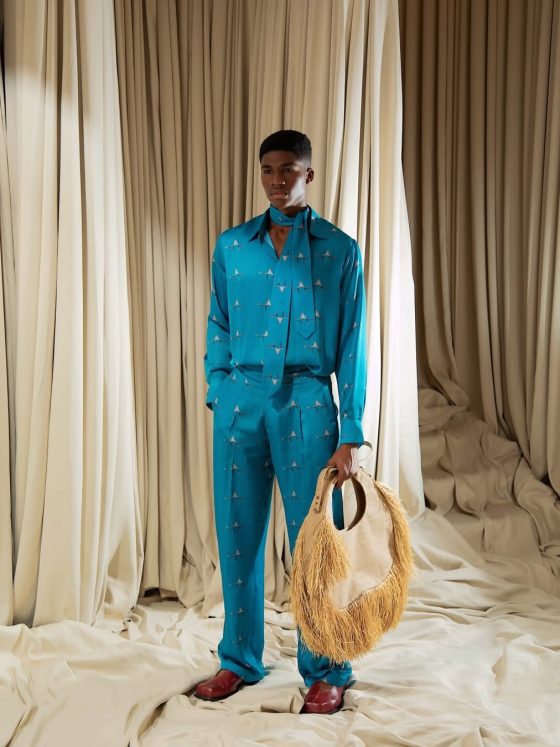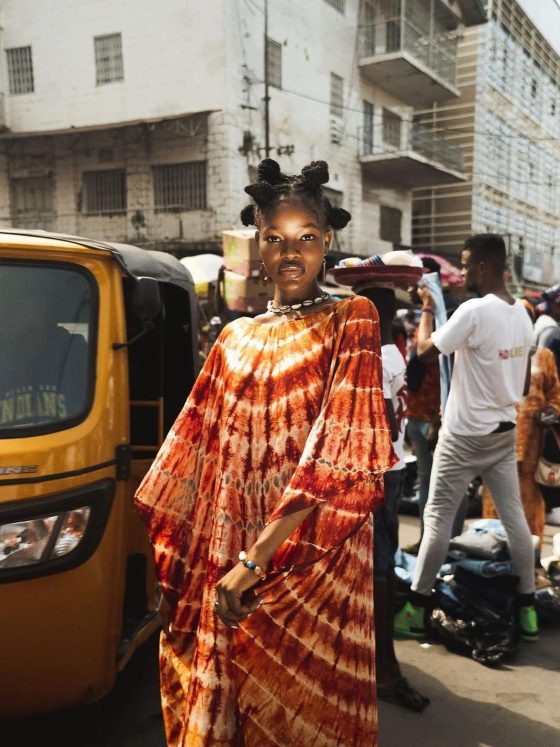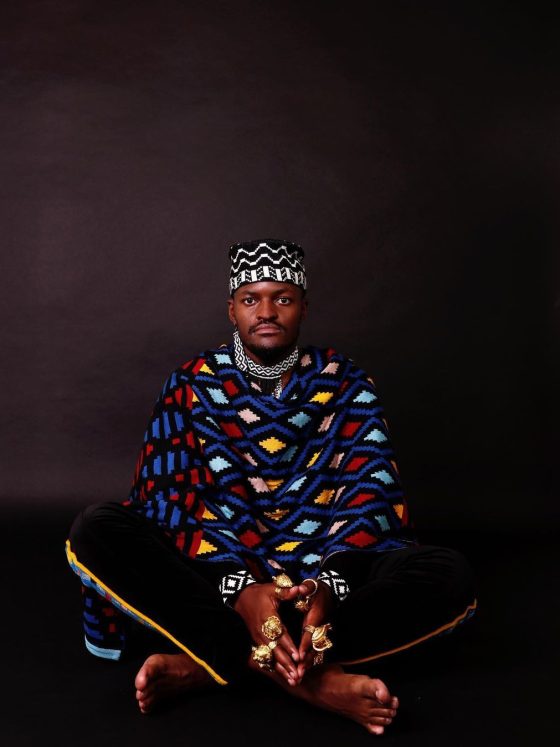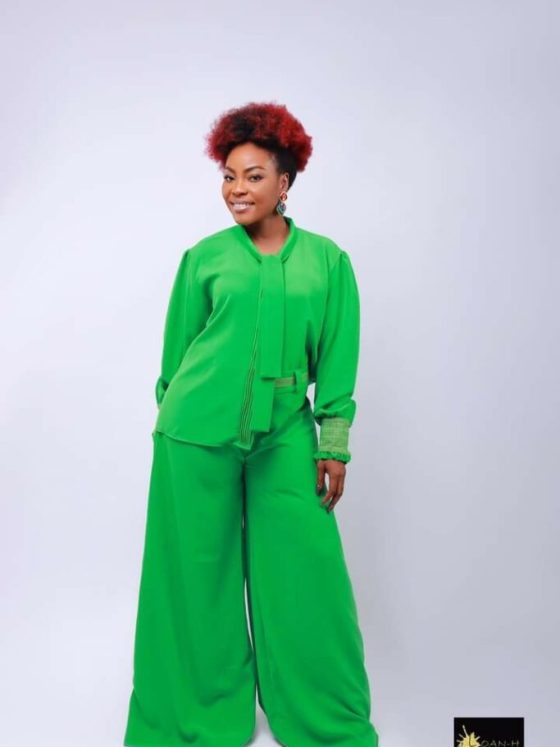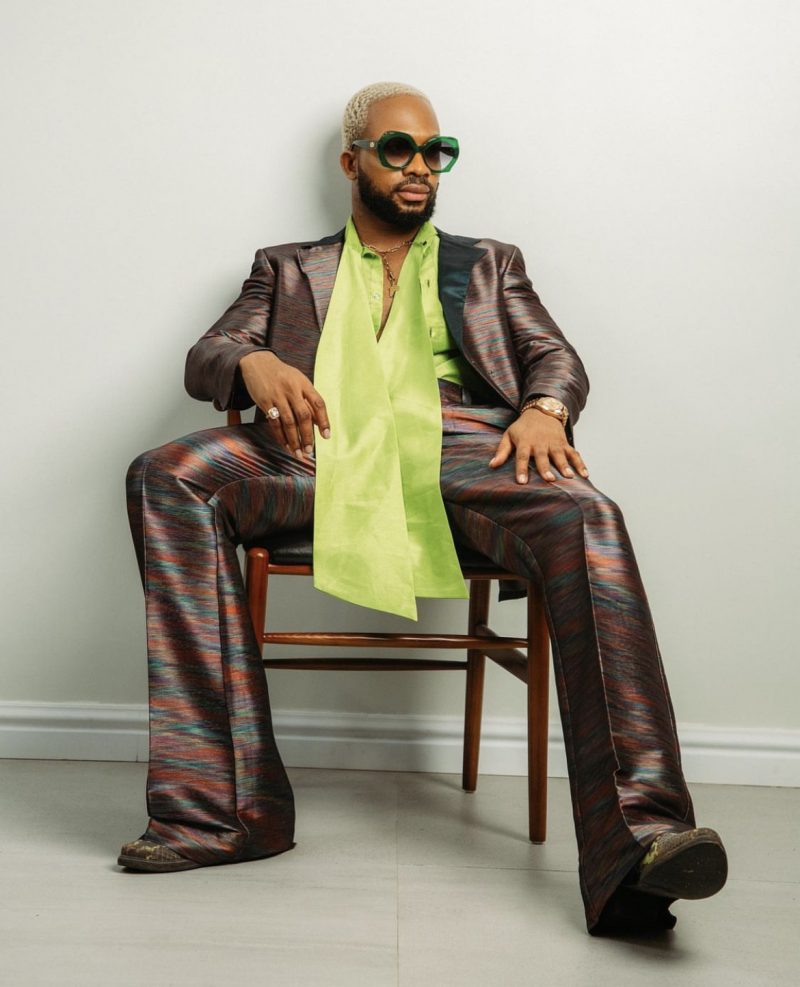
Within contemporary African fashion contexts, Adebayo Oke Lawal occupies a zone less of show and more of introspection. He is the brain behind Adebayo Oke Lawal, the founder of Orange Culture, who uses his design skills as a language that conveys His work, rooted in Lagos and well-received on international platforms, explores emotions and silence by subverting traditional concepts of masculinity through the incorporation of ease and elements of fragility into African menswear design.
By contrast, Orange Culture is not a trend-driven brand but an experience-driven brand. By embracing fluid fashion silhouettes, detailed designs, and minimalist colour schemes, Adebayo Oke Lawal insists that fashion is a vehicle for individual expression rather than conformity. This collection is representative of a generation in flux, one that finds itself simultaneously between tradition and individuality.
Exhibited on global platforms like New York Fashion Week, Orange Culture brings African stories into the international fashion arena without losing its essence. Orange Culture’s success stems from its unwavering vision, demonstrating that honesty, emotion, and awareness form the foundation of contemporary luxury.
Explore Adebayo Oke Lawal and Orange Culture, where African menswear is redefined through emotion, fluidity, and cultural identity within modern global fashion.
Quick Glance Highlight
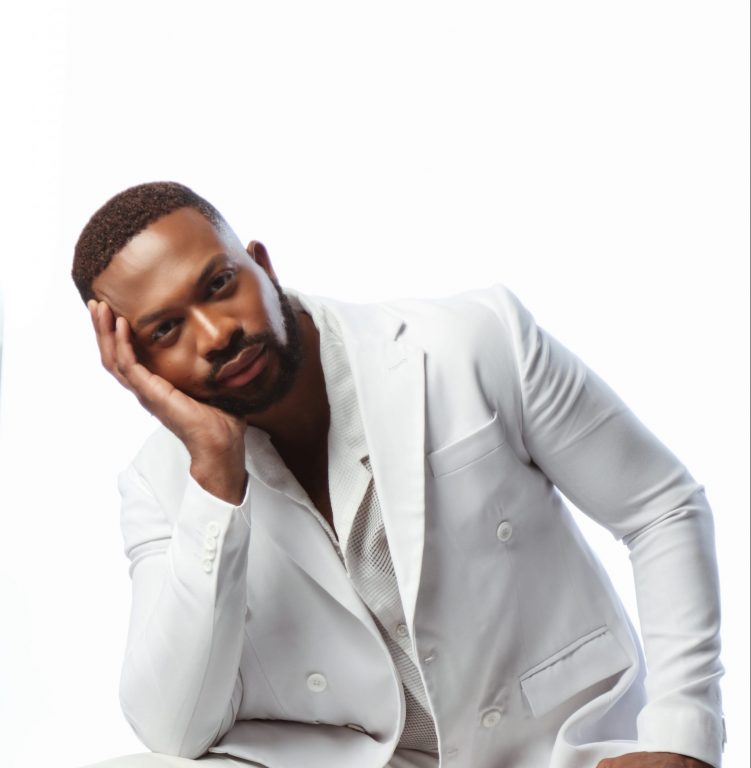
Name: Adebayo Oke Lawal
Origin: Lagos, Nigeria, West Africa
Profession: Fashion designer, creative director
Brand: Orange Culture
Scope: Menswear, contemporary ready-to-wear
Signature: Fluid silhouettes, emotional storytelling, softened tailoring
Design Language: Contemporary African menswear shaped by vulnerability, introspection, and refined restraint
Positioning: A culturally grounded fashion house redefining masculinity through emotion and modern expression
Influence: Expanding the narrative of African menswear by centring identity, feeling, and cultural honesty within global fashion discourse
Reframing African Masculinity Through Design
Orange Culture grew out of a recognition of the way in which definitions of masculinity have long existed in African culture and the lack they create in emotional expression. For Adebayo Oke Lawal, fashion became a way to challenge these prescribed limits. His designs suggest a different definition of masculinity, one that is centred on sensitivity rather than viewing it as rigid as concrete or defining a man as the master in a relationship.
This change is a subtle but deliberate shift. Orange Culture not only upholds tradition but also challenges the cultural mandates imposed on men. In this way, through softer silhouettes, loose-fitting, and delicate details, identity as vulnerability becomes legitimate. Fashion shifts from a masking function to a reflection that need not be performed.
What’s intriguing in this approach is its rootedness in culture. Oke Lawal draws on his experiences in Nigerian culture, where expressing emotions is associated with immaturity and weakness. By contradicting this belief in design, Orange Culture begins a conversation that is more personal than provocative. There’s no statement of defiance in the designs. Everything’s an implication of introspection.
In the current African fashion culture, this philosophy is of enormous significance. This philosophy covers fashion’s design and fabrics, as well as the emotional issues it may have ignored in the past. Orange Culture reveals the dynamic nature of masculinity and the complexity of the male culture. Orange Culture shows that male fashion in Africa can mean more than what cultural expectations dictate.
Emotion as Craft and Design Language
At Orange Culture, emotion is not treated as a concept alone but as a guiding principle that shapes construction, material choice, and silhouette. Adebayo Oke Lawal approaches design as an inward process, translating feeling into form with restraint and precision. This perspective shifts craft away from ornamentation toward intention, where every decision serves a narrative purpose.
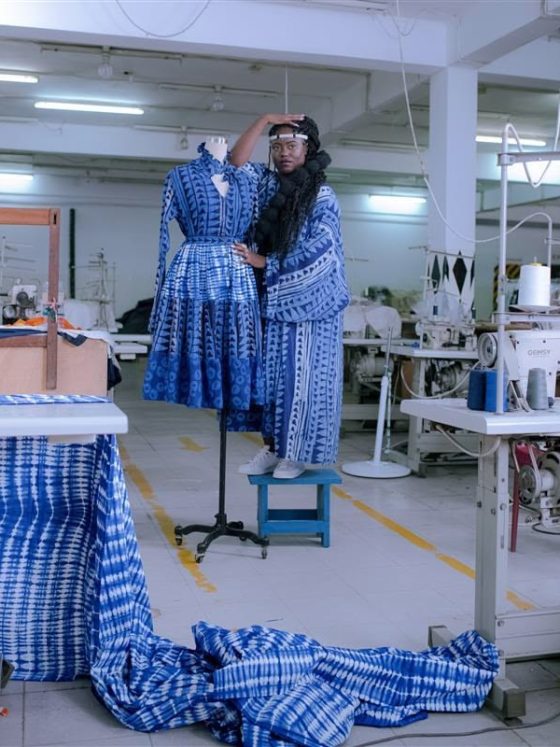
Fluidity defines much of the brand’s visual language. Fabrics are selected for their ability to move gently against the body, allowing garments to respond to motion rather than restrict it. Tailoring is softened, proportions are relaxed, and seams are handled with care, creating pieces that feel lived in rather than imposed. The colour palettes remain thoughtful and muted, reinforcing emotional tone over visual dominance.
This design approach resists the urgency of trend cycles. Instead of reacting to seasonal demands, Orange Culture builds collections around introspection and continuity. Emotion becomes a method of consistency, ensuring that each body of work contributes to an ongoing dialogue rather than isolated statements. The result is a recognisable language that evolves without disruption.
By grounding craft in emotional awareness, Adebayo Oke Lawal elevates technique beyond skill into authorship. The garments communicate not through excess detail, but through clarity of feeling. In this way, Orange Culture demonstrates how fashion can function as a quiet form of storytelling, where craft carries meaning and emotion becomes a durable design language rather than a fleeting idea.
Global Recognition and Cultural Impact
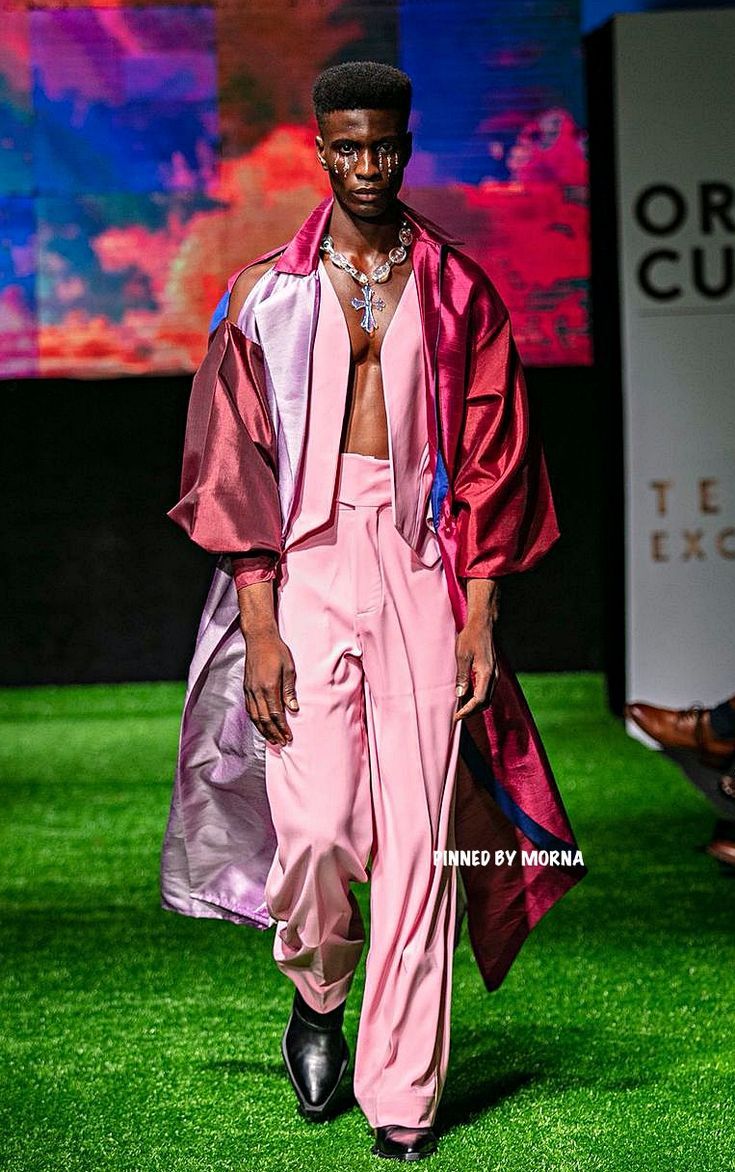
Orange Culture’s global presence has evolved through alignment with institutions and platforms that value cultural depth over spectacle. This progression reflects how Adebayo Oke Lawal’s work resonates beyond fashion cycles, finding relevance in spaces where memory, identity, and preservation are central. International recognition, in this sense, is not framed as arrival but as affirmation.
A defining moment in this trajectory was the presentation of Orange Culture’s Spring/Summer collection, A Memory of an Ongoing of Home, staged at the Victoria and Albert Museum in London. Within a space dedicated to history, craft, and cultural archiving, the collection explored themes of memory and belonging with emotional clarity. The setting reinforced the brand’s commitment to storytelling, positioning fashion as a medium capable of holding personal and collective narratives.
ALSO READ
- Soft Strength: Redefining Feminine Power in Contemporary Women’s Style
- How Christmas Became a Season of Personal Empowerment
- The African Icons Transforming the Modern Runway
This presentation sits alongside Orange Culture’s continued presence on global fashion platforms, where the brand has engaged international audiences without adjusting its voice. Rather than adapting to external expectations, Adebayo Oke Lawal allows cultural specificity to guide the work. The emotional language established in earlier collections remains intact, proving legible across borders because it is rooted in human experience.
Through these milestones, Orange Culture demonstrates how African-led fashion can occupy global spaces with quiet authority. The brand’s influence is measured not by scale, but by resonance. By situating emotion, memory, and identity at the centre of its practice, Orange Culture sustains relevance in global fashion conversations while remaining firmly grounded in its cultural origins.
Conclusion
Orange Culture represents a deliberate shift in how African menswear is imagined and experienced. Through emotion, introspection, and cultural awareness, Adebayo Oke Lawal has built a design practice that expands masculinity beyond inherited limitations. His work does not seek disruption for its own sake but clarity through honesty, allowing fashion to function as a space for self-recognition and quiet dialogue.
Omiren Styles views Orange Culture as a prime example of how emotion, memory, and responsibility shape modern luxury. From Lagos to global cultural institutions, the brand demonstrates that African fashion can lead conversations rooted in depth rather than display. Orange Culture sustains relevance through meaning, not noise, by staying true to its identity and engaging the world.
Frequently Asked Questions (FAQs)
1. Who founded Orange Culture?
Orange Culture was founded by Nigerian fashion designer and creative director Adebayo Oke Lawal, whose work focuses on identity, emotion, and contemporary African menswear.
2. What is Orange Culture known for?
The brand is known for redefining African masculinity through fluid silhouettes, gentle tailoring, and emotionally driven design narratives that challenge rigid norms.
3. What themes shape Orange Culture’s collections?
Orange Culture draws from themes of vulnerability, memory, self-expression, and lived experience, using fashion as a medium for emotional and cultural storytelling.
4. Where has Orange Culture presented its work on a global scale?
Orange Culture has presented on international platforms, including major fashion weeks and cultural institutions. Notably, the brand staged its spring/summer collection, A Memory of an Ongoing Home, at the Victoria and Albert Museum in London.
5. Why is Orange Culture significant in African fashion?
Orange Culture is significant for expanding the conversation around African menswear, positioning emotion and identity as central design values while maintaining cultural integrity and global relevance.