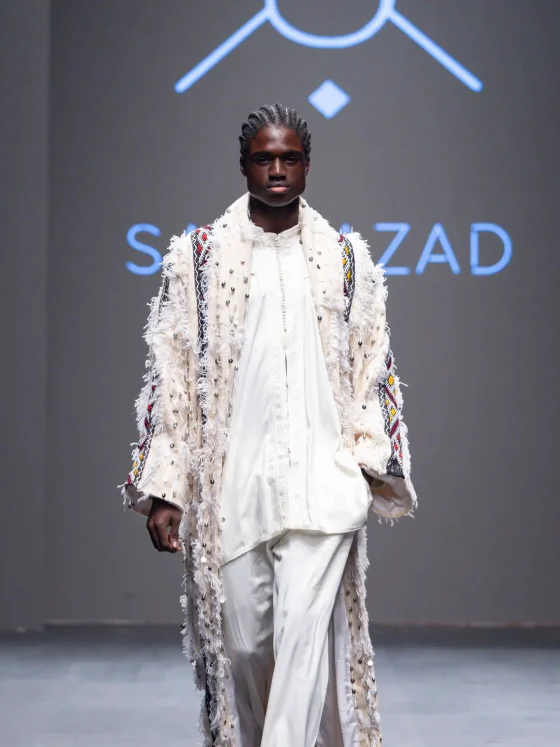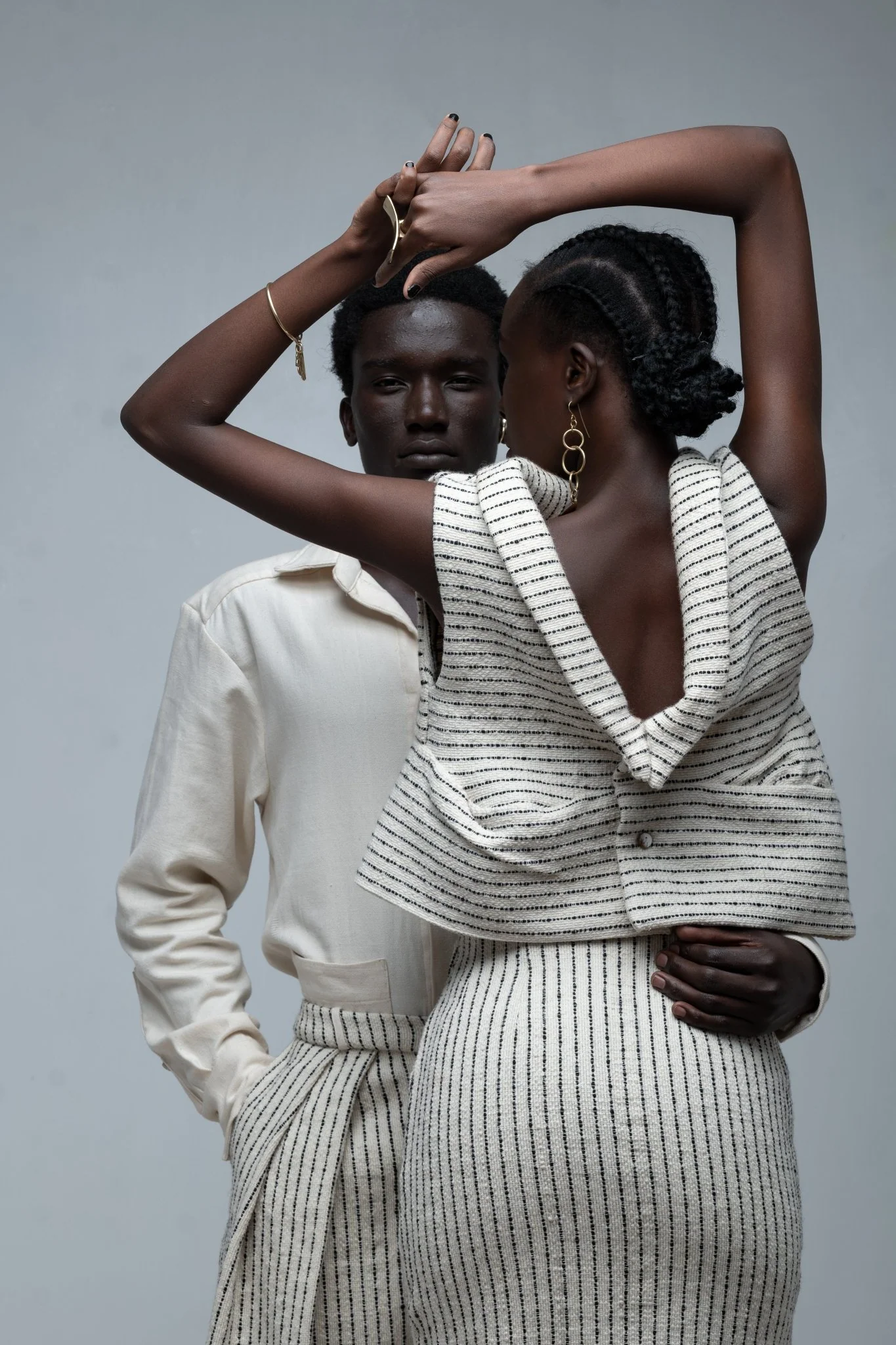
KATUSH’s Black Bird A Kanga | Obsidian Dawn is most interesting where its references operate at different distances from their source. The published account describes soft, rounded clothing alongside claw-shaped accessories in gold-plated brass. One element approaches the body through volume; the other presents a recognisable animal form. The collection does not need both to tell the story in the same way. Their difference is its strongest documented design proposition. The source is particular: a Kamba folktale about a guinea fowl and a chicken, connected in the collection account with creative director Katungulu Mwendwa’s memories of Kitui. That specificity gives the work a firmer foundation than a general claim to “African inspiration.” It does not, however, make every curve a cultural symbol or every colour a narrative clue. A more useful enquiry is how a story can open a vocabulary of shapes without assigning a literal meaning to each one.
Explore the design ideas behind KATUSH’s Black Bird A Kanga, from rounded silhouettes to claw-shaped accessories and a particular Kamba folktale.
A Story About a Relationship
As summarised in the published collection coverage, the guinea fowl and chicken were once close. Their relationship changed when the chicken concealed the advantages of domestication and living alongside people. This is the story as presented in the collection account, rather than an independently established definitive version of the tale. Its relevance lies in the relationship it supplies: proximity, difference and a breach of trust. That gives a designer more to work with than the appearance of two birds. An animal reference can become a printed image or a recognisable accessory, but a story can also establish a less direct atmosphere of contrast. Assigning those narrative roles to particular garments would be speculative without Mwendwa’s explanation. What we can say is that the source offers possibilities beyond reproducing feathers, beaks, or claws.
The collection’s title should therefore introduce the enquiry rather than settle the interpretation. Knowing the tale does not remove the need to examine the design. Equally, an outfit does not have to recount the plot for the reference to matter. The question is what the story enables the designer to do that remains compelling as clothing.
Rounded Form Without Literal Illustration
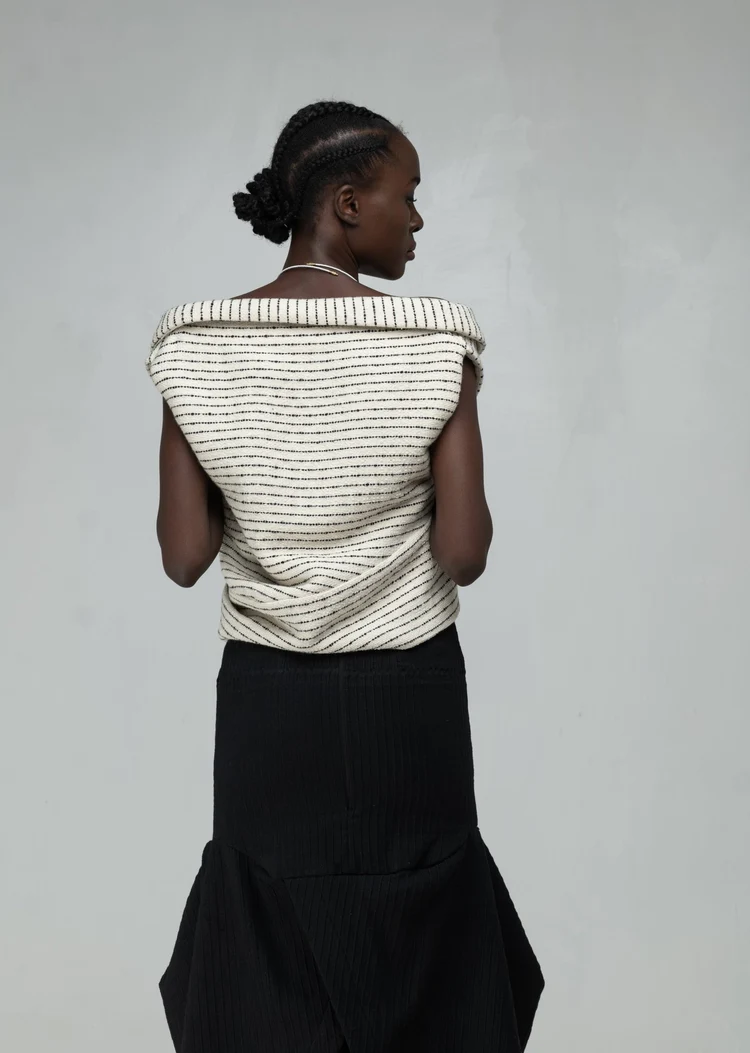
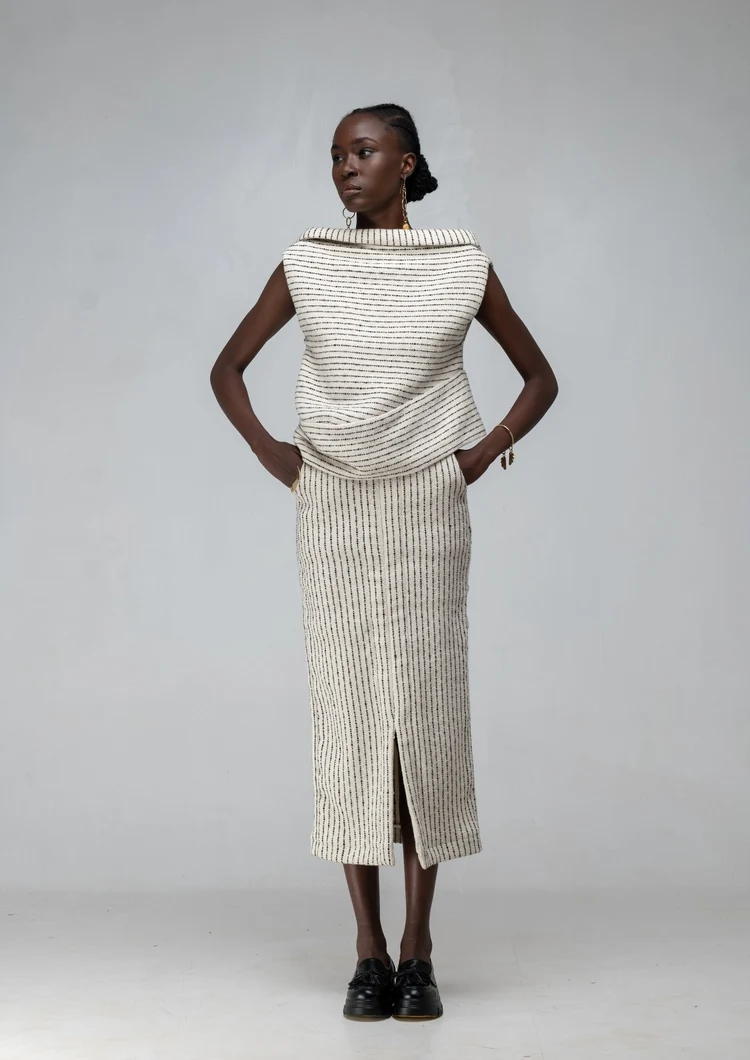
Twyg and Bubblegum Club describe the collection through “playful volumes” and soft, rounded structures. These terms identify an intended formal direction, but they do not locate fullness at a particular shoulder, sleeve, waist or hem. They also do not explain how the shapes are supported. The documented claim is about the collection’s presented vocabulary, not a complete account of its cutting or construction. Within that vocabulary, rounded form offers a less literal response to the source than an animal-shaped object. A garment can enlarge the space around a body without becoming an illustration. Its outline may remain available to a viewer who knows nothing of the folktale. That independence is important: the narrative can deepen the encounter without becoming the only reason to value the shape.
The distinction also prevents an easy but reductive reading. Calling every full garment “birdlike” would replace observation with association. The decisive features are where the volume begins, how it changes, and what contains it. Those questions belong to the silhouette itself. The published descriptions suggest a direction worth investigating, but they do not justify inventing the individual answers.
The Claw Is a More Direct Statement
The claw-shaped accessories make the avian connection more explicit. Both collection reports describe them as gold-plated brass. That is a material claim with a defined limit: it does not mean solid gold, nor does it establish the precise fabrication process or identify an individual maker. The available account supports the object’s described form and material, not a complete production history. Their significance in the collection lies in the different kind of recognition they offer. A rounded garment can remain abstract; a claw is more readily named. The accessories therefore give the story a point of directness without requiring every garment to become equally illustrative. They can carry the clearest animal reference while leaving the clothing more open.
The collection’s conceptual strength lies in allowing those approaches to coexist. Literalness is not automatically a weakness, and abstraction is not automatically sophistication. Each needs a role. The claw becomes useful when it does more than confirm that birds inspired the work; the rounded form becomes useful when it offers more than a vague sense of softness. The relationship between them is the proposition to test, not a success to assume.
Childhood Making Is Context, Not a Production Claim
The account of Mwendwa’s childhood adds a material dimension to the collection’s background. Twyg describes time spent in her grandmother’s workshop in Kitui and family weekends involving clay and weaving. These experiences locate the creative references in activities, places and relationships rather than in an anonymous category of tradition. They should not be converted into claims about how the collection was manufactured. Childhood experience of weaving does not establish that a particular garment was handwoven. Working with clay does not prove that a rounded textile form was modelled through the same process. The connection is biographical and creative unless further documentation makes it technical.
This distinction preserves rather than diminishes the specificity of the story. Mwendwa’s memories need not certify every production decision to matter. They can explain a disposition towards material, form and play while the garments retain their own making histories. Treating inspiration and execution separately makes room for other practitioners’ contributions, rather than letting the founder’s biography absorb them.
Colour and Pattern Remain Part of the Clothing
The published descriptions place vibrant colour and pattern alongside volume. They do not provide a complete motif inventory or assign a documented meaning to every colour. The article therefore cannot responsibly identify a pattern as feathers, landscape or a particular character merely because such a reading would fit the title. Colour nevertheless has a role beyond symbolism. It can distinguish areas of a garment, connect separate pieces or make a broad surface more visually active. Pattern can likewise complicate the reading of a shape rather than simply decorate it. These are the relevant design questions, even where the available collection account does not answer them at the level of individual looks.
The useful limit is to resist overexplaining. A collection with a culturally specific source does not require a cultural meaning for every decision. Some choices may arise through proportion, combination or the search for a convincing surface. The account becomes stronger when it acknowledges those possibilities rather than forcing the whole garment into a symbolic system the designer has not documented.
The Campaign Is a Separate Creative Work
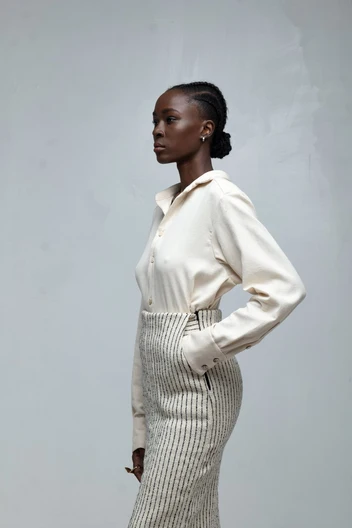
The published campaign credits identify Mwendwa as creative director, Dalton Odiyo as director and stylist, and Emmanuel Jambo as photographer. Daniel Ajang and Agnetta Asira are credited as cast, with Alex Wanjohi, Mukami Mugambi and Wairimu Gitonga named as set assistants. These credits establish that the collection’s public image is a collaborative presentation. That matters because a collection and its photographs are not identical objects: styling, pose, framing, and selection present clothing. An accessory can gain emphasis through its placement in an image, while a silhouette can be made more or less apparent by the body’s position. The campaign is a legitimate part of the work’s public expression, but it does not establish every property of the garments.
Nothing in that distinction requires a judgement that the pieces are impractical. Nor does a photograph prove comfort, mobility or durability. Those are different enquiries. The appropriate task here is to understand the collection’s stated visual proposition without turning an editorial presentation into a wear test it was never documented to be.
What the Collection’s Proposition Offers
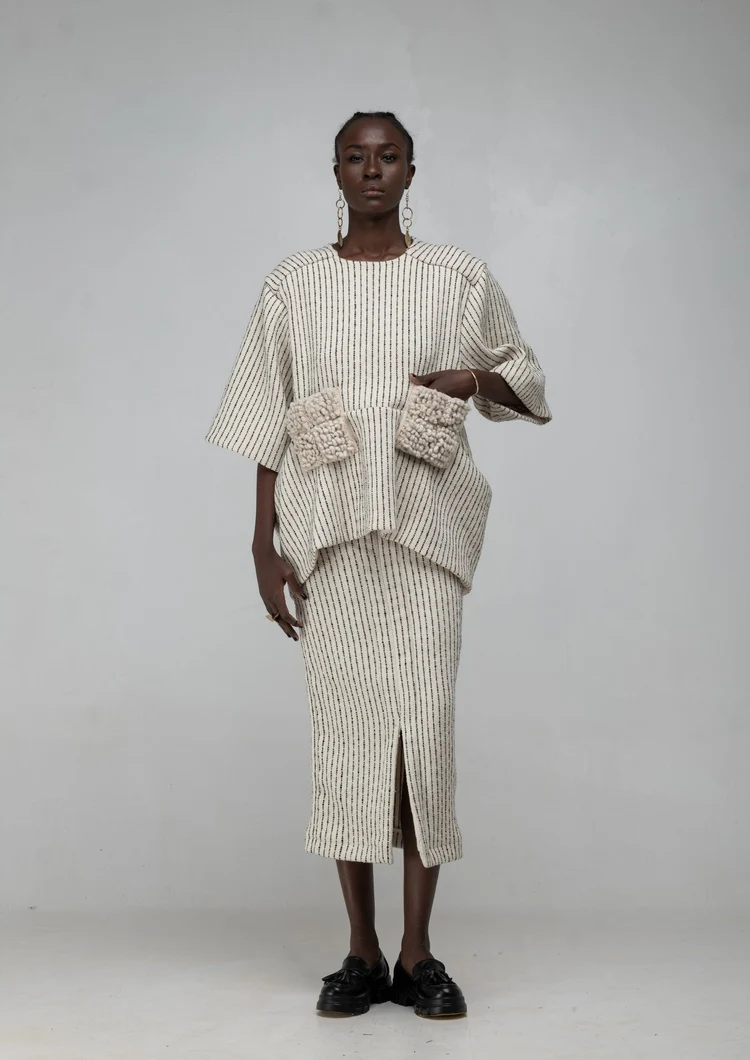
Black Bird A Kanga is strongest as a proposal for how a particular story can generate several kinds of reference. The claw operates through recognition. Rounded volume offers a more abstract response. Colour and pattern extend the surface vocabulary without an established obligation to illustrate the plot. This gives the collection more conceptual room than a single animal motif repeated across otherwise unrelated garments. The available documentation is more precise about inspiration than about individual design decisions. That limits the verdict. It supports an assessment of the collection’s organising idea, not a declaration that every silhouette resolves it successfully. Describing the proposition as coherent is different from proving the effectiveness of each look.
Even within that boundary, the collection offers something worth retaining: cultural specificity without requiring literal reproduction. Its source is named, but its design possibilities are not confined to illustrating the source. The most productive relationship is between recognition and openness, enough information to establish where the enquiry begins, and enough freedom for the clothes to become something more than a retelling.
The Omiren Argument
The principle is interpretation. A story becomes a design resource when it opens decisions about shape, surface and contrast, not when every garment must carry a fixed explanation.
KATUSH’s documented proposition lets a claw remain recognisable while a rounded form stays less literal. That range is its most interesting idea. The story gives the collection a particular beginning; the design challenge is to create clothing that keeps rewarding attention beyond it.
Also Read:
- Kenyan Fashion Brands You Need to Know: Designers Putting Nairobi on the Global Map
- East African Textile Untold: Kitenge, Kikoi, and the Coastal Cloth
- The Invisible Thread: How African Oral Tradition Shapes Fashion and Heritage Textiles
- Top 5 Ewe Kente Styles for Ewe Women in 2026
Frequently Asked Questions
Who is behind KATUSH?
Katungulu Mwendwa is KATUSH’s Nairobi-based founder and designer. The brand’s official account describes a practice shaped by Nairobi and East African craftsmanship, and Twyg’s feature places her creative beginnings in her grandmother’s workshop in Kitui, where she spent family weekends experimenting with clay and weaving.
Which collection does this article examine?
It examines Black Bird A Kanga | Obsidian Dawn, identified as Spring/Summer 2025 in Twyg’s September 2024 feature and Bubblegum Club’s related coverage. The reports describe playful volumes and claw-shaped accessories in gold-plated brass. This is retrospective analysis, not a new-release announcement.
Does the collection represent Kamba dress generally?
The sources connect the collection to a particular Kamba folktale about a guinea fowl and a chicken, and to Mwendwa’s memories of Kitui. That does not make the collection a comprehensive representation of Kamba dress or storytelling, and the article does not assign a fixed meaning to every curve or colour.
Does the material account establish sustainability?
No environmental outcome is established here. The reports describe cotton sourcing and regional textile processes, but those descriptions do not provide a calculation of emissions, waste avoided or the impact of individual garments. Nor do the childhood references to weaving and clay establish production methods.