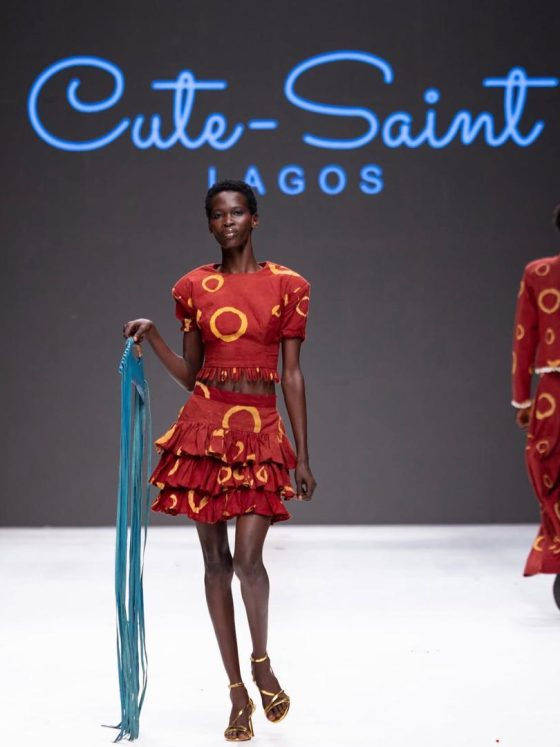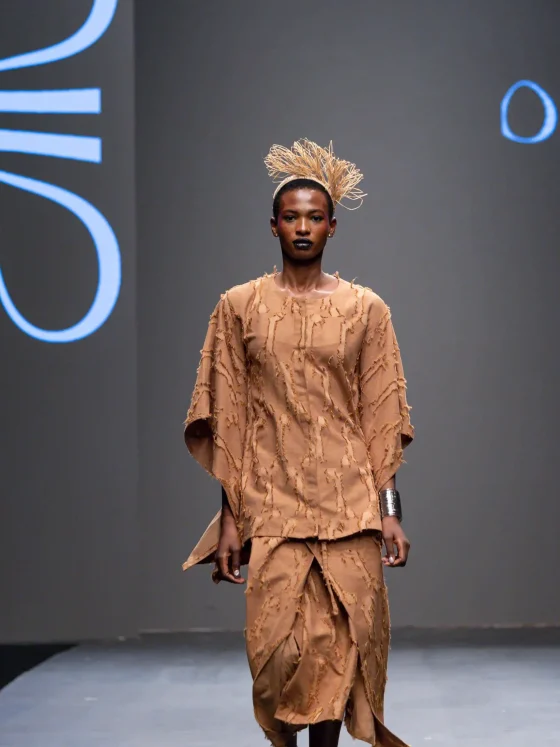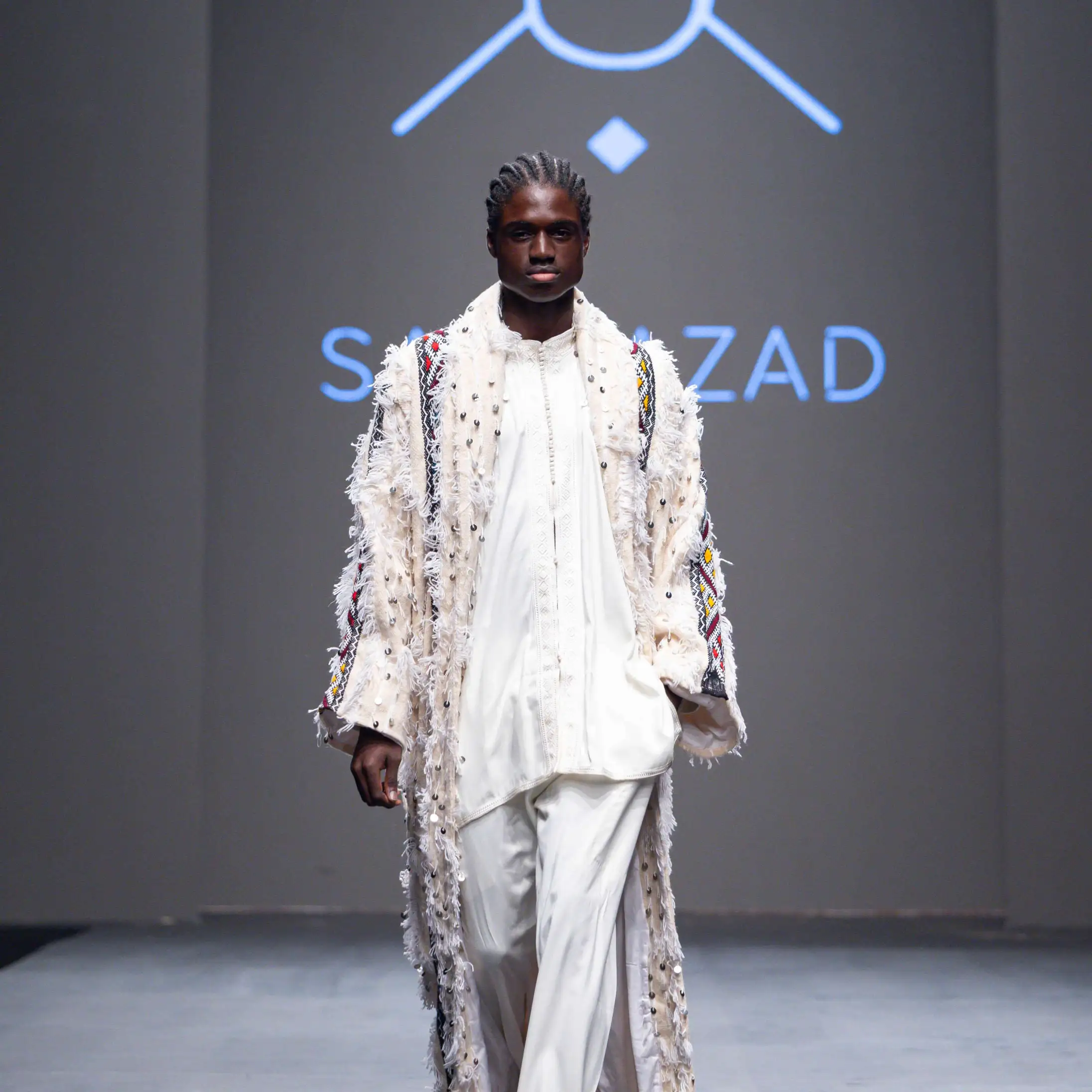
A runway establishes a collection’s presence. A showroom allows a different examination: the finishing inside a garment, the weight of its fabric, and the texture that photographs cannot fully communicate.
At Lagos Fashion Week 2026, the partnership with ALÁRA made that second encounter an explicit part of the programme. The official schedule listed showroom access for buyers, press and guests throughout the October 28–November 1 event, alongside a citywide retail programme involving ALÁRA, Gather House, Vanestyle and Zinkata.
That arrangement provides a useful starting point for understanding this edition. Under the theme “CRAFTED: Heritage. Innovation. In “Circular Futures”, designers presented work engaging with textile knowledge and material experimentation. Alongside the collections, the programme addressed business modelling, profitability, capital and the cost of making.
The connection was consequential. Craft gave collections their distinction; retail and business discussions addressed the conditions under which that distinction might become a viable product.
For Omiren, the question is not whether Lagos can produce fashion worthy of attention. It is how the edition connected design, production and consumption, and where the available evidence stops short of demonstrating commercial results.
Lagos Fashion Week 2026 connected craft-led collections with retail ambition. Omiren examines the designers, showrooms and business decisions behind it.
Craft as a Method of Design
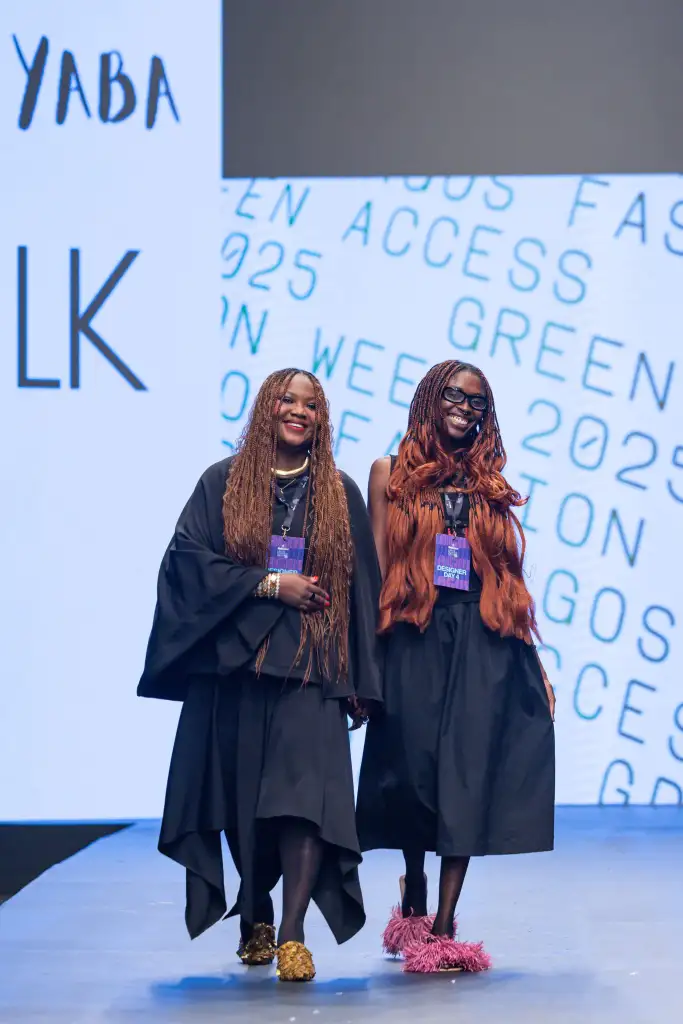
Pettre Taylor’s Spring/Summer 2027 collection, The Middlemen, offers one way into the relationship between craft and contemporary form.
BellaNaija Style’s account describes knitwear, woven fabrics and oversized denim, with layering, fraying and ruching used to build texture and dimension. It emphasises material manipulation rather than elaborate embellishment alone.
Those distinctions matter. Ruching changes how fabric falls around the body. Layering alters volume and the relationship between surfaces. Fraying exposes an edge that conventional finishing might conceal. In the reported vocabulary of The Middlemen, making was part of the collection’s visual proposition, rather than an invisible stage preceding it.
That does not establish how convincingly every look worked. It does, however, identify a more precise subject for criticism than a general claim that the collection “celebrated craftsmanship”: how the treatment of fabric generated shape and surface.
Pepper Row approached the theme through a different relationship with materials. BellaNaija Style places the label’s ready-to-wear practice within a design language that incorporates handwoven aso oke, hand-dyed batik, and collaborations with artisans. Its account connects those techniques to contemporary womenswear silhouettes.
The distinction between the two labels is worth preserving. Pettre Taylor’s reported emphasis was on manipulating materials into dimensional forms. Pepper Row’s established vocabulary draws on weaving and dyeing practices as resources for contemporary clothing. Neither approach needs to be reduced to a generic “African craft” aesthetic.
The available coverage is less detailed about the individual makers involved, their specific contributions and how those working relationships are organised. That limits what can presently be concluded about authorship and the distribution of value.
A textile’s cultural significance and a garment’s commercial identity are connected, but they are not identical. Naming the technique is a beginning; identifying the people whose knowledge makes it possible completes more of the record.
The Showroom Changed the Terms of Attention
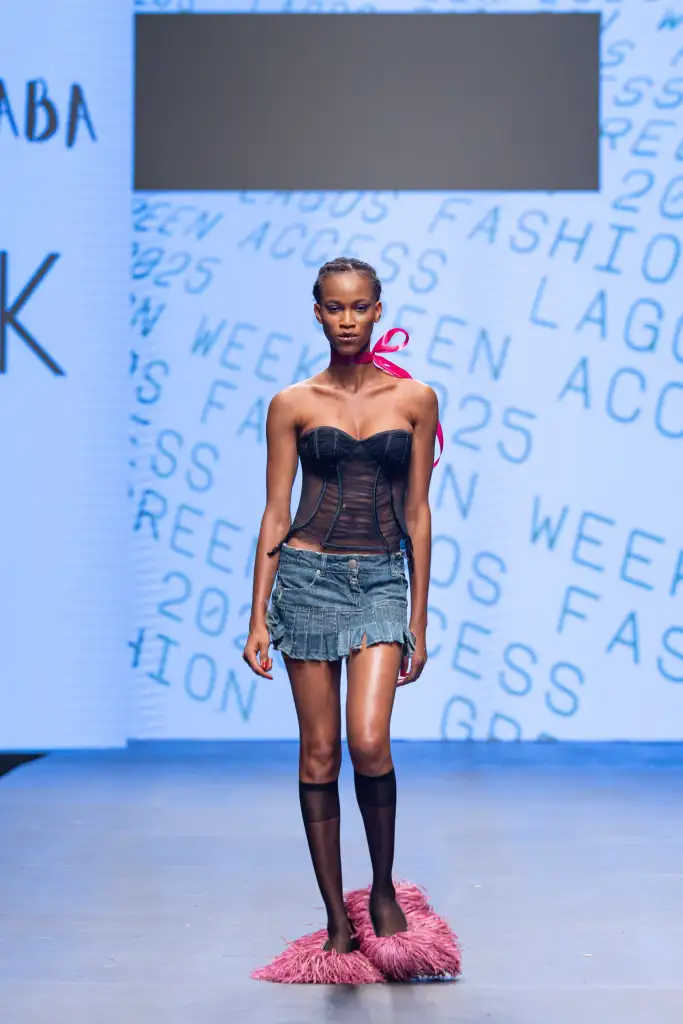
The ALÁRA showroom allowed buyers to assess what a runway presentation could not fully reveal.
In Vogue’s reporting, ALÁRA buyer Arinola Fagbemi described examining finishing, texture and weight, and emphasised that the store’s customers expect well-made products regardless of where they originate. She identified Orange Culture, Dukun and Orire among her standout collections.
Her comments place cultural distinction alongside product standards, rather than treating either as a substitute for the other.
A compelling textile history can draw a customer towards a garment. Fit, finish, comfort and price help determine whether that interest becomes a purchase. The showroom lets those considerations meet the designer’s proposition up close.
Sacha Okoh, creative director and buyer at Ghana’s Viva Accra, made a related assessment in the same report. She described looking for a balance of creativity, quality, wearability and commercial appeal, naming Christie Brown, Jermaine Bleu and Boyedoe among her selections.
Wearability need not mean creative caution. It concerns how a collection enters a wardrobe: which pieces communicate its identity, how they function on a body and whether they make sense for a retailer’s customer.
The buyers’ accounts also revealed different approaches to purchasing. Fagbemi described a separate ALÁRA budget for Lagos and a buying rhythm that does not simply mirror the international seasonal calendar. Okoh described an allocation for African designers within Viva Accra’s overall budget, rather than a separate Lagos fund.
No single model of demand emerged. Different retailers approached the same platform with different customers, financial arrangements, and purchasing priorities.
That picture is more useful than the suggestion that buyer attendance alone signals success. The showroom created an opportunity for commercial scrutiny. Confirmed orders, delivery and repeat purchasing remain separate measures.
Lagos Was a Market, Not Just a Stage
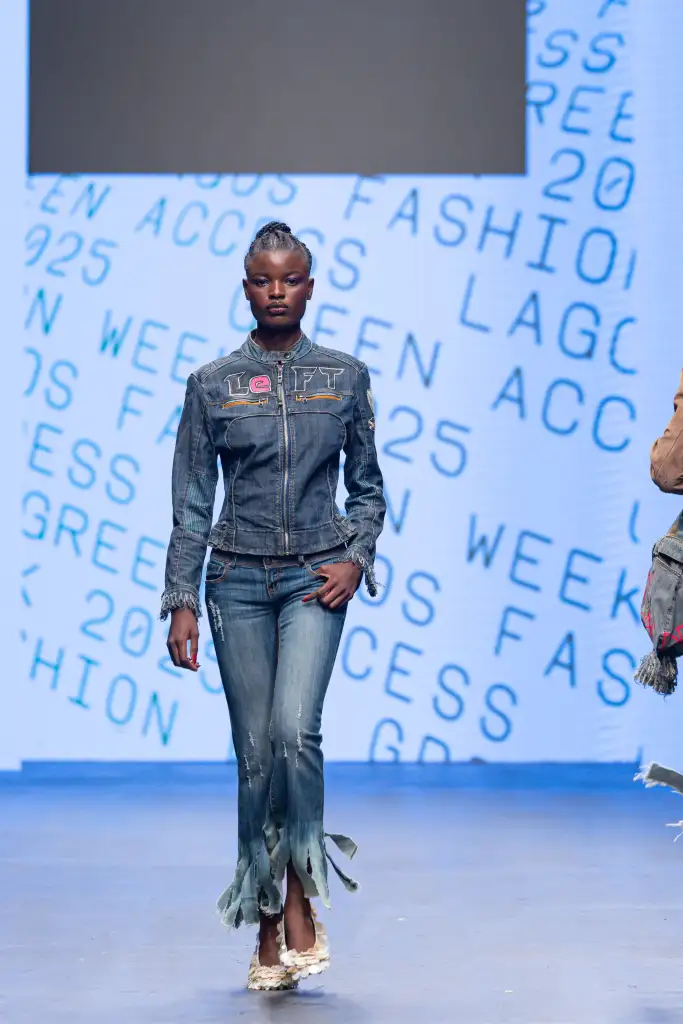
Some of the edition’s most prominent returns were also decisions about where to build a business.
Christie Brown returned after an eight-year absence as part of a wider African expansion strategy, according to Vogue. Founder and creative director Aisha Ayensu identified Nigeria as one of the markets where the Ghanaian label wanted a presence. A six-month residency at Temple Muse gives that intention a retail expression in Lagos beyond the runway presentation.
The residency matters because it connects an event appearance with ongoing access to customers. A show can introduce a collection; an extended retail presence allows people to encounter the product after the invited audience has dispersed.
Christie Brown’s strategy also places African consumption at the centre of the story. Lagos was not merely a departure point towards customers elsewhere. It was a destination market within the brand’s expansion plans.
Other designers approached the platform from a different position.
Uganda’s IGC Fashion self-funded its participation after failing to secure sponsorship in time. Founder Katende Godfrey told Vogue that Lagos offered access to media, a new audience and a larger fashion market.
For Christie Brown, participation supported a defined market-entry strategy with a retail residency attached. For IGC Fashion, it represented an investment in access and discovery. The same event carried different costs, opportunities and levels of commercial certainty.
These differences should shape how the platform is assessed. A useful introduction, a stockist relationship and an immediate order are distinct outcomes. Their value depends partly on a designer’s stage of development and why they attend.
The Collection Calendar Met Business Capacity
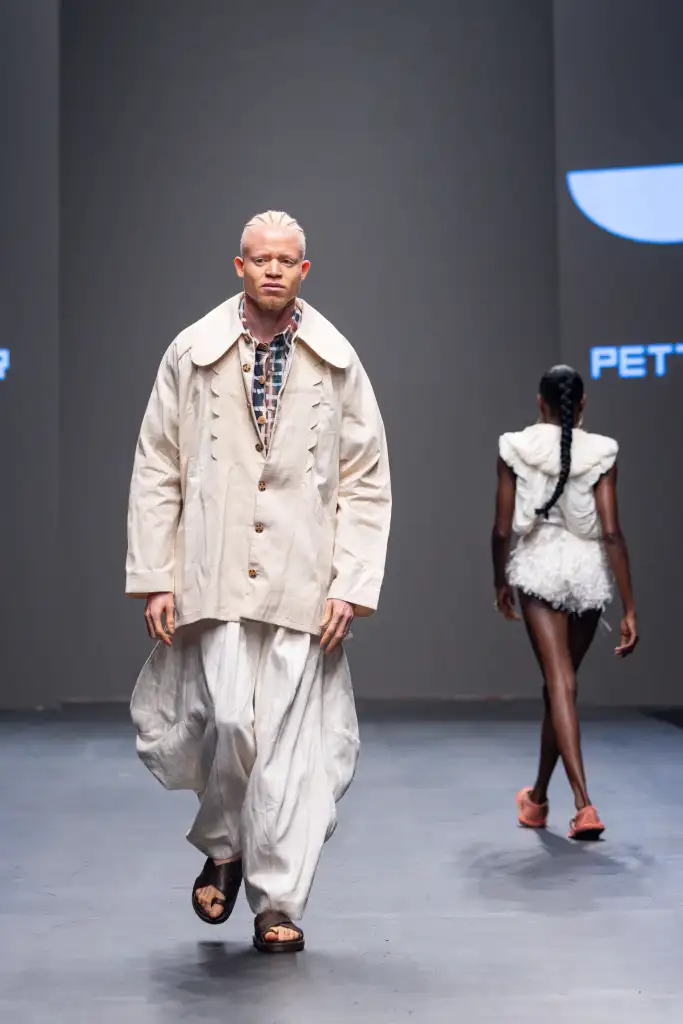
Ugo Monye’s return raised another operational question: when should a designer show?
Speaking to Vogue, Monye explained that business pressures had contributed to his previous year-long break. He described carrying responsibility for the business alongside design and said that collections from earlier seasons remained in demand.
His account challenges the idea that continuous novelty is the only credible measure of momentum.
A collection can continue generating demand after the season in which it was presented. Producing another one may create additional attention, but it also adds work: sampling, sourcing, staffing and the organisation required to fulfil new commitments.
The official programme acknowledged those pressures. Its opening-day sessions included fashion business modelling and franchising, alongside a session asking whether participants were making money or merely making sales. Later programming addressed capital, craft and commerce.
The distinction between revenue and a sustainable business was therefore not imposed on the event from outside. It was part of the event’s stated agenda.
The programme cannot establish on its own how effectively those discussions translated into changes within participating businesses. That requires evidence beyond session attendance.
Circularity Was a Stated Ambition, Not a Settled Result
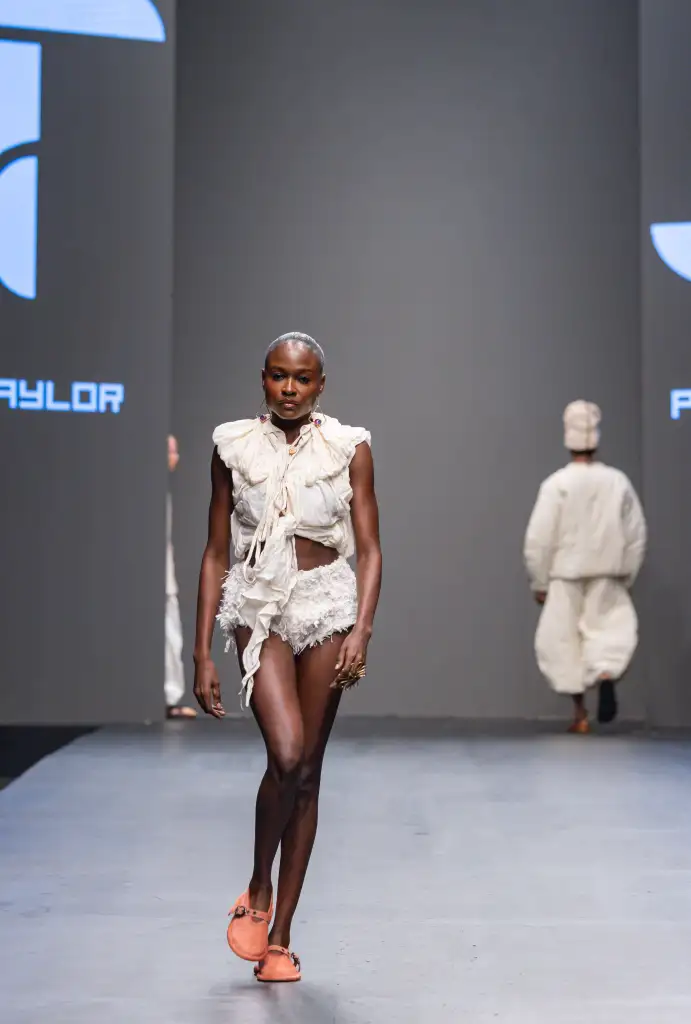
The organiser’s Green Access 2026 framework brought craft, environmental responsibility and business development together. It identified deadstock, reclaimed textiles and indigenous fibres alongside durability, repairability and long-term product value. Its stated activities included artisan visits, production tours, prototype reviews and business-development clinics.
This is a broader proposition than presenting recovered fabric as a visual effect. It places material choices within the practical work of developing and producing a collection.
The framework nevertheless describes programme objectives. It is not an independent assessment of the environmental performance of every participating garment or business.
The distinction allows the work to be taken seriously without making claims the evidence cannot yet support. Material experimentation can be recognised on its own terms while questions about sourcing, repeat production and product life remain open.
The Omiren Argument
Omiren’s editorial position treats African fashion as authored cultural and economic work, not as material awaiting outside discovery. Its published standards prioritise attribution, cultural specificity and precision over general celebration.
Applied to Lagos Fashion Week 2026, that means following value through the event: the knowledge embedded in a textile, the designer’s transformation of it, the buyer’s assessment and the business arrangements that bring the garment to a customer.
The edition’s strongest documented connection was between craft-led design and a more explicit retail and operational conversation. Showrooms, buying strategies, a continuing retail residency and designers’ accounts of business pressures gave that connection practical substance.
That is not proof of widespread commercial success. It is evidence that the platform is doing more than assembling presentations.
The next measure is whether those connections endure: whether products reach customers, working relationships continue, and the people contributing to a collection receive identifiable credit and economic value. For now, the useful finding is narrower and clear. Lagos Fashion Week brought the making of fashion and the business of selling it into closer conversation.
Also Read:
- The Lagos Fashion Week Effect: What a Decade of Runway Has Actually Done for Nigerian Designer Revenue
- Lagos Fashion Designers Who Stay Are Not Compromising. They Are Winning.
- Omoyemi Akerele and the £1 Million Argument
- African Fashion Events in 2026: International Trade Visitors, Buyers and Data Gaps
Frequently Asked Questions
When did Lagos Fashion Week 2026 take place?
Lagos Fashion Week 2026 ran from October 28 to November 1 under the theme “CRAFTED: Heritage. Innovation. Circular Futures.” Its official programme combined runway presentations, off-site events, showrooms, retail activity and business sessions, focusing on craftsmanship, material practices and the relationship between inherited knowledge and contemporary design.
What was the role of the ALÁRA showroom?
The official schedule listed the Lagos Fashion Week × ALÁRA showroom for buyers, press and guests. Vogue’s buyer interviews describe its practical value in allowing closer examination of garments’ finishing, texture and weight after the runway presentations, which a runway alone cannot fully reveal.
Why was Christie Brown’s return significant?
Christie Brown returned after eight years as part of an African market-expansion strategy. Founder Aisha Ayensu identified Nigeria as a market where the Ghanaian label wanted a presence, and a six-month residency at Temple Muse connected the Lagos appearance with a continuing opportunity for customers to shop the label locally.
Did Lagos Fashion Week 2026 generate confirmed sales for designers?
The sources reviewed for this article document buyer interest, showroom activity and retail plans but do not establish an event-wide total for confirmed orders or sales. Those developments should not be presented as equivalent to verified commercial results, which require evidence of confirmed orders, delivery and repeat purchasing.