
Meiling’s making period is not a single number that customers can apply to every order. Its general policy asks for 14–21 days, while individual product pages specify different business-day allowances. For someone buying for a fixed occasion, the garment page matters as much as the shipping estimate. The distinction is practical. Meiling’s shipping policy says all items are made to order, then placed for international shipping, advertised as 5–7 business days after production. A customer reading only the shipping estimate would therefore miss the first stage of the purchase. For background on the designer, see our profile of Meiling and her minimalist language.
The more useful question is whether the whole sequence fits the customer’s plans. That requires making allowances for the selected item, a delivery arrangement for the destination, and an understanding of what happens if the original choice needs to change. None of those questions diminishes the garment’s appeal. They determine whether the purchase works beyond the product page.
Meiling’s product-specific lead times affect your purchase timeline. Understand production, shipping and size changes before ordering for an occasion.
The product page changes the timeline.
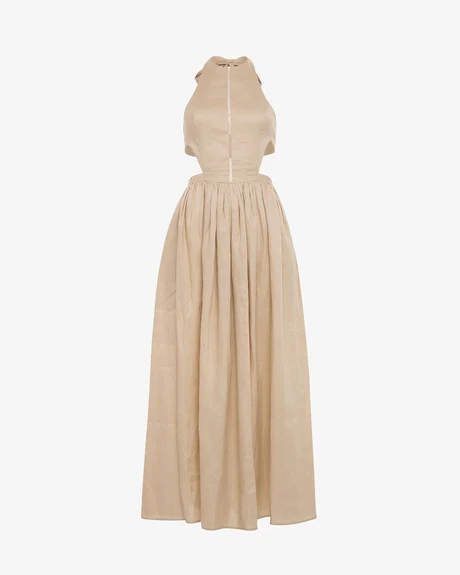
Two garments make the issue concrete. The Slouch Jumpsuit is described as a cotton design with a peplum neckline and front piping. Its page asks customers to allow up to 14 business days to create the piece. Marlowe, a linen skirt with pockets, a pronounced waistband and gentle pleats, carries an allowance of up to 21 business days. Those product-specific statements give the buyer more detailed information than the general 14–21-day wording. They need not be treated as evidence of a contradiction: a product page can refine a broader policy. However, the general statement does not specify whether the days are calendar or business days, while both product descriptions do. The applicable allowance should therefore be established rather than assumed.
The published information can be read side by side:
- General policy: 14–21 days for making; production precedes international shipping, but the day-count convention is unspecified.
- Slouch Jumpsuit, up to 14 business days: the item has a more specific making allowance.
- Marlowe, up to 21 business days: another item carries a longer product-specific allowance.
- International shipping, 5–7 business days after production: transport is a separate advertised stage.
The purchasing consequence is clear: do not use one garment’s allowance to plan another garment’s arrival. Nor should the lowest making figure and shortest shipping estimate be combined into a promised delivery date. Before committing to a time-sensitive order, establish which allowance governs and when its count begins. The pages do not explain why the garments have different schedules. There is no basis for attributing the difference to construction difficulty, staffing, demand or fabric availability. The relevant finding is narrower: the selected product changes the planning information.
“A made-to-order promise is only as useful as the sequence behind it.” Omiren Styles Editorial Intelligence
Plan around possession, not simply the occasion.
An event date is not always the customer’s real deadline. Someone travelling to a wedding needs the garment before departure. A gift buyer may need it before meeting the recipient. A person who wants time to assess the item needs more than arrival on the morning it will be worn. Give Meiling the selected garment, destination and date by which it must be in your possession. Request confirmation of the making allowance and proposed delivery arrangement in relation to that date. This is more useful than asking whether an order can arrive “quickly”, because it gives the business a defined purchase to assess.
The start of the making period also matters. The public wording reviewed does not establish whether the count begins at checkout, payment confirmation or another point. Likewise, it does not separately time any interval between completion and dispatch. These are general operating questions that remain unresolved in the published information, not stages that should be assigned invented durations. For the customer, the decision is whether the available information is sufficient to proceed. If the deadline is essential, an unconfirmed arrival plan remains incomplete even when the advertised making allowance appears to fit.
Shipping completes the plan; it does not replace it.
Meiling identifies its headquarters as being in Trinidad and Tobago and advertises international shipping of 5–7 business days after production. The policy does not provide a destination-by-destination schedule or identify the carrier in that statement. A general international estimate is useful, but it is not the same as an arrangement confirmed for a particular address. Before ordering for a fixed date, establish the service being used, tracking availability and how any destination charges will be handled. Those details affect the complete purchase even though they are not part of making the garment.
Local orders need their own arrangement. The international estimate does not establish the timing of delivery within Trinidad and Tobago. The site publishes a Woodbrook address, but an address alone should not be read as confirmation that a particular online order can be collected there. This is where retail information becomes actionable: the customer can connect the product’s making allowance with a delivery route that applies to them. Without that connection, the advertised periods remain useful components rather than a complete plan.
Made-to-order does not settle sizing or personalisation.
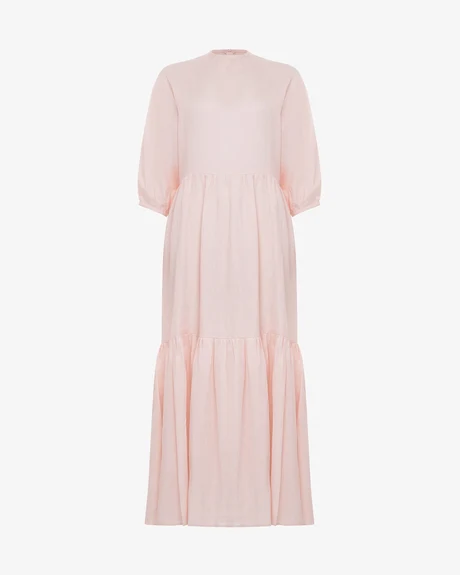
The examined product pages describe made-to-order garments and publish standard size charts. They do not establish an individually drafted pattern, a fitting appointment or an alteration service. Customers should therefore separate two questions: when will the garment be made, and to what agreed specification? A wait for production does not automatically mean the piece will be adapted to personal measurements.
If a length adjustment or other change is essential, establish its availability before payment. Confirm whether it affects the price, schedule or return conditions. An order note is a request, not evidence that a modification has been accepted. For standard sizing, use the chart carefully and seek clarification where needed. The point is not to guarantee that every first choice will be right. It is to reduce avoidable uncertainty before a production period begins and to understand your options if the delivered item is unsuitable.
A different size may require another purchase.
Meiling’s shipping-policy page says customers seeking another size or colour should return the original item and place a new order. Its dedicated refund page similarly describes a separate purchase after return acceptance as the fastest route to a different item. That instruction changes the deadline calculation. A customer should not assume that an exchange will be dispatched immediately from available stock. A second purchase needs its own timing confirmation, particularly when the general policy describes all items as made to order.
This makes “arrives before the event” a less complete planning standard than it first appears. The original item may arrive in time while leaving little room for a size change. The public pages do not establish whether a new order can progress while a return is being assessed, so that arrangement should not be built into the plan without confirmation. No universal buffer applies. The practical question is whether the customer is comfortable proceeding if the first arrival leaves no realistic opportunity for another order.
Keep return eligibility separate from return timing.

Meiling publishes a 14-day return policy, but the two relevant pages describe the deadline differently. The dedicated refund page gives customers 14 days after receipt to request a return; the shipping policy page says items must be returned within 14 days of delivery. Requesting and completing a return are not the same action. The operational deadline should be clarified, especially for an international customer. Both pages require the item to remain in its original condition, while the dedicated refund page also requires prior return approval, tags, original packaging and proof of purchase. The shipping policy says customers bear return shipping costs; the refund page says an accepted return receives a label and instructions. A label should not automatically be interpreted as a free return. Our piece on who pays when a fashion return crosses a border explains why that distinction matters.
Eligibility is a separate issue. The dedicated refund policy excludes custom products, including special orders and personalised items. Because the shop also uses “made to order” for its catalogue, customers need to know whether a standard product purchase is treated differently from a specially modified order. The wording does not justify declaring every garment non-returnable or promising that every made-to-order purchase qualifies. These points deserve clarification, but they should remain proportionate. They are questions about the advertised procedure, not evidence that Meiling has refused a valid return. The commercial consequence is whether the customer understands and accepts the available remedy before committing.
What a clear purchase plan should establish
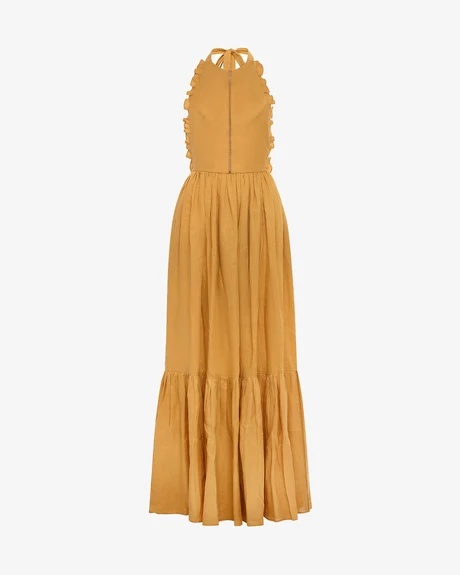
The published terms provide a foundation: production comes first, international transport follows, and a size change involves a return and another purchase. The remaining task is to connect that framework to the selected item and destination. A useful confirmation should leave the customer knowing the applicable making allowance, its starting point, the proposed delivery route and the return position for the specific purchase. Once those matters are clear, the buyer can decide whether the schedule suits a fixed occasion or whether the order is better approached without a time-critical expectation.
The advertised model does not establish delivery performance or environmental outcomes. Those questions require different evidence. This article’s concern is the quality of the information available for a purchase decision, not whether waiting for production is inherently desirable.
The Omiren Argument
The central standard is clarity. A making period becomes useful retail information when customers can connect it to dispatch, arrival and the consequences of needing a change. Meiling’s product-specific allowances demonstrate why that connection cannot rest on one general number.
The customer’s task is to choose with a workable understanding of the sequence. The retailer’s opportunity is to make that sequence easy to follow, with aligned wording across product pages and policies. A wait can be an informed choice. It becomes harder to evaluate when the buyer must supply missing definitions or assume how separate stages connect. The strongest made-to-order promise is therefore not simply several days. It is an intelligible account of what happens next. More from the industry desk is at Omiren Styles.
Also Read:
- Afro-Caribbean Fashion in Trinidad and Tobago
- Caribbean Luxury Fashion Brands
- Visibility Is Not Market Power: Why Global Attention Still Fails Independent African Fashion Brands
- Trinidad Carnival Costume Cost: Consumer Price, Band Revenue, and Who Captures the Value
Frequently Asked Questions
Is Meiling advertising immediate dispatch?
No. The shipping policy includes a making period before international transport.
Does every garment have the same making allowance?
The examined pages differ. The Slouch Jumpsuit asks for up to 14 business days; Marlowe asks for up to 21 business days.
Does ‘made to order’ include personal measurements?
The pages examined publish standard sizing rather than establishing an individual fitting service. Any modification needs a separate agreement.
What happens if another size is needed?
The published procedure directs customers to return the original item and make a separate purchase. Confirm the timing of that new order rather than assuming an immediate exchange.