Menu
  • Fashion
    • Africa
    • Caribbean
    • Latin America
    • Trends
    • Street Style
    • Sustainable Fashion
    • Diaspora Connects
  • Culture
    • Textiles
    • Cultural Inspirations
    • Ceremony & Ritual
    • Art & Music
    • Cultural Inspirations
  • Designers
    • African Designers
    • Caribbean Designers
    • Latin American
    • Emerging Talent
    • Interviews
  • Beauty
    • Skincare
    • Makeup
    • Hair & Hairstyle
    • Fragrance
    • Beauty Traditions
  • Women
    • Women’s Style
    • Evening Glam
    • Workwear & Professional
    • Streetwear for Women
    • Accessories & Bags
    • Health & Wellness
  • Men
    • Men’s Style
    • Grooming Traditions
    • Traditional & Heritage
    • The Modern African Man
    • Menswear Designers
  • Diaspora
    • Diaspora Voices
    • UK Scene
    • US Scene
    • Caribbean Diaspora
    • Afro-Latino Identity
  • Industry
    • Strategy
    • Investment
    • Retail
    • Insights
    • Partnerships
  • News
    • Cover Stories
    • Fashion Weeks
    • Opinion & Commentary
    • Style Icons
    • Rising Stars
    • Editorial Intelligence
Subscribe
OMIREN STYLES OMIREN STYLES

Fashion · Culture · Identity

OMIREN STYLES OMIREN STYLES OMIREN STYLES OMIREN STYLES
  • Fashion
    • Africa
    • Caribbean
    • Latin America
    • Trends
    • Street Style
    • Sustainable Fashion
    • Diaspora Connects
  • Culture
    • Textiles
    • Cultural Inspirations
    • Ceremony & Ritual
    • Art & Music
    • Cultural Inspirations
  • Designers
    • African Designers
    • Caribbean Designers
    • Latin American
    • Emerging Talent
    • Interviews
  • Beauty
    • Skincare
    • Makeup
    • Hair & Hairstyle
    • Fragrance
    • Beauty Traditions
  • Women
    • Women’s Style
    • Evening Glam
    • Workwear & Professional
    • Streetwear for Women
    • Accessories & Bags
    • Health & Wellness
  • Men
    • Men’s Style
    • Grooming Traditions
    • Traditional & Heritage
    • The Modern African Man
    • Menswear Designers
  • Diaspora
    • Diaspora Voices
    • UK Scene
    • US Scene
    • Caribbean Diaspora
    • Afro-Latino Identity
  • Industry
    • Strategy
    • Investment
    • Retail
    • Insights
    • Partnerships
  • News
    • Cover Stories
    • Fashion Weeks
    • Opinion & Commentary
    • Style Icons
    • Rising Stars
    • Editorial Intelligence
  • Men's Style

West African Menswear: The Tailoring Tradition That Preceded Savile Row

  • Ayomidoyin Olufemi
  • May 13, 2026
West African Menswear: The Tailoring Tradition That Preceded Savile Row
Total
0
Shares
0
0
0

West African menswear has a documented history that stretches back to the eleventh century. Arab geographers traversing the trans-Saharan trade routes recorded the prestige robes of the Ghana, Mali, and Songhai empires in accounts that predate Savile Row by approximately seven hundred years. The flowing over-robe, the fitted under-tunic, the matched drawstring trousers, the embroidered chest panel, and the occasion-specific cap: these are not contemporary updates of an ancient form. They are the ancient form, maintained, refined, and transmitted across generations with the same precision that London’s tailoring quarter claims as its defining characteristic. The chronological record is not ambiguous. West African tailoring is older, and the global fashion industry’s failure to register that fact is a structural problem, not an oversight.

Savile Row as a tailoring destination dates back to approximately 1790, when military tailors began establishing workshops along the street. By 1803, the first tailors had taken premises on the Row itself. Henry Poole and Co, credited with founding the Savile Row tradition, opened at number 32 in 1846. The word ‘bespoke’, meaning cloth spoken for by a specific client, entered the tailoring vocabulary from this street in the nineteenth century. These are significant achievements in the history of menswear. They are not the beginning of menswear history. That beginning dates back several centuries, to the courts and trade networks of West Africa.

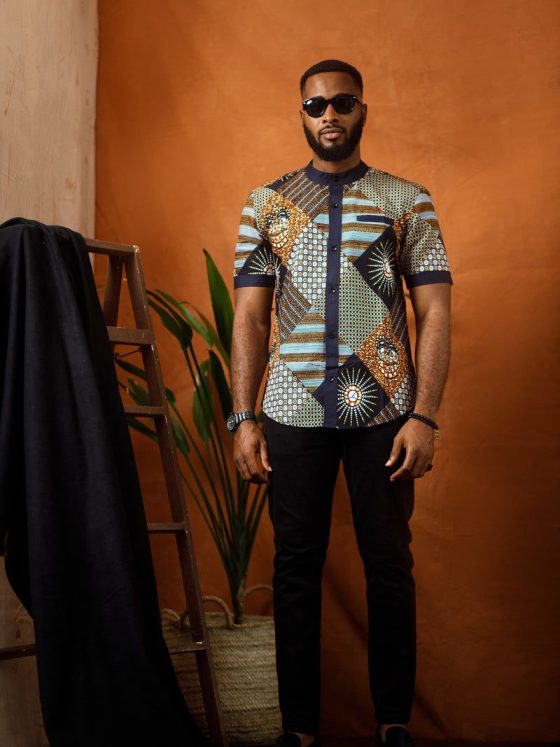
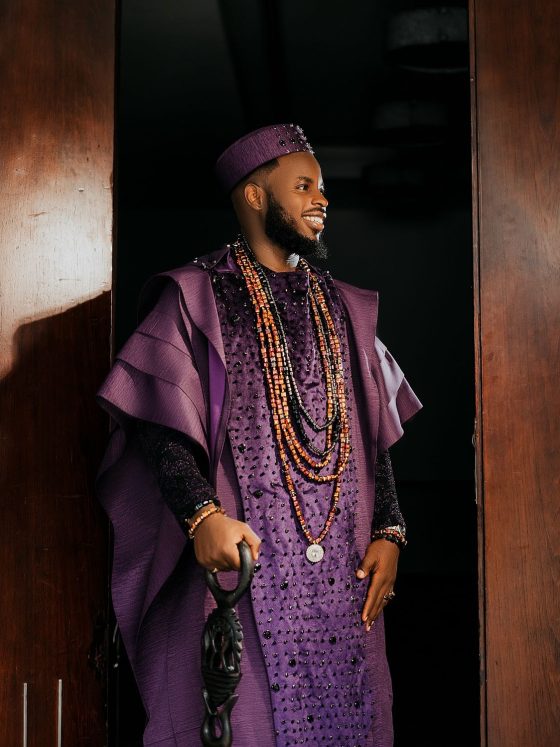
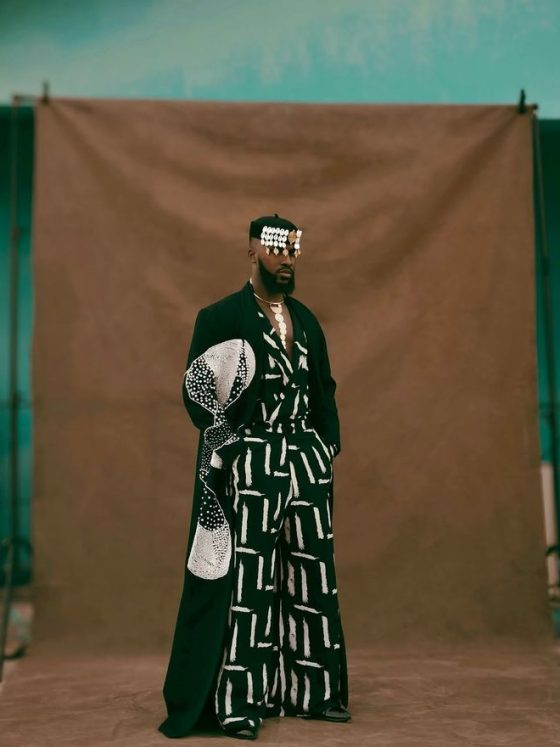
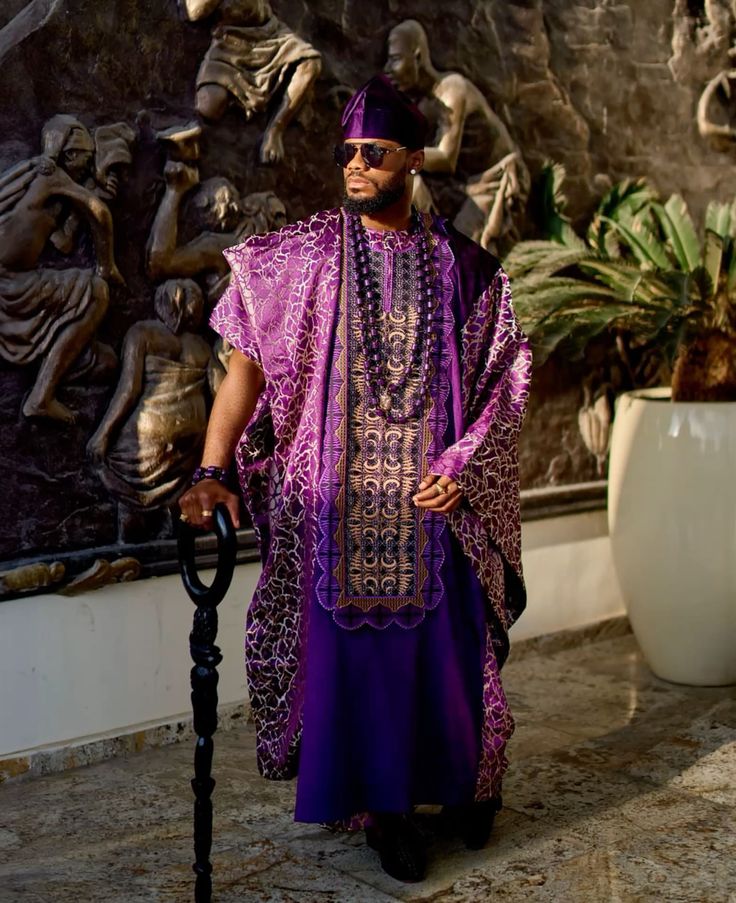
West African men’s tailoring: the agbada, the kaftan, the aso-oke ensemble. These garments were occasion-specific, precisely constructed, and culturally codified centuries before Savile Row existed.

The Agbada: Seven Centuries of Considered Construction
The Agbada: Seven Centuries of Considered Construction
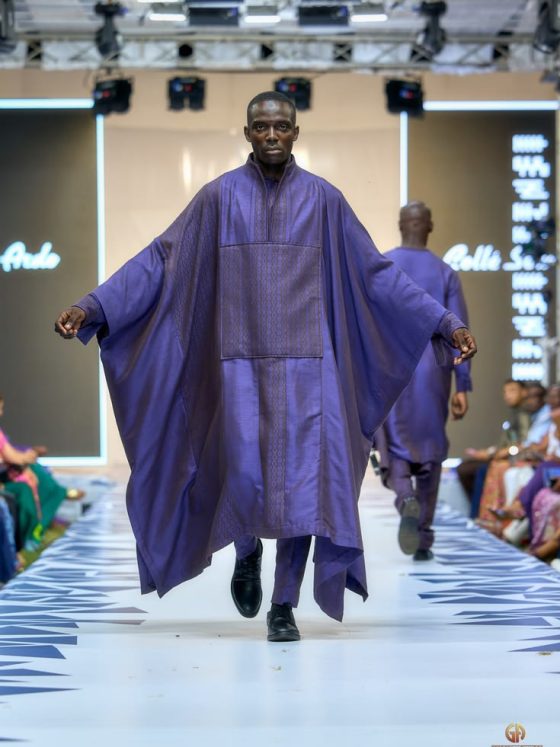
The agbada, the wide-sleeved prestige robe of Yoruba men, is documented in the dress traditions of the twelfth- and thirteenth-century Mali and Songhai empires, where the nobility adopted it as a symbol of rank and religious authority. Arab geographer Al-Bakri, writing in 1068, recorded elaborate robes as part of the court dress of the Ghana Empire. Ibn Battuta’s fourteenth-century accounts of Mali under Mansa Musa describe court dress of considerable sophistication. These are not secondary sources. They are contemporary records from trained observers, written when the tailoring traditions around Cork Street in London were still centuries away from existing.

The Yoruba agbada is a three-piece ensemble: the outer robe, known as the fila, the buba inner tunic, and the sokoto drawstring trousers, all cut from the same fabric and embroidered at the chest in the juba pattern whose density and intricacy communicate the wearer’s investment and social standing. The embroidery at the chest opening is hand-stitched, requiring specialist knowledge and significant labour. The outer robe is cut wide enough that the sleeves must be folded back over the forearm when in motion: a construction decision that privileges the silhouette and the ceremony of arrival over ease of movement. This is not casual dress adapted for special occasions. It is a prestige garment system designed from the ground up for considered, occasion-specific wear.

“The agbada was documented in the courts of the Mali Empire in the twelfth century. Savile Row opened for business in 1803. The chronology is not a debate.”

The Babban Riga: The Hausa Tradition of the North

Pc: Pinterest
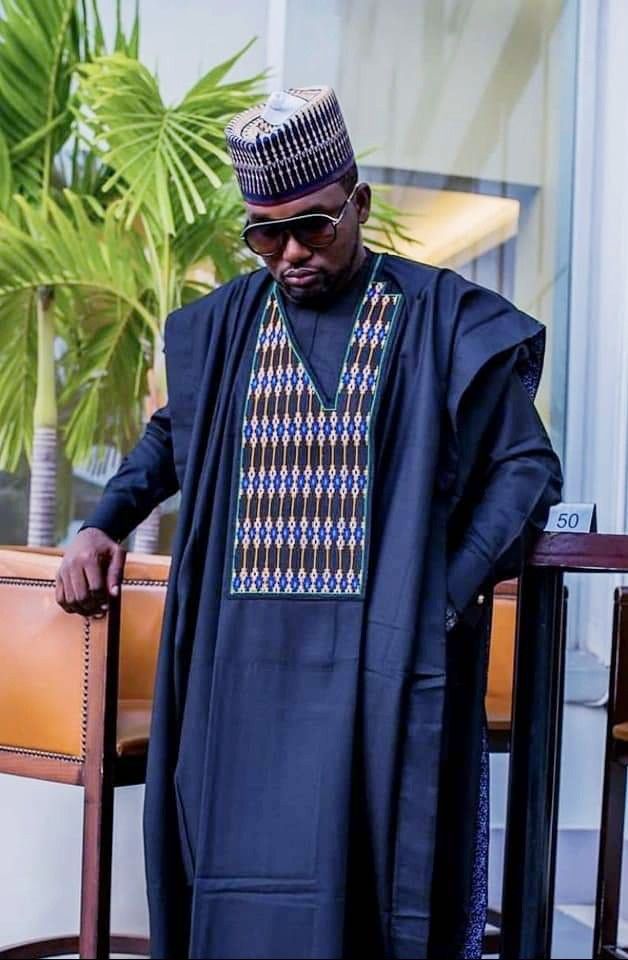
The babban riga, meaning 'large gown' in Hausa, is the prestige menswear tradition of the Hausa and Fulani peoples of northern Nigeria and the wider West African savannah. Like the agbada, it belongs to the family of wide-sleeved, embroidered over-robes that spread through West Africa via trans-Saharan trade routes and were adopted across the Sahel as markers of Islamic scholarship, political authority, and social standing. The babban riga’s embroidery, concentrated at the chest in patterns known collectively as the laba style, is among the most technically demanding in the region, with thread densities that can require weeks of work from specialist embroiderers to complete a single garment.

The Hausa tailoring tradition, centred in Kano, is one of West Africa’s oldest craft economies. Kano’s dyeing pits, some of which have been in continuous operation for over five centuries, supplied the indigo cloth that Hausa weavers and tailors worked into garments for trade networks stretching from the Sahara to the coast. The Emir of Kano’s court dress, the full babban riga in embroidered white or indigo, worn with a turban and matching trousers, represents a complete prestige menswear system whose protocols of fabric, embroidery pattern, and occasion-specific wearing conventions have been maintained without interruption across the same period in which European tailoring was still developing the concept of the fitted suit.
Aso-Oke: The Fabric That Makes the Man
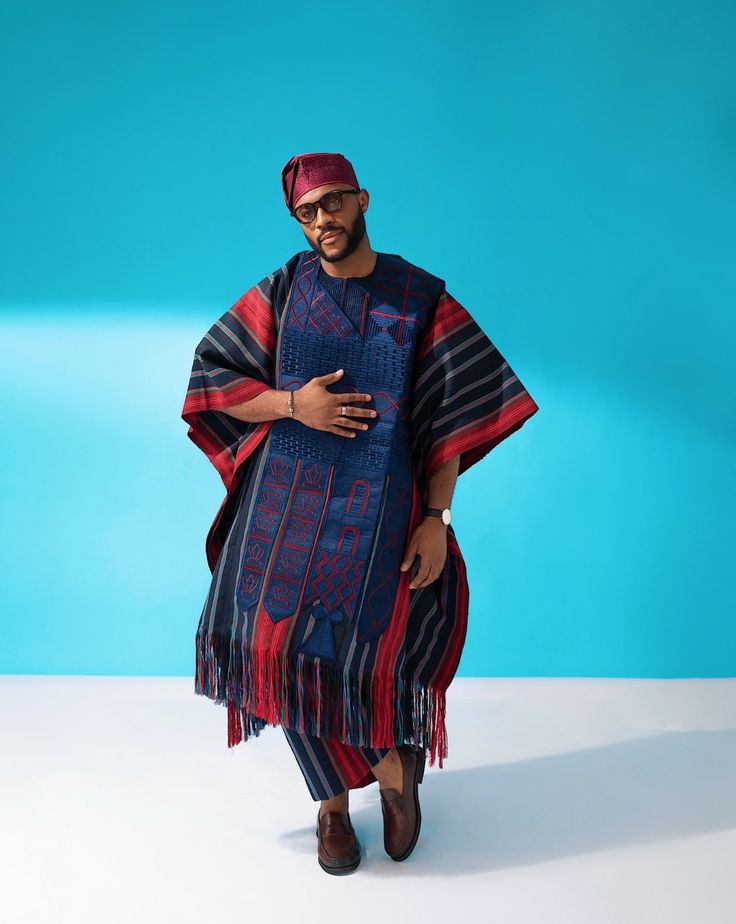
The Yoruba aso-oke, meaning 'top cloth' in Yoruba, is a handwoven prestige textile produced on narrow horizontal strip looms by specialist weavers, historically concentrated in towns such as Iseyin and Ilorin in Oyo State. The cloth is woven in strips approximately four inches wide, which are then sewn together to produce the final fabric. Three distinct aso-oke weave types carry specific occasion associations: sanyan, a natural beige-brown woven from wild silk and cotton, is the most prestigious and is worn at funerals and title ceremonies; alaari, a deep red or magenta, is worn at high-status celebrations; etu, an indigo-dyed dark blue-black, is worn at formal ceremonies and chieftaincy events. Selecting the appropriate aso-oke type for the occasion is not optional. It is a social requirement whose breach communicates ignorance of the dress code.

The complete Yoruba men’s aso-oke ensemble for formal occasions includes the agbada outer robe in aso-oke, the buba tunic, the sokoto trousers, the fila cap shaped to match, and traditional beads at the wrist or neck. The ensemble is assembled months in advance of a major occasion, with the aso-oke commissioned specifically for the event and often colour-coordinated across family groups as aso-ebi, meaning 'family cloth', a practice that transforms individual dress into collective identity marking. The logistics of this system, the commissioning, the weaving, the cutting, the stitching, and the collective coordination are those of a sophisticated fashion infrastructure that requires no external reference point to legitimise it.

“The correct Aso-oke type for the correct occasion is a social requirement. Getting it wrong does not signal informality. It signals ignorance of the code. That is the standard of a dress tradition that knows exactly what it is.”

What Bespoke Actually Means in West Africa

Pc: Pinterest 
Savile Row’s claim to the word bespoke rests on the practice of cloth being spoken for by a specific client, cut to a pattern drafted exclusively for one body. That practice is precisely what the specialist tailors of West Africa have always done. The agbada is not purchased off a rack. It is commissioned from a tailor who knows the client’s body, the occasion for which it will be worn, the fabric the client has selected or had woven, and the embroidery pattern appropriate to the wearer’s status and the event’s formality. The measurement, the cutting, the hand-finishing, and the embroidery are all performed by skilled practitioners whose knowledge is transmitted through apprenticeship. The finished garment belongs to one person and was made for one occasion. That is bespoke. The word did not originate in West Africa, but the practice did, centuries before it had an English name.

The tailors who produce these garments, the Asa-oke weavers of Iseyin, the agbada embroiderers of Abeokuta and Ibadan, and the babban riga specialists of Kano, represent an artisanal workforce of considerable skill and cultural knowledge. Their practices are transmitted through apprenticeship systems that can last several years and that require demonstrable competency before a practitioner is considered qualified to produce prestigious garments independently. The training model is not dissimilar to the apprenticeship tradition at Savile Row. The West African version predates it by several centuries.
Ozwald Boateng and What Happened When Africa Walked Into the Row
In 1995, Ozwald Boateng became the first tailor of African heritage to open a house on Savile Row itself. Born in London to Ghanaian parents, Boateng brought a design philosophy shaped by his father’s Ghanaian kente and the cultural confidence of a man who grew up understanding African prestigious dress as the baseline, not an aspiration. His suits, which brought colour, drama, and a theatrical approach to silhouette to a street defined by conservative restraint, were not departures from the Savile Row tradition. They were a return to a more fundamental truth about prestige menswear: that it should announce presence, communicate status, and reward the occasion that demands it. That is what the agbada has always done. Boateng made it legible to an institution that had been built without reference to the tradition it was echoing.
Boateng’s success on Savile Row, his appointment as creative director of Givenchy Homme in 2003, and his subsequent work documenting African fashion through the documentary series A Man’s Story, constitute one of the most direct arguments ever made about the relationship between African dress tradition and global menswear. He did not enter Savile Row as an outsider bringing an unfamiliar aesthetic. He entered it as a man whose aesthetic roots were in a tailoring tradition older than the street, and the Row was permanently changed by his presence.
The Chronological Record Deserves to Be Stated Plainly
West African prestige menswear was documented by Arab geographers in the eleventh century. The nobility of the twelfth and thirteenth-century Mali Empire wore embroidered over-robes as markers of rank. The Hausa babban riga tradition in Kano was established alongside dyeing and weaving industries that have been continuously operational for five centuries. The Yoruba aso-oke weaving tradition produces occasion-specific prestige cloth whose wearing conventions are socially enforced. The agbada is a three-piece, hand-embroidered, client-specific prestige ensemble whose construction requires specialist knowledge accumulated through years of apprenticeship. Savile Row began accepting tailoring workshops in approximately 1790. Henry Poole opened at number 32 in 1846.

The global fashion industry’s habit of positioning Savile Row as the origin point of considered menswear is not a neutral historical error. It is the product of a centuries-long alignment between Eurocentric assumptions about craft, sophistication, and cultural authority, and the editorial infrastructure of an industry that has consistently located those qualities in Western Europe. West African tailoring does not need to be measured against Savile Row to establish its significance. It preceded it. The significance was always there. The documentation simply has not been written in the places where the global fashion press has been looking.

Read next: 
Agbada Boubou, Grand Boubou: One Silhouette, Four Countries, Four Arguments About Power
OMIREN ARGUMENT
Pc: Pinterest 
The standard account of global menswear history positions the European fitted suit and Savile Row bespoke tailoring as the apex from which other dress traditions are measured. West African prestige menswear predates that apex by approximately seven hundred years, operates from a complete set of occasion-specific wearing conventions, requires specialist artisanal knowledge transmitted through structured apprenticeship, and produces garments cut and constructed for individual clients. Every criterion the global fashion industry uses to define serious tailoring applies to the agbada, the babban riga, and the aso-oke ensemble. The only criterion that does not apply is location. These traditions were built in Kano, in Ibadan, in Abeokuta, in Iseyin, not in Mayfair. That is the structural reason they have not been given the critical literature they merit. The chronological argument this article makes is not revisionist. It is the record, read in full, without the assumption that European tailoring was the centre from which everything else radiated.
Frequently Asked Questions
What is the history of West African menswear?
West African menswear has a documented history extending to the eleventh century, when Arab geographers recorded prestige robes at the courts of the Ghana Empire. The agbada-type flowing over-robe was adopted by the nobility of the twelfth- and thirteenth-century Mali and Songhai empires as a marker of rank and religious authority. The Hausa babban riga tradition in Kano developed alongside dyeing and weaving industries that have operated continuously for over five centuries. The Yoruba aso-oke weaving tradition produces occasion-specific prestige cloth whose wearing conventions are socially codified. These are among the oldest documented menswear traditions in the world.
What is an agbada, and how is it constructed?
The agbada is a three-piece prestige ensemble worn by Yoruba men across West Africa, consisting of an outer robe with wide sleeves, a fitted buba inner tunic, and matching sokoto drawstring trousers. All three pieces are cut from the same fabric. The outer robe features hand-embroidered decoration at the chest opening, known as the 'juba', whose density and pattern communicate the wearer’s status and the occasion’s formality. Fabric choices range from hand-woven aso-oke in prestige weave types to imported brocade and Swiss voile. The garment is commissioned from specialist tailors and constructed for specific occasions.
How does West African tailoring compare to Savile Row?
West African tailoring predates Savile Row by approximately seven hundred years. Savile Row as a tailoring destination dates from approximately 1790, with the first tailors taking premises on the street itself by 1803. West African prestige menswear was documented by Arab geographers in the eleventh century and established as a sophisticated court-dress tradition in the twelfth- and thirteenth-century Mali and Songhai Empires. Both traditions involve client-specific commissioning, specialist artisanal knowledge transmitted through apprenticeship, and occasion-specific wearing conventions. The primary difference is that one tradition has been accorded critical literature and institutional recognition proportionate to its age and sophistication. The other has not.
What is aso-oke fabric, and how is it used in men's dress?
Aso-oke is a hand-woven prestige textile produced by specialist Yoruba weavers on narrow horizontal strip looms, historically concentrated in towns including Iseyin and Ilorin in Oyo State, Nigeria. It is woven in four-inch strips that are sewn together into finished cloth. Three primary weave types carry specific occasion associations: sanyan, a natural beige-brown from wild silk and cotton, is the most prestigious and is worn at funerals and title ceremonies; alaari, a deep red or magenta, is worn at high-status celebrations; and etu, an indigo dark blue-black, is worn at formal ceremonies and chieftaincy events. Selecting the correct type for the correct occasion is a socially enforced requirement.
Who is Ozwald Boateng, and what is his significance in menswear history?
Ozwald Boateng is a British-Ghanaian tailor who, in 1995, became the first person of African heritage to open a tailoring house on Savile Row itself. Born in London to Ghanaian parents, he brought a design philosophy influenced by his father’s Ghanaian kente and the visual confidence of African prestige dress. His collections introduced colour, drama, and theatrical silhouette to Savile Row, and he was appointed creative director of Givenchy Homme in 2003. He subsequently produced A Man’s Story, a documentary series examining the relationship between African dress tradition and global menswear. His presence permanently changed the aesthetic conversation on the Row.

The agbada, the wide-sleeved prestige robe of Yoruba men, is documented in the dress traditions of the twelfth- and thirteenth-century Mali and Songhai empires, where the nobility adopted it as a symbol of rank and religious authority. Arab geographer Al-Bakri, writing in 1068, recorded elaborate robes as part of the court dress of the Ghana Empire. Ibn Battuta’s fourteenth-century accounts of Mali under Mansa Musa describe court dress of considerable sophistication. These are not secondary sources. They are contemporary records from trained observers, written when the tailoring traditions around Cork Street in London were still centuries away from existing.

The Yoruba agbada is a three-piece ensemble: the outer robe, known as the fila, the buba inner tunic, and the sokoto drawstring trousers, all cut from the same fabric and embroidered at the chest in the juba pattern whose density and intricacy communicate the wearer’s investment and social standing. The embroidery at the chest opening is hand-stitched, requiring specialist knowledge and significant labour. The outer robe is cut wide enough that the sleeves must be folded back over the forearm when in motion: a construction decision that privileges the silhouette and the ceremony of arrival over ease of movement. This is not casual dress adapted for special occasions. It is a prestige garment system designed from the ground up for considered, occasion-specific wear.

“The agbada was documented in the courts of the Mali Empire in the twelfth century. Savile Row opened for business in 1803. The chronology is not a debate.”

The Babban Riga: The Hausa Tradition of the North

The babban riga, meaning ‘large gown’ in Hausa, is the prestige menswear tradition of the Hausa and Fulani peoples of northern Nigeria and the wider West African savannah. Like the agbada, it belongs to the family of wide-sleeved, embroidered over-robes that spread through West Africa via trans-Saharan trade routes and were adopted across the Sahel as markers of Islamic scholarship, political authority, and social standing. The babban riga’s embroidery, concentrated at the chest in patterns known collectively as the laba style, is among the most technically demanding in the region, with thread densities that can require weeks of work from specialist embroiderers to complete a single garment.

The Hausa tailoring tradition, centred in Kano, is one of West Africa’s oldest craft economies. Kano’s dyeing pits, some of which have been in continuous operation for over five centuries, supplied the indigo cloth that Hausa weavers and tailors worked into garments for trade networks stretching from the Sahara to the coast. The Emir of Kano’s court dress, the full babban riga in embroidered white or indigo, worn with a turban and matching trousers, represents a complete prestige menswear system whose protocols of fabric, embroidery pattern, and occasion-specific wearing conventions have been maintained without interruption across the same period in which European tailoring was still developing the concept of the fitted suit.

Aso-Oke: The Fabric That Makes the Man

Aso-Oke: The Fabric That Makes the Man

The Yoruba aso-oke, meaning ‘top cloth’ in Yoruba, is a handwoven prestige textile produced on narrow horizontal strip looms by specialist weavers, historically concentrated in towns such as Iseyin and Ilorin in Oyo State. The cloth is woven in strips approximately four inches wide, which are then sewn together to produce the final fabric. Three distinct aso-oke weave types carry specific occasion associations: sanyan, a natural beige-brown woven from wild silk and cotton, is the most prestigious and is worn at funerals and title ceremonies; alaari, a deep red or magenta, is worn at high-status celebrations; etu, an indigo-dyed dark blue-black, is worn at formal ceremonies and chieftaincy events. Selecting the appropriate aso-oke type for the occasion is not optional. It is a social requirement whose breach communicates ignorance of the dress code.

The complete Yoruba men’s aso-oke ensemble for formal occasions includes the agbada outer robe in aso-oke, the buba tunic, the sokoto trousers, the fila cap shaped to match, and traditional beads at the wrist or neck. The ensemble is assembled months in advance of a major occasion, with the aso-oke commissioned specifically for the event and often colour-coordinated across family groups as aso-ebi, meaning ‘family cloth’, a practice that transforms individual dress into collective identity marking. The logistics of this system, the commissioning, the weaving, the cutting, the stitching, and the collective coordination are those of a sophisticated fashion infrastructure that requires no external reference point to legitimise it.

“The correct Aso-oke type for the correct occasion is a social requirement. Getting it wrong does not signal informality. It signals ignorance of the code. That is the standard of a dress tradition that knows exactly what it is.”

What Bespoke Actually Means in West Africa

Savile Row’s claim to the word bespoke rests on the practice of cloth being spoken for by a specific client, cut to a pattern drafted exclusively for one body. That practice is precisely what the specialist tailors of West Africa have always done. The agbada is not purchased off a rack. It is commissioned from a tailor who knows the client’s body, the occasion for which it will be worn, the fabric the client has selected or had woven, and the embroidery pattern appropriate to the wearer’s status and the event’s formality. The measurement, the cutting, the hand-finishing, and the embroidery are all performed by skilled practitioners whose knowledge is transmitted through apprenticeship. The finished garment belongs to one person and was made for one occasion. That is bespoke. The word did not originate in West Africa, but the practice did, centuries before it had an English name.

The tailors who produce these garments, the Asa-oke weavers of Iseyin, the agbada embroiderers of Abeokuta and Ibadan, and the babban riga specialists of Kano, represent an artisanal workforce of considerable skill and cultural knowledge. Their practices are transmitted through apprenticeship systems that can last several years and that require demonstrable competency before a practitioner is considered qualified to produce prestigious garments independently. The training model is not dissimilar to the apprenticeship tradition at Savile Row. The West African version predates it by several centuries.

Ozwald Boateng and What Happened When Africa Walked Into the Row

Ozwald Boateng and What Happened When Africa Walked Into the Row

In 1995, Ozwald Boateng became the first tailor of African heritage to open a house on Savile Row itself. Born in London to Ghanaian parents, Boateng brought a design philosophy shaped by his father’s Ghanaian kente and the cultural confidence of a man who grew up understanding African prestigious dress as the baseline, not an aspiration. His suits, which brought colour, drama, and a theatrical approach to silhouette to a street defined by conservative restraint, were not departures from the Savile Row tradition. They were a return to a more fundamental truth about prestige menswear: that it should announce presence, communicate status, and reward the occasion that demands it. That is what the agbada has always done. Boateng made it legible to an institution that had been built without reference to the tradition it was echoing.

Boateng’s success on Savile Row, his appointment as creative director of Givenchy Homme in 2003, and his subsequent work documenting African fashion through the documentary series A Man’s Story, constitute one of the most direct arguments ever made about the relationship between African dress tradition and global menswear. He did not enter Savile Row as an outsider bringing an unfamiliar aesthetic. He entered it as a man whose aesthetic roots were in a tailoring tradition older than the street, and the Row was permanently changed by his presence.

The Chronological Record Deserves to Be Stated Plainly

West African prestige menswear was documented by Arab geographers in the eleventh century. The nobility of the twelfth and thirteenth-century Mali Empire wore embroidered over-robes as markers of rank. The Hausa babban riga tradition in Kano was established alongside dyeing and weaving industries that have been continuously operational for five centuries. The Yoruba aso-oke weaving tradition produces occasion-specific prestige cloth whose wearing conventions are socially enforced. The agbada is a three-piece, hand-embroidered, client-specific prestige ensemble whose construction requires specialist knowledge accumulated through years of apprenticeship. Savile Row began accepting tailoring workshops in approximately 1790. Henry Poole opened at number 32 in 1846.

The global fashion industry’s habit of positioning Savile Row as the origin point of considered menswear is not a neutral historical error. It is the product of a centuries-long alignment between Eurocentric assumptions about craft, sophistication, and cultural authority, and the editorial infrastructure of an industry that has consistently located those qualities in Western Europe. West African tailoring does not need to be measured against Savile Row to establish its significance. It preceded it. The significance was always there. The documentation simply has not been written in the places where the global fashion press has been looking.

READ MORE:

  • Agbada Boubou, Grand Boubou: One Silhouette, Four Countries, Four Arguments About Power

OMIREN ARGUMENT

The standard account of global menswear history positions the European fitted suit and Savile Row bespoke tailoring as the apex from which other dress traditions are measured. West African prestige menswear predates that apex by approximately seven hundred years, operates from a complete set of occasion-specific wearing conventions, requires specialist artisanal knowledge transmitted through structured apprenticeship, and produces garments cut and constructed for individual clients. Every criterion the global fashion industry uses to define serious tailoring applies to the agbada, the babban riga, and the aso-oke ensemble. The only criterion that does not apply is location. These traditions were built in Kano, in Ibadan, in Abeokuta, in Iseyin, not in Mayfair. That is the structural reason they have not been given the critical literature they merit. The chronological argument this article makes is not revisionist. It is the record, read in full, without the assumption that European tailoring was the centre from which everything else radiated.

Frequently Asked Questions

  • What is the history of West African menswear?

West African menswear has a documented history extending to the eleventh century, when Arab geographers recorded prestige robes at the courts of the Ghana Empire. The agbada-type flowing over-robe was adopted by the nobility of the twelfth- and thirteenth-century Mali and Songhai empires as a marker of rank and religious authority. The Hausa babban riga tradition in Kano developed alongside dyeing and weaving industries that have operated continuously for over five centuries. The Yoruba aso-oke weaving tradition produces occasion-specific prestige cloth whose wearing conventions are socially codified. These are among the oldest documented menswear traditions in the world.

  • What is an agbada, and how is it constructed?

The agbada is a three-piece prestige ensemble worn by Yoruba men across West Africa, consisting of an outer robe with wide sleeves, a fitted buba inner tunic, and matching sokoto drawstring trousers. All three pieces are cut from the same fabric. The outer robe features hand-embroidered decoration at the chest opening, known as the ‘juba’, whose density and pattern communicate the wearer’s status and the occasion’s formality. Fabric choices range from hand-woven aso-oke in prestige weave types to imported brocade and Swiss voile. The garment is commissioned from specialist tailors and constructed for specific occasions.

  • How does West African tailoring compare to Savile Row?

West African tailoring predates Savile Row by approximately seven hundred years. Savile Row as a tailoring destination dates from approximately 1790, with the first tailors taking premises on the street itself by 1803. West African prestige menswear was documented by Arab geographers in the eleventh century and established as a sophisticated court-dress tradition in the twelfth- and thirteenth-century Mali and Songhai Empires. Both traditions involve client-specific commissioning, specialist artisanal knowledge transmitted through apprenticeship, and occasion-specific wearing conventions. The primary difference is that one tradition has been accorded critical literature and institutional recognition proportionate to its age and sophistication. The other has not.

  • What is aso-oke fabric, and how is it used in men’s dress?

Aso-oke is a hand-woven prestige textile produced by specialist Yoruba weavers on narrow horizontal strip looms, historically concentrated in towns including Iseyin and Ilorin in Oyo State, Nigeria. It is woven in four-inch strips that are sewn together into finished cloth. Three primary weave types carry specific occasion associations: sanyan, a natural beige-brown from wild silk and cotton, is the most prestigious and is worn at funerals and title ceremonies; alaari, a deep red or magenta, is worn at high-status celebrations; and etu, an indigo dark blue-black, is worn at formal ceremonies and chieftaincy events. Selecting the correct type for the correct occasion is a socially enforced requirement.

  • Who is Ozwald Boateng, and what is his significance in menswear history?

Ozwald Boateng is a British-Ghanaian tailor who, in 1995, became the first person of African heritage to open a tailoring house on Savile Row itself. Born in London to Ghanaian parents, he brought a design philosophy influenced by his father’s Ghanaian kente and the visual confidence of African prestige dress. His collections introduced colour, drama, and theatrical silhouette to Savile Row, and he was appointed creative director of Givenchy Homme in 2003. He subsequently produced A Man’s Story, a documentary series examining the relationship between African dress tradition and global menswear. His presence permanently changed the aesthetic conversation on the Row.
Post Views: 51
Total
0
Shares
Share 0
Tweet 0
Pin it 0
Related Topics
  • African Fashion History
  • African textile traditions
  • Cultural Identity in Fashion
  • traditional African menswear
Avatar photo
Ayomidoyin Olufemi

ayomidoyinolufemi@gmail.com

You May Also Like
Dressed With Power: How Nigerian Men Redefined Traditional Fashion at the AMVCA 12 Cultural Night
View Post
  • Men's Style
  • Red Carpet & Galas

Dressed With Power: How Nigerian Men Redefined Traditional Fashion at the AMVCA 12 Cultural Night

  • Adams Moses
  • May 10, 2026
The Congo’s Sapeurs: What La Sape Tells the World About Elegance, Resistance, and African Identity
View Post
  • Men's Style

The Congo’s Sapeurs: What La Sape Tells the World About Elegance, Resistance, and African Identity

  • Adams Moses
  • May 6, 2026
The White Shirt: A Study in Minimalist Authority
View Post
  • Men's Style
  • Trends

The White Shirt: A Study in Minimalist Authority

  • Faith Olabode
  • April 15, 2026
The Return of the Well-Dressed Man: Why Men Are Investing in Personal Style Again
View Post
  • Men's Style

The Return of the Well-Dressed Man: Why Men Are Investing in Personal Style Again

  • Philip Sifon
  • April 14, 2026
The Well-Dressed Man Reimagined: Moving Beyond The Suit Into Intentional Style
View Post
  • Men's Style

The Well-Dressed Man Reimagined: Moving Beyond The Suit Into Intentional Style

  • Philip Sifon
  • April 14, 2026
Radical Tailoring for Men Is Reshaping Style in 2026
View Post
  • Men's Style
  • The Modern African Man

Radical Tailoring for Men Is Reshaping Style in 2026

  • Philip Sifon
  • April 14, 2026
The Legacy of the Modern Timepiece: Precision and Presence
View Post
  • Luxury Living
  • Men's Style

The Legacy of the Modern Timepiece: Precision and Presence

  • Faith Olabode
  • April 13, 2026

Leave a Reply Cancel reply

Your email address will not be published. Required fields are marked *

The Omiren Argument

African fashion and culture are not emerging. They are foundational. We document, interpret, and argue for the full cultural weight of African and diaspora dress. With precision. Without apology.

Omiren Styles Fashion · Culture · Identity

All 54 African Nations
Caribbean · Afro-Latin America
The Global Diaspora

Platform

  • About Omiren Styles
  • Our Vision
  • Our Mission
  • Editorial Pillars
  • Editorial Policy
  • The Omiren Collective
  • Campus Style Initiative
  • Sustainable Style
  • Social Impact & Advocacy
  • Investor Relations

Contribute

  • Write for Omiren Styles
  • Submit Creative Work
  • Join the Omiren Collective
  • Campus Initiative
Contact
contact@omirenstyles.com
Our Reach

Africa — All 54 Nations
Caribbean
Afro-Latin America
Global Diaspora

African fashion intelligence, in your inbox.

Editorial features, designer profiles, cultural commentary. No noise.

© 2026 Omiren Styles — Rex Clarke Global Ventures Limited. All rights reserved.
  • Privacy Policy
  • Editorial Policy
  • Terms of Use
  • Accessibility
Africa · Caribbean · Diaspora
The Omiren Argument

African fashion and culture are not emerging. They are foundational. We document, interpret, and argue for the full cultural weight of African and diaspora dress. With precision. Without apology.

Omiren Styles Fashion · Culture · Identity
  • About Omiren Styles
  • Our Vision
  • Our Mission
  • Editorial Pillars
  • Editorial Policy
  • The Omiren Collective
  • Campus Style Initiative
  • Sustainable Style
  • Social Impact & Advocacy
  • Investor Relations
  • Write for Omiren Styles
  • Submit Creative Work
  • Join the Omiren Collective
  • Campus Initiative
Contact contact@omirenstyles.com

All 54 African Nations · Caribbean
Afro-Latin America · Global Diaspora

African fashion intelligence, in your inbox.

Editorial features, designer profiles, cultural commentary. No noise.

© 2026 Omiren Styles
Rex Clarke Global Ventures Limited.
All rights reserved.

  • Privacy Policy
  • Editorial Policy
  • Terms of Use
  • Accessibility
Africa · Caribbean · Diaspora

Input your search keywords and press Enter.