This article contains affiliate links. We may earn a small commission if you purchase through our links at no extra cost to you.
Colour theory has long been treated as a universal system in beauty education. It is taught as a set of fixed rules that should work across all skin tones. But in practice, those rules were developed using lighter skin as the reference point.
This is where the problem begins. What works on lighter complexions does not always translate the same way on deeper skin tones.
Colour theory for melanin-rich skin operates differently because melanin affects how colour appears, how light is absorbed, and how light is reflected.
To build a colour system that reflects how melanin-rich skin truly responds to colour, understanding how pigment strength works together is important.
Colour theory for melanin-rich skin challenges everything taught in European beauty schools. What if the rules taught were never designed for deeper skin?
Why Traditional Colour Theory Fails on Melanin-Rich Skin
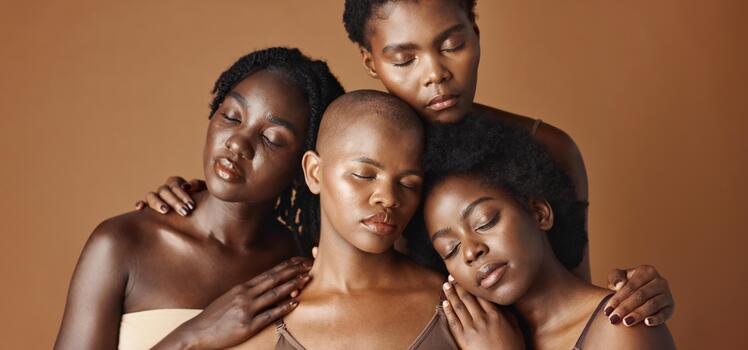
Traditional colour theory assumes contrast is created by placing light against dark. On lighter skin, this works because the complexion functions as a relatively neutral base.
This allows pigment to sit visibly on the surface. On melanin-rich skin, that base is already deep and layered. So instead of sitting clearly on top, weaker pigments can merge into the skin.
When this happens, it reduces their visibility and impact. This is why soft pastels, low-intensity blushes, and muted contour shades often fail on deeper complexions.
They weren’t designed for a base that requires stronger saturation to register contrast. So, the issue isn’t just shade selection, but how colour theory defines visibility.
Traditional systems prioritise contrast through lightness, but melanin-rich skin demands contrast through depth, intensity, and saturation. Until that shift is made, many products will continue to read as flat, muted, or invisible on deeper skin tones.
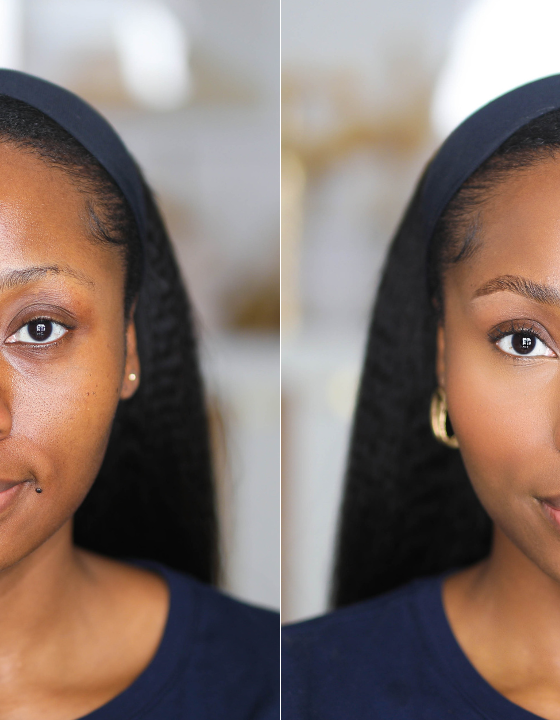
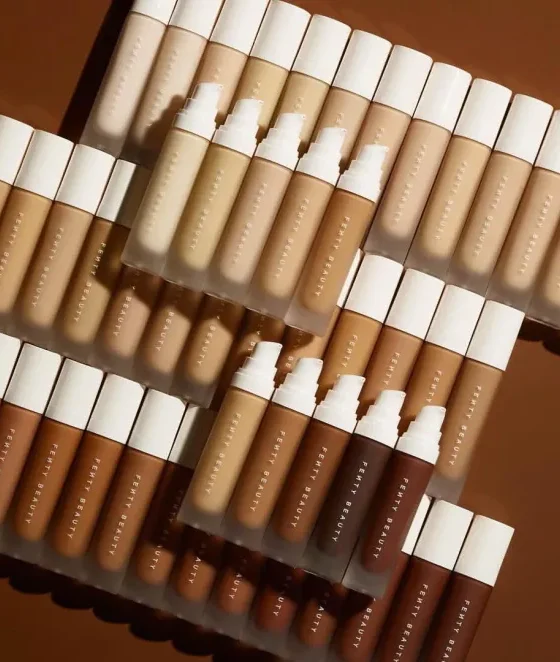
Finding foundation shades that truly work on deeper skin tones has never been as straightforward as the beauty industry likes to pretend. These are some of the complexion products makeup artists, beauty editors, and everyday users with melanin-rich skin consistently return to for undertones, depth, and finish.
How Melanin Changes the Way Colour Appears on Skin
Colour theory for melanin-rich skin is shaped by how melanin physically interacts with light and pigment. These are the main ways it changes colour appearance:
1. Melanin Absorbs Light
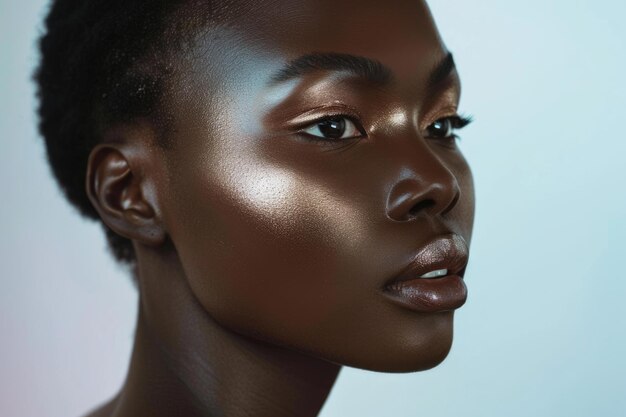
Melanin absorbs a high amount of visible light. Because less light is reflected, colours appear less bright than they would on lighter skin. This changes how vibrant or soft a shade looks once applied.
2. Melanin Reduces Surface Contrast
Because the skin already contains rich pigment, there is less contrast between the skin and the colour placed on it. As a result, low-intensity shades can appear muted or less defined.
3. Melanin Affects Pigment Visibility
Some pigments do not sit clearly on deeper skin tones. Instead, they can blend into the skin tone, making the colour look faded or less visible if it is not strong enough.
4. Melanin Changes Colour Perception
The same shade can appear differently depending on how it interacts with melanin. It may look deeper, warmer, or less saturated than it does on lighter skin tones.
The Problem with Eurocentric Beauty Education
In many traditional beauty schools, colour theory is still taught using lighter skin as the default reference point. This shapes how students are introduced to concepts like contrast, undertone, and product application from the very beginning.
As a result, most training systems are built around incomplete colour references. Demonstrations, diagrams, and product examples often centre on lighter complexions.
On the other hand, deeper skin tones are introduced later as adjustments rather than as part of the core framework. When darker skin is treated as something to “adapt to” rather than as something the system is built around, it creates gaps in understanding.
Students may learn techniques that work well on lighter skin but struggle to translate them effectively to melanin-rich skin. Over time, this affects both application and product development.
The lack of early, equal representation in education leads to approaches that don’t fully account for how colour performs on deeper skin tones. This further reinforces a system that isn’t complete from the start.
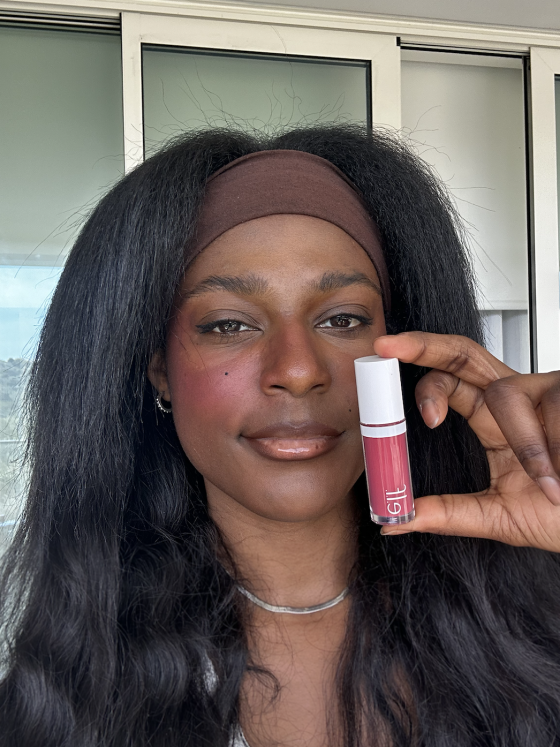
Berry tones, rich reds, and warm browns tend to blend beautifully on deeper skin tones without looking harsh or overly cool. These are some of the lip colours and blush shades beauty lovers with melanin-rich skin repeatedly come back to because the undertones actually work.
Also Read
- Foundation Matching for Deep Skin Tones: Why the Shade Range Problem Still Persists
- Blush That Shows on Deep Skin: The Formulas, Shades, and Application Techniques That Work
- Contouring and Highlighting on Dark Skin Without the Ashy Result That Every Tutorial Gets Wrong
- Bold Lip Colours for Deep Skin: The Shades That Actually Flatter and the Application Steps That Make Them Last
Rethinking Colour Theory for Melanin-Rich Skin
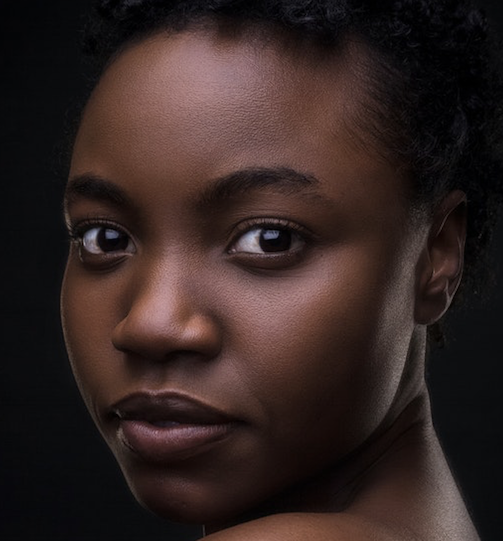
To move beyond these gaps, colour theory needs to be reframed around how melanin-rich skin responds to pigment, rather than how lighter skin serves as the default model.
This shift is not about rejecting colour theory entirely, but correcting its starting point. Instead of prioritising light-versus-dark contrast, the focus should shift to how pigment strength, saturation, and undertone interact with deeper skin tones.
On melanin-rich skin, colour is less about surface contrast and more about intensity and clarity of pigment. This means teaching colour as something that must be evaluated across different skin depths from the beginning, rather than adapted after the fact.
When colour theory is built this way, it becomes more accurate, more inclusive, and more effective in real-world applications.
In simple terms, rethinking colour theory for melanin-rich skin is about rebuilding the framework so it reflects how colour actually behaves, not how it was originally assumed to behave.
Warm metallics, copper tones, and rich gold shadows usually appear more dimensional on deeper skin tones without looking chalky or washed out. These are some of the eyeshadow palettes consistently recommended for deeper complexions.
The Omiren Argument
Colour theory is often presented as neutral and universal, but it is actually a system built from a specific visual reference point. In most cases, that reference point is lighter skin.
This means the rules of contrast, visibility, and blending were never fully designed with melanin-rich skin at the centre.
On deeper skin tones, colour does not fail. It behaves differently. Melanin changes how light is absorbed and how pigment is perceived, which means the same rulebook produces different outcomes depending on the skin it is applied to.
The real issue is not colour theory itself, but the assumption that one version of it can work for everyone without adjustment.
When the system is treated as fixed, melanin-rich skin is forced into interpretation rather than intention. The Omiren argument is that colour theory isn’t wrong; it is incomplete.
And until melanin-rich skin is treated as a foundational reference rather than an afterthought, the system will continue to produce uneven results in both education and practice.
Conclusion
Colour theory for melanin-rich skin shows that what is often taught as universal in beauty education is actually based on a limited reference point. Because of this, the same rules do not always translate to deeper skin tones.
The issue isn’t colour theory itself, but how it is framed. When melanin-rich skin is properly accounted for, it becomes clear that colour must be understood in terms of pigment strength.
It must also be understood through undertone and light interaction, not a single standard system.
Frequently Asked Questions
1. What is the colour theory for dark skin?
Colour theory for dark skin refers to how colour behaves on deeper skin tones, where melanin affects visibility, contrast, and pigment strength. It focuses on how saturation, undertone, and light interactions change the appearance of colours compared to lighter skin.
2. How To Brighten Melanin-Rich Skin?
Brightening melanin-rich skin in makeup is not about changing skin tone. It is about using higher-pigment, well-matched shades and strategic highlighting to enhance natural glow. Colours with strong saturation and correct undertone tend to show better and look more radiant.
3. How Does Melanin Decide Skin Colour?
Melanin determines skin depth by controlling the amount of pigment in the skin. Higher melanin levels create deeper skin tones, while lower levels create lighter tones. It does not affect the identity of colour itself, but how light interacts with the skin surface.
4. What Are the 4 Types of Skin Colour?
Skin colour is often grouped into four general categories: fair, light, medium, and deep. These categories are simplified ways of describing skin tone depth, but they do not fully capture undertones or the complexity of melanin-rich skin variations.
The Colour Edit for Melanin Rich Skin
These are the colour and complexion products that actually work on deeper skin tones — chosen for undertone accuracy, pigment strength, and finish.
| Product | Shade Direction | Why It Works | Where to Buy |
|---|---|---|---|
| Foundation deep skin warm undertone | Warm, neutral, and deep shades | Matches without oxidizing or looking ashy | View on Amazon → |
| Berry lip colour dark skin | Berry, wine and plum tones | Complements deeper complexions and adds richness | View on Amazon → |
| Bronzer for dark skin warm | Deep warm bronze | Adds dimension without turning orange | View on Amazon → |
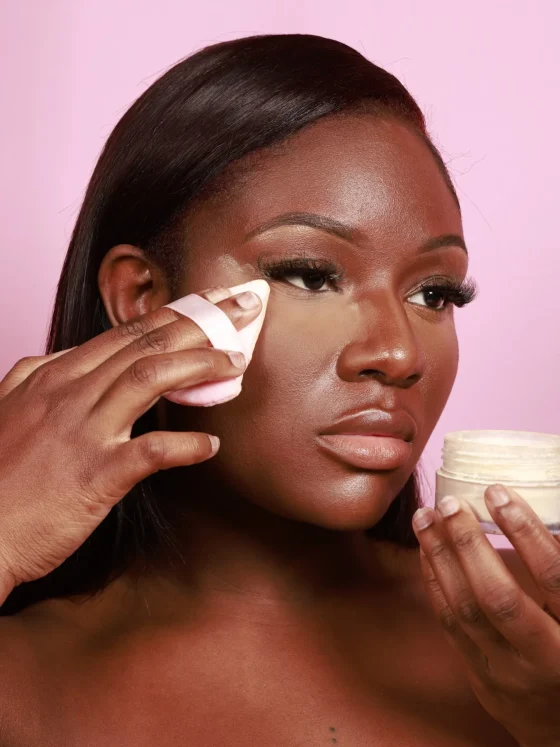
| Setting powder for melanin, no flashback | Translucent or warm tinted | Prevents flashback and keeps finish smooth, not ashy | View on Amazon → |
This article contains affiliate links. We may earn a small commission if you purchase through our links at no extra cost to you.