Across Africa, textile traditions have long used structured colour systems. Fabrics like Kente cloth, Adire, Bògòlanfini, and Shweshwe textile patterns are built around intentional colour groupings.
These textiles often use a dominant tone and its variations to create balance, meaning, and visual harmony within a single visual system rather than random colour mixing.
This idea is what makes monochromatic makeup inspired by African textile colour stories feel so connected to African visual culture. It isn’t about adding colour for effect.
It is about using a single clear colour family and building depth through tone, just as these fabrics do. The goal isn’t heavy contrast, but controlled harmony that still feels expressive and wearable
Learn how to create stunning monochromatic makeup looks inspired by African textiles from our detailed guide.
What Is Monochromatic Makeup and Why It Pairs Perfectly with African Textile Colour Stories
Monochromatic makeup is a technique in which a single colour family is used across the eyes, cheeks, and lips. Instead of mixing different shades, the look is built using tonal variations of the same colour to create a clean, unified finish.
This works especially well on melanin-rich skin because it enhances natural undertones instead of overpowering them. The result is a look that feels smooth, balanced, and naturally defined.
It pairs perfectly with African textile colour stories because both are built on the same design principle: controlled harmony within a single colour system.
Choosing the Right Colour Story from African Textiles
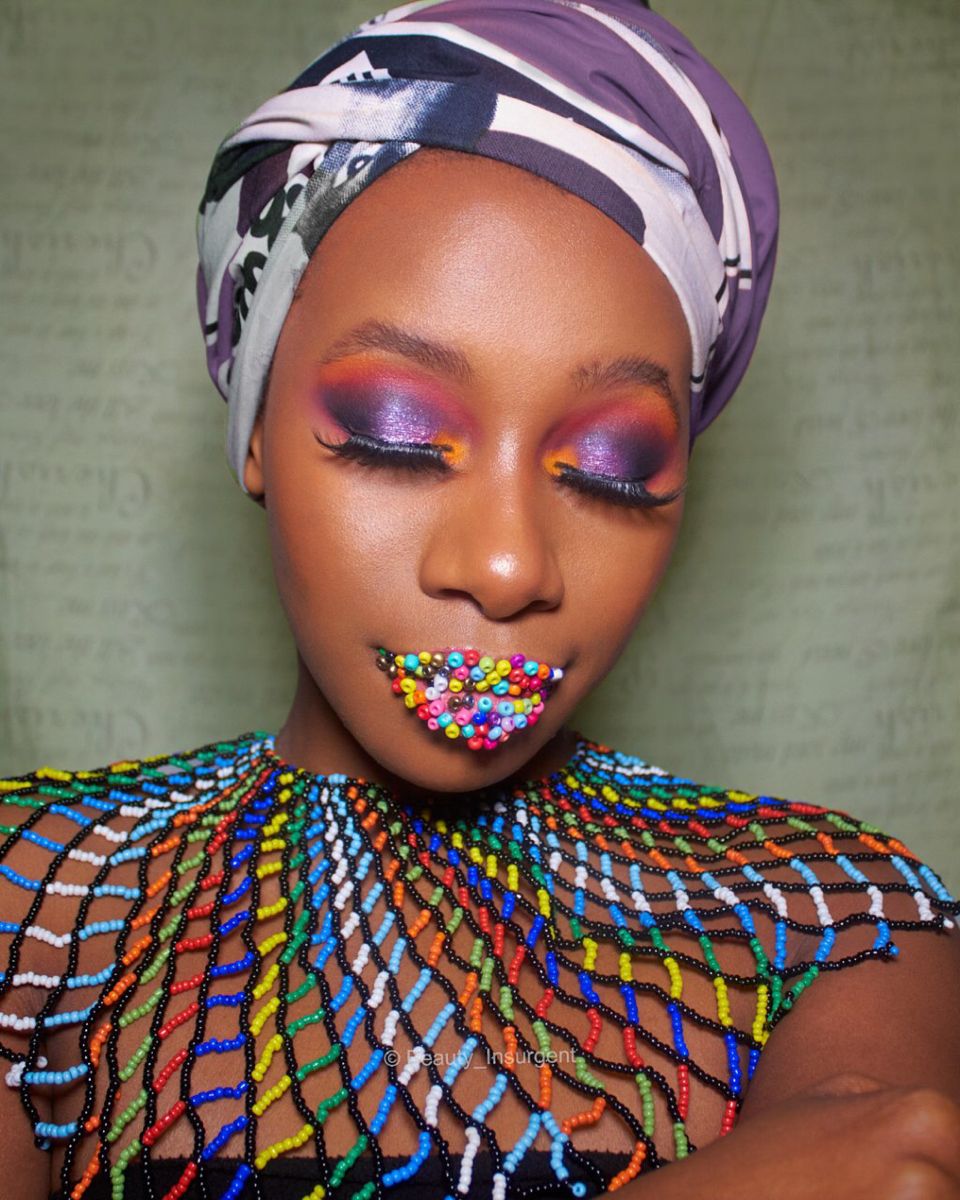
Choosing a monochromatic makeup look starts with selecting a colour story, not just a single shade.
In African textile traditions, colour is often grouped into families that carry mood, meaning, and identity. This same idea can guide how makeup is built.
Here are some common textile-inspired colour directions and how they translate into makeup:
- Warm Earth Tones
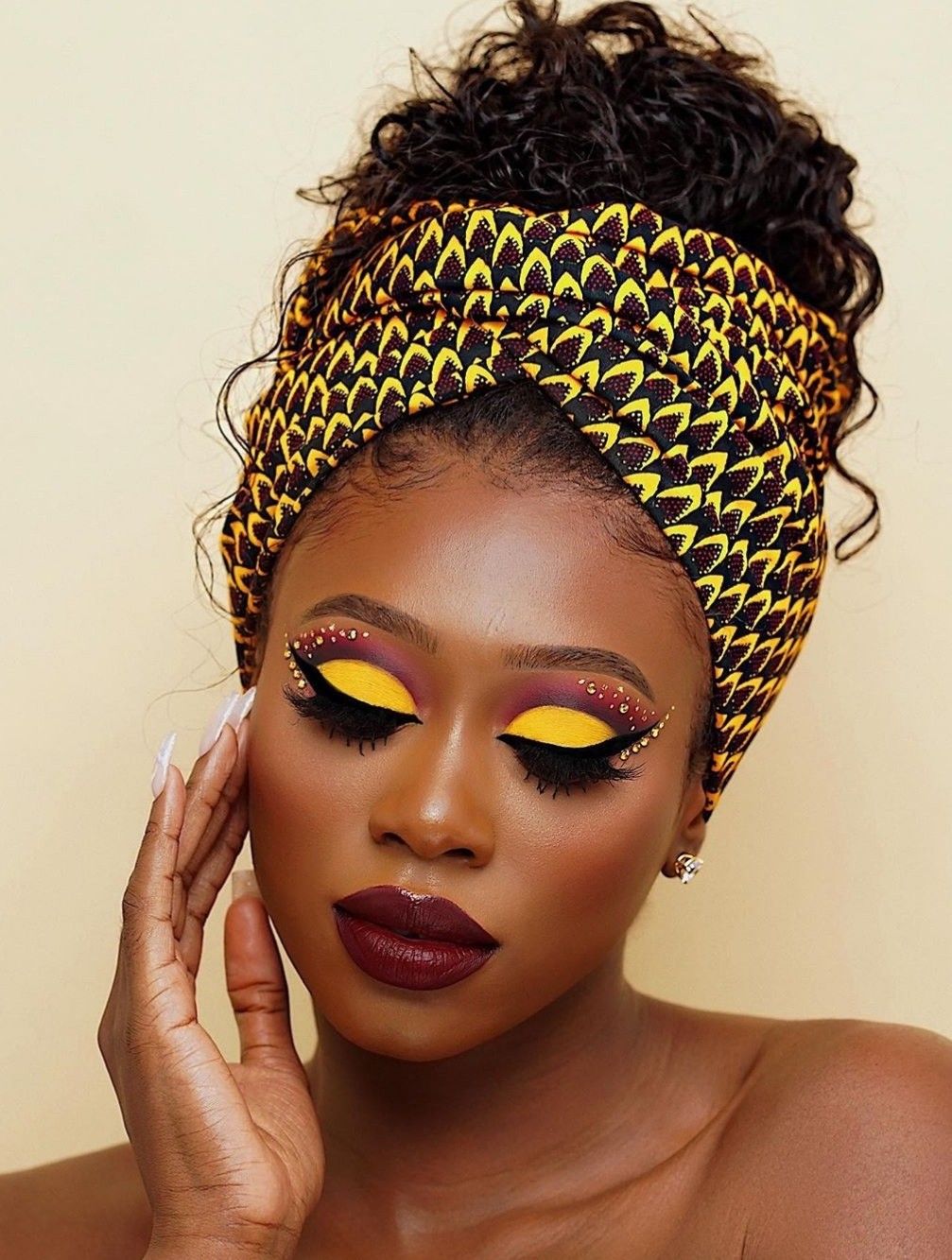
Inspired by vibrant wax prints across African regions. Shades like terracotta, burnt orange, and saffron work well here. In makeup, they create a soft, warm monochromatic look that enhances golden and deep undertones.
- Deep Indigo Blues
Inspired by Adire. These tones range from soft blue to deep navy. In makeup, they can be used as cool-toned monochromatic looks with blue-based eyes, soft berry cheeks, and deeper lip tones within the same family.
- Gold and Yellow Tones
Strongly associated with Kente cloth. These translate into honey, bronze, and golden shimmer shades in makeup, creating brightness and warmth without harsh contrast.
- Earthy Neutrals
Inspired by Bògòlanfini, which uses browns, blacks, and natural whites. In makeup, this becomes cocoa, mocha, and soft beige monochromatic looks that feel understated and wearable.
The most important step is matching your colour story to your undertone.
Essential Products and Tools for Tonal Beauty
To achieve a clean monochromatic look, product choice matters as much as technique.
Because the style uses a single colour family across the face, makeup artists rely on formulas that blend easily, layer well, and maintain a consistent tone.
Here are some essential products and tools:
- Cream, multi-use products
Cream formulas are widely used in monochromatic makeup because they can be applied to the eyes, cheeks, and lips. They blend into the skin more easily than powders and help keep the colour story unified across the face.
- Highly pigmented colour products
Strong pigment is important so the colour does not fade or turn dull after blending, especially on melanin-rich skin tones. This ensures the monochromatic effect stays visible and intentional.
- Setting powder (targeted use)
Used to control shine and help lock cream or liquid products in place, especially in humid or hot climates. It is usually pressed into areas like the T-zone rather than applied heavily everywhere.
- Setting spray
A light mist that helps hold makeup in place and melt all layers together for a smoother finish. Setting spray is often used as the final step to improve wear time and reduce a powdery look.
- Blending tools (brushes and sponges)
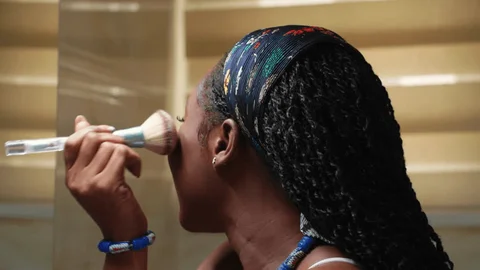
Soft brushes and damp sponges are essential for seamless blending. They help merge the eyes, cheeks, and lips into a single continuous tone without harsh lines.
The core idea behind monochromatic makeup, inspired by African textile colour stories, is simplicity.
You aren’t building complexity through multiple colours, but through how well a single colour family is layered, blended, and applied across the face.
Step-by-Step Monochromatic Makeup Tutorial Inspired by African Textiles
To create a monochromatic makeup inspired by African textiles’ colour, here are some steps to follow:
- Start with clean, moisturised skin: Apply a lightweight moisturiser and allow it to absorb fully. This creates a smooth base so products don’t separate later.
- Apply primer based on your skin type: Use a mattifying primer for oily skin or a hydrating one for dry skin. This helps the makeup last longer in heat and humidity.
- Apply foundation in thin layers, blending evenly with a brush or damp sponge. Build coverage only where needed to keep the skin looking natural.
- Conceal strategically: Apply concealer under the eyes and on areas needing brightening or correction. Blend carefully so it melts into the foundation.
- Set lightly where needed: Use powder only on areas that crease or get oily (like the T-zone). Avoid heavy all-over powdering to keep the monochromatic finish soft.
- Choose your single colour family (textile-inspired tone). Pick one direction, such as terracotta, indigo, gold, or earthy brown, inspired by African textile colour stories.
- Apply eyeshadow using that one colour family: Use a lighter tone on the lid and a deeper version in the crease for depth while staying within the same colour story.
- Apply blush in the same colour direction: Blend softly on the cheeks, building slowly so it connects with the eyes without looking separate.
- Apply lip colour in the same tone: match or slightly deepen it to keep the full face unified.
- Finish with setting spray: Lightly mist to lock all layers together and reduce any powdery finish.
Also Read:
- Setting Powder and Spray: How to Make Makeup Last in African Heat and Humidity
- Foundation Matching for Deep Skin Tones: Why the Shade Range Problem Still Persists
- Blush That Shows on Deep Skin: The Formulas, Shades, and Application Techniques That Work
- Contouring and Highlighting on Dark Skin Without the Ashy Result That Every Tutorial Gets Wrong
Tips for Flawless Tonal Beauty on Melanin-Rich Skin
This is where monochromatic makeup inspired by African textile colour stories becomes especially practical.
It is about making sure the look stays consistent, smooth, and wearable across different skin tones and climates.
- Use different textures within the same colour family, such as matte, satin, and shimmer finishes in the same shade.
- Match colours to undertones: for example, warm undertones work well with terracotta, gold, and orange-based tones, while cool undertones suit berries, plums, and deep blues.
- Blend thoroughly for a seamless finish so there are no harsh lines or patchiness on the skin.
- Build colour gradually rather than applying too much at once, so you can control the intensity and final tone.
- Adjust for heat and humidity by using lightweight layers, setting only oily areas, and finishing with setting spray to help the look last.
The Omiren Argument
Monochromatic makeup is often treated as a styling choice built around simplicity or ease. That framing is too shallow to explain what is actually happening when it is done well.
In African textile systems like Kente, Adire, Bògòlanfini, and Shweshwe, colour is not used as decoration. It is structured as a controlled system in which meaning and balance arise from variation within a single dominant tone.
The design logic isn’t based on contrast, but on internal harmony. Most modern makeup systems move in the opposite direction.
They assume the definition comes from separating features with different colours. Eyes, cheeks, and lips are treated as independent zones that require distinct shades to create impact.
The Omiren Argument is this: Monochromatic makeup, inspired by African textile colour stories, challenges the idea that beauty requires contrast to be visible or sophisticated.
Instead, it uses one colour family as a full-face structure. What looks like minimalism is actually a design discipline, not the absence of colour choice.
Conclusion
Monochromatic makeup inspired by African textile colour stories brings together culture, colour, and simplicity in a way that feels both wearable and intentional.
It takes inspiration from how African fabrics build beauty through structured colour systems and applies the same idea to makeup.
Instead of mixing many shades, the focus stays on one colour family, carried across the face with balance and control.
This makes the look easy to adapt for everyday wear while still being expressive enough for special occasions.
When applied well, it works across different skin tones and holds up in different climates, especially when texture, blending, and setting are done properly.
Frequently Asked Questions
1. What Are the Monochromatic Colours in Makeup?
Monochromatic makeup uses one colour family across the face. You apply different shades of the same colour to the eyes, cheeks, and lips to create a unified look.
2. What Does Monochrome Makeup Mean?
Monochrome makeup means creating a full look using variations of a single colour. The depth comes from light and dark tones, not different colours.
3. Did Ancient Africans Wear Makeup?
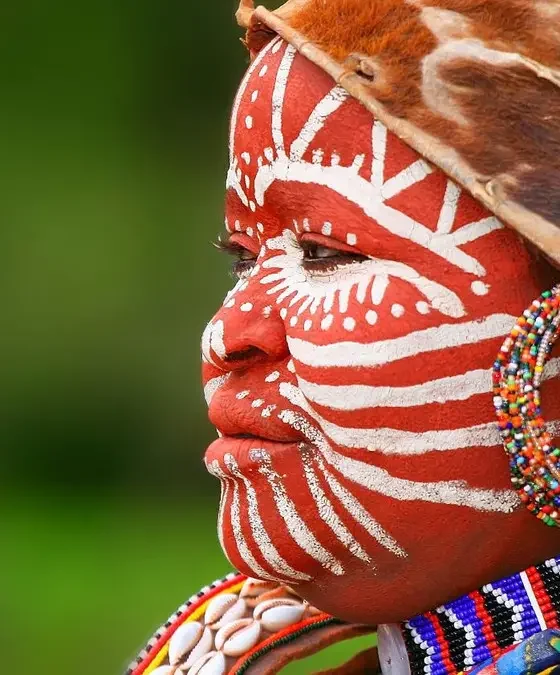
Yes. Ancient Africans used makeup for beauty, rituals, and identity. Egyptians used kohl and minerals, while other regions used clay, charcoal, and natural dyes for decoration and ceremonies.
4. Why Do Africans Put White Powder on Their Faces?
White powder often comes from kaolin clay or chalk. It is used in ceremonies, spiritual practices, rites of passage, and cultural celebrations, depending on the tradition.