The Kingdom of Jimma emerged in the early nineteenth century as one of the five Gibe monarchies in south-western Ethiopia, a region whose cultural landscape nurtured its distinctive dress and coiffure traditions. It consolidated into a centralised state under the leadership of Abba Jifar I around 1830. His reign marked the transformation of Jimma from a cluster of clan-based settlements into a structured kingdom with defined administrative systems, expanding trade networks, and growing diplomatic influence. The kingdom developed a distinctive cultural identity shaped by long‑distance trade, Islamisation, and interactions with neighbouring Oromo and non-Oromo groups.
Antonio Cecchi, who travelled through the Gibe region in 1879–1880, was among the first Europeans to document Jimma Oromo women’s dress in writing. He identified three categories of skin used in garment-making, each with a specific Oromo name: gogaa loonii (cowhide), used primarily for the wandabo; haduu or gogaa reeyee (goat and sheep skin), used for capes and more flexible undergarments; and gogaa bineensaa (wild animal skins, colobus monkey or leopard), reserved strictly for the Luba, those in the ruling age grade of the Gadaa governance system. The material a woman wore was inseparable from her social position.
The preparation of cowhide garments was itself a practice requiring considerable skill. Fresh hides were scraped clean and stretched in the sun, then softened over several days with butter, animal fat, or plant oils, a process that prevented cracking and gave the leather a smooth, pliable texture. Some hides were smoked to improve durability and produce a warm brown tone. Leopoldo Traversi, the Italian photographer who visited Jimma in the 1880s, remarked on the distinct scent produced by bark treatments, including birbira, used to preserve the leather against rot. This scent, he noted, was a recognisable marker of Oromo identity.
The dress traditions of Jimma Oromo women, cowhide wandabo, beaded gurda, and sculpted coiffures, encode identity, lineage, and sovereignty in every garment.
The Gurda Belt: Beadwork and Identity
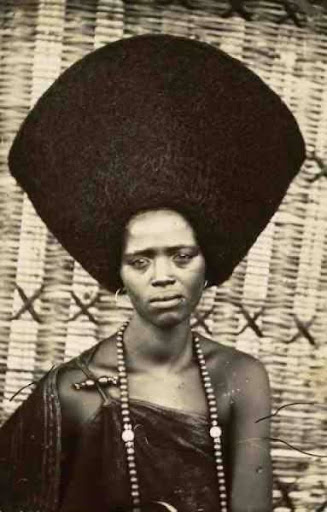
Of all the garment elements documented in Jimma, the gurda (also recorded by Cecchi as sabaqa) is perhaps the most precise expression of how the social meaning of Jimma Oromo women’s dress tradition was carried. The gurda was a wide, stiff leather belt, heavily encrusted with white and coloured glass beads, cinching the wandabo at the waist. Cecchi described beads being pierced through the hide or sewn onto its edges, creating a garment that was not only visual but also auditory: the beads clicked against the stiff leather as the wearer moved, producing a rhythmic sound that was part of the garment’s identity. Specific bead patterns on the gurda indicated clan affiliation and family wealth. This was not decorative excess. It was a precise communication system, readable by anyone within the community.
The qollo (a skin or leather cloak worn over the shoulders) and the wandabo (a wrap-around skirt reaching the knees) together formed the core of daily dress, while the gurda and associated jewellery signalled social standing with precision. To understand this system more fully, it helps to read alongside The Silent Dialogue: Zulu Beadwork as an Archive of Intent, which explores how beadwork functions as structured language across African dress traditions. This parallel illuminates the Jimma Oromo case precisely because the traditions are distinct.
Jules Borelli, whose observations from his travels in the Gibe region in the late 19th century are preserved in the collections of the Musée du quai Branly, noted that, for Jacques Chirac, the abundance and quality of jewellery signified wealth and social standing, particularly among women connected to the royal court. Necklaces of imported glass beads and cowrie shells were widely worn; large metal hoop earrings were common; and bead sets were worn as bracelets and anklets. The French explorer’s records corroborate what the material evidence suggests: Jimma Oromo women’s dress was a structured, legible system rather than a collection of decorative choices.
The beads clicked against the stiff leather as the wearer moved. The gurda was not jewellery. It was a sentence, in a language the whole community could read.
Coiffure as Architecture and Identity
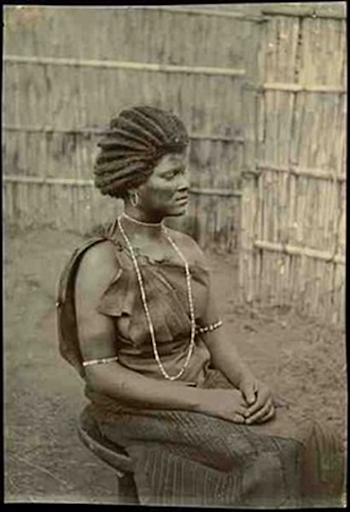
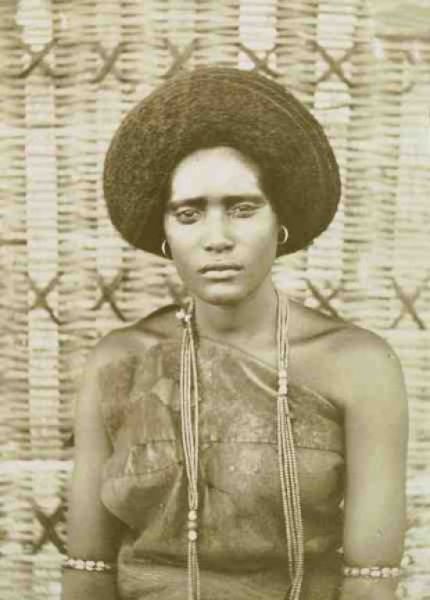
Traversi’s photographic portfolio from the 1880s, held in the Traversi Collection of the Società Geografica Italiana, documents one of the most architecturally ambitious traditions of hairstyles on the continent. The coiffures he photographed on Jimma Oromo women extended outward in a smooth, circular silhouette, forming a rounded, halo-like frame around the head, supported internally by plant fibres woven into the structure to prevent collapse. These were not casual arrangements. They took considerable time and skill to construct.
The coiffures reflected age, marital status, and social identity. Traversi consistently noted their volume, symmetry, and what he described as an architectural quality: the visual impression of a carefully sculpted crown. What Traversi was registering, though he lacked the framework to name it properly, was a tradition of structured self-presentation in which every element, the scale of the coiffure, its symmetry, and the materials incorporated into it, communicated information about the woman wearing it.
Trade, Cotton, and the Politics of Jimma Oromo Women’s Dress Under Abba Jifar II
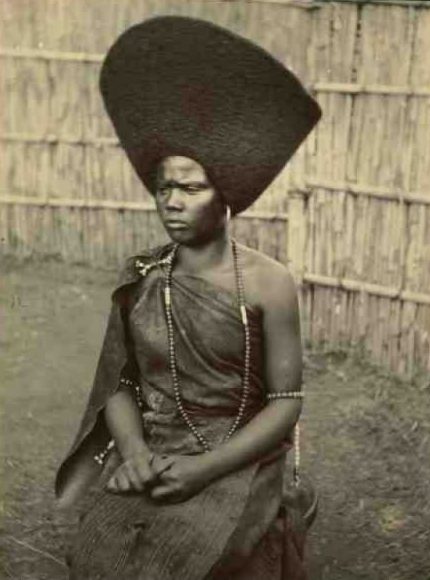
By the time of Abba Jifar II, the Kingdom of Jimma sat at the intersection of multiple long-distance trade networks. Caravans from Gojjam and Shewa brought finely woven Shema cloth, white cotton wraps (netela, kuta and gabi), and textiles with decorative borders. Through routes passing via Harar, Zeila, and Massawa, merchants introduced fine cloth from Yemen and the Arabian Peninsula, striped and patterned textiles from the Hadhramaut, and Indian Ocean fabrics traded through Aden and the Gulf.
As Traversi documented in the Società Geografica Italiana’s account ‘Escursione nel Gimma’, highland cotton garments began appearing in Jimma by the late 19th century. The ruling class increasingly wore it during this period. Cotton was not grown locally; it arrived through trade routes from Gojjam, Shewa, and other highland regions. These garments became symbols of refinement and social standing.
The bright white colour of highland cotton carried its own meaning. Clean, luminous white cloth signalled wealth, urban sophistication, and connection to merchant families or the royal court. In a region where leather had long been the dominant material, cotton introduced a new aesthetic that is lighter and softer and associated with the highland Christian kingdoms to the north. Wearing cotton was not simply a fashion choice; it was a statement of status and cosmopolitan identity. The broader history of cotton’s movement across civilisations is examined in The Global Migration of Cotton: How One Fibre Connected Civilisations and Closets.
Oromo identity is fundamentally pastoralist, rooted in livestock and cowhide. Their clothing traditions centred on hide items such as the wandabo and the woya (a toga-like robe of softened hide worn by men). Cotton shema weaving was a different technology brought from the highlands. The distinction mattered then, and it matters now to any account that takes Oromo material culture seriously on its own terms. For a parallel examination of how dress functions as a cultural declaration in a different context, see When Dressing Becomes Declaration: Clothing as Cultural Identity.
ALSO READ
- Dressed for the Gods: How Yoruba Ceremonial Aesthetics Continue to Influence Contemporary Fashion
- How Fashion Became the Frontline of Cultural Sovereignty in the Post-Colonial World
- Mud Cloth as Fine Art: The Cultural Authority of Bogolanfini
Cultural Criticism & Aesthetics
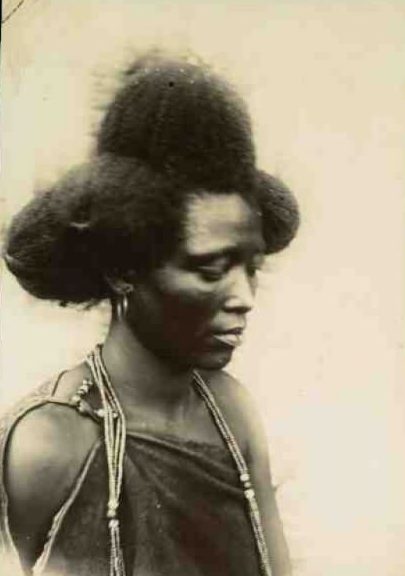
The wandabo is not a relic. It is an argument.
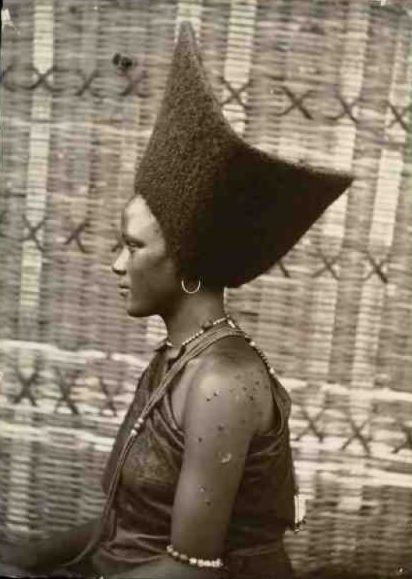
Before cotton arrived along the Gibe trade routes, before highland Shema cloth made its way south from Gojjam and Shewa, Jimma Oromo women dressed in cowhide. Not as a concession to poverty or geography, but as a deliberate, technically sophisticated, and socially encoded practice. The wandabo, a wrap-around cowhide skirt, was not merely clothing. It was a statement about who the Jimma Oromo were, where they came from, and what they understood of beauty, status, and the world.
Documentation & Preservation of Jimma Oromo Women’s Dress Traditions
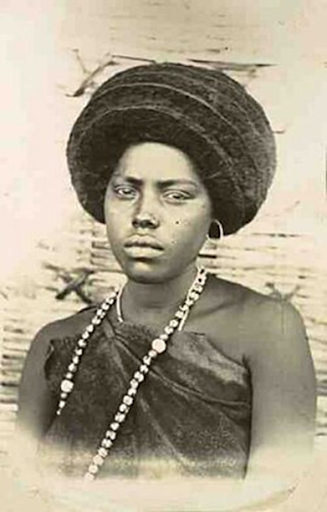
The earliest visual records of Jimma Oromo women’s dress exist because three European men chose to document what they saw: Cecchi in writing; Borelli in both writing and images now held by the Musée du quai Branly – Jacques Chirac; and Traversi through the lens of a camera. Their accounts are invaluable. They are also incomplete in specific ways. They describe from the outside. They do not carry the internal knowledge of what it meant to prepare a wandabo, to choose a particular bead pattern for a gurda, to build a coiffure for a ceremony rather than a Tuesday.
What these records establish, beyond any reasonable dispute, is that Jimma Oromo women’s dress in the 19th century constituted a material language of considerable complexity. Cowhide garments encoded pastoral identity and environmental knowledge. Beadwork communicated clan and status. Coiffures marked age and social position. Jewellery signalled wealth and court connection. Every element of the dress tradition was doing work.
The core argument this article makes is this: Jimma Oromo women’s dress was not clothing in the reductive sense; it was an organised, legible system of self-definition, operating through material knowledge, craft skill, and a grammar of adornment that encoded identity from the gurda belt outward. To read it as decorative is to misread it entirely. To treat it as a historical curiosity is to misunderstand what is at stake when that knowledge erodes. The wandabo, the beaded gurda, and the sculpted coiffure are not relics of a past that must be mourned. There are arguments about who the Jimma Oromo are, expressed in leather, beads, and the specific knowledge of how to prepare a hide so that it lasts.
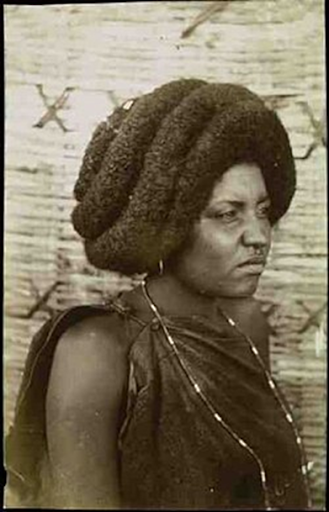
Yet today, these practices face increasing pressure and the risk of erasure as modern aesthetics dominate and imported styles become the norm. Across Ethiopia, highland cultural symbols, especially white cotton shema garments such as the habesha kemis paired with netela, have become widely promoted as the national standard of “Ethiopian dress”. As these highland styles spread through the media, urban centres, and national celebrations, communities like the Jimma Oromo often feel compelled to adopt them to “blend in” with the broader Ethiopian cultural identity. This shift places authentic traditions at risk, not because they lack beauty or value, but because they do not align with the modern, homogenised image of Ethiopian fashion that has gained prominence.
The pressure to conform to highland aesthetics can unintentionally marginalise Jimma’s pastoralist heritage. Younger generations may view cowhide garments as outdated. opting instead for cotton styles associated with urban life and social mobility. As a result, the knowledge of hide preparation, beadwork, and sculptural hairstyling that was passed down through generations faces the imminent danger of erasure.
Preserving these traditions is essential not only for cultural continuity but also for honouring the diversity within Ethiopia’s many identities. Jimma’s clothing and hairstyles remind us that Ethiopian fashion is not monolithic; it is a mosaic of regional histories, ecological adaptations, and artistic innovations. Here at Omiren Styles, these histories continue to be celebrated. They affirm that the women of Jimma were not simply dressing; they were designing, innovating, and defining beauty on their own terms. Their clothing, hairstyles, and jewellery form a cultural archetype that deserves recognition, respect, and continuity.
Frequently Asked Questions
1. What is a wandabo?
The wandabo is a wrap-around skirt made from heavily worked cowhide, worn as the primary garment by Jimma Oromo women in south-western Ethiopia. It was the foundation of the Jimma Oromo women’s dress tradition, central to both daily life and social identity. Antonio Cecchi documented it in the 1880s, noting that its cowhide construction provided structural protection suited to the Jimma landscape.
2. What did the gurda belt signify in Jimma Oromo women’s dress?
The gurda (also recorded as ‘sabaqa’) was a wide, stiff leather belt encrusted with white and coloured glass beads, worn to cinch the wandabo at the waist. Specific bead patterns on the gurda communicated clan affiliation and family wealth. Cecchi recorded that the beads clicked rhythmically against the leather as women walked, making the garment as auditory as it was visual. The gurda functioned as a structured social communication system, not a decorative accessory.
3. What materials did Jimma Oromo women use for their clothing?
Antonio Cecchi documented three primary categories of skin in the 1880s. Gogaa loonii (cowhide) was used for the wandabo and the gurda belt. Haduu or gogaa reeyee (goat and sheepskin) was used for softer capes and undergarments, often treated with butter or oil. Gogaa bineensaa (wild animal skins, including colobus monkey or leopard) was reserved strictly for the Luba, those holding the ruling age grade within the Gadaa governance system.
4. How did Jimma Oromo women prepare cowhide garments?
The preparation process involved scraping and sun-stretching fresh hides, then softening them over several days with butter, animal fat, or plant oils. Some hides were smoked to improve durability and produce a warm brown colour. Decorative beads and cowrie shells were sewn onto the leather using fibre cords. Leopoldo Traversi noted that bark treatments, including birbira, were used to preserve the leather against rot and produced a distinct scent regarded as a marker of Oromo identity.
5. What was the significance of coiffures in Jimma Oromo women’s dress?
Traversi’s photographic records from the 1880s document coiffures of considerable architectural scale: large, rounded structures supported internally by plant fibres, extending outward in a circular silhouette. These coiffures were not simply aesthetic choices. They reflected age, marital status, and social identity within Jimma Oromo society. The scale and symmetry of the coiffure communicated the wearer’s position in ways that were legible to the community.
6. How did trade routes influence the dress of Jimma Oromo women?
By the reign of Abba Jifar II, the Kingdom of Jimma was connected to trade routes bringing highland Shema cloth from Gojjam and Shewa and imported textiles from Yemen, the Arabian Peninsula, and the Indian Ocean networks via Harar, Zeila, and Massawa. These imports were used side by side: highland cotton became a prestige marker for the elite, whilst cowhide remained the indigenous foundation of Oromo dress.