I still remember the last time I went to Kofar Mata Dye Pit in Kano on a quiet Harmattan morning—the air smelt of ash, wet dye, and cold dust. A soft haze lifted above the pits, blurring the early sun like fabric stretched over water. To my right, an elderly embroiderer, Malam Idris, worked beneath a neem tree, his fingers moving with the calm precision of someone stitching memory itself.
I said, “Sannu da aiki, amma wanna kalar tayi kyau, baba.” “Well done, sir, this design looks wonderful.”
He quickly responded to me by saying.
“Embroidery is not just work for us,” he continued without raising his head. “It is our living identity.”
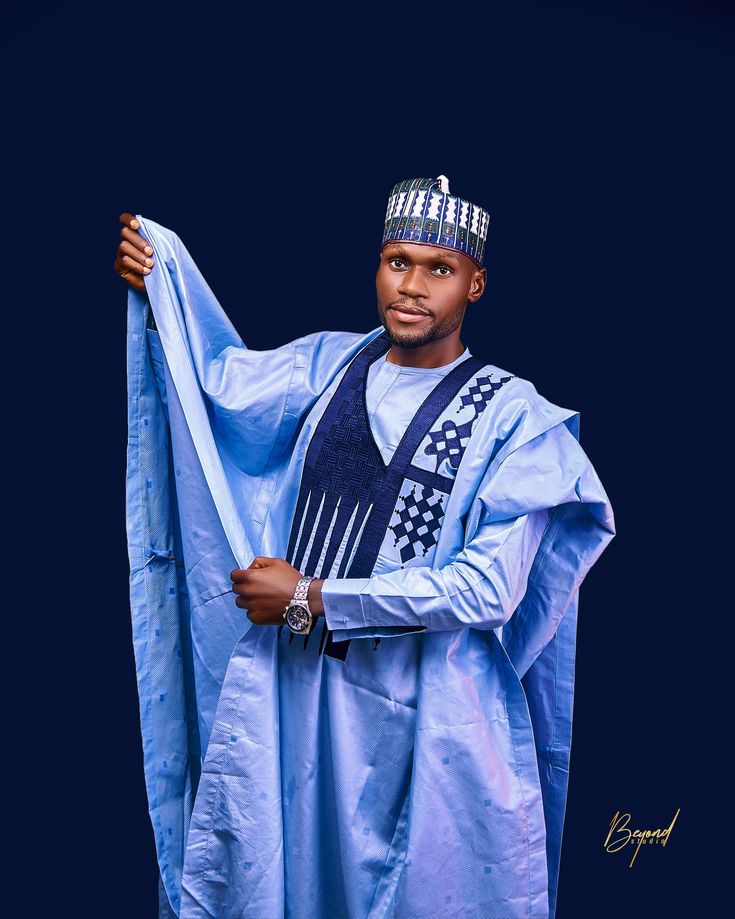
In that moment, watching him loop silver thread into deep navy cloth, I understood what every Hausa family has always known: embroidery is more than decoration; it’s an identity carved into fabric. From the sweeping, regal lines of Babban Riga to the subtle motifs on everyday kaftans, Hausa embroidery carries the weight of ancestry, pride, and artistry dating back hundreds of years.
This feature explores how that language of stitches evolved, how it shaped us, how it still defines us, and how it continues to reinvent itself in a world that is racing forward.
A journey through centuries of stitches, uncovering how Hausa embroidery became a living language of identity, craftsmanship, and cultural memory across Northern Nigeria.
Origins: The Stitch That Began a Civilisation

Long before it became a modern metropolis, Kano served as a vital hub on the trans-Saharan trade route. Among salt merchants, leather workers, and storytellers, embroiderers held a quiet but powerful place.
According to historian Malam Bashir Tukur, embroidery among the Hausa dates back to at least the 14th century, when threads of silver and cotton travelled from North Africa down into Hausaland.
“Kano was a textile city before Lagos became a port,” he told me in his study lined with old maps. “The needle built our reputation long before the railway did.”
The earliest Hausa embroidery, known as “dinkin zare”, was bold, symbolic, and deeply connected to status. Chiefs and scholars wore large robes with broad embroidered chests, the famous Babban Riga, woven to signify power, learning, and spiritual grounding.
Standing in Kurmi Market, touching fabric that echoes those ancient symbols, you feel the continuity of a world that refused to forget its beginnings.
Motifs and Meaning: The Hidden Language in Every Thread
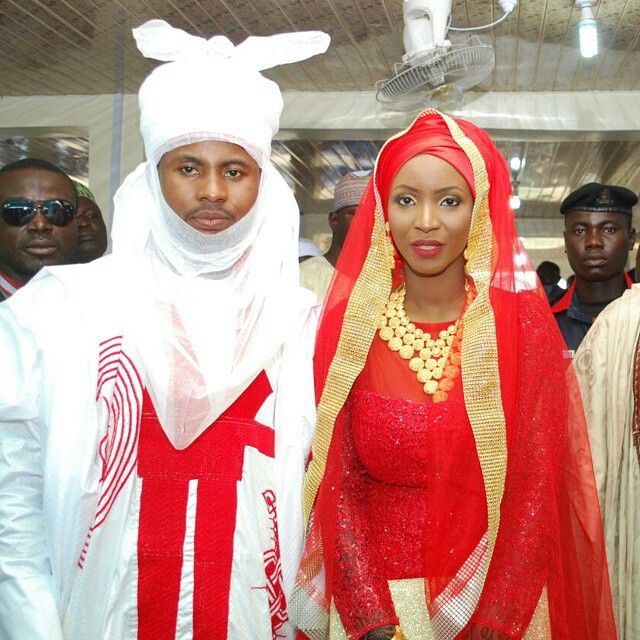
Hausa embroidery is not random beauty. Every motif carries a story.
During my visit to Zaria, a young designer, Kamaraddin Musa, laid out a row of robes on her studio floor.
“Look closely,” he said, guiding my palm over the raised lines. “These stitches are alphabets.”
Here are some of the motifs he explained:
- Giwa (Elephant pattern): Signifies strength, gentle leadership, and endurance.
- Kaftan: A long, modest design
- Alkyabba
- Falmaran
- Tsamiya (Tamarind pod): Symbol of prosperity and continuity.
- Ruwan Bagaja (Flowing Water): Represents purity and spiritual journey.
- Tambarin Sarki (King’s emblem): Reserved for nobles, scholars, and lineage custodians.
The magic of Hausa embroidery lies in this silent grammar: a single garment can communicate status, tribe, lineage, or even personal philosophy without a spoken word.
The Artisans: Masters of Needle, Memory, and Discipline
In the ancient city of Daura, I spent an afternoon with 72-year-old master embroiderer Baba Maikudi, who has stitched for three Nigerian presidents. His workshop was dimly lit, the only brightness coming from the metallic threads he held between his fingers.
“My son,” he said, leaning toward me, “embroidery is patience woven into cloth.”
He showed me the rhythm of his craft:
- Thread between fingers
- Needle gliding through cotton
- Fabric folding like water
- A breath, a pause
- Another stitch
He told me that when he began at age 14, one robe took seven weeks. Today, with technological and machine assistance, many are finished in three days, but the hand-stitched pieces remain treasured heirlooms.
“Machine embroidery is fast,” he shrugged, “but the cloth will always remember the human hand.”
Modern Reinvention: When Tradition Meets Runway
Across Abuja and Kaduna, a new generation of designers is pushing Hausa embroidery into global fashion spaces.
During Kano Week, I went there with my friend Kamaraddin from Zaria to present his brand, Zazzau Smart Clothing. He wants them with a variety of modern designs of Babbar Riga (Agbada), Falmaran, and Alkyabba.
I said, “Abokina kayi kokari.” “You really try with this design.”
He replied by raising one of the alkyabba and said, “This is Moroccan alkyabba. I always blend modernity with our tradition.”
From TikTok creators showcasing “classic vs. modern dinki,” to diaspora stylists pairing Babban Riga with loafers and sunglasses, Hausa embroidery is evolving into a statement of global African luxury.
And yet, even in reinvention, the design language never strays too far from its roots.
ALSO READ:
- The Beauty of Zani da Riga: The Art of Storytelling Through Fashion
- Babbar Riga: The Garment That Connects Northern Nigerian Tribes
- 5 Best Traditional Caps for Northern Nigerian Men in 2025.
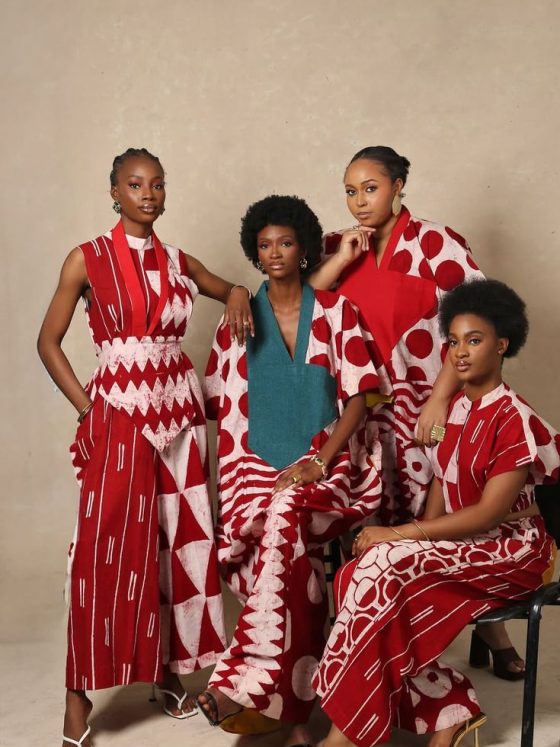
The Colour Language of Hausa Women’s Dressing
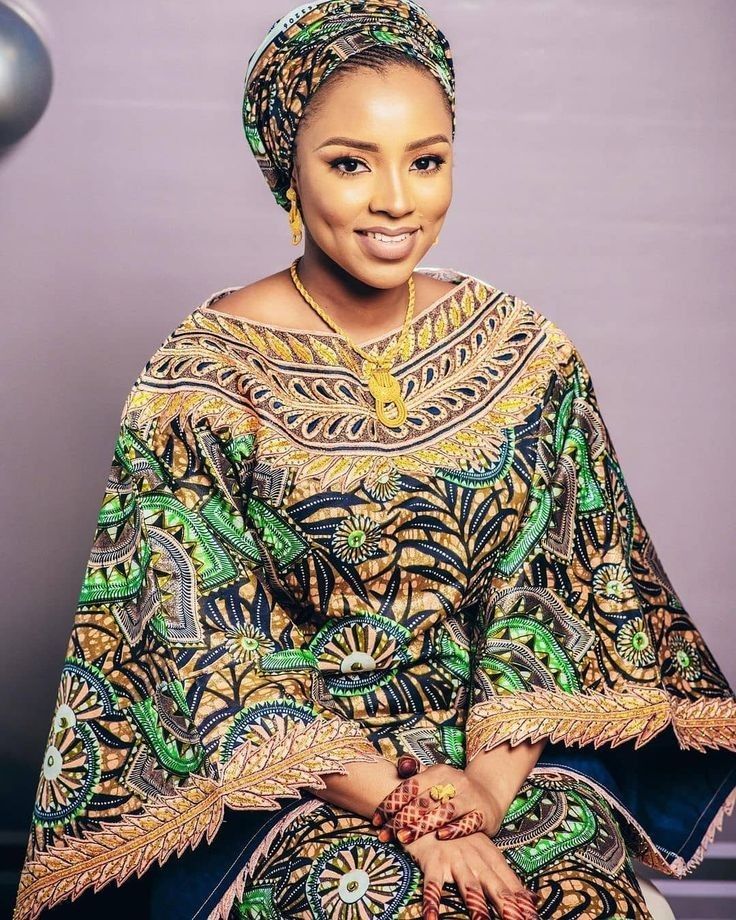
Among Hausa women, colour is not merely aesthetic; it is a quiet, eloquent dialect that speaks of age, modesty, celebration, and belonging. Step into any gathering in Kano, Katsina, or Zaria, and the first thing you notice is the choreography of fabric: bold wrappers, soft veils, shimmering laces, and flowing zane moving like desert waves in evening light. But beneath that beauty lies meaning.
Traditionally, younger girls gravitate toward bright, lively colours: emerald green, coral orange, sky blue, and sunflower yellow. “Colour is joy,” a mother once told me in Kofar Gayan Market as she helped her daughter choose a wrapper. These shades reflect youthfulness, innocence, and the vibrancy of early womanhood.
Married women, however, often choose deeper, richer tones, such as wine, royal blue, dark green, gold, and burgundy. These colours signal maturity and elegance, carrying the quiet confidence expected of a woman who now represents her household. Gold, primarily known locally as zari, is tied to celebration and prestige; its shimmer is seen at weddings, naming ceremonies, and festive gatherings.
Religious influence also shapes colour choices. On Fridays, during Eid, or for Qur’anic events, women often choose white, symbolising purity and spiritual intention. You’ll also find soft pastels during Ramadan: dusty rose, cream, baby blue, and colours that rest lightly on the eyes, mirroring the serenity of the month.
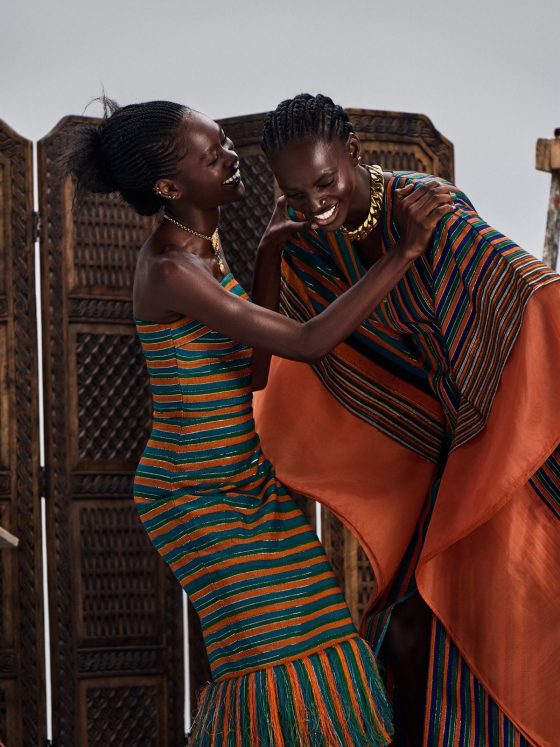
But today, as modern Hausa fashion evolves, women blend tradition with trend: Ankara prints with bold contrasts, Dubai abayas in jewel tones, and northern atamfa designs mixing cultural motifs with global palettes. Yet even in this evolution, one truth remains: colour is a woman’s first introduction before she speaks.
As I left the dye pits that morning, the sun finally climbed high enough to warm the earth. Malam Idris folded his finished robe across his lap, the threads glimmering like quiet stars.
“Every stitch is a prayer,” he said softly.
Walking away, I realised why Hausa embroidery refuses to fade. It is not just cloth. It is not fashion It is living memory, stitched by ancestors, worn by the present, preserved for generations we will never meet.
And in every robe, every motif, every thread, we hear the same truth:
FAQs
1. Why is Hausa embroidery so detailed and complex?
Because it originated from a culture that values artistry, scholarship, and identity, embroidery became a way for men, especially scholars, nobles, and traders, to express dignity and depth without resorting to loud displays.
2. Can women wear Hausa embroidered clothing?
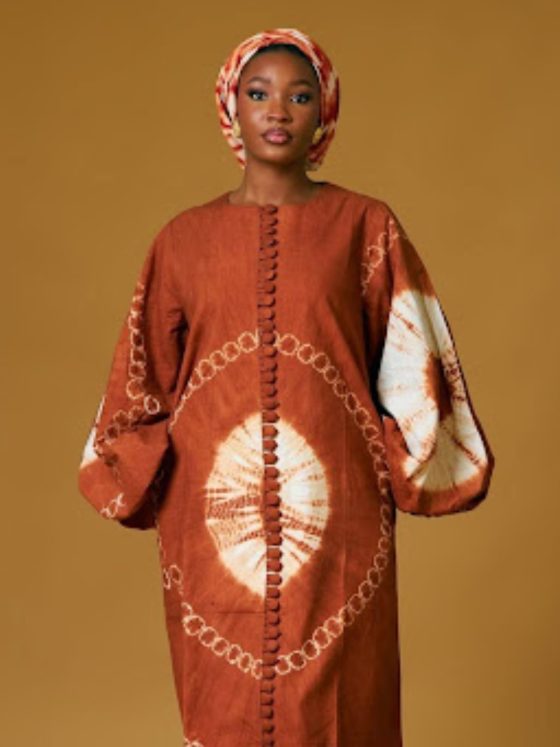
Absolutely. While men traditionally dominated the styles, modern designers now create embroidered abayas, kaftans, turbans, and jackets for women, blending heritage and contemporary elegance.
3. Is machine embroidery considered inferior?
Not inferior, just different. Machine embroidery is accessible and affordable. Hand-stitched pieces, however, remain the crown jewels because they contain time, labour, and human intentions.
4. What motifs should a first-time wearer start with?
Start with Ruwan Bagaja or Tsamiya, neutral, elegant, and suitable for all ages and occasions.
5. Why do Hausa embroidered robes often look majestic or “royal”?
Because they were historically worn by emirs, scholars, and respected men, the grandeur of the robe, its width, its fall, and its deep motifs were meant to reflect wisdom, dignity, and spiritual presence.