Inside Harar Jegol’s ancient walls, Harari women built one of Africa’s most precise dress traditions, one shaped by Islamic scholarship, Indian Ocean trade, and centuries of deliberate aesthetic judgement. The global fashion industry has yet to reckon with it properly.
Some cities preserve their history for visitors, and others simply live it. Harar Jegol, in eastern Ethiopia, is the second kind. A UNESCO World Heritage Site since 2006, the walled city holds within its five gates a civilisation that has been refining itself for the better part of a millennium. Its narrow alleys, its whitewashed homes, its network of shrines, and its centuries of Islamic scholarship and Indian Ocean trade: all of it produced something the global fashion conversation has consistently underestimated. A woman’s dress tradition of surgical precision, in which every garment is a text, and every textile decision is an argument.
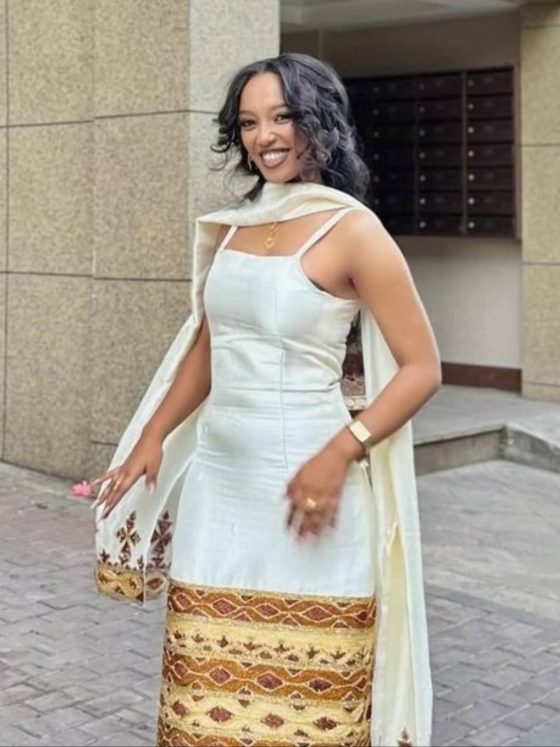
Harari women’s clothing is not ceremonial dress that surfaces at festivals and retreats only to be stored. It is a complete, daily system of meaning, one that encodes lineage, marital status, spiritual practice, and social authority into cut, colour, and embroidery with more specificity than most contemporary fashion brands manage across an entire collection. The siyasa headpiece, the melfota headwrap, the Tey Eraz and Gey Eraz dresses, and the embroidered Gey Gannafi trousers are not separate garments. They are a language, and Harari women have been its fluent authors for generations.
Inside Harar Jegol’s ancient walls, Harari women built one of Africa’s most precise dress traditions. Here is what the global fashion industry has yet to reckon with properly.
The Siyasa Zergef: A Headpiece With the Authority of a Crown
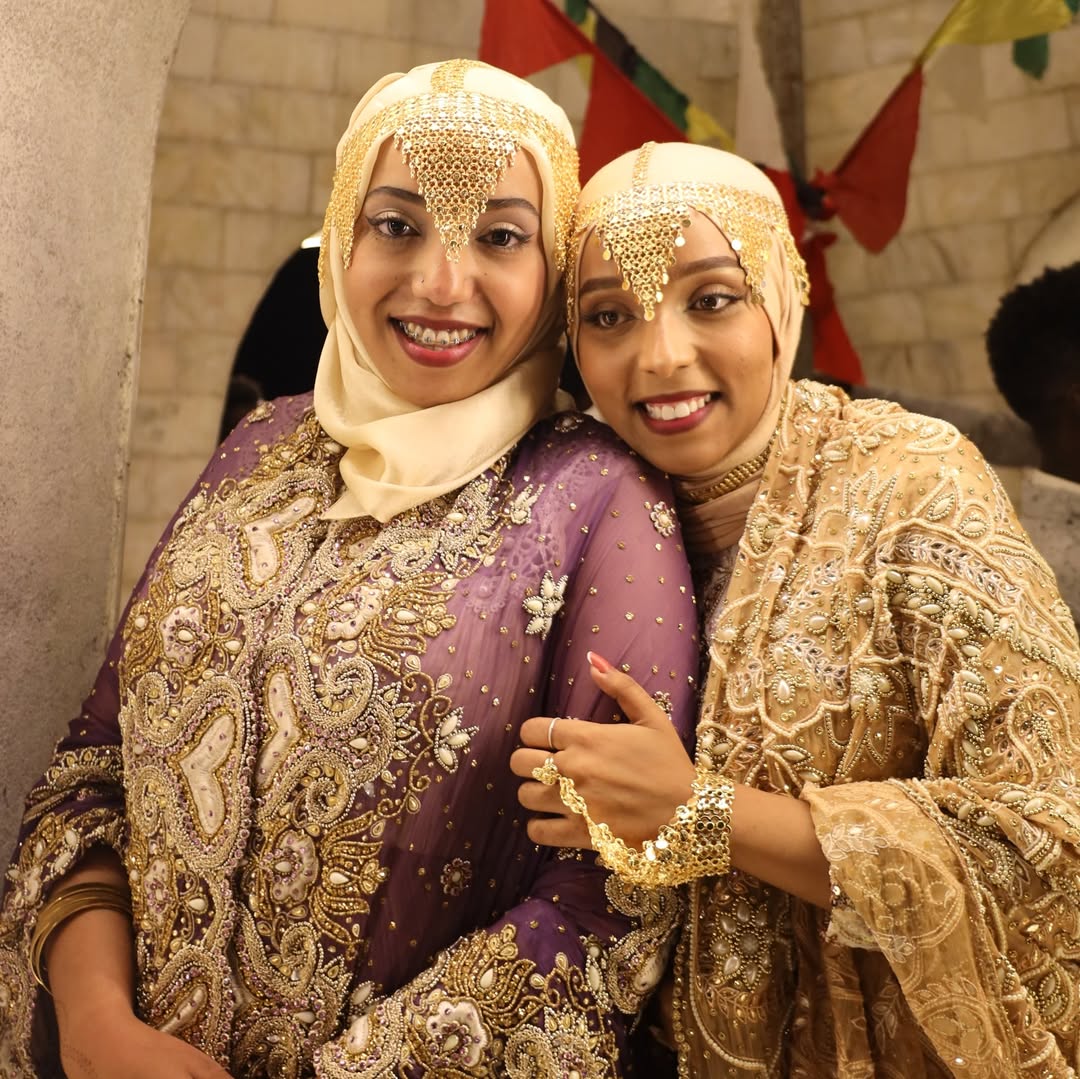
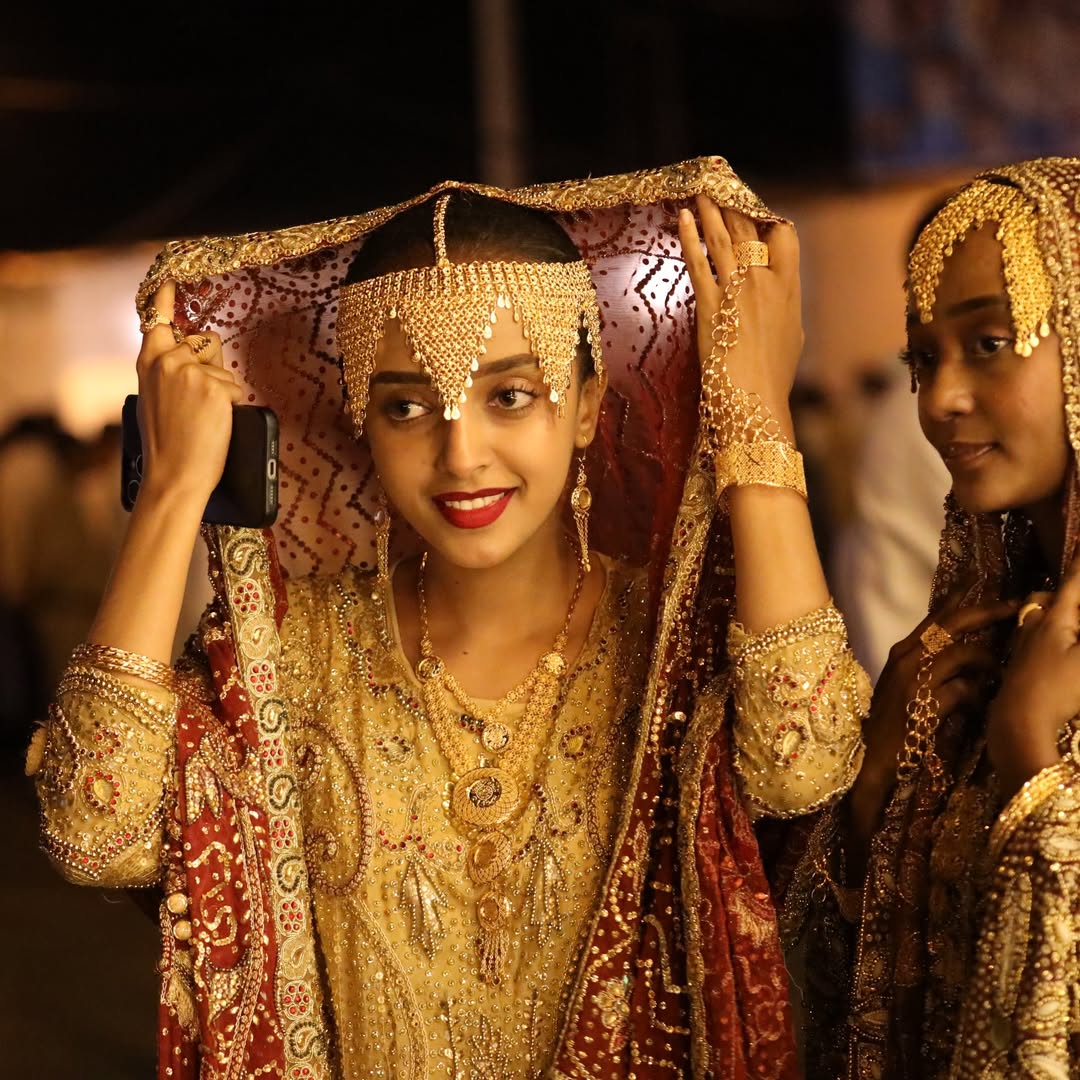
The siyasa does not decorate itself. It declares. This structured, embroidered headpiece sits at the crown of the Harari dress system with the authority of something that has never needed to compete for attention. Its metallic thread embroidery carries the same geometric language found in the carved woodwork of Harar’s domestic architecture: angular, precise, unapologetic. The siyasa belongs to the same category as the finest headpieces in couture history, not because Harari women borrowed from those traditions but because they solved the same formal problem with greater depth of meaning.
Every detail of the siyasa communicates. Its construction signals lineage. Its embroidery patterns place the wearer within a social and ceremonial order. The occasions on which it is worn, and the specific form it takes for each, carry information that a fluent reader of Harari’s visual culture can decode without a word being spoken. The fashion industry has spent decades trying to build garments that communicate identity at this level of specificity. The siyasa have been doing it for centuries.
The Melfota: A Headwrap With Runway Fluidity
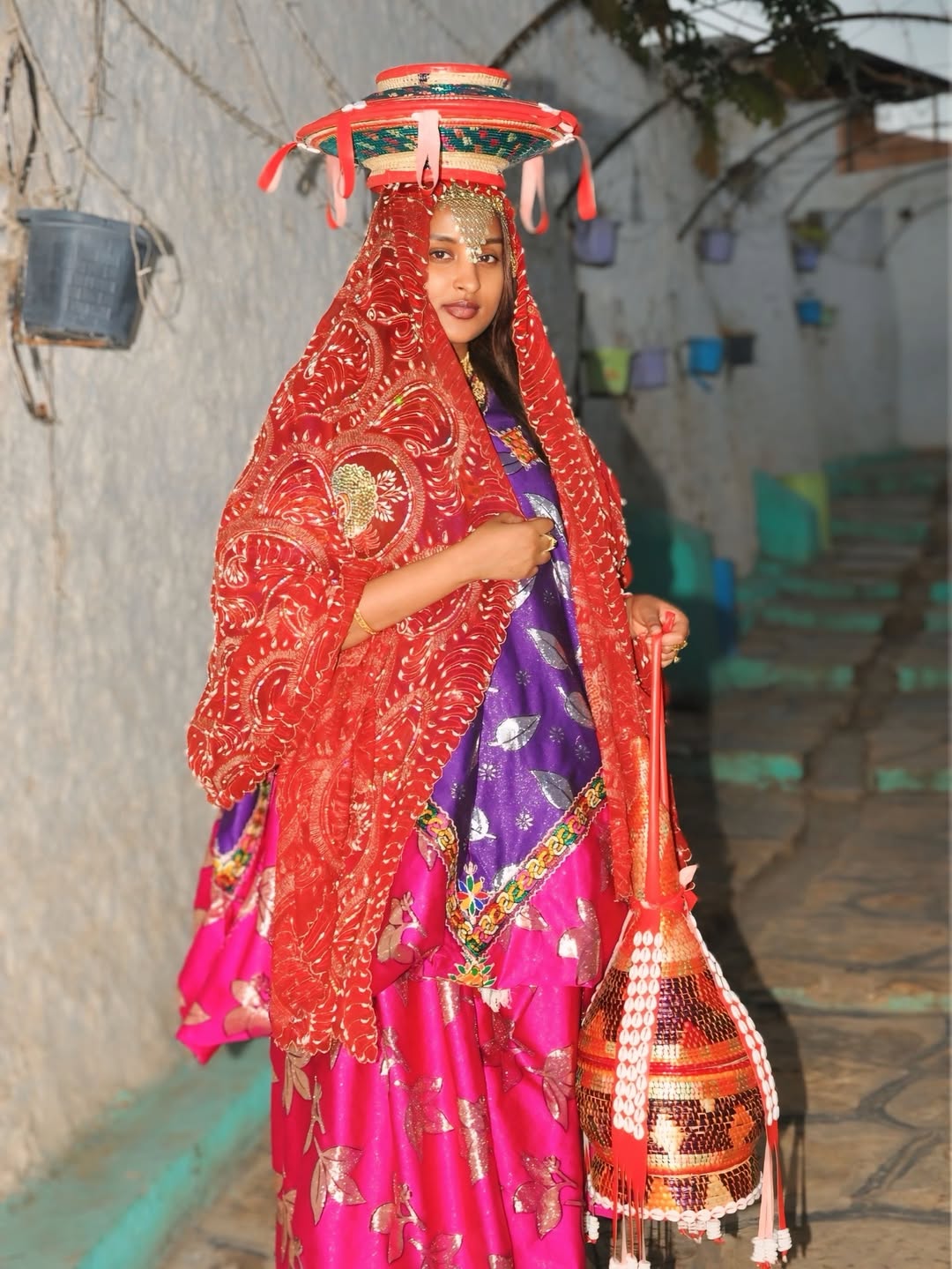
The melfota is the movement within the architecture. Where the siyasa commands stillness, the melfota responds to the body in motion: a headwrap tied with practised precision that drapes with the kind of fluid weight luxury textile houses spend considerable research budgets trying to replicate. Its colour palette is not a decorative choice. Deep jewel tones, luminous whites, warm earth shades each carry distinct social and ceremonial information, shifting the reading of the whole look depending on context, occasion, and the specific knowledge of the person reading it.
What makes the melfota particularly significant is that it is worn daily and not reserved. Not brought out for the ceremony and otherwise stored. This level of draping intelligence and colour fluency is exercised every day in Harar, passed between generations as practical knowledge rather than preserved as ritual. In the global fashion world, the editorial headwrap is a styling moment. In Harar, it is a Tuesday.
The Gufta of Harari Women
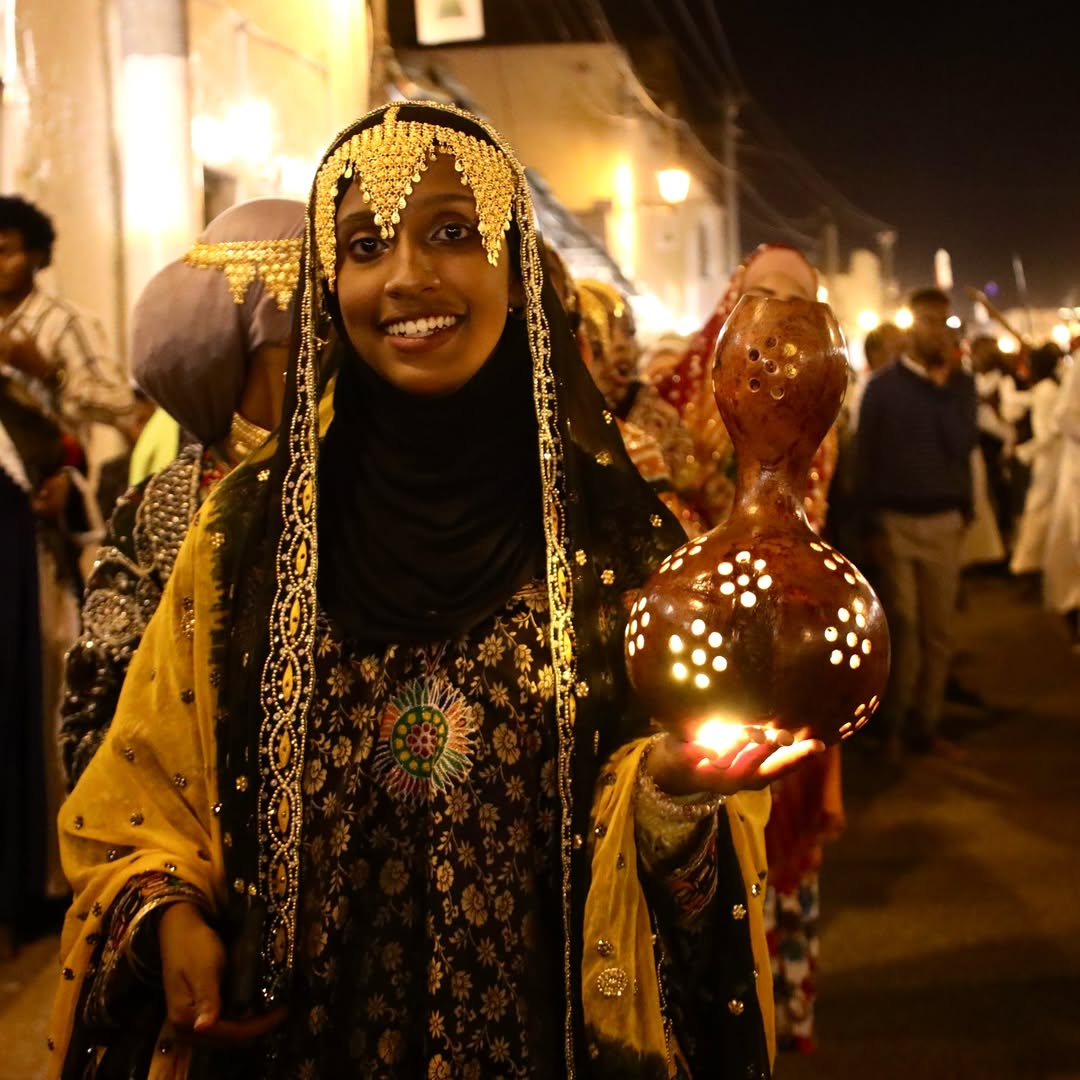
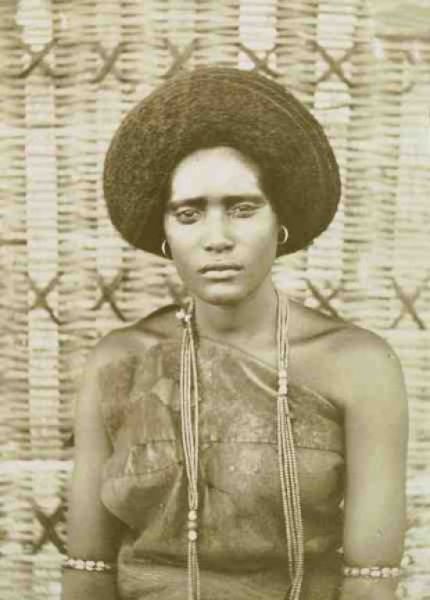
The gufta is the foundation on which the whole Harari headpiece system rests, and it is not fully understood until it is seen in that structural role. The hairstyle itself is architectural: the hair is shaped into two rounded forms, positioned symmetrically behind the ears with the deliberate geometry that runs through every element of Harari dress. These forms are then secured beneath a fine cloth veil, also called the gufta, traditionally cut in deep indigo, violet, or midnight blue. The colour is not incidental. Those tones sit within the same jewel-toned palette as the Gey Eraz and the Tey Eraz, creating a unified chromatic logic from the crown of the head to the hem of the dress.
The veil drapes lightly over the hairstyle, softening its volume while holding the modesty and refinement that sit at the centre of Harari dress. It is also critically the surface on which siyasa is performed. The suspended metal triangles of the headpiece rest against the gufta’s cloth during movement and celebration, the geometry of the metalwork reading cleanly against the deep-toned ground beneath it. As UNESCO’s documentation of Harar Jugol records, the city’s aesthetic traditions are inseparable from its Islamic intellectual life, and the gufta carries that logic precisely: adornment and modesty held in the same object without contradiction. Harari dress has always operated as a total system rather than a collection of separate garments. The guffta is the element that makes it legible at first glance.
|
The Harari Dress: A Silhouette That Moves Like Poetry
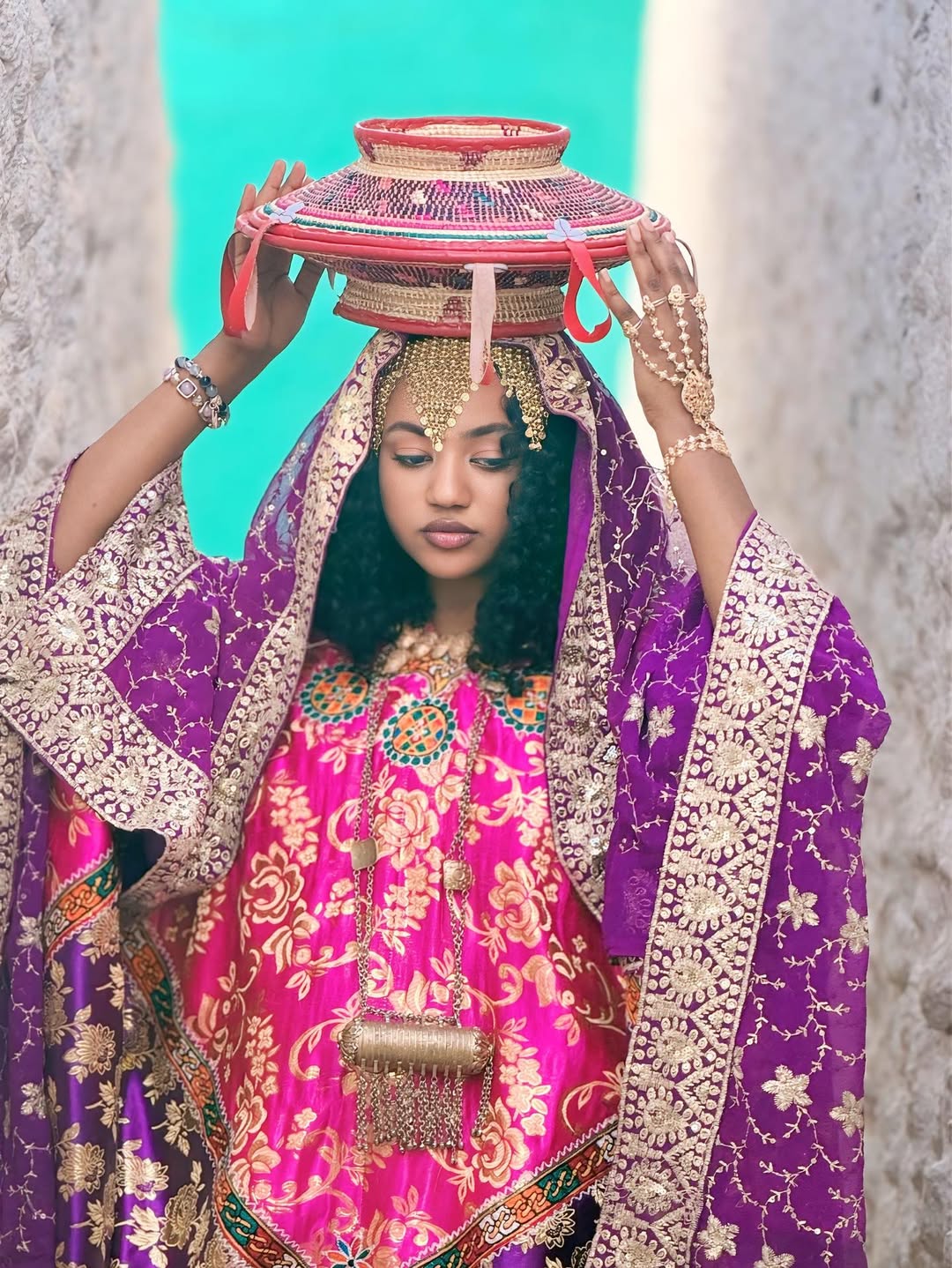
The Tey Eraz, literally the black dress, is not a garment that hedges. Long and wide-skirted, dyed indigo or deep chocolate, it announces marital status, maturity, and social authority before anyone in the room has spoken. The defining feature is a bold scarlet embroidered triangle running from shoulder to waist: a geometric interruption in the dark field that follows the same visual logic as a signature. The Tey Eraz does not dress the body. It positions it within a social order.
The Gey Eraz works at a different frequency. Made of silk or fine cotton and cut to knee or calf length, it is constructed as a double-faced garment: one side carries the full ornamental weight of festival dress; the other offers a simplified face for daily wear. This is not a compromise. It is precision engineering. A single garment that holds two complete registers of occasion within the same construction, eliminating the need to choose between them.
Both dress forms carry the material evidence of Harar’s centuries-long position at the intersection of trade networks. The Indian Ocean routes that connected the city to Gujarat, Yemen, and Oman brought textiles, dyes, and construction techniques that Harari women absorbed and reworked entirely on their own terms. As the African Studies Association has noted in its documentation of East African material culture, this pattern of full cultural assimilation rather than surface borrowing distinguishes the region’s dress traditions from the appropriative logic that has driven so much of global fashion history.
ALSO READ
- Clothing as Cultural Identity
- Culture as the Foundation of Style
- Cultural Resistance Movements in African Fashion
- Global Style and Culture
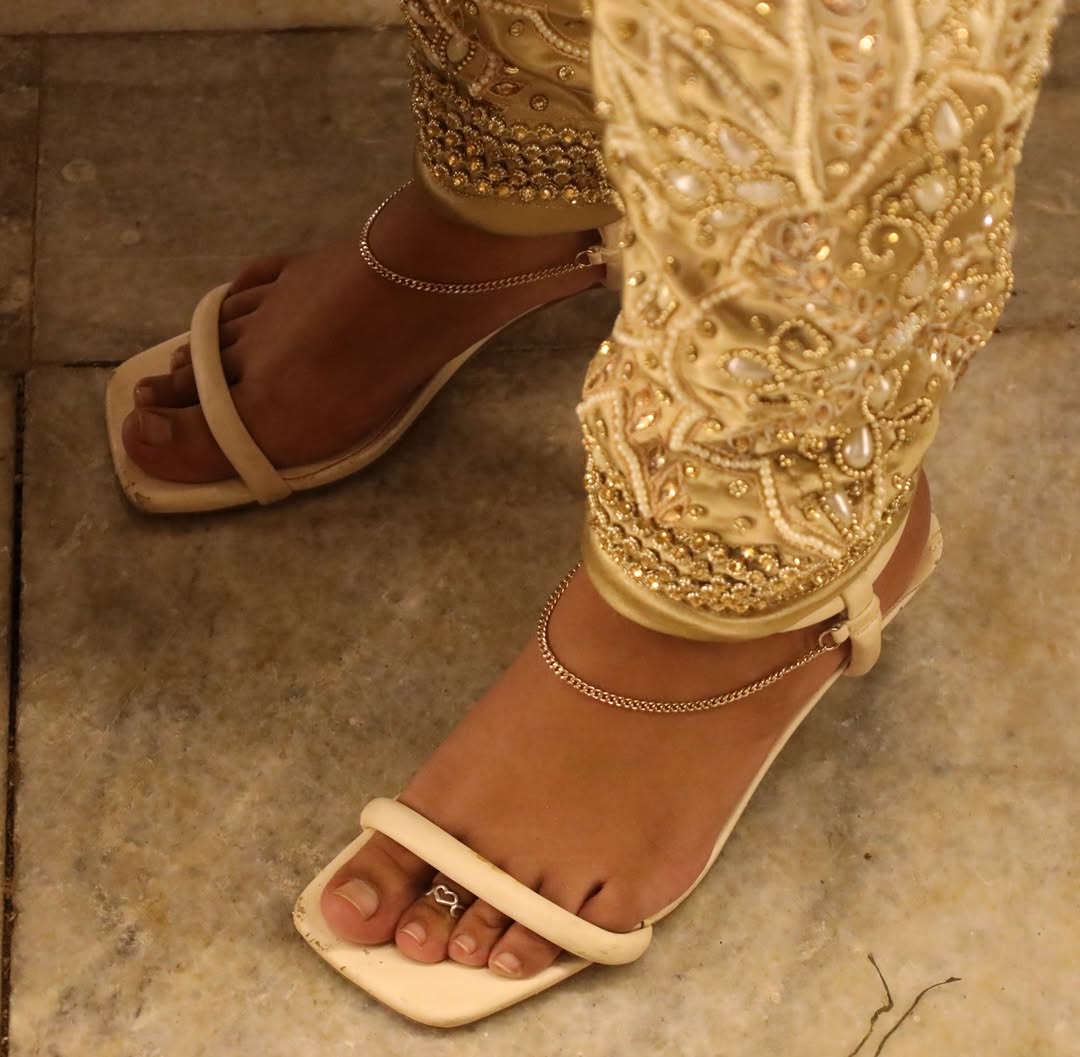
The Gey Gannafi are a part of the Harari wardrobe that rewards attention. Worn beneath the outer dress, these tight-fitting embroidered trousers are invisible at rest and visible only in motion: when a stride lifts the hem, when the body turns, when the dress responds to movement. The ankle embroidery, worked in geometric or floral patterns and executed entirely by hand, is heavy and deliberate. It is not accent work. It is the signature of the look, placed exactly where it will be seen only by someone paying full attention.
The layering logic is precise. The dress carries the primary statement; the Gey Gannafi carries the detail. Together, they build a system of revelation in which the complete look is never fully visible at once, never static, never reducible to a single glance. This was not an accident of tradition. It was a considered aesthetic strategy, one that held structure and softness, modesty and craft, in deliberate tension long before the global fashion industry formalised layering as a contemporary idea worth pursuing.
That intelligence did not develop in isolation. Harar’s position along the Indian Ocean trade routes placed it in sustained contact with Gujarat, Yemen, Oman, and the wider Indo-Persian world across several centuries. Merchants, scholars, and artisans moved through these networks carrying textiles, dyes, beads, and construction techniques that entered Harari material culture and were absorbed on Harari terms. As UNESCO’s documentation of Harar Jugol makes clear, the city has always been a point of convergence rather than isolation, its identity formed through selective engagement with the wider world rather than despite it.
What Harari women built from those influences is something the African Studies Association has identified as a defining characteristic of East African dress traditions: full cultural assimilation rather than surface borrowing. The trade routes brought the raw material. Harari women decided what it would become, merging external techniques with Islamic modesty, local aesthetic principles, and the architectural geometry of the walled city into a dress system that is cosmopolitan in its origins and absolutely specific in its expression.
The Men’s Hat: A Scholar’s Crown
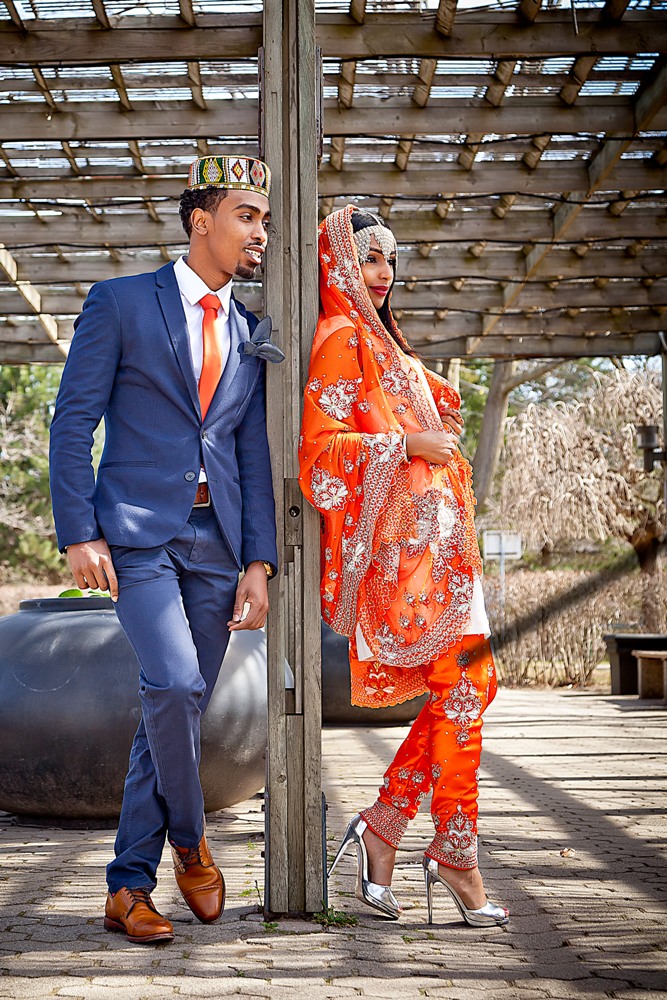
Harari men wear the kufi with a dignity that feels almost ceremonial. Some are plain white; others are intricately crocheted with geometric motifs that mirror the patterns found in Harari manuscripts and carved woodwork. The kufi is not an accessory. It is a symbol of scholarship, respectability, and spiritual grounding.
Basketry: The Art That Holds a Civilisation
Harari basketry is one of the region’s oldest commercial crafts: a heritage of women’s artistry and economic independence. Harari baskets (tabaq and kafiya) are woven with grass, palm fibres, and dyed threads. The patterns often represent the five gates of Harar, stars and constellations, floral motifs, and protective symbols. Baskets decorate the walls of gry-gar homes, arranged like constellations. Historically, Harari baskets travelled across the Ethiopian highlands, the Somali coast, and the Red Sea trade routes. Basketry is not a craft; it is continuity.
Manuscripts, Shrines, and Scholarship
Harar is one of the most important Islamic centres in East Africa, and its religious life shapes its aesthetics. The city contains over one hundred shrines dedicated to saints, scholars, and spiritual figures. These shrines serve as community gathering points, influence ceremonial dress and jewellery, and inspire motifs in embroidery and basketry.
Harar’s manuscript tradition is centuries old. Scribes produce Qur’anic manuscripts, prayer books, poetry collections, and legal texts. The calligraphy, colour palettes, and geometric borders in these manuscripts directly influenced textile and jewellery design. Harar has long been a centre of Islamic learning, and its scholars shaped moral values, dress code, ceremonial practices, and aesthetic preferences rooted in modesty and dignity. Religion is not separate from fashion; it is the foundation that gives meaning to adornment.
The Festival After Ramadan: A Cultural Bloom
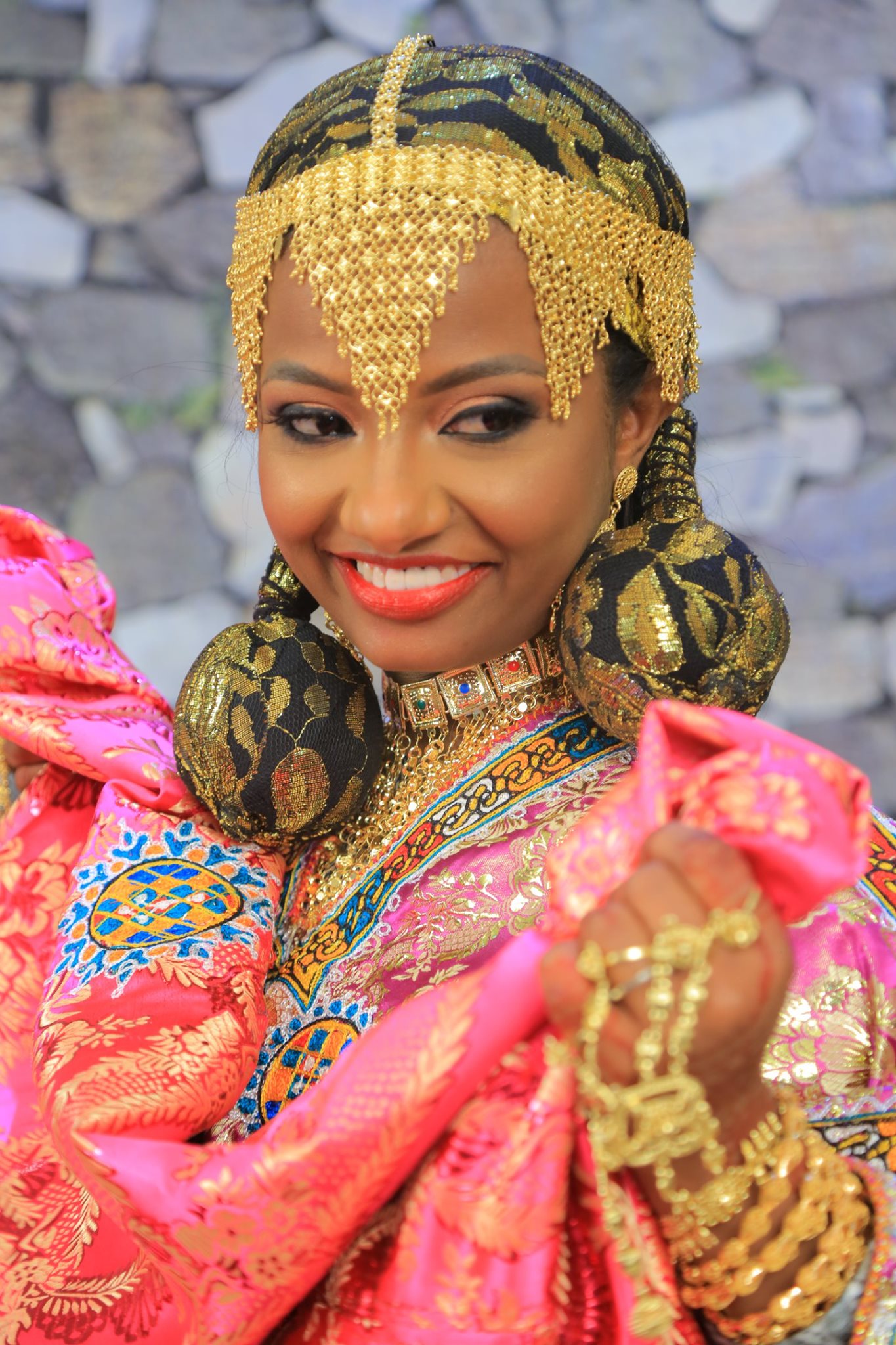
The festival following Ramadan, Eid al-Fitr, is one of the most vibrant cultural moments in Harar. During this celebration, women wear their finest Tey Erz or Gey Eraz dresses, layering jewellery generously with long necklaces, silver pieces, and heirloom beads. The siyassa and melfota appear in their most elaborate forms, and men dress in crisp white garments topped with embroidered hats. Homes fill with the scent of incense, the glow of colourful textiles, and the warmth of family gatherings. Visits to shrines, the exchange of blessings, and the sharing of traditional foods transform the walled city into a living runway of heritage, devotion, and artistry.
Yet the festival season in Harar does not end with Eid al-Fitr. It continues into the month of Shawwal, culminating in a uniquely Harari celebration known as Shuwal-Eid. Shuwal-Eid carries a profound spiritual resonance. It marks the completion of the six voluntary fasts of Shawwal, a practice deeply cherished in Harari religious life.
On Shuwal Eid, the walled city awakens with a different kind of energy. Women often choose elegant Gey Eraz dresses in dignified tones, while men don their finest white garments. After the morning prayers, people spill into the narrow streets, greeting neighbours, exchanging blessings, and moving together through the historic alleys. Groups of young people often form spontaneous circles, singing traditional Harari songs, clapping rhythmically, and performing the soft, swaying dances that have been part of Harari celebrations for generations. The sound of laughter, the shimmer of jewellery, and the movement of colourful garments create a sense of collective joy that feels both ancient and alive.
The Omiren Argument
Harari women’s dress is not heritage dressing preserved for a ceremony. It is a living fashion system built on Islamic scholarship, Indian Ocean trade, and centuries of deliberate aesthetic authority, and it has operated with greater intentionality than most contemporary fashion brands for the best part of a millennium.
FAQs
1. What is the siyasa in Harari fashion?
The siyasa, also called the siyasa zergef, is a structured, embroidered headpiece worn by Harari women as a central element of traditional dress. Constructed with metallic-thread embroidery whose geometric patterns mirror Harar’s carved architectural woodwork, it serves as a marker of occasion, lineage, and social standing. It is worn during ceremonies, festivals, and significant social events.
2. What is the difference between the Tey Eraz and the Gey Eraz?
The Tey Eraz, or the black dress, is a long, wide-skirted garment dyed indigo or deep chocolate, with a bold scarlet-embroidered triangle from the shoulder to the waist. It is a high-status garment associated with married women and encodes maturity and social authority. The Gey Eraz is made from silk or fine cotton, cut to knee- or calf-length, and double-faced: one side ornate for festivals and the other simplified for daily wear.
3. What are the Gey Gannafi?
The Gey Gannafi are tight-fitting embroidered trousers worn beneath the Harari dress. They feature heavy hand embroidery in geometric or floral designs concentrated at the ankle and reveal themselves only when the outer dress moves. The layering of dress over embroidered trousers is a sophisticated Harari aesthetic strategy that holds modesty and craftsmanship in deliberate tension.
4. How did trade routes influence Harari fashion?
Harar’s position along the Indian Ocean trade routes brought it into sustained contact with Gujarat, Yemen, Oman, and the wider Indo-Persian world over several centuries. Merchants and artisans introduced new textiles, dyes, beads, and garment forms that Harari women integrated into their existing dress tradition while maintaining its internal coherence and Islamic aesthetic principles. The result is a dress culture that is simultaneously cosmopolitan and locally specific.
5. What role does Islamic scholarship play in Harari dress?
Harar is one of the most important centres of Islamic learning in East Africa, with a centuries-old manuscript tradition whose calligraphy, colour choices, and geometric borders directly influenced textile and jewellery design. The city has over 100 shrines to Islamic saints and scholars, which serve as active sources of ceremonial and aesthetic influence. Modesty, dignity, and symbolic precision are the foundational principles of Harari dress, rooted in this intellectual culture rather than imposed from outside it.
6. When is Shuwal-Eid celebrated in Harar?
Shuwal-Eid is a distinctly Harari celebration observed during the Islamic month of Shawwal, marking the completion of the six voluntary fasts recommended after Ramadan. It follows Eid al-Fitr and is marked by communal prayer, movement through the historic alleys of the walled city, traditional Harari song, and the wearing of fine dress, particularly the Gey Eraz. It is considered a spiritually significant and specifically Harari observance.