In April 2024, the Partech Africa VC report recorded US$3.2 billion in venture capital investment across the African continent in a single year. Nearly half of that went to fintech. The remainder was distributed across energy, logistics, health technology, agriculture, and a range of other sectors that institutional investors have decided are legible, scalable, and worthy of serious capital. Fashion did not appear as a significant category. It did not appear at all. This is not because Africa’s fashion industry lacks scale. It is because institutional investors have not built the frameworks to assess it, and have spent long enough without those frameworks for the absence to harden into an assumption: African fashion is artisanal, fragmented, commercially unstructured, and therefore not an institutional asset class.
Each element of that assumption is wrong, and the cost of it is measurable. Africa’s apparel market reached US$73.59 billion in 2025. Its fashion exports exceed US$15 billion per year. The African Continental Free Trade Area is predicted to increase intra-African textile trade by 33%. The IFC, Afreximbank, and a small number of specialist vehicles have begun to demonstrate that African fashion can absorb and generate returns on institutional capital. The question is not whether the market exists. The question is why the institutional investor class has not built a dedicated pan-African fashion portfolio, and what it would need to understand to do so.
No institutional investor holds a dedicated pan-African fashion portfolio. This piece makes the commercial case for why that must change, and documents the precise cost of staying out.
What the Landscape Actually Looks Like
Three types of capital characterise the investment landscape in African fashion in 2026. The first is development finance: the IFC, Afreximbank, Proparco, and the African Development Bank’s Fashionomics Africa programme operating within a larger US$2 billion creative industries fund. The second is specialist vehicles: Birimian Ventures, founded in Abidjan in 2021 by Laureen Kouassi-Olsson, which has invested between US$5,000 and US$300,000 in twenty-seven brands at incubation, acceleration, and growth stages, and partnered with Paris-based Trail Capital to create a long-term investment vehicle targeting at least five million euros per year deployed across a portfolio of twenty to thirty brands. The third is platform funding: ANKA, the Ivorian e-commerce platform formerly known as Afrikrea, which raised US$13.5 million in total investment through multiple rounds including a US$5 million pre-Series A extension led by the IFC in September 2023; The Folklore, which raised US$1.7 million in pre-seed funding for its wholesale management software connecting African brands to Nordstrom, Saks Fifth Avenue, and Bergdorf Goodman; and Jendaya, which raised approximately US$1.2 million in pre-seed funding.
That is the totality of publicly documented, dedicated, structured investment activity in African fashion that is currently active. It represents a fraction of the capital required to build the infrastructure an industry of this size needs. And it is worth noting what is absent from that landscape: no institutional fund with a pan-African fashion mandate, no major private equity firm with African fashion as a primary vertical, no sovereign wealth fund allocating to African fashion as an asset class, and no pension or endowment portfolio with exposure to African fashion. The capital that has entered the market has done so through development finance institutions whose mandate is not commercial returns but development impact, and through a handful of specialist operators whose ambitions are serious but whose scale is, by necessity, limited by the absence of institutional co-investment.
The Three Arguments Institutional Investors Make and Why Each Fails
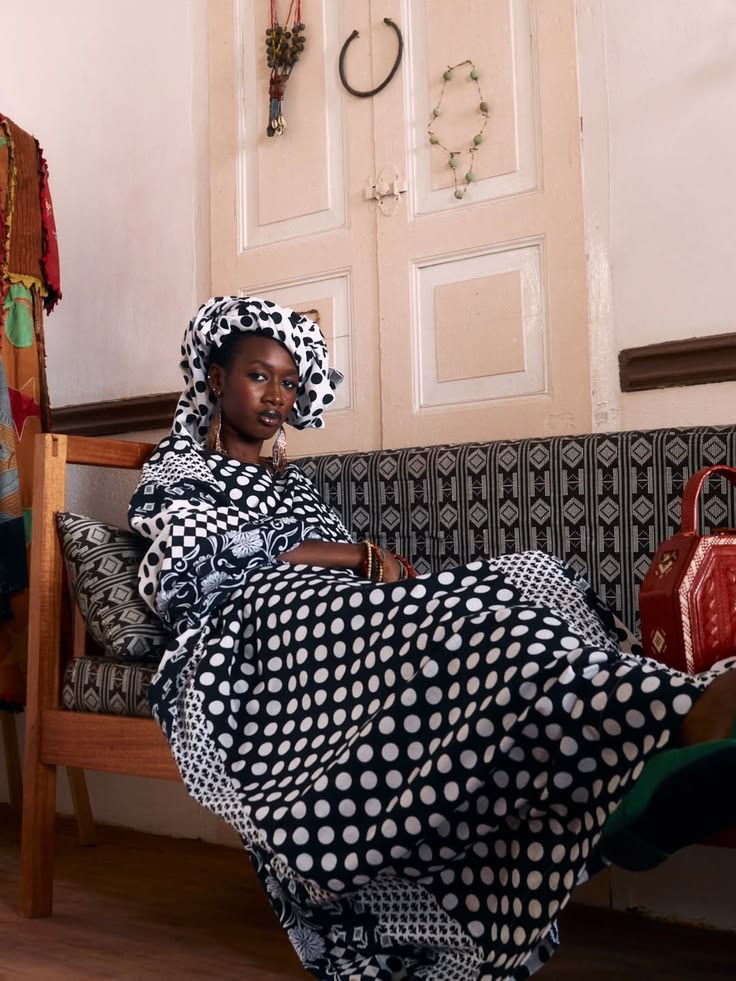
The Clearly Invincible investment gap analysis, published in June 2025, interviewed investors across the African VC and private equity landscape and identified the structural arguments that institutional capital uses to stay out of fashion. They reduce to three. First, fashion does not fit the VC model because it lacks the rapid scalability and exponential growth that venture capital prioritises, characteristics more naturally associated with technology. Second: fashion is capital-intensive, requiring significant upfront investment in production, logistics, and marketing before becoming profitable, making it a difficult case for institutional risk committees. Third: African fashion businesses are typically structured as small and medium enterprises, lacking the governance, financial transparency, and bankable structure that institutional capital requires before committing.
Each of these arguments contains a real observation embedded in a flawed conclusion. The first is correct that African fashion does not fit the VC model, as that model is currently configured for technology businesses. The conclusion that this means African fashion is not investable is wrong. It means that the investment model needs to be different: longer holding periods, patient capital, brand equity accretion over time, rather than exponential user growth. This is not a novel investment thesis. It is the standard model for luxury and heritage-brand investment in Europe, where firms like LVMH, Kering, and Richemont have built their portfolios on exactly this kind of patient, multi-year brand-development capital. The claim that African fashion cannot sustain this model is not supported by evidence. It is an assumption derived from unfamiliarity.
The investment model that built LVMH is patient capital deployed behind heritage brands with long-term brand equity potential. That is precisely what African fashion requires. The thesis is not novel. The geography is.
The second argument, that fashion is too capital-intensive before profitability, applies to virtually every consumer brand in its early growth phase. The ITRC analysis of African textile investment, published in April 2026, identified that the distinction between funded and unfunded projects in the African clothing, textile, and apparel sector is rarely about underlying business quality. It is about alignment with the frameworks that govern capital allocation. African fashion businesses that have undergone the kind of financial audit, governance structuring, and bankable business plan development that Birimian Ventures provided for its accelerator brands, including audits conducted by EY and subsequent debt renegotiation with banking partners, performed well against institutional assessment criteria. The governance gap is real. It is also addressable, and addressing it is precisely the function that a dedicated pan-African fashion investment vehicle would perform.
The third argument, about governance and financial transparency, is the most structurally significant and the most honest. Many African fashion businesses have grown organically, with management structures that reflect operational needs rather than institutional requirements. Decision-making is often centralised, financial systems are informal, and reporting is non-standardised. These are real barriers. They are also the barriers that Birimian’s model is specifically designed to remove before capital is deployed: financial audits, internal control strengthening, financial planning processes, and production and distribution capacity building are built into the investment structure rather than expected as preconditions. The argument that governance gaps make African fashion uninvestable is an argument for building investment infrastructure that prepares businesses for institutional capital, not for staying out.
What Development Finance Has Already Proved
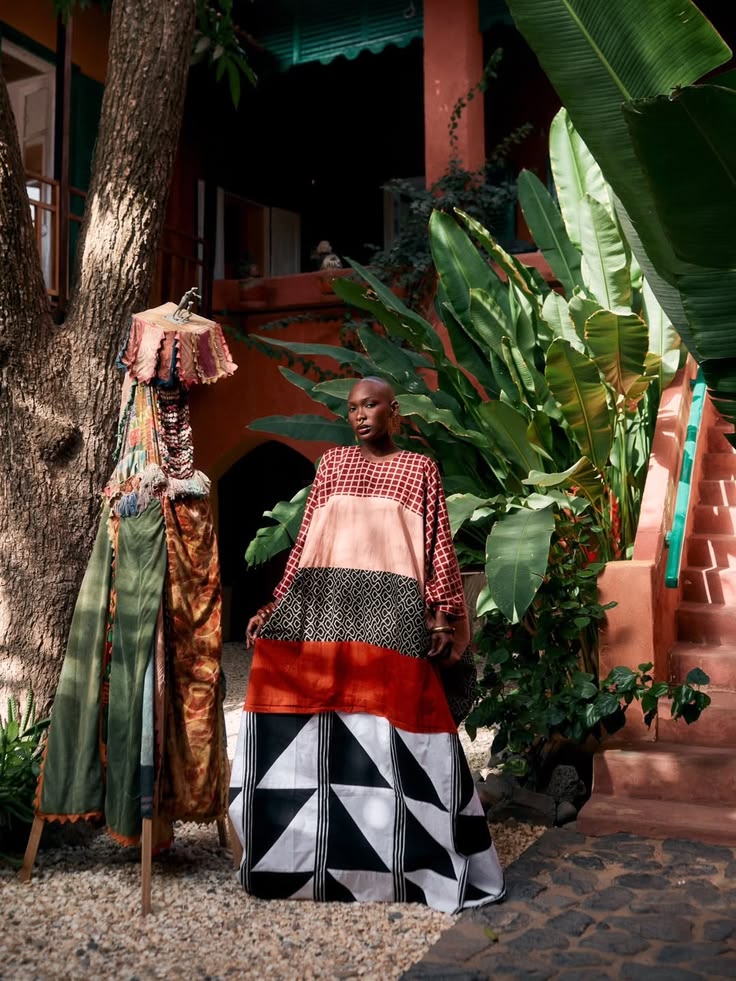
The IFC’s September 2023 extension round into ANKA, led alongside Proparco and the French Public Investment Bank, brought ANKA’s total investment to US$13.5 million. The IFC’s January 2025 US$15 million package for Kenya’s Royal Apparel EPZ, which created 3,700 jobs and adopted EDGE-certified green manufacturing, generated measurable returns in employment, sustainability, and export infrastructure simultaneously. Afreximbank’s Canex programme doubled from US$1 billion to US$2 billion under its creative industries mandate, funding export market access for designers from Ghana, Kenya, Nigeria, and beyond, underwriting Paris Fashion Week showroom costs, and co-financing textile manufacturing clusters in Nigeria and Benin.
The Birimian-Orange Bank Africa partnership, signed in September 2022, financed 20 creative entrepreneurs, with a 0% default rate and a 100% drawdown of the available envelope. Birimian’s partnership with Trail Capital, targeting five million euros per year over five years across a portfolio of twenty to thirty brands, represents the closest existing model to what a pan-African fashion private equity vehicle would look like at institutional scale. Laureen Kouassi-Olsson, speaking to BoF, identified Afreximbank’s activities as important because they highlight the investability of African fashion entrepreneurs. The language is significant: investability. The development finance institutions have spent four years demonstrating that African fashion businesses can absorb capital, generate returns, and build the governance structures that institutional investors require. What they have not been able to do, by mandate, is operate at scale and with a commercial-return orientation that would bring private institutional capital into the market behind them.
ALSO READ
- The African Fashion Investment Deficit: $70 Billion in Market Activity With No Dedicated Intelligence Infrastructure
- Africa’s Fashion IP Crisis: Cultural Ownership as the First Strategic Priority
- The Global South Fashion Alliance: Why Africa, the Caribbean, and Latin America Must Build Intelligence Together
The Returns That Are Not Being Captured
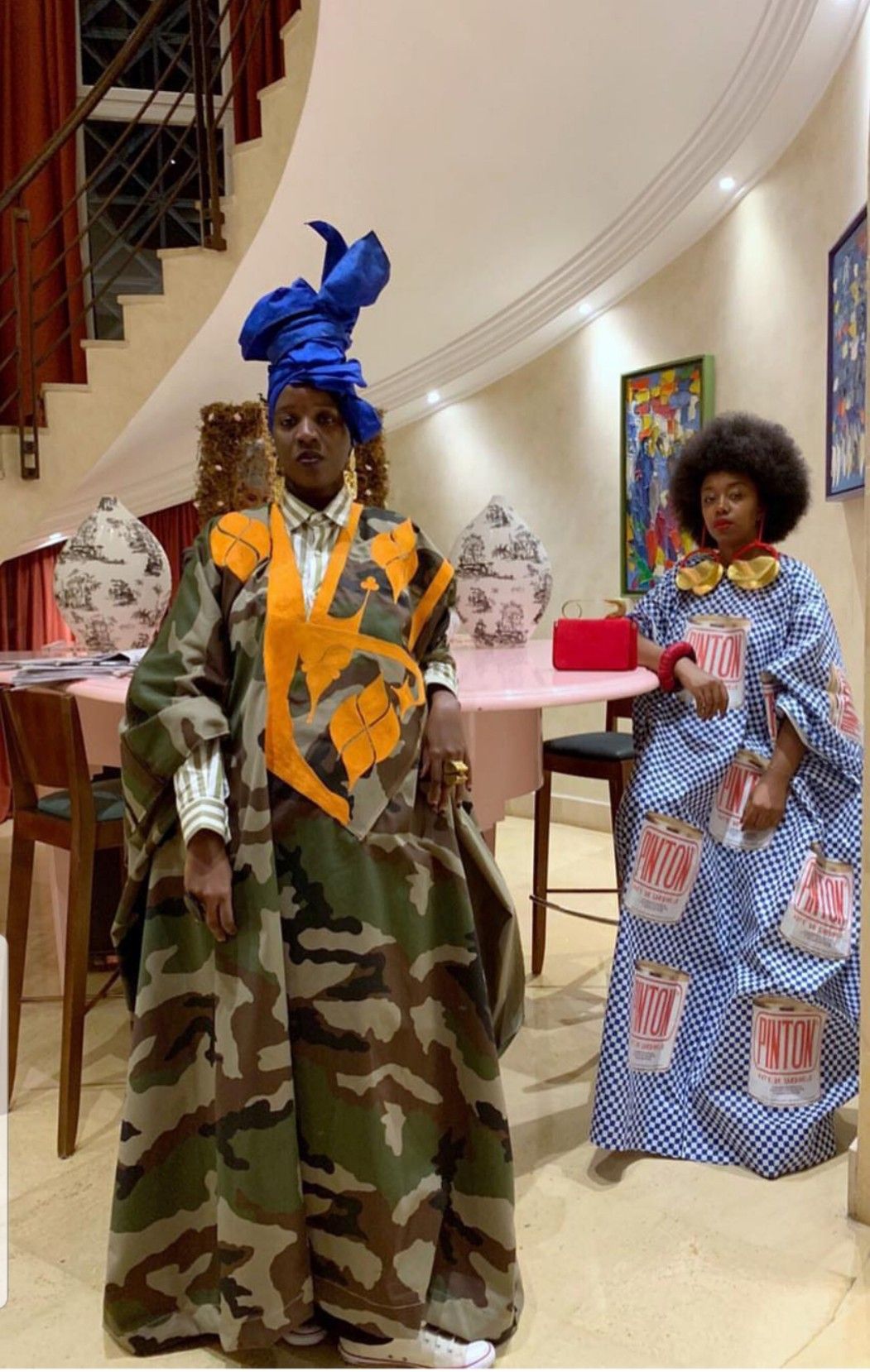
The African fashion market is projected to reach US$50 billion in Sub-Saharan Africa alone by 2030. Rwanda’s apparel exports increased by 83% between 2018 and 2020 following local manufacturing initiatives. Ethiopia’s Hawassa Industrial Park employs over 30,000 garment workers and generates significant export revenue. Nigeria’s fashion industry is the largest single contributor to West Africa’s US$19.25 billion fashion market. Morocco’s textile and apparel exports totalled US$4.5 billion in 2024, with strong CAGR projections driven by proximity to the EU and supply chain integration. These are not projections built on optimism. They are existing revenue streams in existing markets, growing at rates that comparable sectors in Europe and North America are not generating.
The African Continental Free Trade Area, when its apparel provisions are fully operational, is projected to increase intra-African textile trade by 33%. The AfCFTA represents the creation of a single continental market for fashion goods: lower production costs through tariff liberalisation, standardised border operations reducing logistics friction, and a market of over 1.3 billion consumers accessible without the cross-border cost structures that currently limit intra-African trade. An institutional investor who builds a pan-African fashion portfolio now, before AfCFTA’s full effects are realised, is positioned to capture the market expansion that follows. An institutional investor who waits for the market to mature and the returns to be obvious will pay the price of entry that early positioning would have avoided.
What a Dedicated Pan-African Fashion Portfolio Would Require
The ITRC’s April 2026 analysis of African textile investment identified three preconditions for institutional capital: governance that meets investor transparency requirements, scale that justifies capital deployment thresholds, and predictability that allows investors to commit capital with confidence. Birimian’s model addresses governance through its accelerator programme and brand preparation infrastructure. Scale is addressed through aggregation: a portfolio of twenty to thirty brands, held over five to seven years, generating blended returns across brand equity accretion, licensing revenue, export growth, and platform value. Predictability requires editorial and data infrastructure capable of consistently tracking market performance, which is precisely the intelligence gap that Omiren Styles’ INDUSTRY section is built to close.
The African Fashion Development Initiative, founded in January 2025 specifically to provide micro-grants and mentorship to emerging African fashion entrepreneurs, represents the early-stage end of a capital continuum that needs to be completed at an institutional scale. The HEVA Fund, dedicated to supporting creative and cultural industries in East Africa, provides funding to up to 40 businesses and empowers around 8,000 entrepreneurs. The Collectif Ivoirien de Design, formed by five influential Ivorian labels to unify, collaborate, mentor, and educate across the continent, demonstrates that the industry is building its own collaborative infrastructure. What remains absent is the institutional anchor: a dedicated, commercially oriented, pan-African fashion fund of sufficient scale to serve as the counterpart to Birimian’s specialist vehicle and Afreximbank’s development mandate.
The absence of a pan-African fashion investment portfolio in any institutional investor’s holdings does not reflect the market’s commercial readiness. It is a reflection of the intelligence gap that has allowed the assumption of unreadiness to persist without challenge. Birimian Ventures has invested in twenty-seven brands with a 0% default rate on its initial banking partnership. The IFC has committed US$15 million to a single Kenyan apparel manufacturer and US$5 million to a Ghanaian recycled-fibre operation in the same twelve-month period. Afreximbank has doubled its creative industries fund to US$2 billion. The development finance institutions are not taking speculative positions. They are responding to demonstrated commercial performance. What they cannot do, by mandate, is provide the scale of private patient capital that the industry needs to build the next generation of African fashion houses capable of competing with global heritage brands, whose investment model they are already replicating.
The cost of institutional blindness in African fashion is not abstract. It is the difference between the industry that exists, generating US$73 billion in annual revenue without commensurate investment infrastructure, and the industry that could exist, with the capital, governance support, and market access infrastructure to convert that revenue base into globally recognised brand equity and continent-wide economic returns. LVMH was not built by investors who waited for Paris to be proven. It was built by investors who understood that heritage, craft, and cultural authority are the foundations of the world’s most durable asset class, and who committed capital on that basis before the returns were obvious to everyone. Africa has a heritage. It has the craft. It has the cultural authority—the investors who recognise that first will define the next chapter of global fashion’s most consequential expansion.
Frequently Asked Questions
1. Why do institutional investors avoid African fashion?
Institutional investors typically cite three reasons: African fashion does not fit the VC model’s demand for rapid, exponential scalability; fashion is capital-intensive before reaching profitability; and African fashion businesses often lack the governance, financial transparency, and bankable structuring that institutional capital requires. Each argument contains a real observation but leads to a flawed conclusion. The investment model that built the European luxury industry, patient capital behind heritage brands held over five to seven years, is directly applicable to African fashion. The governance gaps are real but addressable through structured pre-investment support, as Birimian Ventures has demonstrated.
2. What investment activity is currently taking place in African fashion?
Three types of capital are active. Development finance institutions, including the IFC, Afreximbank through its US$2 billion Canex programme, and Proparco, are the largest players. Birimian Ventures is the primary specialist vehicle, having invested in 27 brands across incubation, acceleration, and growth stages, with a Trail Capital partnership targeting € 5 million per year over 5 years. Platform funding has reached ANKA at US$13.5 million total, The Folklore at US$1.7 million pre-seed, and Jendaya at approximately US$1.2 million. No institutional fund with a dedicated pan-African fashion mandate currently exists at a private equity scale.
3. What would a pan-African fashion portfolio need to succeed?
The ITRC’s April 2026 analysis identifies three preconditions: governance that meets institutional transparency requirements, scale sufficient to justify capital deployment thresholds, and predictability that allows investors to commit with confidence. Birimian’s accelerator model addresses governance through pre-investment financial structuring, audit, and debt management. Scale is achievable through portfolio aggregation of twenty to thirty brands held over five to seven years. Predictability requires the editorial and data infrastructure to track African fashion market performance consistently, which is the intelligence function that Omiren Styles’ Industry section is built to provide.
4. What returns are institutional investors missing by staying out of African fashion?
Africa’s apparel market is projected to reach US$50 billion in Sub-Saharan Africa by 2030. Rwanda’s apparel exports grew by 83% between 2018 and 2020, following investment in local manufacturing. The African Continental Free Trade Area is projected to increase intra-African textile trade by 33%, creating a single continental market for fashion goods accessible without current cross-border cost structures. An institutional investor who builds a pan-African fashion portfolio before AfCFTA’s full effects are realised will capture the subsequent market expansion at early-entry pricing. Returns that are not captured are not speculative. They are the compounding of demonstrated commercial growth in the absence of the capital that would accelerate it.