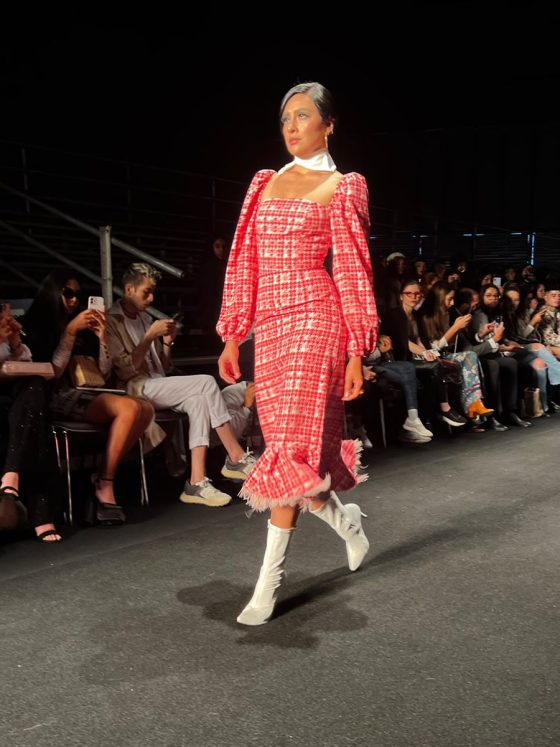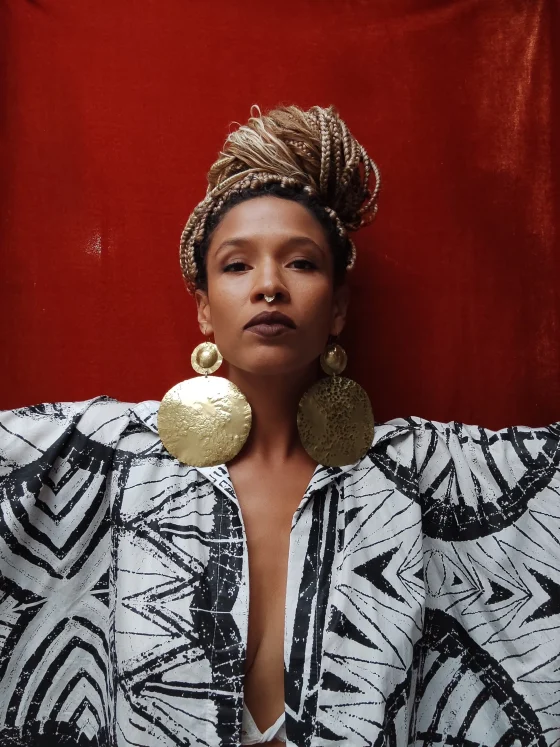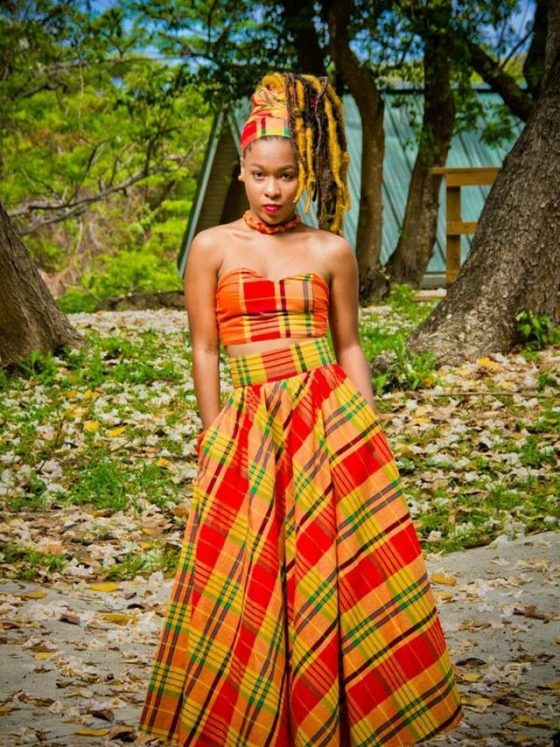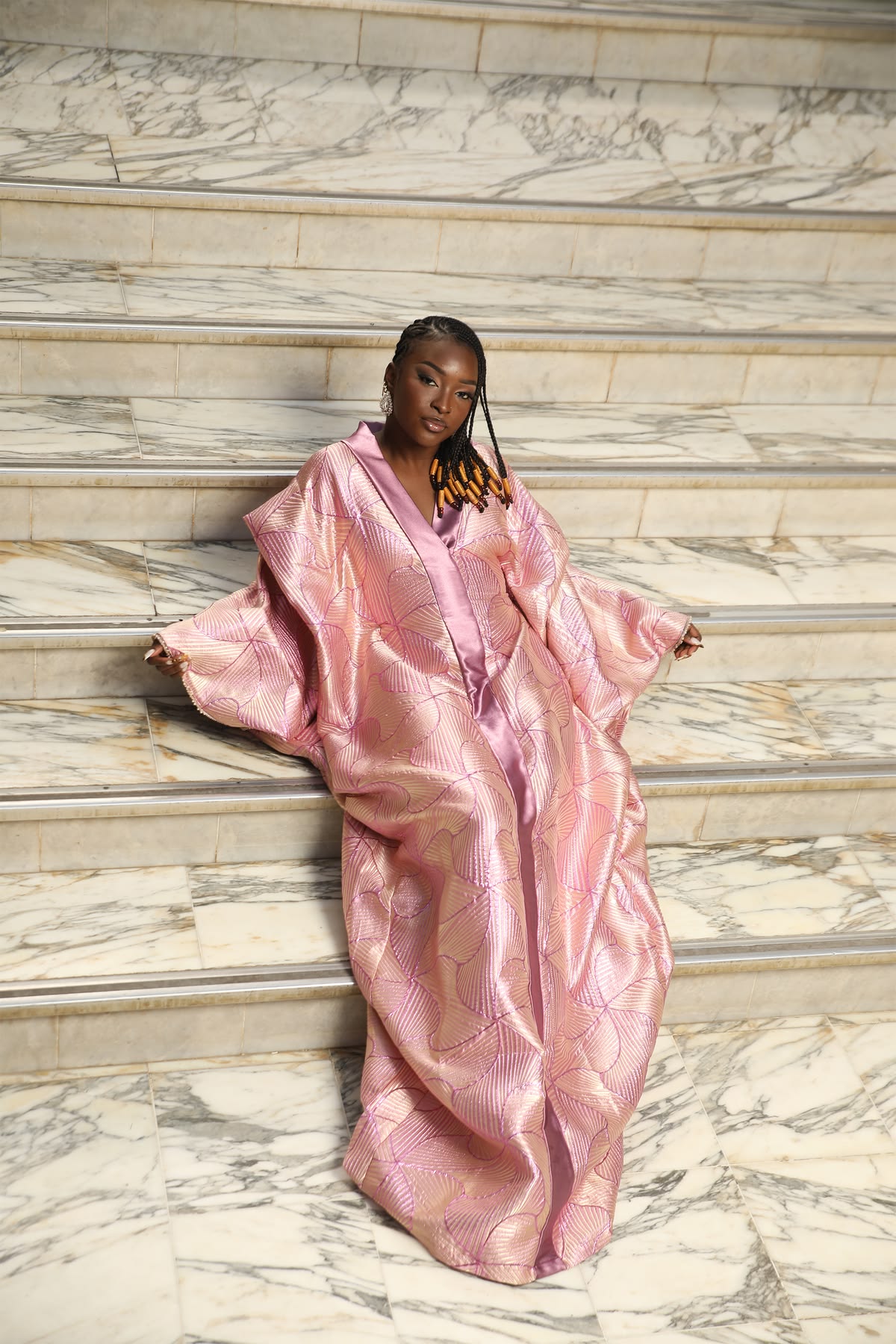
There is a garment in West Africa that has never needed an introduction. It enters the room before the person wearing it does. It settles the question of who is present before anyone speaks. It has done this for centuries, moving through empires, crossing deserts, surviving colonial interruption, and arriving intact in the contemporary cities of Lagos, Dakar, Abidjan, and Bamako, where it continues to carry more meaning than most garments manage across an entire fashion season. That garment is the flowing over-robe: agbada in Yoruba-speaking Nigeria, boubou across much of Francophone West Africa, and grand boubou in Senegal and the wider Sahel, one silhouette. Endless conversation.
What makes this garment remarkable is not its longevity, though longevity alone would be worthy of study. What makes it remarkable is that the same basic form, a wide-sleeved robe falling to the ankle, worn over matching trousers and an inner shirt, means something entirely different depending on which city you are standing in when you see it. The differences are not superficial. They are not simply a matter of regional fabric preference or embroidery tradition, though those things matter too. The differences are philosophical. They reach into how each culture understands power, dignity, religious authority, and the relationship between the individual and the collective. To read the agbada, the boubou, and the grand boubou correctly is to read four distinct civilisations that happen to share a silhouette.
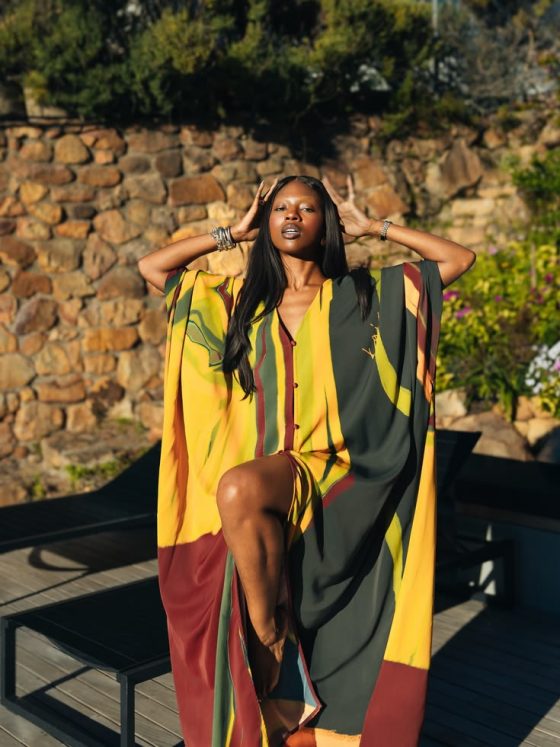
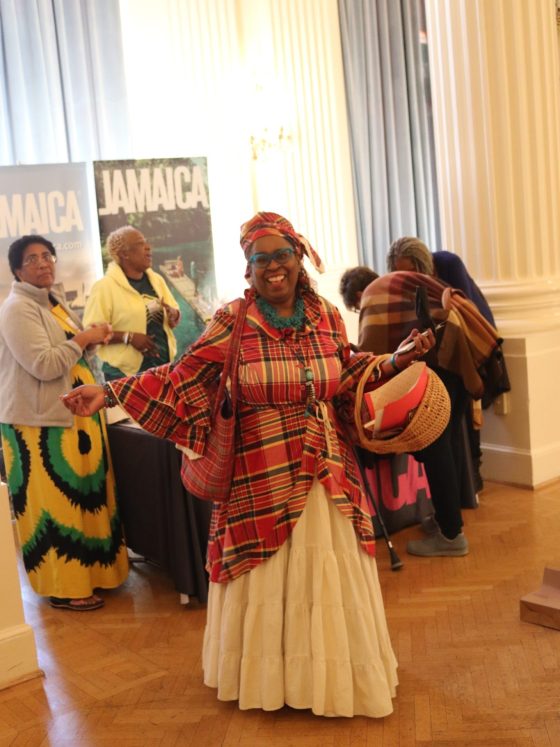
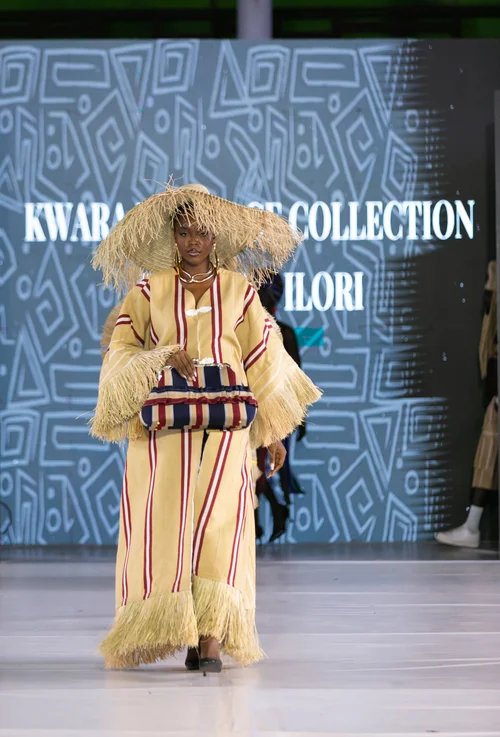
Agbada, boubou, grand boubou: one West African silhouette worn across Lagos, Dakar, Abidjan, and Bamako, each time carrying a different declaration of power, identity, and cultural authority.
Where the Robe Began
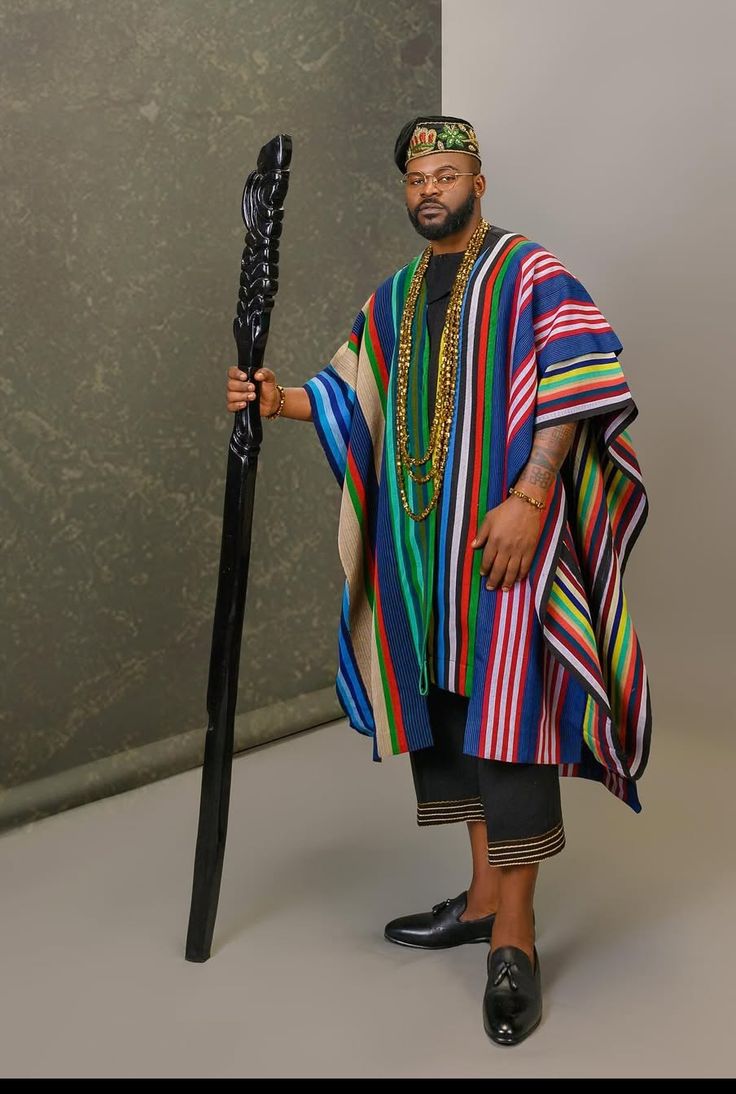
The origin of this silhouette is not a mystery, though it is often treated as one by those who encounter it primarily through the lens of contemporary African fashion. The wide-sleeved over-robe traces its documented presence through the Mali Empire and the Songhai Empire, both of which functioned as centres of Islamic scholarship, trans-Saharan trade, and courtly culture whose sophistication rivalled anything in medieval Europe. Timbuktu, at its peak, was a city of universities, libraries, and a manuscript tradition spanning multiple languages and disciplines. The robes worn in those courts were not folk costumes. They were power dressing in its most complete sense: garments whose fabric weight, embroidery complexity, and layering communicated rank, learning, wealth, and political alliance in a single visual statement.
The garment moved with Islam as it spread south and west, carried by scholars, traders, and clerics who brought religious practice and material culture together into the communities they entered. By the time it reached the coastal cities and forest kingdoms of what would become Nigeria, it had already been adapted by Hausa and Fulani cultures in the north, who had made the embroidery traditions and fabric vocabularies their own. When the Yoruba received and refined the silhouette, they brought their own genius for ceremony, colour, and social occasion to a garment already rich in inherited meaning. Further west, in the Wolof kingdoms of Senegal, in the Mandé-speaking communities of Mali and Côte d’Ivoire, the process repeated itself. Same lineage. New language.
Lagos: The Agbada and the Art of Arrival
Lagos is a city that understands spectacle as a serious business. In a metropolis of more than twenty million people where competition for visibility, status, and social legibility is constant and relentless, the agbada functions as one of the most refined instruments of self-presentation available. To wear it correctly in Lagos is not vanity. It is communication.
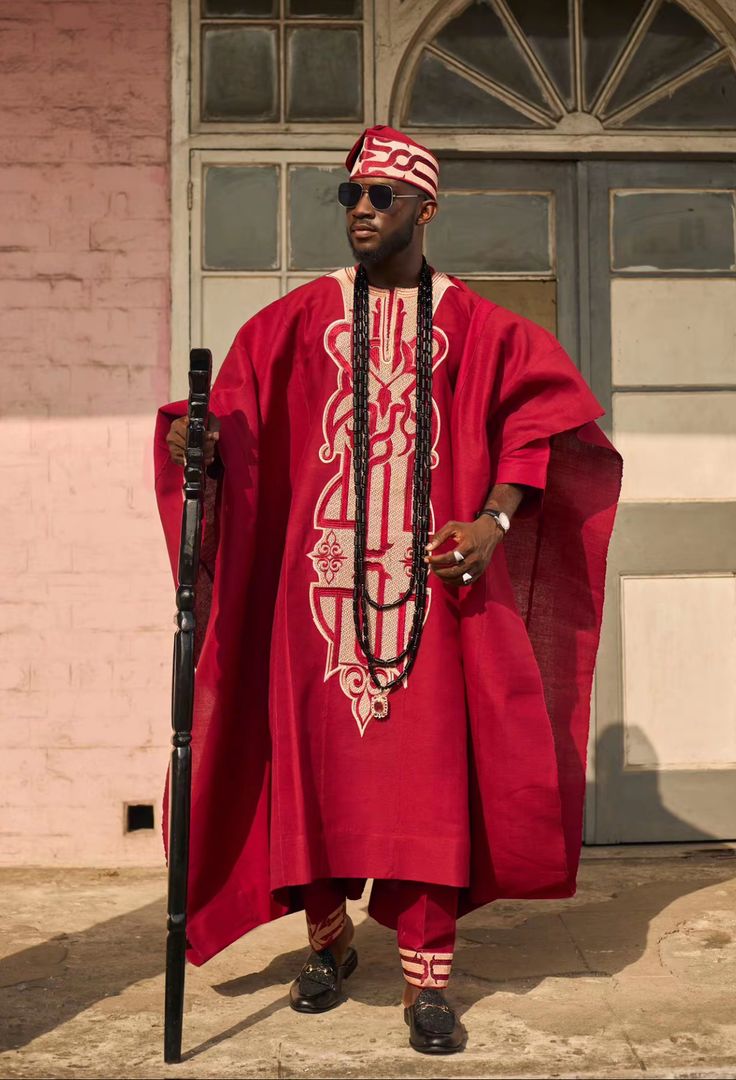
The Yoruba agbada is structured around the moment of entrance. It is a three-piece ensemble: the wide outer robe, the matching sokoto trousers, and the buba inner shirt, all cut from the same fabric and often embroidered with matching or contrasting thread at the chest, the cuffs, and the hem of the outer robe. The embroidery at the chest, known as the juba, is the centrepiece. Its density, pattern, and thread quality are read by those who know how to read them as indicators of the wearer’s investment, taste, and social standing. The outer robe is cut wide enough that the sleeves must be folded back over the wearer’s forearm when in motion. This is not a design flaw. It is an instruction: this garment was not made for rushing.
The political dimensions of the agbada in Nigeria are explicit and long-established. It is the standard ceremonial dress of Yoruba chiefs and has become the preferred public dress of Nigeria’s political class across ethnic lines. Governors are sworn in wearing it. Senators hold legislative sessions in it. Wealthy business people receive guests in it. What the suit is to the Western boardroom, the agbada is to Nigerian public life, with the critical difference that the agbada also carries the weight of cultural continuity in a way that the suit, borrowed and imposed, cannot. When a Nigerian politician chooses the agbada over the suit for a public appearance, he is not simply making a style choice. He is making a claim: that his authority is rooted in something older and more legitimate than any electoral process.
The fabric hierarchy matters enormously in Lagos. Aso-oke, the hand-woven Yoruba prestige cloth, sits at the top, particularly for ceremonies. Swiss voile, prized for its translucence and drape, is favoured for occasions where the garment needs to move dramatically in the heat. Italian jacquard and embossed damasks signal a different kind of wealth, more contemporary, more internationally orientated. Each choice speaks before the wearer opens his mouth.
Dakar: The Grand Boubou and the Weight of Dignity
If the Lagos agbada is designed for the moment of arrival, the Dakar grand boubou is designed for the entirety of a man’s presence in the world. Senegalese culture holds a concept called jom, which translates inadequately as dignity or honour but which really describes a complete orientation toward life: a refusal of smallness, a commitment to composure, and an awareness that the community is always reading one’s bearing. The grand boubou is jom made visible.
The Senegalese grand boubou for men is typically cut from bazin riche, a mercerised cotton damask treated to achieve a distinctive sheen and stiffness. The fabric holds a pressed crease with authority. It does not wilt in heat. It does not rumple in movement. A man in a freshly laundered and pressed grand boubou in bazin riche carries himself differently because the fabric requires it: the garment provides its own structure and, in doing so, imposes a certain posture on its wearer.
The political and spiritual dimensions of the grand boubou in Senegal are inseparable from the country’s deep Sufi brotherhood traditions.
Senegalese women wear their own form of the grand boubou, a wide-shouldered, flowing robe in vivid colours and luxurious fabrics, often embroidered with far greater elaboration than the men’s version. The female grand boubou is one of West Africa’s most celebrated dress traditions. It has influenced fashion across the diaspora, appearing in elevated form on international runways and red carpets while retaining its everyday prestige on the streets of Dakar.
Abidjan: The Boubou and the Politics of Choice
Abidjan presents the most complicated relationship with this silhouette, and that complication is itself revealing. Côte d’Ivoire was shaped by a particularly thorough French colonial project that left deep marks on professional culture, educational systems, and public dress codes. The country’s post-independence leadership, particularly under Félix Houphouët-Boigny, maintained close ties with France and presided over an economic model that kept Abidjan oriented toward French cultural norms, distinguishing it from Dakar or Lagos. The suit became the dress of Ivorian professional and political life in a way that was more sustained and more ideologically loaded than in neighbouring countries.
The result is that the boubou in Abidjan occupies a different position from that in any other part of this conversation. It is not the default register of public life as in Bamako. It is not the standard of ceremonial power as in Lagos. It is not the daily uniform of an entire class as in Dakar. In Abidjan, the boubou is most commonly worn on Fridays for Muslim prayer, at traditional ceremonies, and at events where cultural assertion is part of the point. This means that choosing to wear the boubou in Abidjan, particularly on a weekday in a professional context, is a more deliberate act than it would be elsewhere. It is a statement about priorities.
That act of deliberate choice has produced its own creative energy. Ivorian designers working with the boubou silhouette have developed some of West Africa’s most inventive contemporary interpretations of the form, drawing on the country’s own textile heritage, including the woven and dyed cloths of the Baoulé and other Ivorian peoples, as well as on regional influences from Ghana, Mali, and Senegal. Ivorian women in particular have pushed the boubou into new territory, experimenting with silhouette, layering, and combining traditional fabrics with contemporary construction techniques.
Bamako: The Boubou as Continuity
Mali is where this garment comes from, and Bamako is where you can feel that most clearly. In Bamako, the boubou requires no explanation, no justification, no deliberate choice, and no political calculation. It is worn by men of every class and profession, across every occasion from market trading to government ministry, in the intense heat of the dry season and through the cooler months of harmattan. It is simply how Malian men dress. That simplicity is the most profound statement of all.
When a garment has been worn continuously by a culture for long enough, it stops being a symbol and becomes a substrate. The boubou in Bamako is not about power, dignity, or cultural assertion in the way it is in Lagos, Dakar, or Abidjan, because it does not need to be about any of those things separately. It carries all of them simultaneously, invisibly, as a matter of course.
The significance of this continuity has sharpened in recent years. Mali has lived through repeated political crises, military coups, and the profound instability brought by conflict in its northern regions. The persistence of the boubou as everyday dress in this context is not merely a fashion fact.
It is evidence of something that formal institutions, governments, and constitutions have struggled to provide: a thread of continuity that connects the present to a past that was dignified, accomplished, and self-determined. In Bamako today, wearing the boubou is an act of cultural memory, performed daily without ceremony by millions of people who thereby refuse to be reduced to the crises that surround them.
Read also:
- The Agbada In The Boardroom: How West Africa’s Most Commanding Garment Is Rewriting Power Dressing
- Why African Diaspora Men Are Turning to Traditional Dress for Everyday Style
Four Cities, One Garment, No Single Answer
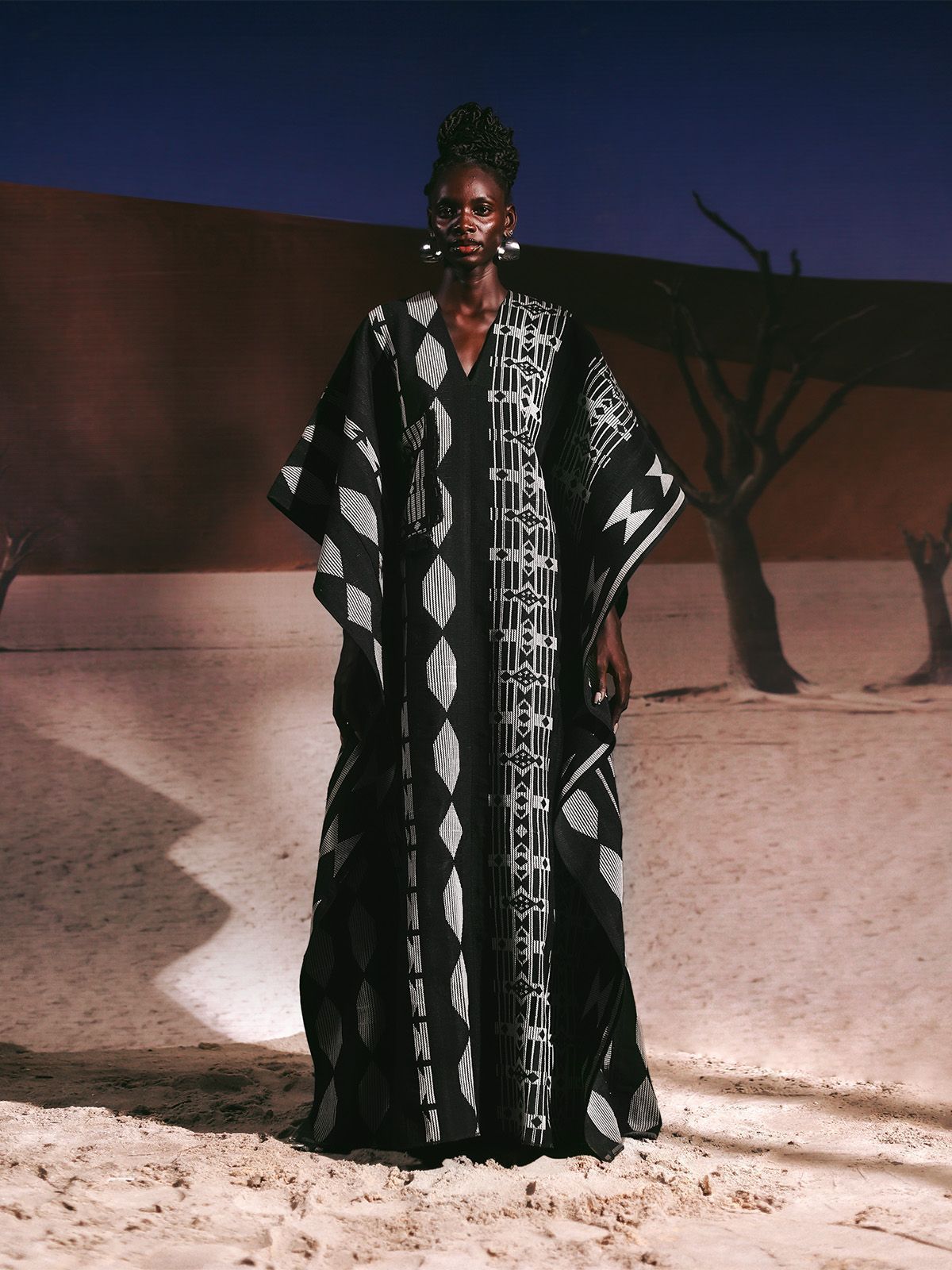
What this mapping reveals is something that the global fashion industry has been slow to understand: that African dress traditions are not monolithic, not interchangeable, and not reducible to a single aesthetic vocabulary. The agbada of Lagos and the grand boubou of Dakar share a silhouette and a lineage. Still, they have been doing different philosophical work for long enough that they are now, in many meaningful ways, different garments. The boubou of Abidjan carries the specific weight of a culture negotiating its relationship to imposed modernity. The boubou of Bamako carries the weight of an entire civilisation’s continuity. None of these is a simpler or more authentic version of the others.
Understanding this requires more than visual literacy. It requires the kind of cultural fluency that comes from taking African dress seriously as a system of thought, not just as a source of inspiration or aesthetic reference. When global fashion borrows the agbada silhouette without that understanding, what it produces is beautiful at best and extractive at worst. When it engages with that understanding, it enters a conversation that has been ongoing for centuries and that has, frankly, been more sophisticated than most of what the international luxury industry has produced in the same period.
The garment is one. There are four arguments. All four are correct. All four are necessary. And all four have been there, being made, in fabric and embroidery and the specific weight of a sleeve, long before anyone thought to call what they were doing fashion.
The Omiren Argument
African fashion does not begin where Western attention arrives. The agbada, the boubou, and the grand boubou have been doing the intellectual and political work of entire civilisations for centuries. What Omiren Styles insists on is this: the conversation these garments carry is not background context for a trend.
It is in the foreground. That is the point. Until the global luxury industry learns to read a sleeve the way a griot reads a lineage, it will keep mistaking the surface for the depth. We are not here to make that easier. We are here to raise the standard of what counts as understanding.
Frequently Asked Questions
- What is the difference between agbada, boubou, and grand boubou?
All three names refer to variations of the same West African flowing over-robe, but the terms, construction details, and cultural associations differ by region and linguistic tradition. Agbada is the Yoruba term, used primarily in southwestern Nigeria, and typically refers to a three-piece ensemble consisting of the wide outer robe, matching trousers, and an inner shirt, often with heavy embroidery at the chest. Boubou is the broader Francophone West African term, used across Mali, Côte d’Ivoire, Guinea, and other countries, describing a single flowing robe worn over trousers or a wrap skirt. Grand boubou refers specifically to the most formal and elaborately embroidered version of the boubou, most associated with Senegalese dress culture, and worn as both everyday dress by distinguished men and as ceremonial dress for significant occasions.
- Is the agbada only for men?
The three-piece agbada in its traditional Yoruba form is most commonly worn by men, but women across West Africa wear closely related silhouettes adapted to female dress traditions. In Senegal, the female grand boubou is a major and celebrated dress form in its own right, worn in vivid fabrics and often more elaborately embroidered than the men’s version. In Côte d’Ivoire and Mali, women’s boubou traditions have developed rich and distinct design vocabularies.
- Why do Nigerian politicians wear an agbada at official functions?
The agbada has become the standard ceremonial and official dress of Nigeria’s political class because it communicates cultural legitimacy and rootedness in Yoruba and broader Nigerian tradition. Choosing it over a Western suit at a public function signals that the wearer’s authority is connected to the culture and people they seek to represent, rather than to external or imported frameworks of power. The fabric quality, embroidery, and styling of an agbada also communicate wealth and status in ways that are immediately legible to a Nigerian audience, making it a politically layered choice in every dimension.
- What is Bazin Riche, and why is it significant in Senegalese fashion?
Bazin riche is a mercerised cotton damask fabric that has become the most prestigious material for Senegalese grand boubou. It is characterised by a distinctive sheen and a stiffness that allows it to hold a crisp pressed form even in heat. The fabric’s structure means it requires and rewards good tailoring, and a well-cut grand boubou in quality bazin riche is immediately recognisable as an investment piece. Bazin riche is imported primarily from Europe and Asia, but has been so thoroughly adopted into Senegalese dress culture that it is now inseparable from the identity of the grand boubou tradition.
- How does the boubou in Mali differ from the boubou worn in Côte d’Ivoire?
In Mali, the boubou is an everyday dress worn across all social classes and occasions, carrying the ease and naturalness of a garment that has never needed to prove itself. In Côte d’Ivoire, particularly in Abidjan, the boubou occupies a more contested position alongside Western professional dress, and wearing it can be a more deliberate cultural or religious statement depending on the context. This difference reflects the distinct post-colonial histories of the two countries: Mali’s cultural life remained more continuously connected to pre-colonial dress traditions, while Côte d’Ivoire’s urban professional culture was more thoroughly shaped by French colonial norms.