The flight is six hours. The suitcase is already at its limit. And somewhere in the back of a wardrobe at the hotel is a length of fabric you bought on the second day and have been negotiating with your luggage allowance ever since. You know it is the right purchase. You knew it the moment the trader pulled it from the bolt and held it to the light. The question now is whether you leave it behind or carry it home wrapped around your shoulders on the plane.
You carry it home.
This is the choice every culturally intelligent traveller to Lagos, Accra, and Nairobi eventually makes: fabric over luggage comfort, textile over convenience. Because the fabric available in these three cities is not available anywhere else in the world at the same quality, the same provenance, or the same price. Once you leave, the window closes. This guide tells you what to buy before it does.
Three cities. Three distinct textile traditions. This is what to buy in Lagos, Accra, and Nairobi before your flight home, and why each piece matters.
Before You Shop: The Three Rules
The same rules that govern all culturally intelligent fabric shopping in Africa apply with particular force when you are shopping against a departure deadline.
First: know what you are buying before you buy it. The fabric markets of Lagos, Accra, and Nairobi carry a vast range of quality grades, from certified authentic craft textiles to factory-printed imitations that use African visual culture for marketing. The price difference between them is significant. The provenance difference is total. A buyer who cannot distinguish aso-oke from a printed polyester imitation will pay the wrong price for the wrong thing and leave with something that carries none of the cultural authority they were looking for.
Second: know the label. Every fabric bolt in a serious market carries a brand sticker or selvedge mark. That mark is your first provenance check. The full guide to reading fabric labels is in “How to Read a Label on African Designer Clothing.” The principle applies equally to uncut fabric: if the seller cannot tell you the manufacturer and the fibre content, move to the next stall.
Third: buy more than you think you need. African fabric is typically sold in 6-yard half pieces or 12-yard full pieces because the tailoring tradition expects you to have enough for a complete garment. A buyer who purchases two yards because it seems sufficient will arrive home with a length that cannot be made into anything useful. Buy a full piece. If the fabric is genuine, it will be worth every centimetre.
Lagos: What to Buy and Where
Lagos is the most commercially complex fabric market in West Africa. Balogun Market on Lagos Island, with over 8,000 stalls across multiple streets, offers the full range of Nigerian textiles alongside imported fabrics from around the world. The buyer who enters knowing what they want leaves with something real. The buyer who enters hoping the market will decide for them leaves overwhelmed.
Aso-Oke
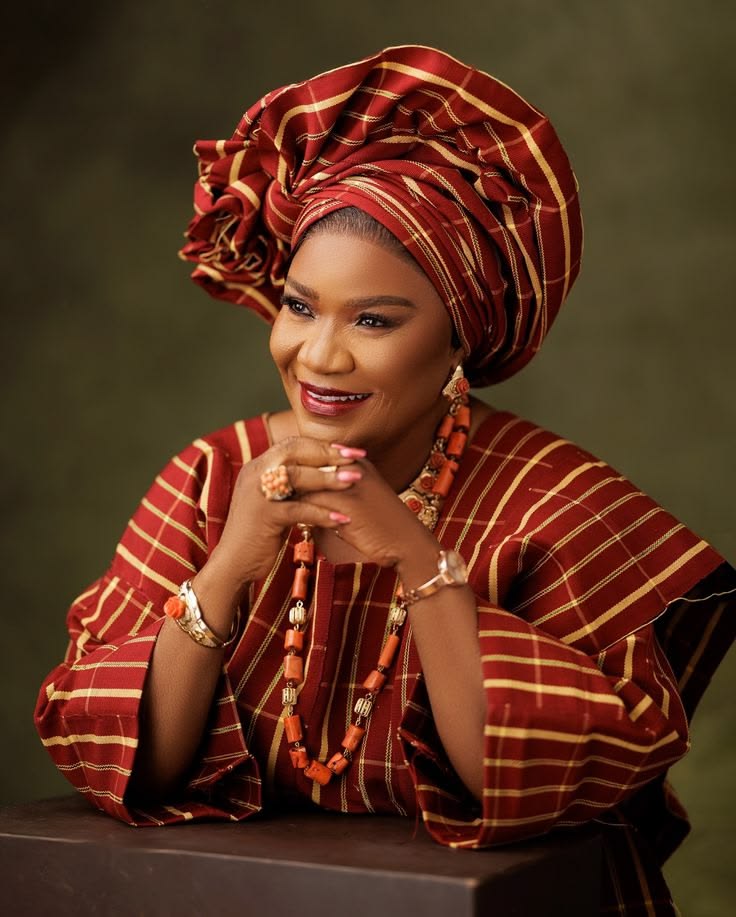
Aso-oke is the highest-priority fabric to buy in Lagos. The Yoruba prestige cloth, hand-woven on narrow looms in the Iseyin weaving tradition, is available at Balogun in the sections along Balogun Street itself, where specialist traders carry sanyan, alaari, and etu grades alongside the modern metallic and lace-threaded variations that dominate contemporary Nigerian ceremony. Buy the weave type appropriate to your intended use—triple-weave aso-oke for formal agbada or gele; single-weave for lighter applications. Feel the weight before you buy. If the fabric feels light and uniform, it is not hand-woven aso-oke.
Adire
Adire, the indigo-resist cloth of the Yoruba people, is produced by master craftswomen in Abeokuta, Ogun State, and reaches Lagos traders through supply chains that are worth understanding before you purchase. The best adire carries the specific texture of hand-applied resist techniques: stitch-resist adire eleko and starch-paste adire alabere have surface irregularities that machine-printed imitations cannot replicate. Adire is sold by the yard and by the piece in Balogun and in specialist stalls throughout the Lagos Island market cluster. Buy natural indigo where possible. The dye depth in natural indigo adire is visibly different from that of synthetic blue.
Lace and George

Nigerian lace, used extensively in aso-ebi dress codes for weddings and ceremonies, and George fabric, the silk and brocade textile used in southeastern Nigerian traditional dress, are both available at Balogun and Idumota in grades from Swiss voile to French double lace. These are not hand-crafted textiles in the same sense as aso-oke, but they carry specific cultural uses and quality grades that matter to the buyer who knows Nigerian ceremony culture. Ask for the fabric grade and the country of manufacture. The best Swiss lace carries a stamp.
“The fabric available in these three cities is not available anywhere else in the world at the same quality, the same provenance, or the same price. Once you leave, the window closes.”
Accra: What to Buy and Where
Makola Market anchors Accra’s fabric market in the city centre, established in 1924 and offering the broadest range of Ghanaian textiles under one roof. The buyer visiting Accra for fabric has one primary objective: to understand the differences among Kente cloth, Kente print, and machine-manufactured imitations that dominate international markets, and to leave with the genuine article.
Authentic Kente
Authentic handwoven Kente from Makola is available, but it requires specific knowledge to identify correctly. The strip construction, the weight, the slight irregularities of hand-worked thread, and the specific brand marks of approved GTP, Woodin, and ATL production are the first markers. For the highest certainty of provenance, the Kente weaving villages of Bonwire and Adanwomase, both within reach of Kumasi on a day trip from Accra, offer direct purchases from weavers. Adanwomase operates an internationally verified DHL shipping system for buyers who cannot carry fabric on the flight, making it one of the few sources where the provenance chain from loom to buyer remains unbroken. The full buying guide is in “Where to Buy Kente Cloth Without Funding a Counterfeit Industry.”
Adinkra Cloth
Adinkra cloth, the hand-stamped fabric of the Akan people of Ghana, is produced primarily in the village of Ntonso on the Kumasi-Mampong road and is available in Accra’s Arts Centre near Black Star Square. The Bonwire Kente weaving centre is located near Ntonso, making a combined visit practical. Adinkra cloth is stamped with symbols drawn from Akan philosophical and proverbial tradition: over 60 distinct Adinkra symbols carry specific meanings. Buy a cloth whose symbols you can identify. The vendor at the Arts Centre or in Ntonso should be able to name each symbol on the piece they sell you.
Wax Print Fabric
Accra carries the broadest range of wax-print fabric quality grades in West Africa. The brand sticker on each bolt is your guide: Vlisco from the Netherlands and Woodin from Ghana represent the quality ceiling; GTP (Ghana Textile Printing) and ATL (Akosombo Textile Limited) represent quality Ghanaian industrial production; “hitarget” indicates Chinese manufacture. Know what you are buying and pay accordingly. Do not pay Vlisco prices for hitarget fabric. The labels tell you the difference.
Nairobi: What to Buy and Where
Nairobi’s fabric market is distinct from Lagos and Accra in its textile tradition. East African dress culture centres on kitenge, khanga, and kikoi, three distinct fabrics with specific cultural uses, available in Nairobi in quality and variety unmatched elsewhere in East Africa.
Kitenge
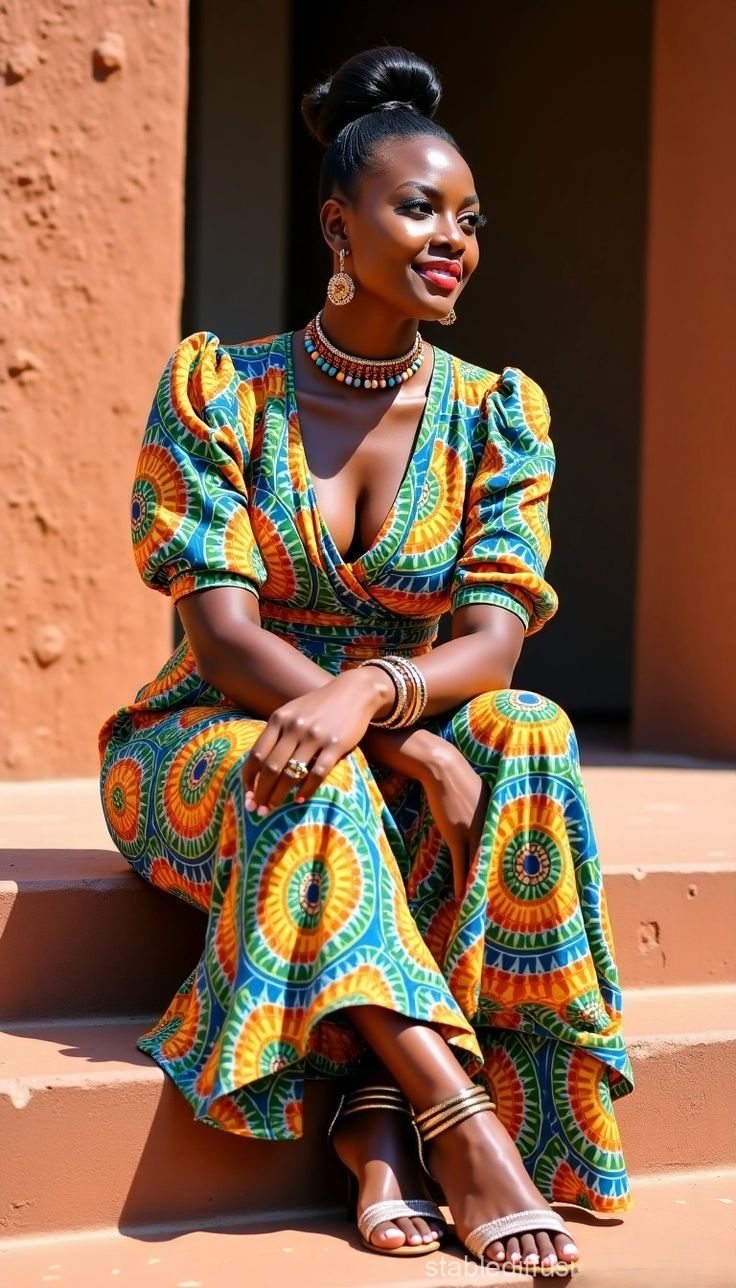
Ngara Market, one of Nairobi’s best-kept secrets for fabric buyers, is where professional tailors, designers, and artisans source kitenge. The market carries kitenge in bold patterns from across East and Central Africa, as well as African-print textiles, lace, and imported materials. Biashara Street in the CBD is the city’s primary destination for kitenge and kikoi at competitive prices. Buy kitenge in full six-yard pieces for tailoring. Know the colour you want: kitenge dyes vary considerably in depth and fastness, and colours that are difficult to match in a bolt are even harder to match at home.
Khanga
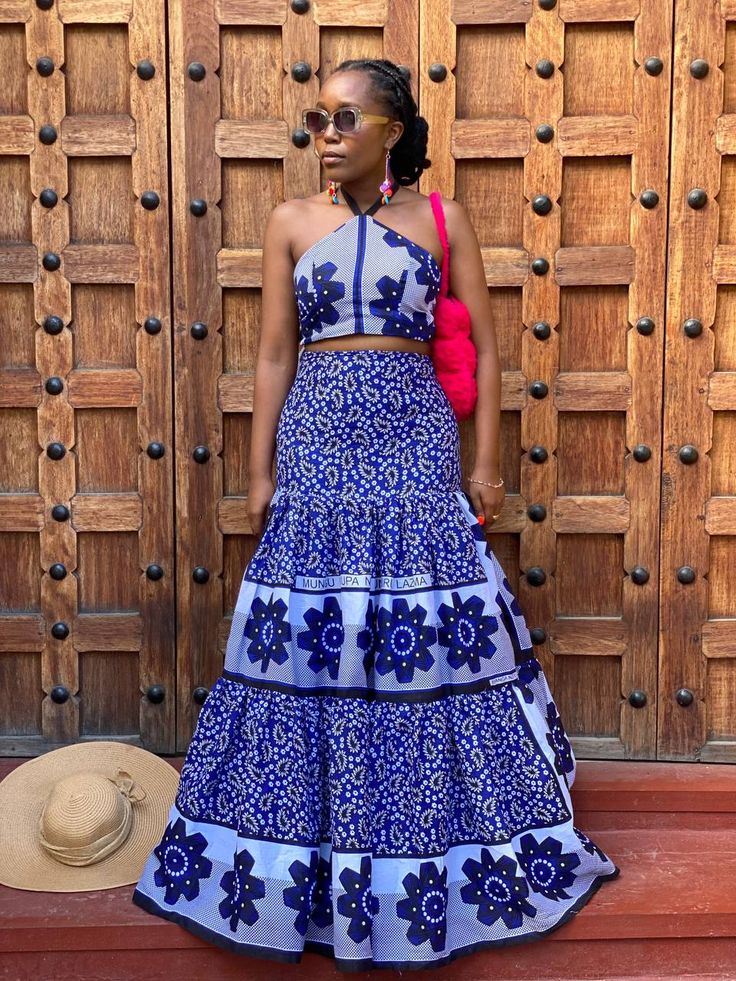
Khanga is sold in pairs and should be purchased that way. The two-rectangle set functions as a complete garment ensemble: one piece worn as a wrap skirt, the second as a headscarf or shawl. Each khanga carries a Swahili proverb printed along its border. Buy a khanga whose proverb you can read. Ask the vendor to translate it if you cannot. The proverb is not decorative. It is the social message the wearer has chosen to carry. A khanga purchased without knowing what it says is incomplete.
Kikoi
Kikoi, the striped cotton cloth of the Swahili coast, is available in Nairobi’s Maasai Market and in specialist textile shops. Kikoi is traditionally woven in cotton with a checked or striped pattern and used as a wrap, a sarong, and a towel across coastal East Africa. It is one of the most versatile textiles available from any of the three cities in this guide: lightweight, durable, and washable. Buy the heaviest grade available for longevity.
THE OMIREN ARGUMENT
The fabric you buy in Lagos, Accra, or Nairobi is not a souvenir. It is a document of where that textile tradition lives, who makes it, and what it means. The difference between buying correctly and buying generically is the difference between bringing home a piece of that tradition and bringing home an image of it. An image can be bought anywhere. The tradition can only be bought where it lives.
The context is centuries of design intelligence encoded in the fabrics available in these markets. Aso-oke carries the weaving knowledge of Iseyin master artisans who have worked the same loom geometry for generations. Kente carries the pattern grammar of the Asante and Ewe communities of Ghana, now formally protected under Geographical Indication law and UNESCO recognition. Khanga carries the Swahili proverbial tradition of coastal East Africa, each border print a sentence selected with social intent. None of this is visible in the fabric from a distance. It requires knowing what to look for. The buyer who arrives with that knowledge leaves with something that will mean more in ten years than it does today.
The disruption is that most fabric purchased by visitors to these three cities is purchased without that knowledge. The markets are not at fault. Lagos, Accra, and Nairobi each contain a fabric of extraordinary cultural and craft depth, available at prices that reflect their local production economies. The problem is the buyer who arrives without preparation, spends two hours in a market that rewards knowledge and punishes its absence, and leaves with a generic wax print that could have been purchased online from a factory in China. Omiren Styles publishes this guide because the fabric is not the problem. The preparation is.
Also Read
- How to Shop African Fashion: The Complete Guide for the Culturally Literate Consumer
- The African Fabric Market Guide: From Balogun to Kariakoo
- Where to Buy Kente Cloth Without Funding a Counterfeit Industry
- East African Textile Untold: Kitenge, Kikoi, and the Coastal Cloth
Frequently Asked Questions
How much fabric should I buy for a complete garment?
African tailoring tradition uses 6-yard half pieces or 12-yard full pieces as standard cutting units. A woman’s dress, wrapper, or skirt suit typically requires 6 yards. A man’s agbada or grand boubou requires 12 yards. A gele (headwrap) requires an additional 2 to 3 yards of matching fabric. Always buy more than you think you need: fabric purchased in situ cannot be matched exactly at home, and running short after returning is a common and avoidable error.
How do I identify authentic aso-oke in Lagos?
Authentic hand-woven aso-oke has three physical markers: strip construction (visible seams where narrow strips are sewn together lengthwise), density and weight (genuine aso-oke is heavy and structured; light, uniform fabric is not authentic), and slight colour irregularities (the result of hand-worked threads rather than machine printing). Traders on Balogun Street specialising in aso-oke should be able to identify the weave type (sanyan, alaari, or etu) and the grade. If they cannot, they do not know what they are selling.
What is the difference between kente and kente print in Accra?
Authentic kente is hand-woven on narrow looms in approved Ghanaian weaving communities and assembled from strips sewn edge to edge. The strip seams are visible. The cloth is dense and heavy. Each pattern has a name and meaning. Kente print is an industrially manufactured fabric that reproduces kente colour patterns by printing them on cotton. Brand markers at Makola include GTP, Woodin, and ATL for quality industrial production, and “hitarget” for Chinese-manufactured prints. Authentic handwoven kente purchased in Accra markets is typically sourced from weavers in the Kumasi region rather than produced in Accra itself.
Where should I buy kitenge in Nairobi?
Ngara Market is Nairobi’s primary destination for sourcing professional-grade kitenge for tailors, designers, and artisans. Biashara Street in the CBD carries kitenge and kikoi at competitive retail prices. The Maasai Market, which rotates locations across the city throughout the week, carries kitenge alongside craft textiles and beadwork in a more curated, less wholesale environment. Bring cash to all three locations.
Can I ship fabric home from these cities if I cannot carry it?
Yes. The Adanwomase Kente weaving community near Kumasi operates DHL international shipping for verified, authentic Kente purchases. Many Lagos fabric traders now ship via DHL or local courier services for domestic and international delivery. In Nairobi, established textile shops,s including those on Biashara Street, can arrange shipping. For all three cities, confirm the shipping cost and timeline before purchasing, and ensure the seller provides a receipt that describes the fabric type, quantity, and country of production.
Know Before You Go
Omiren Styles publishes cultural intelligence on African fashion, textiles, and design across all 54 nations, the Caribbean, and the global diaspora. Read before you travel. Buy better when you arrive.