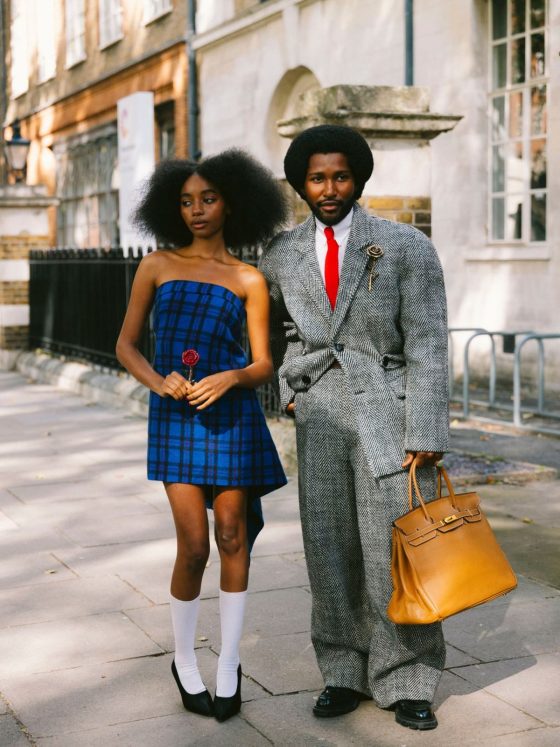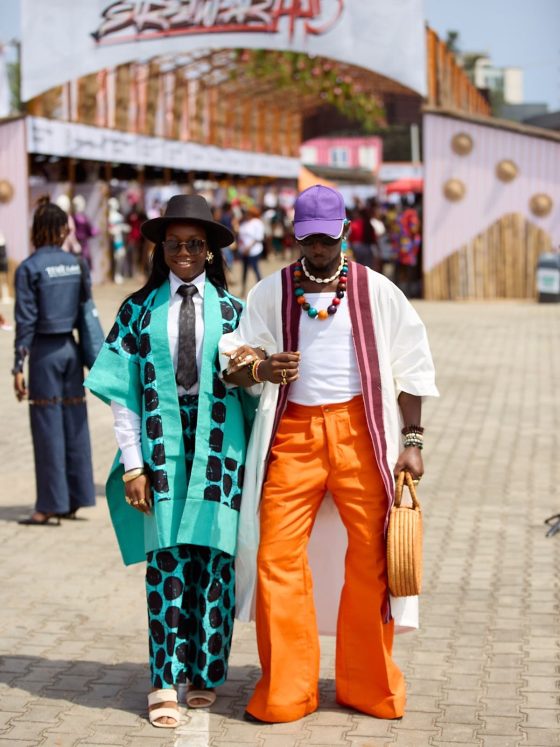
Type “African dress” into Amazon. Watch what comes back. Page after page of machine-printed polyester, manufactured in China, tagged with search terms stripped from African visual culture. Not a single piece woven by a Kente master in Bonwire. Not a length of aso-oke from an Iseyin loom. Not a tailored kaftan from a Lagos atelier. The algorithm has spoken. This is what it thinks “African fashion” means.
Now search for Thebe Magugu on the same platform. Nothing. Search for Kenneth Ize. Nothing. Search for Lisa Folawiyo, Tongoro, or Orange Culture. Nothing. Three of the most critically acclaimed designers on the African continent, whose work has been worn at the Grammy Awards, shown at Paris Fashion Week, and stocked at Dover Street Market, do not exist inside the world’s largest e-commerce platform.
This is not a coincidence. It is a structural condition. And understanding it is the first step to buying around it.
African designers are present online. The algorithm is not built for them. Here is why African fashion disappears in search and exactly how to find it.
How the Algorithm Buries African Fashion

The global online fashion marketplace was built on a specific commercial logic: volume, velocity, and price. Amazon, ASOS, Shein, and Zalando each optimise for high turnover, fast fulfilment, competitive pricing, and mass-market search behaviour. The ranking systems that determine what a buyer sees first are built to serve that logic. They reward sellers who list thousands of SKUs, can ship within 48 hours, and price at the margin enabled by mass production.
African fashion, in its authentic form, operates on an entirely different logic. A Kente cloth from Bonwire is hand-woven in narrow strips over days. An aso-oke piece from an Iseyin master requires weeks of skilled labour. A garment from Tongoro or Orange Culture is produced in limited runs that cannot be replicated at scale. These are not supply chain failures. They are design choices, rooted in the cultural principle that craft takes time and that time is part of what you are buying.
The algorithm does not know this. It sees a product with a high price point, low volume, and slow fulfilment. It ranks it accordingly: behind the factory-printed competition that costs a fraction of the price, ships in 48 hours, and lists ten thousand variants. The designer’s cultural authority, their textile provenance, and the centuries of craft tradition behind their work do not appear as ranking signals.
“The algorithm sees a price point and a fulfilment time. It does not see four hundred years of craft history. That asymmetry is the entire problem.”
The Counterfeit Advantage
The counterfeit economy compounds the problem with algorithms. When a buyer searches for “Kente cloth” or “African print dress” on Amazon, ASOS, or general marketplace platforms, the results they receive are dominated by factory-produced imitations that use African visual culture as a marketing category without attribution, payment, or connection to the communities those patterns belong to.
These products carry the search term. They carry the visual reference. They carry a price point that genuine African craft cannot match and should not have to match. And because the algorithm rewards click-through rate, conversion rate, and review volume, the imitations rank higher than genuine products simply because they sell more units. The more they sell, the higher they rank. The higher they rank, the more they sell. The genuine African designer, producing at an artisan scale with authentic materials, is pushed further down a search results page that was never designed to surface them.
The Business of Fashion has documented this structural gap directly: most African designers rely on sales from their own e-commerce stores and small local boutiques rather than global platforms. The exceptions, Thebe Magugu, Kenneth Ize, and a small cohort of designers who have achieved international institutional recognition, are available through retailers such as Dover Street Market, Farfetch, and Browns. But these are the outliers. The African fashion industry’s structural dependence on direct-to-consumer channels is not a business model choice. It is a response to being systematically excluded from the mainstream marketplace infrastructure.
The Infrastructure Built to Solve It
The response to marketplace exclusion has been the construction of alternative infrastructure. A growing set of platforms has been built specifically to give African fashion the commercial architecture that general marketplaces refuse to provide.
ADJOAA
ADJOAA, founded by Ghanaian entrepreneur Pinaman Owusu-Banahene in 2021, was built specifically to address the logistical and market-access barriers that prevent African designers from scaling globally. The platform combines marketplace access, integrated payments, DHL logistics, quality assurance, and marketing support for designers primarily from Nigeria, Ghana, and Côte d’Ivoire. Its vetting model is deliberate: designers are assessed on quality and operational readiness before onboarding. ADJOAA currently works with approximately 120 brands and ships globally. It is not a general marketplace where anything can be listed. It is an editorial and commercial infrastructure built around African craft.
Industrie Africa
Industrie Africa is a curated editorial and retail platform that indexes African designers with the same rigour that Vogue or Business of Fashion applies to European houses. Its designer directory carries brands from across the continent, with editorial context, cultural background, and direct links to purchase channels. For a buyer who knows where to go, it serves as the discovery layer that general search engines refuse to provide.
The Folklore and Direct Designer Commerce
The Folklore, founded by Amira Rasool in 2017, was among the first platforms to position African and diaspora luxury goods for the global fashion market with the same presentation standards as those applied to European luxury goods. Direct designer websites, from Tongoro to Orange Culture to Christie Brown, complete the picture. These channels operate entirely outside the general marketplace logic. They do not compete on price. They do not compete on fulfilment speed. They compete on cultural authority, craft quality, and the relationship between a buyer who understands what they are purchasing and a designer who has produced it with integrity.
How to Search Correctly
The practical consequence of the marketplace problem is a specific methodology. A buyer who wants to find genuine African fashion online must abandon general marketplace search entirely and adopt a different approach.
Search by designer name, not by category. “Tongoro” returns Tongoro. “African dress” returns factory imitations. This is not a workaround. It is the correct methodology. The designer’s name is the provenance marker. It is the entity that carries cultural authority. Search for it directly.
Use editorial platforms as discovery engines. Omiren Styles, Industrie Africa, and ADJOAA function as the editorial layer between the buyer and the designer. They surface designers with cultural context, buying links, and provenance information. They are the infrastructure that general algorithms refuse to build.
Follow designers on Instagram and go directly to their commerce channels from there. The African fashion industry’s move to Instagram as its primary discovery platform was not a marketing strategy. It was a response to algorithmic exclusion. Designers who cannot rank on Amazon or ASOS can build audiences of culturally engaged buyers on social platforms and convert them directly through their own websites. That direct channel is where the most culturally specific purchasing happens. For the complete framework for navigating this, read How to Shop African Fashion: The Complete Guide for the Culturally Literate Consumer.
THE OMIREN ARGUMENT
African fashion does not disappear from online marketplaces; it is simply absent. It disappears because the platforms were built on a logic that values volume, velocity, and price over provenance, craft, and cultural specificity. Amazon was not designed to rank a Kente master weaver in Bonwire above a factory in Guangzhou producing printed polyester. ASOS was not built to surface a Lagos atelier producing twenty pieces a season above a Shein competitor offering ten thousand. The infrastructure does not understand what it is failing to surface. It is not indifferent to African fashion. It is structurally blind to it.
The context is a global fashion industry whose e-commerce architecture was built in and for European and North American markets, trained on the purchasing behaviour of buyers who had already been conditioned to search in generic category terms rather than specific cultural ones. When 75% of Amazon searches are non-branded, the search terms that surface are generic: “African dress,” “African print,” “Kente.” Those terms return whatever the algorithm has learned to associate with them. What the algorithm has learned to associate with them is the factory-produced imitation economy, because that economy has trained it to reward volume and velocity.
The disruption is the counter-infrastructure: ADJOAA, Industrie Africa, The Folklore, Omiren Styles, and the direct commerce channels of African designers themselves. These platforms are not filling a gap in the market. They are building the market that the mainstream infrastructure systematically refuses to build. Each platform is a political and commercial act: a refusal to accept that African fashion’s visibility should be determined by an algorithm that was never designed with African craft in mind.
Also Read
- How to Shop African Fashion: The Complete Guide for the Culturally Literate Consumer
- How to Read a Label on African Designer Clothing
- The African Fabric Market Guide: From Balogun to Kariakoo
- How a New Wave of Designer Brands Are Building Legacy, Not Just Products
Frequently Asked Questions
Why don’t African fashion designers appear on Amazon or ASOS?
The general marketplace algorithm rewards volume, fast fulfilment, and competitive pricing. African designers producing authentic craft textiles at an artisan scale cannot compete with mass-produced imitations on these metrics. Most African designers instead operate through their own e-commerce websites, curated platforms such as ADJOAA and Industrie Africa, and boutique stockists. The exception is a small group of internationally recognised designers, including Thebe Magugu and Kenneth Ize, who are stocked by high-end retailers such as Farfetch and Dover Street Market.
What is ADJOAA and how does it work?
ADJOAA is a curated e-commerce platform founded in 2021 by Ghanaian entrepreneur Pinaman Owusu-Banahene. It onboardes African fashion and lifestyle brands after a vetting process that assesses quality and operational readiness. The platform handles integrated payments, logistics through DHL, quality assurance, and marketing support for approximately 120 brands primarily from Nigeria, Ghana, and Côte d’Ivoire. It ships globally and operates as a commercial and editorial alternative to general marketplaces.
What happens when I search for “African dress” online?
General marketplace searches for category terms like “African dress,” “African print,” or “Kente cloth” return results dominated by factory-manufactured imitations produced primarily in China. These products use African visual culture as marketing categories without attribution to the communities from which those patterns originate. They rank highly because they sell high volumes at low prices, which trains the algorithm to surface them above genuine African craft products. To find authentic African fashion, search by designer name directly or use editorial platforms such as Industrie Africa, ADJOAA, or Omiren Styles as discovery tools.
How do I find African designers who ship internationally?
The most reliable methods are: searching by specific designer name on general platforms or directly on the designer’s own website; using ADJOAA, which ships globally via DHL and carries approximately 120 vetted African brands; using Industrie Africa’s curated designer directory; using The Folklore for African and diaspora luxury brands; and following designers on Instagram and converting directly through their own commerce channels. Omiren Styles publishes designer profiles with direct links to purchase channels.
Is African fashion available on Farfetch or luxury platforms?
A small number of internationally recognised African designers are stocked on Farfetch, including Thebe Magugu, and on boutique luxury retailers, including Dover Street Market and Browns. This represents the upper tier of African fashion’s mainstream platform presence. The majority of African designers, including many whose work is of comparable craft quality, are not present on these platforms due to structural barriers such as minimum order quantities, commission rates, and institutional validation processes that favour designers already embedded in European fashion-week circuits.
Find What the Algorithm Hides
Omiren Styles publishes designer profiles, buying guides, cultural intelligence, and market analysis across all 54 African nations, the Caribbean, and the global diaspora. Subscribe to our editorial newsletter for the African fashion intelligence that no algorithm will surface for you.