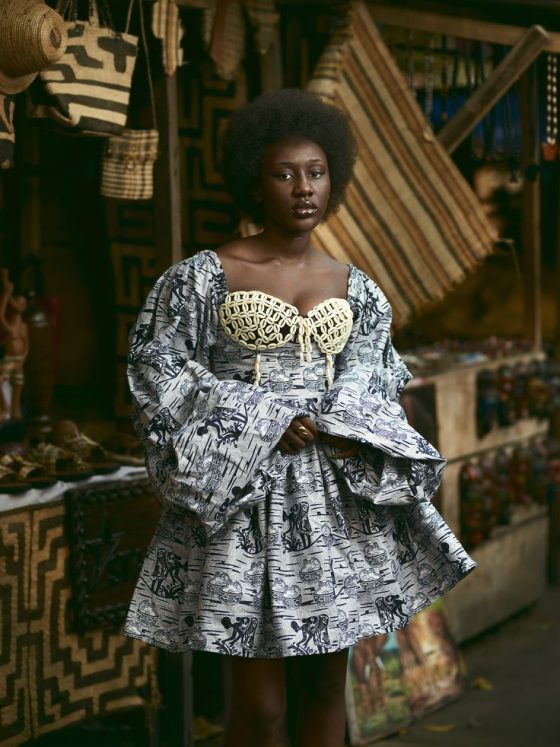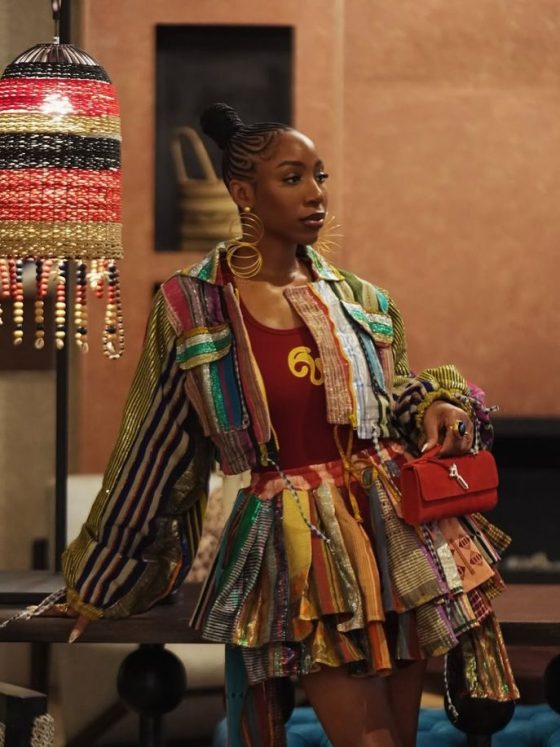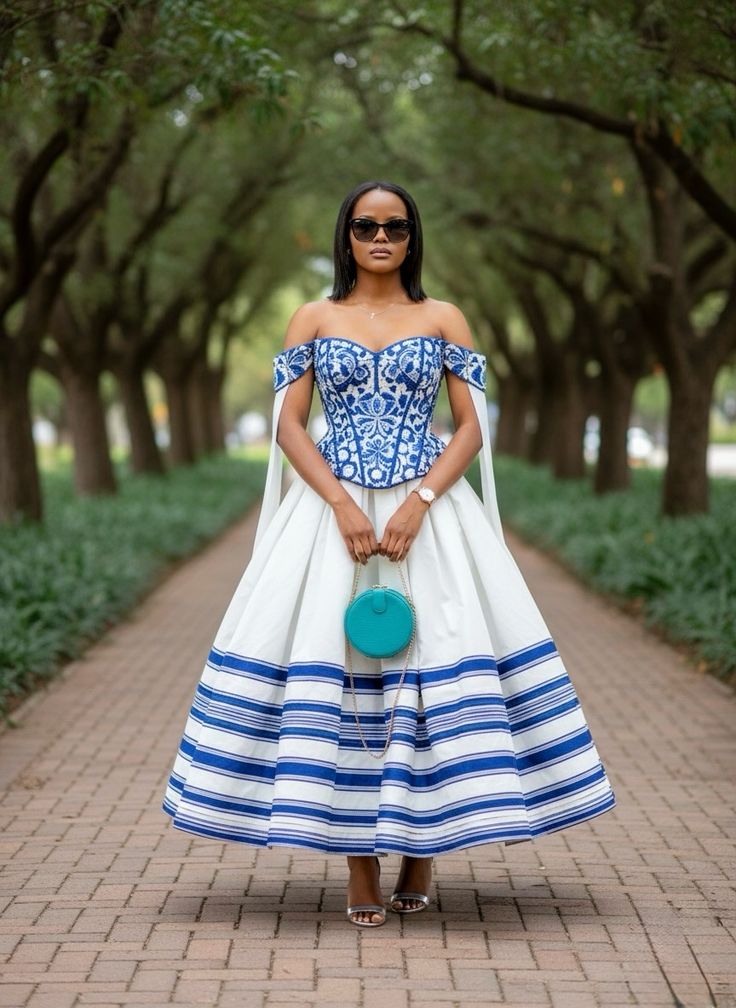
In the Eastern Cape, indigo is more than just a colour. It is a ceremony.
Across rural homesteads and urban townships, in Johannesburg studios and Cape Town ateliers, the crisp snap of printed cotton carries meaning before it carries movement. Circles, dots, florals, and tight geometric repeats march across deep blue cloth. The patterns are precise. Repetitive. Structured. Nothing about Shweshwe is accidental.
For generations, isishweshwe — the distinctive discharge-printed cotton fabric adopted by Xhosa, Sotho, Tswana, and other Southern African communities- — as served as dancewear, bridal attire, an initiation garment, and an everyday uniform. It is South African fashion’s most persistent visual language. When people reach for the “denim of South Africa” comparison, they capture Shweshwe’s durability and democratic reach but miss its real authority. Denim was imposed on a culture. Shweshwe was claimed by one. This article focuses on that distinction.
Shweshwe arrived in Southern Africa as imported cotton. What happened next is not a story of fashion adoption. It is a story of cultural transformation, and the geometry of that transformation is still worn today.
From Commodity to Cultural Infrastructure: The 19th-Century Origin
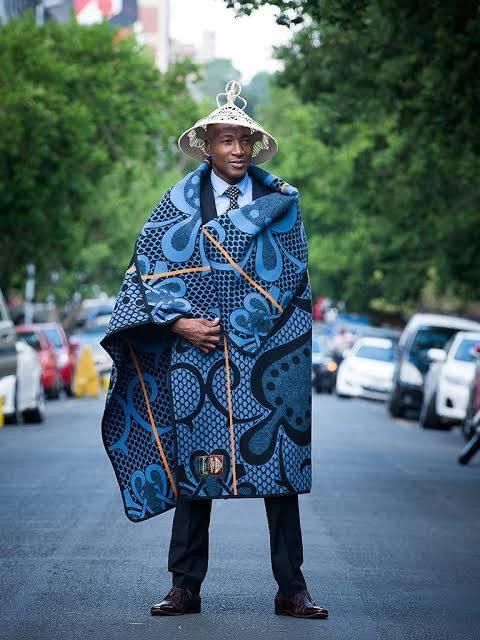
Shweshwe fabric was introduced to the Eastern Cape and Lesotho regions in the mid-19th century through German missionary networks and European trade routes. Printed cotton had commercial reach across colonial supply chains, but in Southern Africa, something specific happened that did not happen elsewhere. The fabric encountered a king.
Moshoeshoe I, the founder and king of the Basotho nation, received printed cotton cloth as a diplomatic gift, and it is widely understood that he favoured it so consistently that the fabric came to be known as ‘Moshoeshoe cloth’. A king choosing an imported cloth, wearing it, assigning it prestige, and making it visible at royal ceremonies was not passive acceptance. It was cultural appropriation in the precise, original sense of the word: the act of a community taking something external and making it structurally its own.
That act set the terms for everything that followed. If a cloth enters a culture through trade and remains imported, it is a commodity. If it enters through ceremony and becomes the fabric of initiation, marriage, and public identity, it is infrastructure. Within a single generation, Shweshwe transcended this boundary.
The Technique: Why Discharge Printing Matters
Shweshwe’s traditional production involves discharge printing, a technique in which dye is removed from indigo-dyed cotton to create crisp, repeating white patterns on a deep blue ground. The result is a fabric that feels almost architectural: dense in structure, mathematically consistent, and visually rhythmic. The patterns are not decorative choices. They are the product of a technical constraint, what the discharge process permits, which Southern African communities then invest with meaning.
This is worth naming precisely because it is the reverse of how most cultural textiles work. Kente is defined by what is woven in. Its resist-dyed fabric defines Adire. Shweshwe’s visual identity is defined by what is taken out, which makes it an unusual case in the global vocabulary of cultural cloth. The geometric precision that gives Shweshwe its characteristic graphic authority is a product of chemistry made meaningful by repetition, ritual, and community ownership.
Ceremony as Cultural Claim
Southern African ceremonial life. Xhosa brides wore it. Sotho initiates were wrapped in it during coming-of-age ceremonies. Tswana women used it as an everyday dress. The fabric’s deep blue, already culturally significant in communities where indigo carried spiritual weight, aligned with existing colour meanings rather than displacing them.
What is remarkable about this process is its consistency across linguistically and geographically distinct communities. Shweshwe was not adopted by one ethnic group and later borrowed by others. It was adopted simultaneously and in parallel, which suggests that the fabric offered something that met a shared need: a visually legible cloth, technically durable, available at scale, and open to meaning rather than already saturated with someone else’s. The blank geometry was the invitation.
Today: The Living Fabric
Da Gama Textiles remains the historic manufacturer of Three Cats Shweshwe, the most recognised quality mark in the category. The brand’s continuity is commercially significant, but it is also worth examining honestly: Da Gama is an industrial producer working under licence, operating in a lineage that began with European printed-cotton imports. That the name Three Cats Shweshwe has become a cultural authentication mark, with the fabric’s authority deriving from what Southern African communities did with it, rather than its manufacturing origin, is itself an argument about who gets to define authenticity in fashion.
The answer, for Omiren Styles, is the same as it always is: the community. Contemporary South African designers like Laduma Ngxokolo of MaXhosa Africa are the clearest evidence of this. MaXhosa works explicitly within the Xhosa visual tradition, extending the geometric vocabulary of Shweshwe and beadwork into contemporary knitwear that has been shown at Paris Fashion Week, been worn by Beyoncé, and been acquired by collectors who understand that what they are buying is not nostalgia but a living design intelligence with a centuries-long pedigree.
That is what Shweshwe’s story has always been. Not a fabric that survived. A fabric that was chosen, and keeps being chosen, with full understanding of what it means.
Pattern as Cultural Code
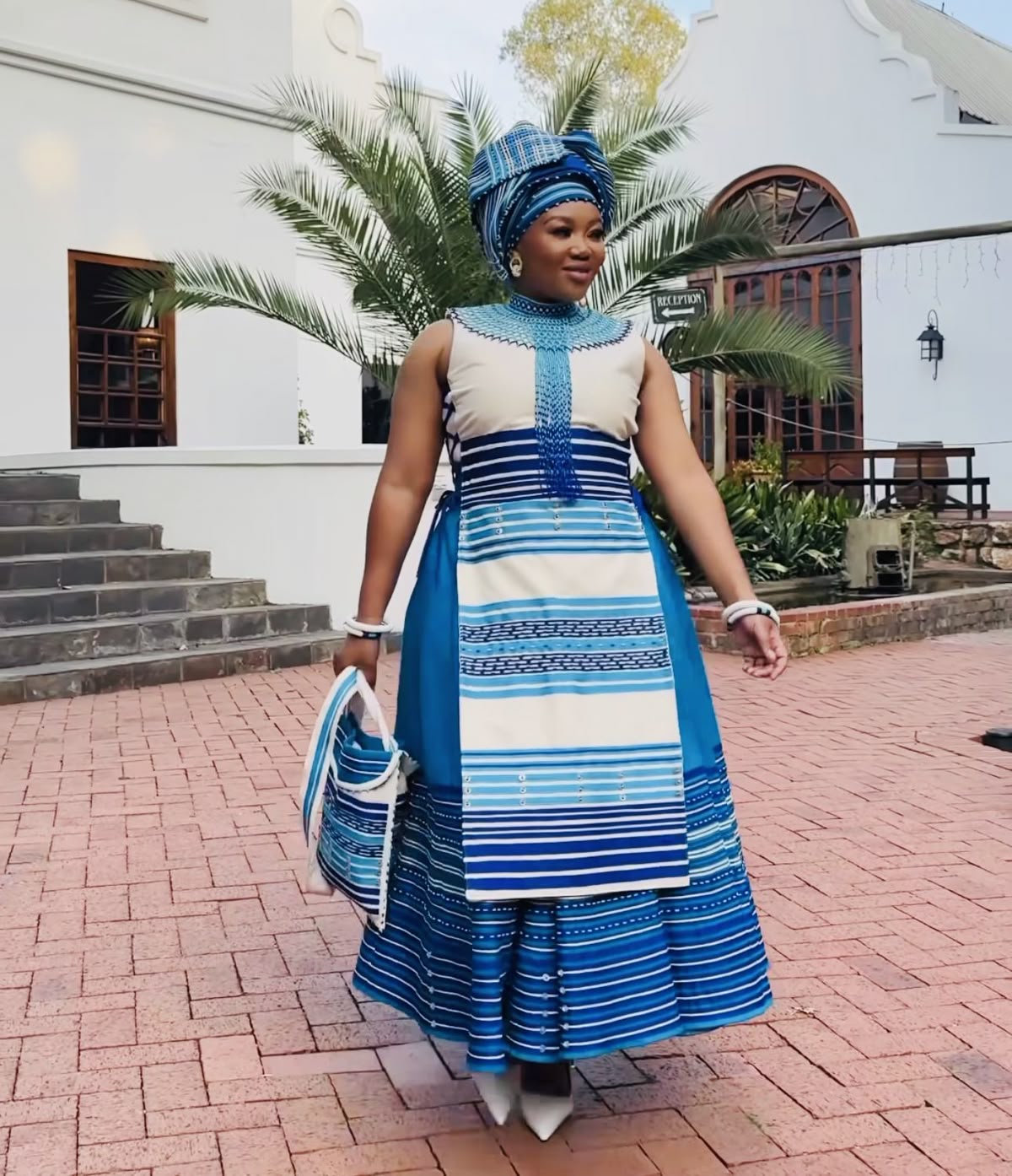
What distinguishes Shweshwe from other printed cottons is its discipline.
The geometry is tight. The spacing is deliberate. The symmetry is near mathematical.
In many Xhosa ceremonies, clothing is not merely decorative — it signals the stage of life, family ties, or community belonging. Pattern becomes semiotic. It speaks.
The indigo base, which is long the dominant colour, carries depth and gravitas. Later variations introduced chocolate brown and rust red, expanding the palette while preserving the structure.
Unlike trend-driven prints that cycle in and out of relevance, Shweshwe’s visual language has remained stable. The power lies in repetition. The repetition creates recognition. Recognition builds identity.
It is this consistency that allows Shweshwe to function across generations without losing authority.
The “Denim of South Africa” — And Why That Matters
The phrase “denim of South Africa” circulates often in fashion commentary. On one level, the comparison makes sense.
Like denim, Shweshwe is:
- Durable
- Widely accessible
- Intergenerational
- Adaptable from work to ceremony
But denim evolved from labour cloth into global casualwear. Shweshwe evolved into something more layered. It has retained ceremonial weight while expanding into everyday life.
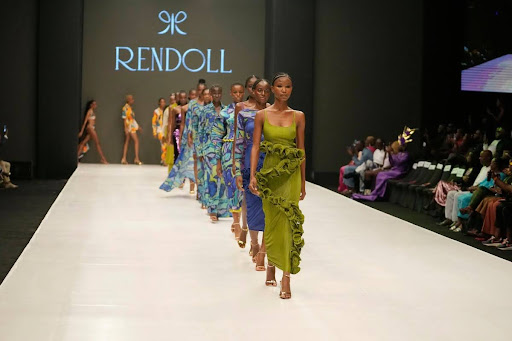
You will see it at rural weddings in the Eastern Cape. You will also see it reinterpreted on the runways of Johannesburg Fashion Week.
That duality is not accidental.
It reflects a textile that has never been confined to one social register.
READ ALSO: How Japanese Denim Culture Teaches Us the Value of Patina
Contemporary Reinvention: Rural Memory, Urban Cut

Modern South African designers are not treating Shweshwe as a static heritage.
They are cutting it into:
- Structured blazers
- Sculptural dresses
- Tailored two-piece sets
- Streetwear-inspired separates
- Accessories and handbags
The key shift is silhouette.
Where traditional garments emphasised wrap, volume, and layered modesty, contemporary interpretations experiment with sharper tailoring, asymmetry, cropped proportions, and architectural seams.
In Cape Town, designers pair Shweshwe skirts with minimalist tops. In Johannesburg, it appears in bomber jackets and structured coats. The fabric has moved from rural ritual into urban cosmopolitanism without losing its grammar.
The effect is not dilution.
It is a translation.
Sustainability Before It Was Language
Western fashion discourse often frames sustainability through carbon metrics and trend cycles. Shweshwe embodies a different logic.
The fabric is sturdy. It ages well and can be passed down. It withstands ceremony, dance, and repetition. Garments are repaired, restyled, and reused.
Like many African textile traditions, Shweshwe culture assumes longevity.
A Shweshwe dress is worn repeatedly, not just archived for novelty. It remains in rotation for years, sometimes decades. It adapts to new contexts — a skirt becomes a blouse, and a wrap becomes a headscarf.
This durability is not marketed as sustainability.
It is simply how the cloth lives.
Geometry in a Global Context
As global fashion cycles through minimalist revivals and pattern resurgences, Shweshwe stands apart because it never abandoned structure.
Its geometry aligns naturally with contemporary tastes for repetition and graphic clarity. Yet unlike digitally generated prints, Shweshwe carries a lineage.
International designers often search for “authentic pattern stories”. South Africa has one embedded in everyday life.
The difference is authorship.
Shweshwe is not an aesthetic raw material waiting for external reinterpretation. It already possesses narrative authority within its context.
Why It Still Defines South African Fashion
South African fashion is multifaceted — influenced by township culture, high-gloss urban luxury, and pan-African exchange. But Shweshwe remains one of its most recognisable signifiers.
Why?
Because it bridges:
- Rural and urban
- Ceremony and everyday wear
- Heritage and experimentation
- Accessibility and prestige
It functions as both a baseline and a canvas.
A designer can use Shweshwe to signal cultural grounding. A family can use it to signal belonging. A bride can use it to signal continuity.
Few fabrics hold that breadth of meaning.
ALSO CHECK OUT: Sindiso Khumalo: South African Designer Redefining Global Sustainable Textile Craft.
The Future of the Pattern
The next chapter of Shweshwe lies in thoughtful evolution.
As younger designers experiment with scale — enlarging traditional micro-motifs or deconstructing the symmetry — the challenge will be maintaining recognition while inviting innovation.
The strength of Shweshwe is its geometry. Disturb it too radically, and the language dissolves. Respect it entirely, and the conversation stagnates.
The most intelligent South African designers understand this balance. They cut boldly but print faithfully. They shift the silhouette while preserving the pattern.
That restraint is power.
Get the latest in fashion, culture and trends — dive into Cover Stories on OmirenStyles.
FAQs
- What is Shweshwe fabric?
Shweshwe fabric is a distinctive South African printed cotton that is known for its indigo dye and geometric motifs.
- Which cultures wear Shweshwe?
Xhosa, Sotho, Tswana, and other Southern African communities are the primary wearers of Shweshwe.
- How is Shweshwe made?
Traditionally, the process involves discharge printing on indigo-dyed cotton.
- Why is it called the “denim of South Africa”?
This is due to its durability, versatility, and widespread cultural adoption.
- Is Shweshwe still relevant today?
Yes. Contemporary designers reinterpret it for modern urban fashion.