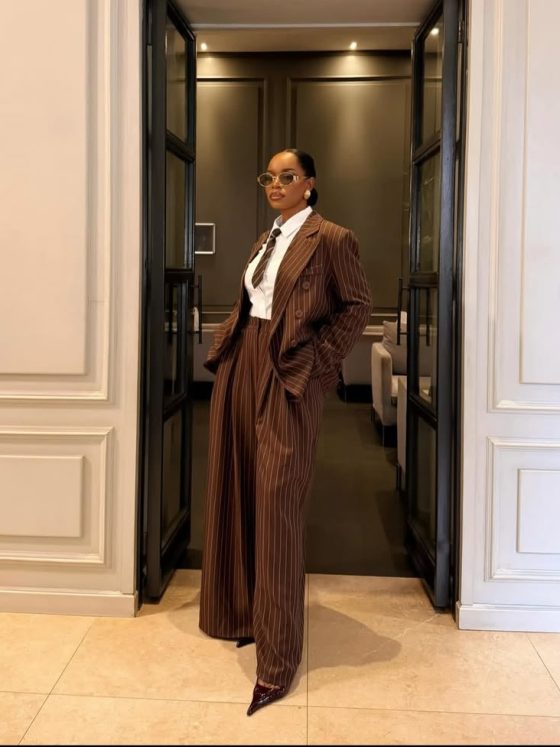
The trench coat has long been described as a British invention, perfected by European refinement and immortalised by cinema. That narrative is neat, repeatable, and incomplete. Houses like Burberry and Aquascutum formalised the garment during World War I, but nostalgia has little to do with its continued relevance. In 2026, the trench coat sits at the centre of a shift in global fashion, one that privileges structure, longevity, and authorship. And increasingly, the authorship is African.
African designers are not borrowing the trench coat. They are interrogating it, taking a silhouette built for British weather and imperial utility and asking what it means when it is cut in Aso-Oke, lined in Adire-dyed cotton, or extended into the floor-length volumes that Lagos has always understood as authority. The result is not fusion. It is an argument.
In 2026, African designers are not merely reviving the trench coat but rather reauthoring it, reclaiming a European silhouette according to their own structural, cultural, and material terms.
What the Trench Coat Has Always Been About
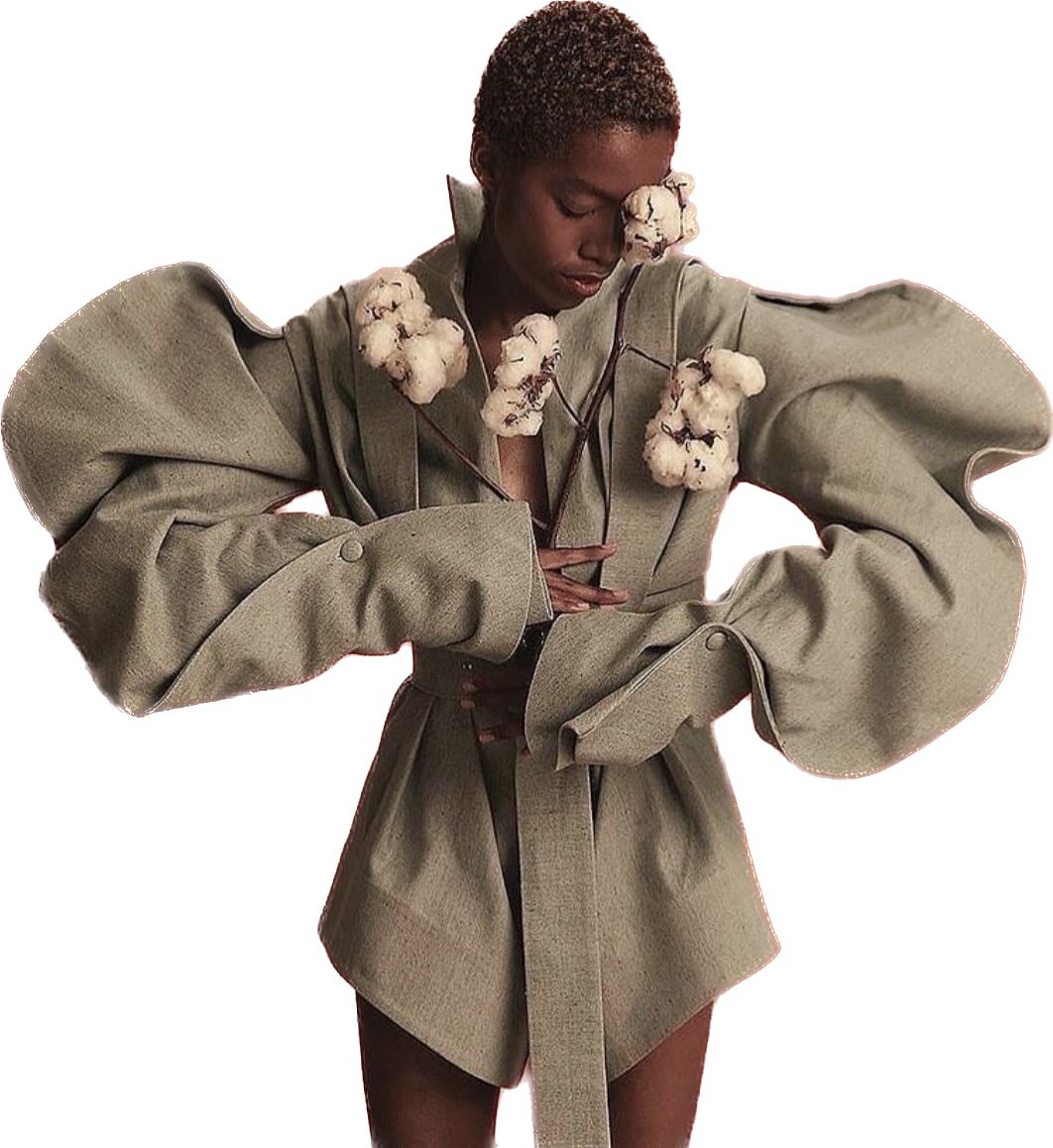
The garment’s durability as a fashion object is not accidental. The trench coat survives every decade because it is not primarily about aesthetics; it is about posture. It is about how a person occupies space. The double-breasted front, the belted waist, and the structured shoulder: these are not decorative decisions. They are architectural ones. They say, ‘I am here, I am deliberate, and I take up exactly as much room as I intend to.’
That language has always resonated in African dressing. The agbada says the same thing in different grammar. So does the floor-length boubou. So does a perfectly tailored Ankara coat worn to a meeting where the room was not expecting you. What African designers are now doing with the trench coat form is not an adoption of Western tailoring; it is a recognition that the underlying argument was already being made, in different cloth, on different bodies, in different cities, long before Burberry put its name on it.
From Military Engineering to Cultural Symbol
The trench coat was originally engineered for function. Gabardine offered water resistance without suffocation. Epaulettes, storm flaps, and D-rings served practical military needs. After the war, the coat transitioned into civilian wardrobes without shedding its disciplined structure.
Cinema amplified its mythology. When American actor Humphrey Bogart wore it in Casablanca, the trench coat came to signify masculine restraint and emotional distance. When British actress Audrey Hepburn appeared in Breakfast at Tiffany’s, it softened into elegance. Over time, the garment accumulated cultural memory, becoming shorthand for sophistication.
Yet garments are not fixed in meaning. They absorb context. They shift with geography. Authority stitched into fabric can be unsettled.
Why the Trench Coat Feels Urgent in 2026
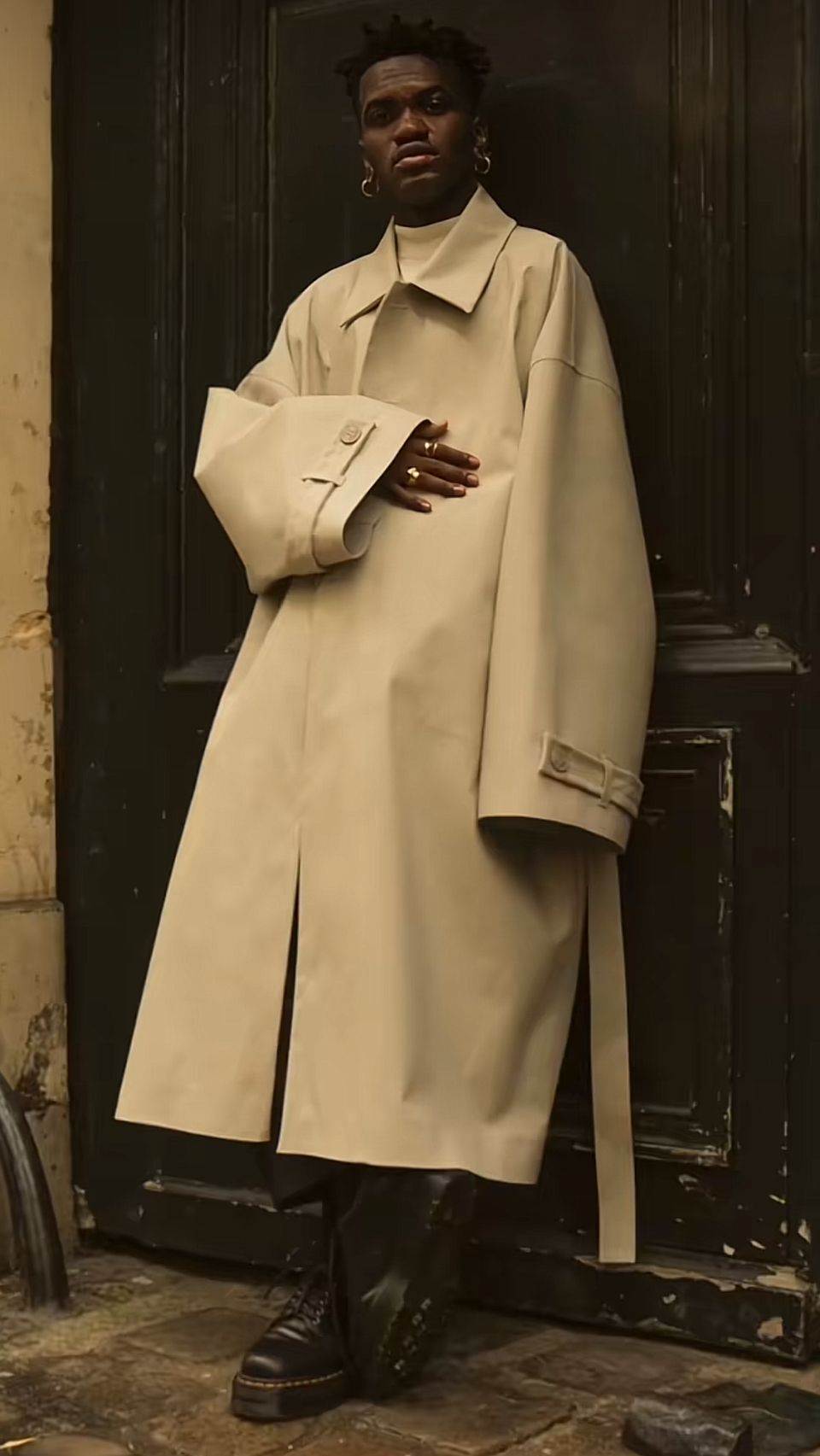
Fashion’s accelerated cycle of micro-trends has exhausted both designers and consumers. In its place, a slower logic is emerging, one that values permanence over spectacle. The trench coat aligns with this recalibration because it was constructed with clarity. Its silhouette frames the body without excess. Its neutrality allows repetition without fatigue.
Across Africa, longevity has never required rebranding. Textiles are rewoven, repurposed, and inherited. Garments are built to circulate across time. Within this context, the trench coat’s endurance feels less like a Western innovation and more like a garment finally entering a conversation Africa has always understood.
The renewed interest in tailoring reinforces this shift. During his tenure at Bottega Veneta, Daniel Lee foregrounded sculptural outerwear defined by restraint. Labels such as The Row have built collections on disciplined silhouettes and controlled volume. The trench coat fits seamlessly within this architectural language.
What distinguishes 2026 is not that designers are refining the trench. It is that African designers are reframing it.
Recontextualising the Silhouette on African Terms
In Lagos, structured outerwear is increasingly styled as deliberate architecture rather than seasonal necessity. The trench appears layered over fluid kaftans, tailored separates, and contemporary suiting. It anchors outfits while allowing experimentation beneath it.
Brands such as Orange Culture have long challenged rigid Western tailoring by introducing fluidity and softness. When filtered through this lens, the trench coat loses its militaristic edge and gains expressive flexibility. In South Africa, Thebe Magugu approaches structure as narrative. His tailoring interrogates history rather than merely referencing it. Within such frameworks, the trench coat becomes a canvas for cultural dialogue.
Material experimentation further reshapes its identity. Handwoven Aso-Oke alters weight and movement. Indigo-dyed cotton reframes surface texture. Structured brocades replace gabardine, maintaining silhouette integrity while shifting cultural ownership. These interventions are not cosmetic. They reposition the garment within a different lineage.
The trench coat was born within imperial systems. Its reinterpretation across African studios signals authorship rather than adoption.
Climate, Craft, and Adaptation
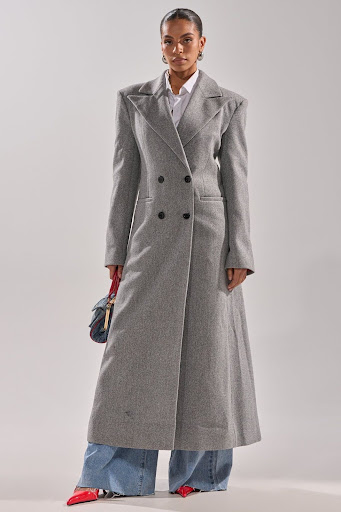
Global fashion often frames transitional outerwear as a response to contemporary climate instability. Yet climate intelligence has long informed African dressing. Breathable woven cottons, adaptive layering, and silhouettes designed for movement across indoor and outdoor settings are not new inventions.
When adapted for tropical cities such as Lagos or Accra, trench coats evolve. Linings are lightened. Belts are loosened. Fabrics are chosen for ventilation rather than insulation. The silhouette remains recognisable, but the engineering responds to local realities. This process reflects design literacy, not imitation.
READ ALSO:
- What the Most Influential Fashion Pieces of 2026 Communicate Today
- Simplify, Then Elevate: The Quiet Power of Digital Minimalism in Fashion
Redefining Luxury Without External Validation
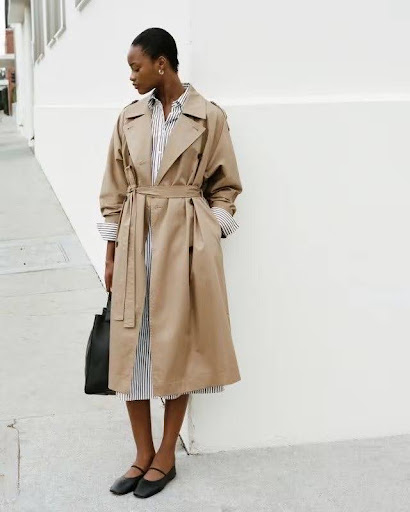
Luxury discourse has historically relied on European reference points. Omiren rejects that hierarchy. The trench coat does not require validation from Paris to hold authority in African wardrobes. Its power lies in its construction; it communicates control. Worn open over fluid silhouettes, it conveys ease. Styled as an owambe with contemporary heels, it bridges ceremony and modernity. In each case, the trench operates as a framework garment, one that disciplines proportion while permitting personal expression.
When African designers reinterpret it using heritage textiles and local craft knowledge, the result is not fusion. It is ownership.
The Framework Garment in a Slower Era
Certain garments decorate an outfit. Others anchor it. The trench coat belongs to the latter category. Its structural lines stabilise experimental layers underneath. It absorbs shifts in trend without appearing displaced.
In 2026, as wardrobes become more intentional, framework pieces become more important. They have long-centred garments that function this way, wrappers, tailored jackets, and ceremonial lace. The trench coat, reauthored, enters this lineage not as an imported classic but as a silhouette open to reinterpretation.
Conclusion
The second life of the trench coat is not about revival. It is about the redistribution of meaning. Global reinterpretation shapes its present relevance, despite its origins in British military engineering. African designers are not merely participating in its return; they are redefining its context, materiality, and symbolism.
The trench coat endures because it was constructed with clarity. It evolves because designers across continents refuse to leave its meaning untouched. In 2026, its authority no longer rests solely in heritage. It rests in authorship.
And authorship, increasingly, is African.
Find today’s top styles — explore the Trends category on OmirenStyles.
FAQs
- Why is the trench coat relevant in 2026?
Its structured silhouette and durability align with fashion’s shift toward longevity and intentional dressing.
- How are African designers redefining the trench coat?
African designers are redefining the trench coat by incorporating heritage textiles, incorporating climate-sensitive engineering, and using narrative tailoring to reframe its historical symbolism.
- Can trench coats work in tropical climates?
Yes. Designers adapt fabrics and construction to suit heat and humidity while maintaining structural clarity.
- What makes the trench coat a framework garment?
Its clean lines anchor an outfit, allowing experimentation beneath without visual imbalance.
- Is the trench coat still tied to European luxury houses?
While its origins are European, contemporary reinterpretation has expanded its cultural ownership beyond those foundations.