In Abidjan, elegance is rarely quiet.
The city hums with colour, markets layered in wax prints, lagoon light reflecting off glass towers, and music spilling into boulevards at dusk. It is a place where spectacle and sophistication coexist naturally. Within that landscape, Simone & Elise have carved out a distinct space: couture that tells stories.
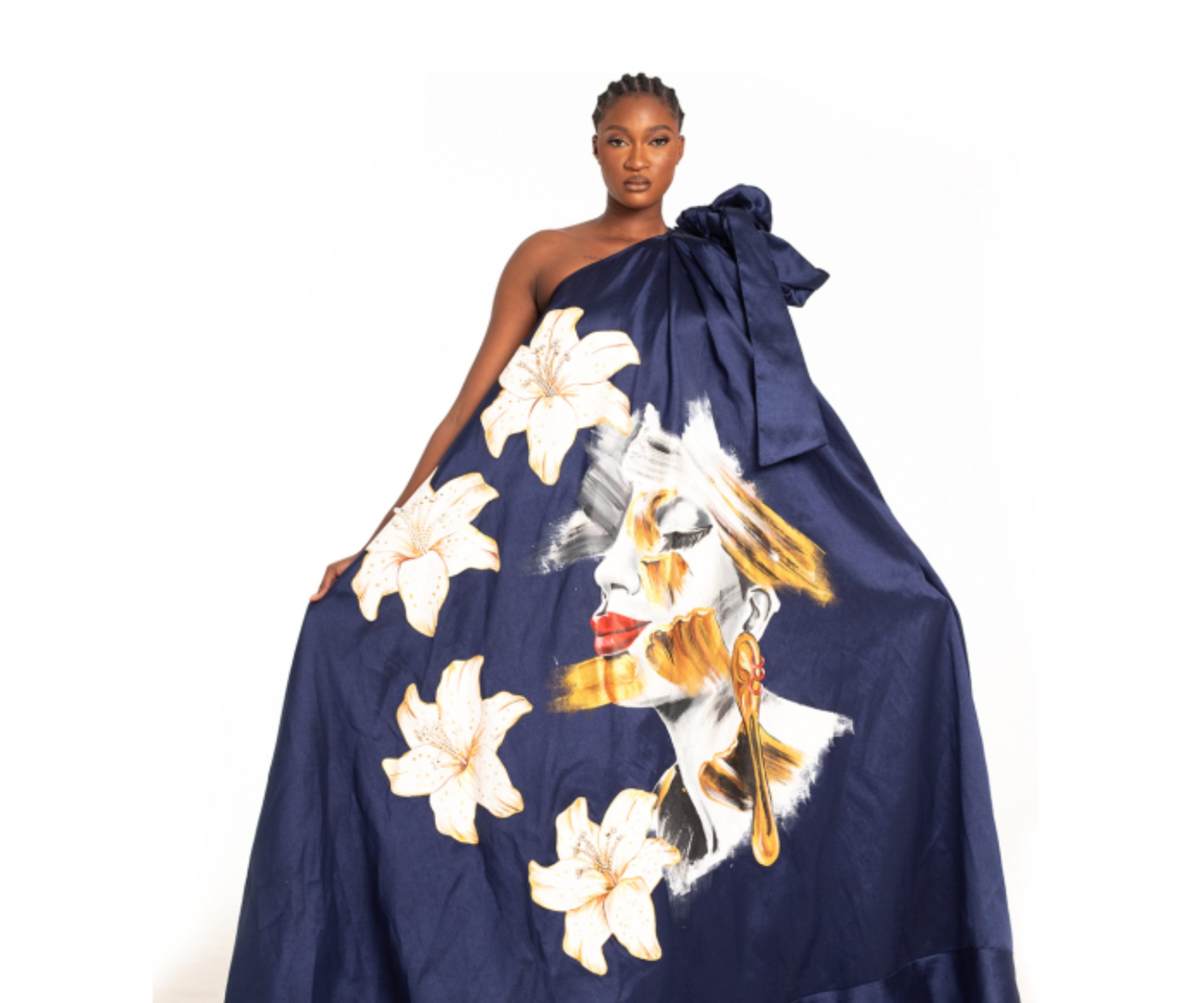
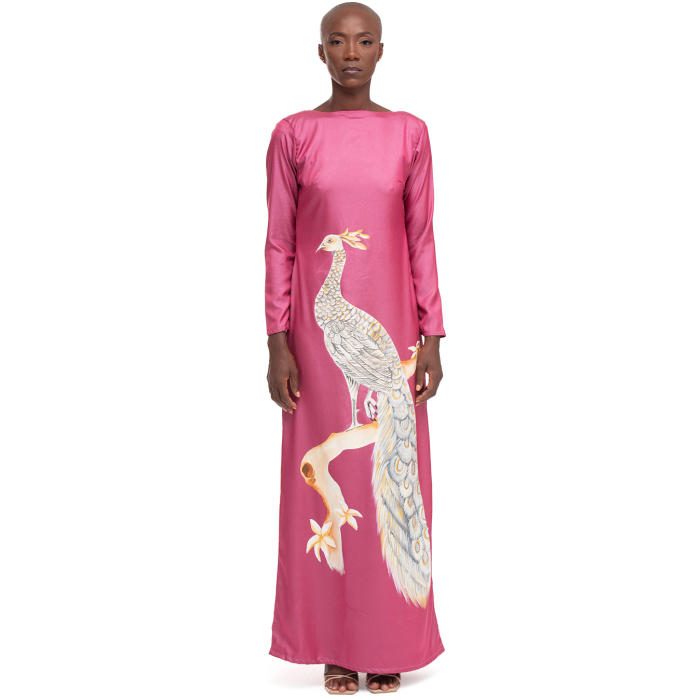
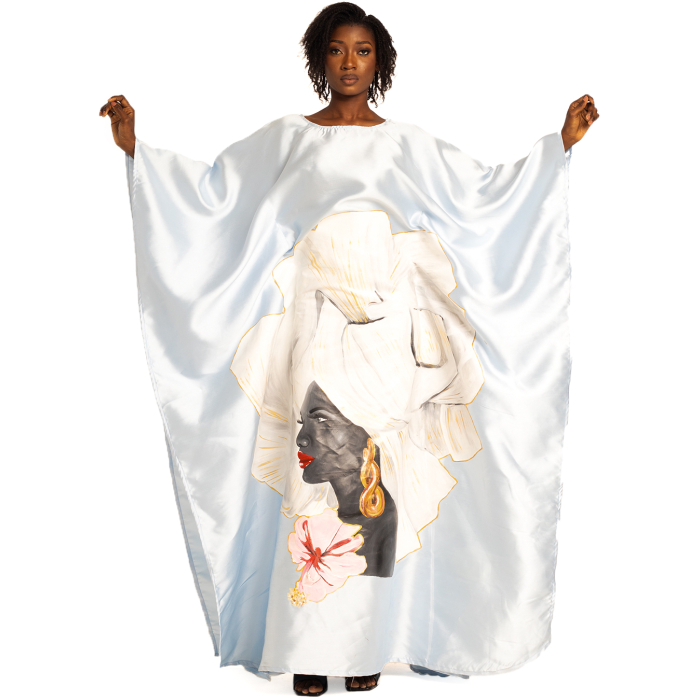
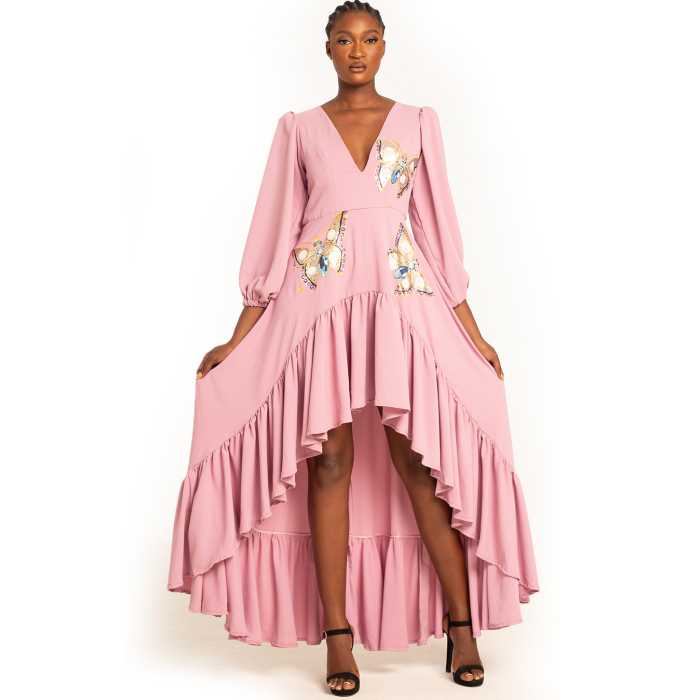
Founded by Mariam-Simone Sibidé and Gina Kakou-Marceau, the womenswear label has become one of Abidjan’s most compelling creative voices. Their gowns are not simply constructed; they are illustrated. Figures, daily scenes, teachers, market women, and working mothers, painted directly onto fabric, move across sweeping silhouettes.
The result is a couture archive.
And in Côte d’Ivoire’s evolving fashion ecosystem, that gesture carries weight.
Simone & Elise redefine Ivorian couture in Abidjan, painting everyday West African stories onto sweeping, modern gowns.
Abidjan’s Fashion Reawakening
For decades, discussions of West African fashion have often centred on Lagos or Dakar. Abidjan, despite its long-standing cultural vibrancy, remained slightly outside the international spotlight.
That is shifting.
A new generation of Ivorian designers is redefining the city’s fashion identity by merging couture techniques with narrative specificity. Simone & Elise sit at the forefront of that recalibration.
Their work reflects Abidjan’s dual character: cosmopolitan yet grounded, modern yet intimately connected to everyday life.
The city is no longer only a backdrop. It is the subject.
Painting the Everyday
Simone & Elise distinguish themselves through the process. Before fabric becomes a gown, it becomes canvas.
The designers paint everyday figures and scenes onto cloth: women carrying baskets, classroom moments, and domestic gestures. These are not abstract motifs. They are recognisable realities.
Globally, African imagery is often reduced to a pattern or symbol. Simone & Elise reverse that reduction. They depict life directly.
By translating ordinary scenes into couture surfaces, they elevate roles that rarely appear in luxury narratives. The market vendor becomes a muse. The teacher becomes an icon.
Couture becomes testimony.
The “Everywoman” as Protagonist
Fashion has long been centred on aspiration, royalty, celebrity, and unattainable glamour. Simone and Elise shift their gazes.
The garment honours the “everywoman” of Côte d’Ivoire, not as a stereotype, but as a presence. The painted figures are neither caricatures nor romanticised. They are grounded and dignified.
This repositioning matters in a region where women’s labour sustains both domestic economies and informal markets.
To place these figures onto couture gowns is to grant visibility in a space historically reserved for elite fantasy.
It is political without being loud.
Colour as Language
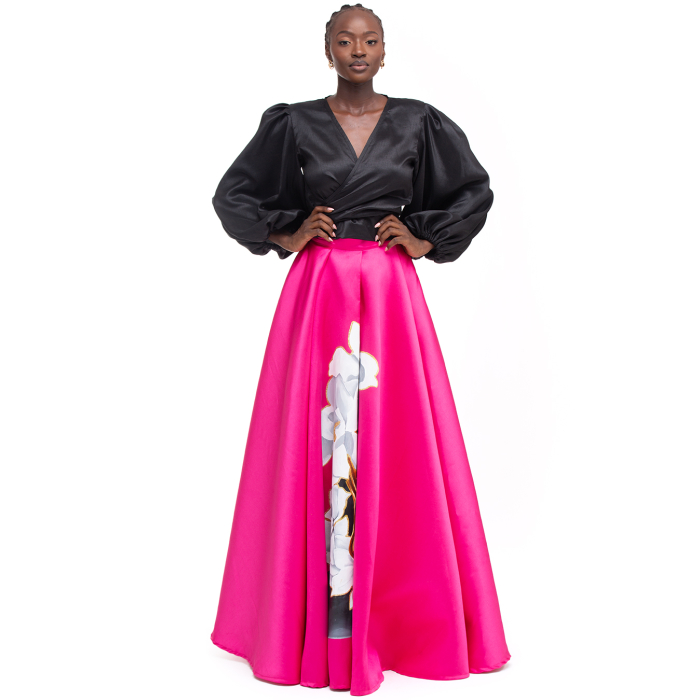
A saturated colour defines the brand’s visual signature. The brand’s visual signature features blues layered against sunlit yellows. Deep greens intersect with reds. Pigment operates not as decoration but as an emotional register.
West African textiles have long embraced chromatic intensity. Simone & Elise harness that tradition while refining it within a couture structure. The silhouettes are controlled, fitted bodices, voluminous skirts, and sculptural drapery.
The balance between exuberant imagery and disciplined tailoring creates tension. The dresses feel celebratory, yet composed.
Abidjan’s energy is present but edited.
Couture with Cultural Specificity
Unlike ready-to-wear brands scaling for export, Simone & Elise remain committed to couture’s intimacy. Each garment requires time, painting, cutting, fitting, and finishing.
This slow production process preserves artistic authorship. No two pieces are identical. The brushstroke becomes a signature.
In an industry increasingly dominated by digital printing and rapid replication, hand-painted couture feels deliberate.
The specificity also protects cultural nuance. Scenes remain rooted in Ivorian experience rather than generic “African” representation.
That distinction is crucial.
West African Elegance Rewritten
For years, global fashion narratives have framed African design as either exuberant prints or minimalist tailoring influenced by Europe.
Simone & Elise introduce a third vocabulary, narrative elegance.
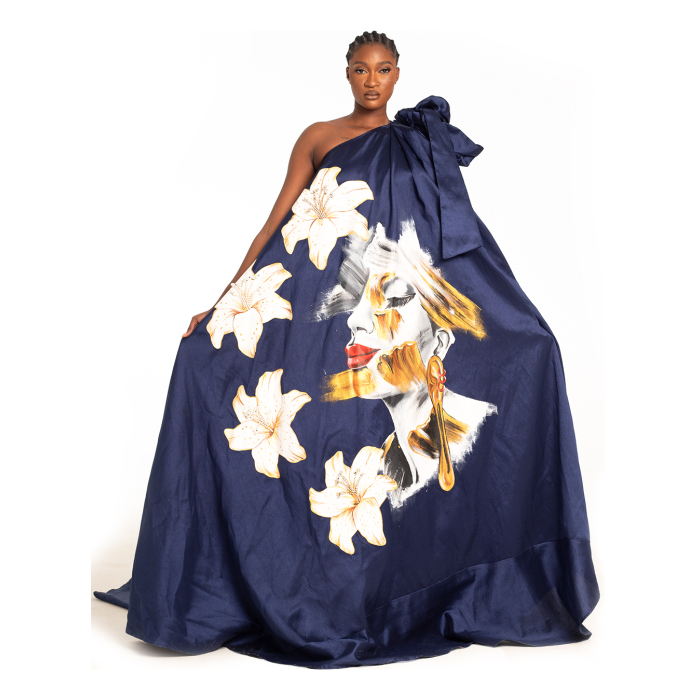
Their gowns do not abandon opulence. They embrace volume and drama. But that drama carries context.
A sweeping train may carry paintings of figures engaged in daily labour. A structured bodice may frame an illustration of community life.
Elegance here is not detached from reality. It grows out of it.
Appealing Beyond Borders
Though deeply rooted in Côte d’Ivoire, Simone & Elise appeal to clients across the continent. Their pieces resonate in Lagos, Dakar, and Accra, where women seek garments that reflect both sophistication and cultural pride.
The brand’s cross-border appeal suggests a broader appetite for couture that tells African stories from within.
Luxury clients increasingly value narrative as much as craftsmanship. Simone & Elise offer both.
Women Designing Women
There is also significance in authorship.
As female founders, Sibidé and Kakou-Marceau bring an intimate understanding to the figures they depict. Their gaze is neither distant nor ornamental. It is informed by shared experience.
When portraying market women or teachers, they avoid fetishisation. Instead, they frame these roles with quiet reverence.
This perspective reshapes couture’s traditional power dynamics. Women are not just subjects of fashion. They are narrators.
READ ALSO:
- Vanhu Vamwe and the New Language of African Luxury
- Lisa Folawiyo’s Vision of Contemporary African Luxury
- The Rise of African Luxury Designers Redefining Global Runway Culture
The Future of Narrative Fashion
The global industry increasingly recognises storytelling as currency. Brands invest in campaigns that project values and identity.
Simone & Elise embed the story directly in the fabric.
As digital platforms amplify African designers’ visibility, narrative couture may become a defining feature of West African luxury. It bridges heritage and modernity without flattening either.
The challenge ahead lies in balancing growth with artistic control. Couture’s intimacy must be protected even as demand expands.
If preserved, the brand’s model could inspire similar approaches across the region.
Beyond Ornament
Ultimately, Simone & Elise demonstrate that fashion can operate as cultural documentation.
Their gowns are not costumes of nostalgia. They are contemporary interpretations of lived experience. They transform daily labour into visual poetry without erasing its grounding.
In Abidjan, couture does not escape from reality. It is engaging with it.
And in that engagement lies the city’s emerging authority, modern, elegant, and unapologetically Ivorian.
Celebrate innovative design rooted in culture — browse African Fashion Designers on OmirenStyles.
FAQs
- Who are Simone & Elise?
Simone & Elise is an Abidjan-based couture label founded by Mariam-Simone Sibidé and Gina Kakou-Marceau.
- What is Simone & Elise known for?
The brand is known for hand-painted gowns featuring scenes from everyday Ivorian life.
- Is Simone & Elise a couture brand?
Yes. The label focuses on custom, hand-crafted couture pieces.
- Where are Simone & Elise based?
Simone & Elise are based in Abidjan, Côte d’Ivoire.
- How do Simone & Elise reflect Ivorian culture?
By painting local figures and daily life onto fabric, the brand embeds Côte d’Ivoire’s cultural identity into modern couture.