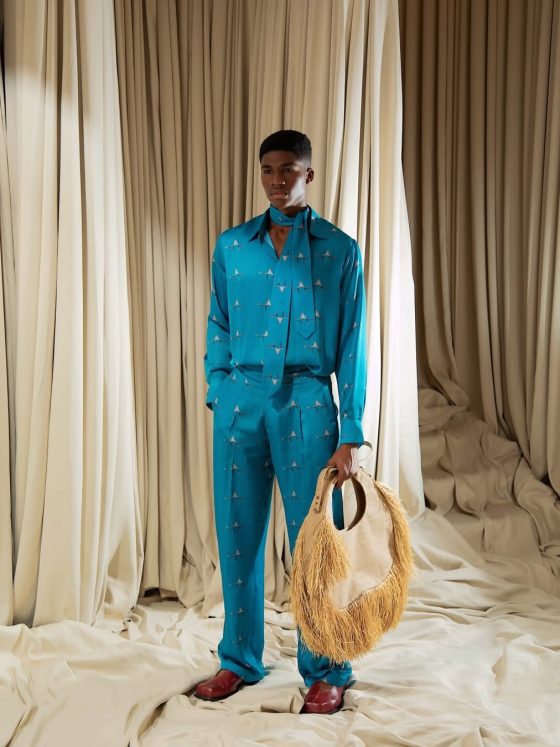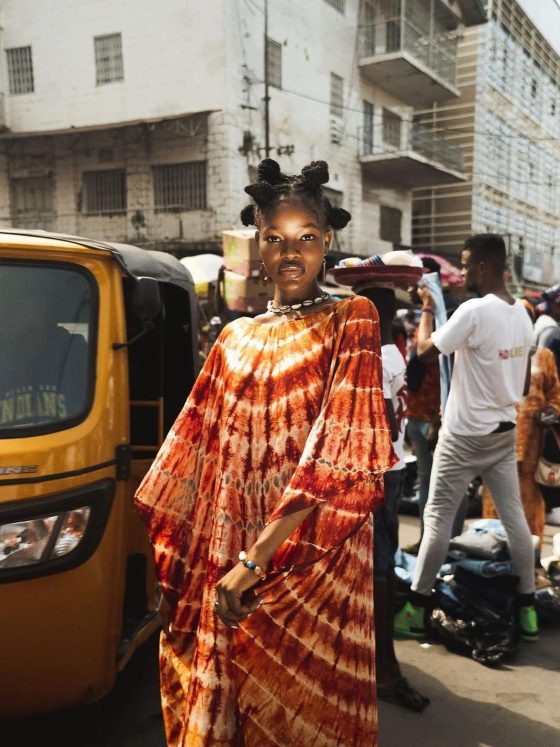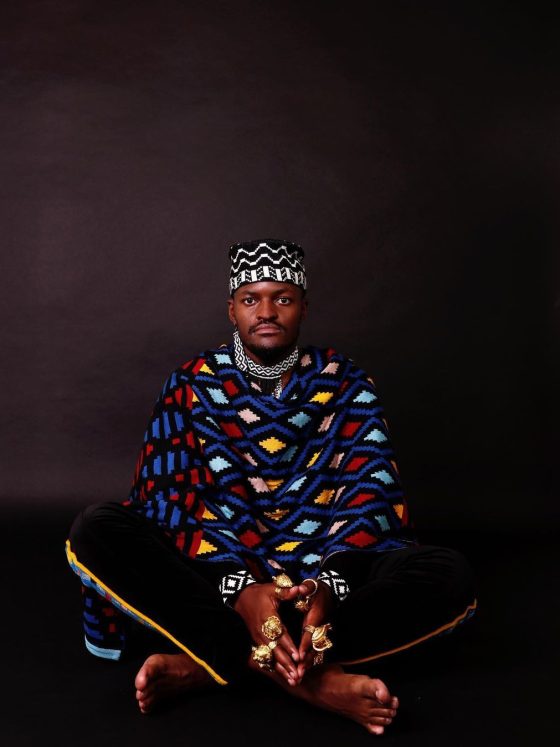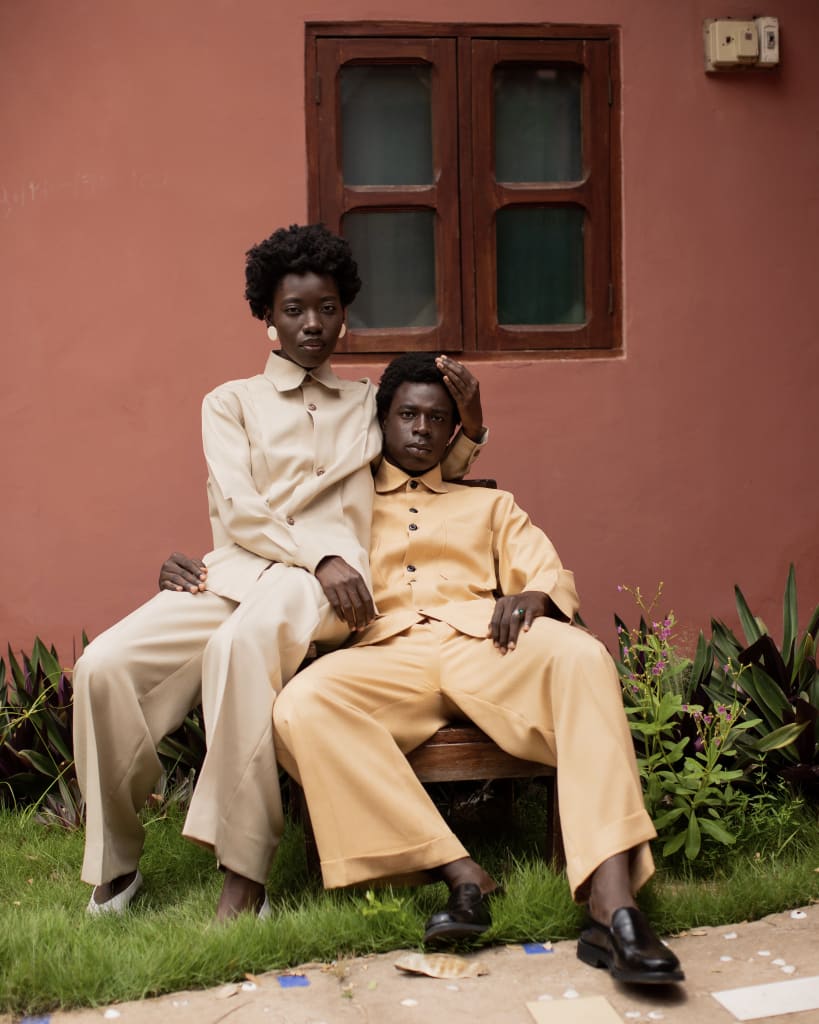
In Accra, minimalism does not arrive as absent.
It arrives edited.
Ajabeng, the Ghanaian label founded by Travis Obeng-Casper, operates within that edit. Clean silhouettes. Controlled palettes. Locally sourced cotton. Structured ease. The garments feel deliberate without feeling austere.
Ajabeng takes a different position at a time when the global perspective on African fashion often emphasises maximal print and spectacle. It reduces. It sharpens. It refines.
The result is that Western minimalism is not replicated in Ghana. It is something else — an Afro-minimalism grounded in local material systems and youth consciousness.
Ajabeng’s Travis Obeng-Casper redefines Ghanaian fashion through Afro-minimalist design, sustainability, and a youth-driven identity.
Heritage Without Costume
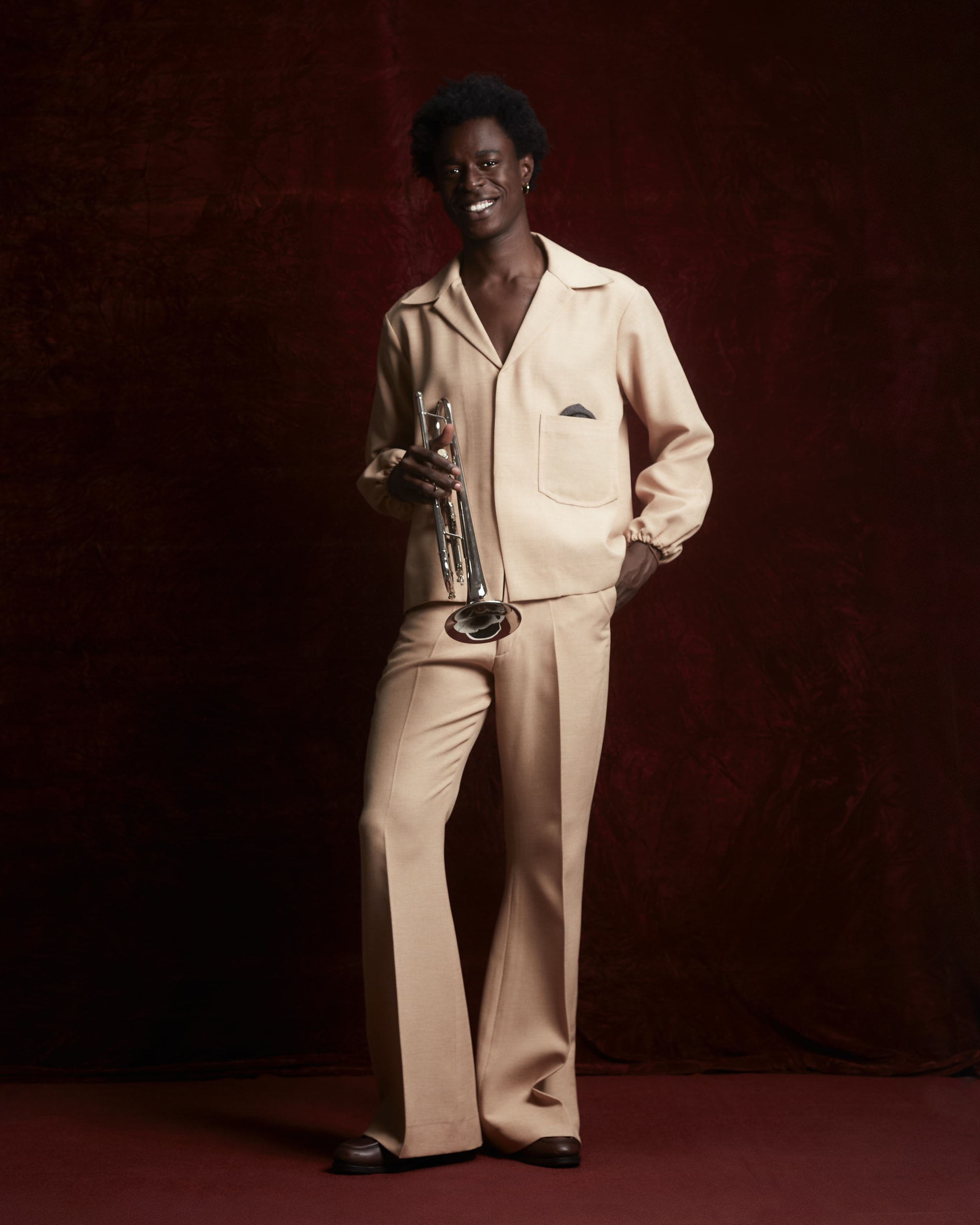
Ajabeng does not rely on obvious kente or Ankara references to signal Ghanaian identity. Instead, heritage appears subtly, in textile sourcing, proportions, and tailoring sensibility.
The “Heritage in Motion” collection exemplified this balance. Biodegradable fabrics met streamlined silhouettes. The garments moved easily, unburdened by excessive layering or ornament.
Worn by artists such as Amaarae, the pieces felt contemporary rather than ceremonial. This is critical. Ajabeng does not treat heritage as a display. It treats it as embedded logic.
The restraint distinguishes it.
Rethinking Masculinity and Femininity
Ajabeng’s silhouettes blur rigid boundaries.
Structured trousers soften at the waist. Jackets sit somewhere between tailoring and workwear. Shirts are cut for movement rather than dominance. The brand does not loudly proclaim gender neutrality, yet its collections consistently avoid hyper-masculine posturing or overtly gendered tropes.
In Ghana, where fashion still interacts with traditional expectations around gender presentation, this quiet recalibration matters.
Ajabeng’s garments allow for ambiguity. They do not exaggerate masculinity. They do not stylise femininity. They operate in a space between.
This subtlety feels generational.
Accra as Context
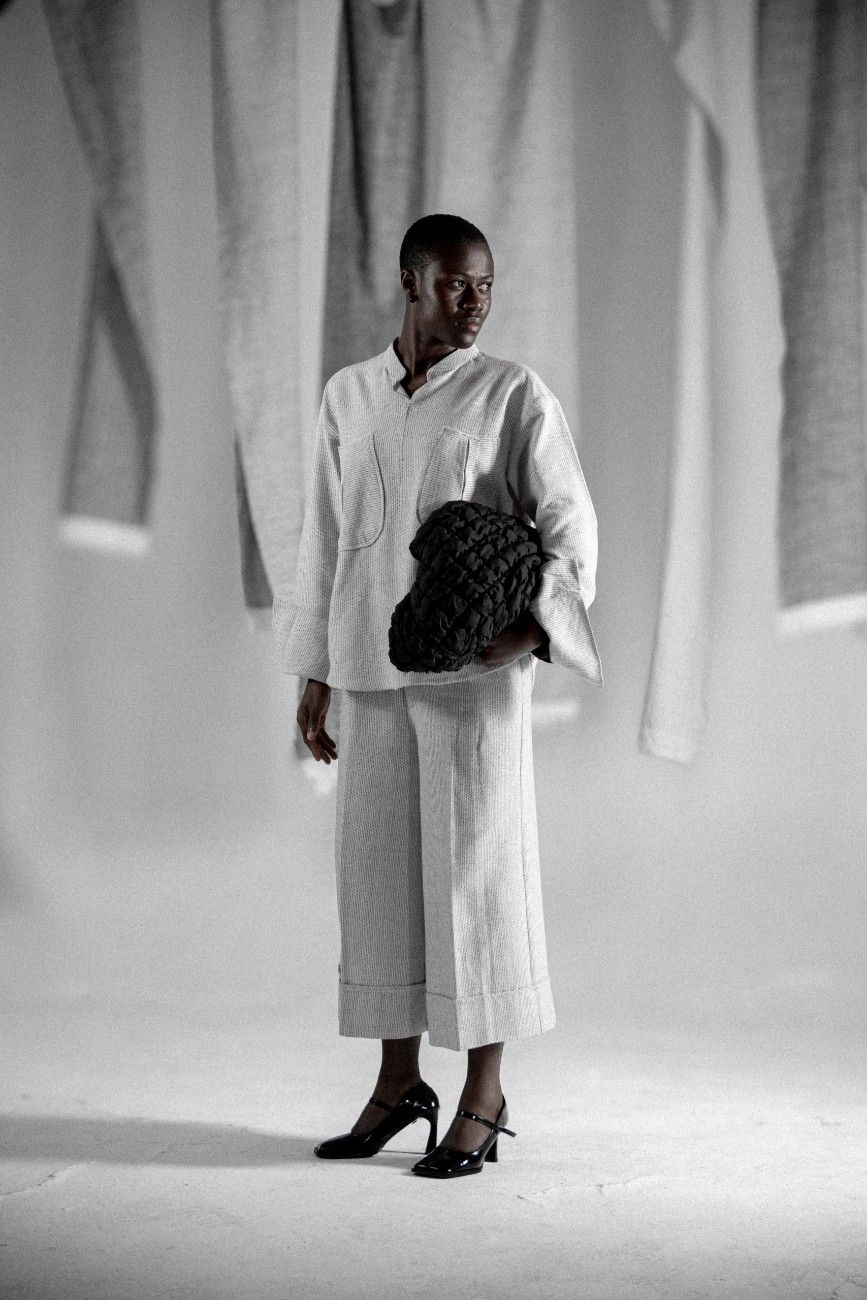
Accra’s creative scene has expanded significantly in the last decade. Music, art, design, and diaspora engagement have converged to reposition the city as a cultural hub.
Ajabeng exists within that ecosystem but does not depend on spectacle. Its visual language is disciplined. Campaign imagery avoids chaos. The grid is controlled.
This restraint contrasts with the exuberance often associated with West African fashion, creating a distinctive signature.
Minimalism, in this context, becomes an act of authorship. It signals confidence.
Sustainability Beyond Aesthetics
Many global brands adopt sustainability language without restructuring production. Ajabeng’s approach is more integrated.
By working with local workshops and reducing reliance on imported synthetic materials, the brand lowers environmental impact while reinforcing domestic supply chains. Limited production drops reduce surplus.
The use of biodegradable materials in “Heritage in Motion” reflects a broader commitment to lifecycle awareness. Garments are designed to endure but not to accumulate indefinitely.
This positions Ajabeng within a wider conversation about African fashion as future-oriented rather than extractive.
Youth Culture and Visual Clarity
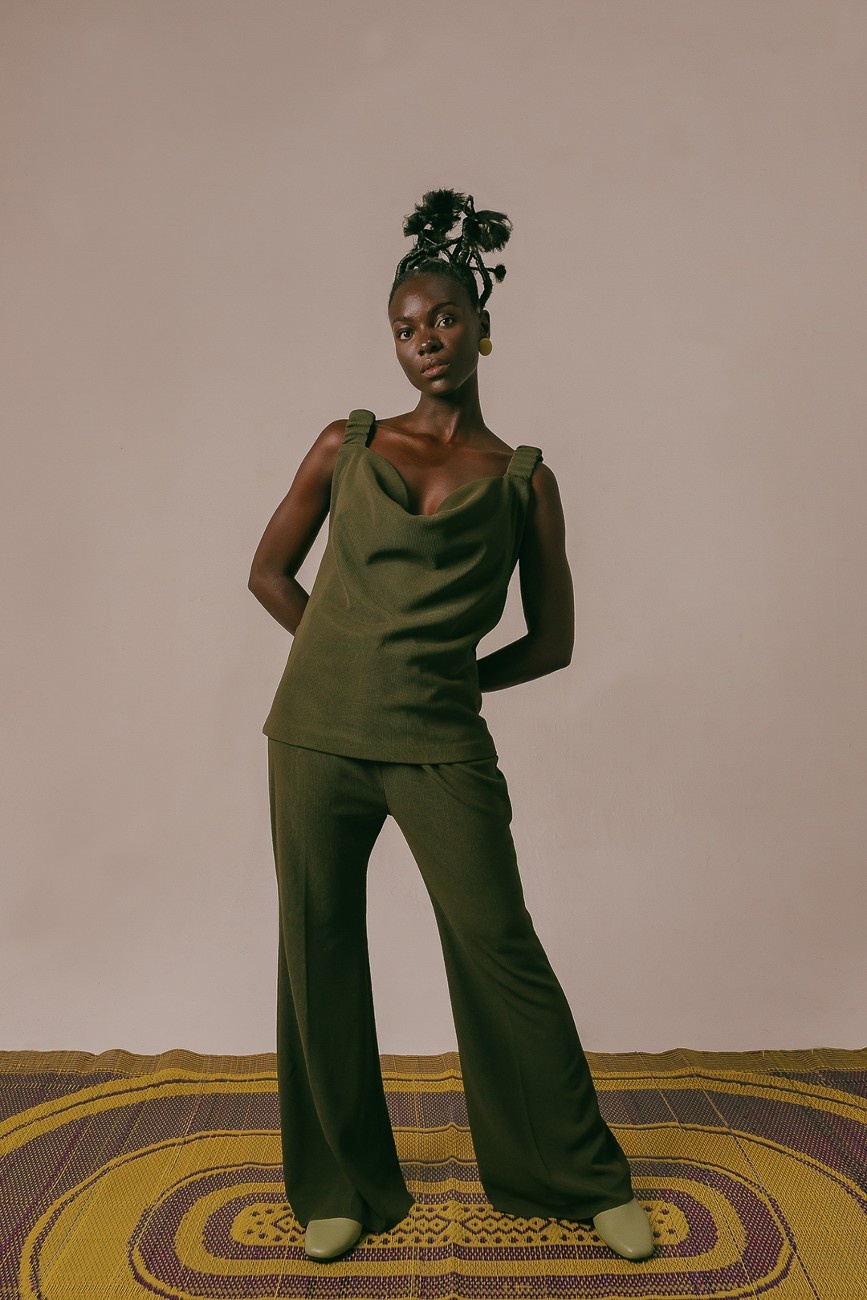
Ajabeng’s audience is digitally fluent and culturally layered. Young Ghanaians seamlessly move between local references and global aesthetics. The brand mirrors that movement.
The clothes photograph well, a necessary condition in the Instagram age — but they do not depend on trend volatility. Their strength lies in proportion and construction rather than graphic overload.
This clarity makes Ajabeng exportable without dilution. The design is distinctly Ghanaian and requires no explanation.
Afro-Minimalism as Statement
Minimalism is often associated with European or Japanese fashion discourse. Ajabeng challenges that assumption.
Afrominimalism does not reject ornament because it lacks value. It edits because clarity carries power.
In Ajabeng’s hands, negative space becomes expressive. A clean neckline holds as much authority as embroidered density. A muted palette can communicate cultural specificity through fabric origin rather than surface pattern.
Building Slow, Thinking Long
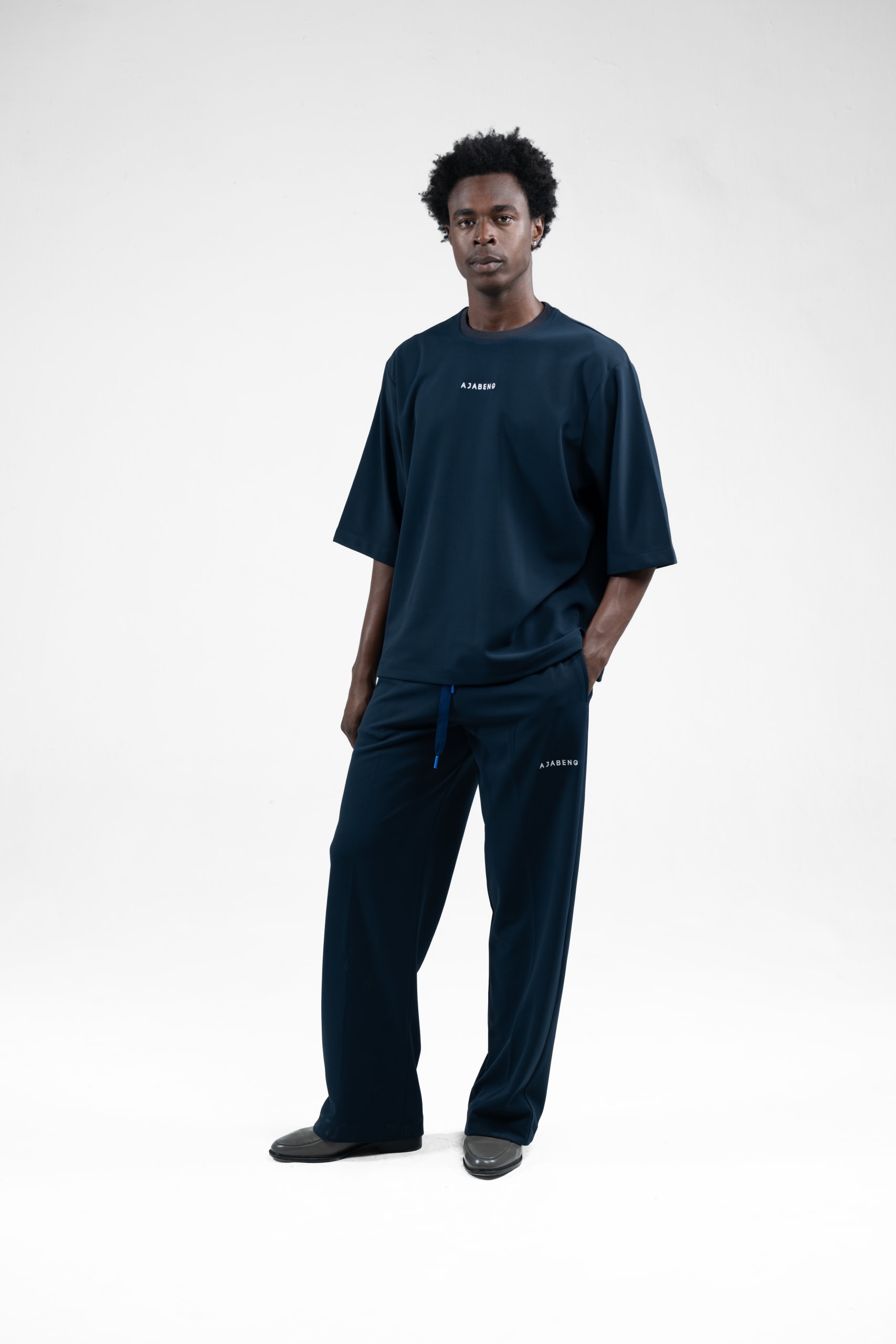
Ajabeng’s growth appears measured rather than explosive. The brand prioritises coherence over expansion. That restraint protects identity.
In a global industry addicted to scale, slow growth can be strategic. It allows infrastructure to strengthen before visibility outpaces capacity.
For Ghana’s fashion ecosystem, brands like Ajabeng demonstrate that international relevance does not require abandoning local production or aesthetic discipline.
It requires clarity.
READ ALSO:
- Hamaji Studio and the New Cartography of Fashion
- Awa Meité and Bogolanfini: Mud Cloth as a Living Archive of West African Memory
- Ethiopian Men’s & Gender-Neutral Tailoring in Contemporary African Fashion
The Future of Ghanaian Design Language
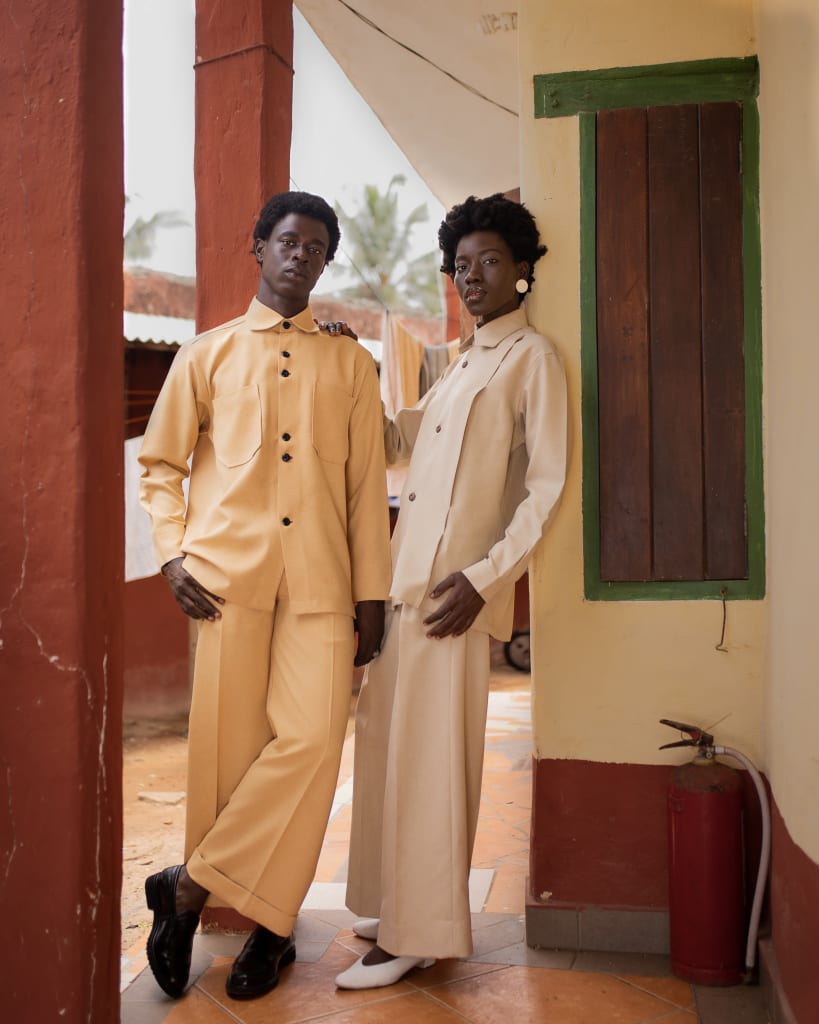
Ajabeng signals a broader shift within Ghanaian fashion. Designers are no longer limited to maximalist narratives of heritage. They are exploring refinement, reduction, and reinterpretation.
This diversification strengthens the ecosystem. It allows Ghana to present multiple design vocabularies simultaneously.
Ajabeng’s contribution lies not in loud reinvention, but in careful recalibration.
In Accra, minimalism is no longer imported. It is authored.
Celebrate innovative design rooted in culture — browse African Fashion Designers on OmirenStyles.
FAQs
- Who founded Ajabeng?
Ghanaian designer Travis Obeng-Casper founded Ajabeng in Accra.
- What is Ajabeng known for?
The brand is known for Afro-minimalist fashion that blends local craftsmanship with sustainable materials.
- What was the “Heritage in Motion” collection?
A collection featuring biodegradable fabrics and streamlined silhouettes rooted in Ghanaian textile traditions.
- Is Ajabeng a sustainable brand?
Ajabeng emphasises locally sourced materials, small-scale production, and environmentally conscious design practices.
- How does Ajabeng redefine Ghanaian fashion?
By combining minimalist aesthetics with heritage textiles and challenging rigid gender norms through fluid silhouettes.