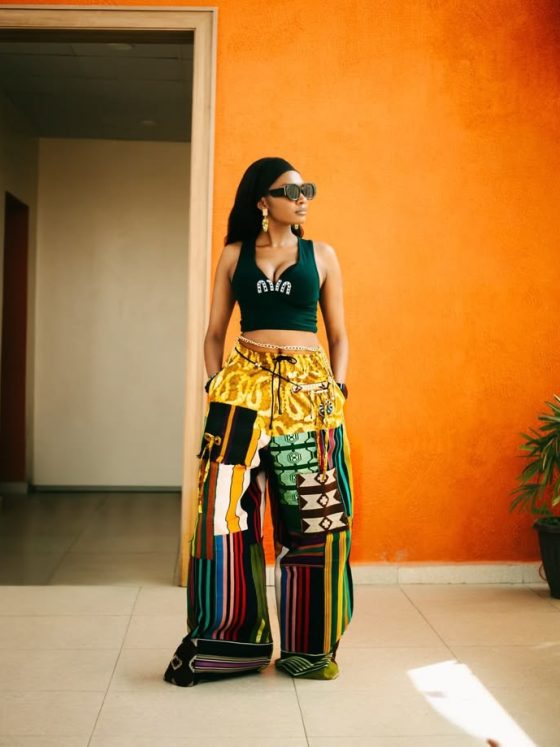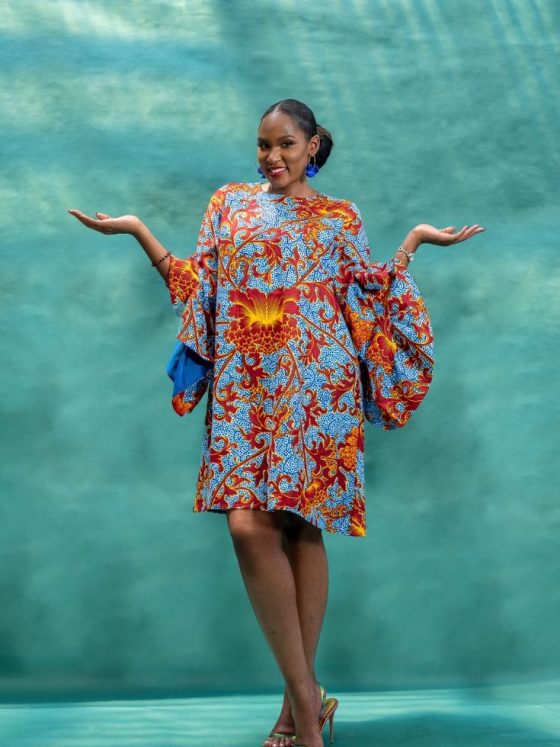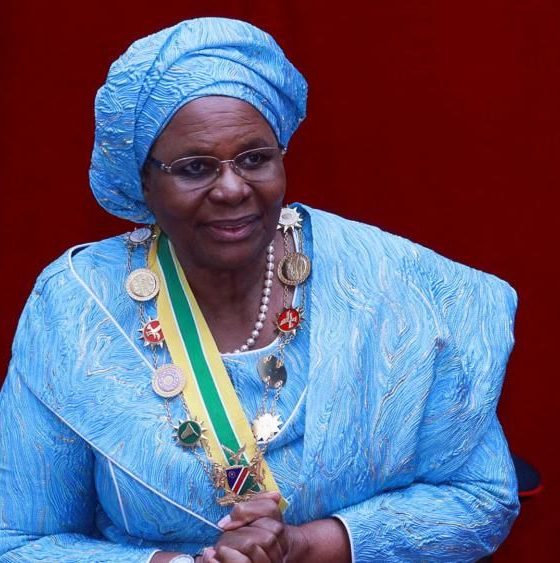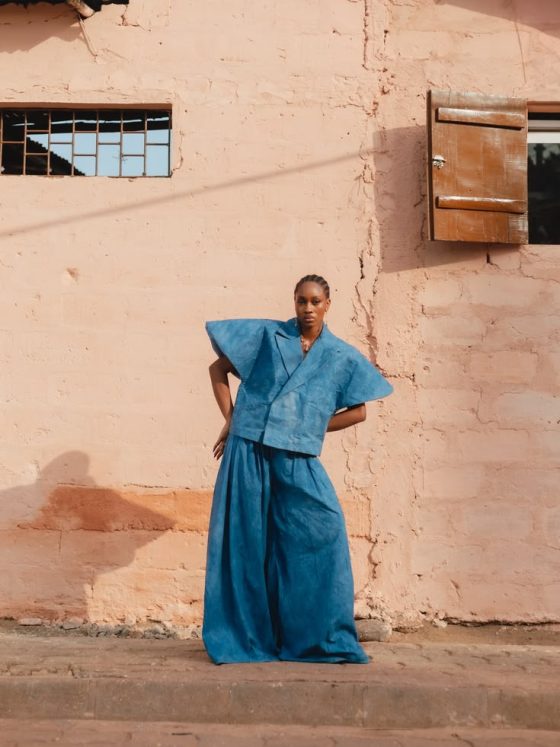
Fashion, at its most powerful, is never just about what is worn; it is about what is remembered. Across centuries, societies have used clothing not merely as adornment but as an archive: a way to preserve history, encode belief systems, and express identity without words. In Ethiopia, one of Africa’s oldest continuous civilisations, clothing has long served this function. Few garments illustrate their significance more vividly than the Habesha Kemis.
Often misunderstood outside its cultural context as simply “traditional wear”, the Habesha Kemis is, in truth, a living garment, one that has evolved alongside Ethiopia’s shifting political landscapes, spiritual traditions, and social structures. Today, as global fashion increasingly turns toward heritage, sustainability, and narrative depth, the Habesha Kemis is experiencing a renaissance that places Ethiopian fashion firmly within contemporary global discourse.
For Omiren Styles, this resurgence is not a momentary trend. It is evidence that fashion, rooted in memory and meaning, can transcend borders, time, and category.
Explore how the Habesha Kemis, Ethiopia’s traditional dress, is evolving from sacred ceremonial wear to a symbol of heritage luxury in global fashion. Discover its deep cultural roots, modern reinvention, and why it matters today.
Ethiopia: A Civilisation Woven in Continuity
To understand the Habesha Kemis, one must first understand Ethiopia itself. Unlike much of Africa, Ethiopia was never formally colonised, which allowed many of its cultural systems, including textile production, dress codes, and symbolic aesthetics, to develop with relative continuity. Ethiopian clothing demonstrates this continuity, incorporating design elements from centuries-old manuscripts and religious murals into modern garments.
Textiles have historically played a central role in Ethiopian society:
- As markers of spiritual devotion
- As indicators of social and ceremonial status
- As expressions of regional and ethnic identity
Within this context, the Habesha Kemis emerged not as a fashion item but as a cultural standard, one shaped by faith, climate, craftsmanship, and communal values.
What Is the Habesha Kemis? Beyond Definition
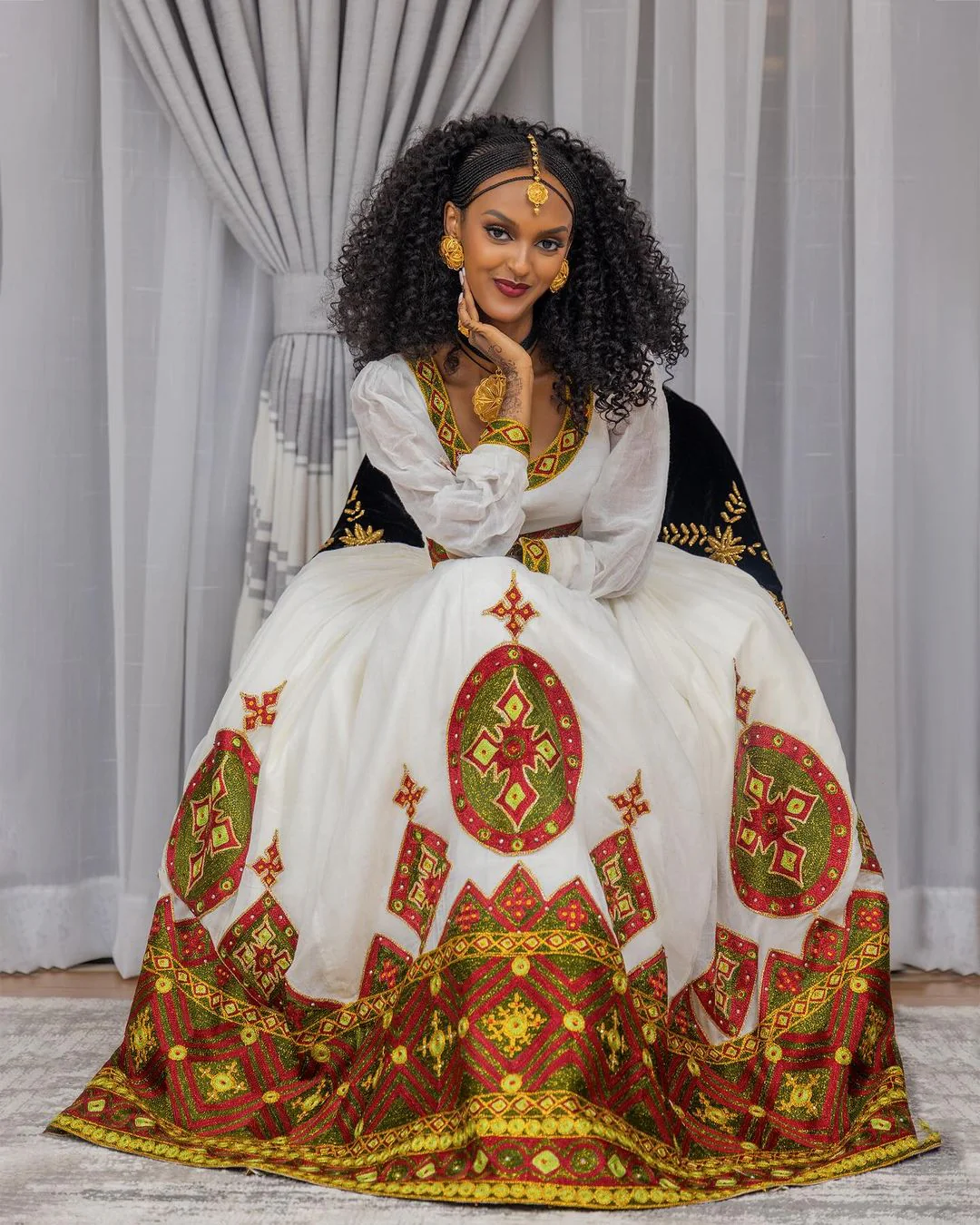
The Habesha Kemis is a traditional Ethiopian women’s dress, typically ankle-length, made from shema, a handwoven cotton fabric produced on narrow looms. These strips of fabric are sewn together to form a larger textile, a process that itself symbolises unity and patience.
What distinguishes the kemis visually is its tibeb, intricate woven or embroidered borders placed along the neckline, sleeves, and hem. These patterns are not random decoration. They often carry:
- Spiritual symbolism
- Regional identifiers
- Aesthetic philosophies are passed down through generations.
Traditionally worn during religious festivals, weddings, and rites of passage, the Habesha Kemis functioned as ceremonial attire, yet it was never static. Even historically, styles varied by region, era, and social context.
The Cultural Language of Colour and Embroidery
In Ethiopian aesthetics, colours are never neutral. The traditional white or ivory base of the Habesha Kemis reflects:
- Spiritual purity
- Reverence
- The sacred role of women in ceremonial life
The Tibetan embroidery, often featuring gold, green, red, or black, adds layers of meaning:
- Gold evokes divinity and reverence
- “Green” symbolises life and land.
- Red signifies strength and sacrifice
- Black grounds the garment’s continuity and endurance.
In many ways, the Habesha Kemis operates like a visual language—one that communicates values long before trends.
From Sacred Spaces to Social Expression

Historically, the kemis was most visible in religious settings, particularly within the Ethiopian Orthodox tradition. Women wore it to church not to stand out, but to participate in a collective visual harmony in which modesty, craftsmanship, and devotion intersected.
Over time, the garment expanded beyond purely religious spaces. It became central to:
- Weddings and courtship rituals
- National celebrations
- Community gatherings
Each adaptation reflected broader shifts in Ethiopian society, proving that the kemis was never locked in ritual; it evolved as life evolved.
The Modern Reinvention: Tradition in Motion
The contemporary transformation of the Habesha Kemis is not about abandoning tradition but about allowing tradition to move.
Contemporary Silhouettes
Modern designers have reimagined the kemis through:
- Structured bodices
- Tailored waists
- Architectural sleeves
- Asymmetrical and layered cuts
These changes respond to modern lifestyles, allowing the kemis to exist comfortably in urban, diasporic, and global contexts without losing their essence.
ALSO READ
Colour as Modern Dialogue
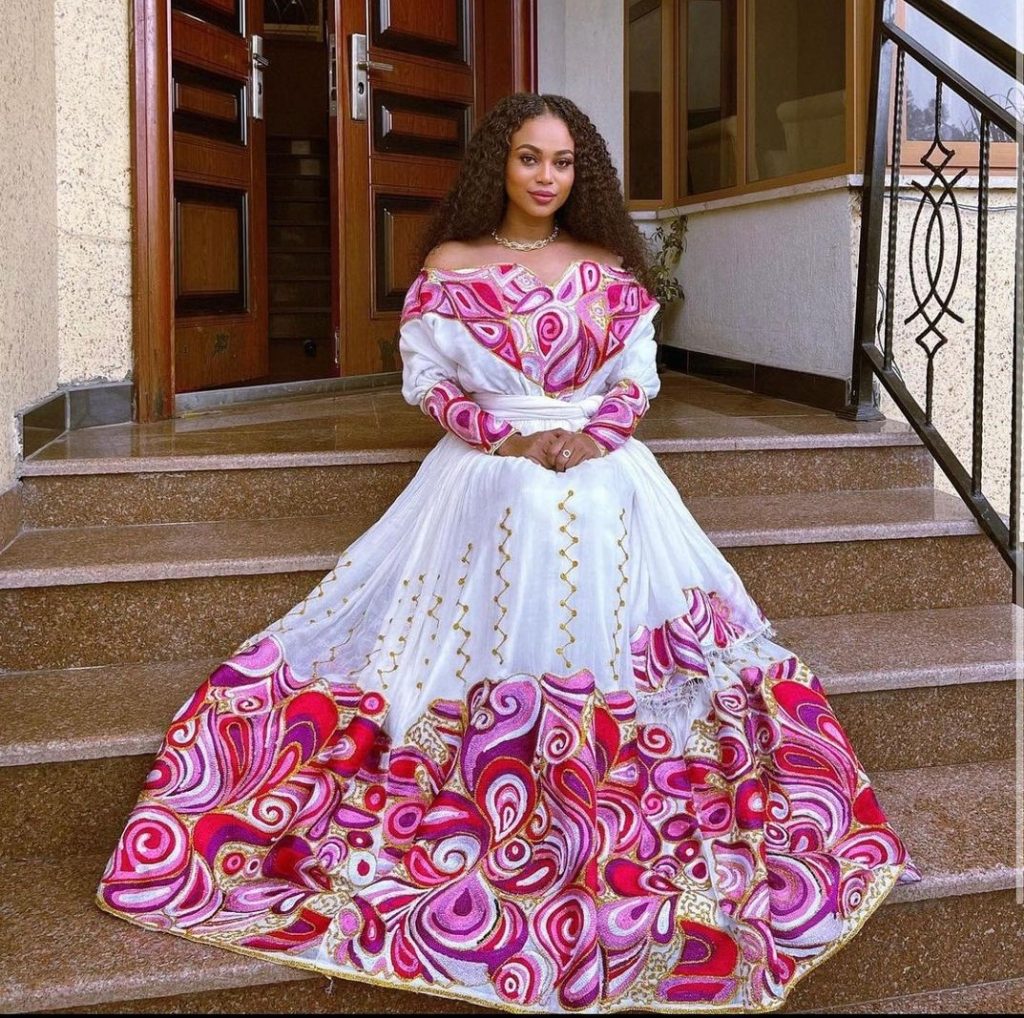
While white remains iconic, today’s Habesha Kemis embraces:
- Earth tones
- Jewel hues
- Monochromatic minimalism
This shift reflects a broader global fashion movement in which heritage garments are no longer confined to cultural events but are integrated into everyday luxury.
Craftsmanship, Sustainability, and Slow Fashion
At a time when the fashion industry is reckoning with overproduction and environmental harm, Ethiopian textile traditions offer an alternative vision.
Handwoven shema:
- It uses minimal machinery.
- Supports local artisan economies
- Encourages slow, intentional production
This makes the Habesha Kemis not just culturally significant but ethically relevant. Sustainability here is not a marketing strategy; it is an inherent practice.
Diaspora, Identity, and Global Visibility
For Ethiopians in the diaspora, the Habesha Kemis has become a powerful anchor of identity. People wear it in cities like London, New York, and Milan.
- At weddings and cultural ceremonies
- At fashion showcases
- At events far removed from Ethiopian-only spaces
Styled with contemporary accessories and silhouettes, the kemis now speak across cultures, asserting presence without explanation.
Designers and the Rise of Heritage Luxury
A growing number of Ethiopian designers have repositioned the Habesha Kemis as heritage luxury, elevating it through:
- Couture-level embroidery
- Runway presentations
- Global collaborations
This reframing challenges outdated fashion hierarchies that separate “traditional” from “luxury”, insisting that craftsmanship and story define value.
Styling the Habesha Kemis Today
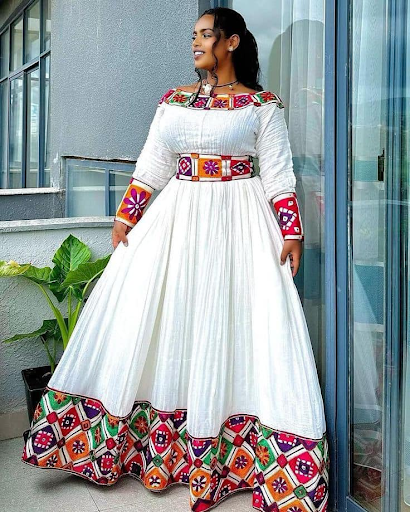
For the modern wearer, styling the kemis is an act of interpretation:
- Pair them with minimalist jewellery for editorial elegance.
- Layer with structured outerwear for urban styling
- Combine traditional fabrics with modern footwear
- Let the garment speak without over-accessorising
The power of the kemis lies in restraint; it commands attention without excess.
Why the Habesha Kemis Matters Now
The global fashion industry is shifting toward:
- Cultural authenticity
- Narrative depth
- Ethical production
The Habesha Kemis sits naturally at this intersection. It demonstrates that modern fashion does not need to invent meaning; it can recover it.
The Omiren Styles Perspective
At Omiren Styles, fashion is understood as a cultural document. The Habesha Kemis is not frozen heritage; it is a living archive that continues to write itself.
It carries:
- Memory
- Resistance
- Elegance
- Continuity
Its modern evolution is not a trend cycle. It is a cultural conversation.
Conclusion: A Garment That Refuses Erasure
Habesha Kemis doesn’t want to be remodelled. It adapts because it has always adapted. Its presence in contemporary fashion is not a revival; it is survival made visible.
As global fashion continues to search for authenticity, Ethiopian fashion—anchored by the Habesha Kemis—offers something rare: a future built without forgetting the past.
For Omiren Styles, this story is only beginning.
FAQs
1. What is the Habesha Kemis?
The Habesha Kemis is a traditional Ethiopian women’s dress, typically ankle-length and made from handwoven cotton called ‘shema. It is distinguished by its intricate Tibetan embroidery, which carries spiritual, regional, and generational symbolism. Originally worn for religious ceremonies and rites of passage, it has evolved into a versatile garment embraced in both Ethiopian and global contexts.
2. How is the Habesha Kemis being reimagined in modern fashion?
Modern designers have updated the Habesha Kemis with new silhouettes and more colours, making it suitable for urban and global lifestyles while preserving its cultural significance.
3. What makes the Habesha Kemis culturally significant?
The Habesha Kemis acts as a “living archive” of Ethiopian identity, reflecting centuries of unbroken cultural continuity. Its colour, embroidery, and fabric carry deep meanings related to spirituality, social status, and regional belonging. Because Ethiopia was never formally colonised, the garment represents a unique thread of preserved heritage that has evolved alongside the nation’s history.
4. Why is the Habesha Kemis relevant to sustainable fashion?
Handwoven using artisanal methods, the Habesha Kemis supports local economies and sustainable fashion through its ethical, low-waste production.