The global fashion system produces approximately 124 million tonnes of fibre annually. Less than 0.3% of it is recirculated.
In Nairobi’s Gikomba market, tailors alter, repair and refashion garments daily. In Accra’s Kantamanto, traders sort incoming bales of used clothing from Europe and North America, salvaging what can be resold or repurposed. In Lagos’s Balogun and Aba’s Ariaria International Market, seamstresses and tailors construct, repair and alter garments at prices calibrated to real incomes rather than to aspirational retail margins. In Dakar’s Sandaga market and in repair stalls across Abidjan, Kampala and Johannesburg, cobblers, alteration specialists and fabric traders form the service layer that keeps clothing in use rather than in landfill.
The word used to describe all of this, when it is noticed at all, is ‘informal.’ The word functions as a descriptor of what is absent: regulatory registration, tax records, formal employment contracts, institutional support. What it does not describe is what is present: skill, speed, community accountability, price accessibility, circular material use and a deep-rooted practice of extending the useful life of clothing that the Global North is currently spending hundreds of millions of euros trying to rebuild through Right to Repair legislation, circular fashion initiatives and luxury brand take-back programmes.
Before colonial regulation rendered them ‘informal,’ market trading, corn milling, and other activities were not part of an ‘informal economy’; they were the economy. The same applies to Africa’s repair trades. They did not become informal when they fell below a modern standard. They became informal when a standard was imposed that was not designed with them in mind.
That observation, from Jennifer Hart’s 2024 book Making an African City, documented in recent academic research on repair economies in Kampala, Uganda, reframes the question of formalisation entirely. The tailors, cobblers, and market traders of Africa’s fashion repair economy are not operating outside the standard. They are operating within a different standard: one built through practice, community accountability, price signals and material necessity rather than through regulatory architecture. The question of whether that standard can be translated into formal fashion infrastructure is worth asking. The question of whether it should be is more important.
Africa’s informal repair economies are the most sustainable fashion infrastructure on earth. Formalisation is the wrong first question. The right question is: what conditions would allow these systems to grow without losing what makes them work?
What the Numbers Establish

According to Brookings Institution analysis published in May 2026, informal employment accounted for 86.3% of all jobs in sub-Saharan Africa in 2024, the highest proportion of any region in the world. Women are more likely than men to work in the informal sector: 89.5% versus 83.5%. Informal employment is highest in Central and West Africa, at 92.5% and 91.8% of all jobs, respectively. The informal economy’s share of GDP exceeds 27% and is projected to remain above that level through 2043. This is not a transitional state. It is the structural condition of African economies, and the Brookings analysis is direct about what this means: ‘Informality is not a departure from the mainstream but is, in fact, the mainstream.’
The fashion and textile dimension of this reality is specific and underreported. The $31 billion combined apparel and footwear market in sub-Saharan Africa is served primarily through informal retail, informal manufacturing, informal repair, and the secondhand trade, whose volumes now dwarf those of formal retail in most African cities. The tailors who make bespoke garments in Balogun, the seamstresses who perform alterations in Lagos’s residential neighbourhoods, the cobblers who repair leather goods in Kampala’s street-facing stalls: each is participating in a fashion economy whose material intelligence is more developed, and whose sustainability credentials are more robust, than most of the formal fashion industry that is currently positioning itself as a leader in circularity.
The Ellen MacArthur Foundation has documented that African designers, tailors and entrepreneurs are leading the way in circular fashion skills and business models, and that the combined apparel and footwear market in sub-Saharan Africa represents a $31 billion sector growing at approximately 5% annually. The circular economy holds the key to a prosperous, inclusive and resilient fashion industry in Africa, the Foundation argues, specifically because of the repair, reuse and alteration infrastructure that the informal sector already provides. The infrastructure exists. It has existed for generations. The challenge is not to build it but to recognise it.
What the Informal Repair Economy Actually Does
The repair economy in African fashion cities performs functions for which no equivalent formal infrastructure has been built.
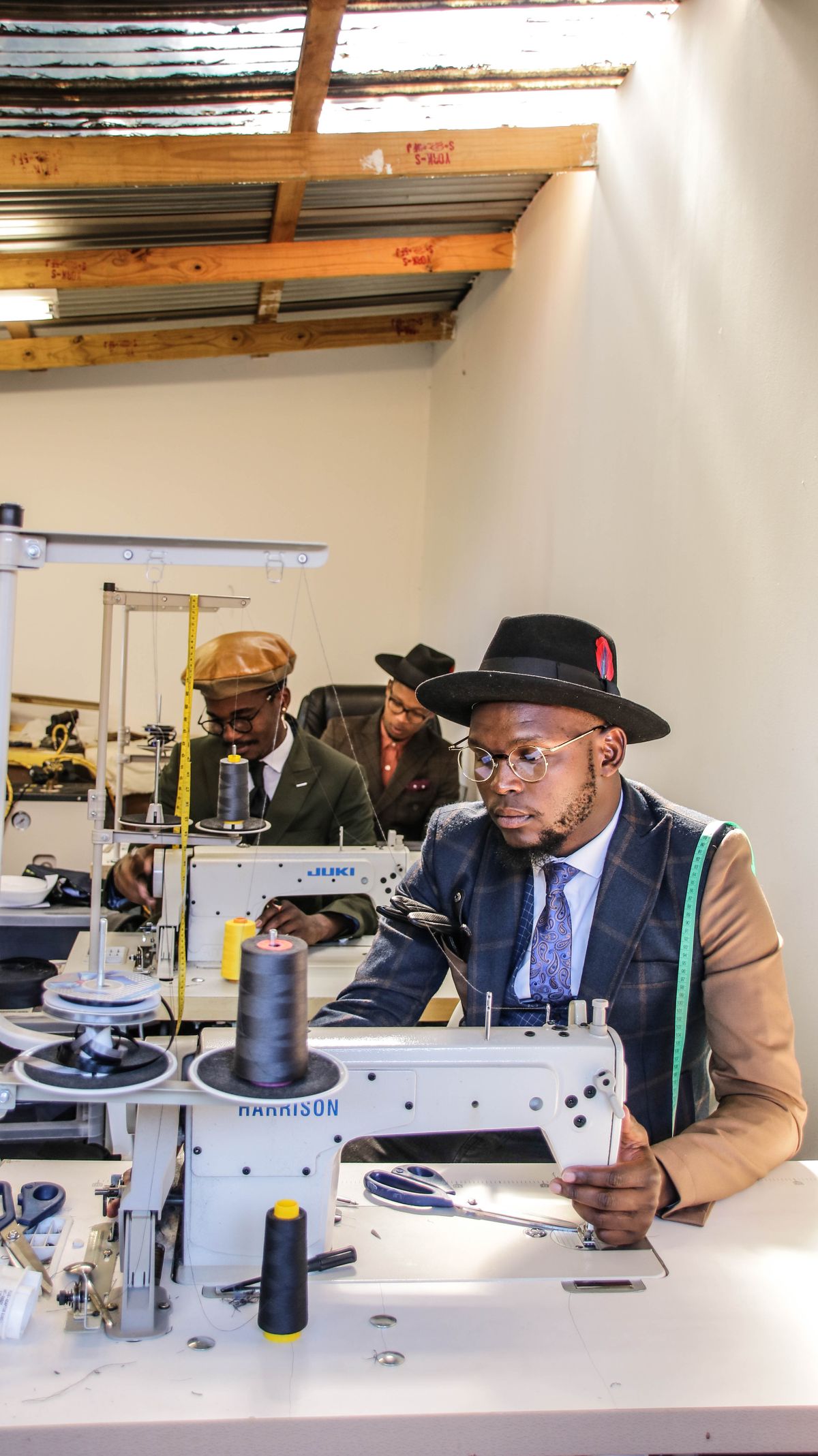
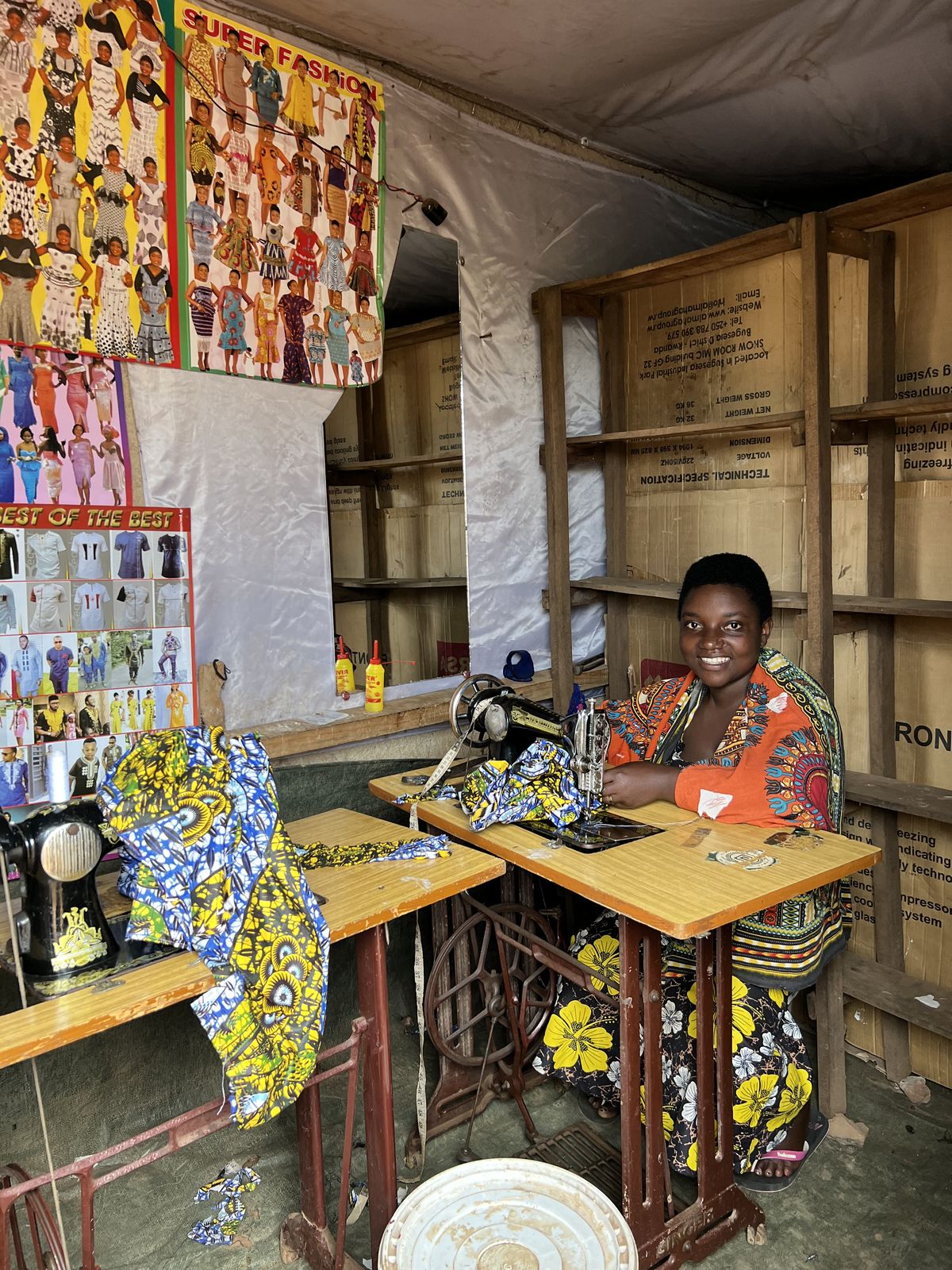
A tailor in Gikomba can alter a garment to fit a specific body in a specific time frame at a price calibrated to the local wage economy. A cobbler at a Kampala roadside stall can resole a pair of leather shoes, replace a heel or restitch a seam using materials sourced from the local spare-parts market, at a cost that makes repair economically rational relative to replacement. A seamstress in an Abidjan residential quarter can take a damaged or outdated garment, disassemble it, and remake it into something new, using the original fabric at its full value rather than at the fraction of value that secondhand sale would return.
These practices are not primitive versions of the repair services that European circular fashion initiatives are trying to build. They are more sophisticated in several respects: they are demand-responsive, price-accessible, materially efficient and embedded in community relationships that provide accountability without contractual formality. A tailor’s reputation in their neighbourhood is a more immediate and responsive accountability mechanism than any consumer protection regulation because the tailor’s livelihood depends directly on the quality of work delivered to people they will see again tomorrow.
As Omiren Styles has established in its analysis of sustainability metrics, it cannot see a tailor; the frameworks used to measure, certify, and reward sustainability in fashion were not built to see craft production. They were built around the disclosure frameworks of large industrial companies. A tailor who produces zero overstock, maintains a garment’s full material value through repair and alteration, and extends its useful life by years is performing what the circular economy literature describes as the highest-value intervention in the textile lifecycle. That tailor is invisible to the certification systems that reward brands for meeting sustainability targets.
That invisibility has commercial consequences. A fashion brand can pay for a repair certification, publish a take-back programme, commission a third-party audit and receive an ESG rating that reflects its formal sustainability commitments. A Kampala cobbler whose daily practice is more materially sustainable than any certified brand take-back programme is unrated, unrecognised and excluded from the financing, infrastructure investment and policy attention that sustainability certification unlocks.
The Pressure Being Applied From Outside
As Deeds Magazine documented in 2025, Africa’s repair and reuse systems are increasingly strained not by a failure of capacity but by volume: the scale of secondhand clothing arriving from the Global North has pushed tailors, markets and secondhand traders well beyond their limits, absorbing volumes never designed for circulation or care. In Accra, the Kantamanto market absorbs vast quantities of secondhand clothing from Europe and North America, sorting, reselling and discarding what cannot be used, with overflow spilling into landfills and waterways. In Nairobi, fabric waste at Dandora has nearly tripled over the past five years, according to the National Environment Management Authority.
The pressure is external in origin and internal in consequence. Africa’s informal repair economy did not create the volume problem. The Global North’s fast fashion industry created the volume problem and routed its consequences to African markets through the secondhand trade. The result is that the systems built to extend garment life are being overwhelmed by the volume of garments whose first life was too short to justify repair.
This is the specific form of the sustainability contradiction. The fashion industry that positions itself as a leader in circularity produces the surplus that strains the repair economy it simultaneously points to as evidence of African circular fashion capacity. The Kantamanto trader who sorts through an incoming bale of fast fashion discards is providing the circular fashion service that the brands whose products are in that bale declined to provide before they exported the problem. The acknowledgement that Africa’s informal repair economy is circular fashion infrastructure should be accompanied by an acknowledgement of what is being deposited into that infrastructure without consent or compensation.
The Formalisation Question and Its Risks
The Ellen MacArthur Foundation’s research on Africa’s repair economies cautions that formalisation can make repair a highly exclusive experience, particularly for those who have operated in the informal economy for decades. The risk is specific: once repair is brought within formal regulatory frameworks, it incurs costs, particularly for registration, compliance, tax, insurance, and premises requirements, that restructure the price point at which it can be offered. A tailor whose stall in a market costs a small monthly rent can offer alteration services at prices that most people can afford. A tailor operating from a registered premises, paying VAT, employing staff under formal contracts and complying with health and safety standards offers a different service at a different price to a different customer.
That difference matters for equity. The populations whose fashion needs are currently served by the informal repair economy are not primarily the consumers who can afford formal fashion services. They are the workers, market traders, domestic employees and informal sector participants for whom the informal repair economy’s price structure is the precondition for accessing clothing maintenance at all. A formalisation programme that shifts these practitioners into a higher-cost structure, or prices their customers out of the service, has not improved the system. It has made it more exclusive while making it look more legible to institutional frameworks that were not designed to serve the people it previously reached.
As Omiren Styles has documented in its analysis of the economics of made-to-measure tailoring, the made-to-order model is structurally more sustainable than any industrial alternative, producing zero overstock, enabling demand-driven production, and fostering direct maker-to-consumer relationships. The informal tailoring economy in African cities is the largest operational example of this model at continental scale. Formalisation that preserves those structural characteristics while addressing specific systemic limitations — lack of access to working capital, irregular payment terms, limited tooling investment, and vulnerability to displacement — would represent genuine infrastructure improvement. Formalisation that replaces the model with a higher-cost formal service structure would destroy what makes the system sustainable in exchange for the appearance of institutional modernity.
What Infrastructure Support Would Actually Require
The distinction between formalisation and infrastructure support is the most important one in this discussion.
Formalisation, in the sense used by development economists, typically means bringing informal practitioners within a regulatory framework that requires registration, taxation and legal compliance. The evidence on formalisation in African economies is mixed at best: programmes designed to bring informal enterprises into formal frameworks have repeatedly shown that the majority of informal businesses remain informal because the costs and complexity of formal compliance exceed the available capital and the marginal benefit of formal status for businesses serving informal markets.
Infrastructure support is a different intervention. It addresses the specific systemic limitations that keep informal repair enterprises small, vulnerable, and unable to invest in their own development without forcing them to adopt a cost structure that undermines their price accessibility.
For Africa’s fashion repair economy, the specific infrastructure gaps are identifiable. Working capital access: a tailor who cannot afford to hold fabric stock, invest in a better sewing machine or hire an additional hand cannot grow even when demand supports it. The informal finance systems that address this gap — rotating savings and credit associations, mobile money platforms, community lending arrangements — are underutilised as vehicles for investment in the fashion sector. Workspace security: a tailor operating from a stall with insecure tenure cannot invest in equipment, training, or client relationships whose payback period exceeds the tenure horizon. Security of tenure, even without formal property ownership, would unlock investment that current tenure insecurity blocks. Skills certification: a tailor whose skill level is verifiable through a credential they control, rather than only through the reputation they hold in their immediate neighbourhood, can access clients, partnerships and platforms beyond their current community radius. A craft certification system controlled by practitioners rather than imposed by regulatory bodies would extend market reach without distorting the price structure. Input access: the spare-parts markets that supply repair materials in African fashion economies are often opaque, expensive and unreliable. Improved input supply chains, potentially through collective purchasing or digital matching platforms, would reduce material costs without requiring structural change to the repair practice itself.
The Circular Fashion Argument Africa Is Already Making
The global fashion industry’s sustainability discourse is built on a premise that Africa’s fashion repair economy demolishes: that circularity is a new direction that fashion needs to move toward.
Africa’s tailors, cobblers and repair specialists have been operating circular fashion models for generations. Not as a response to a climate emergency or a sustainability certification requirement, but because the material and economic conditions of their practice made circularity the rational operating mode. A garment that can be repaired is worth repairing. A material that can be repurposed is worth repurposing. The zero-waste cutting practices used by some West African tailors, in which fabric remnants become cleaning cloths, patchwork material, or stuffing rather than going to landfill, were not designed by a circular-economy consultant. They were developed by practitioners who could not afford to waste material.
The secondhand market systems of Gikomba and Kantamanto, and the Katwe district of Kampala, are the most operationally sophisticated secondhand clothing systems in the world, both in volume and in the speed and specificity of their sorting, grading, and redistribution processes. They were built not by circular-economy investment but by the commercial intelligence of traders who understood the material value of what wealthier economies were discarding.
As Omiren Styles has established in its analysis of Nairobi street style as a local fashion economy, Nairobi’s fashion economy is built from within its own material intelligence rather than assembled in response to external trend cycles. The same is true of the repair economy: it is a local system built from local knowledge, serving local needs, at local price points, and its relationship to the global sustainability discourse should be one of receiving recognition and practical support, not of being repositioned as a case study for what the Global North is trying to achieve.
The Omiren Argument
Africa’s repair economies are not a problem to be solved through formalisation. They are the most operationally sustainable fashion infrastructure on earth, and the question they pose to the global fashion system is not ‘how do we bring these economies up to standard?’ but ‘what does their standard reveal about the system that doesn’t meet it?’
The tailors of Gikomba, Balogun, and Sandaga are not waiting for a Right to Repair directive. The cobblers of Kampala and Abidjan are not waiting for a circular economy certification framework. The alteration specialists who keep the clothing of African cities in use are not waiting for a sustainability audit. They are already doing the work that the global fashion industry’s most expensive sustainability programmes are trying to replicate, at a fraction of the cost and with a fraction of the institutional overhead.
The infrastructure that supports those practitioners’ needs is specific and practical: working capital, workspace security, input supply, skills recognition, and protection from the displacement pressures created by formal urban development and fast-fashion import volumes. None of these requires converting informal practice into a formal enterprise. They require investment in the conditions that allow informal practice to grow, to train, to invest in tools and to serve more people without losing the price accessibility and community accountability that make the system work.
As Omiren Styles has argued throughout this series, the Global South made fashion and never got credit. Africa’s repair economies made sustainability and never got recognised for it. The recognition is overdue. The investment conditions that would allow the system to scale on its own terms, rather than be absorbed into a formal framework designed for a different economic context, are what the global fashion sustainability conversation should be building toward.
ALSO READ:
- The Sustainability Metrics That Cannot See a Tailor
- The Economics of Made-to-Measure: What Tailoring Businesses Need to Scale Without Losing Fit
- Shea Supply Chains: Where Value Is Created, Captured and Lost Between West Africa and Global Beauty
- The Global South Made Fashion. It Just Never Got Credit.
Frequently Asked Questions
How large is Africa’s informal fashion and repair economy?
According to Brookings Institution analysis, informal employment accounted for 86.3% of all jobs in sub-Saharan Africa in 2024, the highest proportion of any region in the world. The informal economy’s share of GDP exceeds 27% and is projected to remain above that level through 2043. Within the $31 billion combined apparel and footwear market in sub-Saharan Africa, as documented by the Ellen MacArthur Foundation, the vast majority of production, retail, alteration, and repair activity occurs in the informal sector. The tailors, cobblers and alteration specialists who form the fashion repair economy are not a marginal portion of the African fashion industry. They are its primary operating layer.
Why is formalisation of Africa’s repair economy potentially harmful?
As the Ellen MacArthur Foundation has cautioned, formalisation can make repair a very exclusive experience, particularly for those who have operated in the informal economy for decades. When repair is brought under formal regulatory frameworks, it incurs costs, including registration, taxes, insurance, premises requirements, and compliance burdens, that reshape the price point at which it can be offered. The populations currently served by Africa’s informal repair economy are those for whom the informal price structure is the precondition for accessing clothing maintenance at all. Formalisation, which prices these customers out of the service while making the system more legible to institutional frameworks, has improved the paperwork without improving the outcome.
What is the Kantamanto market and what does it reveal about Africa’s repair economy?
As Deeds Magazine documented, Kantamanto in Accra, Ghana absorbs vast quantities of secondhand clothing from Europe and North America, sorting, reselling and discarding what cannot be used, with overflow spilling into landfills and waterways. The market is the most visible example of the scale pressure being applied to Africa’s informal repair economy: the systems built to extend garment life are being overwhelmed by the volume of garments whose first life was too short to justify repair. Africa’s repair economy did not create this volume problem. The Global North’s fast fashion industry created it and routed its consequences to African markets through the secondhand trade.
What infrastructure support would actually help Africa’s informal repair economies?
The specific systemic limitations that keep informal repair enterprises small and vulnerable are identifiable and addressable without requiring full formalisation. Working capital access through community finance mechanisms, mobile money platforms, and rotating savings structures already present in African cities. Workspace security that provides tenure stability without formal property ownership, unlocking investment that insecure tenure currently blocks. Skills certification controlled by practitioners rather than imposed by regulatory bodies, extending market reach without distorting price structure. Improved input supply chains for repair materials, potentially through collective purchasing or digital matching, reducing material costs without structural change to the repair practice itself. Each of these interventions addresses a specific constraint without converting the informal system into a formal one.
How does Africa’s repair economy compare to the Global North’s circular fashion initiatives?
Africa’s informal repair economy has been operating circular fashion practices for generations: zero-waste fabric use, demand-driven production with zero overstock, garment repair and alteration that extends material life, and sophisticated secondhand sorting and redistribution systems. The Global North’s circular fashion initiatives, including the European Union’s Right to Repair directive adopted in 2023, luxury brand take-back programmes and repair certifications, are attempting to rebuild commercial structures that Africa’s informal sector never dismantled. The material sustainability of a Kampala cobbler resoling a pair of leather shoes exceeds that of most certified circular fashion programmes in operational terms. The difference is that the cobbler is invisible to the certification systems whose metrics determine what counts as sustainable.
EXPLORE MORE
Read the full Industry and Infrastructure, Institutions and Creative Power sections at Omiren Styles for ongoing analysis of Africa’s fashion repair economies, circular fashion infrastructure and the conditions that would allow informal practice to grow without losing what makes it work. Discover travel and heritage intelligence across Africa’s fashion cities at Rex Clarke Adventures.