
The name YZA is an Amazigh girl’s name, the kind, Nawal Rmili says, that a grandmother would call out across a courtyard. It carries force, resilience and the road home.
That last quality explains the brand. Nawal Rmili spent nearly fifteen years in Paris working as a stylist and assistant, building her eye across shoots for Vogue, Grazia and Marie Claire. The fashion industry she worked in was the one that the world recognises as the centre: the editorial meetings, the long shoot days, the luxury clients, the European fashion calendar. She learned what that system knows. Then she came home to Guéliz, Marrakech, and built something the system does not know how to make.
That something is YZA, a studio and craft atelier at 66 rue Yougoslavie in Guéliz, which makes handcrafted bags, accessories, jewellery, and ready-to-wear from local materials in limited editions. The atelier is 100% women, from the artisans who crochet, braid and embroider each piece by hand to the studio team that manages the brand. Each piece’s handtag bears the artisan’s name. The work takes between two and seventy hours per item. Nothing is made in advance of need. The piece does not exist until someone orders it.
“One piece at a time, never twice the same.” That is not a marketing phrase at YZA. It is a production principle. The brand is designed so that the scarcity is structural, not manufactured. There is no excess inventory because there is no inventory. There are hands, time and intention.
That model is the argument Nawal Rmili makes with YZA: the craft knowledge held by the artisans of Guéliz is not raw material for a souvenir economy. It is the foundation of a slow fashion brand that can reach a global audience on its own cultural terms. The bag that a woman carries from Marrakech to Tokyo is not a reminder of a holiday. It is a work produced by a named practitioner in a named atelier, made from materials specific to the city, using a technique that takes time to learn and cannot be replicated by a machine.
After nearly fifteen years as a stylist in Paris, Nawal Rmili returned to Marrakech and built YZA — a 100% women’s atelier making handcrafted pieces that carry the city’s craft forward, not as souvenirs but as slow fashion for the world.
Three Generations at One Address
The studio at 66 rue Yougoslavie is not simply a business address. It is the geographical expression of a family commitment to Guéliz that runs three generations deep.
As YZA’s own history page notes, the building that houses Studio YZA today dates to the 1940s — first a bar called the Keys Club, then a French cultural centre. Nawal’s father ran La Rôtisserie de la Paix, the family restaurant, on the same street. The family acquired the building in 1990. The studio has occupied the adjacent space since 2025. Three generations of the same family, on one street in Guéliz, each contributing a different form of hospitality to the same neighbourhood.
That continuity is not incidental to the brand’s argument. YZA is not a brand that has arrived in Marrakech to extract its craft knowledge and repackage it for export. It was built by someone whose family has been part of Guéliz for decades, who grew up with the neighbourhood, who knows the artisans whose work she commissions not as suppliers but as community. The brand’s 100% feminine structure, its commitment to fair wages for artisans, its insistence on naming the maker on every handtag: these are not ethical positioning decisions made in a strategy meeting. They are the practical expression of a relationship that predates the brand.
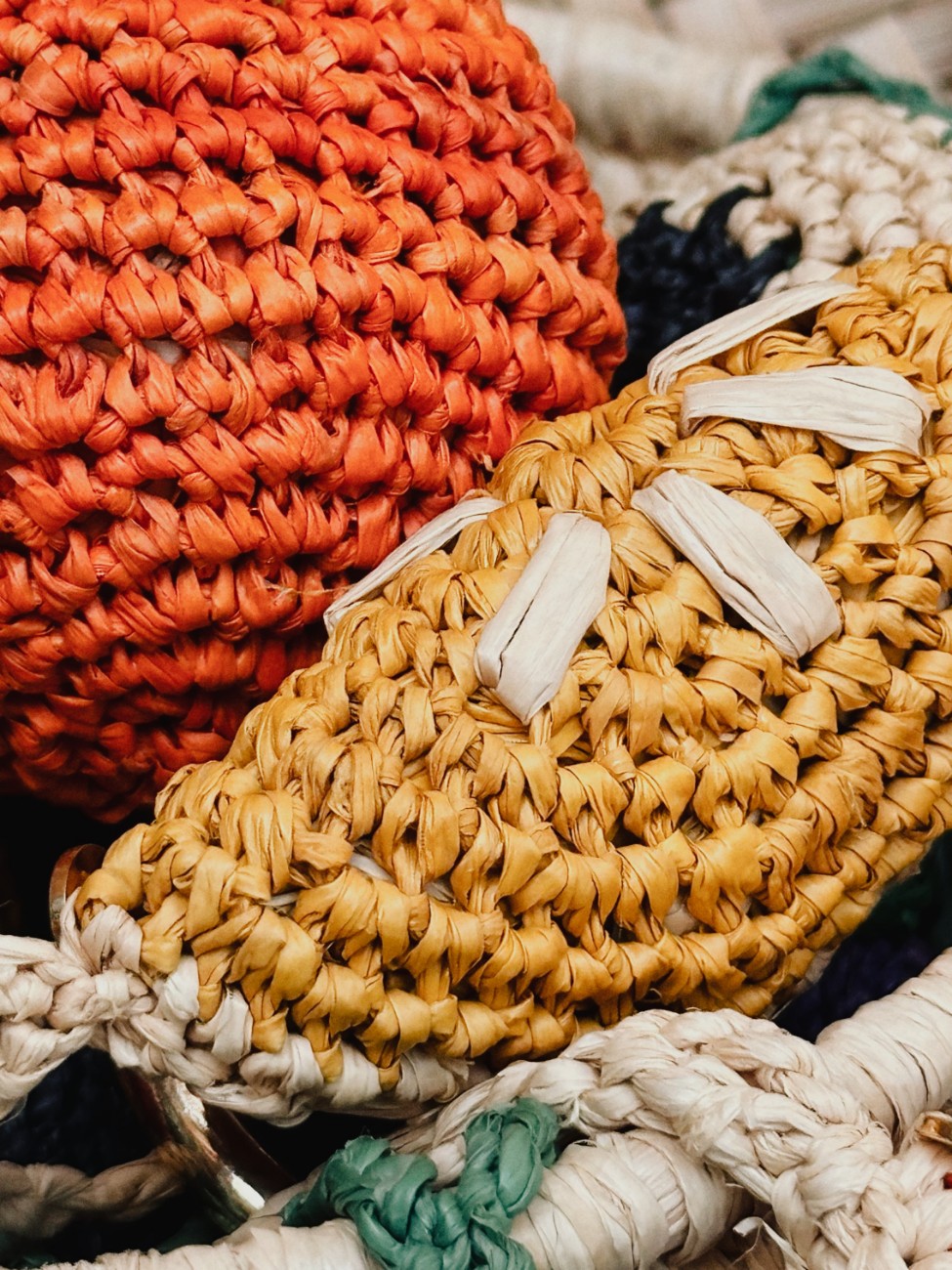
The craft knowledge that flows through the atelier also carries its own generational depth. Nawal describes the atelier as holding thirty-seven years of gesture in the room—the accumulated knowledge of artisans who have practised their techniques across decades. The raffia crocheting, the doum braiding, the hand embroidery on the Jawhara fabric: these are not skills that can be taught from a manual. They are transmitted through proximity and repetition, and YZA has built its production model to protect them rather than to replace them with faster alternatives.
The Paris Years and Why She Came Back
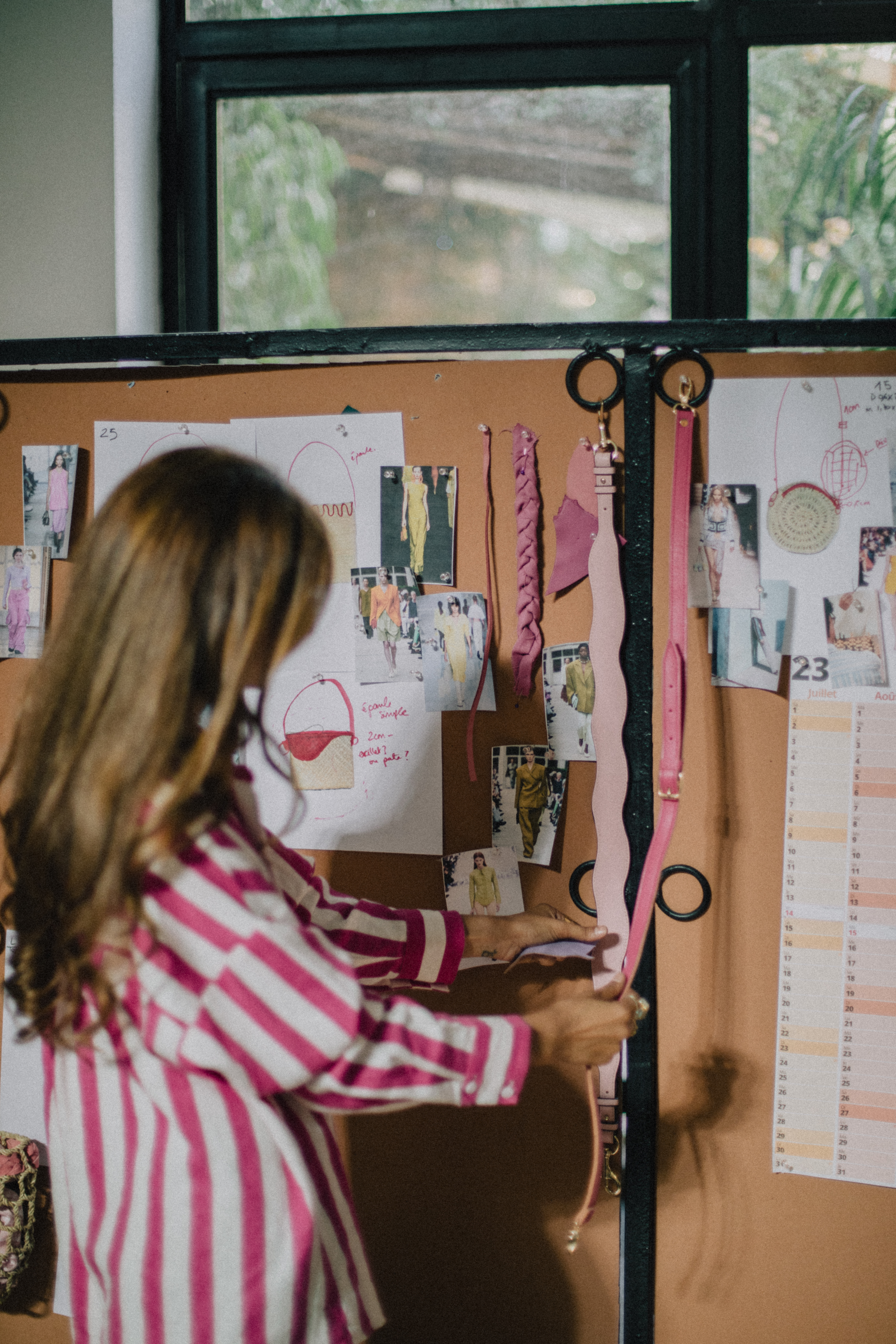
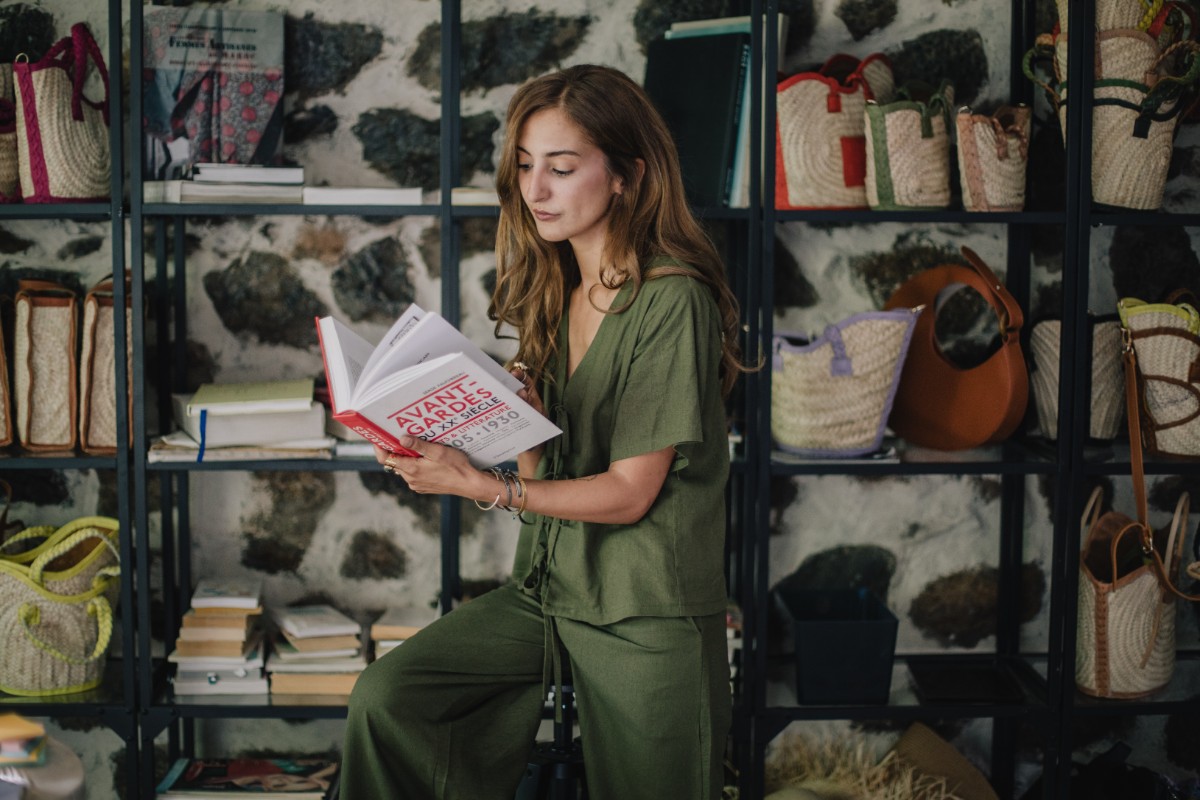
Fifteen years is a significant investment in a career, and the career Nawal Rmili was building in Paris was serious. She was working at the highest level of the editorial fashion industry, on shoots for publications whose visual standards define what fashion looks like globally. She gained the technical precision, aesthetic judgement, and industry relationships the editorial world requires.
What she describes bringing back from Paris is the eye and the rigour. What she describes returning toward is the colour, the culture and the link — something that the hand could hold. The abstraction of Parisian fashion editorial, the visual language built around European luxury and its global aspirations, was not the direction her own creative instinct pointed. She wanted more sense and more ethics in fashion. She wanted the beauty to make life better for the people who create it.
The return to Marrakech was therefore not a retreat from the industry but a reorientation of its resources. The editorial eye that Paris developed is present in every YZA visual: the product photography is precise, the styling coherent, the brand identity specific and consistent. What is different is what the eye is pointed at. YZA photographs artisans at work in the atelier, hands braiding raffia, and light in the Guéliz workshop. The brand’s visual language is rooted in Marrakech rather than aspirationally pointed toward Paris.
Omiren Styles has established, in its analysis of luxury beyond price in African fashion, that provenance is not a postcard. It begins when a brand can explain the value chain behind the product without turning place, craft, or culture into decorative marketing language. YZA’s provenance is not decorative. It is structural: the atelier is at a specific address in Guéliz, the materials are specific to the region, the artisanes are named, and the brand’s founder grew up two hundred metres from where the pieces are made. That is provenance that holds up under examination.
YZA: The Name and the Manifesto
YZA — in Tifinagh script ⴰⵣⵉ, in Arabic ييزة — is an Amazigh girl’s name. Nawal’s choice of an Amazigh name for the brand is not a superficial cultural reference. The Amazigh people of North Africa, the indigenous Berber communities whose language and cultural traditions predate the Arab conquest and whose presence is felt throughout Morocco in architecture, textiles, music and language, are the deep cultural substrate beneath Guéliz’s cosmopolitan surface. To name the brand with an Amazigh name is to root it in that substrate rather than in the colonial or tourist Marrakech that external representations of the city tend to produce.
The brand’s manifesto, published on its story page, is three lines. We grow through women — those who make, those who wear, those who pass on: more hands, fewer machines, less waste, more meaning. Beauty lives in community — in the link, the lineage, the gesture of making. These are not aspirational statements. They describe how the atelier currently operates: 100% women, handmade, no excess production, rooted in the specific community of Guéliz.
The phrase Modern Marrakech Wear, which Nawal has trademarked as the brand’s positioning, deserves attention. It refuses two common framings for a brand in YZA’s category. It refuses the heritage framing that positions Moroccan craft as traditional, ancient, and unchanging — the souvenir-shop framing the brand was explicitly built to counter. And it refuses the international luxury framing that would position the brand as Moroccan-inspired fashion for a global market. Modern Marrakech Wear is Marrakech as the primary referent: not traditional, not inspired by, but contemporary and specific.
The Collections and What They Make
YZA has developed its product range across six collections, each building on the previous rather than replacing it. The sequence shows a brand that is deepening its vocabulary rather than chasing trend cycles.
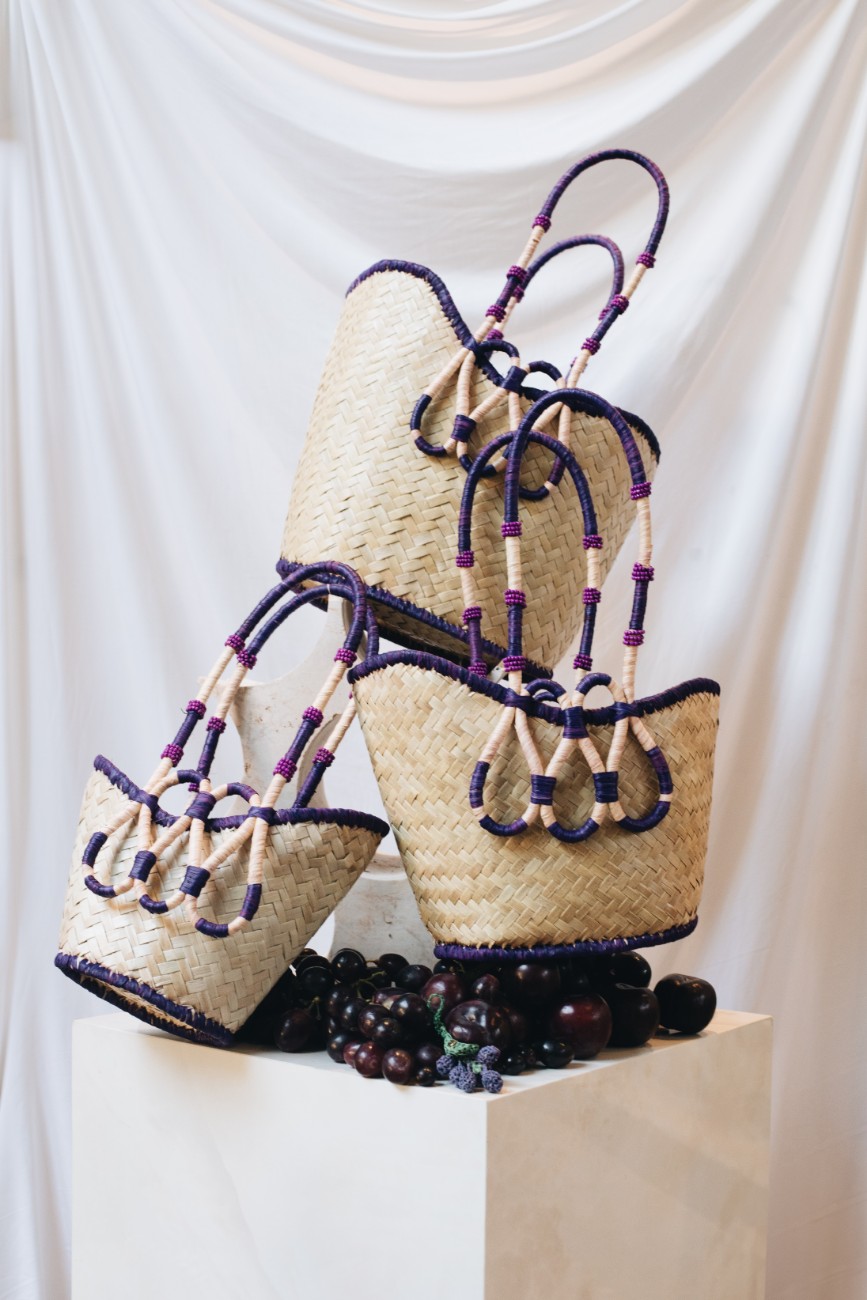
La Vague, the founding basket, launched the brand. A hand-braided raffia bag in the wave form that gives the collection its name established the material language and the production logic that all subsequent collections build on. La Vaguelette, the small everyday format, reduced the scale without reducing the craft. La Nouvelle Vague re-presented the line with braided handles, beadwork and new colours — the same gesture at a new frequency. La Sculpture, the current bag reference, produces sculptural handles worked like jewellery, a bag that is as much an object as a carrier.
The Fruit Market charm collection extended the brand into a different product register: hand-crocheted raffia fruit charms designed to be attached to bags, worn as jewellery, or given as a piece of Marrakech that does not sit forgotten on a shelf. Cherries, lemons, watermelon, tomato, avocado, kiwi and orange, each crocheted by hand in the atelier. The charms are the most directly accessible entry point into the YZA universe and the product that brought the brand its widest audience.
The TRANOÏ Paris debut, covered by Omiren Styles in its analysis of YZA’s Fruit Market collection and Paris presentation, placed YZA at one of the international fashion trade shows most relevant to independent accessories brands. The Fruit Market collection was the centrepiece of the presentation. A brand that had built its audience through its Guéliz atelier and its Instagram community at @yzahandmade was entering the professional trade context with a collection ready for international buyers. That arrival was not an endpoint but a confirmation of what the brand had already built.
The Jawhara prêt-à-porter collection, the most recent addition, extends the brand into clothing: tops, sarong skirts, and trousers made from the Jawhara signature fabric, cut, sewn, and embroidered at the atelier. The fabric was developed specifically for YZA and is named after the Arabic word for jewel. The ready-to-wear brings the atelier’s hand embroidery into a wearable form, completing the brand’s offering from accessories to a full wardrobe.
The Artisanes and Why Their Names Are on the Tag
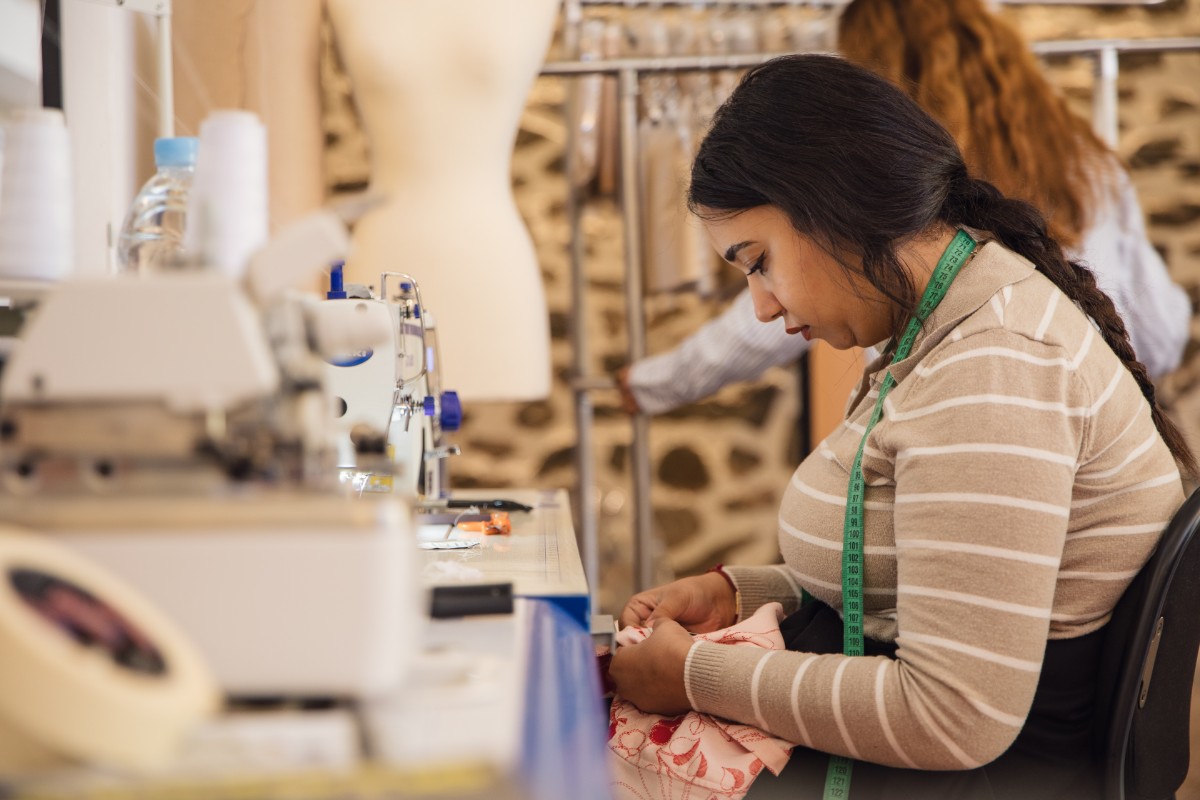
The decision to put the artisan’s name on the handtag of every YZA piece is both a commercial and political statement.
Commercially, it signals provenance. The buyer who receives a YZA bag and reads the name of the woman who made it is receiving specific information that changes the nature of the purchase: this is not an anonymous craft product. It is the work of a named practitioner in a named atelier at a named address. That specificity underpins the trust the brand is building with its customers.
Politically, it is a credit decision. The global craft economy has a consistent pattern: the maker is photographed for the brand’s marketing, their skill is referenced in the product description, and their name disappears from the commercial record once the transaction is complete. The brand holds the customer relationship, brand equity, and margin. The maker receives a payment and anonymity. YZA’s handtag policy refuses this pattern at its most basic level: the person who made the object is on the object.
Omiren Styles has established, in its analysis of what credit owes beyond naming a cultural source, that naming a maker or cultural source does not answer who owns the product, controls the intellectual property, receives the margin or benefits from future growth. YZA’s commitment goes beyond the handtag: the artisans of the Guéliz atelier are employees in a 100% women-run business, are paid fair wages, and work in a studio whose founder grew up in the same neighbourhood. The commercial relationship between the brand and the artisans is not a commission structure but an employment relationship. That is a different and more durable commitment than naming.
Craft That Travels
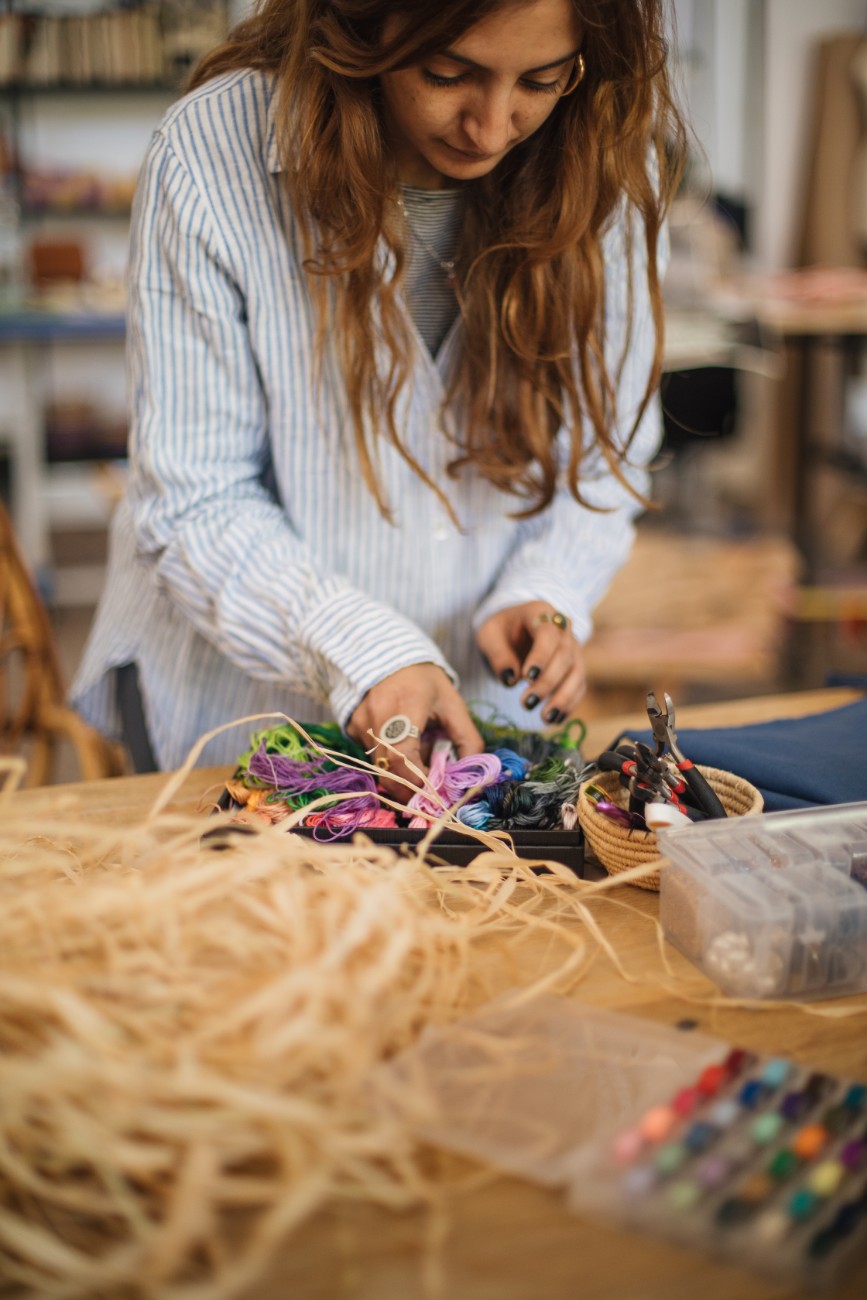
YZA describes its pieces as made in Marrakech, made to travel. The phrase captures the brand’s core commercial argument: Guéliz’s craft knowledge is not place-bound, in the sense that it is not only legible or valuable within Marrakech. It is locally rooted in the way that any serious craft tradition is locally rooted — the materials, the hands, the atelier, the cultural geography that shapes the aesthetic — and it is globally portable because the object carries that rootedness wherever it goes.
A YZA basket carried by a woman in Tokyo, São Paulo, or London does not lose its Marrakech identity when travelling. It is exporting it. The basket is an ambassador rather than a souvenir: it carries the story of the atelier, the artisan’s name, the specific material knowledge of raffia and doum crochet, and the visual language Nawal Rmili developed through a Parisian editorial education and a Guéliz family inheritance. All of that travels in the object.
This answers the souvenir problem that the brand’s title names. A souvenir is an object that loses its meaning when it leaves the place it came from, because its meaning was only the memory of being there. A YZA piece does not lose its meaning when it travels because the meaning is not in the memory of Marrakech. It is in the object itself: the raffia from the region, the hands that shaped it, the name on the tag, and the story the brand has built around all three.
Omiren Styles has established, in its analysis of luxury beyond price in African fashion, that an object is irreplaceable not because it is expensive or difficult to obtain, but because replacing it would mean losing something specific: a material, a maker relationship, a documented provenance, a personal history. A YZA piece built those qualities into its design: the limited edition means the colour and weave cannot be replicated; the named artisan means the maker relationship is documented; the atelier’s lifetime repair guarantee means the relationship between the object and its owner can extend beyond the original purchase. That is the structure of irreplaceability, and it is what separates slow fashion from fast fashion at the level of design intent rather than marketing claim.
The Omiren Argument
Nawal Rmili built YZA to answer a specific problem in the global representation of Moroccan craft: the reduction of extraordinary technical knowledge to a decorative souvenir whose value exists only as a memory of place.
The answer she has built is precise. A women’s atelier at a specific address in Guéliz, making pieces from specific local materials in specific techniques that take up to seventy hours of skilled hand labour per item, for a global market that is increasingly looking for exactly what YZA offers: objects that carry a story, a place, a maker’s name and the specific beauty of something that a machine cannot replicate.
The brand launched with a single basket, the Vague. It now spans bags, charms, jewellery and ready-to-wear, with a Jawhara fabric developed specifically for the brand and a TRANOÏ Paris debut that placed Marrakech craft in front of international buyers on the brand’s own terms. The YZA Girls community wears its pieces from Marrakech to Tokyo. The atelier in Guéliz is open to visitors who want to see the work in progress and leave with a piece directly from the hands that made it.
The $31 billion African fashion market includes the Moroccan craft economy, whose artisans hold knowledge that YZA is building into a commercial proposition competitive with the European slow-fashion brands that have dominated this market. As Omiren Styles has established throughout this series, the standard is not to make African and North African craft legible to external markets by translating it into the language of European luxury. The standard is to carry it to those markets on its own cultural terms, with its maker’s name on the tag and its city in the title. Nawal Rmili has built that standard into every piece YZA makes. The brand is available at yza-shop.com and in the studio at 66 rue Yougoslavie, Guéliz, Marrakech.
ALSO READ
- YZA at TRANOÏ Paris: The Marrakech Accessories Brand That Arrived With Its Own Language
- Credit Is Not Compensation: What Fashion Owes Beyond Naming a Cultural Source
- How North African Kaftan Tailoring Operates as Contemporary Menswear
- The Global South Made Fashion. It Just Never Got Credit.
Frequently Asked Questions
Who is Nawal Rmili and what is YZA?
Nawal Rmili is the founder of YZA, a studio and craft atelier based in Guéliz, Marrakech. Before building YZA, she spent nearly fifteen years as a stylist and assistant in Paris, working on shoots for Vogue, Grazia and Marie Claire. She returned to Marrakech to build a brand rooted in local materials and made by a 100% women’s atelier. YZA makes handcrafted bags, accessories, jewellery and ready-to-wear from raffia, doum, banana leaf and the brand’s signature Jawhara fabric. Each piece takes between two and seventy hours of manual work, is produced in limited editions and carries the name of the artisan who made it on its handtag. The brand positions itself as Modern Marrakech Wear: slow fashion, made in Guéliz, built for the world.
What does the name YZA mean?
YZA is an Amazigh girl’s name — in Tifinagh script ⴰⵣⵉ, in Arabic ييزة — the kind, Nawal Rmili says, that a grandmother would call out across a courtyard. It carries force, resilience and the road home. The Amazigh people are the indigenous Berber communities of North Africa whose language and cultural traditions predate the Arab conquest and whose presence shapes Morocco’s material culture, including its textile, architectural and craft traditions. Naming the brand with an Amazigh name roots it in that cultural substrate rather than in the colonial or tourist Marrakech of external representations.
What does YZA make, and what are its main collections?
YZA’s collections have developed across six lines since the brand launched. La Vague is the founding hand-braided raffia basket. La Vaguelette is the everyday small format. La Nouvelle Vague re-presented the line with braided handles, beadwork and new colours. La Sculpture produces sculptural bag handles worked like jewellery. The Fruit Market charm collection offers hand-crocheted raffia fruit charms that can be attached to bags or worn as accessories. The Jawhara prêt-à-porter line, the most recent addition, features tops, sarong skirts, and trousers made from the brand’s signature Jawhara fabric, cut, sewn, and embroidered at the Guéliz atelier. All pieces are handmade in limited editions at the studio at 66 rue Yougoslavie, Guéliz, Marrakech.
Why does YZA put the artisan’s name on the handtag?
The decision to name the artisan on every YZA handtag is both a commercial and a political commitment. Commercially, it signals provenance: the buyer receives specific information about the person who made the object, changing the purchase from an anonymous craft product to the work of a named practitioner. Politically, it rejects the pattern common in the global craft economy, where the maker’s skill is used in marketing, and their name disappears from the commercial record once the transaction is complete. YZA’s artisans are employees of a 100% women-run business at a named address in Guéliz, paid fair wages. The handtag is the visible expression of a commercial relationship that extends beyond the individual transaction.
How can I visit or order from YZA?
YZA’s studio is at 66 rue Yougoslavie, Guéliz, Marrakech. Opening hours are Wednesday to Sunday, 12h to 20h, and Monday, 12h to 16h; the studio is closed on Tuesdays. You can arrange private fitting appointments via WhatsApp at +212 693 296 630. The full collection is available online at yza-shop.com. Pieces are made in limited editions and, once an edition sells out, are made to order: production takes approximately three weeks from commission. The pieces do not exist before the order is placed. That is, as the brand describes it, the time it takes for something to be born by hand rather than by a machine.
EXPLORE MORE
Discover YZA’s full collection of handcrafted bags, charms, jewellery and ready-to-wear at yza-shop.com. Read the full Industry and The Field sections at Omiren Styles for ongoing profiles of North African fashion founders, craft brands and the ateliers building slow fashion from local knowledge. Discover travel and heritage intelligence across Morocco and North Africa at Rex Clarke Adventures.