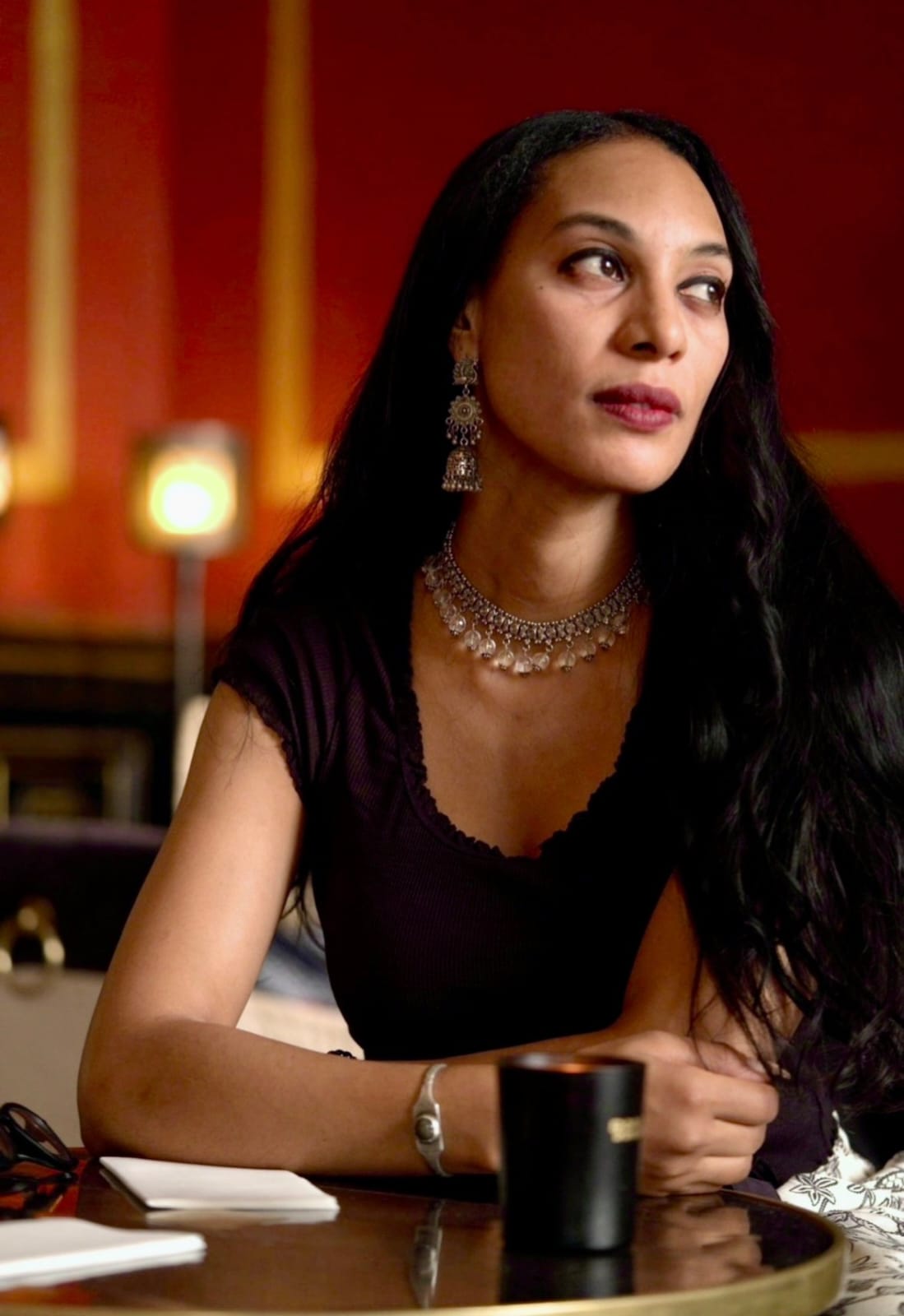
Maison Motema is a slow-luxury house creating handcrafted leather bags and bronze jewellery. It is designed in New York, made by master artisans in Dakar, and presented at Paris Fashion Week. ELLE Magazine has called it a brand “redefining luxury through craftsmanship and modern life.” Its founder, Verlaine-Diane Soobroydoo, presented its vision for sustainable luxury to the United Nations Deputy Secretary-General in 2025.
The facts alone locate Maison Motema in the institutional tier of global luxury conversation. The argument the brand is making is more specific than the facts suggest.
“I believe that true luxury is rooted in intention,” Soobroydoo writes from the brand’s house page. “Each piece is designed for women moving through the world with confidence, carrying not just what they need, but who they are becoming.” The name Motema is a word from Lingala, the Bantu language spoken across parts of central and west-central Africa, meaning heart. A house named for the heart, built on the proposition that the hands of a Dakar artisan constitute a luxury proposition that a New York design studio cannot supply alone.
“My vision is to create a future where luxury honours memory, where each piece honours the soul of the hands that shaped it, and where women wear not just adornment, but legacy.” — Verlaine-Diane Soobroydoo, Founder and Creative Director, Maison Motema.
Maison Motema is not the first. African luxury accessories brand to argue that craft, heritage and slow production constitute a luxury proposition competitive with European luxury’s established vocabulary. It is among the most precisely positioned. The geographic triangle of Dakar, New York and Paris as creative centres is not an accident of logistics. It is deliberate positioning: Dakar holds production authority; New York and Paris hold the commercial language; and intelligence connects all three without subordinating any one to another. As Omiren Styles has established in its analysis of luxury beyond price, claiming African craft as a luxury proposition requires demonstrating not only quality but provenance, scarcity, service, and irreplaceability. Maiso,n Motema has built its commercial structure around all four.
Designed in New York, made in Senegal, presented at Paris Fashion Week. Verlaine-Diane Soobroydoo is building Maison Motema as an argument about what luxury owes memory — and about who gets to make that argument on the global stage.
What Maison Motema Is and What It Makes

Maison Motema describes itself as a women-founded, artisan-centred brand redefining luxury through craft, heritage and lived experience. Its product range covers two primary categories: luxury leather bags and bronze jewellery, each crafted in the Dakar atelier in small batches by master artisans whose hands carry generations of knowledge.
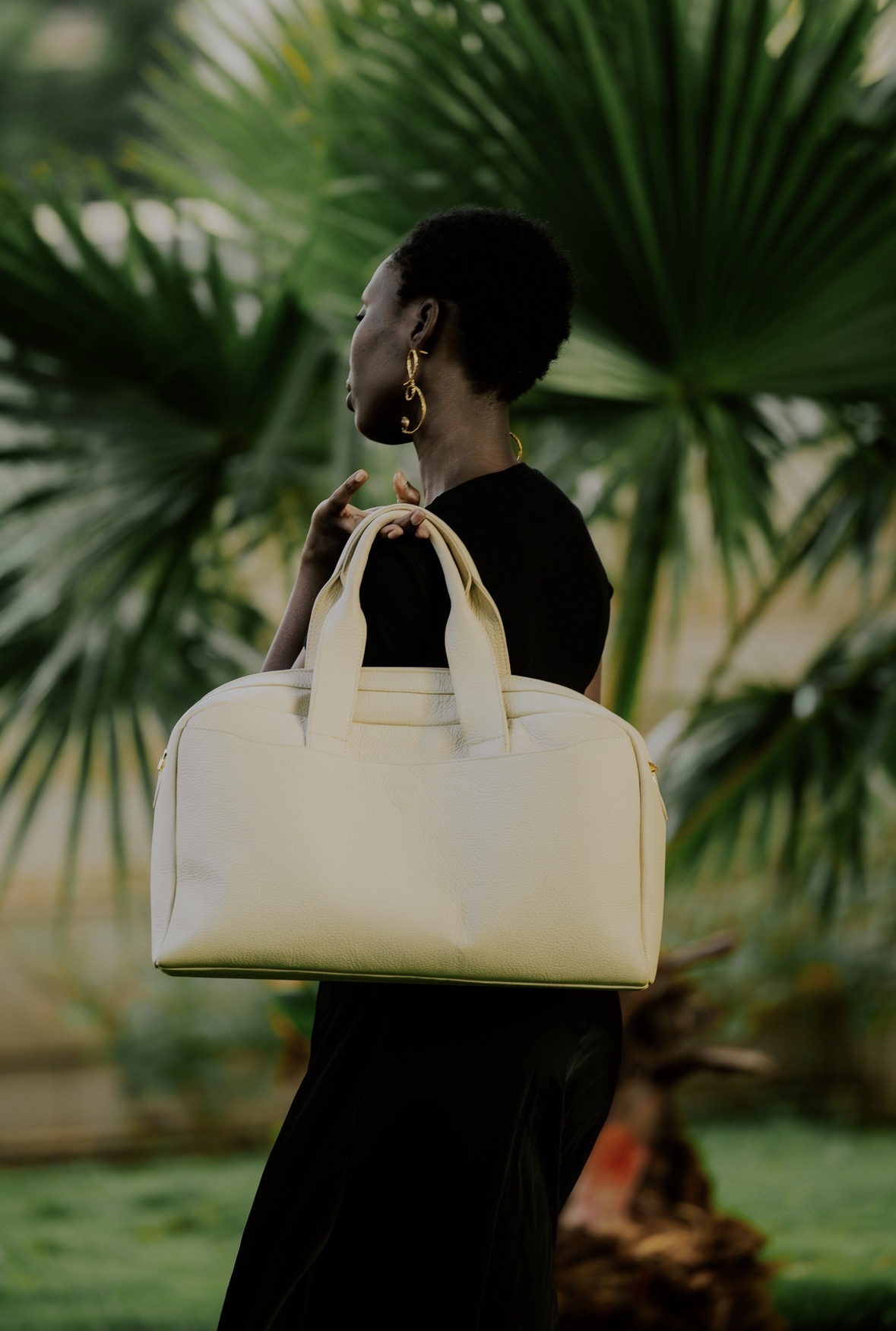
The bag collections span a range of silhouettes and occasions. The Maam, the house’s signature bag, takes its name from the Wolof word for grandmother, an explicit nod to the intergenerational transmission of knowledge and material culture. The Cayor references a pre-colonial Wolof kingdom of Senegal. The Jackie, the Le Croisé, the Lexi, the Zale, the Nola and the Gramercy extend the range across crossbody, tote and bucket formats. The Weekend Travel Bag addresses the functional range of a full accessory house. The bespoke service, which allows customers to commission a bag designed specifically for them, places Maison Motema explicitly in the made-to-order tradition that the Omiren luxury analysis identifies as the model most structurally resistant to the overproduction problem that undermines most luxury brand sustainability claims.
The bronze jewellery draws specifically on Senegal’s bronze-working tradition, which belongs to ancient metal Africa’s lineages. As the Maison Motema artisans’ page documents, each creation results from precise, results from an intimate understanding of materials; craftsmanship is not rushed, and every detail is honoured. In the Dakar atelier, artisanal excellence is a lived practice, shaped by tradition, mastery and pride in work done well. This is a specific claim about the production process, and it is verifiable: the artisans are named on the brand’s platform, nd their work is documented.
The brand operates a bespoke commission service, a concierge service, and ships internationally to twenty markets, including the United States, United Kingdom, France, Germany, Canada, Australia, Italy, and Switzerland. This is the commercial infrastructure of a brand that has moved beyond the discovery stage into operational international retail.
The Founder: Who Verlaine-Diane Soobroydoo Is
Verlaine-Diane Soobroydoo’s background before Maison Motema is not in fashion but in women’s institutional advocacy and social entrepreneurship — and that is precisely what makes the Maison Motema proposition coherent rather than incidental.
As founder of Zahara’s Dream Inc., an impact initiative for young women’s empowerment through innovation worldwide, Soobroydoo has worked with two of the most significant international institutions for women’s leadership: the African Union and the United Nations. Her work at those institutions focused on scaling women’s participation in governance and peace and security, ensuring that participation is meaningful and that women’s voices have real impact.
The bridge from institutional advocacy to luxury brand founding is less counterintuitive than it may seem. So, though her Maison Motema vision may not sound like the language of a fashion designer, it is the language of an institution builder: “To honour the artisans who shape, honourcraft the women who carry our pieces.” The brand statement: beneficiaries are women who wear it. The ecobrand’s economic model is designed to create a reciprocal economic relationship between those two communities. The brand was invited to present Maison Motema’s vision for sustainable luxury to the United Nations Deputy Secretary-General. A luxury accessories brand presenting a sustainability and artisan economy argument to the United Nations is not doing brand marketing. It is making an institutional case that the commercial model of a slow-luxury African accessories house contributes to sustainable development outcomes that international institutions should understand and support. That is a different order of ambition from most fashion brand sustainability communications, and it reflects a founder whose professional formation was in institutional impact rather than in fashion.
The Luxury Argument Maison Motema Is Making
Maison Motema’s luxury proposition has three specific structural elements that distinguish it from brands that invoke African craft as an aesthetic reference without building a commercial structure around it.
The first is production transparency. The Dakar atelier is named, photographed and documented on the brand’s platform. The artisans who produce the work are featured by name and face on the artisans page. This is not the anonymous “handcrafted by skilled artisans” language that decorates many luxury brand sustainability claims. It is a documented production relationship whose human specificity is part of the brand’s commercial proposition. A customer buying a Maam bag can see the hands that made it. That visibility is itself a form of luxury accountability that most brands, including most Western luxury houses, do not provide.
The second is naming as an argument. The Maam collection takes its name from the Wolof word for grandmother. The Cayor collection references a pre-colonial Wolof kingdom. These are not decorative cultural references. They are arguments embedded in the product name: this object carries a lineage. This lineage belongs to the Wolof community of Senegal, not to the European luxury tradition that global markets have been trained to associate with prestige accessories. Naming a bag after a grandmother is a commercial decision that says: the knowledge that made this object is not exotic inspiration. It is inheritance. It is the same source of value that every European luxury house invokes when it mentions its founding year. Maison Motema’s founding year is less important than the founding knowledge the name encodes.
The third is the made-to-order model. The bespoke commission service is not simply a premium upsell. It is the structural expression of the brand’s luxury argument: true luxury is built for a specific person, not reproduced at volume. As Omiren Styles established in its analysis of the sustainability metrics that cannot see a tailor, the made-to-order model has a lower environmental impact, a higher customer attachment rate and a more direct commercial relationship between maker and purchaser than any industrial production model. Maison Motema has built this model into its commercial structure rather than offering it as an optional premium. The bespoke service is the clearest expression of luxury rooted in intention.
Dakar, New York, Paris: What Each City Contributes
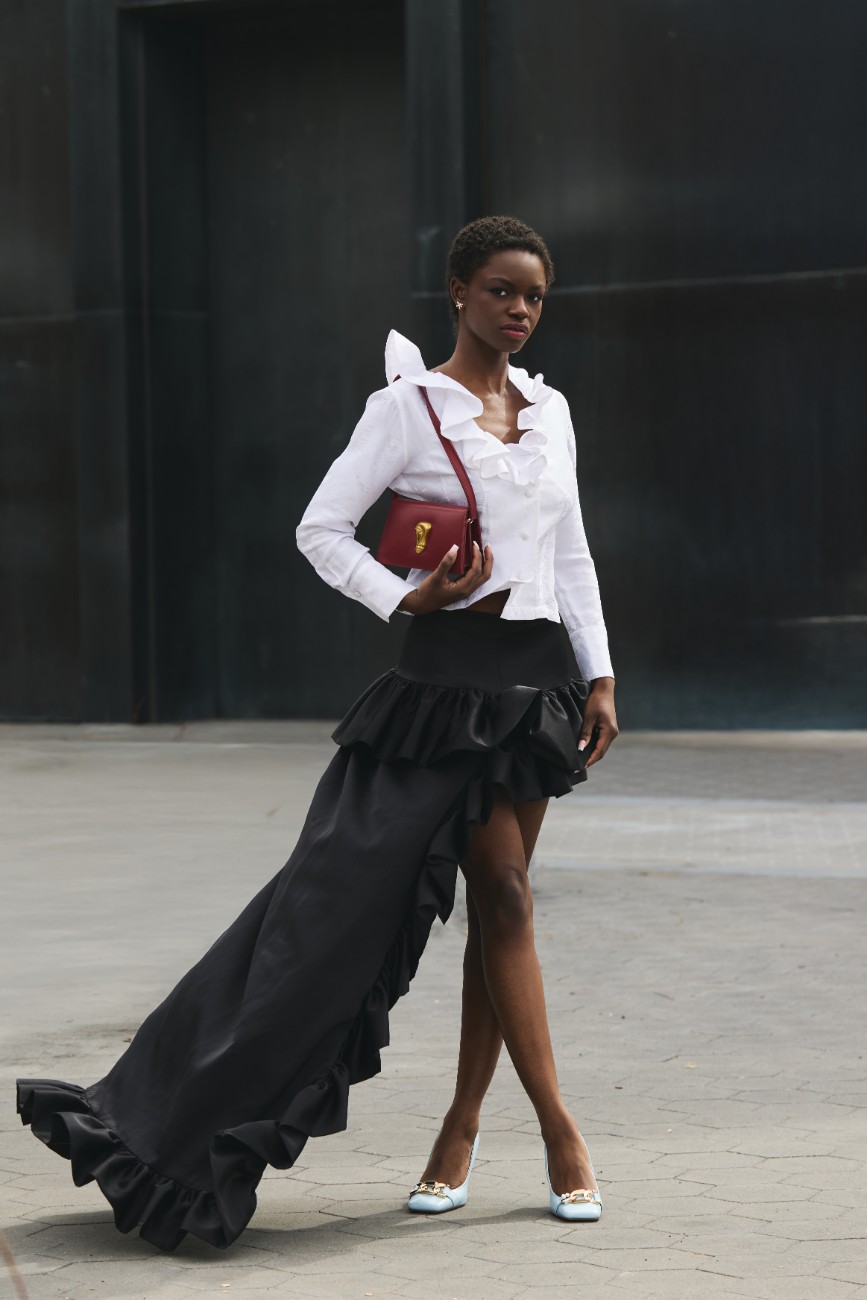
Maison Motema describes Dakar, New York and Paris as its creative centres. Understanding what each city contributes to the brand is understanding the brand’s commercial logic.
Dakar is where the objects are made. The master artisans whose hands carry generations of bronze-casting and leather knowledge work in the Dakar atelier. Maison Motema’s production authority is Senegal; as documented in its analysis of Senegalese wrestling dress and fashion image-making in Dakar, Dakar’s visual and material culture intelligence is sophisticated, specific, and underrepresented in international fashion discourse. Maison Motema’s Dakar production is not a cost decision. It is a cultural authority decision: the bags and jewellery carry Dakar because Dakar’s artisan knowledge is what makes them what they are.
New York is where the brand is; its primary commercial infrastructure is based there. The physical address at 419 Broome Street in SoHo places Maison Motema in one of New York’s most historically significant fashion retail districts. New York provides the brand’s commercial language: the naming, the product range architecture, the retail infrastructure, and the international buyer relationships that allow a Dakar-produced luxury accessory to enter the global market on terms serious luxury buyers understand.
Paris is where the brand presents and where the international press reads it; it sets the terms of luxury discourse. The Paris Fashion Week presentation, confirmed by Soobroydoo’s own documentation of international press coverage, places Maison Motema inside the institutional framework that global luxury buyers use to validate emerging brands. Paris does not make the brand legitimate. The artisans of the Dakar atelier make it legitimate. But Paris provides the platform on which that legitimacy becomes legible to audiences who learned to read luxury in a European language.
The Dakar-New York-Paris triangle is therefore not a logistics description. It is a commercial strategy: producing in the city whose craft authority makes the objects worth their price, designing in the city whose commercial infrastructure makes them accessible to international buyers, and presenting in the city whose institutional framework makes the brand legible to the press and buyers whose coverage and orders constitute international market access.
What Maison Motema Represents in the Wider African Luxury Market
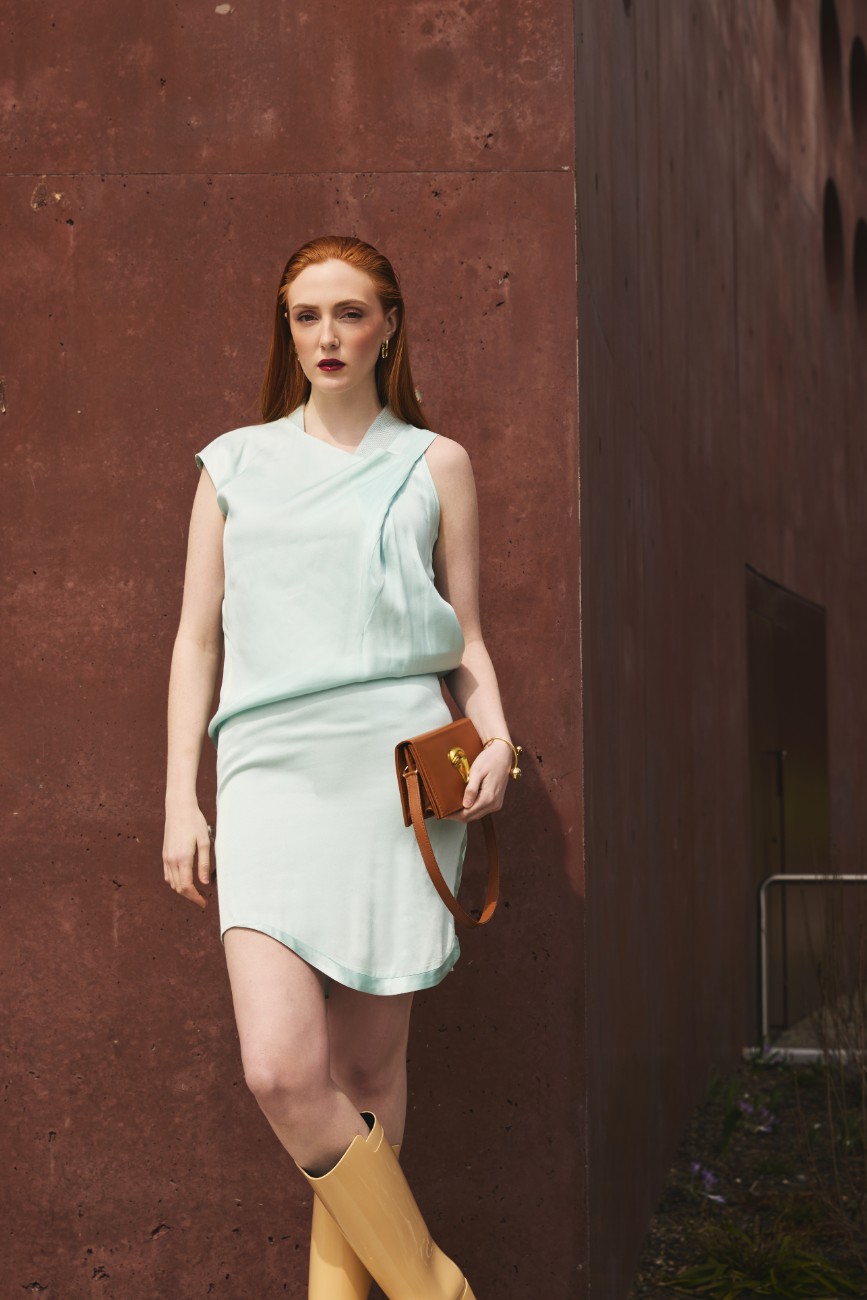
Maison Motema is not operating in isolation. It is part of a growing cohort of African luxury accessories brands that are building commercial structures around the argument that African craft knowledge constitutes a luxury proposition competitive with European luxury’s established vocabulary. That argument, as Omiren Styles has established in its analysis of why capital can fix manufacturing but cannot fix the credibility gap, requires not only production quality but the institutional credibility signals that allow international buyers and press to assess a brand with confidence. Maison Motema has built several of those signals: Paris Fashion Week presentation, ELLE Magazine coverage, United Nations institutional engagement, a bespoke service that places it in the made-to-order tradition, and a named artisan atelier whose work is documented on the brand’s own platform.
The brand also represents a specific model of how an African luxury house can position itself without translation into European luxury language. The Maam bag does not need to be compared to a Birkin. The Cayor does not need to be positioned against a European heritage house. The bronze jewellery does not need Paris to validate it. Maison Motema’s collections carry their reference point in their names: Wolof words, pre-colonial kingdoms, the Lingala concept of motema. That is a brand that defines its positioning rather than positioning itself on someone else’s. As Omiren Styles has established in its analysis of visibility versus market power, the most durable commercial position is not validated by existing luxury institutions, but built on the authority that makes those institutions want to validate your presence. Maison Motema is building that authority.
The Omiren Argument
Maison Motema is an argument about what luxury means when memory is its material.
The bags are made by hands that Handsedge in a Dakar atelier. Artisans cast the jewellery in bronze, drawing on one of West Africa’s oldest metalworking traditions. The names given to the objects encode lineage, community and the specific cultural geography of Senegal. The bespoke service makes each commission specific to one person rather than reproducible at volume. The sustainability commitment was presented not to a fashion trade body but to the United Nations. The brand’s creative centres are three cities on three continents, none of which is subordinated to the others.
This is the luxury argument that Verlaine-Diane Soobroydoo is making with Maison Motema: that a Dakar artisan’s accumulated knowledge is a luxury material in the same sense that a Florentine leather tradition or a French silk weaving heritage is a luxury material; that naming a bag after a Wolof grandmother is an equivalent prestige signal to naming a watch after a Swiss mountain; that slow production in a small Dakar atelier is a more honest luxury proposition than high-volume production in a European factory that calls itself artisanal.
The $31 billion African fashion market contains the craft knowledge, the artisan communities and the cultural heritage that can sustain arguments of this quality. What it has lacked is the commercial structure to make those arguments legible to global luxury markets on their own terms. Maison Motema is building that structure — in Dakar, in New York and in Paris — with the patience and precision that slow luxury requires. As Credit Is Not Compensation established, the fashion industry owes the communities whose knowledge builds its most valuable aesthetic properties a commercial relationship rather than a cultural Maisoon. Motema is building a commercial relationship. Visit the house at maisonmotema.com.
ALSO READ
- Capital Can Fix Manufacturing. It Cannot Fix the Credibility Gap African Designers Face.
- The Sustainability Metrics That Cannot See a Tailor
- After the Textile Explainer: A Dyeing Economy Cannot Grow by Leaving Its Producers Behind
- Visibility Is Not Market Power: Why Global Attention Still Fails Independent African Fashion Brands
- Building Local First Is How African Fashion Brands Earn the Right to Expand
Frequently Asked Questions
What is Maison Motema and who founded it?
Maison Motema is a women-founded slow-luxury house creating handcrafted leather bags and bronze jewellery, designed in New York and made by master artisans in Dakar, Senegal. Verlaine-D, a self-described humanist, intersectional feminist, and social entrepreneur, founded it after Zaha, a founding initiative for young women’s empowerment, and worked with the African Union and the United Nations on women’s leadership in governance and peace. Motema is a Lingala word meaning heart. ELLE Magazine described the brand as “redefining craftsmanship and modern life” and has presented it at Fashion Week in international press coverage. In 2025, Soobroydoo presented the brand’s vision for sustainable luxury to the United Nations Deputy Secretary-General.
What does Maison Motema make and where are its products crafted?
Maison Motema’s product range includes luxury leather bags across several named collections, including The Maam, The Cay, The Jackie, Le Croisé, The Lexi, The Zale, The Nola, The Gramercy and The Weekend Travel Bag, as well as bronze jewellery inspired by Senegalese bronze-casting traditions. All pieces are handcrafted in the Dakar atelier in close collaboration with master artisans whose hands carry generations of knowledge. The brand also offers a bespoke commission service, allowing customers to have a bag designed specifically for them. Production is in small batches using luxury-grade leather and hand-finished details, with limited quantities per collection.
What does the name “Maison Motema” mean?
Motema is a word from Lingala, the Bantu language spoken across parts of central and west-central Africa, meaning heart. Maison Motema is therefore literally “House of the Heart.” The name reflects the brand’s founding proposition: true luxury is built slowly, with the heart, and each object should carry the touch of the hands that shaped it. The brand’s collection names extend this cultural vocabulary: The Maam takes its name from the Wolof word for grandmother, anchoring the object in intergenerational knowledge transmission; The Cayor references a pre-colonial Wolof kingdom of Senegal. These are not decorative cultural references. They are arguments embedded in the product name about where the brand’s prestige authority comes from.
What is Maison Motema’s connection to sustainability and the United Nations?
In 2025, Verlaine-Diane Soobroydoo was invited to present Maison Motema’s vision for sustainable luxury to the United Nations Deputy Secretary-General. The brand’s sustainability argument rests on a slow-luxury production model: small-batch, made-to-order production in a Dakar atelier that avoids the overproduction that characterises industrial luxury manufacturing. The brand’s bespoke service, which produces each bag for a specific commission rather than for speculative inventory, is the structural expression of this model. The Maison Motema sustainability commitment publishes its sustainability commitments.
Maison Motema position itself in the global luxury market?
Maison Motema positions itself as a slow-luxury house whose prestige authority rests in the craft knowledge of its Dakar artisans and the cultural heritage of West Africa, rather than in comparison with established European luxury houses. Its three creative centres — Dakar for production authority, New York for commercial infrastructure and Paris for institutional presentation — allow it to operate simultaneously in the craft tradition of the Senegalese atelier and the commercial language of international luxury markets. The brand has been covered by ELLE Magazine, presented at Paris Fashion Week with documented international press, and engaged at the United Nations institutional level on sustainable luxury. These institutional credibility signals place it in the serious luxury tier without requiring comparative validation.
EXPLORE MORE
Discover Maison Motema’s full collection of handcrafted leather bags and bronze jewellery at maisonmotema.com. Read the full Industry and Brand Intelligence sections at Omiren Styles for ongoing analysis of African luxury brand building, craft economics and the commercial structures that allow African artisan knowledge to compete in international luxury markets. Discover travel and heritage intelligence across West Africa, including Senegal and the artisan traditions of the Dakar atelier, at Rex Clarke Adventures.