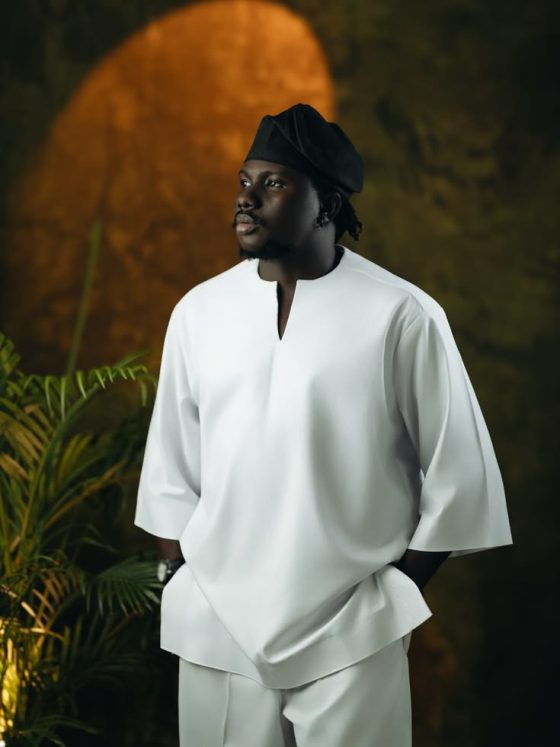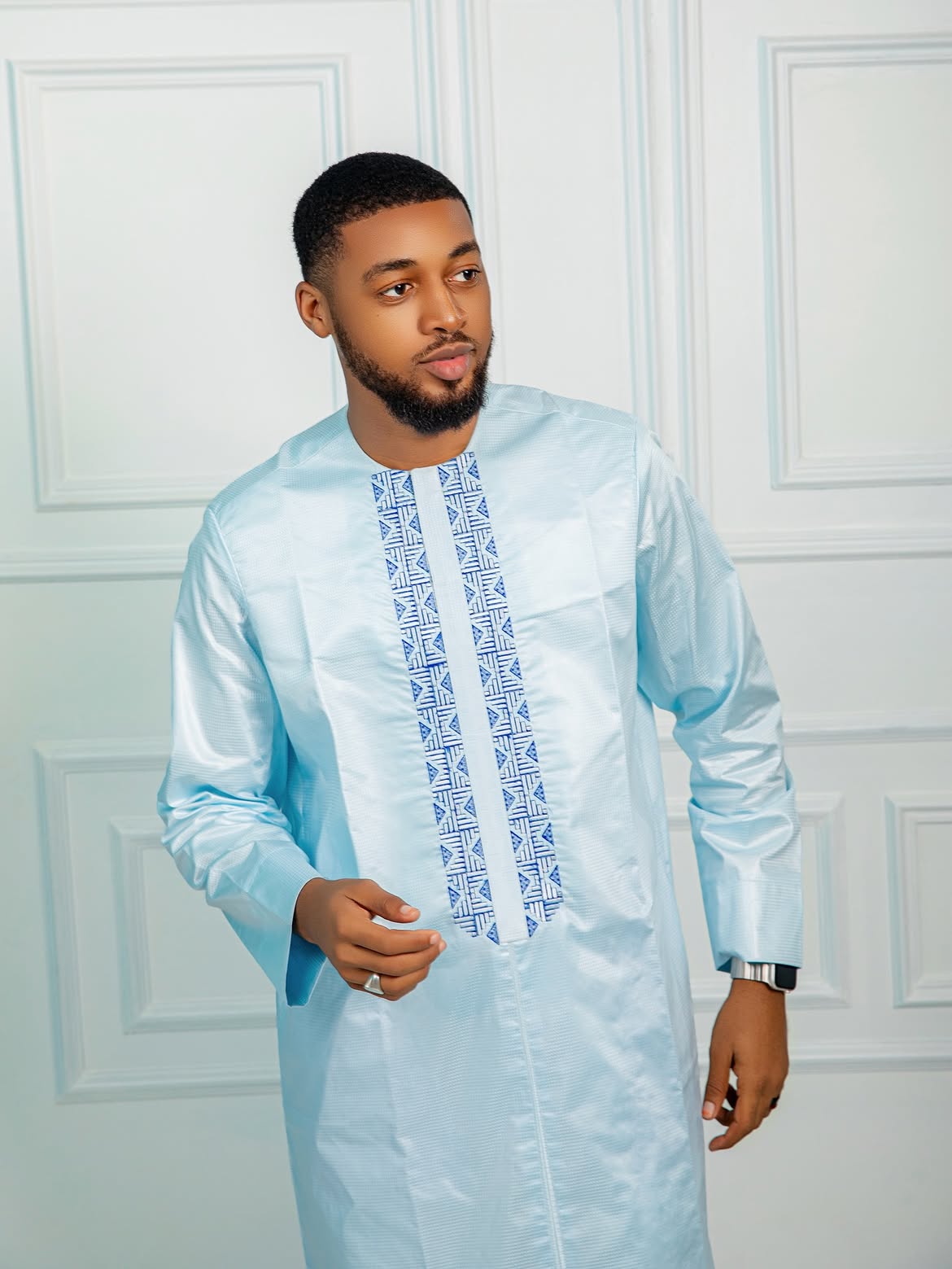
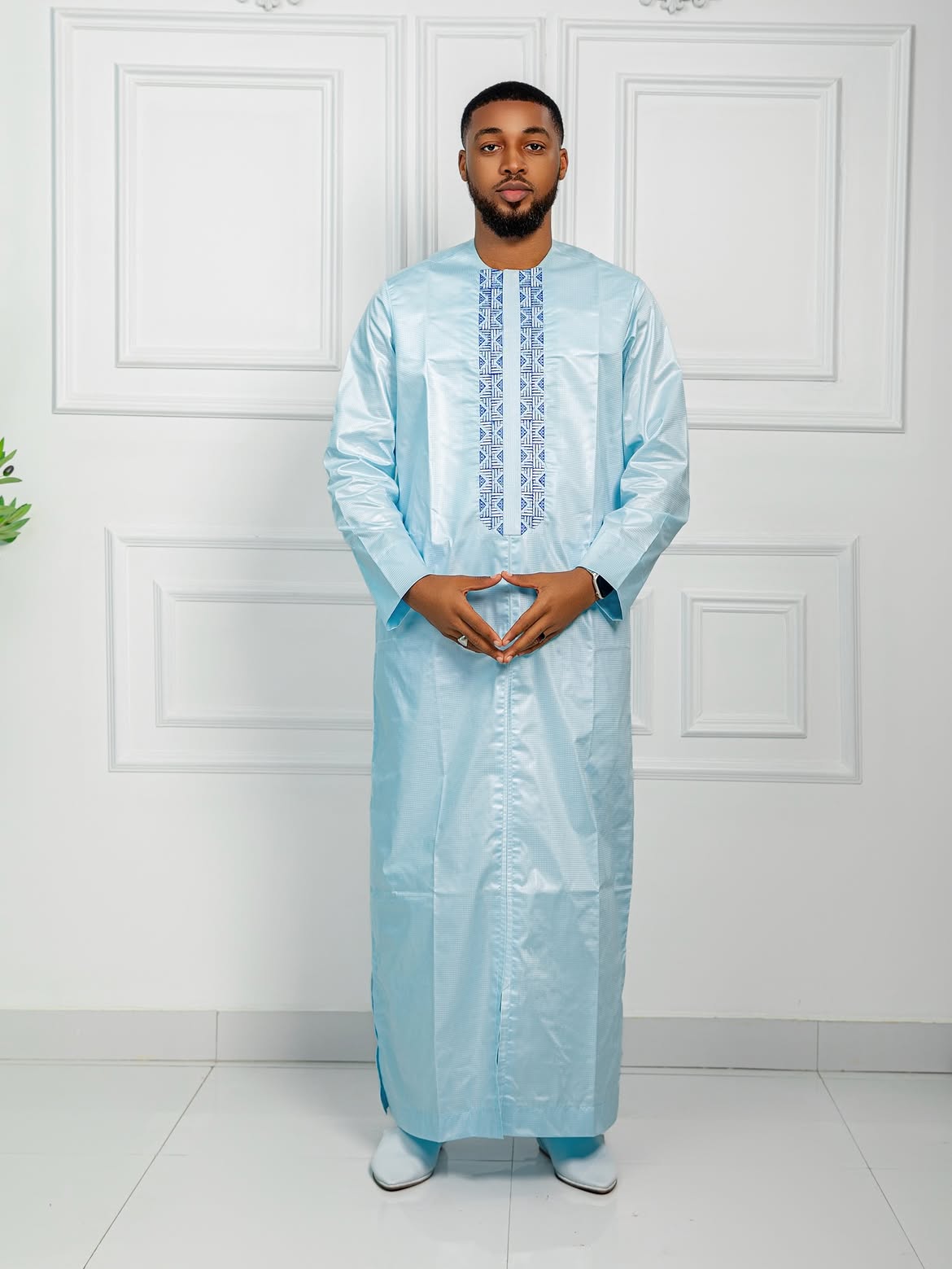
The African fashion market is worth 31 billion dollars. Senegalese tailoring accounts for a share of that figure, but its international visibility has consistently undersold it. Omiren Styles’ analysis of the grand boubou and the concept of jom confirms that the Senegalese grand boubou for men is typically cut from bazin riche, a mercerised cotton damask treated to achieve a distinctive sheen and stiffness, and it is not merely a garment. It is jom made visible: a refusal of smallness, a commitment to composure, the awareness that the community is always reading a man’s bearing. That cultural weight does not disappear when a tailor shortens the hem or adds a structured pocket. It relocates into the new form.
Senegalese boubou tailoring is moving beyond its classic flowing silhouette and into a more flexible menswear conversation. Across Dakar and beyond, tailors and designers are reworking the modern Senegalese boubou with shorter lengths, cleaner lines, structured details, and fabrics that suit both ceremony and everyday wear. The shift matters because the boubou is not disappearing. It is being adapted. In Senegalese men’s fashion, the question is no longer whether traditional dress belongs in contemporary wardrobes. It is how Senegalese tailoring can preserve cultural identity while meeting the expectations of the modern man.
Senegalese boubou tailoring is moving from ceremony into everyday life. Four Dakar designers are showing what the modern boubou can look like. Here is what they are making.
What Senegalese Boubou Tailoring Is
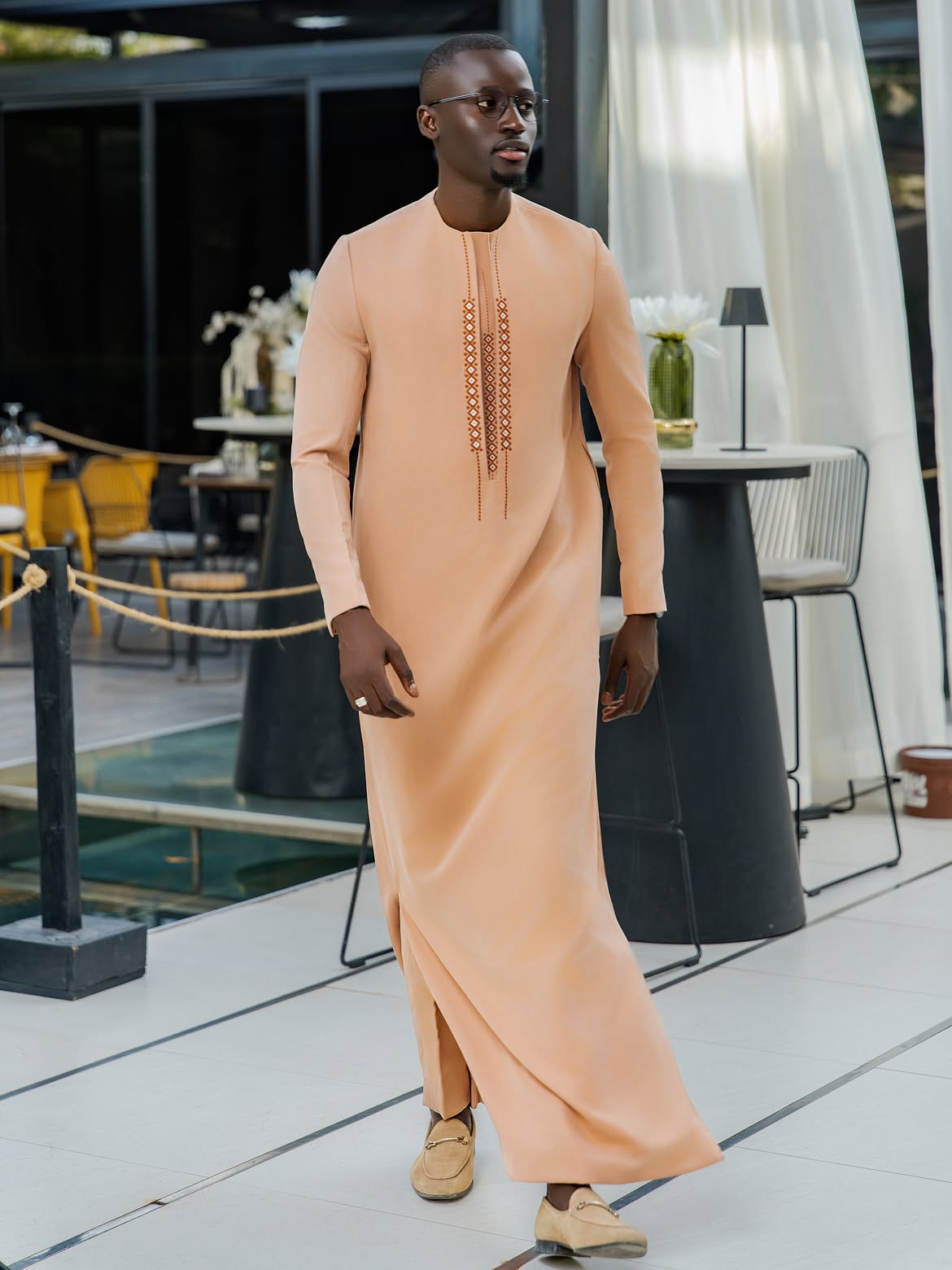
Senegalese boubou tailoring is the custom construction of a boubou to suit an individual’s measurements, occasion, and personal taste. Traditionally, the garment is a loose-fitting outer robe worn over a tunic and matching trousers, creating the long silhouette associated with Senegalese traditional menswear. As the FIT Fashion History Museum’s documentation of the boubou confirms, the boubou’s origin lies with the Wolof, Mande, Songhai-Zarma, Hausa, Kanuri, Toubou, and other trans-Saharan and Sahelian trading groups who used the robe as protection from the harsh sun and sub-freezing desert nights. The garment’s adaptability to extreme conditions is the same quality that allows it to adapt to contemporary urban life.
The beauty of boubou tailoring lies in the range of decisions a maker controls. Traditional clothing in Senegal is not a preserved system of identity but a continuously reconstructed practice of social meaning shaped through use. The boubou is actively reorganised through Dakar’s tailoring economy, compressed ceremonial timelines, and shifting fabric circulation, allowing garments to be commissioned, adjusted, and reinterpreted in real time. Fabric choice, embroidery, neckline shape, and finishing details all change how the garment reads, whether the goal is formality, ease, or status.
The Senegalese grand boubou is jom made visible. What tradi-moderne tailoring is doing is not shrinking jom into a smaller garment. It is finding new forms in which jom can still be read, by the family gathering, the office, the street.
How Senegalese Boubou Tailoring Is Changing
One of the clearest shifts in modern boubou styles for men is the move toward shorter, more structured silhouettes. Pieces inspired by the grand boubou, such as the demi-saison, sit between a shirt and a full-length robe, giving the wearer a more compact and contemporary profile. Modern Senegalese designers are reinterpreting the boubou by experimenting with cuts, layering, and gender-fluid styles while honouring its heritage. The garment is not frozen. It evolves with memory intact.
This change is not only about fit. It reflects the rise of tradi-moderne Senegalese fashion, where traditional garments are adapted for offices, informal events, and urban life without losing their cultural foundation. The demi-saison has reportedly gained popularity among young professionals, which shows how traditional-inspired tailoring is being adapted for modern working life. For younger men, this makes the boubou easier to wear outside weddings and religious celebrations, extending the garment’s social range without diminishing its cultural weight.
Modernisation also happens through detail rather than silhouette alone. The Turki ndiarem, traditionally associated with clerical dress and commonly seen in white or ecru, is now being produced in different colours and more fitted versions for everyday wear. Other contemporary Senegalese designs borrow elements from European tailoring, including epaulettes on Senegalese tunics, which have found an audience among executives and politicians. These changes show that Senegalese boubou for men can be reinterpreted without losing recognisability. The robe still signals Senegalese identity, but it now does so through cleaner construction, sharper finishing, and a more urban sensibility.
Four Designers Shaping the Modern Senegalese Boubou
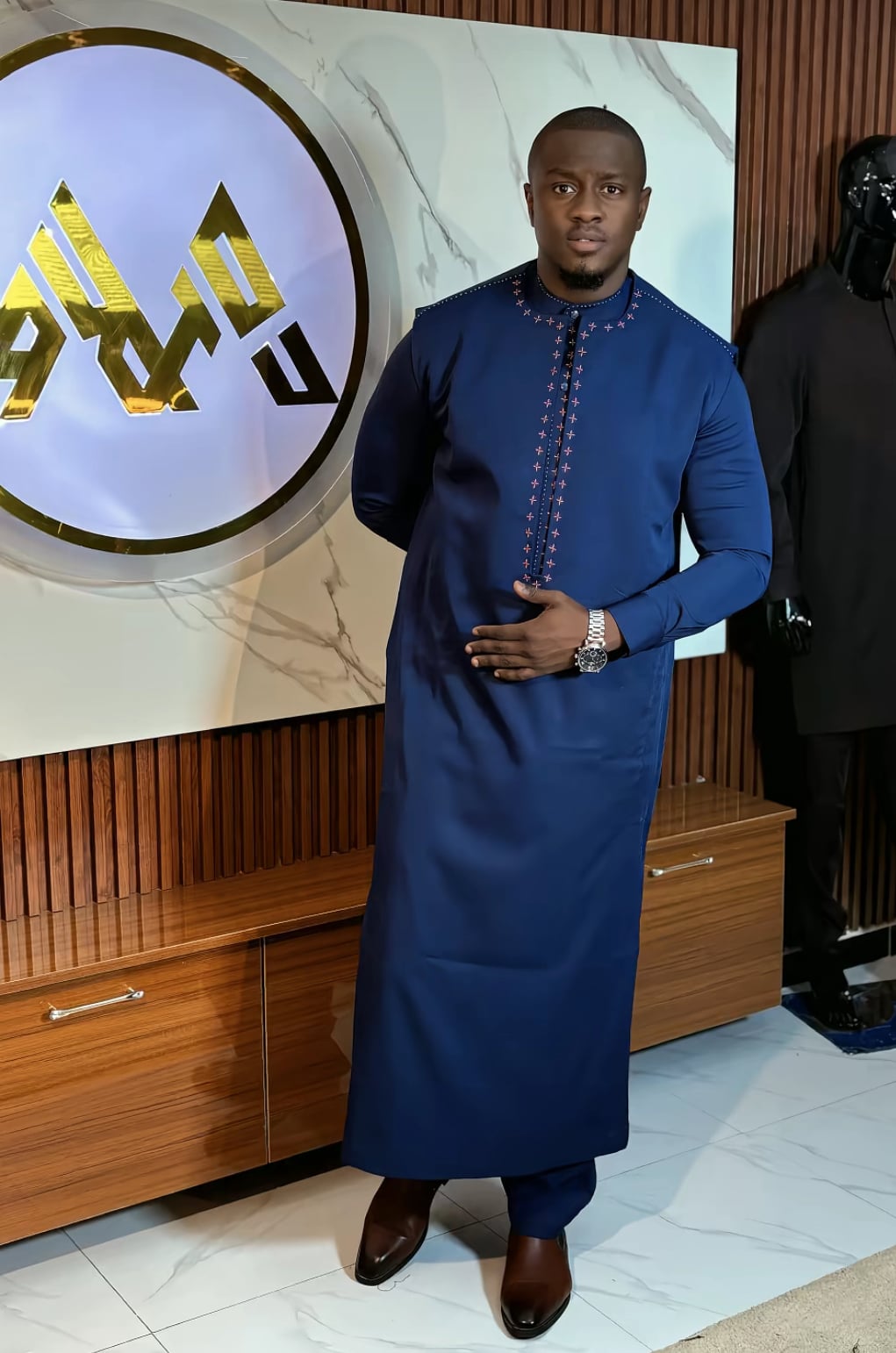
A new generation of designers and tailors is driving the growth of contemporary boubou style. Their work spans formal boubous, tailored sets, and hybrid looks that sit between traditional menswear and modern suiting. Dakar is the undisputed fashion capital of Senegal, hosting Dakar Fashion Week, numerous designer ateliers, and a vibrant tailoring scene that blends traditional craftsmanship with contemporary design.
Buba
El Hadj Boubacar Gueye, known as Buba, is a Dakar-based designer whose work is largely focused on menswear. He began turning his interest in fashion into a business in 2015 and later opened a pattern-making workshop. Approximately 90% of his output is menswear. Buba is known for using rich fabrics including brocade and Getzner. His designs include three-piece boubous and African suits, with embroidery used around the necklines of grand boubous. The result is a formal take on the modern Senegalese boubou that places as much emphasis on fabric quality and finishing as on the garment’s main silhouette.
Momo Sartorial
Momo Sartorial takes a digital-first approach, using social media platforms to present his work and allowing customers to place orders by sending their photographs and measurements. One of his notable designs is the three-piece African suit known as the Diomaye: a straight cut with a closer fit around the chest, made from Super 100 fabric, and available in olive green, tobacco brown, garnet red, beige, and ash grey. His work shows how modern Senegalese boubou style can move toward a sharper, more fitted silhouette while remaining rooted in Senegalese dress culture.
Maktoum Couture
Maktoum Couture focuses on the power of small details. The designer uses fil-a-fil fabric for Turkish-inspired African outfits, adding features including embroidered necklines, jewelled buttons, buttoned cuffs, and geometric pockets. These choices give the clothes a more finished and distinct look without removing their connection to African dress. They also demonstrate how Senegalese tailoring can evolve through decisions about the neckline, sleeves, and buttons rather than relying on a new overall shape.
Momo Mbaye Luxe
Momo Mbaye Luxe focuses on caftans and grand boubous made with bazin and Getzner fabrics. His designs use V-shaped and square necklines to add definition to the silhouette, while embroidery adds detail to the smaller boubou worn underneath the outer robe. Momo’s work also revives the thiaya, a loose traditional trouser gathered at the ankles. Bright colours including imperial yellow and lemon yellow give the garments a contemporary quality without abandoning their ceremonial authority. His work shows that updating Senegalese traditional menswear does not always mean making it more fitted: colour, neckline, and the return of older garment forms can also change how a look reads.
Why the Tradi-Moderne Direction Matters
The rise of tradi-moderne Senegalese fashion reflects broader changes in how men dress in Senegal. Traditional clothing is no longer reserved only for major occasions. It is being worn in offices, social settings, and urban everyday life. As Omiren Styles’ analysis of the future of Senegalese fashion confirms, Senegalese tailoring culture remains one of Senegal’s strongest assets for the future of fashion. Artisans have historically maximised the use of materials and created durable garments. Today, many Dakar studios are formalising these practices by developing structured training programmes and small-scale manufacturing systems that prioritise longevity over volume.
That makes the boubou’s future less about preservation in a museum sense and more about active relevance. If designers continue to evolve the garment thoughtfully, Senegalese boubou tailoring can remain both culturally grounded and commercially viable. The tradi-moderne approach allows the boubou to function across generations and settings. Tradition does not have to stay frozen to remain meaningful, and the best Senegalese tailoring understands that change can be a form of continuity.
The Omiren Argument
Senegalese boubou tailoring is not in crisis. It is in motion. The African fashion market is worth 31 billion dollars, and within that market the Senegalese tailoring tradition has the cultural authority, the craft infrastructure, and the designer talent to compete at the highest level of African menswear. What Buba, Momo Sartorial, Maktoum Couture, and Momo Mbaye Luxe are demonstrating is that the grand boubou, the demi-saison, the Turki ndiarem, and the Diomaye three-piece African suit are not competing forms of dress. They are a continuum, each serving a different register of Senegalese men’s life, from the Friday mosque to the executive office to the wedding reception to the street. The garment does not need to choose between ceremony and everyday wear. It needs tailors who understand both registers well enough to move fluidly between them. Senegalese tailoring has always been that kind of craft. The tradi-moderne generation is proving it still is.
ALSO READ:
- Grand Boubou: The Most Prestigious West African Garment
- Traditional Clothing in Senegal: The Elegance of Boubou and Cultural Identity
- The New Gentleman: Redefining Masculinity Through Conscious, Considered Dressing
Frequently Asked Questions
What is Senegalese boubou tailoring?
Senegalese boubou tailoring is the custom construction of a boubou to suit an individual’s measurements, occasion, and personal taste. The garment is traditionally a loose-fitting outer robe worn over a tunic and matching trousers. Fabric choice, embroidery, neckline shape, and finishing details all change how the garment reads. In contemporary practice, Senegalese boubou tailoring also includes shorter and more structured versions such as the demi-saison, the Turki ndiarem in new colourways, and three-piece African suit formats that sit alongside the classic grand boubou.
What is a tradi-moderne Senegalese outfit?
A tradi-moderne Senegalese outfit is a garment that combines traditional Senegalese dress forms with contemporary tailoring details, silhouette adjustments, or fabric choices. Examples include a demi-saison that is shorter and more structured than a classic grand boubou, a Turki ndiarem produced in new colours and fitted versions, or a three-piece African suit like the Diomaye that uses Super 100 fabric with a closer chest fit. The tradi-moderne approach allows traditional dress to function in offices, social settings, and urban everyday life alongside its ceremonial roles.
What is the men’s boubou in Senegal called?
The men’s boubou in Senegal is commonly called the grand boubou, and the outer robe itself may be referred to as a mbubb or xaftaan in Wolof. A traditional men’s ensemble includes the outer robe, a tunic, and matching trousers. In Wolof culture, the grand boubou is associated with the concept of jom, meaning dignity and honour, and it is worn as a declaration of composure and social presence. In origin, the boubou derives from the robes worn by Wolof, Mande, Songhai-Zarma, Hausa, and other trans-Saharan trading groups.
Which countries wear the boubou?
The boubou is strongly associated with Senegal, but it is worn across West Africa in countries including Mali, Mauritania, Niger, Guinea, and Côte d’Ivoire, with regional variations in name, construction, and cultural associations. Related garments include the agbada in Nigeria, the babban riga in northern Nigeria and Niger, and regional kaftan forms across the Sahel. All belong to the extended family of wide-sleeved outer robes that spread along trans-Saharan trade routes during the medieval and early modern periods.
What designers are shaping modern Senegalese boubou tailoring?
Four Dakar-based designers are currently among the most visible shapers of modern Senegalese boubou tailoring. Buba (El Hadj Boubacar Gueye) works in brocade and Getzner with embroidered grand boubou necklines and three-piece outfits. Momo Sartorial takes a digital-first approach and makes the fitted three-piece Diomaye African suit in Super 100 fabric. Maktoum Couture focuses on detail through fil-a-fil fabric, jewelled buttons, and geometric pockets on Turkish-inspired African outfits. Momo Mbaye Luxe works with bazin and Getzner caftans and grand boubous, using V-shaped necklines, traditional thiaya trousers, and bright ceremonial colours.
Explore More
Read the full Men section for Omiren Styles’ documentation of African menswear, boubou tailoring traditions, and the designers shaping contemporary dress across Senegal, Nigeria, Ghana, and the diaspora.