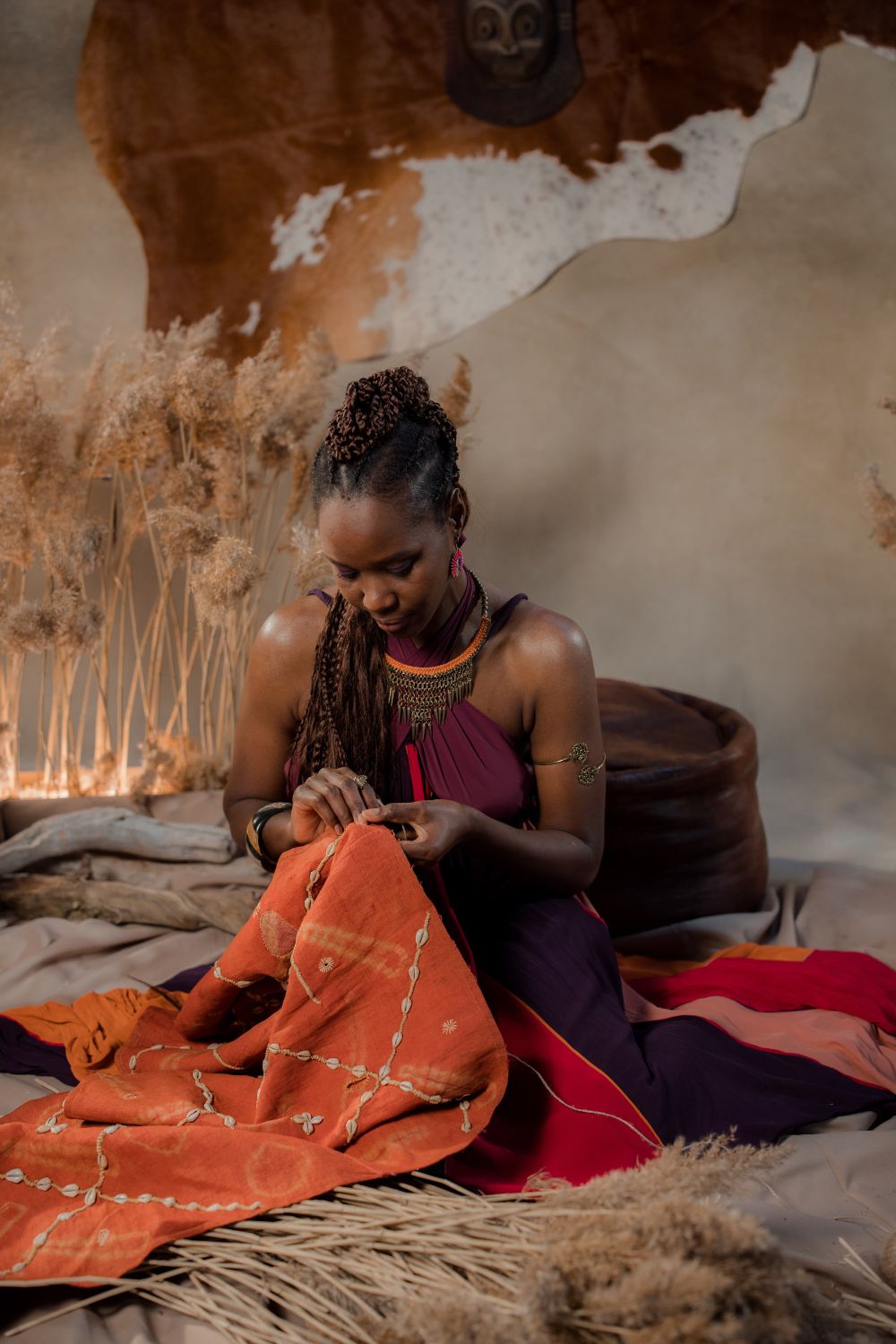
In September 2025, Ghana formally launched Kente cloth as a Geographical Indication at a ceremony in Accra, developed with support from the World Intellectual Property Organisation. The GI designation, which followed UNESCO’s inscription of Kente weaving on its Intangible Cultural Heritage list in December 2024, means that only weavers in recognised Ghanaian communities, including Bonwire, Adanwomase, Kpetoe, and Agbozume, can produce and sell cloth as authentic Kente. Factory-printed versions sold globally as Kente, many of them manufactured in China, are now legally distinguishable from the genuine article. Buyers can verify authenticity through QR-coded labels traceable to the weaving community. Economic forecasts project a 40% increase in community revenue for Kente weavers within three years of the designation.
This is not primarily a cultural achievement, though it is that too. It is a commercial architecture decision. Ghana has done what Champagne’s producers did in the nineteenth century and what Parmigiano-Reggiano’s producers did in the twentieth: it has used intellectual property law to create enforceable market differentiation for a product whose value lies in its specific origin, method, and craft knowledge. The investment case that follows from that decision is one that the African fashion industry has not yet made loudly enough: heritage textiles are the one category of African fashion products that Western fast fashion cannot structurally replicate, and their value is currently underpriced by every investor who has not understood why.
Kente now has GI protection. Aso-Oke is next. Heritage textiles carry what fast fashion structurally cannot produce. Here is the investment case that the industry has been ignoring.
African Textile Heritage Investment: Why the Asset Is Different

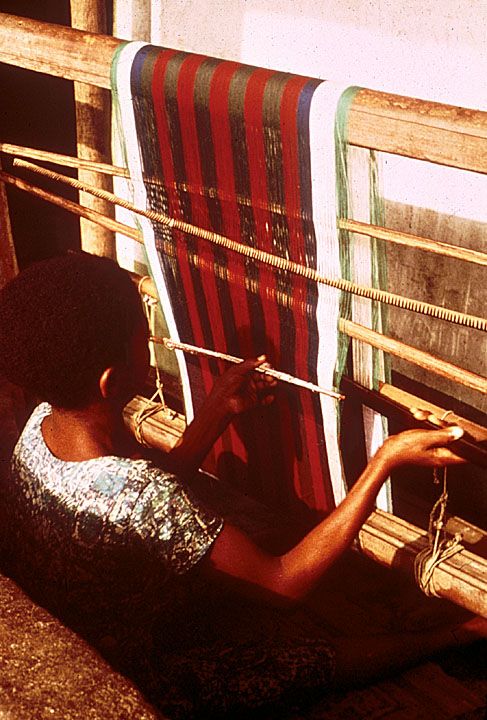
Fast fashion operates on a specific economic logic: identify a design or aesthetic that is selling, reproduce it at speed and scale using industrial production, and price it below the original. This logic has absorbed and commodified nearly every category of global fashion. It has not absorbed heritage textiles, because heritage textiles are not primarily a design asset. They are a knowledge system asset. The handwoven Kente strip produced on a narrow loom in Bonwire carries value not because of its pattern alone, but because of the specific technical knowledge, counting systems, colour sequencing, and structural decision-making that an experienced Ashanti or Ewe weaver applies in producing it. A factory in Guangzhou can reproduce the visual output. It cannot reproduce the knowledge system. As the Kente GI documentation confirms, the legally binding Book of Specifications governing GI certification covers not just origin but also standards of quality and technique. The technique is the asset. The technique cannot be offshored.
The same logic applies across Africa’s heritage textile landscape. Aso-Oke, the Yoruba hand-stripped woven fabric produced in Oyo, Oshun, and Kwara states in Nigeria, requires a weaver to hold the full pattern in memory across hundreds of warp threads, making decisions about density, float patterns, and supplementary weft embellishment that no industrial loom replicates without losing the structural specificity that defines the cloth. Bogolan, the mud-cloth tradition of the Bambara and other Malian peoples, uses a fermentation and resist-dyeing process involving specific local plant matter and iron-rich mud from particular riverbeds. The chemical process is replicable in a laboratory. The cultural knowledge of which materials to use, when, and in what sequence is not documented in a form that industrial production can absorb. Kuba cloth, produced by the Kuba Kingdom of the Democratic Republic of Congo, uses a cut-pile embroidery technique on raffia palm fibre that produces geometric patterns of extraordinary complexity. There is no industrial equivalent.
These textiles share a structural property that makes them investment-grade in a specific sense: their production cannot be scaled through industrial substitution without becoming a different product. This is the opposite of a limitation. It is the source of their durable premium value. Champagne cannot be made outside the Champagne region without becoming sparkling wine. Kente cannot be made outside its designated communities without being printed. The GI framework that Ghana has established creates the legal infrastructure to enforce that distinction in commercial contexts.
The Market Numbers Behind the Heritage Textile Case
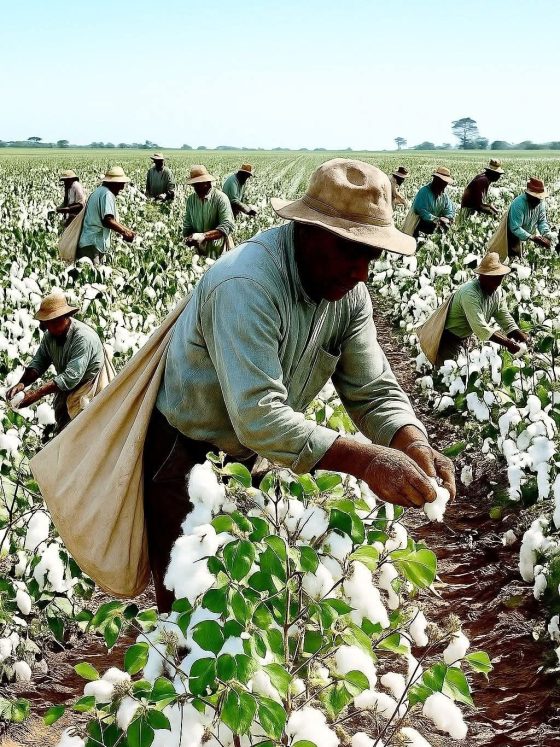
The broader African textile investment context frames the opportunity precisely. The International Trade Centre projects that Africa has the potential to export €5.8 billion in finished cotton garments by 2026, with nearly 15% destined for the continent itself. The African cotton market is estimated at $6 billion in 2025 and is projected to grow to approximately $7.5 billion by 2030. The WTO’s March 2026 ministerial event in Yaoundé launched the new phase of the Partenariat pour le Coton initiative, targeting $5 billion in investment over a decade to generate $6 billion in value-added products. As the WTO confirmed, approximately 98% of West and Central Africa’s cotton is currently exported as raw fibre. The potential value chain uplift from processing that cotton into finished goods on the continent is the primary investment thesis for industrial textile investment. Heritage textiles represent a different but complementary investment thesis: not industrial scale but premium differentiation.
The luxury goods comparison is instructive. The global luxury goods market is structured around provenance, craft specificity, and the impossibility of industrial substitution. These are precisely the characteristics that African heritage textiles possess and that no amount of fast fashion reproduction can eliminate. The challenge has been that heritage textile producers have historically lacked IP protection, quality certification, and market-access infrastructure to command luxury pricing in international markets. The Kente GI addresses the IP and certification dimension. Market access remains the outstanding infrastructure gap.
The Kente GI’s projected 40% revenue increase for weaving communities within three years is a conservative estimate if market access infrastructure develops in parallel with legal protection. Ghana’s strategy includes a digital public registry of certified weavers for global verification, a QR-enabled label system, and a precedent-setting framework that, as multiple analysts have noted, sets the blueprint for Nigeria’s Aso-Oke, Mali’s Bogolan, and potentially dozens of other African heritage textiles that meet the criteria for GI or UNESCO protection. Each additional textile that enters this framework represents a new premium asset category with enforceable market differentiation.
Fast fashion can copy a pattern. It cannot copy the knowledge system that produces it. That knowledge system is an asset, and it is currently undervalued by every investor who has not learned to read it.
Where Investment Is Needed and What It Produces
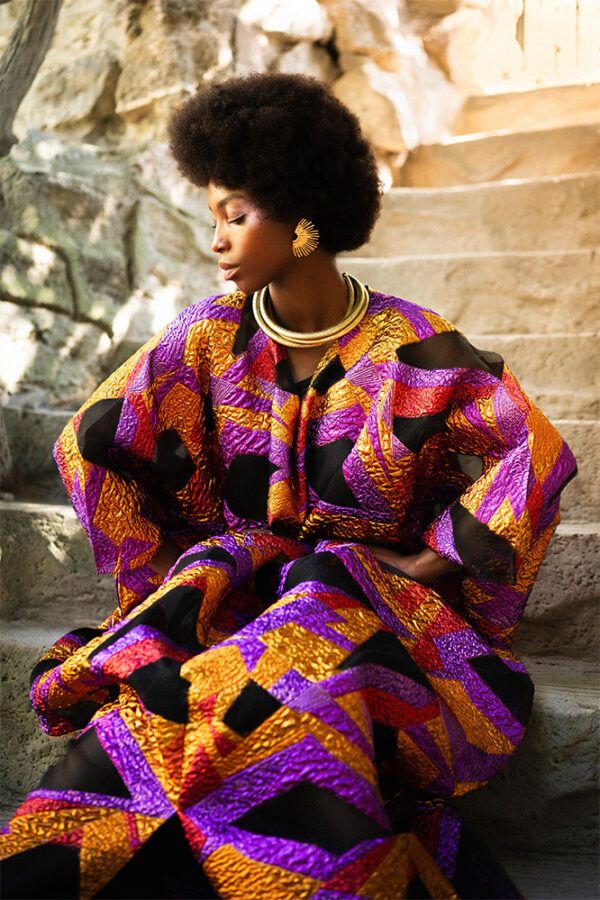
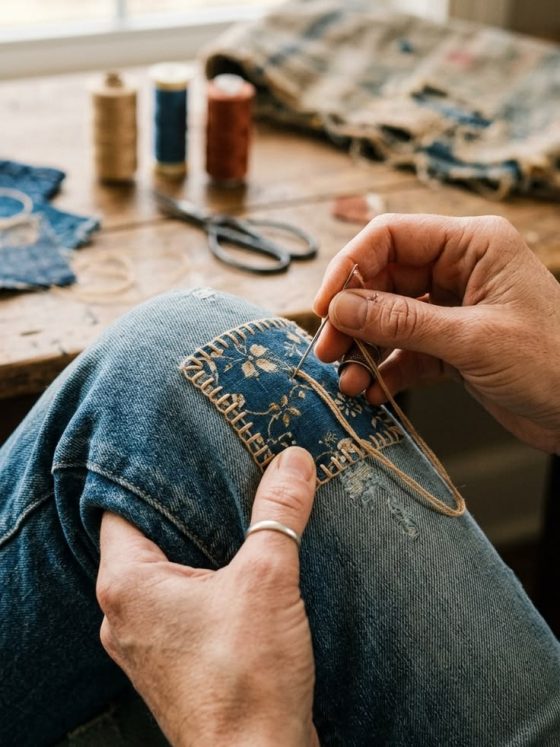
The investment case for African heritage textiles operates across three distinct layers. The first is knowledge preservation and documentation. Weaving traditions that are undocumented can disappear within a generation. The knowledge held by a master Kuba cloth weaver or an experienced Aso-Oke pattern designer is not written down in a form that survives its holder. Investment in structured documentation, apprenticeship programme formalisation, and knowledge transfer infrastructure is the foundational layer on which everything else depends. Without it, the asset depreciates through mortality rather than market forces.
The second layer is production infrastructure. Heritage textile production at an artisanal level is limited in volume, not because the market does not exist, but because the production ecosystem, the looms, the dye materials, the finishing processes, and the quality control systems, is fragmented and undercapitalised. Investment in cooperative production infrastructure, standardised quality assurance, and aggregation logistics can increase output without industrial substitution, which is the critical distinction. A weaver producing ten Kente strips per week with documented craft knowledge and GI certification can produce forty strips with better loom infrastructure, reliable material supply, and an aggregation system that delivers the product to international buyers, with the weaver managing export logistics.
The third layer is market access. The Afreximbank CANEX programme’s work connecting African designers to Galeries Lafayette and Tranoi demonstrates that institutional support for market access produces results. The same framework applied specifically to heritage textile producers, connecting Kente cooperatives to luxury department stores in Paris, London, and New York with GI certification as the quality guarantee, would create a direct revenue pipeline from weaving communities to international premium markets. The intermediary layer, the designer who reinterprets the textile for international consumption, remains valuable. But the weaver who produces the raw certified cloth should also have a direct market channel that does not require designer intermediation to reach premium pricing.
Also Read:
- Why African Fashion Needs Its Own Data Infrastructure Before It Can Lead Globally
- What African Fashion Brands Get Wrong About Scaling — and the Three That Got It Right
- Who Actually Owns Ankara: The Legal and Cultural Argument the Fashion Industry Has Been Avoiding
- The Lagos Fashion Week Effect: What a Decade of Runway Has Actually Done for Nigerian Designer Revenue
The Investment Gap and Why It Persists
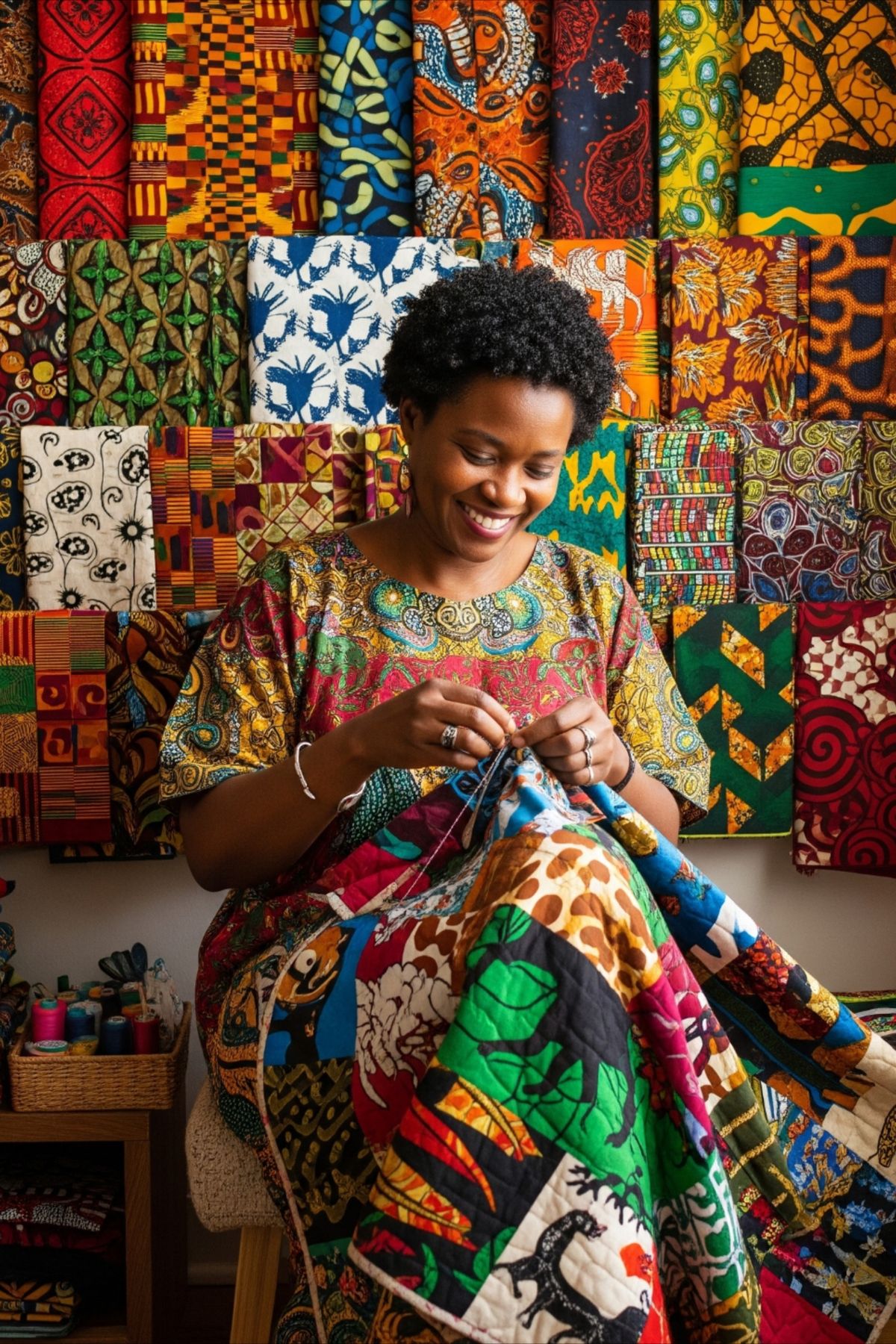
The ITRC’s April 2026 analysis of why most textile projects in Africa fail investment screening identifies a structural disconnect: promoters emphasise operational strengths such as access to raw materials and labour advantages, while investors focus on governance, currency exposure, and market volatility. The bankability gap, as the ITRC describes it, is not primarily a quality problem. It is a project preparation problem. Heritage textile investment propositions that are not packaged with a financial audit, governance structure, IP documentation, and a market access roadmap will not pass institutional investment screening, regardless of the underlying asset quality.
This is a solvable problem, and it is being solved, partially. The Birimian Ventures accelerator for African luxury brands has demonstrated that African creative businesses with proper financial structuring, including EY audits and formalised governance, can access institutional capital. The Kente GI provides IP documentation that previously had to be asserted and defended rather than referenced. What remains missing is a dedicated investment vehicle specifically structured for African heritage textile preservation and commercialisation, one that pools the knowledge preservation, production infrastructure, and market access layers into a single bankable proposition.
The luxury fashion analogy points toward the structure. LVMH’s portfolio model, which holds luxury brands with long-term brand-equity potential across multiple categories, is structurally applicable to African-heritage textiles at the institutional scale. A portfolio of GI-protected or UNESCO-inscribed African heritage textiles, held by a patient capital vehicle with a 10- to 15-year horizon, would include assets whose value increases as IP protection matures, market access infrastructure develops, and global luxury consumer demand for provenance-verified craft products continues to grow.
The Omiren Argument
The business case for investing in African textile heritage is stronger than the investment industry has recognised, as it rests on a structural competitive advantage that fast fashion cannot neutralise. Fast fashion’s competitive mechanism is industrial substitution: identify what sells, reproduce it at scale and speed, and underprice the original. This mechanism has worked against almost every category of apparel and textile. It has not worked against handwoven heritage textiles because the value of those textiles is not primarily in their appearance. It is in the knowledge system, the cultural specificity, and the craft labour that produces them. You cannot substitute that knowledge system industrially without producing a different product. Ghana understood this when it built the Kente GI. The investors who understand it next will hold assets with durable premium value in a market that is increasingly hungry for exactly the authenticity and provenance that heritage textiles structurally provide.
The preservation argument and the investment argument are not in tension. They are the same argument stated from different positions. Preserving the knowledge systems that produce Kente, Aso-Oke, Bogolan, and Kuba cloth requires the economic conditions in which weavers can earn enough from their craft to pass it on. Those economic conditions require market access, IP protection, and investment in production infrastructure. The investment that creates those conditions is the investment that preserves the heritage. The investor who funds a Kente weaving cooperative’s production infrastructure and market access is not extracting value from a cultural tradition. They are creating the economic conditions that allow the tradition to survive. That alignment between commercial return and cultural preservation is rare in any investment category. It is the most compelling part of the heritage textile case, and the one that patient capital vehicles are best positioned to realise.
Frequently Asked Questions
What is a Geographical Indication, and how does it protect African heritage textiles?
A Geographical Indication is a legal designation under international intellectual property law that links a product’s quality and reputation to its specific geographical origin and production method. Ghana formally registered Kente as a GI in September 2025 with WIPO support, following UNESCO’s December 2024 Intangible Cultural Heritage inscription. The GI means that only weavers in designated Ghanaian communities, including Bonwire, Adanwomase, Kpetoe, and Agbozume, can sell cloth as authentic Kente. Commercial use of Kente patterns by global brands abroad must now acknowledge the origin and may require royalty contributions to local weavers. GI protection positions Kente alongside Champagne and Parmigiano-Reggiano as a legally protected premium product.
Why can’t fast fashion copy African heritage textiles?
Fast fashion’s mechanism is industrial substitution: reproducing designs at scale and speed to underprice the original. This works for appearance-based differentiation but not for knowledge-system-based differentiation. Heritage textiles like Kente, Aso-Oke, Bogolan, and Kuba cloth carry value in the specific technical knowledge that produces them: the counting systems, pattern sequencing, resist-dyeing processes, and structural decisions that experienced weavers hold and apply. A factory can reproduce the visual pattern. It produces a print, not the textile. The GI framework establishes this legally. The knowledge system that creates the genuine article is not transferable to industrial production, which is the source of the asset’s durable premium value.
What is the scale of the investment opportunity in African heritage textiles?
The broader African textile market is estimated at $6 billion in cotton alone in 2025, growing to $7.5 billion by 2030. The ITC projects €5.8 billion in finished cotton garment exports by 2026. For heritage textiles specifically, the Kente GI projects a 40% increase in revenue for weaving communities within three years. If a similar framework were extended to Nigeria’s Aso-Oke, Mali’s Bogolan, the DRC’s Kuba cloth, and dozens of other African heritage textiles that meet GI or UNESCO criteria, the cumulative premium market opportunity would constitute a new category of certified luxury textile assets with enforceable provenance at the point of sale.
What three layers of investment does preserving African textile heritage require?
The first layer is knowledge preservation and documentation: the structured recording of weaving traditions, the formalisation of apprenticeships, and knowledge-transfer infrastructure. This is the foundational layer because undocumented knowledge depreciates through mortality. The second layer is production infrastructure: cooperative access to looms, reliable material supply chains, quality assurance systems, and aggregation logistics that increase output without industrial substitution. The third layer is market access: direct channels connecting heritage textile producers to international premium buyers, using GI certification and UNESCO recognition as quality guarantees.
How does the Kente GI set a precedent for other African textiles?
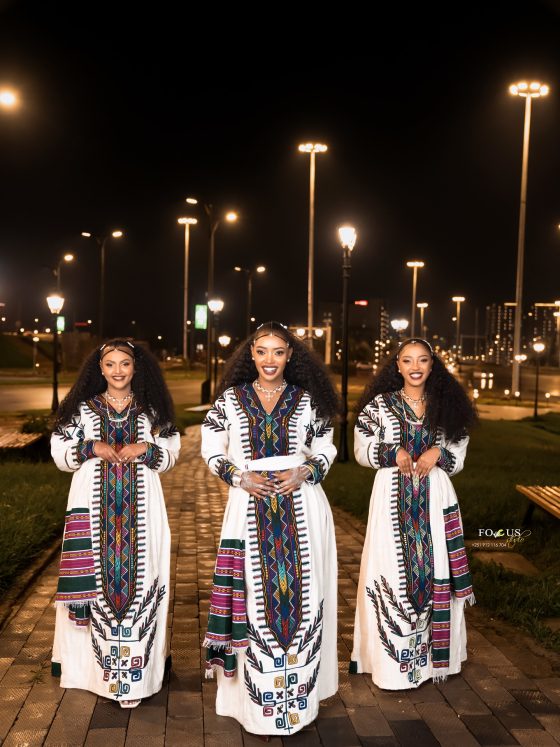
Ghana’s GI framework, developed with WIPO support, provides a replicable legal architecture that other African nations can adapt for their own heritage textiles. Multiple analysts have noted that Nigeria’s Aso-Oke is the most immediate candidate, given its documented craft traditions, named production communities, and international market recognition. Mali’s Bogolan, Ethiopia’s Habesha textile traditions, and the DRC’s Kuba cloth all meet the criteria for comparable protection. Each additional textile that enters a GI or UNESCO framework adds a new premium asset category with legally enforceable market differentiation that fast fashion producers cannot undermine through industrial reproduction.
Explore More
Read the full Industry section for investment analysis, strategy, and business intelligence across the African fashion and textile economy.