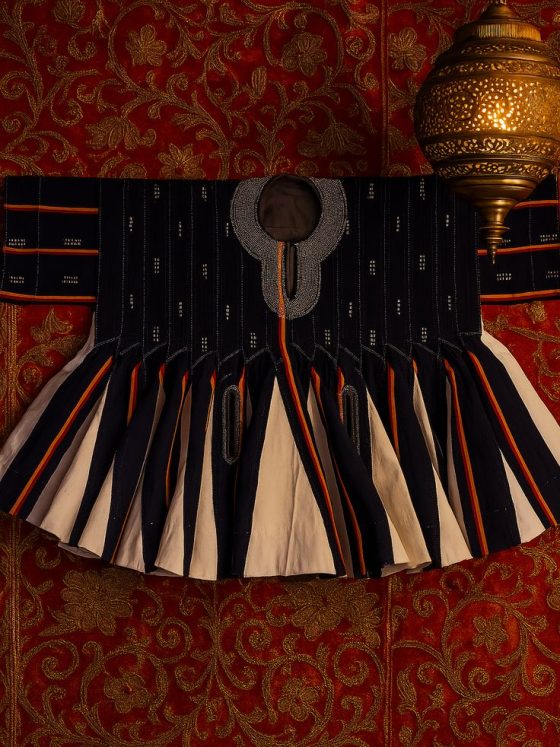
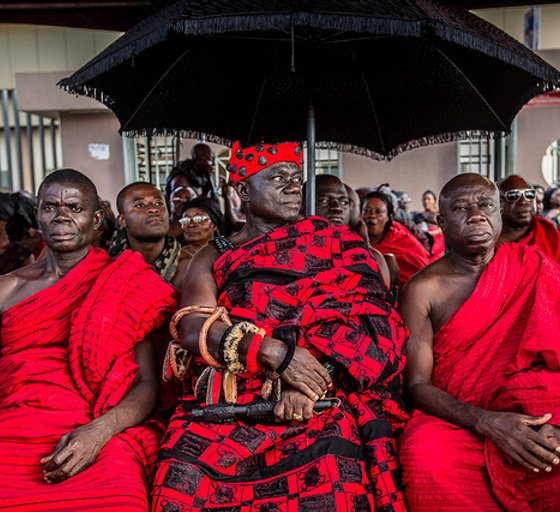
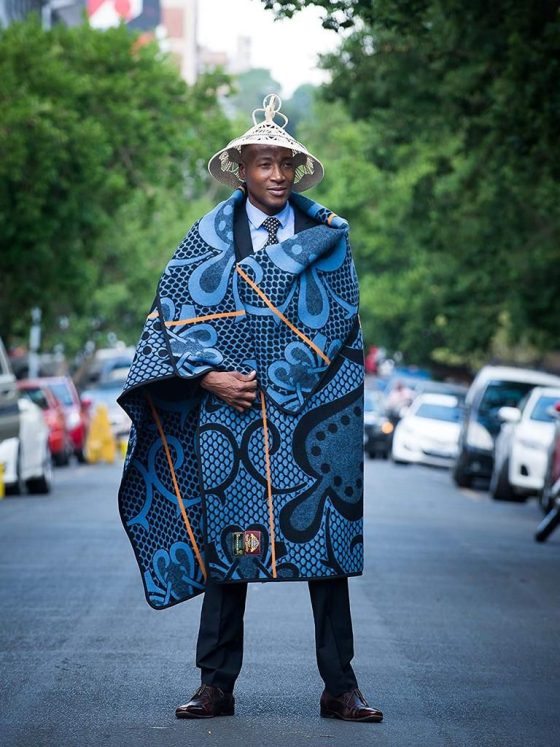
There is a city in Delta State, Nigeria, that sits at the meeting point of three rivers and three peoples, where the Ijaw, the Urhobo, and the Itsekiri have shared streets, markets, and creeks for centuries. That city is Warri. It does not appear in global fashion media. It does not have a fashion week. Its traditional dress is not credited in museum catalogues in the way the Benin bronzes are, nor discussed in the academic literature surrounding Kente cloth or Yoruba Adire. But anyone who has attended the ceremonies of the Niger Delta, who has watched brides dressed from head to ankle in layers of George fabric and coral beads accumulated over years, who has seen chiefs in their Etibo shirts and feathered hats moving through a crowd with the authority of people who have never doubted who they are, understands that what happens to dress in this region is not simple, not decorative, and not small.
The fashion traditions of the Niger Delta are not peripheral to the Afrocentric fashion story. They are central to any honest account of what African people have done with cloth, coral, ceremony, and identity for centuries. They are also the least credited dress traditions in Nigeria, absent from the global fashion conversation despite the sophistication of their systems and the depth of their histories. This article names them on the global stage for the first time.
Between the creeks and mangroves of the Niger Delta, the Ijaw, Urhobo, and Itsekiri peoples built some of the most sophisticated dress cultures in Nigeria. Omiren Styles tells this story for the first time on the global fashion stage.
The Niger Delta as a Fashion Crossroads
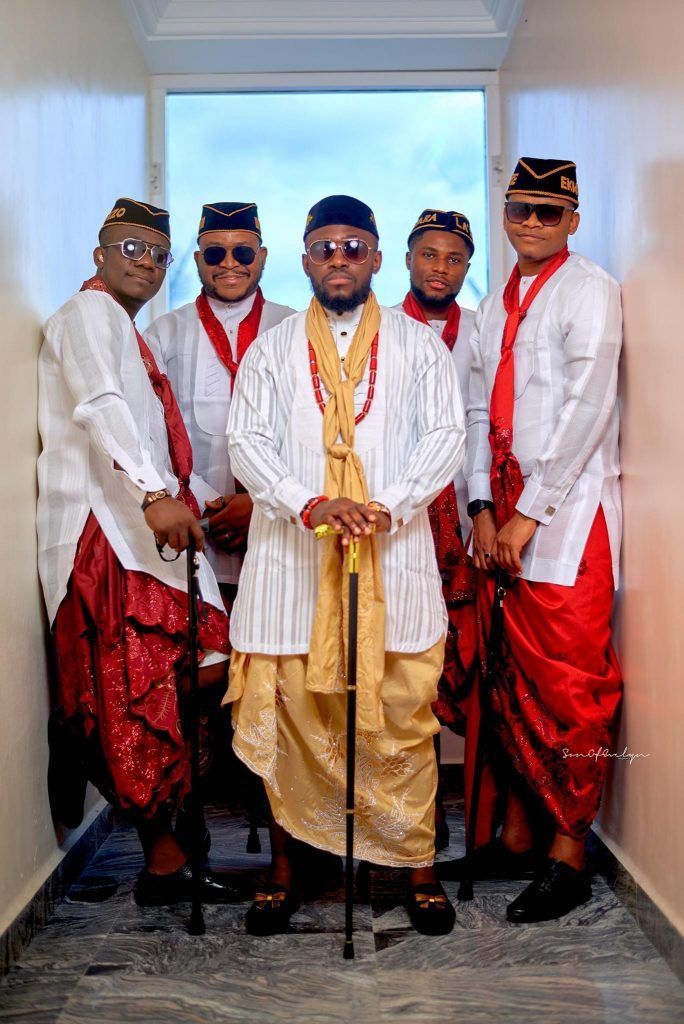
The Niger Delta is not one place and not one people. It is a region of extraordinary diversity, where dozens of ethnic communities have developed distinct cultural identities shaped by their shared environment: the creeks, mangroves, rivers, and sea. The Ijaw are the largest ethnic group in the Niger Delta and one of the oldest peoples in Nigeria, with habitation in the Delta region documented as far back as the fifth millennium BCE. The Urhobo are the largest ethnic group in Delta State, occupying the lower Niger Delta across twenty-two clans. The Itsekiri inhabit the Kingdom of Warri, which they call Iwere, and were among the first peoples in what is now Nigeria to make sustained contact with European traders, beginning with the Portuguese in the late fifteenth century.
Each of these communities built its own dress tradition. But because they share territory, trade routes, rivers, and centuries of interaction, their dress traditions share a visual grammar: the wrapper, the coral bead, the George fabric, the elaborate headtie, and the ceremony-specific garment that marks rites of passage with a precision that has nothing to do with fashion trends and everything to do with the permanence of identity. Niger Delta communities, including the Ijaw, Itsekiri, and Urhobo, wear elaborate wrappers with matching blouses and spectacular head ties that incorporate elements reflecting the riverine environment and the region’s trading history. That sentence is accurate as far as it goes. What it does not say is that the dress system of the Niger Delta is one of the most layered, codified, and historically rooted in Nigeria, and that its absence from the global fashion conversation is one of the most significant gaps in the story Afrocentric fashion tells about itself.
The Ijaw: Coral, Water, and the Language of Ceremony
The Ijaw people, also known as the Izon, centre their identity on water. Their spiritual world is organised around water spirits, their livelihood has historically depended on rivers and creeks, and their dress reflects this relationship in ways that are specific, intentional, and deeply considered. The traditional dress of the Ijaw is associated with their environment and carries important cultural meaning. Light fabrics appropriate for the hot and swampy climate come in bright colours and elaborate patterns that signify occasions, status, and cultural affiliation.
The foundational garment in Ijaw women’s ceremonial dress is the blouse-and-wrapper system. Ijaw women wear a richly embroidered, loose-fitting, long-sleeved blouse, paired with two wrappers, typically made from George, Hollandis, or Ankara fabrics, matched or contrasted to create a layered, elegant silhouette. The headgear, tied in elaborate formations from stiff fabric, is not an accessory. It is a primary element of the ensemble, capable of conveying the nature of the occasion and the wearer’s standing. Coral beads, called Ibolo in Ijaw, are worn as necklaces, bracelets, and earrings by women, signifying both beauty and social status. For bridal ceremonies, ivory beads accompany the coral from the head to the neck, wrists, waist, and ankles, in a layered accumulation of adornment that represents the investment of an entire family in a daughter’s future.
The most significant Ijaw ceremonial dress is the Don outfit, historically reserved for royals and high-ranking individuals. The Don is heavy on the body, featuring an elaborate display of wealth including a cache of jewels, expensive beads, gold studs, and coral ornaments. When an Ijaw woman or chief of high standing wears a full Don ensemble, the weight of the dress is the message. To carry that weight without visible effort is the demonstration of a person who was born to it.
The Iria ceremony, a coming-of-age celebration for Ijaw girls marking the transition to womanhood and readiness for marriage, has its own specific dress code. The elaborate George wrapper ensemble worn at Iria marks this critical life transition with a formality that speaks to how seriously the Ijaw treat the dressed body as a document of social and spiritual standing. Families begin accumulating coral beads years before their daughter Iria’s wedding, making the event a multigenerational investment. The dress is not borrowed or rented. It has been built over the years, in anticipation of a single day.
The Kalabari Ijo and Pelete Bite: Transformation as Art Form
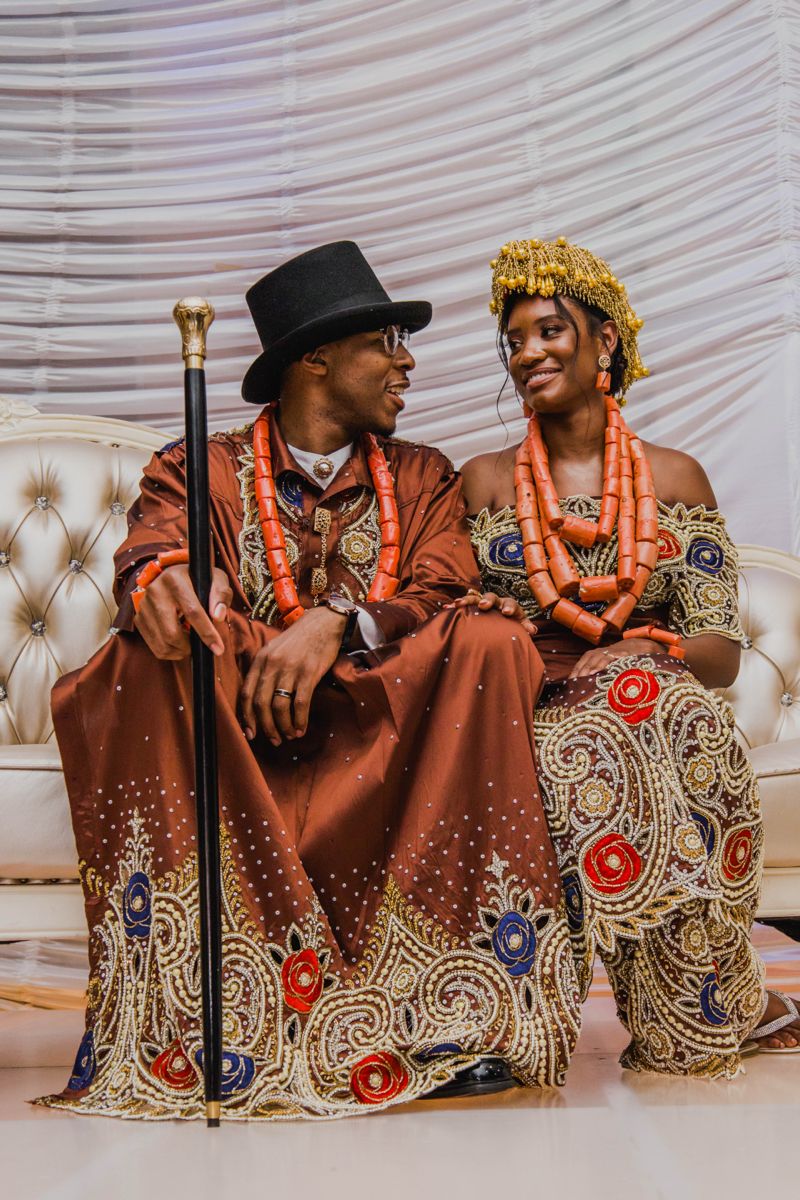
The Kalabari Ijo people of the Niger Delta developed one of the most technically extraordinary textile traditions in West Africa: a practice called pelete bite, in which women take imported Indian madras cloth and transform it by hand into something entirely their own.
Pelete bite is made from Indian madras, a plaid or checked cotton textile handwoven in India and imported into the Niger Delta for perhaps more than two hundred years. The maker uses a needle to pick up individual threads, then cuts each one at both ends and pulls it out of the cloth, continuing this process across the entire textile to create deliberate patterns of removal. What is left is not simply a decorated cloth. It is a new textile, produced from an imported material through an exclusively Kalabari technique, that carries Kalabari meanings and serves Kalabari ceremonies.
The Brooklyn Museum holds examples of pelete bite in its permanent collection, as does the Dallas Museum of Art. These are not ethnographic curiosities. They are works of sustained technical skill, produced by women who understood that an imported fabric was a raw material to be claimed and transformed, not simply worn as found. The Kalabari did not wear the George cloth the way it arrived from India. They remade it. The madras that entered the Niger Delta through trade became something specifically Kalabari through a process of deliberate creative intervention that has no equivalent anywhere else in the global textile record.
This is the argument that pelete bite makes on its own terms: that Kalabari women looked at an imported cloth and saw in it not a cultural imposition but a raw material. They took the threads out and put their own design in. That act of creative sovereignty deserves a place in fashion history that it has never been given.
The Urhobo: Wrapper Layers and the Precision of Occasion
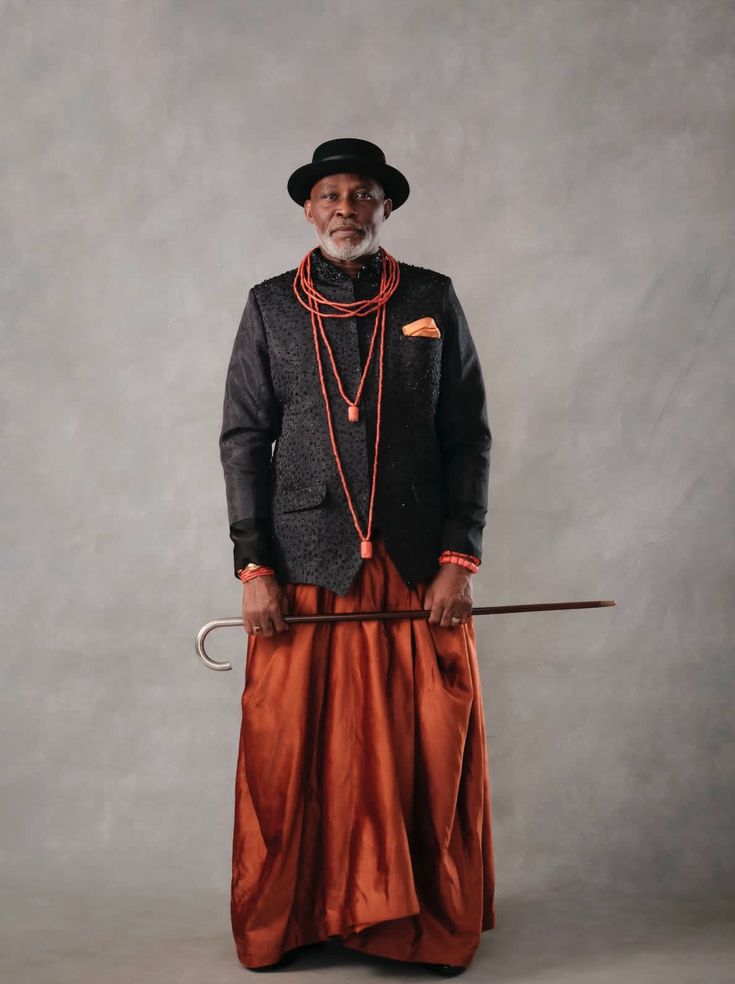
The Urhobo people of Delta State, the largest ethnic group in the state and one of the most culturally distinct communities in southern Nigeria, built their dress tradition around a precise system of layering and naming that communicates occasion, status, and identity with an exactness that Western fashion journalism has never described, because it has never looked.
The Urhobo women’s traditional dress consists of a pair of wrappers tied around the waist and draping to the heel. The inner wrapper, two yards of fabric, is called Aniku. The outer wrapper, four yards, is called Oseba. Each is distinct in name, length, and function. Over this goes the Ewu, the blouse, and the headgear called Onerho or Uriofo. The man’s ensemble includes a waist wrapper, a shirt, and the Eru, the traditional hat. These are not descriptions of generic West African dress. They are the named, specific garments of a specific people, with their own vocabulary and their own logic of occasion.
Coral beads appear in Urhobo dress with specific strategic placement: the beaded crown, called Okuku, may replace a wrapped-bead style depending on the wearer’s rank and occasion. The walking stick, carried by men at formal events, signals leadership, power, and authority as the head of the family. The horsetail, also carried at ceremonies, marks the bearer as someone whose position in the community requires that specific notation. These garments and accessories constitute a complete visual vocabulary. Every community member who can read it knows, without being told, who they are looking at and what that person represents.
Among Urhobo and related Niger Delta communities, there exists a notable and specific rule: Urhobos do not wear gold jewellery at their traditional ceremonies. Silver. Coral. Ivory. But not gold. The colour that signifies royalty and wealth in Asante Kente and in numerous other African dress traditions is deliberately absent from Urhobo ceremonial dress, replaced by a preference for materials with different connotations: the red of coral, the white of ivory, the neutral shimmer of silver. This is not an oversight. It is a coherent aesthetic decision, made deliberately, maintained across generations, and entirely invisible to any fashion account of Nigeria that has not spent time in the Delta.
The Urhobo are governed by traditional rulers called Ovie, whose councils of chiefs and elders oversee cultural events, including major festivals featuring elaborate ceremonial dress. The attire for these occasions is not chosen casually. Each festival has its specific dress requirements, and appearing in the wrong garment at the wrong ceremony carries social consequences. This is a fashion system with enforcement mechanisms. It is taken seriously because it is serious.
The Itsekiri: Trading Culture Written in Cloth
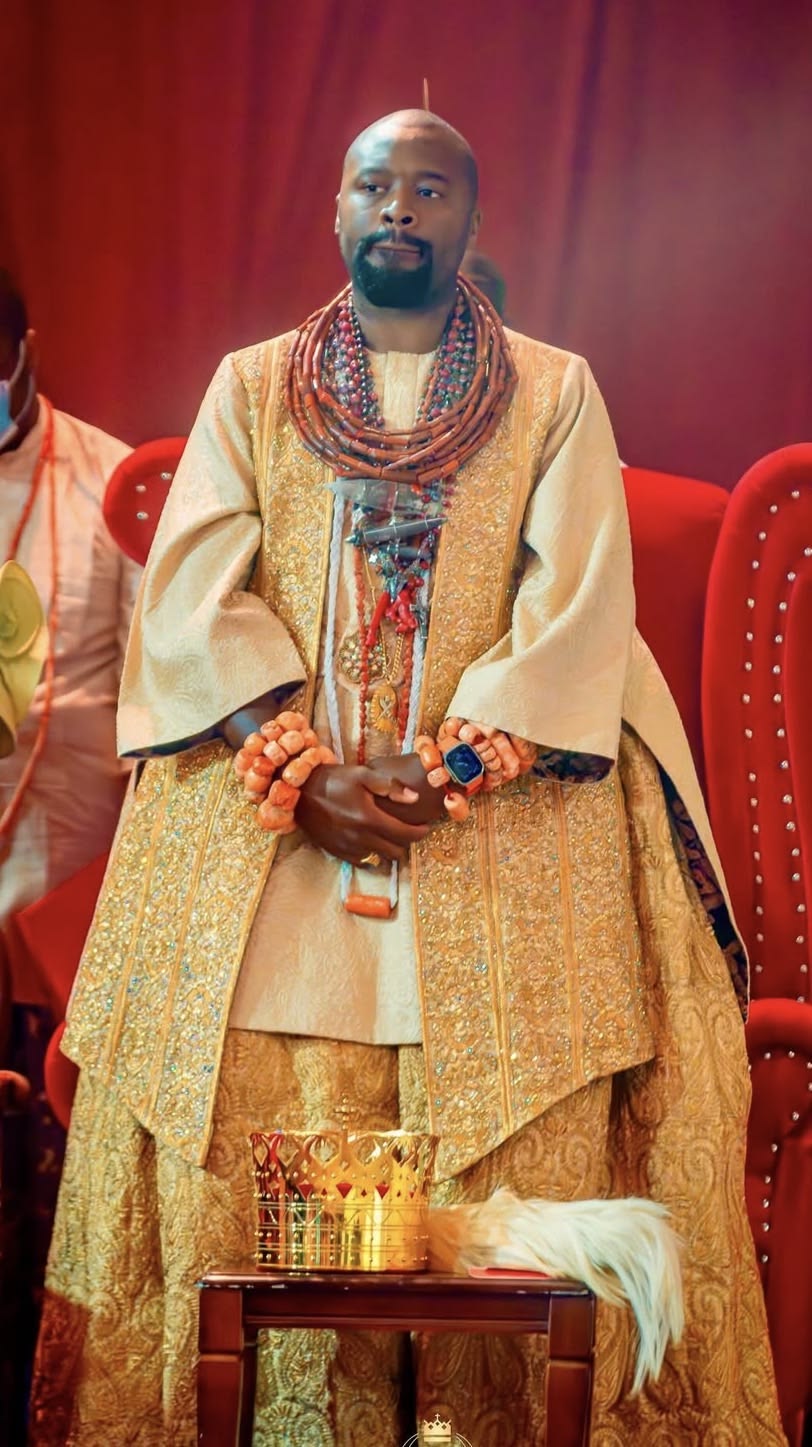
The Itsekiri people of the Kingdom of Warri are the community whose history most explicitly illustrates the relationship between trade, cultural encounter, and dress in the Niger Delta. Their founding dynasty traces its descent from a prince of Benin named Ginuwa, who established a royal house on the western Niger Delta coast in the late fifteenth century. From the sixteenth century onwards, the Itsekiri were among the primary trading intermediaries between the interior kingdoms and the Portuguese, Dutch, and British merchants who arrived on the coast.
The Portuguese during the fifteenth century were the first to make contact. As a result, the Itsekiri established a reputation as great traders and intermediaries supplying European goods to inland peoples in exchange for palm oil and other products from the interior. The early trade between the Itsekiri people and the Europeans brought a transformation in dressing styles. Still, this transformation was selective, intelligent, and driven by Itsekiri cultural logic rather than by European imposition.
The Kemeje, the distinctive Itsekiri shirt made of lace and typically worn with a George wrapper and a feathered hat, is not a European garment. It is an Itsekiri garment, developed from the encounter between local dress tradition and imported materials, shaped entirely by Itsekiri ceremony and Itsekiri community values. Both Itsekiri men and women are heavily adorned with beads, the bead tradition connecting to the Itsekiri’s Benin-descended royal lineage and to the broader Niger Delta ceremonial culture of which they form a part.
The Kingdom of Warri has been governed by the Olu of Warri for centuries, combining ritual authority with control over trade networks and customary law. The Ogiame Atuwatse III currently rules as the Olu of Warri, continuing a royal tradition unbroken since the kingdom’s founding. At every installation of a new Olu, at every state ceremony, at every major communal occasion, the dress of the court carries the full argument of the kingdom’s identity. The flowing Akan robe worn on special occasions signals nobility and authority. The George wrapper and Kemeje shirt constitute the daily ceremonial language of Itsekiri governance. The coral beads accumulated across generations of the royal family speak of continuity and legitimate succession. This is what sovereignty looks like in Warri. It has always looked like this.
George Cloth: The Fabric the Niger Delta Claimed
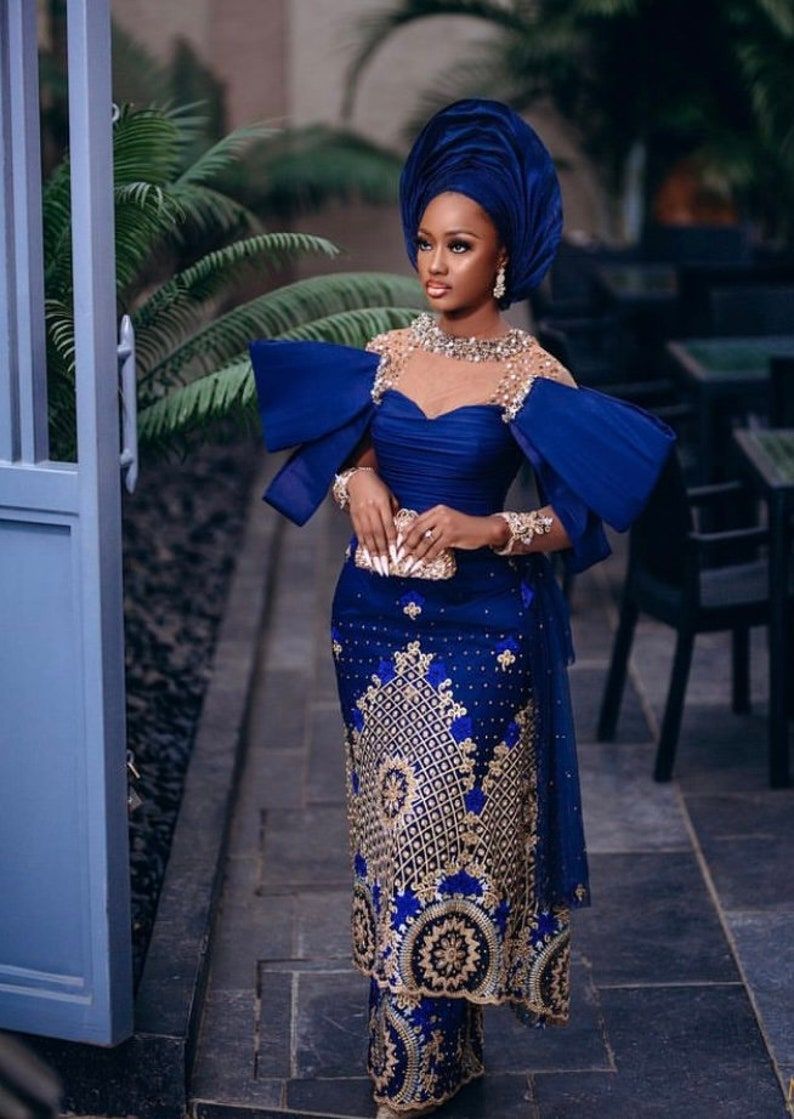
The story of George fabric in the Niger Delta is the story of a people’s relationship with an imported material, one that complicates any simple narrative about colonialism and cultural authenticity. George fabric originated in India, specifically around Madras (now Chennai), and was named after Fort St George, the British colonial trading post from which it was exported to West Africa. It entered the Niger Delta through the same trade networks that connected the region to the wider Atlantic world from the sixteenth century onwards.
What the Niger Delta peoples did with it was not adoption. It was a transformation. The southeastern and south-southern regions of Nigeria, especially the Ijaw, Ibibio, Efik, and Itsekiri, quickly embraced the George fabric and made it their own. It became the go-to fabric for chieftaincy installations, traditional weddings, and high-class ceremonies. George fabric holds deep cultural significance: among the Ijaw, it is the preferred material for traditional marriage ceremonies. Chiefs and kings wear richly embroidered George with coral beads at installations and state events. The fabric is not just for beauty but for power and respect.
The Kalabari Ijo took this relationship furthest of all, developing pelete bite as a technique for physically remaking the cloth through thread removal, producing a textile that could not have existed without the imported material but also could not have existed without the Kalabari woman’s hands and knowledge that transformed it. Since at least the eighteenth century, any cloth produced in the vicinity of Madras and traded in the Niger Delta region could be called a George, and the communities that received it have been doing more sophisticated things with it than simply wearing it.
The Textile Research Centre in Leiden holds extensive documentation on George and Madras cloth in the Niger Delta. The academic record is clear. The fashion media record is almost entirely silent.
Also Read
- The African City That Fashion Forgot: How Benin, Oyo, Dahomey, and Asante Dressed Before Europe Arrived
- Cornrows Were a Map: The African Intelligence Behind Diaspora Braiding
- Indigo: How West African Dyeing Became the Blueprint for Global Denim
- The Cloth That Crossed the Ocean: How African Fashion Tradition Lives in the Caribbean and Latin America
The Language These Garments Speak
Every element of the Niger Delta ceremonial dress is a word in a language. The Aniku and the Oseba are not interchangeable. The Ibolo coral bead is unlike any other bead. The Don outfit is not worn at casual events. The Onerho headgear is not tied in a random configuration. The Eru hat worn by an Urhobo man is not merely a covering but a specific statement about who is present and why.
Niger Delta traditional dress functions as a visual language in which every element communicates specific information to those who understand the cultural code. This is not a metaphor. It is a documented reality of how these communities dress and read dress. The precision is not incidental to the garment. The precision is the point.
Among Ijaw communities, the coral bead tradition is so fundamental that families begin accumulating coral years before the ceremonies that will require it. Authentic coral bead sets represent a significant investment and serve as visible family wealth, communicating status, prosperity, and the seriousness with which the family takes its social obligations. When a bride appears in full coral and George at her Iria ceremony, the assembled community is reading a statement about her family, her future, and her community’s investment in both. The dress is the document.
The Omiren Argument
Vogue has published features on Nigerian fashion. They centre Lagos. They reference Aso-Oke. They photograph agbada. They have never published an article on the Iria ceremony. They have never described pelete bite as a textile technique that belongs in the conversation about global fashion innovation. They have never explained what the distinction between Aniku and Oseba communicates about an Urhobo community’s understanding of occasion. They have never photographed a Niger Delta chief in his full regalia and named what they were looking at with the precision it deserves.
This is not because the material does not exist. The research is held at the Brooklyn Museum, the Fashion Institute of Technology’s Fashion History Timeline, the Textile Research Centre in Leiden, and in the documented oral traditions of the communities themselves. The fashion media have simply not looked. The Niger Delta is off the map that global fashion media uses to navigate African dress.
This is the map problem Omiren Styles exists to correct. The Ijaw, the Urhobo, the Itsekiri, and the Kalabari Ijo have been building, maintaining, and innovating dress systems of extraordinary sophistication for centuries. They have been doing so in conversation with Indian textiles, the enin royal lineage, Portuguese trade networks, Atlantic commerce, and the specific demands of a riverine environment with no parallel elsewhere in Africa. The result is a fashion tradition that is entirely its own: not borrowed from Europe, not derived from the more globally visible traditions of Lagos or Kumasi, but rooted in the creeks and ceremonies of the Niger Delta, in the weight of coral accumulated across generations, and in the specific, named garments that tell every community member who is present and why.
The Niger Delta dress tradition does not need to be discovered. It has always been here. What it needs is to be named, on its own terms, on the global stage. That naming begins here.
The brides of the Niger Delta know what they are wearing and why. The chiefs know what the coral means, who granted the right to wear it, and what that exchange required. The Kalabari women know how to pull a thread from an imported cloth and leave behind something that could not exist without their hands. The ceremony continues. The dress is still being worn. The only thing that has been missing is the global platform that names it with the seriousness it has always deserved.
Frequently Asked Questions
1. What are the main traditional dress traditions of the Ijaw people of the Niger Delta?
The Ijaw people, the largest ethnic group in Nigeria’s Niger Delta and one of the oldest peoples in the region, have a dress tradition centred on the blouse and wrapper system, coral beads known as Ibolo, George and Hollandis fabrics, and specific ceremonial garments including the Don outfit for royals and the elaborate ensemble worn at the Iria coming-of-age ceremony. Coral beads signal wealth and social status and are worn by women as necklaces, bracelets, and earrings across all ceremonial occasions. The weight and density of coral adornment communicate the wearer’s standing and their family’s investment. Families begin accumulating coral beads years before their daughter’ Iria’sIria, making the ceremony a multigenerational cultural investment.
2. What is a pelete bite and why does it matter to African fashion history?
Pelete bite is a textile technique developed by the Kalabari Ijo peoples of the Niger Delta in which women take imported Indian madras cloth and transform it by individually pulling out threads to create deliberate patterns of removal across the whole cloth. The result is a new textile, produced from an imported material through an exclusively Kalabari technique, that carries Kalabari meanings and serves Kalabari ceremonies. It matters to African fashion history because it represents one of the most technically sophisticated examples of the creative transformation of a traded material in the entire African textile record, and it is held in the permanent collections of the Brooklyn Museum and the Dallas Museum of Art, yet remains almost absent from global fashion media.
3. How did George fabric become central to the Niger Delta traditional dress culture?
George fabric originated in India, around the city of Madras, and was named after Fort St George, the British colonial trading post from which it was exported to West Africa. It entered the Niger Delta through trade networks well-established by the sixteenth century. The Ijaw, Itsekiri, Efik, and other Niger Delta communities claimed it as their own, making it the fabric of choice for chieftaincy installations, traditional weddings, and major ceremonial occasions. The Kalabari Ijo took this transformation the furthest by developing pelete bite, a technique for physically remaking imported cloth by removing threads. The Textile Research Centre in Leiden holds extensive academic documentation of this history.
4. Why is the Niger Delta dress tradition absent from global fashion media coverage of Africa?
Global fashion media has consistently mapped African fashion through its most internationally visible cities and its most internationally recognisable textiles, leaving the Niger Delta and its multiplicity of ethnic communities and dress traditions outside the frame. The result is that traditions of extraordinary sophistication, including the pelete bite of the Kalabari Ijo, the layered wrapper system of the Urhobo, the coral bead culture of the Ijaw, and the centuries-old ceremonial dress of the Itsekiri Kingdom of Warri, remain invisible to the global fashion conversation despite being well-documented in academic and museum collections. Omiren Styles exists specifically to correct this absence by placing the Niger Delta dress tradition on the global Afrocentric fashion stage where it belongs.