There is a colour that connects the sacred pots of Yoruba dye women in Abeokuta, Nigeria, to the factory floors of Guangzhou, the runways of Milan, and the wardrobes of nearly every person alive on earth. That colour is indigo. It is the only molecule known to science that produces the blue of denim jeans. The global denim market was valued at over $90 billion and continues to grow, driven by a dye that West African women had been fermenting, applying, and using to build economies for centuries before a Bavarian immigrant named Levi Strauss ever touched a bolt of cloth. The fashion industry knows this. It has consistently and deliberately chosen not to say it.
Vogue has never written this sentence: the blue in your jeans comes from a dyeing tradition that West African women perfected over a thousand years. Omiren Styles is writing it now.
The global denim industry is worth over $90 billion and runs entirely on indigo. Yoruba women in Nigeria were mastering indigo dyeing centuries before Levi Strauss was born. Omiren Styles traces the blue thread from West Africa to every pair of jeans on earth, and names what the fashion industry has refused to say.
What Indigo Is and Where It Has Always Been
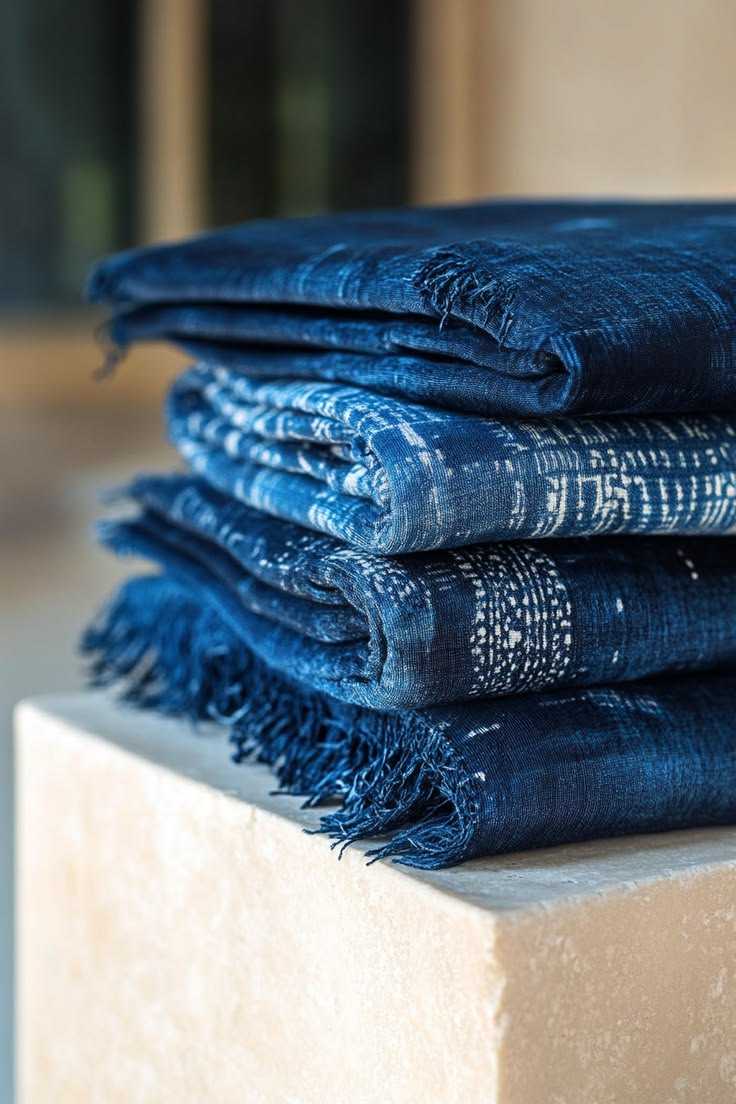
Indigo is the only natural blue dye. That single fact explains everything about its value. Blue was rare. Across the ancient world, from Egypt to Rome to China, whoever controlled blue cloth controlled something that nobody else could easily replicate. Archaeological evidence places indigo dyeing as far back as 6,000 years ago, with documented use in ancient Egypt, the Maya civilisation, and early Chinese textile culture. The plant that produces it, Indigofera tinctoria, is native to the tropics. It grows abundantly in West Africa. And West African peoples, particularly the Yoruba of what is now southwestern Nigeria and the Manding peoples of Mali, built some of the most sophisticated indigo dyeing systems in human history from it, centuries before European merchants arrived to put a price on what they found.
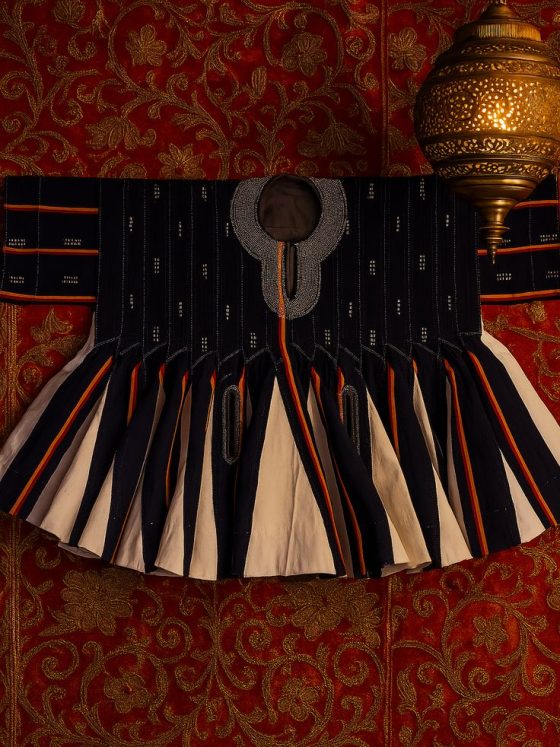
A century ago, blue-and-white striped cloth was the standard daily attire across a vast area from Senegal to Cameroon. This was not fashion. This was a civilisation’s relationship with a colour. Indigo cloth in West Africa signified wealth, abundance, and fertility. The deep pit dye vats of Kano in northern Nigeria, which scholars trace to the ancient trading city of the Kingdom of Kano, were among the most technically advanced dyeing operations anywhere in the pre-industrial world. The Yoruba paid tribute to a patron deity of dyeing, Iya Mapo, who protected all exclusively female trades. Every fourth day was set aside for her worship, her praise songs sung at the dye pits, the dye vats left still in her honour. Indigo dyeing in West Africa was not a craft. It was sacred knowledge, held by women.
Adire: The Yoruba Dyeing System That Predates Denim by Centuries
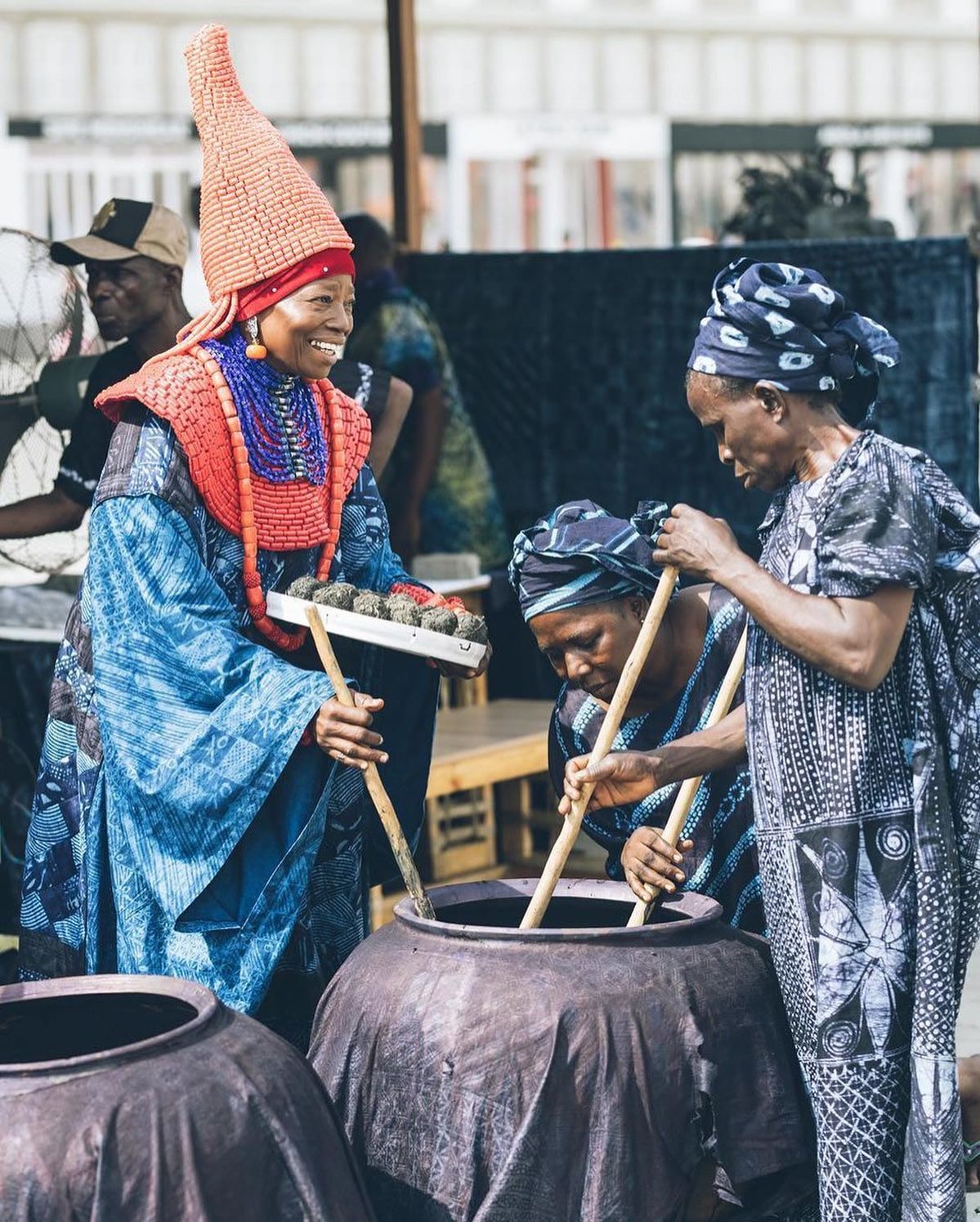
Adire, from the Yoruba words adi, meaning to tie and re, meaning to dye, is the resist-dyed indigo cloth made by Yoruba women of southwestern Nigeria. The tradition of indigo dyeing goes back centuries in West Africa, with the earliest known example being a cap from the Dogon kingdom of Mali dating to the eleventh century, dyed in the oniko style. That is eight hundred years before Jacob Davis and Levi Strauss patented their riveted denim trousers in 1873. Eight hundred years before the word denim existed, West African women were fermenting indigo, dipping cloth in dye vats, building up the colour through repeated immersions, and producing textiles of technical sophistication that the Victoria and Albert Museum now holds in its permanent collection.
The techniques of Adire are not primitive. They are chemistry. Adire Oniko involves tying raffia around stones, seeds, and pebbles to resist the dye and produce complex circular patterns on cloth. Adire Alabere uses hand-stitched raffia thread to trace delicate linear motifs before dyeing, then removes the thread afterwards to reveal the pattern. Adire Eleko, the most technically demanding, involves painting cassava starch paste freehand onto cloth before dyeing, creating an intricate resist that produces designs of extraordinary intricacy. Quality Adire cloth is dipped into the dye vat twenty-five times or more to build a deep blue-black colour of the kind that global denim brands have spent billions trying to replicate with synthetic chemistry.
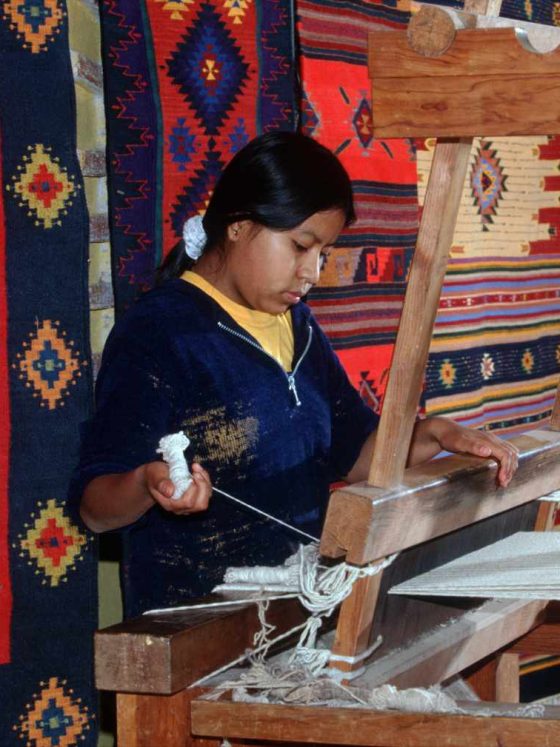
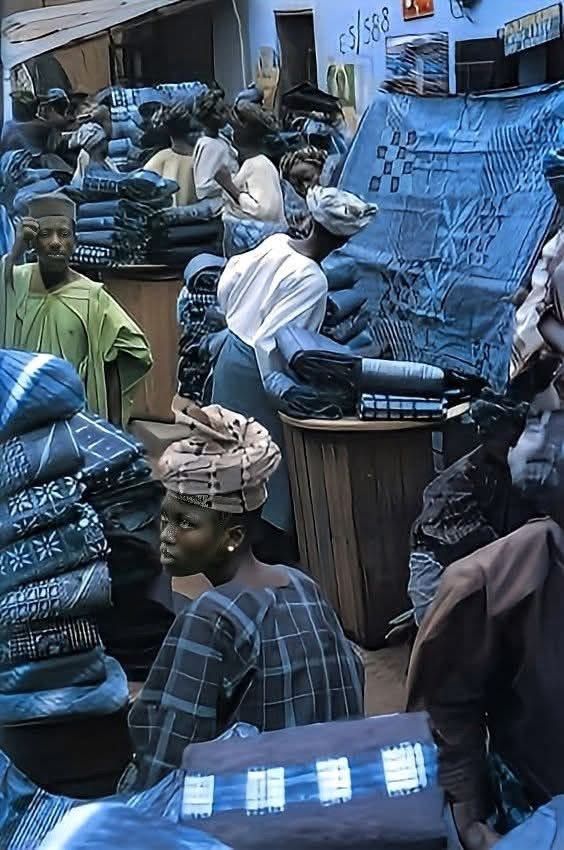
This was not a cottage industry. It was an economic system. In the early decades of the twentieth century, Yoruba dye women of Abeokuta and Ibadan turned Adire into a regional commercial powerhouse, attracting buyers from across West Africa. The market town of Abeokuta became the capital of Adire production. The Itoku Market in Abeokuta became West Africa’s busiest textile hub, controlled entirely by women who designed, dyed, and sold their cloth with complete economic authority. These women were so commercially successful and so economically independent that the British colonial government required them to pay taxes separately from men, the only such arrangement in colonial Nigeria, specifically because the indigo dye industry had made them wealthy enough to warrant it.
The Dye Pit Was a Political Space
In 1946, Funmilayo Ransome-Kuti led the Abeokuta Women’s Union in a three-year series of mass protests against colonial taxation that culminated in the abdication of the Alake of Abeokuta, the paramount king, in 1949. The protests drew tens of thousands of women. What made those women powerful enough to topple a king was, in significant part, the indigo economy. According to Professor Judith Byfield of Cornell University, it was the indigo dye industry and other factors that made the women of Abeokuta so economically self-sufficient that the British required them to pay taxes at all. The dye pit was not merely a place of craft. It was the economic foundation of a political resistance movement. The same indigo that dyes every pair of jeans you have ever worn was the economic engine behind one of the most significant anti-colonial women’s movements in African history.
Garland Magazine’s 2025 documentation of Adire tradition records that during the Abeokuta Women’s Revolt, Funmilayo Ransome-Kuti had thousands of protesting women wear Adire as a uniform, deliberately using the cloth to blur class lines and visually unite market women and educated elites into a single political front. The cloth was not incidental. It was the argument made visible.
Bogolanfini: Mali’s Other Mastery
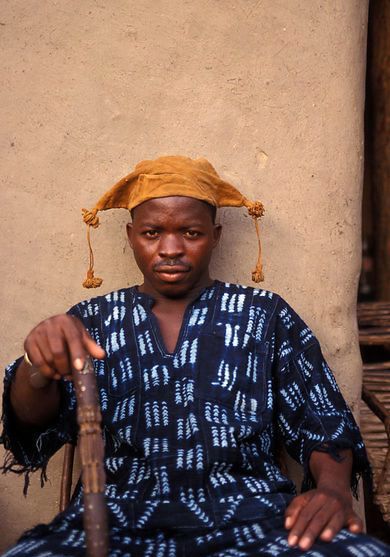
Bogolanfini, the mud cloth of Mali, is a different tradition entirely but part of the same Afrocentric story of West African women and the mastery of cloth dyeing. The word comes from the Bambara language: bogo, meaning mud or earth, lan, meaning with, and fini, meaning cloth. Some scholars trace its origins to the twelfth century, making it, like Adire, a textile tradition that predates modern fashion by seven hundred years or more.
The Smithsonian Institution’s National Museum of African Art holds examples of bogolanfini made by master artisan Nakunte Diarra of Kolokani, widely recognised as the finest living bogolan artist. The process she uses is a scientific achievement. Cloth is soaked in a solution of mashed and boiled leaves from the n’gallama tree. It is sun-dried, then painted with designs using iron-rich mud collected from streambeds and fermented for up to one year in a clay jar. A chemical reaction between the treated mud and the dyed cloth produces a permanent dark colour through the reaction of iron oxide with the tannic acid in the plant dye bath. The process is repeated, sometimes three times over, until the desired depth of colour is achieved. Each pattern is a named symbol that encodes proverbs, historical events, protective meanings, and social information that experienced women read as fluently as they read text.
The Smithsonian notes that bogolanfini is worn by pubescent girls making the transition to womanhood, by hunters seeking protection, and today by a broad range of Malian people as a symbol of national identity. In the 1980s, Malian designer Chris Seydou brought bogolanfini to international fashion houses, applying its patterns to Western silhouettes for runways in Paris. Riccardo Tisci used it at Givenchy in 2007. Neither occasion came with a label reading “Bamana women, Mali, twelfth century.” It rarely does.
Denim: The Blue That Needed Africa to Exist
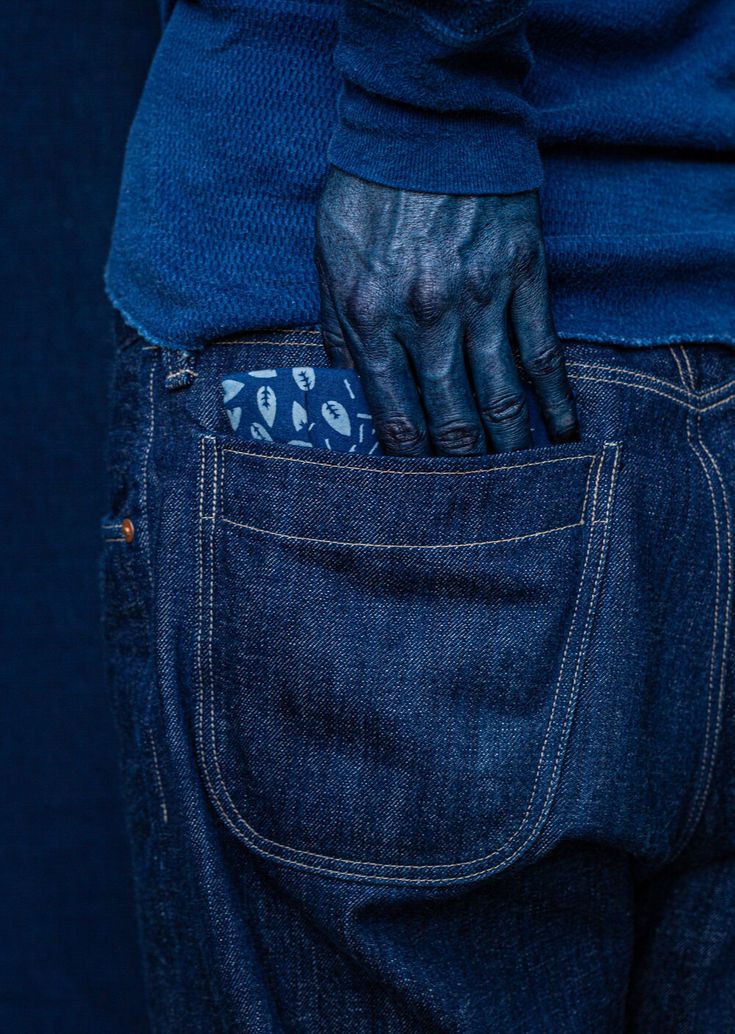
Denim originated as a contraction of the French phrase sergé de Nîmes, a twill fabric woven in the city of Nîmes, France. Its defining characteristic, the feature that made it useful for workwear and the feature that made it a global cultural phenomenon, is that the warp thread is dyed with indigo. In contrast, the weft thread is left white. The surface-level dyeing produced by indigo, which coats the outside of the cotton yarn rather than penetrating it, creates the fading and ageing characteristics that make denim desirable. On average, a single pair of blue jeans requires between three and twelve grams of indigo dye. Multiply that by the over 3.2 billion pairs of denim jeans produced annually, and you begin to understand the scale of indigo’s commercial dominance.
In 1873, Jacob Davis and Levi Strauss patented their riveted denim trousers. The key ingredient was indigo. The specific shade —the deep, rich blue that Levi Strauss chose and that became synonymous with jeans globally —was dark enough to hide dirt and possessed the unique property of fading gracefully with wear—qualities that West African women had known, documented, and exploited for centuries. By 1897, German chemists at BASF and Hoechst had developed synthetic indigo, making it cheaper to produce on an industrial scale. The denim industry today uses approximately 50,000 tonnes of synthetic indigo a year, along with over 84,000 tonnes of sodium hydrosulfite as a reducing agent, producing toxic chemical runoff that dyes rivers blue near factories and contaminates surrounding ecosystems.
The industry that extracted the knowledge of indigo from its West African context, industrialised it, patented a synthetic version, and built a $90 billion market on it has not, to date, credited the women who first mastered it.
Also Read:
- The African Origins of Carnival Costume: Feathers, Beads, and the Masquerade Tradition
- The Pollera, the Wob Dwiyet, and the Baiana: The African Women Who Dressed the Americas
- The Cloth That Crossed the Ocean: How African Fashion Tradition Lives in the Caribbean and Latin America
- Wrapper Traditions Across West Africa: The Cloth That Carries Everything
The Revival and What It Means
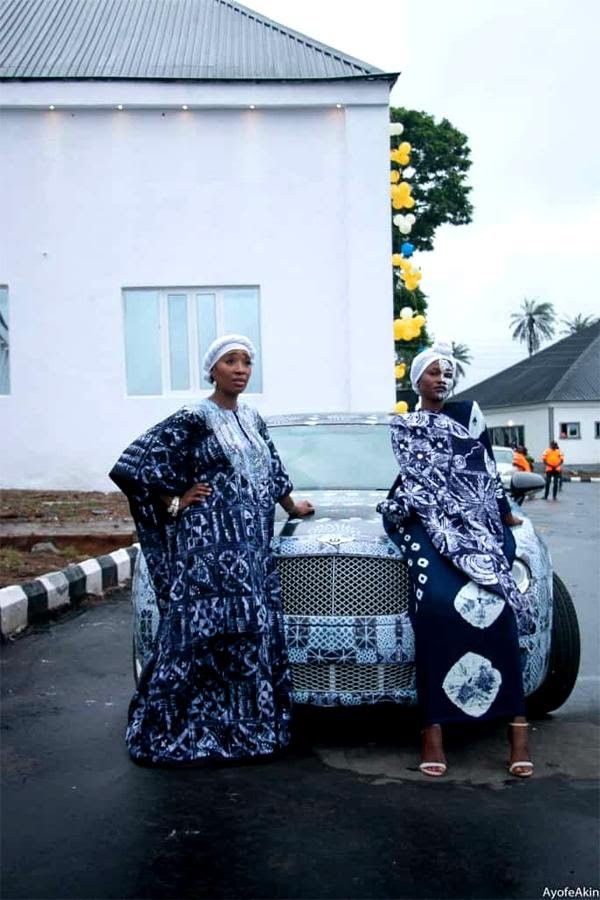
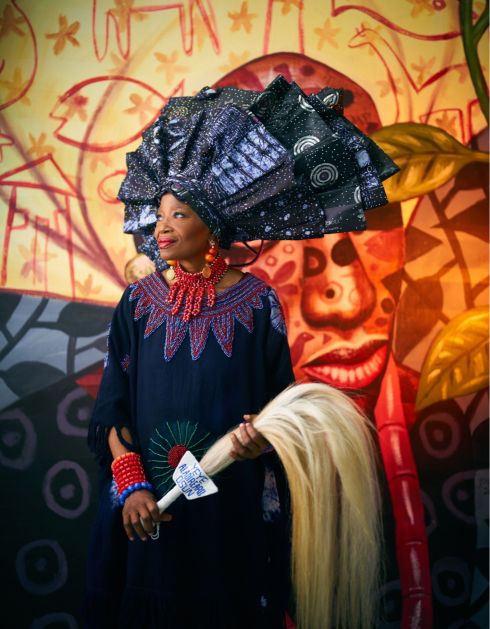
Adire is experiencing a documented global revival. At the 2025 Cultural Canvas Art and Festival Exhibition in Abuja, Nike Davies-Okundaye, one of Nigeria’s most celebrated textile artists, was honoured for a lifetime of elevating Yoruba textile heritage. Davies-Okundaye, who has spent decades training younger generations in the techniques of Adire, has inspired designers including Amaka Osakwe of Maki-Oh, whose Adire-influenced garments have been worn by Michelle Obama in South Africa and Lupita Nyong’o on international red carpets. Each appearance is a quiet insistence that the source be seen.
In Mali, designer Awa Meité works directly with bogolanfini artisans to produce contemporary garments that respect the cloth’s ancestral grammar. Her work has been showcased at international fashion weeks from Abidjan to Shanghai, and it insists on a single thing: that the cloth retain its meaning, its method, and its community of makers. It is not adapted for the Western market. It is African fashion being African fashion, on its own terms, on a global stage.
In December 2022, Levi Strauss and Co. reportedly invested over $4 million in Stony Creek Colours. This regenerative agriculture firm grows natural indigo plants in an attempt to return to plant-based dyeing for sustainability. The world’s leading denim brand is now paying to re-learn what Yoruba women knew. The knowledge was never lost. It was simply not credited.
The Omiren Argument
The global denim industry is worth over $90 billion. It runs on a dye. That dye is indigo. The oldest known example of indigo dyeing in West Africa dates to the eleventh century. Yoruba women built a regional economic empire on it. Malian women encoded their history, spiritual knowledge, and social system into it. The Abeokuta women’s indigo economy was so successful that it funded a political movement that toppled a colonial-backed king. None of this appears in the fashion media’s coverage of denim. None of it appears in Levi’s brand history. None of it appears in the Museum of Contemporary Fashion’s timeline of indigo.
Vogue covers denim trends every season. It has run features on the sustainability crisis of synthetic indigo dyeing. It has profiled artisan denim makers from Japan, Italy, and the American South. It has not run the piece that matters most: the one that names the Yoruba dye woman as the architect of the colour that built the industry. That piece is not difficult to write. The research is there, held by the Victoria and Albert Museum, the Smithsonian, the Horniman Museum, and documented by scholars from Cornell to the University of Lagos. The reason it has not been written is not ignorance. It is a structural preference for origin stories that begin in Europe.
Omiren Styles exists to write the other story. West African women did not influence denim. They built the knowledge system that denim was built on. That knowledge was not borrowed or shared. It existed, complete and sophisticated, in the dye pits of Abeokuta and the mud cloth workshops of Kolokani long before European traders arrived, long before synthetic chemistry existed, and long before a $90 billion industry was built on the colour those women first mastered.
The next time you pull on a pair of jeans, you are wearing a colour that West African women mastered a thousand years ago. They fermented the plant, built the vat, dipped the cloth, counted the immersions, and produced a blue so deep and so durable that the entire global fashion industry is still trying to replicate it without their chemicals. They did it first. They did it better. And Omiren Styles is committed to saying so, every time, on their terms.
Frequently Asked Questions
1. What is the connection between West African indigo dyeing and the global denim industry?
West African indigo dyeing traditions, particularly the Yoruba Adire tradition of southwestern Nigeria and the Malian bogolanfini system, predate the Western denim industry by centuries. The earliest documented indigo dyeing in West Africa dates to an eleventh-century cap from the Dogon kingdom of Mali. Denim as a garment was patented in 1873. The specific techniques West African women developed for fermenting indigo, building colour through repeated dipping, and producing the deep blue-black associated with quality denim are the same technical principles the global industry still relies on. The knowledge was in West Africa first.
2. What is Adire, and why is it significant to fashion history?
Adire is the resist-dyed indigo cloth made by Yoruba women in southwestern Nigeria, using techniques such as tying, stitching, and cassava starch paste to create patterns before dyeing in natural indigo. It is held in the permanent collections of the Victoria and Albert Museum, the Horniman Museum, and the Smithsonian Institution. Its significance to fashion history is threefold: it represents one of the oldest and most sophisticated indigo dyeing traditions in the world; it was the economic foundation of a major commercial system controlled entirely by women; and it directly corresponds in technique and aesthetic to the dyeing principles underlying the global denim industry.
3. How did the indigo dye economy of Abeokuta contribute to Nigerian political history?
The Abeokuta women’s indigo economy made the women of Abeokuta so economically independent that the British colonial government taxed them separately from men, a unique arrangement in colonial Nigeria. This taxation, imposed because of the wealth the indigo trade had generated, became the catalyst for the Abeokuta Women’s Revolt of 1946, led by Funmilayo Ransome-Kuti, which lasted three years and ended with the abdication of the Alake of Abeokuta. The indigo dye pit was the financial engine of one of the most significant anti-colonial women’s movements in African history.
4. Why does mainstream fashion not acknowledge West Africa as the origin of indigo dyeing mastery?
Mainstream fashion media and brand histories frame indigo as a European or Indian story, referencing the French city of Nîmes as denim’s origin and India as indigo’s source without acknowledging that West African women were among the world’s most sophisticated indigo dyers centuries before either reference point became commercially relevant. This reflects the same structural pattern Omiren Styles identifies across all its coverage: African cultural and technical knowledge is absorbed into global commerce without attribution. Major institutions, including the Smithsonian and the V&A, hold the research crediting West African women. The omission is not accidental.