Before Kente became a symbol on runways or graduation gowns, it was authority in cloth, memory in colour, and philosophy in pattern. In the courts of the Asante and among Akan artisans, each narrow strip was more than decoration. It carried lineage, political memory, and ritual.
Every thread was chosen, every motif was encoded with intention. To understand how Kente weaves history into every thread is to recognise that the fabric is a living archive. It is a guardian of memory, a translator of authority, and a medium where the past informs every fold, colour, and pattern.
This article explores how Kente weaves history into every thread by returning to the artisans and the courts that made cloth both a material and a record.
Kente is not just cloth; it is memory, authority, and story. Learn how Kente weaves history into every thread, carrying culture, ceremony, and heritage across generations.
Origin Is Not A Footnote
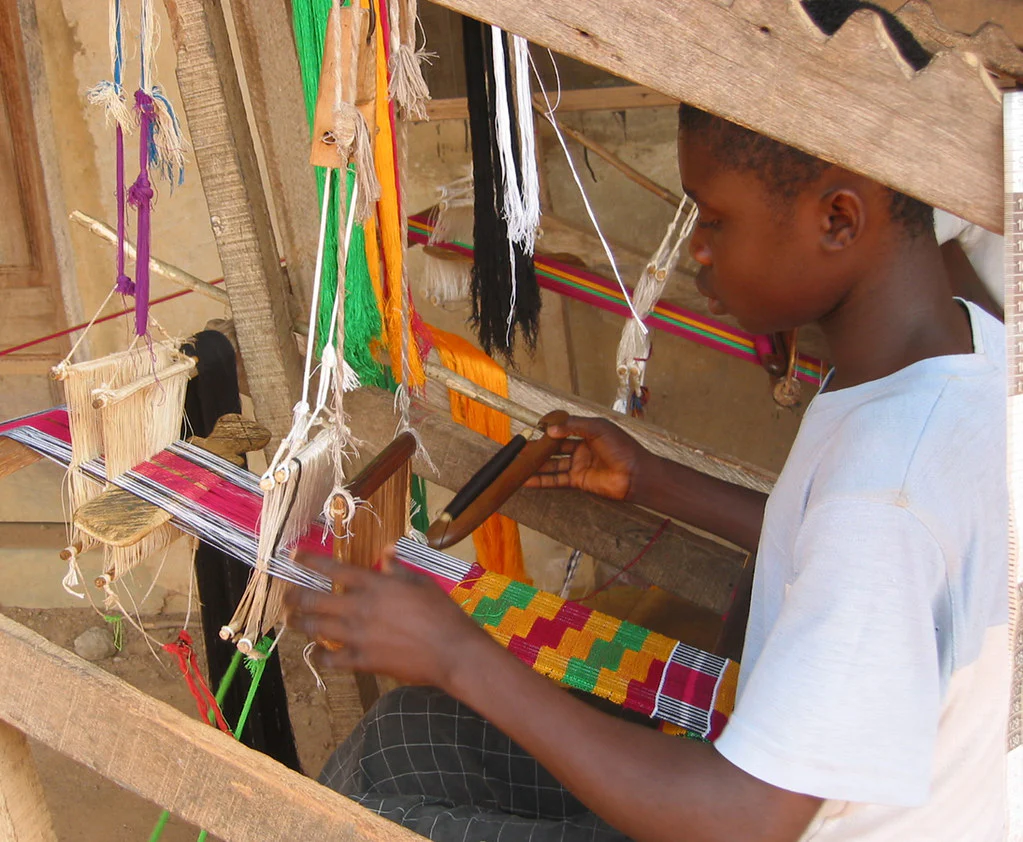
Royal patronage made cloth a tool of authority. Every skilled weaver ensured that only the Asantehene could wear certain patterns. Certain motifs were reserved, which turned cloth into a declaration of power, loyalty, and ritual knowledge.
Also, every weave was a statement of governance. One elder weaver in Bonwire recalls, “Each strip carries the story of our town, our people, our chiefs. It is not just cloth; it is our voice.”
Beyond the Asante, the Ewe developed their own variations of Kente. This demonstrated that Kente is a regional archive of intelligence, ritual, and ceremony and not a uniform commodity.
Understanding how Kente weaves history into every thread begins with the communities that designed and embedded authority into the cloth. Without them, it is decoration.
The Language of Colour: Politics In Pigment
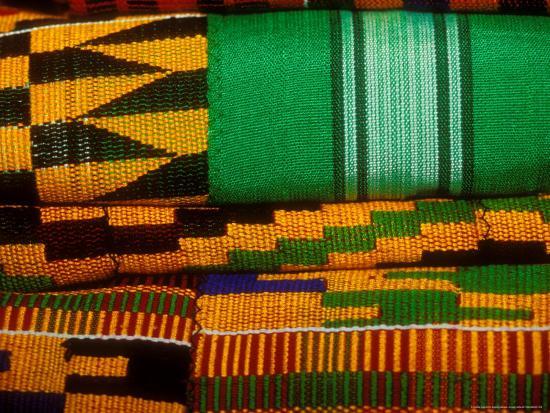
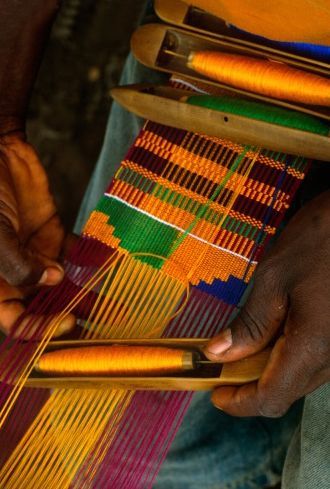
Kente’s story is written in colour as a language of authority. Each hue carries meaning, not decoration. The gold signals divine kingship and authority; black evokes ancestral presence and continuity; green marks land, growth, and renewal; and red carries sacrifice and struggle.
For ceremonies like the Asantehene’s coronation, a chief did not simply wear a pattern; he declared authority through choice. At funerals, patterns like Emaa Da kente cloth communicated mourning and remembrance.
Patterns combined with pigments created visual codes that enforced hierarchy and social memory. Seeing how Kente weaves history into every thread means reading colour as language: each shade is a word and each pattern a sentence.
Patterns As Proverbs: Cloth As Archive
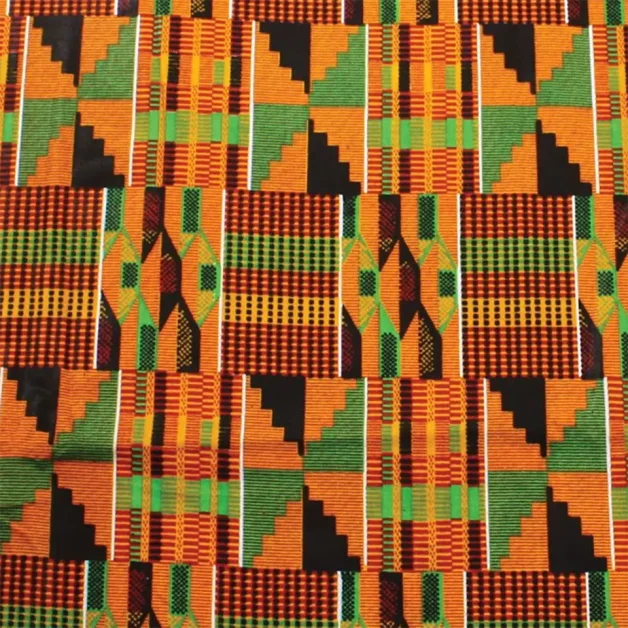
In Kente, every design is an argument, a record, and a story. Adwinasa, meaning “all designs are used up”, celebrates skill and abundance. Emaa Da, meaning “this has never happened before”, marks rare events and significant moments.
On her wedding day, a bride wears a pattern chosen by her family to signal lineage, alliances, and expectations. A chief, draped in Sika Ntoma kente, declares authority and allegiance to ancestors and subjects. Every choice in warp and weft encodes history, memory, and meaning.
Across generations, Kente functions as a living archive. Names, proverbs, and political memory travel along threads, preserved even as spoken language fades. Misuse is disrespect, and misreading is erasure.
Economic And Cultural Stakes: The Loom Beyond Luxury
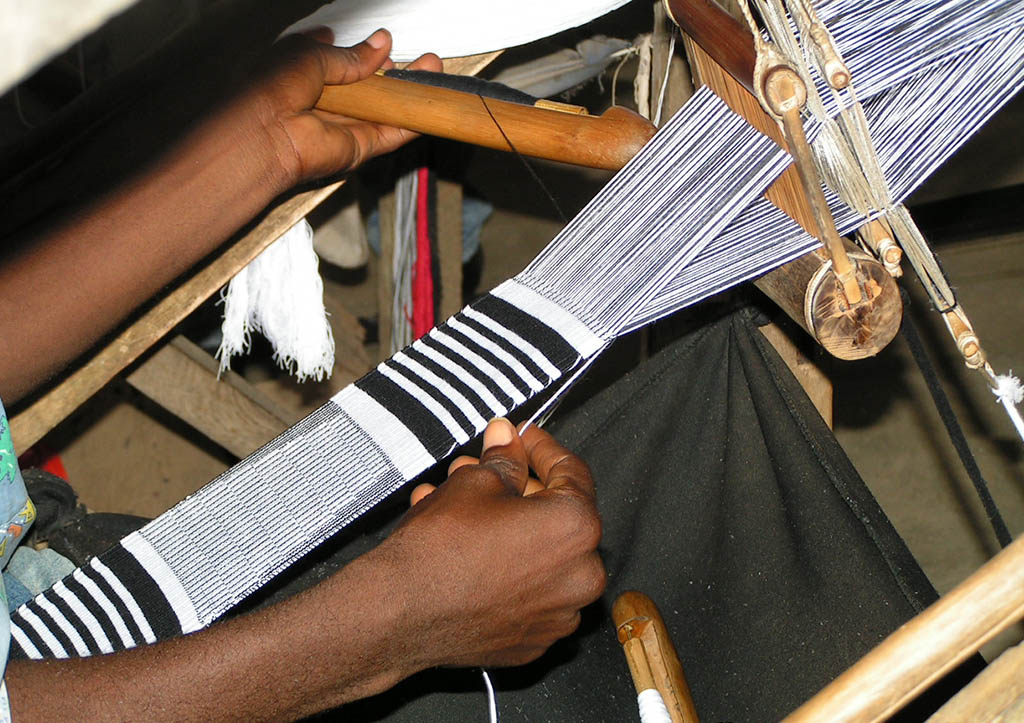
Kente carries value in ways that touch families, communities, and history itself. In this section, we look at the key ways Kente matters beyond fashion:
- Livelihoods: Towns like Bonwire and Adanwomase depend on weaving for survival. Skilled artisans teach children, ensuring the craft and history endure.
- Cultural Authority: Certain patterns are reserved for chiefs, royals, or sacred ceremonies. Misusing them is seen as disrespect, showing that Kente is not just a decoration but a marker of identity and tradition.
- History In Every Thread: Patterns and colours record events, achievements, and family lineages. A cloth is a living archive, carrying stories that might otherwise be forgotten.
- Global Impact and Responsibility: Kente appears internationally, but its meaning remains anchored in local knowledge. Supporting artisans preserves both craft and memory.
READ ALSO:
- Why Leather Holds the Breath of the Herdsman: The Memory of African Pastoral Leather
- The Invisible Thread: How African Oral Tradition Shapes Fashion and Heritage Textiles
- When Dressing Becomes Declaration: Clothing as Cultural Identity
- Why AfroFuturism Is Fashion’s Most Necessary Lens
Kente Today: Heritage In The Modern World

Kente is visible on runways, graduation gowns, and social media. But visibility is not understanding. Without context, Kente risks becoming a spectacle rather than a record.
Modern weavers in Bonwire navigate local and global demand while teaching apprentices the authority encoded in each pattern.
Across the diaspora, Kente signals identity, heritage, and belonging. In London, New York, and Accra, wearing Kente is a conversation with the past. A declaration of who you are and where you come from.
Conclusion
Kente is not a fabric. It is a memory made tangible.
Each pattern carries a message. Each colour declares authority. Each name preserves lineage.
That is why the cloth still matters. When someone wears Kente, they are not dressing well. They are showing how Kente weaves history into every thread, stewarding memory, authority, and culture.
Stories do not only live in books. Sometimes, they live in what we make, wear, and pass down. That is how history survives.
Frequently Asked Questions
-
What Is Kente Cloth?
Kente is a handwoven fabric from Ghana, traditionally made by the Akan people. It uses bright colours and geometric patterns to convey history, social status, and values. Each cloth carries meaning beyond decoration.
-
Why Is Kente Considered Important In Ghanaian Culture?
Kente records history, signals identity, and marks ceremonies. Certain patterns are reserved for chiefs or sacred events, making it a living archive of Ghanaian culture.
-
How Do Kente Patterns Tell A Story?
Each pattern has a name and is linked to proverbs, historical events, or lessons. For example, Adwinasa celebrates abundance, while Emaa Da marks unique achievements. This is exactly how Kente weaves history into every thread.
-
Can Anyone Wear a Kente?
While anyone can appreciate Kente, some patterns are reserved for royalty or special occasions. Wearing them without context can be disrespectful, as the cloth communicates history and authority.
-
How Does Kente Impact Local Communities?
Kente weaving supports households and towns like Bonwire and Adanwomase. Each cloth sold sustains families and passes skills to the next generation, making the loom both an economic and cultural lifeline.