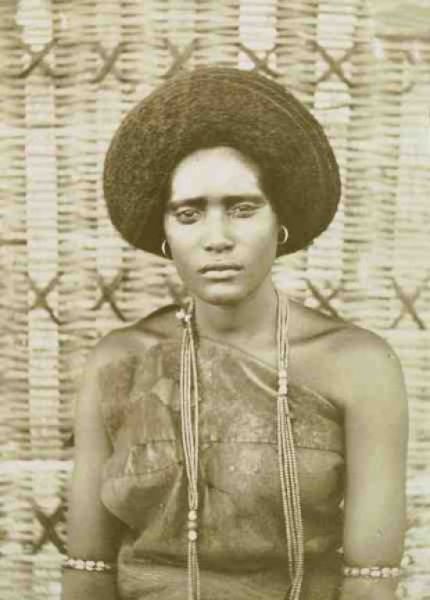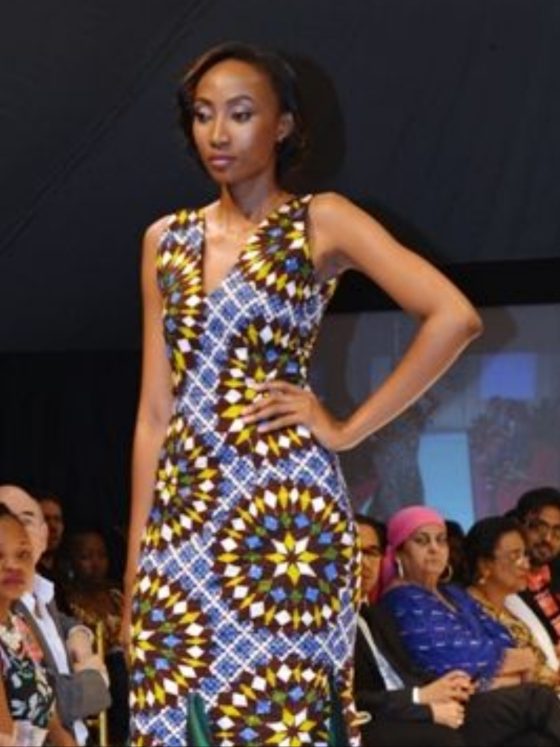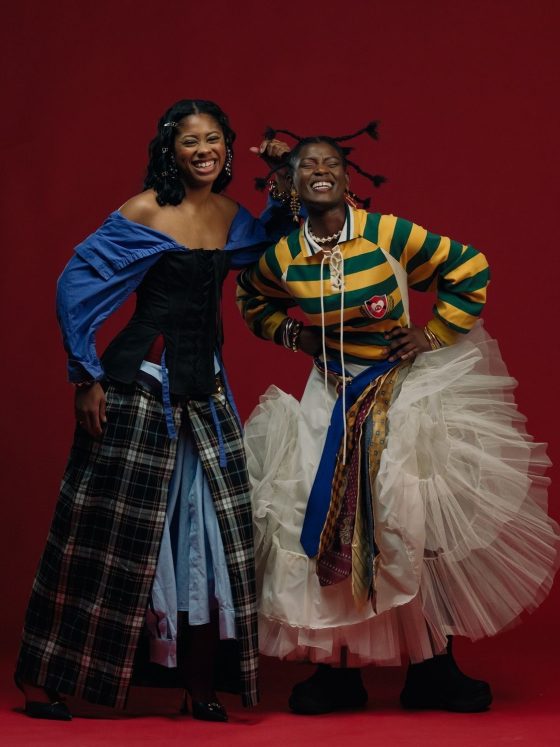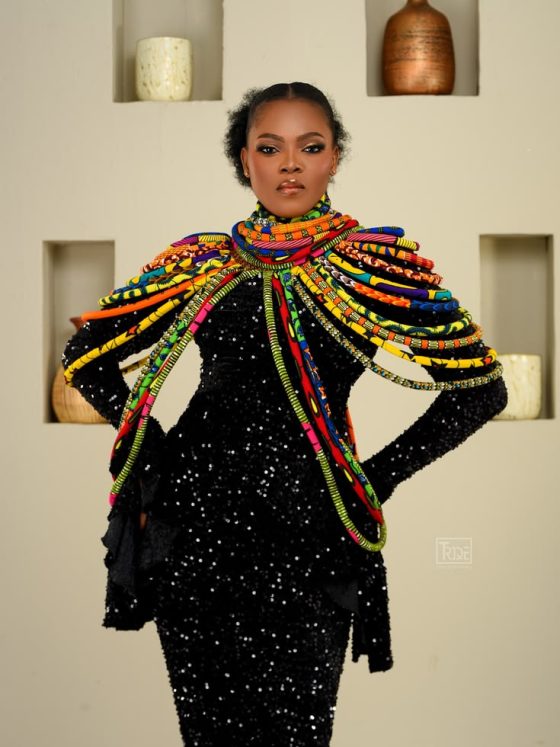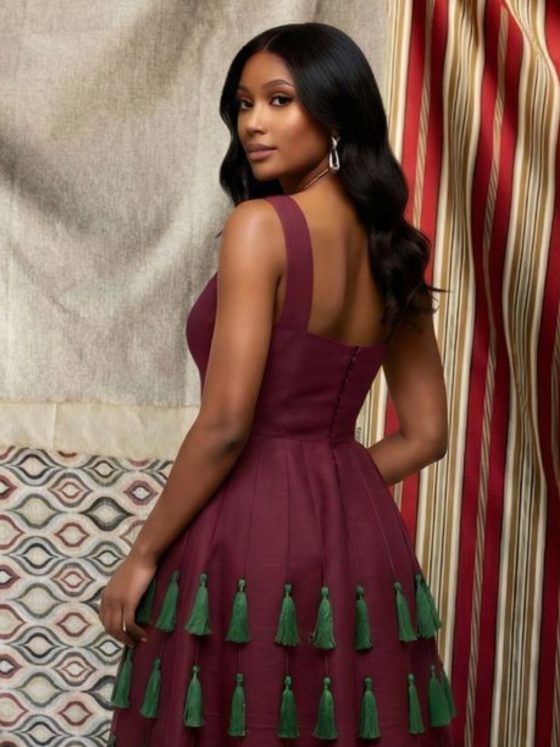
There is a cloth in West Africa that does not simply drape the body. It speaks. It names. It remembers. The Ewe people of the Volta Region in southeastern Ghana and southern Togo have been weaving that cloth for centuries, and they call it Kente. The rest of the world calls it Ewe Kente, and in December 2024, UNESCO made official what Ewe weavers have always known: this textile is among the most significant cultural expressions in human history.
Yet Ewe Kente remains misunderstood. Popular conversation collapses kente into a single tradition, usually the Ashanti one. But Ewe Kente is its own world: older in some of its roots, more figurative in its designs, and more democratic in its access. The Ashanti reserved kente for royalty. The Ewe wove it for everyone who understood what it meant to belong to a lineage, a community, and a cloth.
This article is for the Ewe woman who already knows that. And for every woman who is ready to.
Ewe Kente is not a decorative surface. It is a visual archive. Every figurative motif, every named pattern, carries a proverb, a memory, or a moral position. Wearing it is an act of cultural literacy.
The Cloth That Taught the World to Weave
The Ewe name for this tradition is ‘Agbamevo’, formed from ‘agba’, meaning ‘loom’, and ‘avo’, meaning ‘cloth’. That etymology alone tells the story: for the Ewe, the loom and the cloth are inseparable, and so are the weaver and the culture.
Ewe oral tradition holds that Ewe captives of war, held by the Asante, were the weavers who introduced the craft of kente to their captors. To communicate across the language barrier, as they taught, Ewe weavers used two foundational terms from their craft: ‘kee’, meaning to open the shed on the loom, and ‘te’, meaning to press the weft yarn tightly. Those two words, ‘keetee’, are widely considered the origin of the name ‘kente’ itself.
The town of Agotime-Kpetoe, in Ghana’s Volta Region, is the recognised heartland of Ewe weaving and celebrates the Agbamevo Festival each year in honour of it. A thriving market at nearby Agbozume convenes every four days, drawing traders from Ghana, Togo, Nigeria, and Burkina Faso who come specifically to source Ewe Kente cloth.
In December 2024, kente cloth was inscribed onto UNESCO’s Representative List of Intangible Cultural Heritage of Humanity, recognising both the Asante and Ewe weaving traditions. The recognition places it alongside the world’s most irreplaceable cultural practices and positions the global creative industry, estimated to reach $985 billion by 2025, as a space where African craft must claim its authority.
For a fuller account of how African textile traditions shape global fashion, read The Invisible Thread: How African Oral Tradition Shapes Fashion and Heritage Textiles on Omiren Styles.
1. The Adanudo Gown (The Storytelling Cloth)
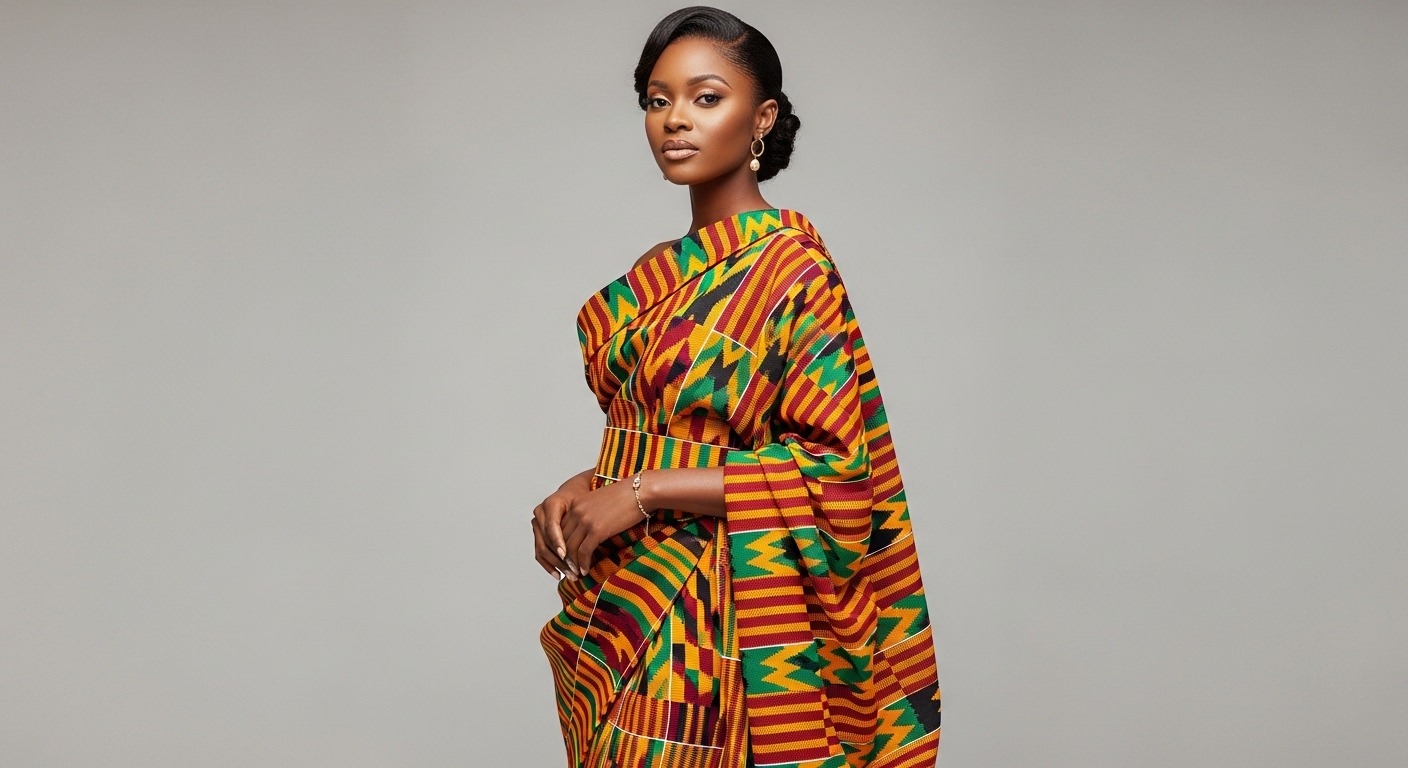
The Adanudo is the most intellectually distinctive form of Ewe Kente. Unlike the geometric abstraction that most people associate with kente, Adanudo cloth is woven with figurative imagery: animals, human silhouettes, ceremonial stools, trees, and household objects rendered directly into the fabric through supplementary weft inlay. No two Adanudo pieces carry the same visual narrative.
Why It Endures
Because it does not simply clothe the body. It introduces the wearer. An Adanudo gown tells the person who sees it something about the woman’s lineage, values, or occasion. In 2026, that quality of specificity is exactly what the global fashion moment is hungry for, even if it does not yet know the name.
2026 Styling Notes
Contemporary Ewe designers are cutting Adanudo cloth into structured maxi gowns with wide necklines that let the figurative weave read as a gallery piece. Minimal jewellery is the standard: the cloth does enough. Earth and indigo tones, handwoven with silk and cotton, carry well from wedding receptions to cultural festivals.
Cultural context: Adanudo cloth was described by scholars as early as the 1940s and continues to be documented by collectors as among the highest expressions of West African textile art. Learn more at Adire African Textiles.
2. The Three-Piece Kete Set (The Architecture of Ewe Dress)
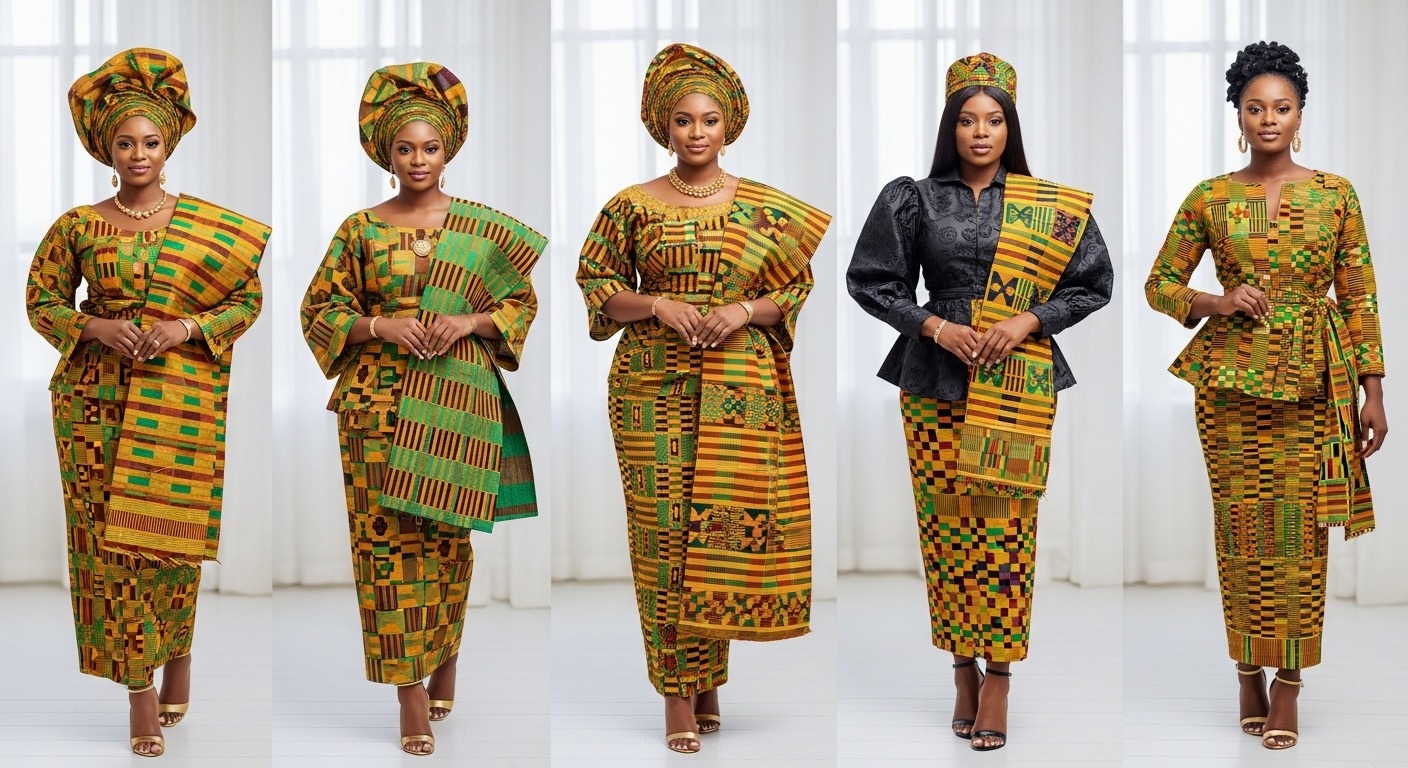
Traditionally, Ewe women wear Kete in three pieces: a wrapper skirt, a fitted blouse, and a third length of cloth draped across the shoulder or arm as a shawl. This tripartite structure is not incidental. Each piece serves a distinct visual and cultural function, and together they create a silhouette that moves with the rhythms of the Ewe ceremony.
Why the Three-Piece Holds Its Ground
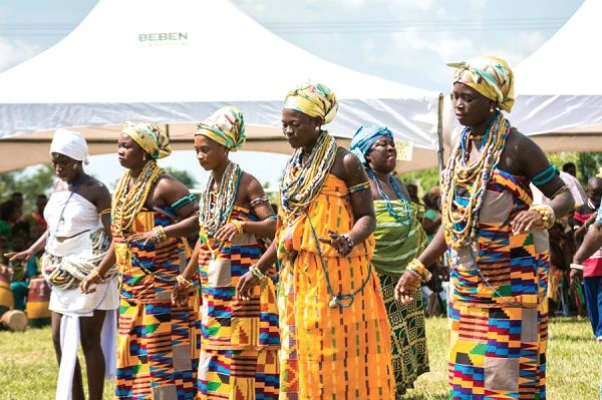
The three-piece Kete set is the ceremonial standard at funerals, outdooring ceremonies, festivals, and the Agbamevo Festival at Kpetoe. It is how Ewe women have dressed for formal occasions for generations, and in 2026, younger designers are returning to its architecture while updating the colour combinations and blouse cuts.
2026 Styling Notes
Structured peplum blouses, in contrast to Kente cloth, are paired with straight wrapper skirts in the dominant cloth. The third piece, the shoulder wrap, is being draped with intention: folded neatly over one forearm for formal events or tied at the waist for a modern street-style read. Rich yellows, deep reds, and white remain the dominant palette, reflecting the Ewe association of those colours with celebration, spiritual protection, and purity.
3. The Kete Wrap Skirt and Fitted Blouse (Everyday Civilisation)
Not every act of cultural dressing requires a ceremony. The Ewe woman who chooses Kete for a market visit, a university lecture, or a professional meeting is making a statement that African textile traditions belong in ordinary life, not only in display.
The Cultural Argument
Unlike Ashanti Kente, which was historically restricted to royalty and high-status occasions, Ewe Kete was woven for broader social access. That democratic quality is one of the most important distinctions between the two traditions, and it makes the everyday Kete wrap skirt a politically and culturally honest choice.
2026 Styling Notes
Mid-length Kete wrap skirts in indigo and white, one of the oldest Ewe colour combinations and possibly a legacy of weaving styles predating Asante contact, pair with simple fitted blouses in complementary solid tones. The overall effect is clean, grounded, and quietly authoritative. Flat sandals or block heels keep the look accessible without losing its cultural register.
4. The Contemporary Kete Co-Ord (Modernity Without Apology)
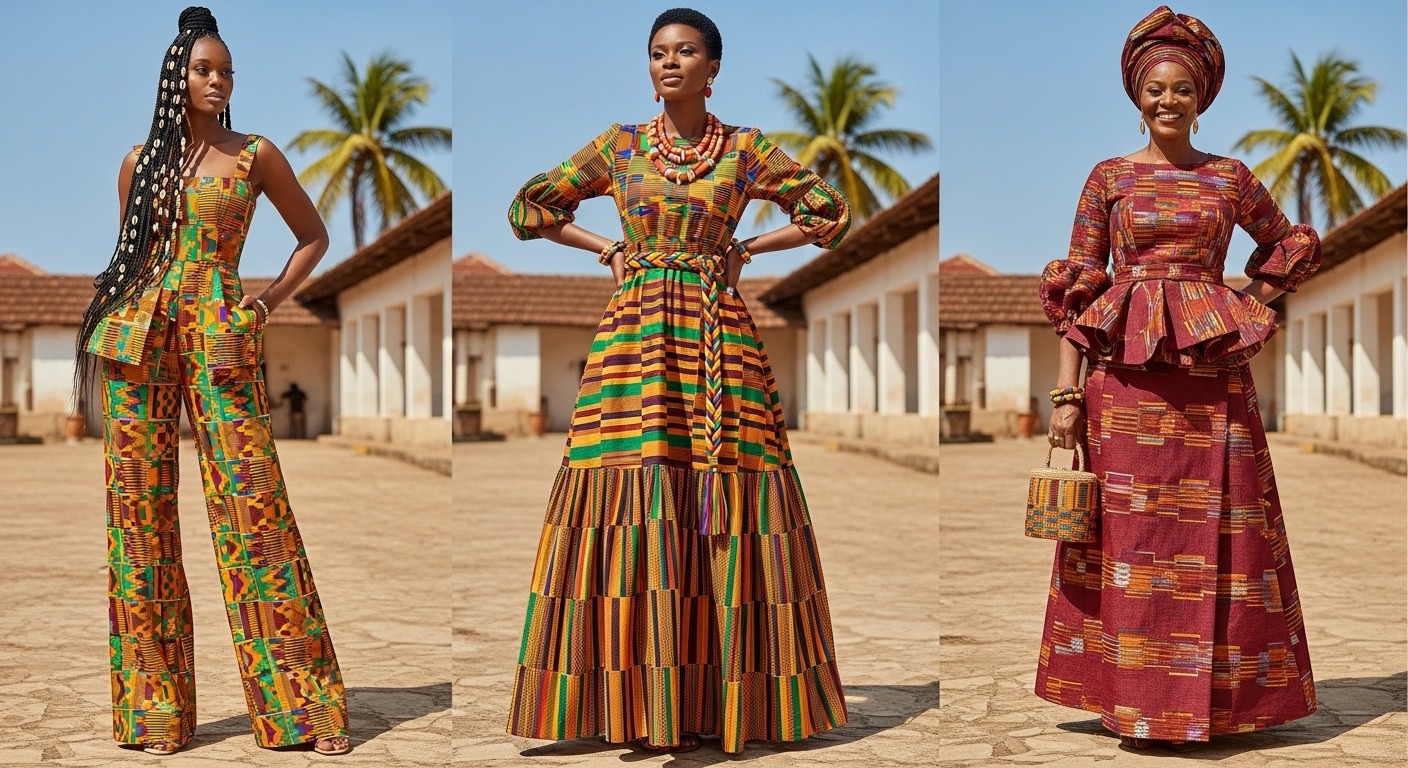
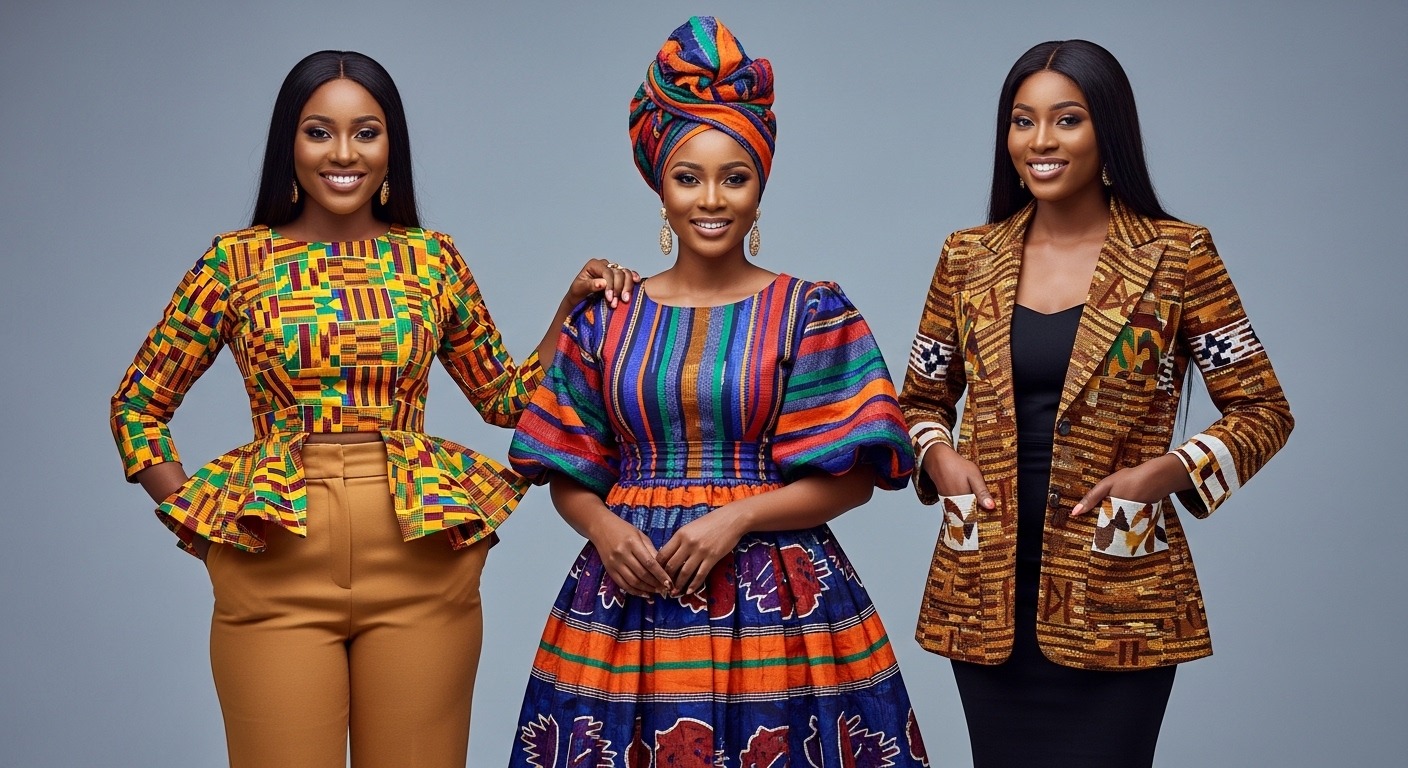
The coordinated Kete set, a matching top and wide-leg trousers or skirt in a single Kete print, is the most visible evolution in Ewe women’s fashion right now. Young designers in Accra, Ho, and across the Ewe diaspora are driving this form because it speaks to women who want to live in their cultural identity without changing their lifestyle for it.
Why 2026 Is the Moment
The global appetite for African fashion is no longer a niche interest. Buyers from Togo, Nigeria, Cameroon, the United Kingdom, the United States, and Canada are actively seeking authentic Ewe Kente. A finished Kete garment from a skilled artisan ranges from $200 to $2,000, reflecting the craft’s labour and its cultural weight. The co-ord format is the entry point that brings that value into the daily wardrobe.
2026 Styling Notes
Wide-leg Kete trousers with a tucked-in Kete crop top or a relaxed Kete kimono jacket over tailored trousers. Wearers are mixing the figurative Adanudo panels with simpler stripe sections within a single garment to create visual contrast. Gold earrings and minimal accessories carry the look from afternoon to evening with no adjustment required.
For a wider view of how African fashion is redefining global style economics, read Culture As Currency: Africa’s Legacy on the Marketplace on Omiren Styles.
5. The Agbamevo Occasion Dress (The Festival Gown)
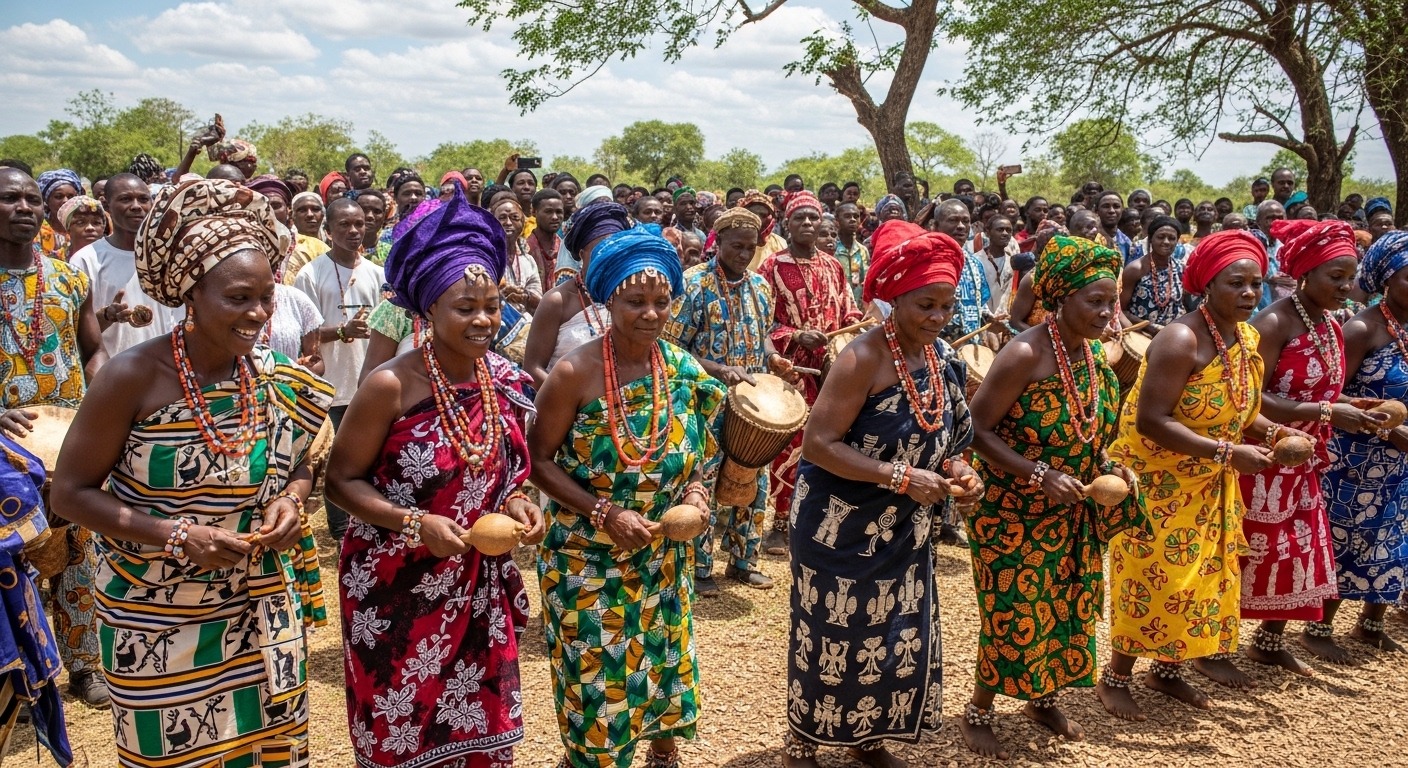
The Agbamevo Festival at Agotime-Kpetoe is the highest public celebration of Ewe weaving culture. It is also a masterclass in what Ewe women’s fashion looks like when the intention is full cultural expression. The occasion dress that Ewe women wear to the Agbamevo Festival and similar celebrations is the full expression of what Kete cloth is capable of: layered, named, and chosen with purpose.
What Makes the Occasion Dress Different
Every element is deliberate. The pattern name matters. The colour combination carries meaning: red signals life and blood; yellow signals wealth and fertility; green signals growth and renewal; black signals spiritual depth and ancestral connection; white signals purification. A woman who chooses her Agbamevo occasion dress with cultural knowledge is not simply getting dressed. She is making a statement about who she is and where she stands.
2026 Styling Notes
Full-length Kente gowns with bell sleeves and wide necklines are the dominant form for occasions in 2026. Silk-woven Kete remains the premium choice, though cotton and rayon blends have expanded access without sacrificing visual richness. Statement headwraps in complementary Kente cloth complete the silhouette. The overall effect is of a woman who has not borrowed from another tradition but arrived fully within her own.
When the Cloth Speaks: Ewe Kente Across Occasions and Ceremonies
For the Ewe woman, choosing a Kete cloth is not a matter of preference alone. It is an act of reading. Each ceremony in Ewe life carries its own vocabulary of colour, pattern, and form. The cloth you bring to a funeral is not the cloth you bring to a naming ceremony. The gown you wear to a wedding says something specific about your relationship to the bride, the groom, and the ancestors who shaped them both. Understanding that vocabulary is what separates dressing in Kete from dressing with Kete.
The Outdooring (Naming Ceremony)
On the eighth day after a child’s birth, the Ewe community gathers to formally welcome a new life into the world. The outdooring, as it is widely known across Ghana, is the moment a child crosses from the ancestral realm into the physical community. It is a threshold occasion, and Kente cloth marks it accordingly.
White and yellow dominate this ceremony. White carries the Ewe association with purity and new beginnings. Yellow, or gold, speaks to the hope of prosperity that the community holds for the arriving child. The mother typically wears a three-piece Kete set: a white or gold wrapper skirt, a fitted blouse, and a complementary shoulder cloth. Beads at the neck and wrists complete the ensemble. On this day, the cloth is not worn for the mother alone. It is worn for the child and for every ancestor who made the child possible.
Kente colour guide for the outdoors: white, gold, pale yellow, and soft green. Avoid deep red and black at this ceremony.
The Traditional Wedding (Tro Kpe)
The Ewe traditional marriage, known as Tro Kpe, is built on the formal knocking at the bride’s family’s door, the presentation of gifts, the blessing of elders, and the union of two lineages. Kente cloth is central to all of it. Weddings, in terms of Kente dressing, are the most visually orchestrated occasion in Ewe life.
The bride typically wears her finest silk-woven Kete in rich gold, deep red, and royal blue combinations: colours that signal wealth, love, and the gravity of the covenant being made. Her three-piece set is the ceremonial standard, often with a heavily embellished blouse and a headwrap tied in a style that announces her status as a woman entering a new household. Female guests and family members wear Kente in complementary tones, and it is common for the women of the bride’s family to coordinate their clothes to create a unified visual statement when the bride is presented.
An authentic piece of wedding-quality handwoven Kete can range from $200 to $2,000, and Ewe women understand that investment as proportional to the occasion. A wedding is not dressed down.
Kente colour guide for the traditional wedding: gold, deep red, royal blue, rich green. Silk weave preferred. Bold Adanudo figurative cloth is appropriate for the bride and senior female family members.
The Todidi Ceremony (The Consolation Wedding)
The Todidi is one of the most distinctive and moving ceremonies in Ewe culture, and one of the least known beyond it. When a husband loses his father, the wife stages what is, in effect, a wedding of consolation. She is collected from her father’s home, dressed in her finest Kete with beads at the neck and wrists, and marched with a large entourage of women, friends, and a brass band to the ceremony grounds where her husband and his family are waiting. The ceremony is her public declaration of loyalty and love at the moment of his deepest grief.
This is a ceremony that holds grief and celebration in the same space. The Kete worn here must honour both registers. It is not the full celebratory gold and red of a wedding, nor is it the muted palette of a funeral. A woman preparing for Todidi typically chooses her best Kete in warm, dignified tones: deep green, rich burgundy, or a combination that reads as beautiful without reading as festive. The cloth must say: I am here, and I am steady.’
Kete colour guide for Todidi: deep green, burgundy, indigo, and warm brown. Fully beaded accessories. Three-piece ceremonial set. Avoid bright yellow or white, which read as purely celebratory.
The Funeral (A Celebration of a Life Completed)
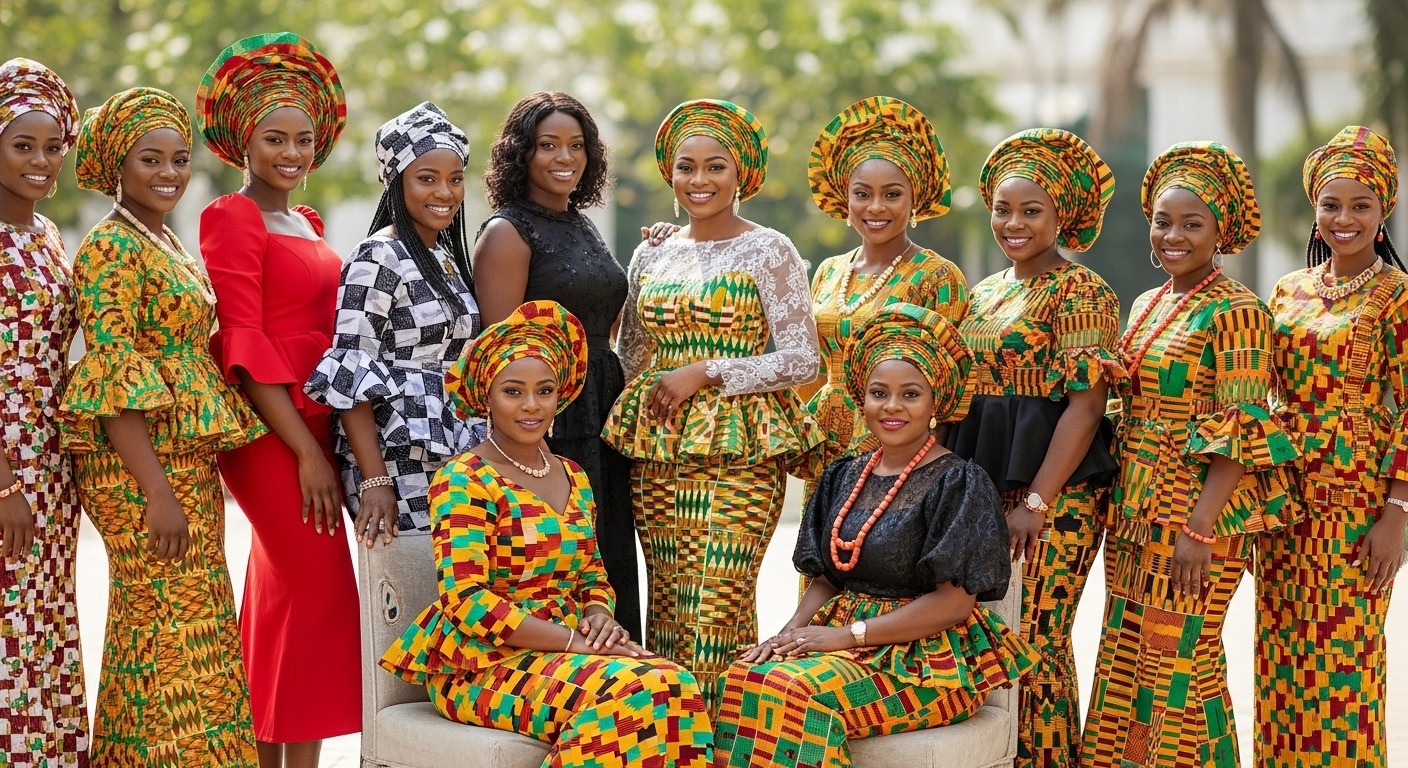
The Ewe funeral is one of the great ceremonial events of West African life. It is not only mourning. It is a communal reckoning with mortality, an honouring of ancestry, and in many Ewe communities, an elaborate multi-day gathering involving drumming, dancing, food, and the gathering of extended family from across Ghana and the diaspora. The cloth worn to an Ewe funeral carries that complexity.
Red and black are the primary funeral colours in Ewe tradition. Red in the Ewe colour system represents seriousness, sacrifice, and mourning. Black carries the weight of spiritual strength, ancestral depth, and maturity. A red-and-black Kete cloth at an Ewe funeral is not a sad choice. It is a dignified one. It says that the wearer understands the gravity of the occasion and has dressed accordingly, with care and with knowledge. Specific Kente patterns are chosen deliberately to celebrate the life and legacy of the deceased, not merely to mark their passing.
For the women of the immediate family, the three-piece Kente set in darker tones is standard. For guests and community members, a Kente wrap skirt and fitted blouse in complementary red or black tones is appropriate. The cloth should be hand-woven if possible. At an Ewe funeral, the quality of your cloth is a measure of the respect you are bringing into the space.
Kete colour guide for the funeral: red, black, dark indigo, and deep brown. Avoid bright gold, white, and pastel tones. Adanudo cloth with figurative ancestral motifs is appropriate for close family members.
The Agbamevo Festival (The Weavers’ Celebration at Kpetoe)
The Agbamevo Festival at Agotime-Kpetoe is the annual celebration of Ewe weaving culture and the occasion where Kente cloth is worn with the greatest intent and knowledge. Agbamevo means “cloth from the loom”, and the festival exists specifically to honour that tradition. Chiefs wear their finest silk Kete. Women come dressed in full ceremonial three-piece sets. The Adanudo figurative cloth is displayed and worn with pride. Weavers present new works. The town becomes a living exhibition of what the loom is capable of.
For an Ewe woman attending the Agbamevo Festival, there is no such thing as overdressing in Kente. This is the occasion where the full range of colour, pattern, and style is not only permitted but expected. Bright yellows, bold reds, deep greens, and royal blues: all colours are welcome, and the richer the cloth, the better. The three-piece set is the formal standard. The Agbamevo occasion gown, in full-length Kente with a statement headwrap, is the highest expression of the day.
Kete colour guide for the Agbamevo Festival: all colours welcome. Silk weave preferred. Full three-piece ceremonial set or occasion gown. Adanudo figurative cloth is especially appropriate.
Graduation and Academic Achievement
Within Ghana, graduation is one of the occasions where Kete has moved most confidently into the modern calendar. It is a day that combines personal achievement with family pride, and Kente cloth carries both registers well. An Ewe woman who dresses in Kente for her graduation is not reaching back in time. She is carrying her lineage forward into a new space of knowledge and authority.
Across the diaspora, this connection is even more explicit. African American graduates have worn Kente stoles at commencement ceremonies since the late 20th century as a visible sign of African heritage and ancestry. For the Ewe woman specifically, the choice of Kete at graduation is an act of naming: I know where this education comes from, and I know where it is going.
Kete colour guide for graduation: gold and green for achievement and growth. A modern Kete co-ord or a structured Kete gown both work. A Kete wrap skirt with a tailored academic jacket is considered a contemporary choice for the diaspora context.
The Ewe woman does not simply wear Kente. She reads the room, reads the cloth, and dresses with the precision of someone who understands that fabric is a language and every ceremony has its own grammar.
ALSO READ:
- Top 5 Ankara Styles for Hausa Women in 2026
- When Dressing Becomes Declaration: Clothing as Cultural Identity
- The Invisible Thread: How African Oral Tradition Shapes Fashion and Heritage Textiles
- Kente cloth (UNESCO Intangible Cultural Heritage, December 2024)
The Omiren Argument
The conversation about kente in the global fashion market has, for too long, centred on one tradition. The Ewe weavers of Kpetoe, Agbozume, and the Volta Region have been producing some of the most sophisticated textile art on the continent since before the modern borders of Ghana and Togo were drawn. Their clothes are named after proverbs. It weaves fish, stools, and human figures into the fabric because the Ewe understand that a cloth without narrative is just material.
In 2026, the world is catching up. The Ewe woman who wears Kete has always known what it means. Now it is time for the world to learn to read it.
FAQs
1. What is the difference between Ewe Kente and Ashanti Kente?
Ewe Kente, locally called Kete, features figurative designs including animals, human figures, and symbolic objects woven directly into the cloth. Ashanti Kente is primarily geometric and abstract. Ewe Kente was traditionally more accessible across social classes, while Ashanti Kente was historically reserved for royalty and high-status individuals. Both traditions were inscribed together on UNESCO’s Intangible Cultural Heritage list in December 2024.
2. Where is Ewe Kente made?
The primary weaving centre is Agotime-Kpetoe in Ghana’s Volta Region, which hosts the annual Agbamevo Festival celebrating the tradition. Ewe weavers also work across the Togo border, where the cloth is known as Kete, reflecting the fact that the Ewe people live across both countries.
3. How much does authentic Ewe Kente cost?
Authentic handwoven Ewe Kente ranges from $200 to $2,000, depending on the quality of materials, the complexity of the weave, and the artisan’s reputation. Silk-woven pieces command higher prices. Machine-made imitations are significantly cheaper but carry none of the cultural or craft value of the handwoven cloth.
4. What occasions are Ewe Kente styles appropriate for?
Ewe Kente is appropriate for the full range of occasions in Ewe life: weddings, naming ceremonies, funerals, cultural festivals, including the Agbamevo Festival, graduation ceremonies, and formal social gatherings. The three-piece traditional set is the standard for formal occasions, while the contemporary co-ord and wrap-skirt styles work in both professional and casual settings.
Explore More on Omiren Styles
Omiren Styles covers African fashion as a civilisational record. Explore our African Style section for the full editorial programme, including cultural inspirations, designer spotlights, and traditional-to-modern style guides across the continent.