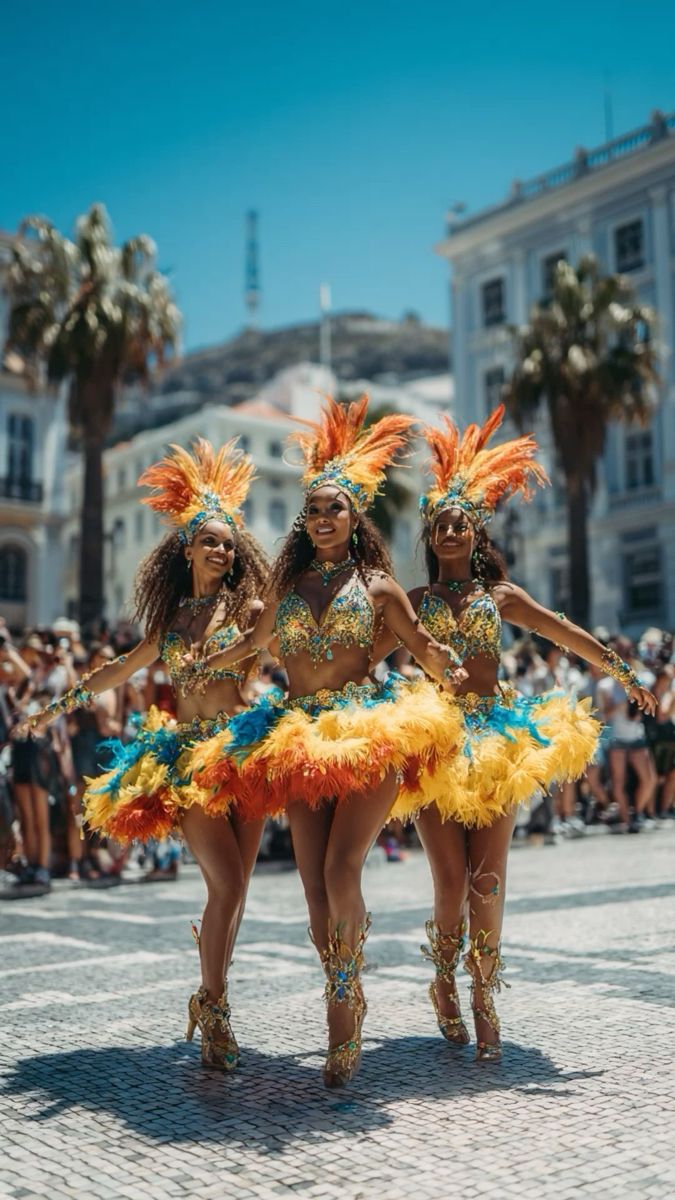
Dominican Carnival is famous for its Diablos Cojuelos, its Lechones, and its regional carnival characters, each with elaborate masks and costumes that take weeks or months to create. As Diario Libre’s documentation of the artistry behind Dominican carnival costume production confirms, the labour behind that spectacle is distributed across a network of workshops, sewing circles, and family studios in La Vega, Santiago, and Santo Domingo, where the actual making happens. What is less discussed is who does the making. In practice, women dominate the sewing, beading, embroidery, and decorative work that turns raw fabric into carnival spectacle. They are modistas, artesanas, and diseñadoras who work through carnival season and beyond, without proportionate public credit.
Dominican Carnival women’s costume artistry is the invisible engine of the country’s most iconic cultural celebration. The masked devils, the feathered queens, the glittering comparsas that define the Dominican Republic’s carnival tradition rest on a foundation of creative labour that formal recognition systems have consistently undervalued. Women are not just executing men’s visions in Dominican Carnival. They are leading design workshops, creating award-winning costumes from recycled materials, organising entire comparsas, and performing in roles traditionally coded as male. The gap between that reality and the official narrative of who makes carnival is the story this article documents.
Women make Dominican Carnival’s costumes. Its comparsas are organised by women. Women increasingly perform its devils. Here is why the credit lags.
Dominican Carnival Women Costume Artistry: The Labour Behind the Spectacle
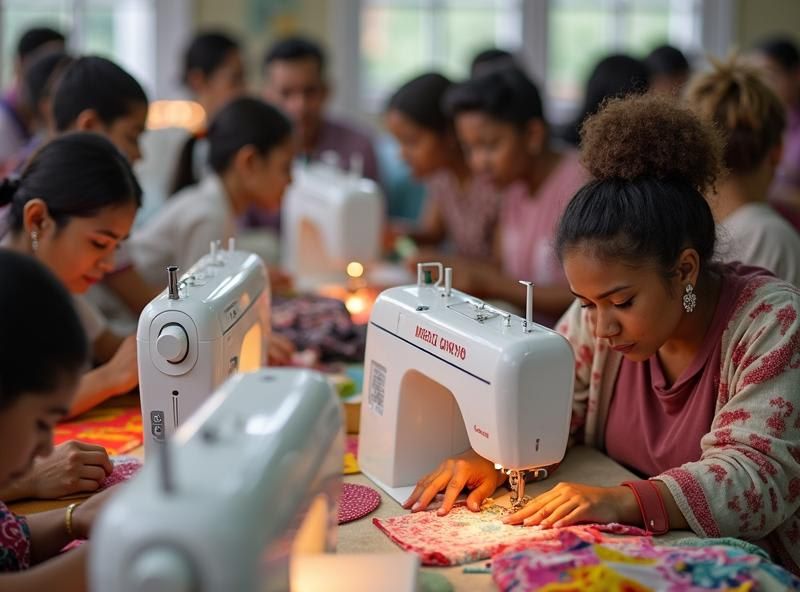
In La Vega, Santiago, and Santo Domingo, women work as the primary sewing, beading, and decoration labour in carnival costume production. In Santiago, the iconic Lechon costumes, elaborate satin and taffeta outfits decorated with mirrors, beads, and bells, are often sewn by women working in small family workshops or independent studios. In La Vega, women have been central to the creation of comparsa costumes, working collectively to produce outfits that reflect a chosen theme or regional identity. These collaborations are not just about sewing. They involve creative decision-making, material sourcing, and thematic research.
As one cultural observer in Santo Domingo put it directly: the woman is the seamstress, the woman runs the workshops, the woman directs, the woman does many events and contributions to the carnival. That observation describes a structural reality that the formal credit systems of Dominican Carnival have consistently declined to reflect.
The parallel with other Caribbean carnival traditions is direct. Omiren Styles’ documentation of the textile and costume traditions behind Trinidad’s Carnival confirms that Caribbean carnival costume production operates through interconnected systems of collaborative labour, imported material networks, and community production that mainstream coverage consistently attributes to individual named designers rather than the collective of women who execute each piece. Dominican Carnival women operate within the same structural invisibility.
Women As Designers and Original Creators
While men often receive public recognition as artists or designers of carnival costumes, women are frequently the ones executing the vision and, increasingly, creating original designs themselves. Mercedes Fernández, a graduate of the Altos de Chavón design school, has dedicated her career to creating fantasy costumes for Santiago’s carnival, specialising in characters that blend traditional motifs with contemporary flair. Her work exemplifies how women are moving from behind-the-scenes labour to recognised design leadership within the Dominican carnival ecosystem.
In La Vega, women’s collective costume production for comparsas involves creative decision-making at every stage: selecting the theme for the season, researching historical and cultural references, sourcing fabrics and materials, designing the palette and construction approach, and coordinating the production timeline so that dozens of coordinated outfits are ready before the first parade. This is not assistance. It is authorship, performed collectively and without the individual credit that male designers working in the same tradition routinely receive.
Margarita Lorenzo and Recycled Costume Artistry
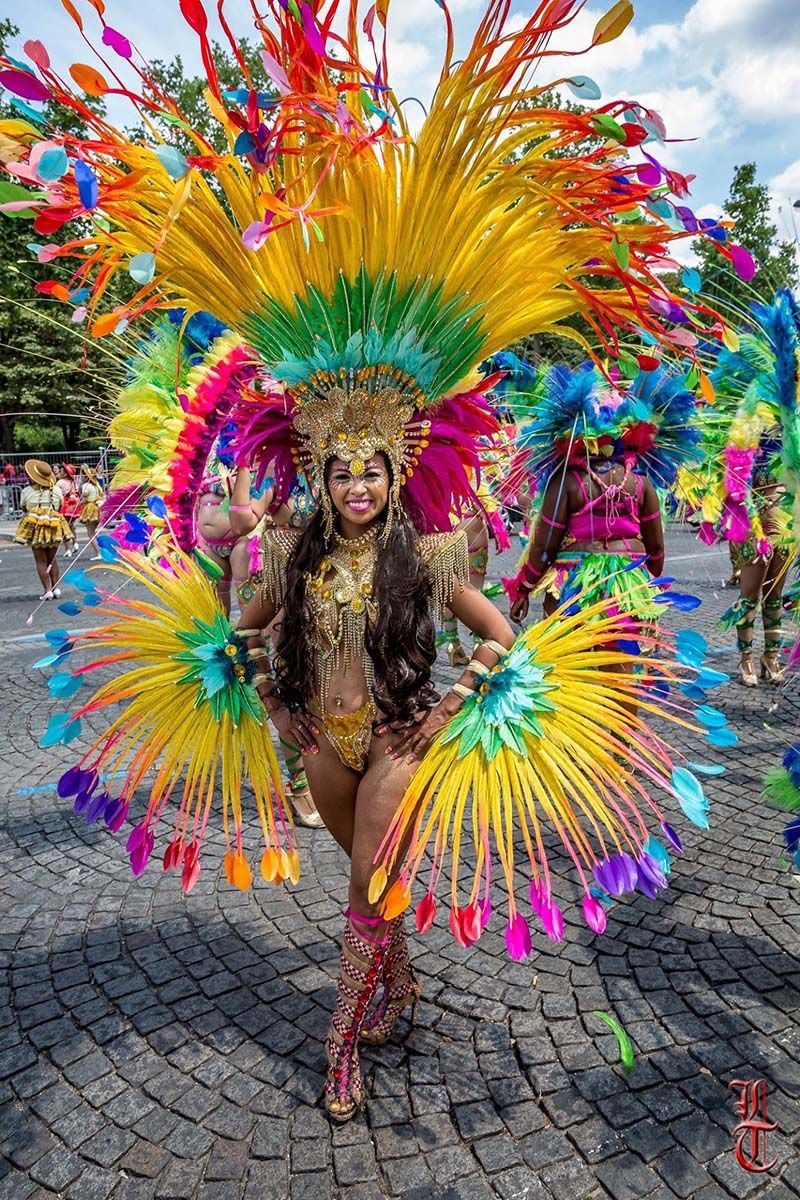
One of the most innovative areas of Dominican Carnival women’s costume artistry is the use of recycled materials. Margarita Lorenzo, a cultural manager and artisan from Santo Domingo, has gained national and international recognition for creating award-winning carnival costumes from discarded items including plastic bottles, egg cartons, pasta, newspaper, and dried leaves. As El Nacional’s documentation of women’s participation in Dominican Carnival confirms, Lorenzo’s costumes have won prizes in national parades, proving that sustainability and spectacle can coexist and that carnival costume artistry does not require expensive or resource-intensive materials to achieve visual impact.
Lorenzo’s work is not only creative. It is political. By using discarded materials, she challenges the assumption that carnival costumes must be expensive to be beautiful. Her approach has inspired other women to experiment with eco-friendly materials, creating a sub-movement within Dominican Carnival that prioritises environmental consciousness alongside artistic expression. As Lorenzo herself has said, everything related to carnival has to do with women, and her work exemplifies how women are redefining what Dominican carnival artistry can be.
Women Organising the Carnival Structures
Beyond costume-making, women play crucial roles in organising and managing carnival comparsas and events. Esther Margarita Mieses, a dentist and comparsa leader, founded Los Leones de Villa Maria, a family-based carnival group that has become a fixture in Santo Domingo’s parades. Her leadership demonstrates how women are not just making costumes but building the institutional structures that sustain carnival year after year.
Miralba Ruiz, a communicator and carnivalera from La Vega, has been instrumental in documenting and promoting women’s participation in the carnival, particularly in the context of the Diablos Cojuelos tradition. She has spoken publicly about how women who dress as devils in La Vega must learn to walk and move like men to avoid harassment from spectators, revealing the gendered dynamics that shape performance and safety in the streets. These women are not just participants. They are cultural archivists, ensuring that women’s contributions to carnival are recorded and remembered.
This organisational dimension connects Dominican Carnival’s women to a broader tradition of Caribbean cultural production. Omiren Styles’ documentation of the African origins of carnival costume confirms that Caribbean carnival is not simply a performance tradition but a production system maintained by communities over generations, with the women of each community typically carrying the transmission function, teaching younger generations the techniques, materials, and meanings that keep the tradition alive. In Dominican Carnival, women are that transmission system.
Women Performing as Diablas Cojuelas
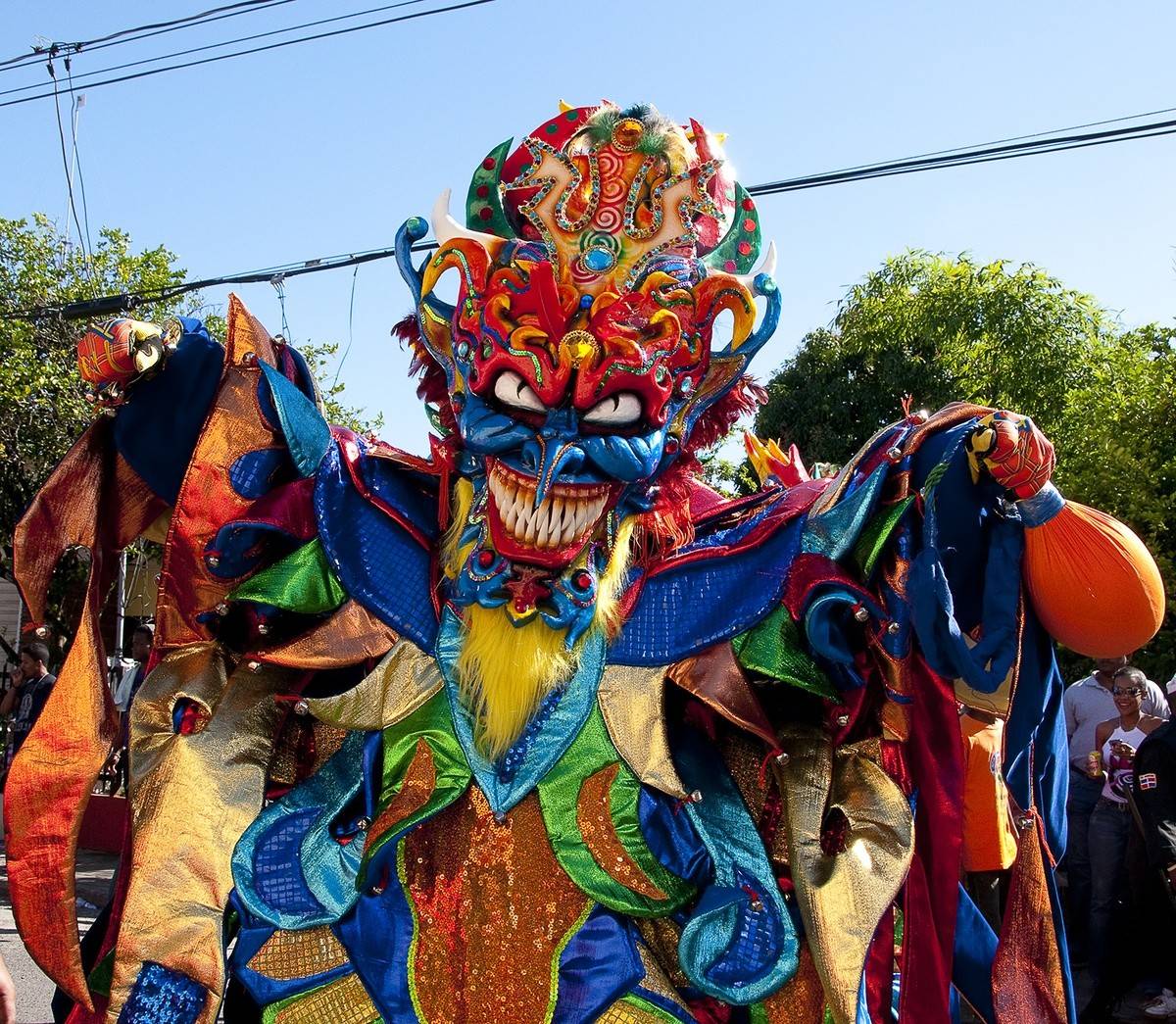
One of the most significant developments in recent decades is the increasing presence of women performing as Diablas Cojuelas, female limping devils, in La Vega and other carnivals. Traditionally, the Diablo Cojuelo was perceived as a male character. Women have been participating in the role since the 1980s, when Letty Rivera and Arlene Pichardo founded the comparsa Las Amazonas in La Vega, establishing the precedent for women’s full participation in the devil tradition.
Performing as a Diabla requires not just wearing the costume but embodying the character’s aggressive, confrontational energy. Women who take on this role must learn to walk, gesture, and wield the vejiga bladder whip with the same intensity as men, often to avoid harassment or disrespect from spectators who may not expect women in such roles. This performance is both artistic and political. It challenges the gendered assumptions of who can occupy the space of the devil, and it asserts women’s right to be as visible, loud, and powerful as men in the carnival context.
The Gender Gap in Formal Recognition
Despite their centrality, women remain underrepresented in formal carnival leadership and recognition. A study of 102 registered carnival groups found that women do not represent parity with men as titular heads of comparsas or design teams. One estimate suggested that 98% of registered artisanal carnival work is attributed to men, with only 2% to women, even though women are visibly present in nearly every aspect of production. This gap reflects broader patterns of gender inequality in cultural industries, where women’s labour is essential but undervalued.
The gap is not only about numbers. It is about visibility. Men are more likely to be named as artists or designers in official programmes, while women’s labour is often framed as help or support. Even when women lead comparsas or create award-winning costumes, they are less likely to receive the same public acclaim as their male counterparts. In La Vega, this dynamic began to shift when the carnival recognised Dona Letty Rivera as Reina Momo for the first time, honouring her contributions to the women-led comparsa Las Hormigas. But such recognitions remain exceptions rather than the rule.
This structural underrepresentation is consistent with how Caribbean and Latin American women’s cultural labour has been treated across the region. The women who built the material culture of Caribbean and Latin American dress traditions, from the Palenqueras of Colombia to the Baianas of Brazil, have consistently been described in terms of performance and identity rather than credited as the designers, producers, and innovators they actually were. Dominican Carnival’s women face the same structural erasure.
The Omiren Argument
Dominican Carnival women’s costume artistry is a story of authorship that the formal structures of the carnival have not yet accurately told. Women are sewing, designing, beading, organising, and performing at every level of Dominican Carnival production, from the backroom workshops of Santiago’s Lechon costume makers to the streets of La Vega where Diablas Cojuelas have been claiming the devil’s space since the 1980s. Margarita Lorenzo has proven that award-winning carnival art can be made from discarded plastic bottles and dried leaves. Esther Margarita Mieses has built a family comparsa group that sustains year after year through her leadership. Letty Rivera and Arlene Pichardo founded Las Amazonas and changed what a devil looks like in La Vega. The statistics say 98% of registered artisanal carnival work is attributed to men. The workshops say something different. Omiren Styles documents what the workshops say.
Also Read:
- The African Origins of Carnival Costume: Feathers, Beads, and the Masquerade Tradition
- The Pollera, the Wob Dwiyet, and the Baiana: The African Women Who Dressed the Americas
- Trinidadian Carnival Masquerade Is a Fashion System; It Is Time the World Called It That
- Mas, Cloth, and Meaning: The Textile and Costume Traditions Behind Trinidad’s Carnival
Frequently Asked Questions
What roles do women play in Dominican Carnival costume artistry?
Women play multiple roles in Dominican Carnival costume artistry, including seamstresses (modistas), artisans (artesanas), designers (diseñadoras), and cultural managers. They are responsible for sewing, beading, embroidery, and decorative work that transforms raw fabric into carnival costumes. Women also lead comparsas, create original designs, organise the logistics of carnival participation from material sourcing to performance coordination, and increasingly perform in carnival roles, including as Diablas Cojuelas. Despite their centrality, women’s labour is often invisible in official narratives.
Who is Margarita Lorenzo, and why is her work significant?
Margarita Lorenzo is a cultural manager and artisan from Santo Domingo who has gained national and international recognition for creating award-winning carnival costumes from recycled materials, including plastic bottles, egg cartons, pasta, newspaper, and dried leaves. Her work is significant because it challenges the assumption that carnival costumes must be expensive to be beautiful. Her costumes have won prizes in national parades, proving that sustainability and spectacle can coexist, and her approach has inspired other women to develop eco-friendly practices within Dominican Carnival.
What are Diablas Cojuelas in Dominican Carnival?
Diablas Cojuelas are women who perform the Diablo Cojuelo, or limping devil, character in Dominican Carnival. This role, traditionally perceived as male, has been taken on by women since the 1980s, when Letty Rivera and Arlene Pichardo founded the comparsa Las Amazonas in La Vega. Performing as a Diabla requires embodying the character’s aggressive, confrontational energy, including learning to walk, gesture, and wield the vejiga bladder whip with the same intensity as male performers. Their participation is both artistic and political, challenging the gendered assumptions of who can occupy powerful, visible carnival roles.
Why is women’s work in Dominican Carnival under-recognised?
Women’s work in Dominican Carnival is under-recognised because formal credit systems, including official programmes, prize committees, and registered artisan designations, have historically favoured male artists and designers. One estimate suggests that 98% of registered artisanal carnival work is attributed to men, even though women are visibly present in nearly every aspect of production. Women’s labour is often framed as support or assistance rather than recognised as creative authorship. This reflects broader patterns of gender inequality in cultural industries across the Caribbean and Latin America.
How are women contributing to sustainable carnival practices?
Women are leading the movement toward sustainable carnival practices by using recycled materials in costume creation. Artisans like Margarita Lorenzo create costumes from discarded items including plastic bottles, egg cartons, and dried leaves, demonstrating that environmental consciousness and artistic excellence can coexist. This approach has inspired other women to experiment with eco-friendly materials, creating a sub-movement within Dominican Carnival that prioritises sustainability alongside artistic expression.
Explore More
Read the full Women section for Omiren Styles’ documentation of women’s creative labour, design leadership, and cultural authorship across Africa, the Caribbean, and the diaspora.